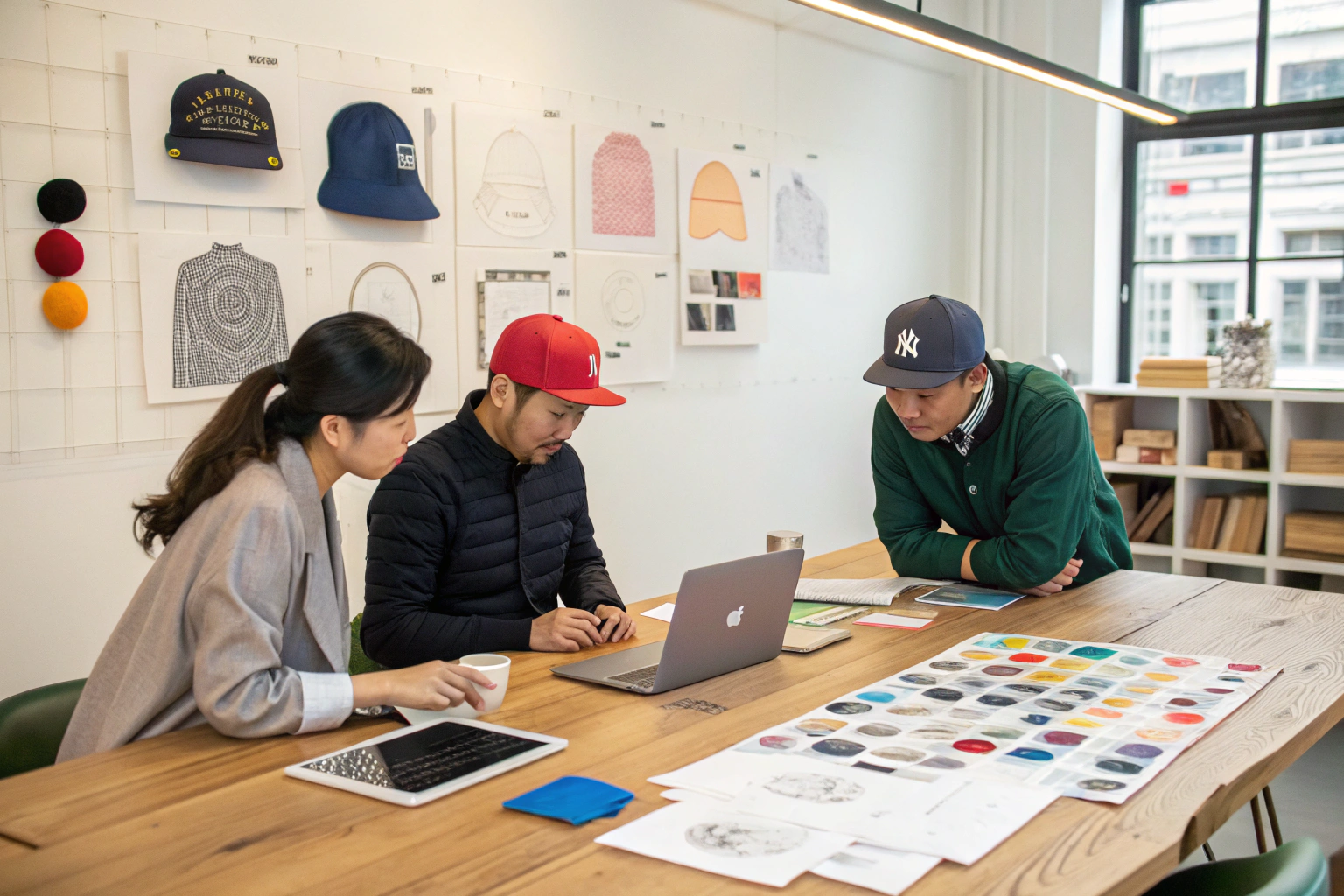
I was on a Zoom call with a potential client, a young entrepreneur named Chloe who had a great idea for a line of hair accessories. She had a Pinterest board full of inspiration. She had a brand name and a logo. But she did not have a "tech pack." She did not know how to draw a flat sketch. She did not know what a seam allowance was. She was almost apologetic. "I'm sorry," she said, "I'm not a designer. I just know what I want it to look like." I told her that was perfectly fine. In fact, it was exactly why she should be talking to us. At AceAccessory, we do not just sew fabric. We help translate a vision into a viable product. We have an in-house design team that speaks both "Pinterest" and "Production."
The primary benefit of sourcing from a factory with an in-house design team is the compression of time and the elimination of costly communication errors between concept and production. Instead of a brand hiring a freelance designer to create a tech pack, then sending it to a factory, and then engaging in weeks of back-and-forth revisions, the entire process happens under one roof. The designer who sketches the bag also understands the constraints of the sewing machines on the factory floor. This integrated approach results in faster sampling, more accurate cost estimating from the earliest stages, and a final product that is optimized for both aesthetics and manufacturability.
At Shanghai Fumao, our design team is not just a marketing asset. It is a core part of our service offering. It is how we add value for clients like Chloe, and for experienced brands who want to offload the technical design work to their factory partner. I want to share the tangible benefits this integrated model provides.
How Does In-House Design Accelerate The Sampling Process?
In the traditional sourcing model, time is the biggest enemy. The brand hires a designer. The designer creates a tech pack. The brand emails the tech pack to the factory. The factory has questions. The questions go back to the brand. The brand goes back to the designer. A week passes. The factory makes a sample. It is wrong. The cycle repeats. This process can take months.
An in-house design team accelerates sampling by eliminating the lag between design intent and production reality. The designer works directly with the pattern maker and the sample sewer. If a seam is too bulky, they fix it on the spot. If a hardware spec is not available, they find an alternative immediately. This direct collaboration allows us to produce a first-round sample in as little as 7-10 days for many accessory categories. This speed allows brands to test more ideas, iterate faster, and get to market before their competition.
What Is The Difference Between A "Tech Pack" And A "Reference Photo"?
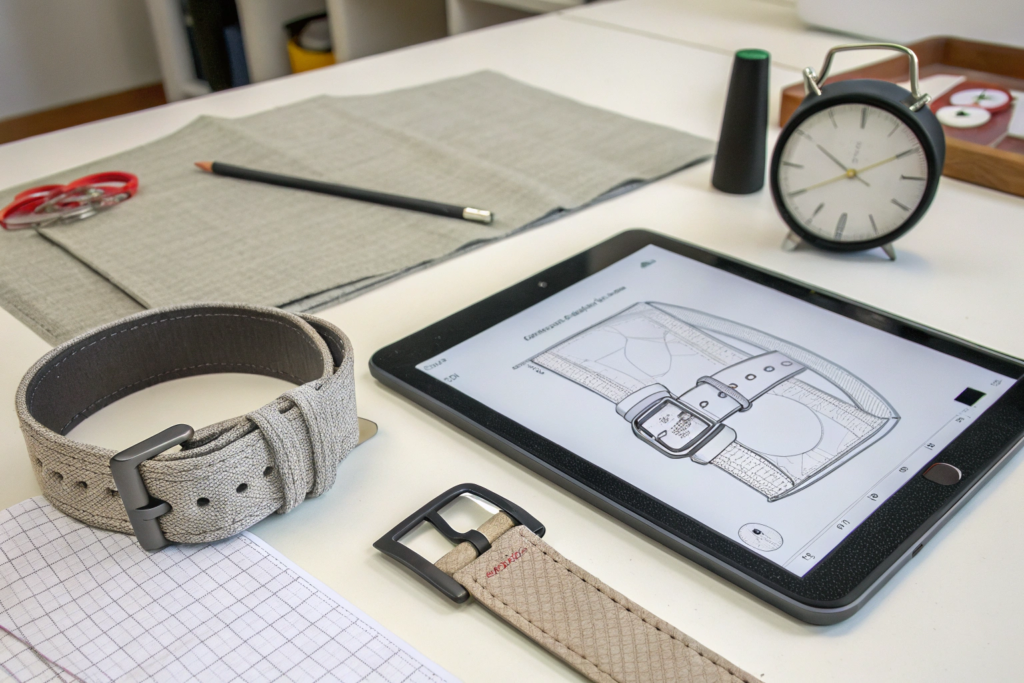
Many factories demand a complete Tech Pack before they will even quote a price. A tech pack is a detailed document containing flat sketches with measurements, material specifications, stitch types, and construction notes.
For a large corporate brand with a dedicated technical design team, a tech pack is standard operating procedure. But for a small brand or a startup, creating a professional tech pack is a major hurdle. They do not have the skills or the software.
This is where our in-house design team provides immense value. We can start with a Reference Photo and a Conversation .
Chloe sent us a photo of a knotted headband she loved from another brand. She said, "I want this shape, but in this color, and I want it to be wider." Our designer took that photo, created a CAD sketch, added the new dimensions, and sourced the fabric. We built the tech pack for her, as a value-added service.
This is not just about being nice. It is about capturing business. We remove the barrier to entry for creative entrepreneurs. We make it easy for them to work with us. The cost of this design time is absorbed into the sampling and development fees, which are often credited back against the bulk order.
How Does 3D Sampling Reduce Physical Prototype Iterations?
This is a newer technology that is changing the game for categories like bags and belts. Our designers use CLO 3D software to create true-to-life, digital 3D samples of products before cutting a single piece of fabric.
Here is the workflow:
- Designer creates the pattern pieces in 2D CAD.
- The pattern is "sewn" together in the 3D software.
- The software simulates the fabric drape, weight, and stretch on a virtual model.
- The client receives a 360-degree video rendering of the bag or hat.
This allows the client to see the proportions, the drape, and the overall look. They can say, "The strap looks too short," or "The body of the bag needs to be wider." We make the adjustments in the software in minutes, not days.
This eliminates one or two rounds of physical sampling. Given that a physical sample plus DHL shipping costs $50-$100 and takes a week, the savings in time and money are substantial. This technology is a key differentiator for a modern, tech-forward factory like AceAccessory.
How Does In-House Design Ensure Better Cost Efficiency?
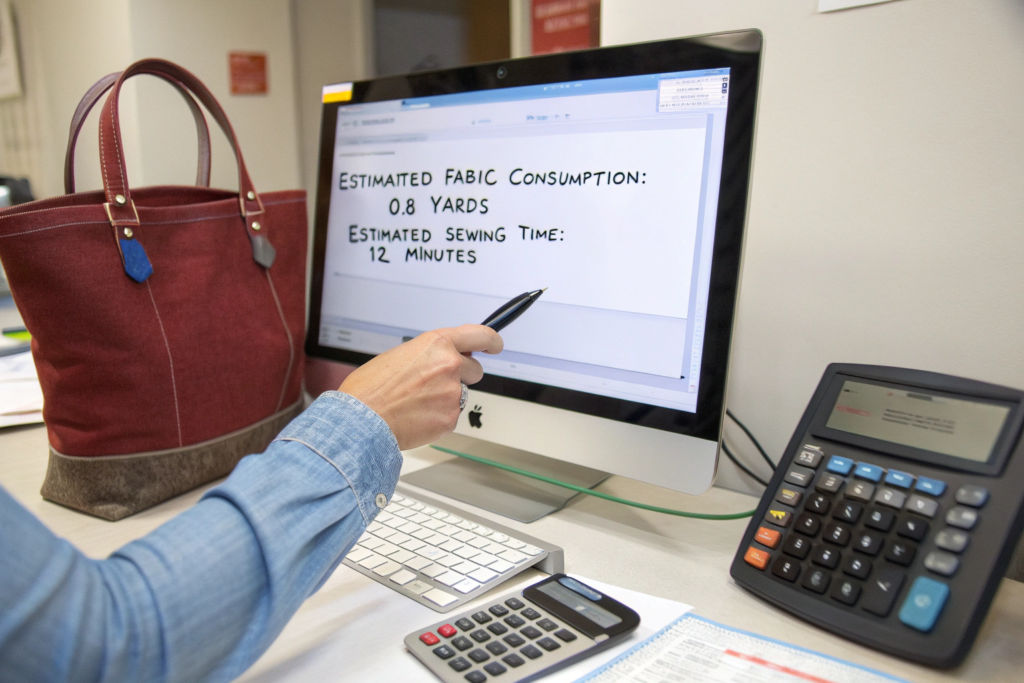
A beautiful design is worthless if it cannot be produced at a price point the market will bear. A freelance designer working in isolation often creates products that are beautiful but impossibly expensive to manufacture. They specify an exotic seam finish that requires a special machine. They design a shape that wastes 30% of the fabric.
An in-house design team is trained in Design for Manufacturing (DFM). They understand the capabilities and limitations of the factory's specific equipment. They know which seam types are fast and which are slow. They know how to nest pattern pieces on a cutting table to maximize fabric yield. This embedded knowledge means that products are engineered for cost-efficiency from the very first sketch. The result is a design that maintains the aesthetic vision while hitting the target FOB price.
How Do Material Choices At The Design Stage Impact Final Cost?
This is a critical conversation we have with clients early in the design phase. A designer might envision a bag made from a specific, expensive Italian leather. We can source it. But the cost might push the retail price out of reach for their customer.
Because we have a deep library of alternative materials in-house, we can offer immediate suggestions.
- "This Italian leather is $8 per square foot. But we have this Korean faux leather that has a nearly identical hand feel and grain for $2 per square foot."
- "This solid brass buckle is $1.80. This zinc alloy buckle with an antique brass finish is $0.45 and looks the same."
The designer can physically touch the alternatives. They can see them against the fabric swatches. They can make an informed trade-off before we cut the first sample. This prevents the heartbreak of falling in love with a sample that costs $25 to produce when the target retail price requires a $12 cost.
This is the advantage of having material sourcing and design sitting next to each other. It is a constant, real-time dialogue about value engineering.
How Does Pattern Making Efficiency Reduce Fabric Waste?
Fabric is often the single largest cost component in a cut-and-sew accessory like a tote bag or a cap. How the pattern pieces are arranged on the fabric determines how much fabric is used.
Our in-house pattern makers use CAD Marker Making Software to optimize this layout. The software calculates the most efficient arrangement of the pieces to minimize the gaps between them.
A freelance designer's pattern might yield 75% fabric utilization. That means 25% of the expensive fabric roll ends up as scrap on the cutting room floor. You pay for that scrap in the cost of the bag.
Our in-house pattern maker, who sits 50 feet from the cutting table, knows the tricks to push that utilization to 88% or higher. They might add a seam in an inconspicuous place to allow for a better fit on the marker. They might adjust the curve of a gusset by a few millimeters to reduce waste.
These are invisible changes that the end consumer will never notice. But they save the brand $0.50 to $1.50 per unit. Over an order of 5,000 bags, that is thousands of dollars in pure profit. This is the hidden financial benefit of integrated design.
How Does In-House Design Protect Brand Intellectual Property?
For brands, their designs are their intellectual property. Sharing those designs with a factory carries an inherent risk. There are stories of factories taking a client's unique design and selling it to another buyer, or even launching their own competing brand.
Sourcing from a factory with a legitimate in-house design team offers a higher level of IP protection. A factory that invests in its own creative talent is in the business of providing a service, not stealing ideas. The design team operates under strict confidentiality protocols. All client sketches, CAD files, and samples are treated as proprietary. Furthermore, because the factory's value proposition is its integrated design and production service, it has a strong reputational incentive to protect its clients' exclusivity.
What Is The Difference Between A Factory And A Trading Company For IP?
This is a crucial distinction. A Trading Company does not own a factory. They are a middleman. They take your design and shop it around to various small workshops to get the best price.
In this process, your design is exposed to multiple parties. The trading company has limited control over what those workshops do with your design. The risk of a leak is high.
A Factory with In-House Design, like AceAccessory, controls the entire process. The design files stay on our secure server. The sample is made in our sample room. The production is done on our floor. The chain of custody is short and controlled.
We also have formal Non-Disclosure Agreements (NDAs) and Exclusivity Agreements that we sign with our clients. These are not just pieces of paper to us. They are the foundation of our business. Our reputation depends on our ability to keep our clients' designs confidential. One leak would destroy the trust we have built over years.
How Does Original Design Development (ODM) Work?
Some of our clients do not come to us with a design. They come to us with a brand identity and a target market. They say, "We need a new collection of Fall hats. What are the trends? What can you create for us?"
This is Original Design Manufacturing (ODM) . Our in-house design team creates a collection of original designs specifically for that client. The client selects the styles they want and places an order.
The key is that the IP for those designs is transferred to the client. They own the exclusive rights to those styles for their market. We do not sell those exact designs to another client in the same region.
This ODM model is incredibly powerful for brands that want to expand their product range but lack the internal design bandwidth. They leverage our creative team as an extension of their own brand. They get a curated, on-trend collection without the overhead of hiring a full-time accessory designer.
Conclusion
Sourcing from a factory with an in-house design team transforms the manufacturing relationship. It shifts from a simple transactional exchange—"Here is a tech pack, give me a price"—to a true creative partnership. The factory becomes an invested stakeholder in the success of the product.
The benefits are clear and measurable: faster sampling, more cost-effective designs, and stronger protection of your brand's intellectual property. You gain access to a team of professionals who can translate a rough idea into a production-ready product, bridging the gap between inspiration and inventory.
At Shanghai Fumao, our design team is one of our proudest assets. They are the bridge between our clients' visions and our factory floor. They are problem-solvers, trend-spotters, and value-engineers. They are a key reason why our clients stay with us year after year.
If you are looking for a manufacturing partner who can do more than just sew, who can help you develop and refine your product ideas, we invite you to connect with us. Let us show you how our integrated design and production model can benefit your brand. For a consultation with our design team and to discuss your next project, please contact our Business Director Elaine directly at elaine@fumaoclothing.com. Let us design and build something exceptional together.