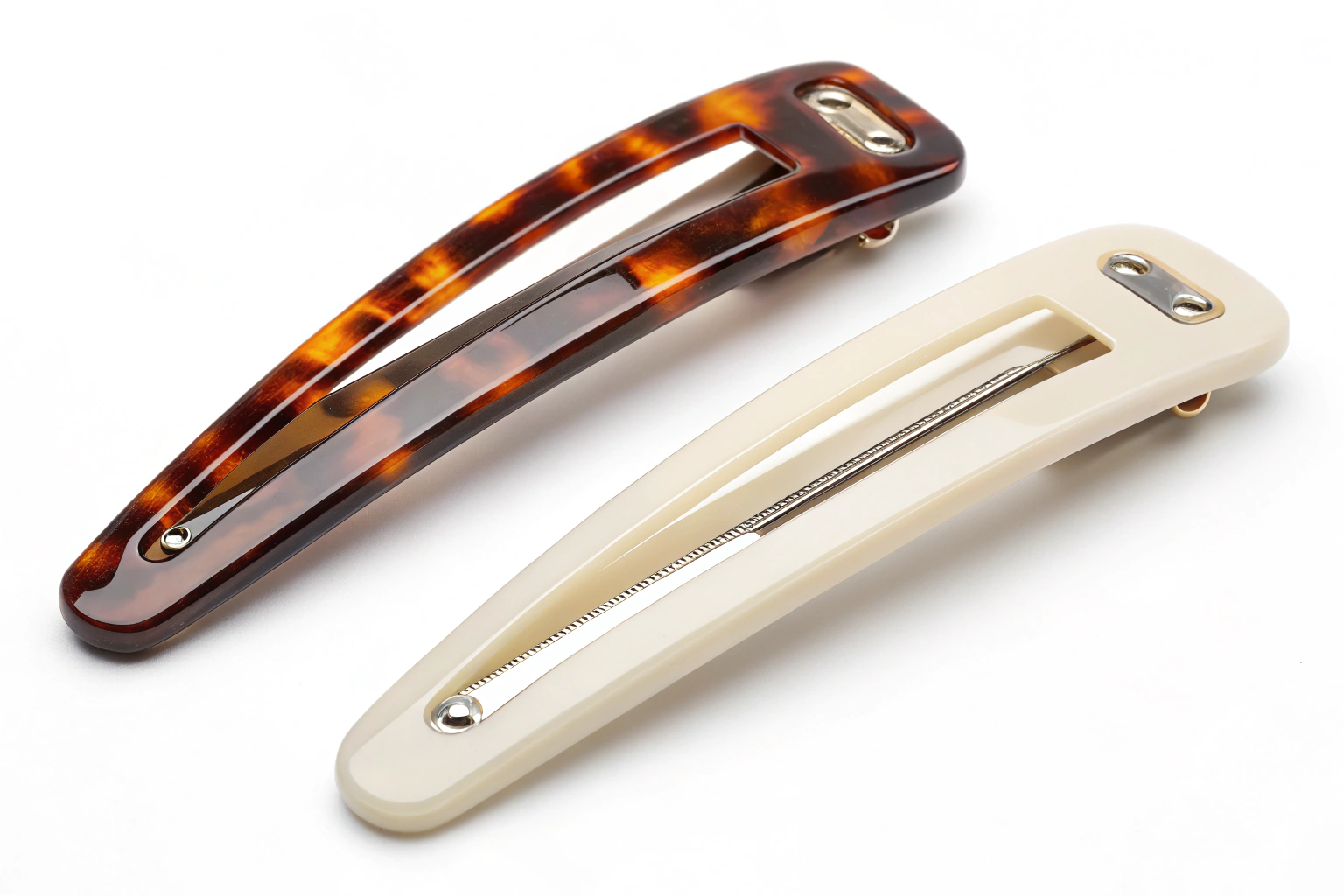
For anyone in the fashion accessory business, choosing the right materials is crucial for product differentiation and customer satisfaction. When it comes to hair clips, the debate between acetate and plastic is central to this decision. While basic plastic clips serve a purpose, acetate—often called "the resin of choice" for premium accessories—offers a compelling array of benefits. For retailers, importers, and brands targeting a discerning market, understanding these advantages is key to developing a successful product line.
The primary advantages of acetate hair clips over plastic are a superior, high-end aesthetic and feel, significantly greater comfort and durability in daily use, and more favorable environmental and safety credentials. Acetate transforms a simple hair accessory from a utilitarian object into a desirable fashion item, justifying a higher price point and building brand prestige. This material, derived from natural sources, brings tangible benefits that conventional petroleum-based plastics often cannot match.
For businesses, this translates to a product that can command better margins, earn customer loyalty through quality, and align with growing market demands for sustainable and well-crafted goods. Let's break down the specific advantages that make acetate the preferred choice for premium hair accessories.
Why Does Acetate Offer a Superior Aesthetic and Feel?
The first and most immediate advantage of acetate is its unmatched visual and tactile quality. While plastic often looks and feels cheap, acetate is engineered to convey luxury. This difference is fundamental to creating a product that feels special from the moment it is picked up.
Acetate has a distinct, warm density and a polished, luminous finish that plastic cannot replicate. It is known for its excellent clarity, depth of color, and ability to mimic natural materials like tortoiseshell, horn, and marble with stunning realism. This allows for sophisticated, high-fashion designs that appeal to style-conscious consumers. Furthermore, the surface of quality acetate is smooth and polished to a high gloss, free from the mold lines and rough edges that often plague plastic clips. This meticulous finish not only looks expensive but also feels pleasant to the touch, a crucial detail for personal accessories.
How Does the Material Enhance Design Versatility?
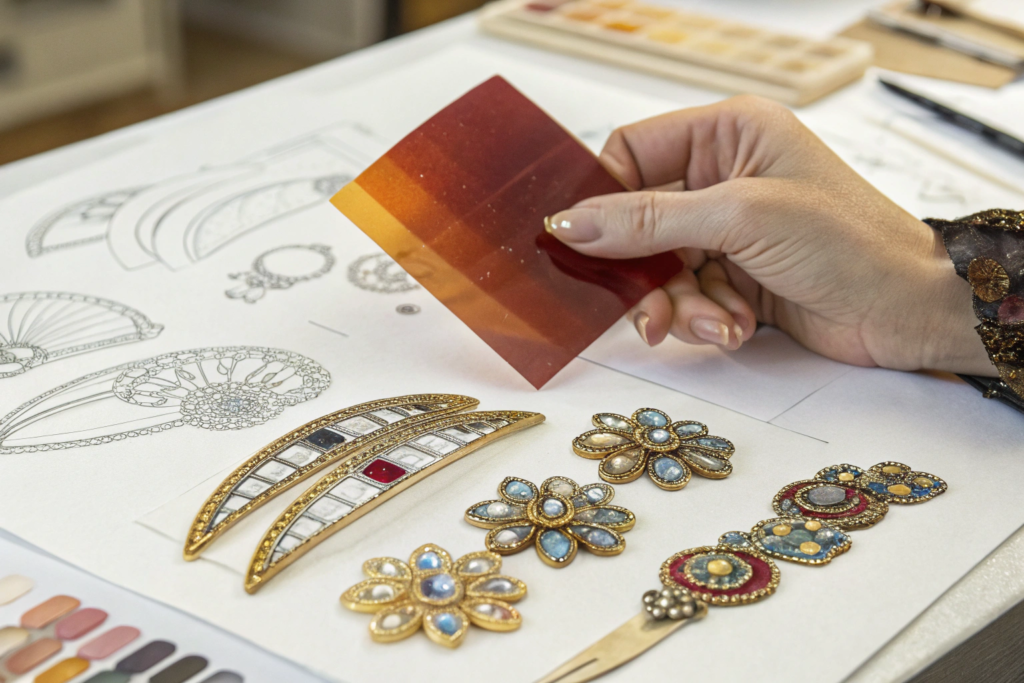
From a manufacturing and design perspective, acetate is exceptionally versatile. It can be precisely injection molded or milled from sheets, allowing for intricate patterns, layered color effects, and complex geometries that are difficult to achieve with standard plastics. This capability enables brands to offer unique, design-driven pieces. More importantly, acetate possesses a unique property where minor surface scratches can often be buffed out simply through wear, helping the clip maintain its like-new appearance over time, unlike plastic which tends to become permanently scuffed and dull. This inherent durability of the finish protects the investment in the product's design.
Why is the "Hand Feel" a Critical Differentiator?
The tactile experience, or "hand feel," is a subtle but powerful selling point. Acetate has a satisfying heft and solidity that feels substantial and valuable. It is a low-thermoconductive material, so it doesn't feel uncomfortably cold against the skin like metal can. When consumers pick up an acetate clip, its weight, smoothness, and temperature all communicate quality before it's even worn. This sensory advantage is a direct result of the material's composition and the advanced polishing processes used in manufacturing, processes that are a standard part of the craftsmanship at facilities focused on quality, like our own.
How Does Acetate Improve Comfort and Functional Durability?
Beyond looks, acetate excels in the practical, everyday performance that determines whether a hair clip becomes a customer's favorite or ends up discarded. Its material properties directly address common pain points associated with plastic clips, such as breakage and discomfort.
Acetate is renowned for its optimal balance of strength and flexibility. It has good structural integrity and resists the brittle cracking and snapping that is typical of low-quality plastics when dropped or over-flexed. This results in a clip that is durable and long-lasting, with a functional lifespan that far exceeds that of common plastic clips. For a business, this means fewer customer complaints about breakage and a stronger reputation for quality and reliability.
What Makes Acetate More Comfortable to Wear?
The comfort factor is where acetate truly outshines plastic. High-quality acetate clips are heavily polished on all edges and surfaces. This eliminates sharp seams and burrs that can snag hair, pull strands, or irritate the scalp, ensuring a smooth, snag-free application and removal. This attention to detail in finishing is a hallmark of premium manufacturing and is a key point of difference that enhances the daily user experience. Furthermore, because it is less prone to static buildup than some plastics, acetate is less likely to cause flyaway hair, a small but appreciated benefit for the end-user.
How Does Durability Impact Brand Perception?
Functional durability directly impacts brand perception and customer loyalty. A clip that withstands daily use without breaking, fading, or losing its shape reinforces the perception of a brand that stands behind its products. Acetate's resistance to warping and its colorfastness—meaning it resists fading from sunlight or cosmetics—ensure the product looks new for longer. This longevity turns a simple accessory into a reliable staple in a customer's collection, encouraging repeat purchases and positive word-of-mouth. For a manufacturer, building this kind of durable product requires precise engineering of both the acetate formulation and the metal spring mechanism inside, a synergy that defines professional accessory manufacturing.
What are the Environmental and Safety Advantages?
In today's market, the environmental and safety profile of a product is no longer a niche concern but a major purchasing driver. Acetate presents clear, marketable advantages over conventional petroleum-based plastics in this arena.
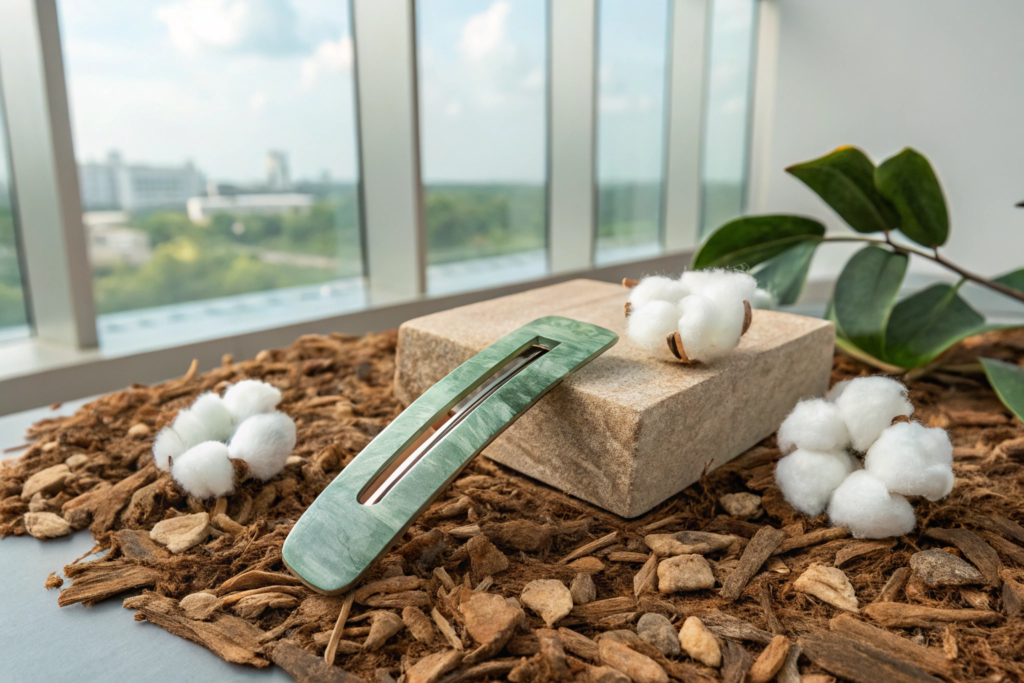
A core advantage is that acetate is derived from natural, renewable sources. It is produced from wood pulp and cotton linters, making it a biobased material. Many acetate formulations are also biodegradable under specific industrial composting conditions, offering a more sustainable end-of-life scenario compared to conventional plastics that persist in the environment for centuries. For brands and retailers, this aligns perfectly with the growing consumer demand for eco-conscious products and can be a powerful part of a brand's sustainability story.
Why is Acetate Considered a Safer Material?
From a safety and compliance standpoint, acetate is generally considered a hypoallergenic and skin-friendly material. It does not contain common plasticizers like phthalates or bisphenol A (BPA), which are raising increasing health concerns and regulatory scrutiny. High-grade acetate used in accessories is also known for its chemical stability and resistance to degradation from skin oils and everyday cosmetics. This stability means the material is less likely to break down and leach unwanted substances, and the colors are less prone to fading or transferring, ensuring the product remains safe and looks new for longer. This is a critical consideration for brands selling in markets with strict consumer safety regulations.
How Can This Support a Brand's Market Positioning?
Communicating these advantages allows a brand to position itself thoughtfully in the market. By choosing acetate, a brand can authentically appeal to consumers who prioritize natural ingredients, safety, and environmental responsibility. This material choice becomes a key point in marketing copy, highlighting the clip as a "thoughtfully crafted," "skin-safe," or "eco-preferable" alternative to generic plastic. This narrative is increasingly important for connecting with audiences on platforms like Instagram and TikTok, where brand values and product origins are often discussed.
Is Acetate a More Eco-Conscious Choice?
In a world where consumers are increasingly concerned about plastic waste, what is the environmental story of acetate? While it is a type of polymer, its origin story is very different from that of traditional plastics.
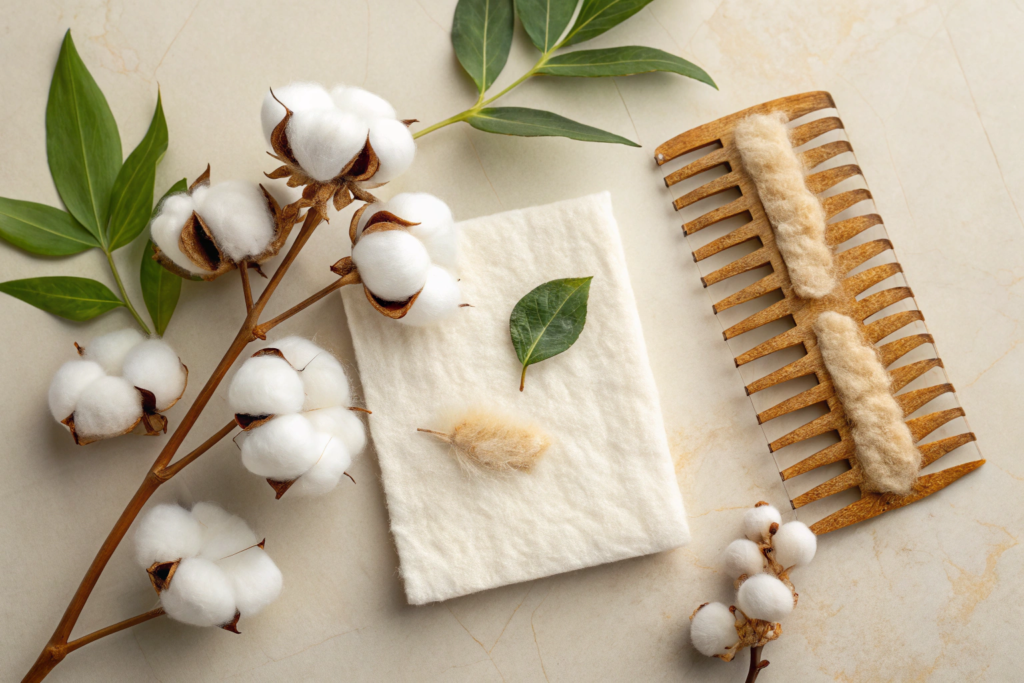
Is acetate just another plastic? No. Standard plastics are synthetic polymers made from petroleum, a fossil fuel. Cellulose acetate, on the other hand, is a bioplastic. Its primary raw material, cellulose, is sourced from renewable resources—namely, cotton linters (the fine, silky fibers that stick to the seeds of the cotton plant after ginning) and wood pulp.
Doesn't this plant-based origin make it a more thoughtful choice? For brands and consumers who are looking to make more sustainable choices, acetate offers a compelling alternative to fossil-fuel-based plastics. This is a powerful part of a modern brand's story.
Is Acetate Biodegradable?
What happens to it at the end of its life? Under the right conditions (in a professionally managed composting environment), cellulose acetate is considered biodegradable. While the rate of degradation can vary, it will break down significantly faster than petroleum-based plastics, which can persist in the environment for hundreds of years. This "end-of-life" advantage is a crucial part of its sustainability profile.
How Does This Align with Modern Consumer Values?
Aren't today's customers looking for more than just a good product? They are looking for brands that share their values. By choosing a plant-based, more eco-conscious material like acetate, you are signaling to your customers that you have made a thoughtful choice. You are offering them a product that is not only beautiful and durable but also better for the planet than the cheap plastic alternatives. This is a powerful way to build brand loyalty with the modern, conscious consumer.
Conclusion
The choice between acetate and plastic for hair clips is ultimately a decision about brand vision and target market. Acetate hair clips offer decisive advantages in premium aesthetics, daily comfort and durability, and environmental responsibility. These benefits allow brands to create accessories that are not merely functional but are cherished, durable fashion items that justify a higher price point and foster customer loyalty.
For businesses looking to move beyond competing on price alone and instead build a reputation for quality and thoughtful design, acetate is the material of choice. It enables the creation of products that tell a better story—one of natural origins, skilled craftsmanship, and enduring style.
If you are looking to develop a sophisticated line of hair accessories that leverage the superior qualities of acetate, we have the expertise and manufacturing excellence to bring your vision to life. Contact our Business Director Elaine at elaine@fumaoclothing.com to discuss how we can craft your next collection with the quality and detail your brand deserves.