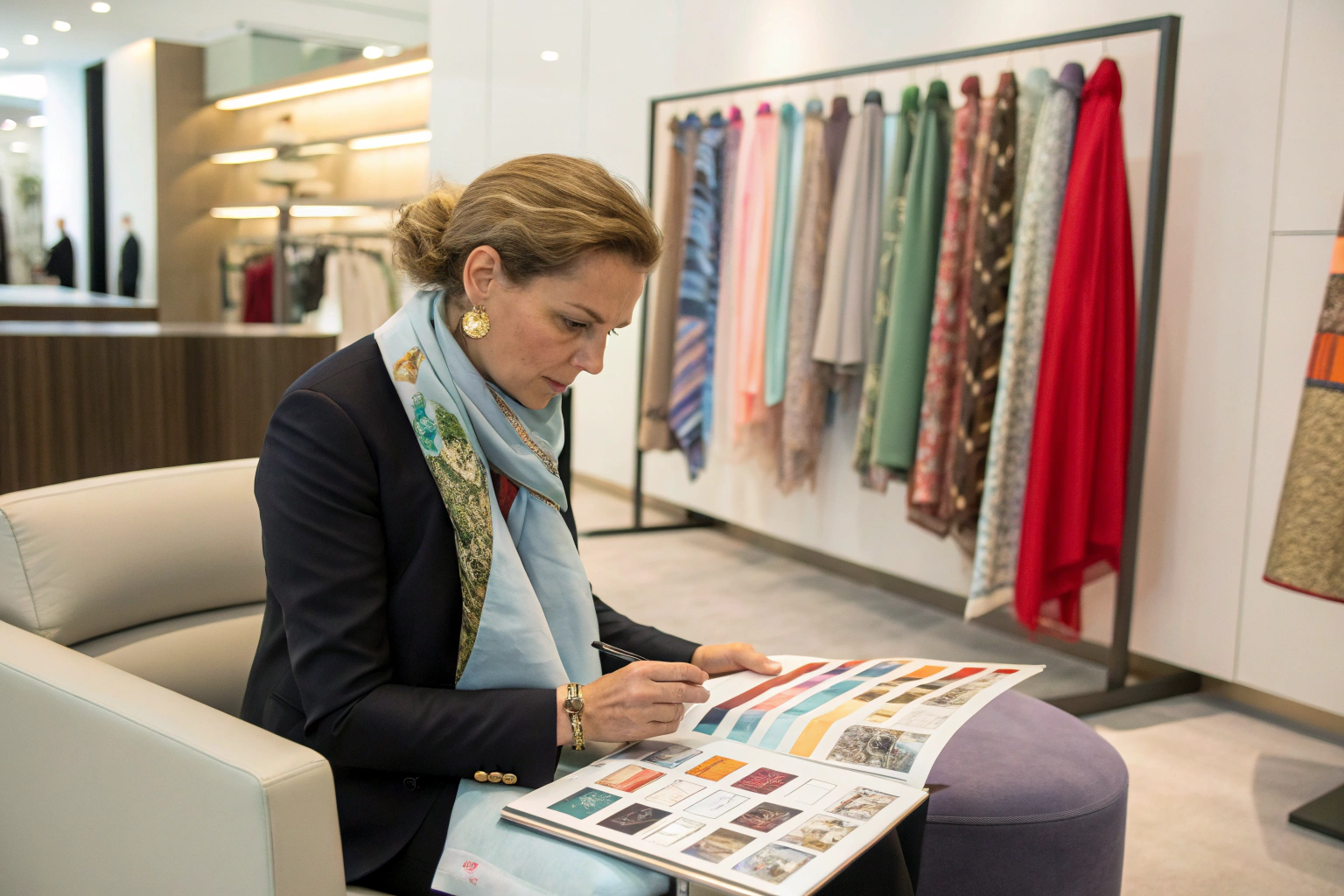
A buyer from a Parisian luxury travel brand sat in my showroom last September with a mood board that told a very clear story. Her customers, affluent travelers who fly business class and stay at five-star resorts, were asking for scarves that did more than look beautiful in a flat lay photograph. They wanted scarves that solved real travel problems. A scarf that could transition from the chilled air of an airplane cabin to the humid heat of a tropical arrivals hall without looking crushed. A scarf that could double as a wrap for an unexpected temple visit or a conservative dinner. A scarf that packed down to nothing but emerged wrinkle-free. She told me her customers were tired of buying beautiful scarves that spent the entire trip folded in a suitcase because they were too delicate, too bulky, or too impractical for actual travel. That conversation set the direction for our luxury travel scarf development for the 2026 season.
The 2026 scarf trends for luxury travel accessories are defined by three core themes. Multi-functional convertible scarves that transform from a neck scarf to a shawl to a head covering to a sarong, designed for the traveler who packs light and needs versatility. Wrinkle-resistant performance fabrics that combine the elegance of natural fibers like silk and cashmere with technical treatments that allow the scarf to be folded tightly for hours and emerge looking fresh, without the telltale creases of a suitcase-packed accessory. And packable, lightweight oversized wraps that weigh under 150 grams, fold into their own integrated pouch, and provide warmth on a chilly flight, modesty at a religious site, and elegance at a Michelin-starred restaurant. Across all three trends, a unifying aesthetic of quiet luxury prevails. Subdued, sophisticated color palettes. Abstract prints inspired by aerial landscapes and topographical maps. Fabrics that feel extraordinary against the skin. And subtle, brand-authentic details rather than loud logos.
The luxury travel accessories market is growing rapidly as global travel rebounds and evolves. Today’s luxury traveler is more discerning, more minimalist in their packing philosophy, and more demanding of functional performance from their fashion purchases. They do not want a scarf that is merely decorative. They want a travel tool that is also a beautiful object. At AceAccessory, we have developed a range of fabrics, finishes, and construction techniques specifically for the luxury travel scarf market. Our European and North American brand clients are already placing orders for their 2026 travel collections. Let me walk you through the three defining trends in detail.
Why Are Multi-Functional Convertible Scarves Trending for Travel
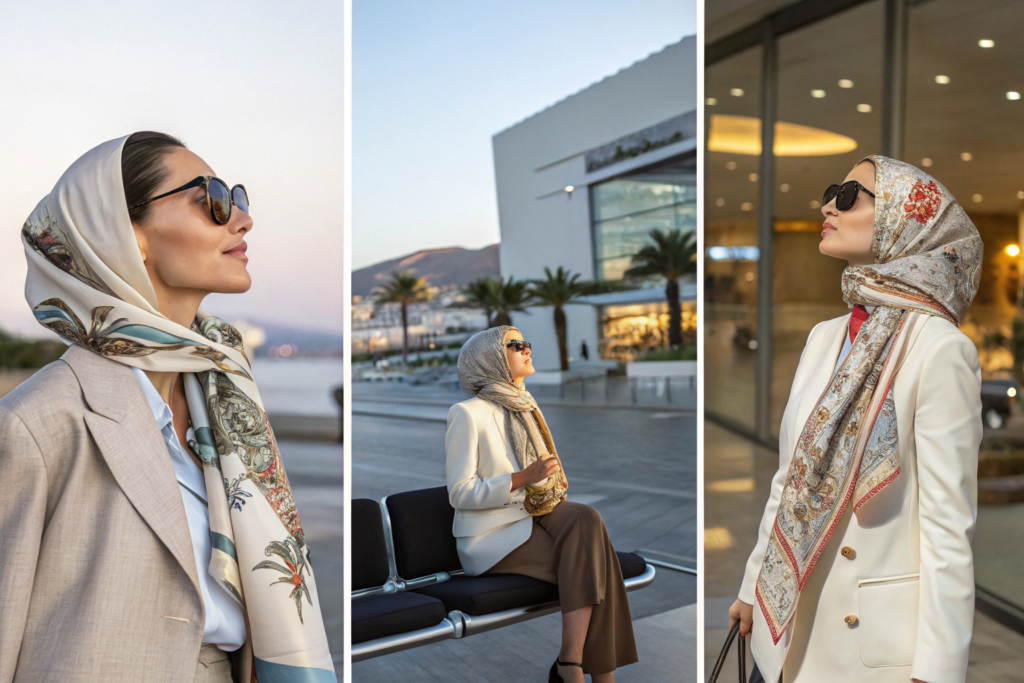
The multi-functional convertible scarf is not a new idea, but the 2026 iteration is far more sophisticated than the gimmicky travel scarves of the past. Older versions often had obvious zippers, snaps, or buttons that compromised the elegance of the scarf and limited how it could be styled. The 2026 convertible scarf achieves its versatility through intelligent design, fabric choice, and sizing, not through visible hardware. It is a scarf that does not advertise its multiple functions. It simply performs them. The key is that the scarf is generously sized, typically 90 by 90 centimeters or 100 by 180 centimeters, and made from a fabric with enough body to hold a shape when draped but enough fluidity to tie and knot elegantly.
Multi-functional convertible scarves are trending for luxury travel in 2026 because they directly address the modern traveler’s demand for packing efficiency and versatility. A single convertible scarf replaces three or four separate accessories in a travel wardrobe. It is a neck scarf for the flight, a shoulder wrap for air-conditioned spaces, a head covering for cultural respect at religious sites, a sarong for an impromptu beach visit, and an elegant shawl for evening dining. This versatility reduces suitcase volume and weight, which is particularly valuable for travelers on airlines with strict carry-on limits. The luxury element is preserved because the scarf is made from premium materials like silk-cotton blends, modal-cashmere blends, or ultra-fine merino wool, and the design is sophisticated enough to look appropriate in any of its configurations. The convertible scarf is not marketed as a travel gadget. It is marketed as a beautifully designed accessory that happens to be extraordinarily versatile.
The design of a successful convertible scarf requires careful attention to the edges, the weight, and the drape. The edges must be finished in a way that looks elegant whether the scarf is tied around the neck, draped over the head, or wrapped around the body. A hand-rolled edge is the gold standard. The weight must be light enough to not feel bulky when worn around the neck, but substantial enough to provide coverage and warmth when worn as a wrap. The optimal fabric weight is typically between 60 and 100 grams per square meter. Let me explore the specific design considerations that make a convertible scarf work.
What Design Features Allow a Scarf to Serve Multiple Travel Functions?
The design of a multi-functional travel scarf starts with the shape and size. The most versatile shape for 2026 is the oversized square, typically 90 by 90 centimeters, or the elongated rectangle, typically 100 by 180 centimeters. The square format is ideal for folding into a triangle and wearing as a headscarf or a neck scarf. It can also be knotted at the hips as a sarong or draped over the shoulders as a shrug. The rectangle format, sometimes called a travel wrap, is ideal for wearing as a long scarf, a shawl, or a blanket on a flight. It can be belted at the waist to create a lightweight cardigan effect. The key design feature is the absence of any fixed hardware. Snaps, buttons, and zippers limit the configurations and can be uncomfortable against the skin. The convertible scarf of 2026 relies entirely on tying, knotting, and draping techniques. To support this, the scarf must have a fluid, responsive drape. Fabrics with a high twist yarn, like crepe de chine silk or high-twist modal, are excellent because they have a slight springiness that holds a shape without being stiff. The edges must be finished with a technique that looks intentional from all angles. Hand-rolled edges are the most luxurious option. The tiny, tightly rolled hem is visually appealing whether it is framing the face as a headscarf or hanging at the hips as a sarong. Some convertible scarves incorporate a subtle, hidden pocket in one corner. This pocket is large enough to hold a credit card and a room key, providing a discreet secure storage option for travel. The pocket is integrated into the hem and is virtually invisible when the scarf is worn. This functional detail is highly valued by travelers and is a strong selling point at retail.
How Does Fabric Choice Impact a Scarfs Versatility?
The fabric is the foundation of versatility. A convertible scarf must perform in multiple climates and multiple use cases. The ideal fabric balances several competing properties. It must have enough body to hold its shape when draped as a shawl, but enough softness to feel comfortable tied closely around the neck. It must have enough warmth for an air-conditioned airplane cabin, but enough breathability for a warm outdoor setting. It must be wrinkle-resistant enough to emerge from a tightly packed suitcase looking presentable. Silk remains the gold standard for luxury scarves, but pure silk has limitations for travel. It wrinkles. It is delicate. It requires careful handling. The 2026 solution is silk blends. A 70 percent silk, 30 percent cotton blend combines the luster and softness of silk with the breathability and slightly more relaxed attitude of cotton. It is less prone to wrinkling and easier to care for. A silk-modal blend, typically 50/50, offers exceptional softness, a beautiful drape, and significantly better wrinkle resistance than pure silk. Modal is a semi-synthetic fiber made from beechwood pulp, and it has a natural affinity for dyes that ensures the print vibrancy is not compromised. For cooler climates and winter travel, a cashmere-modal blend or a superfine merino wool in a lightweight gauge, around 150 GSM or less, provides warmth without bulk. These wool and cashmere blends are naturally wrinkle-resistant due to the crimp in the fiber, and they are odor-resistant, a practical benefit for multi-day travel. The 2026 trend also sees the emergence of performance silk, a silk that has been treated with a nanotechnology-based finish that enhances wrinkle resistance, stain resistance, and even UV protection without compromising the hand feel of the silk. This treatment is invisible and permanent, surviving multiple washes. Performance silk is a premium option that appeals to the luxury traveler who wants the beauty of silk with the practicality of a performance fabric.
What Performance Fabrics Are Defining Luxury Travel Scarves in 2026
The luxury traveler of 2026 has a different relationship with fabric than the luxury consumer of a decade ago. They have been educated by the athleisure revolution. They understand technical fabrics. They know what moisture-wicking means. They expect their luxury purchases to perform, not just to look beautiful. This expectation has driven a wave of innovation in textile technology specifically for the luxury travel accessories market. The fabrics that are defining the 2026 season are hybrids. They combine the natural beauty, the luster, the softness, and the prestige of traditional luxury fibers with the performance characteristics of technical textiles. The result is a scarf that feels like a million dollars and behaves like a travel pro.
The performance fabrics defining luxury travel scarves in 2026 are led by performance silk, a natural silk that has been treated with a molecular-level finish that imparts wrinkle resistance, stain resistance, and moisture management without altering the silk’s legendary hand feel. Wrinkle-resistant modal blends are the second major category, combining the eco-friendly softness of modal with the resilience of a small percentage of elastane or a specialized weave structure that resists creasing. Temperature-regulating fabrics, incorporating phase-change materials originally developed for NASA, absorb and release heat to maintain a comfortable skin temperature, making the scarf comfortable in both an over-air-conditioned lounge and a sunny outdoor market. Anti-microbial and odor-resistant finishes, derived from natural sources like silver ions or chitosan from shellfish, keep the scarf fresh during multi-day travel without washing. UPF 50+ fabrics provide genuine sun protection, which is a valuable feature for scarves worn as head coverings or shoulder wraps in sunny destinations. These performance features are not marketed as sportswear. They are presented as quiet, sophisticated benefits that enhance the travel experience.
The integration of performance features into luxury scarves requires a delicate touch. The hand feel, the drape, and the aesthetic must remain uncompromised. A scarf that feels like a gym shirt, no matter how wrinkle-resistant, will not sell to a luxury customer. Let me explore the two most impactful performance innovations.
How Does Performance Silk Resist Wrinkles During Packing?
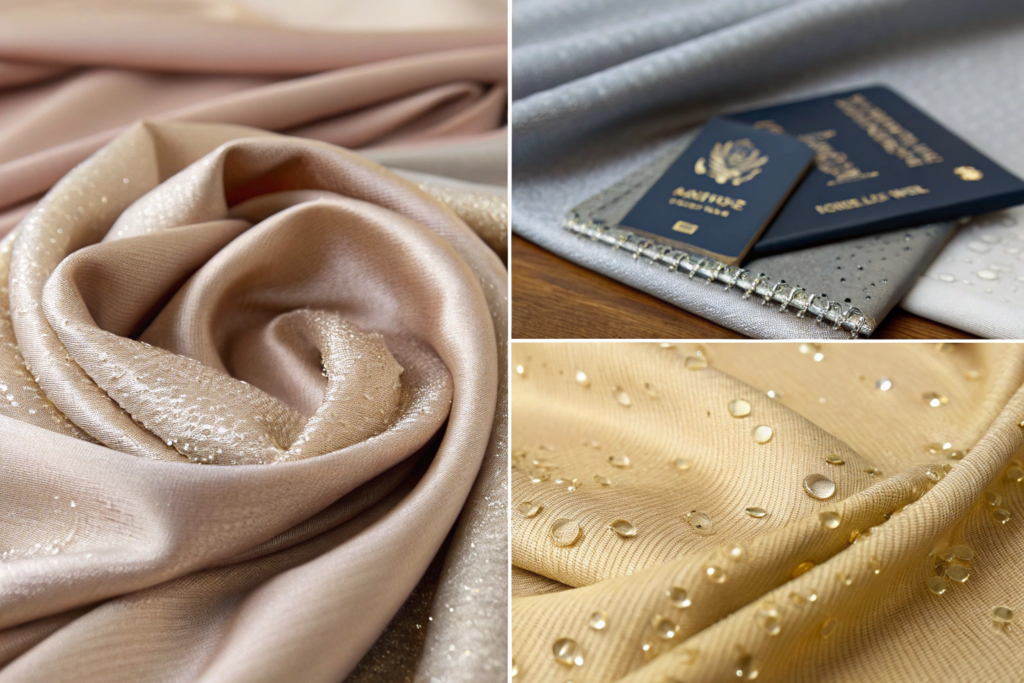
Performance silk is the result of a finishing treatment that operates at the molecular level. Traditional silk is a protein fiber with a natural tendency to form hydrogen bonds in new positions when it is bent or folded. These hydrogen bonds are what create wrinkles. When a silk scarf is folded and compressed in a suitcase, the fibers are forced into a bent configuration. Over time, hydrogen bonds form between the bent protein molecules, and the wrinkles become set. Performance silk interrupts this process. The treatment, typically a formaldehyde-free, silicone-free polymer dispersion, coats the individual silk fibers with an ultra-thin, flexible, cross-linked network. This network acts as a molecular spring. When the fiber is bent, the polymer network stores the energy and gently returns the fiber to its original position when the pressure is released. The hydrogen bonds that cause wrinkles are prevented from forming because the polymer coating holds the fiber molecules in place. The treatment is applied at the final finishing stage, after dyeing and printing. The fabric is padded through a solution of the treatment chemical, dried, and cured at a controlled temperature. The treatment is permanent for the life of the scarf, typically surviving 30 or more home launderings or dry cleanings. The critical requirement for luxury acceptability is that the treatment must not change the hand feel of the silk. The polymer coating must be so thin, measured in nanometers, that it is imperceptible to the touch. We work with a Swiss textile chemical company that specializes in luxury-appropriate performance finishes. Their treatment has been tested and approved by several of the major European luxury maisons. The performance silk scarf can be folded tightly, packed in a suitcase for a week, and removed looking fresh, with minimal creasing that falls out within minutes of being worn. This performance feature is a powerful selling point for the luxury traveler who wants to arrive looking polished without the hassle of steaming or ironing a scarf in a hotel room.
What Are Temperature-Regulating Fibers and How Do They Work?
Temperature-regulating fabrics contain phase-change materials, or PCMs, that actively manage heat. The technology was originally developed by NASA for use in spacesuits, where astronauts needed protection from extreme temperature swings. The PCMs are microscopic capsules, typically 5 to 10 microns in diameter, that are embedded in the fabric fibers or applied as a coating. Inside each capsule is a substance, usually a paraffin wax, that melts and solidifies at specific temperatures. When the skin temperature rises, the wax inside the capsules melts, absorbing excess heat and storing it as latent heat. The wearer feels a cooling sensation because heat is being pulled away from the body. When the skin temperature drops, the wax solidifies, releasing the stored heat back to the body. The wearer feels a warming sensation. The phase-change temperature can be engineered to activate at specific thresholds. For a travel scarf designed to bridge air-conditioned and outdoor environments, the activation temperature is typically set at around 28 to 30 degrees Celsius, slightly above normal skin temperature, so the cooling effect activates when the wearer enters a warm environment. For a scarf designed for cold-weather travel, the activation temperature is set lower. The PCM capsules are embedded in the fiber during the spinning process for synthetic fibers like polyester and modal. For natural fibers like silk and wool, the PCM capsules are applied as a micro-encapsulated finish. The capsules are bonded to the fiber surface using a binder. The finish must be durable enough to survive washing and dry cleaning. The hand feel of a PCM-treated scarf is indistinguishable from an untreated scarf. The capsules are too small to feel, and they are flexible. The temperature-regulating effect is subtle. It is not like turning on an air conditioner. It is a gentle, physiological comfort that the wearer may not consciously notice but will appreciate over hours of wear in changing environments. This technology is a genuine differentiator in the luxury travel market, and it commands a premium retail price.
How Are Oversized Wraps Designed for the Luxury Traveler
The oversized wrap is the hero product of the luxury travel scarf category for 2026. It is not a traditional scarf in the sense of something tied around the neck. It is a generous piece of fabric, typically 100 by 200 centimeters or larger, that functions as a shawl, a blanket, a cover-up, and a style statement. The defining characteristic of the 2026 oversized wrap is its weight, or rather, its lack of weight. These wraps are designed to be ultra-lightweight, under 150 grams for a large piece, so they add virtually nothing to the traveler’s luggage allowance. They pack down into their own integrated pouch, often no larger than a small toiletry bag. They are the ultimate portable luxury.
The oversized wrap is designed for the luxury traveler through a combination of ultra-lightweight fabric engineering, self-contained packability, and travel-specific functional details. The fabric is typically a gauze-weight cashmere, a whisper-light modal-silk blend, or an ultra-fine micromodal knit, all weighing under 100 grams per square meter. The wrap is sized generously enough to function as an in-flight blanket, a beach cover-up, an evening shawl, or a modest cover for visiting religious or conservative sites. It folds or rolls into an integrated pouch that is sewn into the wrap itself, often at one corner or along one edge, so it can never be lost. The pouch is designed to be as elegant as the wrap, not an afterthought. Some pouches have a wristlet strap, so the packed wrap can be carried independently. The aesthetic is quiet luxury. Solid colors or subtle, tone-on-tone patterns. No prominent logos. The luxury is in the fabric, the hand feel, and the functionality.
The oversized wrap trend reflects a broader shift in luxury travel towards minimalism and intentionality. The traveler who carries a single, exceptional wrap instead of three separate accessories is making a statement about their values. They value quality over quantity. They value experiences over possessions. They value design that simplifies their life. The oversized wrap is the physical embodiment of that philosophy. Let me explain the specific design and packing features.
What Is the Ideal Size and Weight for a Packable Travel Wrap?
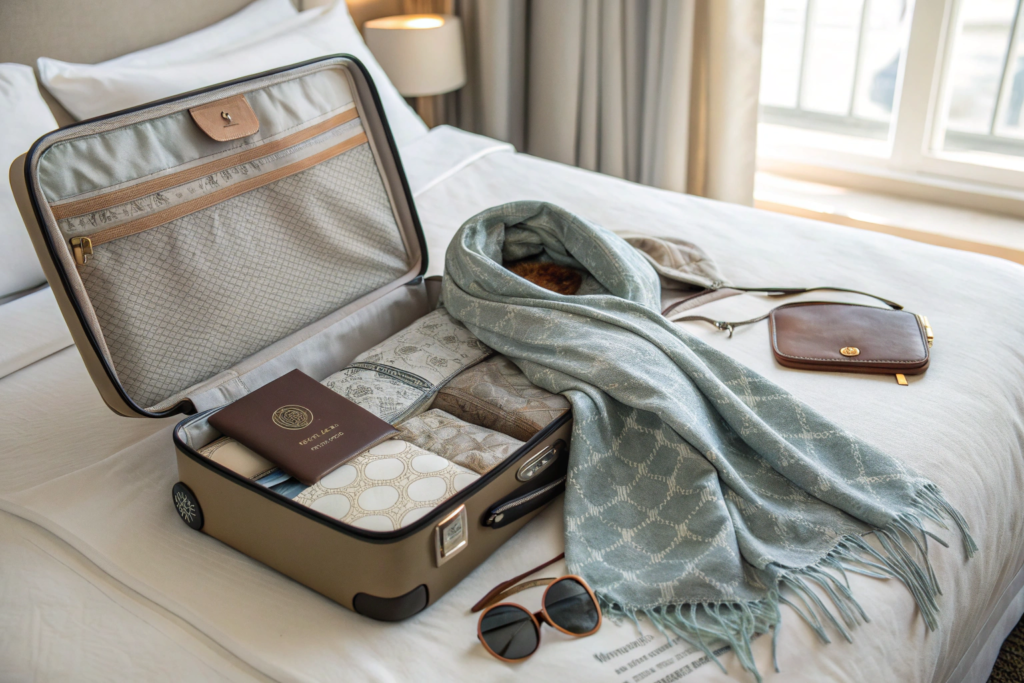
The ideal dimensions for a packable travel wrap balance coverage, versatility, and packability. We have found through extensive sampling and client feedback that the optimal size is 100 centimeters wide by 200 centimeters long. This provides a generous rectangle that can be worn in multiple ways. Draped lengthwise over the shoulders, it covers the arms and back and falls to the hips, providing warmth on a flight. Folded in half lengthwise, it can be worn as a long, elegant scarf. Wrapped around the waist and tied, it becomes a sarong. Draped over the head and shoulders, it provides modest coverage. A 100 by 200 centimeter wrap in a gauze-weight fabric can weigh as little as 120 to 140 grams. To put that in perspective, it is about the weight of a smartphone. The traveler barely notices it in their bag. The weight is achieved through the combination of a very fine yarn and an open, breathable weave or knit structure. For cashmere wraps, we use a 2/60 or 2/80 yarn count in a loose plain weave, producing a fabric that is translucent when held up to light. The fabric is delicate, but cashmere is surprisingly strong for its weight, and with proper care, a gauze cashmere wrap will last for years. For modal-silk blends, we use a fine jersey knit or a loose satin weave that drapes like liquid. The fabric weight is typically 80 to 100 GSM. For summer-weight wraps, a micromodal or Tencel fabric in an open, crepe-like weave provides breathability and a cool touch. The weight is 60 to 80 GSM. The packability is demonstrated through the compression ratio. A 100 by 200 centimeter wrap should compress into a pouch no larger than 15 by 10 centimeters, about the size of a small paperback book. This is the benchmark that our clients use to evaluate a packable wrap. If it cannot meet this compression ratio, it is not truly packable.
How Do You Integrate a Pouch Into a Luxury Scarf Design?
The integrated pouch is a design feature that separates the 2026 luxury travel scarf from a simple piece of fabric. The pouch is the storage solution, and it must be as thoughtfully designed as the scarf itself. The most common approach is a corner pouch. A small, flat pouch is sewn into one corner of the scarf, aligned with the hem. When the scarf is worn, the pouch hangs invisibly at the corner, adding no noticeable weight or bulk. To pack the scarf, the wearer turns the pouch inside out, effectively inverting it, and then stuffs the scarf into the pouch. The pouch is sized so that the scarf fits comfortably without requiring excessive compression. The pouch closure is typically a simple fold-over flap with a hidden magnetic snap, or an elegant drawstring with a small leather cord lock. The pouch is made from the same fabric as the scarf, so it is a completely integrated, seamless design. An alternative approach is an edge pouch. The pouch is sewn along one of the long edges of the scarf, like a pocket. This design works well for wraps that are intended to be rolled rather than stuffed. The scarf is rolled tightly from the opposite edge towards the pouch, and then the pouch is inverted over the rolled bundle. This rolling method minimizes wrinkles in wrinkle-prone fabrics. A third approach is a detached pouch that coordinates with the scarf but is not sewn to it. The pouch is made from the same fabric and is included with the scarf. This is less elegant from a design perspective because the pouch can be lost, but it allows the scarf to be worn without any pouch attached, which some luxury brands prefer for a cleaner aesthetic. The pouch itself is an opportunity for subtle branding. A small, tone-on-tone embroidered logo, a debossed leather tab, or a subtle jacquard pattern on the pouch fabric provides brand recognition without overt branding on the scarf itself. The pouch can also include a small care instruction label, which is useful for a product that will be used during travel and may need spot cleaning.
Conclusion
The 2026 scarf trends for luxury travel accessories reflect a fundamental shift in what the luxury traveler values. They value versatility that simplifies their packing and reduces their load without compromising their style. The multi-functional convertible scarf, free of visible hardware and made from drape-responsive fabrics, delivers this versatility with quiet elegance. They value performance that makes their journey more comfortable and their arrival more polished. Performance silk that resists wrinkles, temperature-regulating fabrics that bridge climate zones, and anti-microbial finishes that stay fresh through long-haul flights are the innovations that meet this demand. They value packability that disappears into their luggage and emerges ready to wear. The oversized, ultra-lightweight wrap with its integrated pouch is the physical expression of this desire for portable luxury.
Across all three trends, a consistent aesthetic prevails. It is the aesthetic of quiet luxury. Subdued, sophisticated colors inspired by the natural world. Abstract prints that evoke travel experiences, aerial landscapes, topographical contours, water reflections, without being literal. Fabrics that feel extraordinary against the skin, that drape beautifully, that whisper quality rather than shouting it. And design details that serve a purpose. The hidden pocket. The integrated pouch. The hand-rolled edge. The temperature-regulating fiber. Every detail is intentional, functional, and beautiful.
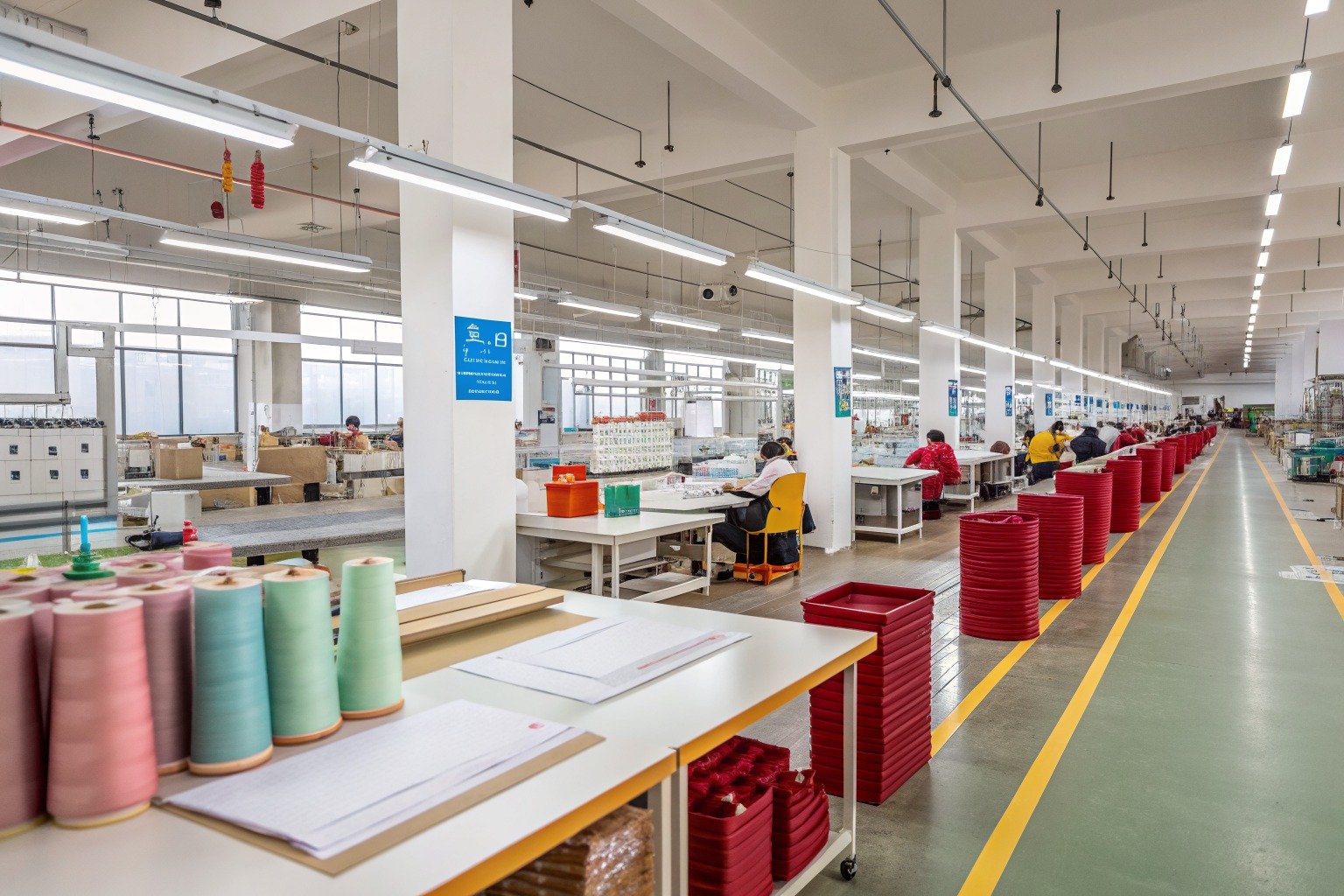
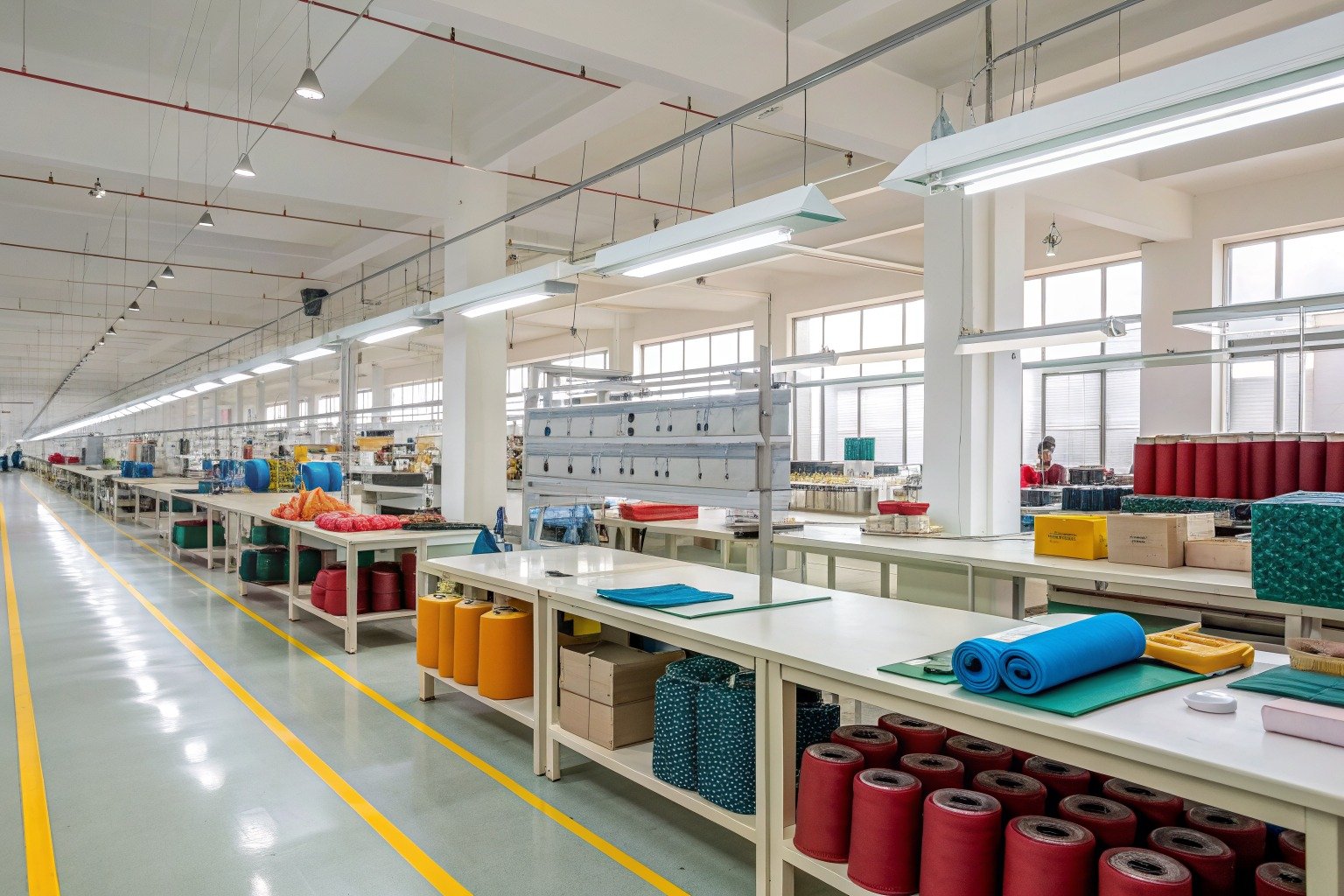
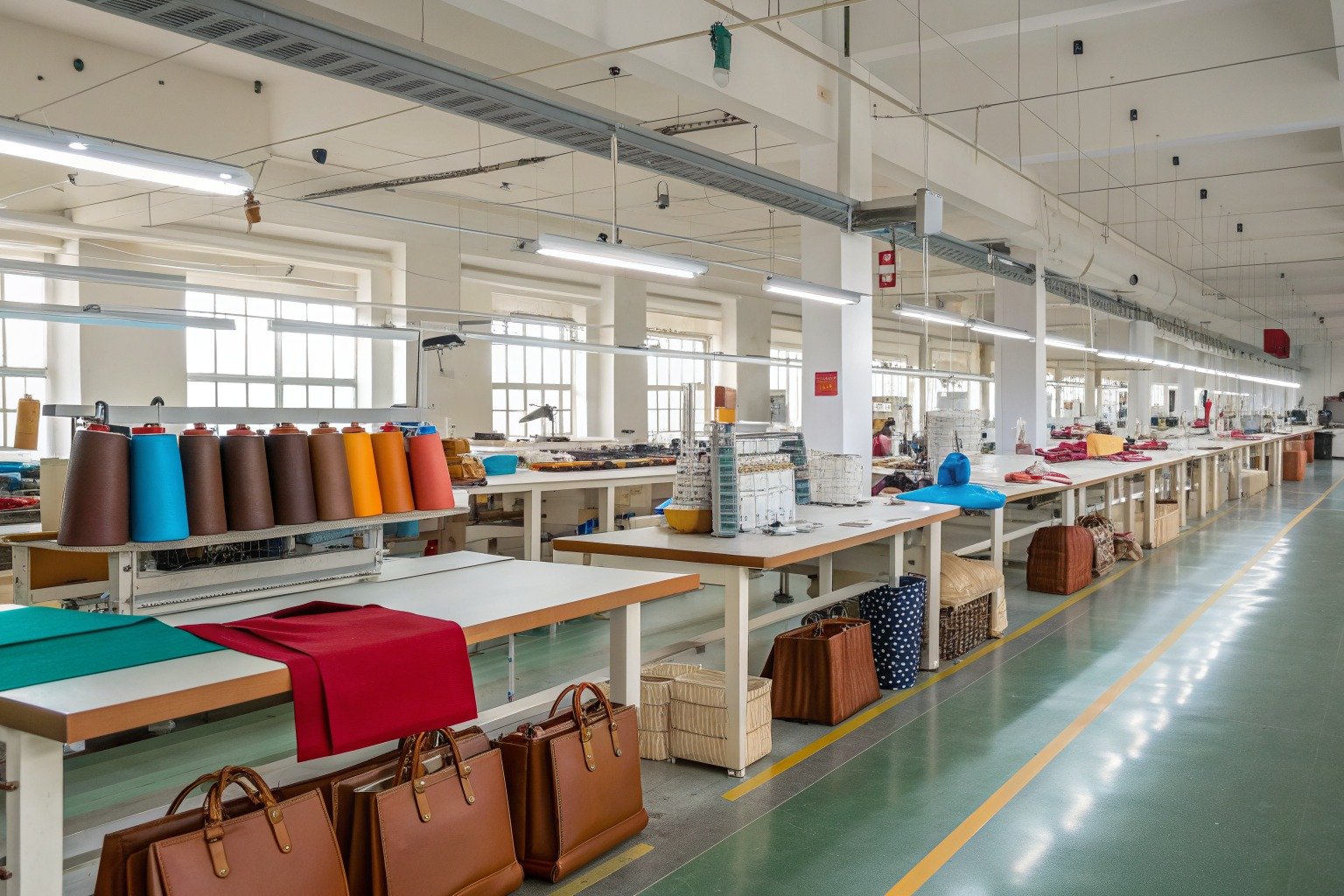
At AceAccessory, we have invested in the fabric technologies, the finishing treatments, and the design expertise to serve the luxury travel accessories market at the highest level. Our performance silk finishing line is certified by the chemical supplier and audited for consistency. Our temperature-regulating fabric applications are tested for durability and performance. Our pattern makers and sample artisans are experienced in the specific construction techniques required for convertible scarves and integrated pouches. We work with luxury brands and premium travel labels who trust us to execute their designs with precision and to deliver quality that meets the expectations of the world’s most discerning travelers.
If you are developing a luxury travel scarf collection for 2026 and you are looking for a manufacturing partner who understands the intersection of fashion, function, and travel, I invite you to contact us. Reach out to our Business Director, Elaine, at elaine@fumaoclothing.com. Tell her about your brand, your target traveler, and the scarf concepts you are exploring. She can arrange for samples of our performance fabrics, our convertible scarf constructions, and our packable wrap designs. Let us create travel scarves that your customers will reach for before every journey, the accessory that makes every trip more comfortable, more elegant, and more effortless.