As a manufacturer who produces millions of hair accessories every year, I can tell you that few products are subjected to as much daily abuse as a simple hair tie. It's stretched, twisted, exposed to hair products, and left on wrists for hours. The number one complaint I hear from brands about their previous suppliers is about durability. Their customers are frustrated with hair ties that snap after a few uses, stretch out and become useless, or snag and break their hair. This isn't just an inconvenience; it's a failure of the product that damages a brand's reputation for quality.
The durability of a hair tie is not determined by a single factor, but by the synergy between its three core components: the quality of the elastic core, the construction of the outer fabric sheath, and the method used to join the loop. A weakness in any one of these areas will lead to premature failure.
For a buyer like Ron, who is concerned with quality control and the development capacity of a supplier, understanding these technical details is crucial. It's the difference between ordering a generic, commoditized item and developing a superior product that earns customer loyalty. At Shanghai Fumao Clothing, we treat the humble hair tie with the same engineering respect as a complex handbag. Let's break down the critical factors that separate a durable hair tie from one that's destined to snap.
Why Is the Elastic Core the Heart of Durability?
The most common and frustrating failure for a hair tie is when it snaps or permanently loses its elasticity, becoming a limp, useless loop. This is almost always a failure of the elastic core. The pain point for many brands is that they specify the outer color and fabric but pay no attention to the "engine" inside.
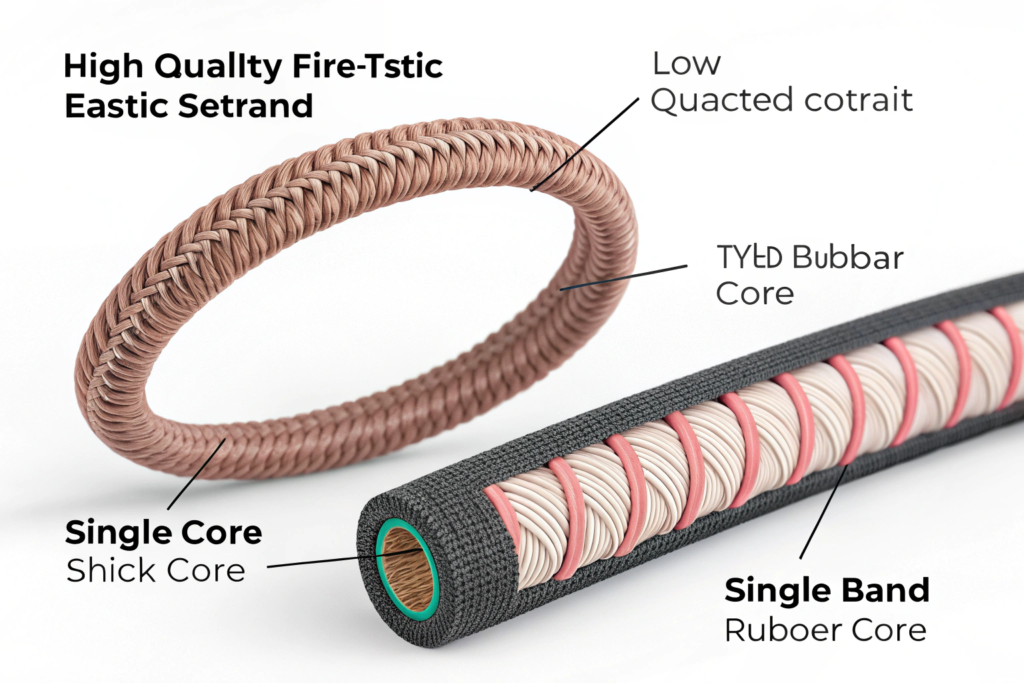
The quality of the elastic core is paramount. A superior hair tie uses a core made of multiple, fine strands of high-quality elastic, like natural rubber or a synthetic spandex like Lycra®. Think of it like a steel cable, which is made of many small wires braided together. This multi-strand construction has several advantages:
- Strength in Numbers: If one tiny strand breaks under stress, dozens of others are still there to carry the load. A cheap hair tie that uses a single, thick band of low-grade rubber will fail completely the moment that one band gets a small tear.
- Better Elasticity and Recovery: High-quality materials like Lycra® have excellent "elastic recovery," meaning they can stretch significantly and still return to their original size. This is what prevents the hair tie from getting permanently stretched out after just a few uses.
When we develop hair ties, we work with our clients to specify the core material and strand count based on the intended use. A "gentle hold" tie for fine hair might have a different core than a "sport hold" tie designed for a thick ponytail during a workout. Sourcing the right core is the first and most important step in building a durable hair tie. This core is then protected by The Outer Sheath.
What is the difference between rubber and spandex/Lycra®?
Natural rubber is a common and effective elastic material. However, it can be more susceptible to breaking down when exposed to oils (like those from hair and skin) and UV light. Spandex (sold under brand names like Lycra®) is a synthetic polymer known for its exceptional elasticity and durability. It's more resistant to oils and does not degrade as quickly, making it a more premium and longer-lasting choice for the core of a hair tie.
What does "elastic recovery" mean?
Elastic recovery is a technical measure of a material's ability to return to its original shape after being stretched. It's usually expressed as a percentage. A material with 95% elastic recovery that is stretched to 10 inches long will return to being 0.5 inches longer than its original length. A high-quality elastic will have a very high recovery percentage, ensuring the hair tie stays snug and doesn't become loose over time. This is a key performance metric in textile testing.
What Is the Role of the Outer Sheath?
The elastic core provides the stretch, but the outer fabric sheath has two critical jobs: to protect the core from damage and to protect the hair from the core. A poorly constructed sheath is a major pain point. If it's too abrasive, it can cause hair breakage. If it's not durable, it will fray and expose the elastic core, leading to snags and eventual failure.
The durability of the sheath depends on two things: the material and the knit density.
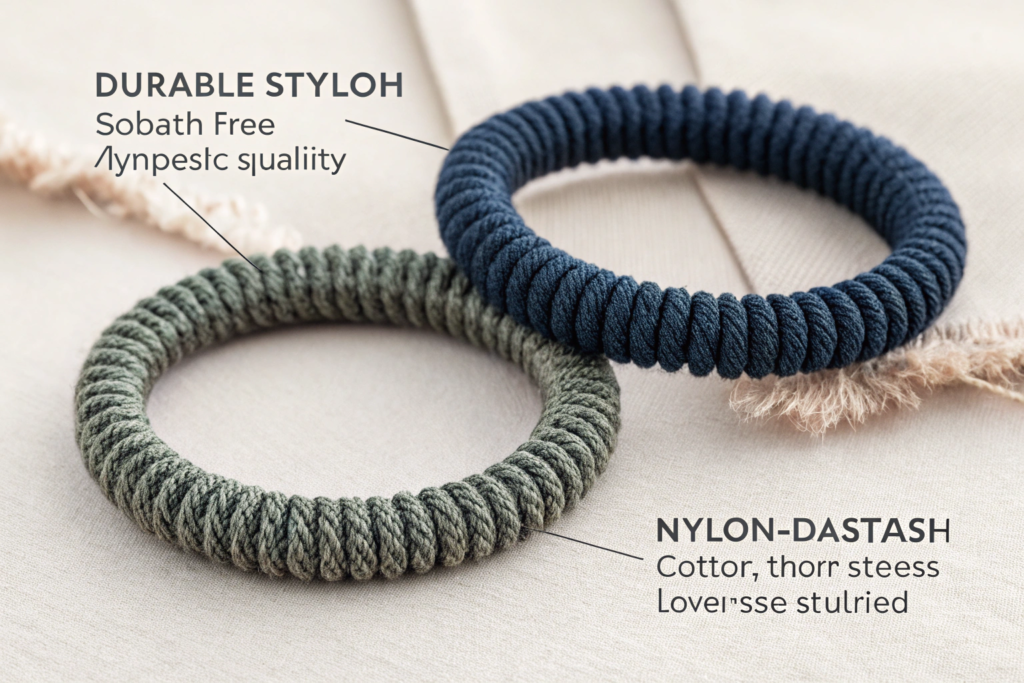
- Material: Smooth, strong synthetic fibers like nylon are an excellent choice. Nylon is highly resistant to abrasion and has a smooth surface that glides over hair cuticles instead of snagging them. Softer materials like cotton are comfortable, but they are more prone to pilling and can absorb moisture and hair products, which can degrade the elastic core over time.
- Knit Density: A tight, dense knit is crucial. It provides a better protective barrier for the elastic core and is less likely to snag or fray. If you can easily see the elastic core through the fabric, the knit is too loose. A dense knit also helps to evenly distribute the pressure of the hair tie on the hair, reducing the risk of creating a dent.
When we manufacture hair ties, we can adjust the knit density and fiber blend to achieve a specific feel and performance. For a "no-snag" athletic hair tie, we would recommend a very tight, smooth nylon knit. For a softer, everyday scrunchie, a high-quality polyester charmeuse or a durable cotton jersey might be more appropriate. The key is to match the sheath's properties to the product's intended use and quality tier.
Why is nylon a good material for hair ties?
Nylon is a type of polyamide known for its exceptional strength, abrasion resistance, and smoothness. As detailed by resources like the Plastics Industry Association, its long, smooth polymer chains create a surface with very low friction. This is why it's used for things like ropes and parachutes. In a hair tie, this low-friction property allows it to slide against hair strands without catching or causing damage, making it an ideal material for the outer sheath.
What is "pilling"?
Pilling is the formation of small, fuzzy balls on the surface of a fabric. It happens when fibers in the yarn become loose and get tangled together through friction. It's a common issue with softer, staple-fiber yarns like cotton and some polyesters. While not necessarily a structural failure, it makes the hair tie look old and worn out very quickly.
How Does the Joint Affect Longevity?
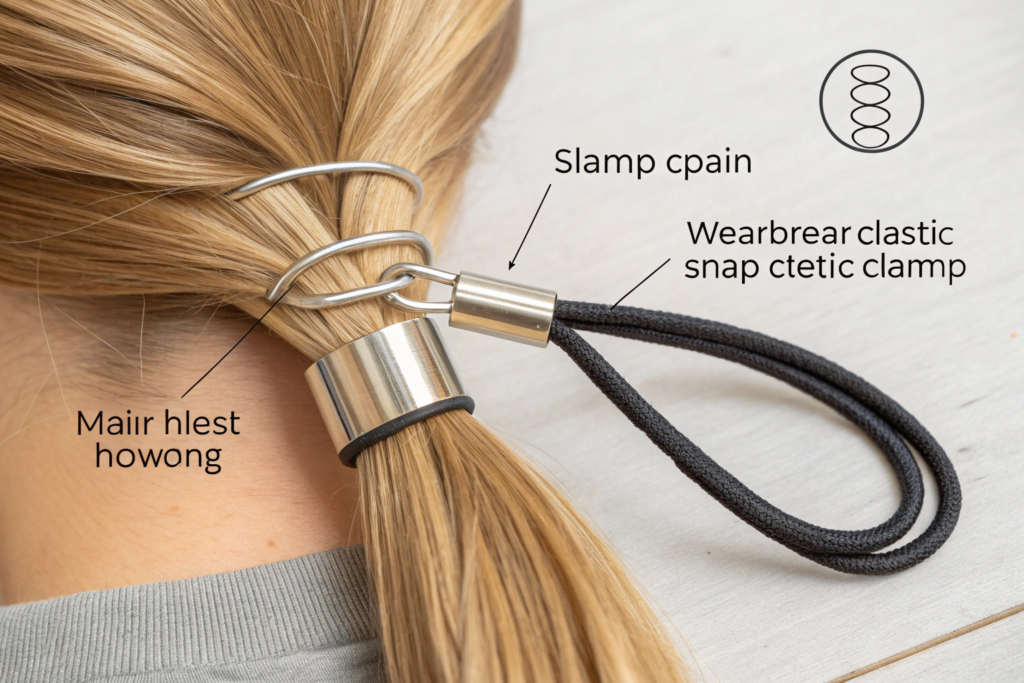
Every hair tie has a weak point: the place where the loop is joined together. This is where most catastrophic "snaps" occur. For decades, the standard method was to use a small metal clamp to crimp the two ends of the elastic together. The pain point here is twofold: the metal clamp itself can snag and break hair, and the pressure from the clamp creates a stress concentration point on the elastic, making it the most likely place to fail.
The modern, superior solution is a seamless, heat-welded joint. This technique uses ultrasonic or heat technology to fuse the two ends of the elastic core together without any additional hardware. The fabric sheath is then finished over this joint, creating a completely smooth and seamless loop. This has huge advantages:
- No Snagging: With no metal clamp or bulky glue joint, the hair tie is perfectly smooth all the way around, gliding in and out of hair without catching.
- No Weak Point: A properly executed weld is as strong as the elastic itself. It eliminates the stress point created by a metal clamp, distributing tension evenly around the entire loop when stretched.
As a manufacturer, investing in ultrasonic welding technology was a key step for us in producing high-quality hair ties. While some budget brands still use metal clamps or glue because it's cheaper, we strongly guide our quality-focused clients toward the seamless option. It is a clear, visible, and functional feature that elevates the product and directly addresses a major customer complaint.
What is ultrasonic welding?
Ultrasonic welding is a manufacturing process that uses high-frequency ultrasonic vibrations to create a solid-state weld between two pieces. As explained by companies in the field like Emerson, the vibrations cause the two surfaces to rub against each other, generating friction and heat that fuses them together at a molecular level. It's a very fast and clean process that is ideal for joining plastics and synthetic fabrics.
Is a glued joint a good alternative?
A glued joint is generally better than a metal clamp, but it can still be a weak point. The durability of the joint depends entirely on the quality of the adhesive and the application process. Some glues can become brittle over time, while others can soften with exposure to heat or hair products. A seamless weld is a more reliable and consistent method for creating a strong, durable joint.
Conclusion
The durability of a hair tie is not an accident; it's the result of deliberate engineering choices. A truly long-lasting hair tie is a three-part harmony: a multi-strand, high-recovery elastic core, a smooth and tightly-knit protective sheath, and a strong, seamless joint. By focusing on the quality of all three of these components, a brand can move beyond the disposable, low-quality options and offer a product that performs better, lasts longer, and builds genuine customer trust.
This is the level of detail we bring to every product we make. We understand that even the smallest accessory is a reflection of your brand's commitment to quality. Our team in Zhejiang has the technical expertise and the right equipment to help you engineer a hair tie that solves customer pain points and stands up to the rigors of daily use.
If you are ready to develop a line of hair accessories that is built to last, we are the partner you've been looking for. Contact our Business Director, Elaine, at elaine@fumaoclothing.com to get started.