You're evaluating a new leather belt from a potential supplier. It looks good, the color is right, and the buckle feels solid. But you have a nagging doubt: is it as thick and durable as they claim? You've been burned before by belts that looked substantial but were actually thin, bonded leather that cracked and delaminated after a few months of wear, leading to customer complaints and returns. This uncertainty makes you hesitant to place a large order, fearing a repeat of costly quality issues.
To accurately verify the thickness of a leather belt, you must use a precision measuring tool like a digital caliper or a leather thickness gauge. Simply looking at the belt or feeling it is not enough. The industry standard is to measure the leather in ounces, where one ounce equals 1/64th of an inch (or about 0.4mm), and this measurement should be taken at several points along the belt's length to ensure consistency.
This verification process is not just about confirming a number; it's about ensuring the structural integrity, durability, and value of the product you're buying. A belt's thickness is a primary indicator of its quality and longevity. As a manufacturer of premium accessories, we at Shanghai Fumao Clothing treat this measurement as a critical quality control checkpoint. Understanding how to measure it correctly empowers you to hold your suppliers accountable and guarantee you're getting the quality you paid for.
Why Is Belt Thickness So Important?
You might think a millimeter here or there doesn't make a difference. It's just a belt, right? But this seemingly small detail is one of the most critical factors determining a belt's lifespan and performance. It's easy to be swayed by a stylish finish or a low price, only to find out the hard way that the belt's core construction was fundamentally weak. This leads to customer dissatisfaction and damages your brand's reputation for quality.
A belt's thickness is directly proportional to its strength, durability, and resistance to stretching and creasing. A thicker, single piece of leather (full-grain or top-grain) will hold its shape, support the weight of items clipped to it, and withstand the daily stress of being tightened and flexed far better than a thin or composite belt.
Think of it as the foundation of a house. A weak foundation will compromise the entire structure, no matter how nice the paint job is. A thick leather belt provides a solid core that resists wear and tear. It won't curl at the edges or develop deep cracks around the buckle holes after a few months. This is especially crucial for your customers who rely on their belts for more than just holding up pants—they might be carrying tools, a phone, or other items. Ensuring proper thickness means you are delivering a reliable, long-lasting product, not a disposable fashion item. This is a key reason why you must use the right tools for verification, as we'll discuss in What Tools Are Needed for Accurate Measurement?.
How does thickness relate to leather quality?
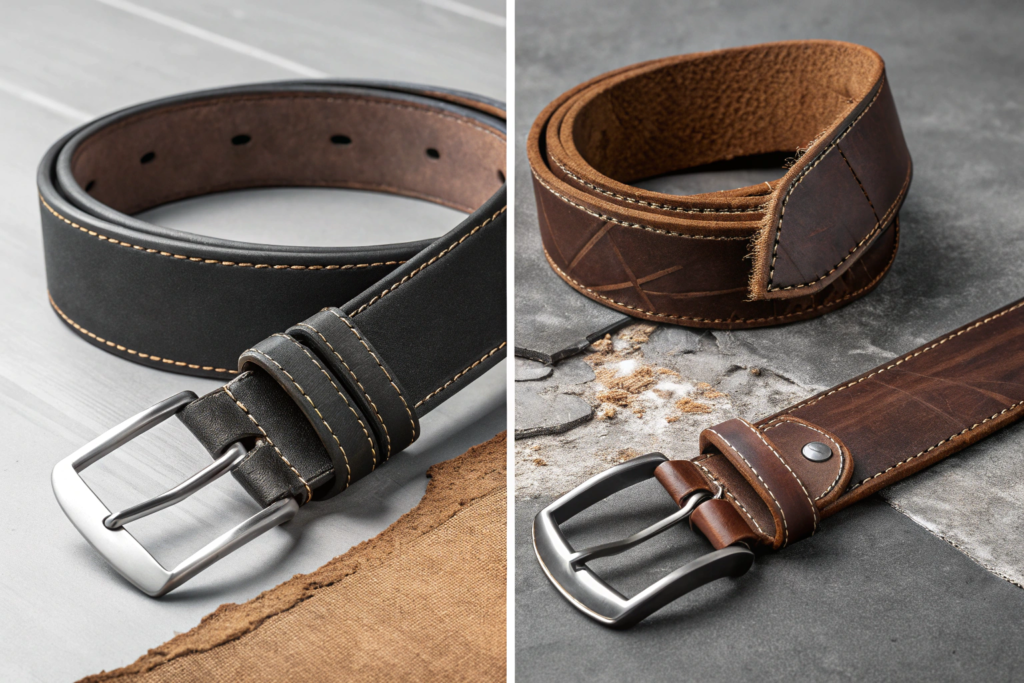
Generally, only higher grades of leather can be produced in thicker cuts. Full-grain leather, the highest quality grade, is made from the top layer of the hide and includes all the natural grain. It is the strongest and most durable type of leather, and it is often available in substantial thicknesses (8-10 oz. or more). As explained by leather experts like the artisans at Tanner Goods, lower-quality "bonded leather" is made from scraps of leather shredded and glued together, and it simply cannot be made thick without delaminating. Therefore, a thick belt is often an initial indicator of higher-quality raw material.
Does thickness prevent stretching?
Yes, significantly. All leather will stretch slightly over time, but thickness plays a huge role in minimizing it. A thicker piece of leather has more cross-linked fibers and substance, giving it greater tensile strength. This means it can resist the constant pulling force from the buckle without elongating and deforming. A thin belt, on the other hand, will stretch out more easily, causing the buckle holes to become misshapen and the entire belt to lose its fit and structure. This is a critical performance factor for a product that is put under tension every single day.
What Tools Are Needed for Accurate Measurement?
You've decided to get serious about verifying belt thickness. You try using a standard ruler or tape measure, holding it up to the edge of the belt. But the markings are too large, the belt edge is slightly rounded, and you can't get a confident reading. You're just guessing. This lack of precision means your quality control is based on feelings, not facts, leaving you exposed to inconsistencies from your supplier.
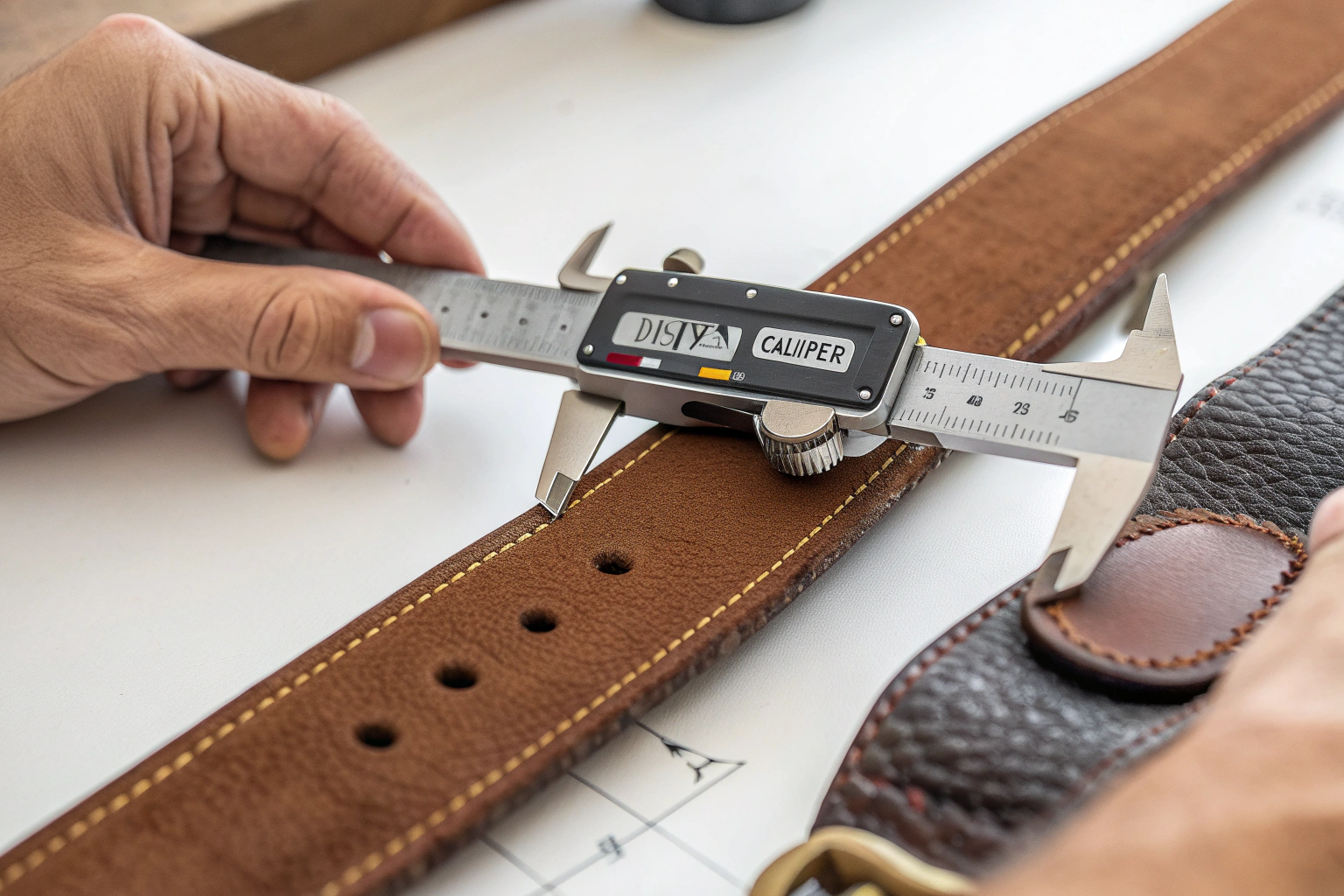
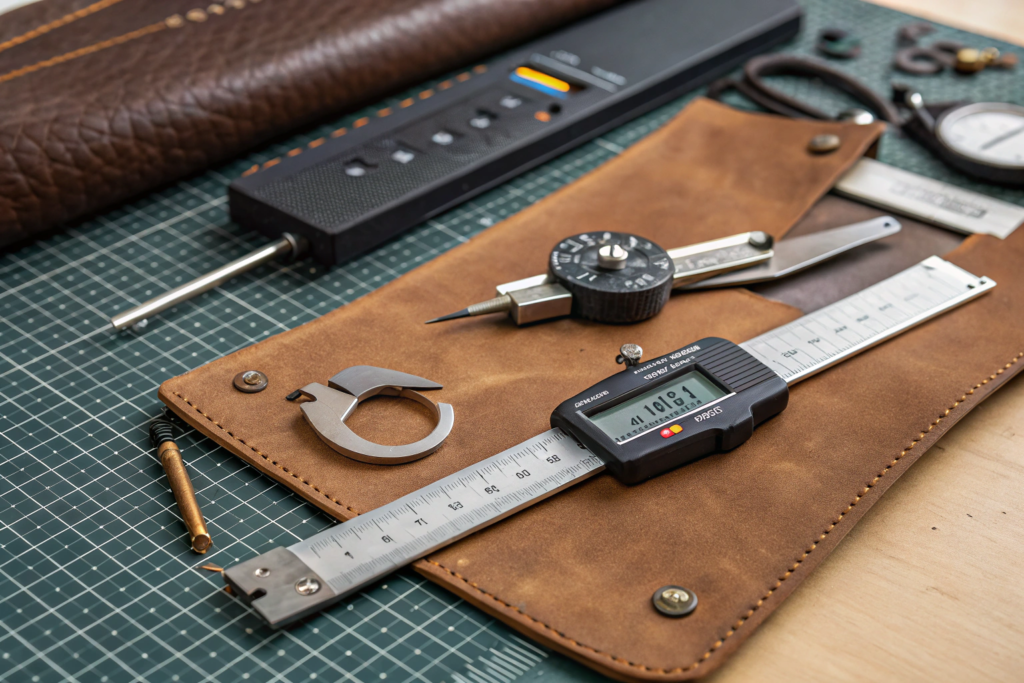
For accurate and professional verification of leather belt thickness, you need a precision instrument. The two standard tools for this job are a Digital Caliper and a dedicated Leather Thickness Gauge. A simple ruler is not adequate for reliable quality control.
These tools are designed to measure tiny increments with a high degree of accuracy, removing all guesswork from the process. A digital caliper is a versatile tool that can measure thickness, depth, and diameter, making it a great all-around investment for any product developer. A leather thickness gauge is a more specialized tool that uses a spring-loaded jaw to apply consistent pressure, ensuring a repeatable measurement every time. Using these tools signals to your supplier that you are serious about specifications and quality. It's a fundamental step in building a professional sourcing relationship, just as important as understanding how to read the measurements correctly.
How do I use a digital caliper?
Using a digital caliper is straightforward. First, turn it on and make sure the jaws are clean. Close the jaws completely and press the "ZERO" button to calibrate it. Then, open the jaws and gently clamp them onto the edge of the leather belt. Do not apply excessive force, as this can compress the leather and give you an inaccurate, thinner reading. The measurement will be displayed clearly on the digital screen. As recommended by engineering supply companies like Grainger, take measurements at several points along the belt to check for consistency.
Is a leather thickness gauge better?
For measuring leather specifically, a dedicated leather thickness gauge can be slightly better because it's designed for the task. These gauges have wide, flat contact points that distribute pressure evenly across the leather's surface, reducing the risk of compression. They are also spring-loaded, which means the tool applies the same amount of gentle pressure for every measurement, leading to highly consistent and repeatable results. While a caliper is perfectly sufficient for most buyers, a thickness gauge is the preferred tool for tanneries and high-volume leather goods manufacturers, as noted by leathercraft suppliers like Weaver Leather Supply.
How Do I Read and Interpret the Measurements?
You've measured your belt sample with a caliper, and the screen reads "3.8mm". Now what? You send this number to your supplier, but they respond by talking about "9-ounce leather". You're now dealing with two different systems of measurement, which can lead to confusion, miscommunication, and ultimately, ordering the wrong product. It's like speaking two different languages.
Leather thickness is traditionally measured in "ounces" in the leather industry. You must learn to convert the millimeter (mm) or inch reading from your caliper into this standard unit. The universal conversion is: 1 ounce of leather = 1/64 inch = 0.3969mm (often rounded to 0.4mm for simplicity).
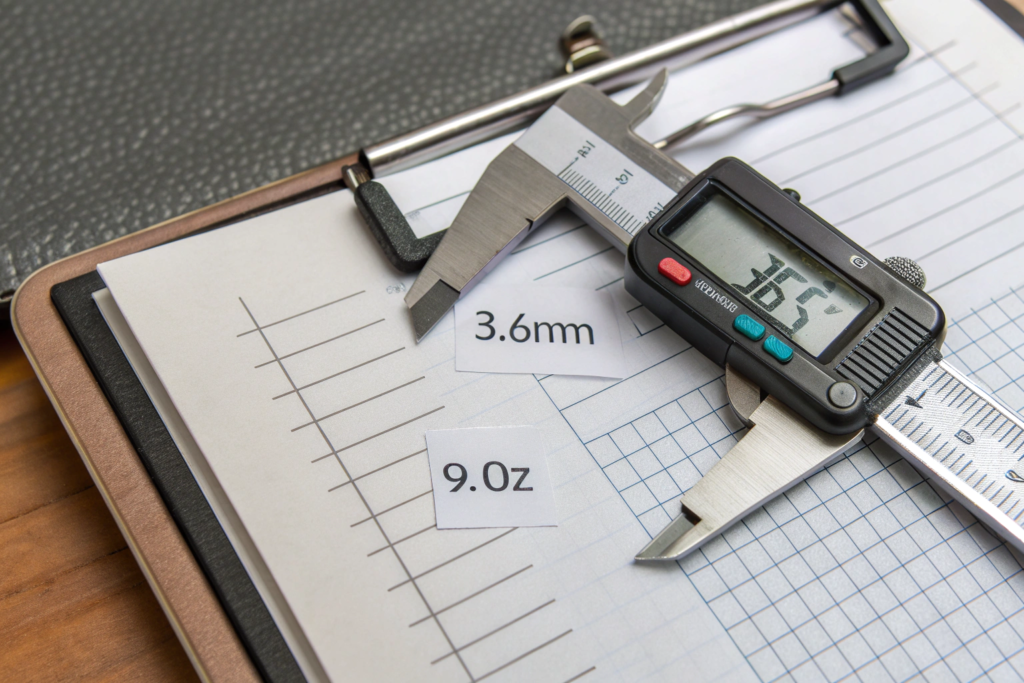
Understanding this conversion is essential for communicating effectively with tanneries and factories. When you specify a "9 oz" belt, you are using the industry's language, which shows your professionalism. A 9-ounce belt should be approximately 3.6mm thick (9 oz * 0.4mm/oz). It's also important to remember that leather is a natural material and will have slight variations. A reasonable tolerance is typically +/- 0.5 ounces. So, if you order a 9 oz belt, you should expect the thickness to be consistently between 3.4mm and 3.8mm. This knowledge is just as important as the physical measurement itself, a point we emphasize at Shanghai Fumao Clothing when creating product tech packs.
What is a good thickness for a quality belt?
The ideal thickness depends on the belt's intended style and use. Here’s a general guide:
- Dress Belts: Typically thinner for a sleek look, around 6-7 oz (2.4 - 2.8mm).
- Casual/Everyday Belts: A good, durable thickness is 8-9 oz (3.2 - 3.6mm). This is the sweet spot for quality and longevity.
- Heavy-Duty/Work Belts: These are very thick and rugged, often 10-12 oz (4.0 - 4.8mm) or even more.
This information is widely referenced on the websites of bespoke belt makers like Orion Leather Company.
How do I specify thickness in a purchase order?
In your purchase order (PO) or technical specification sheet, you should be as precise as possible. Specify the thickness in both ounces and millimeters to avoid any ambiguity. For example, write: "Leather Thickness: 8-9 oz (3.2mm - 3.6mm)". By providing a range, you acknowledge the natural variation in leather while setting clear, measurable quality control limits. This prevents a supplier from delivering a product that is consistently at the thinnest end of the spectrum and ensures the robust quality you expect.
Conclusion
Verifying the thickness of a leather belt is a simple but non-negotiable step in professional quality control. It requires moving beyond subjective feel and appearance and embracing objective, precise measurement. By using a digital caliper, understanding the conversion from millimeters to industry-standard ounces, and setting clear specifications in your purchase orders, you protect your investment and your brand's reputation. This diligence ensures that the belts you sell are not only stylish but are also the durable, high-quality products your customers deserve.
This commitment to measurable quality is at the heart of our manufacturing philosophy. We believe in transparency and precision at every stage of production. If you are looking for a manufacturing partner who understands the technical details and is dedicated to delivering accessories of a consistent, verifiable quality, we are ready to assist. Please contact our Business Director, Elaine, at elaine@fumaoclothing.com to discuss your next project.