I get this question more and more, especially from clients like Ron in the US who are expanding their summer collections. It's a great question. For years, we focused on a hat's style, its color, its material. But now, savvy consumers and brands know that a summer hat's most important job is to provide real protection from the sun. You see "UPF 50+" on a label and wonder, "Is that real? How do they even know that?" You're right to ask. Making a UV protection claim without proof is not just bad marketing; it's a serious breach of customer trust.
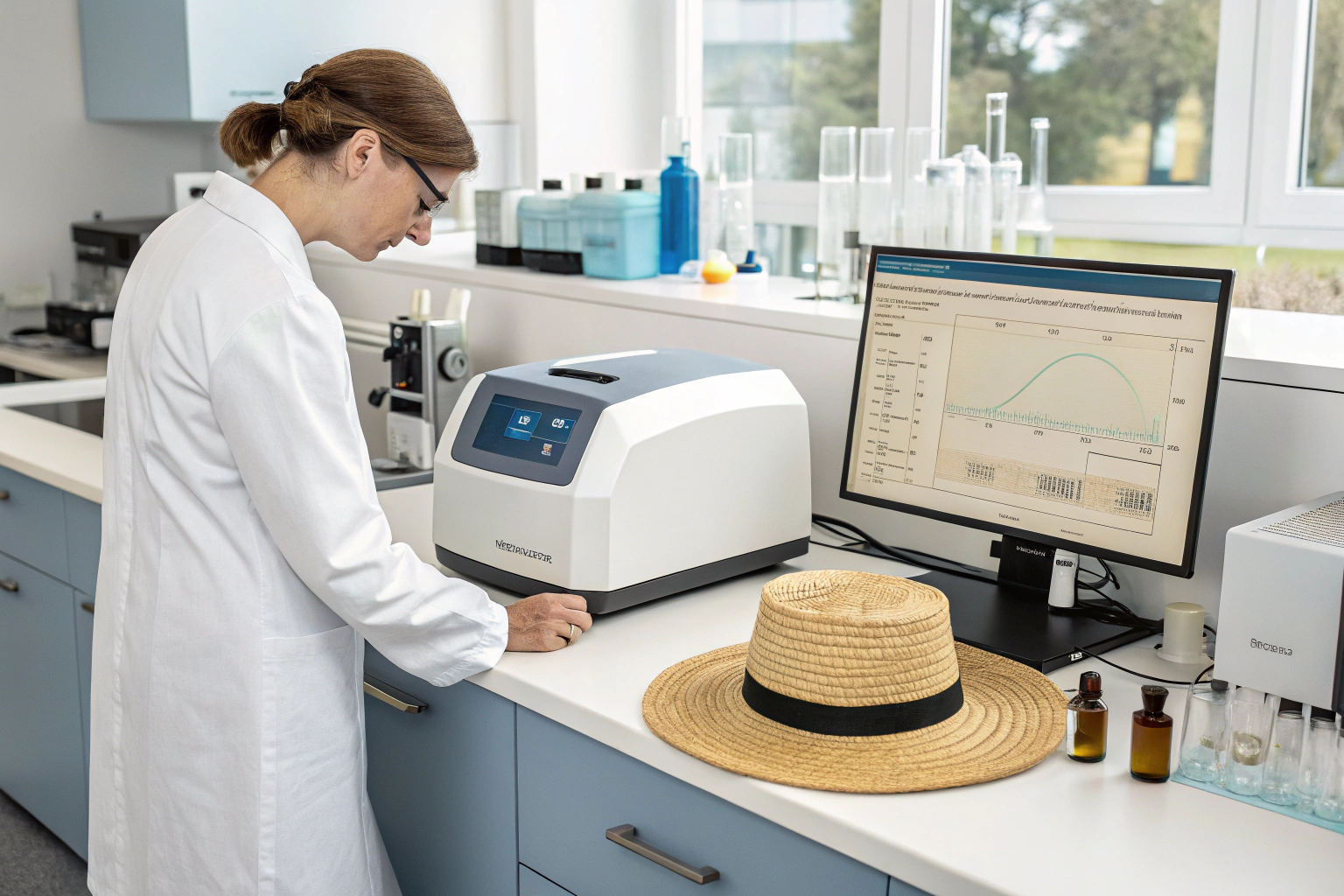
The UV protection of a summer hat is scientifically tested using a spectrophotometer to measure its Ultraviolet Protection Factor (UPF). This laboratory test, governed by standards like AATCC 183, determines how much UVA and UVB radiation can pass through the fabric. A "UPF 50+" rating means the fabric blocks at least 98% of UV rays. While you can't get a precise UPF value at home, you can perform simple visual checks to get a good idea of a hat's protective potential before sending it for official testing.
As a manufacturer, I can't afford to guess. My clients' reputations are on the line. That's why at my company, Shanghai Fumao Clothing, we work with certified labs to test and validate our materials. It's the only way to confidently stand behind a UPF rating. Let me walk you through how this process works, what the ratings mean, and what simple checks you can perform yourself to vet a hat's quality.
What is UPF and how is it professionally tested?
You see UPF ratings on everything from hats to shirts, but the term feels technical and abstract. You need to understand what it actually means and how the "score" is given. You're worried about making false claims or buying products with misleading labels because you don't understand the science behind them.
UPF, or Ultraviolet Protection Factor, is the standard used to measure the effectiveness of sun-protective fabrics. The rating is determined in a laboratory using a spectrophotometer, which shines a UV light source onto the fabric and measures how much radiation passes through. This process is standardized by organizations like the AATCC (American Association of Textile Chemists and Colorists) to ensure consistent and reliable results worldwide.
Think of it like this: if a fabric has a UPF 50 rating, it means only 1/50th (or 2%) of the sun's UV radiation can penetrate the fabric. This is a highly controlled, scientific measurement of the fabric itself, before it's even sewn into a hat. It's the gold standard for verifying sun protection claims. Understanding this professional process is the first step before you can appreciate the factors that actually create UV protection in a fabric.
What do the UPF ratings mean?
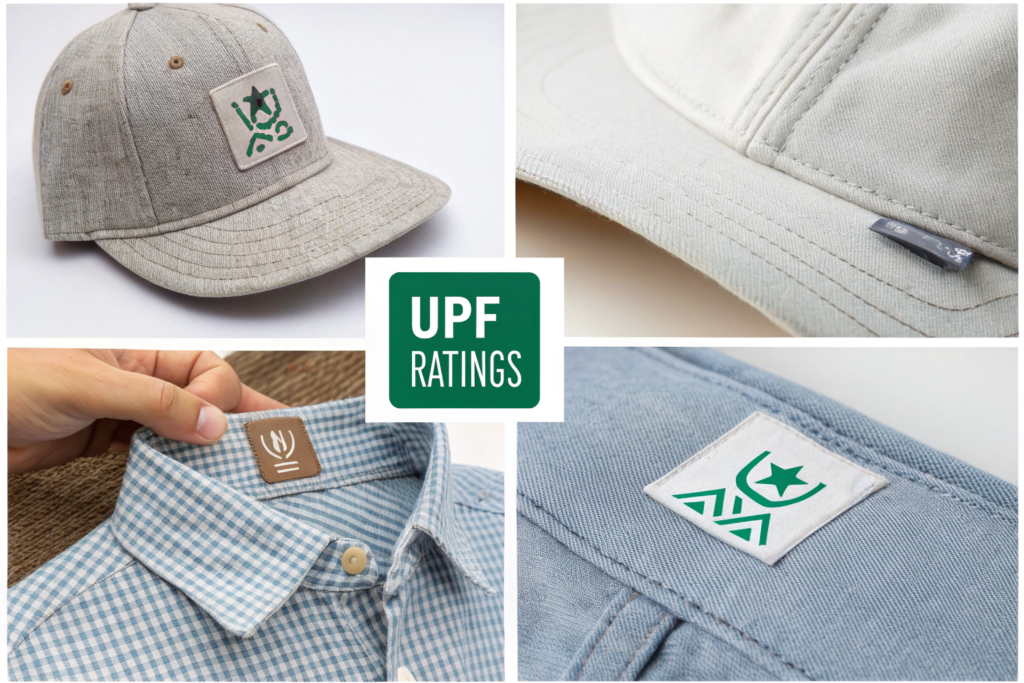
The ratings are straightforward and are categorized into levels of protection. According to standards bodies, here’s a simple breakdown:
- UPF 15-24: Good Protection (Blocks 93.3% - 95.9% of UV radiation)
- UPF 25-39: Very Good Protection (Blocks 96.0% - 97.4% of UV radiation)
- UPF 40-50+: Excellent Protection (Blocks 97.5% - 98%+ of UV radiation)
A "UPF 50+" rating is the highest possible certification. Any fabric that tests higher than 50 is simply labeled as 50+. For a product to be labeled as sun-protective, it must have a minimum UPF of 15. You can find these standards detailed on the websites of organizations like the Skin Cancer Foundation, which has a seal of recommendation program.
What is the AATCC 183 standard?
AATCC 183 is the specific technical standard used in the United States and many other countries for testing the UV-blocking properties of a fabric. The test method specifies how the fabric should be prepared (including being tested both new and after simulated laundering), the type of UV source to use, and how the measurements should be taken and calculated. When we send our hat materials to a lab like SGS or Intertek, we are specifically requesting a test according to this standard. This ensures the results are objective, repeatable, and can be used to legally support a UPF marketing claim.
What fabric factors determine UPF?
You have two hats that look similar, but one claims to have a high UPF rating and the other doesn't. What's the difference? You need to know what physical properties to look for in a fabric that will give you a clue about its potential sun-blocking ability.
A fabric's UPF rating is primarily determined by four key factors: weave density (construction), fiber type, color, and any special treatments or dyes. A tightly woven, dark-colored fabric made from synthetic fibers will generally offer more inherent protection than a loosely woven, light-colored natural fabric.
Understanding these factors is crucial for both design and sourcing. When my design team at Shanghai Fumao Clothing develops a new sun hat, we start by selecting materials that are naturally inclined to have a high UPF. It's far more effective than trying to fix a poor material choice later. Let's break down each of these factors, which will empower you to perform a more effective at-home "eyeball" test.
How does weave density affect protection?
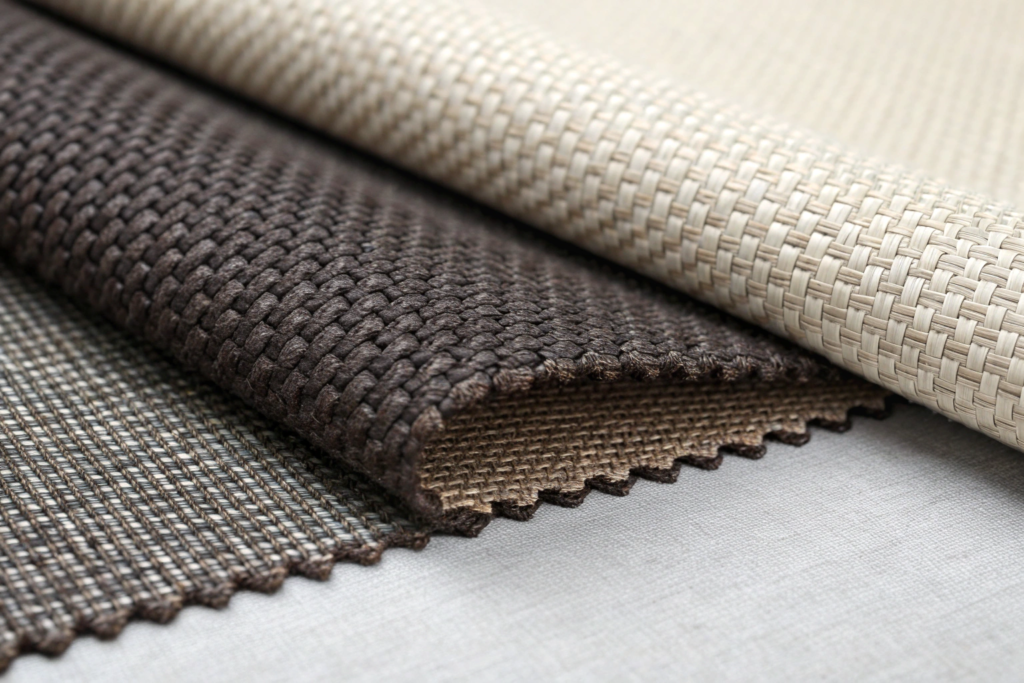
This is the most important factor. The tighter the weave or knit of a fabric, the smaller the holes are for UV rays to pass through. A dense canvas or denim is naturally more protective than a sheer, loosely woven linen. For straw hats, this is critical. A tightly woven straw hat where you can't see any points of light coming through will be far more protective than a decorative, open-weave style. This principle of physical blocking is the foundation of sun protection, as explained by dermatological resources like the American Academy of Dermatology (AAD).
Does color really matter?
Yes, color makes a significant difference. Darker and more intense colors, like black, navy, and deep red, absorb more UV radiation than lighter colors like white and pastels. The dyes themselves help to block the rays. While a white t-shirt may only have a UPF of around 5, a dark one could be closer to 30. So, for the highest protection, a dark-colored, tightly woven fabric is a powerful combination. You can learn more about how light interacts with colors from educational physics websites like Physics Classroom.
Which fibers are best for sun protection?
Generally, synthetic fibers like polyester and nylon are excellent at disrupting UV rays. They are engineered in ways that naturally scatter and absorb the radiation. Natural fibers have a more varied performance. Unbleached cotton contains natural lignins that act as UV absorbers, but this can be lost during the bleaching process. Wool is also quite good at absorbing UV. The least protective fibers are often bleached cotton and rayon. Many high-UPF fabrics use a blend of fibers to maximize both comfort and protection.
Can I test a hat's UV protection at home?
You're at a trade show or in a store, and you need to make a quick judgment call on a hat's quality. You don't have a lab in your pocket, but you can't afford to wait weeks for a test result. Is there a simple, practical way to estimate a hat's protective ability on the spot?
While you cannot measure a specific UPF value at home, you can perform a simple "light test" to get a good indication of a hat's potential UV protection. Hold the hat up to a bright light or the sun. The less light you see passing through the weave of the fabric or straw, the more UV radiation it is likely to block. This is a practical, first-step evaluation, not a substitute for a lab test.
I use this method myself as a quick filter. If I can see the clear shape of the light bulb or the sun through the material, I know it's not going to offer excellent protection. It's a test of weave density. If the light is heavily diffused or completely blocked, it's a good candidate for being a high-UPF product. This simple check, combined with your knowledge of fabric factors, can make you a much smarter buyer.

How to perform the "light test"?
It's simple. Take the hat and find a bright light source. A lamp with a bare bulb or a sunny window works best. Hold the crown or brim of the hat about 6-12 inches away from your eyes and look through the material toward the light.
- Poor Protection: You can clearly see the shape of the light source and many distinct points of light. This is common in decorative, open-weave straw hats.
- Moderate Protection: The light is visible but appears fuzzy and diffused. You can't make out the distinct shape of the source.
- Good to Excellent Protection: You see very little to no light coming through at all. The material appears opaque. This is what you want to see in a true sun-protective hat.
What are the limitations of this test?
The light test is a great starting point, but it has limitations. It primarily tells you about the weave density. It can't tell you about the presence of invisible UV-absorbing dyes or treatments in the fabric. A fabric could have a slightly more open weave but be treated with a UV inhibitor that boosts its UPF rating significantly. It also doesn't give you a number. It's a qualitative "good" or "bad" assessment. Therefore, you should never use this test to create a UPF label. That must come from a professional lab test.
Why is brim size and shape important?
You've found a hat made from a UPF 50+ fabric, so you think you're all set. But you've chosen a baseball cap. You're forgetting that a hat's sun protection isn't just about the material—it's also about the physical shade it provides.
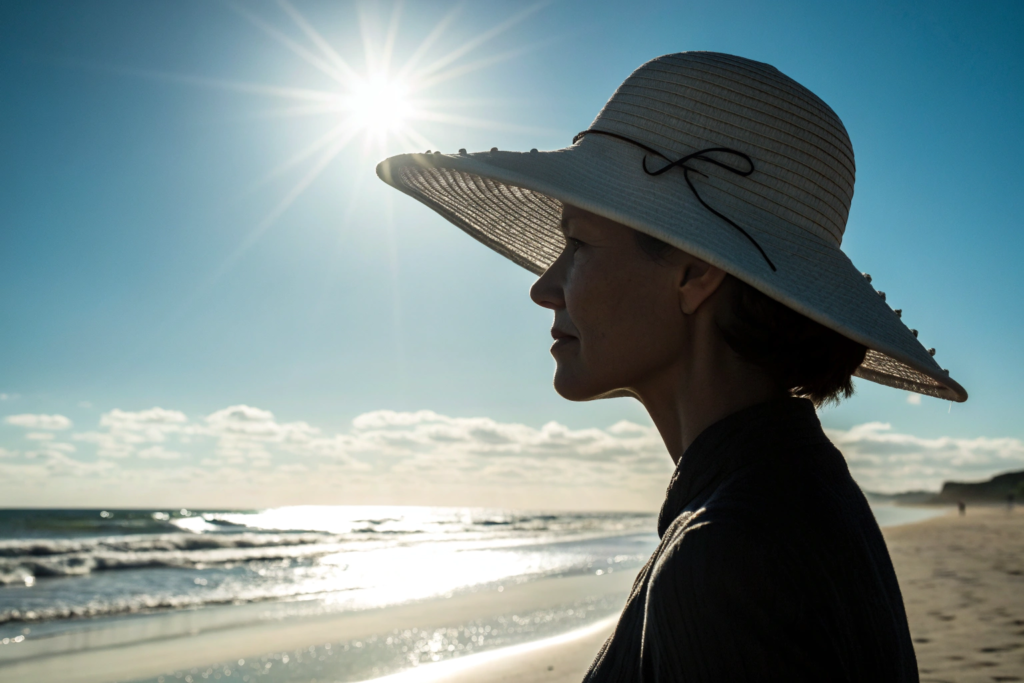
Even with a UPF 50+ rating, the overall sun protection of a hat is critically dependent on its brim size and shape. A wide, all-around brim of at least 3 inches (7.5 cm) is recommended by dermatologists because it provides physical shade to the face, ears, and back of the neck—areas that a baseball cap leaves exposed.
This is a crucial point I emphasize with my clients. The UPF rating applies to the material, but the coverage is what protects the skin. A baseball cap made of UPF 50+ fabric is great for protecting the scalp and forehead, but it does nothing for the ears or neck, which are common sites for skin cancer. When designing or sourcing a "sun hat," you must consider both the material's UPF and the hat's architecture.
What is the ideal brim size?
The Skin Cancer Foundation and other dermatological bodies generally recommend a brim that extends at least 3 inches all the way around. This provides adequate shade for your face, ears, and the nape of your neck. For even greater protection, especially for long hours in the sun, a 4-inch or wider brim is even better. This practical advice is a cornerstone of public health campaigns about sun safety, like those run by the CDC.
Are there other protective design features?
Yes. Some hats are designed with additional protective features. Legionnaire-style hats, which have a flap of fabric that hangs down to cover the back of the neck and ears, offer excellent coverage and are popular for outdoor sports and for children. Also, look for hats with a dark-colored underbrim. A dark underbrim helps to absorb, rather than reflect, UV rays that bounce up from surfaces like water, sand, or pavement, reducing the amount of indirect UV that reaches your face.
Conclusion
Testing the UV protection of a summer hat is a two-part process. The definitive, scientific answer comes from a certified lab that tests the fabric's UPF rating according to established standards. This is the only way to legally and ethically make a UPF claim on your product. However, as a brand owner or buyer, you can make a very educated initial assessment by understanding the key factors—tight weave, dark color, synthetic fibers—and by performing a simple "light test." Finally, never forget that true sun safety comes from combining a high-UPF material with a design, like a wide-brimmed hat, that provides ample physical shade.
Ensuring the true performance of our products is a responsibility we take seriously. We have the experience to source and produce fabrics that meet the highest UPF standards, giving you and your customers genuine peace of mind. If you're looking to develop a collection of truly sun-protective hats that are both stylish and effective, let's connect. Please reach out to our Business Director, Elaine, at her email: elaine@fumaoclothing.com. We can help you build a collection that offers proven protection.