For fashion accessory wholesalers and manufacturers, durability testing of hair bands is not a luxury—it's a necessity. Beyond aesthetics, a hair band is a functional item that must withstand repeated stretching, environmental factors, and the rigors of daily wear. Its failure—through breakage, loss of elasticity, or fraying—leads to immediate product failure, dissatisfied customers, and brand damage.
The durability of a hair band can be systematically tested through three core approaches: Physical Stress Testing (to measure strength and elongation), Fatigue & Long-term Performance Testing (to simulate real-world wear and tear), and Environmental & Material Safety Testing (to ensure product safety and longevity). While specialized labs offer the most precise results, manufacturers and wholesalers can adapt many principles for in-house quality control, ensuring every batch meets a minimum performance standard.
This guide synthesizes industry-standard testing methodologies with practical quality control steps, providing a comprehensive framework for evaluating hair band durability and safeguarding your brand reputation.
What Are the Core Physical Stress Tests for Immediate Strength?
The most fundamental durability tests assess a hair band's ability to withstand a single, powerful event of over-stretching or pulling. This is not about daily wear, but about its breaking point and elastic integrity. These metrics, such as Tensile Strength and Elastic Recovery Rate, are your first indicators of a hair band's intrinsic material quality and construction.
Think of this as the "crash test" for hair bands. It answers the question: "If pulled too hard, will it break or simply stretch out permanently?" For both elastic and fabric-based bands, this is critical. Poor tensile strength can lead to breakage, especially in thinner bands, while poor elastic recovery results in a loose, ineffective product after just a few uses.
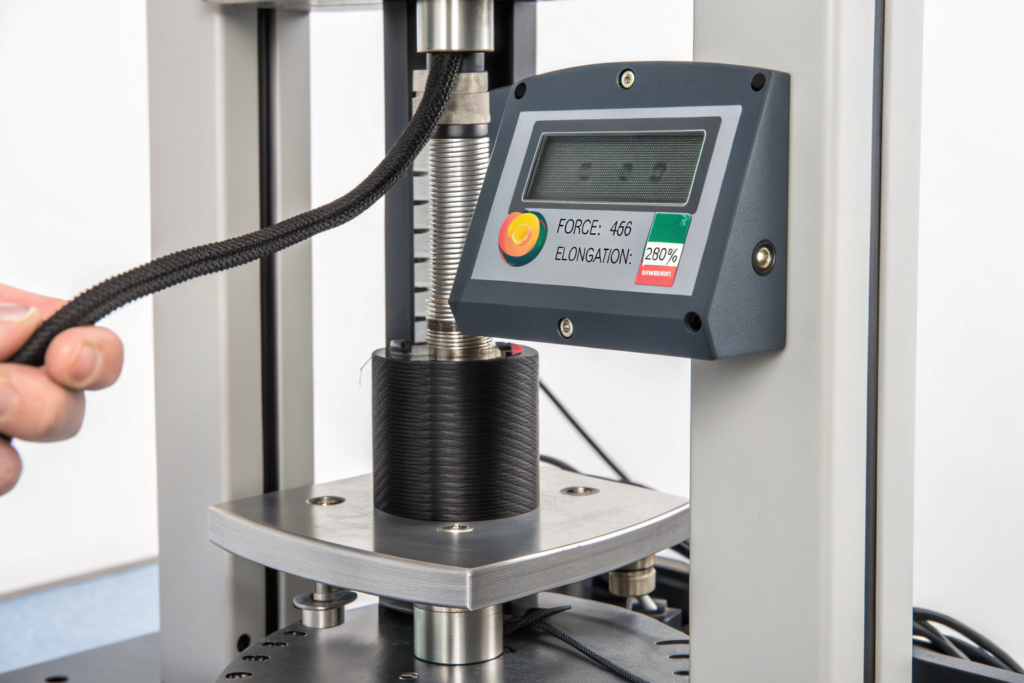
How to Measure Tensile Strength and Elongation?
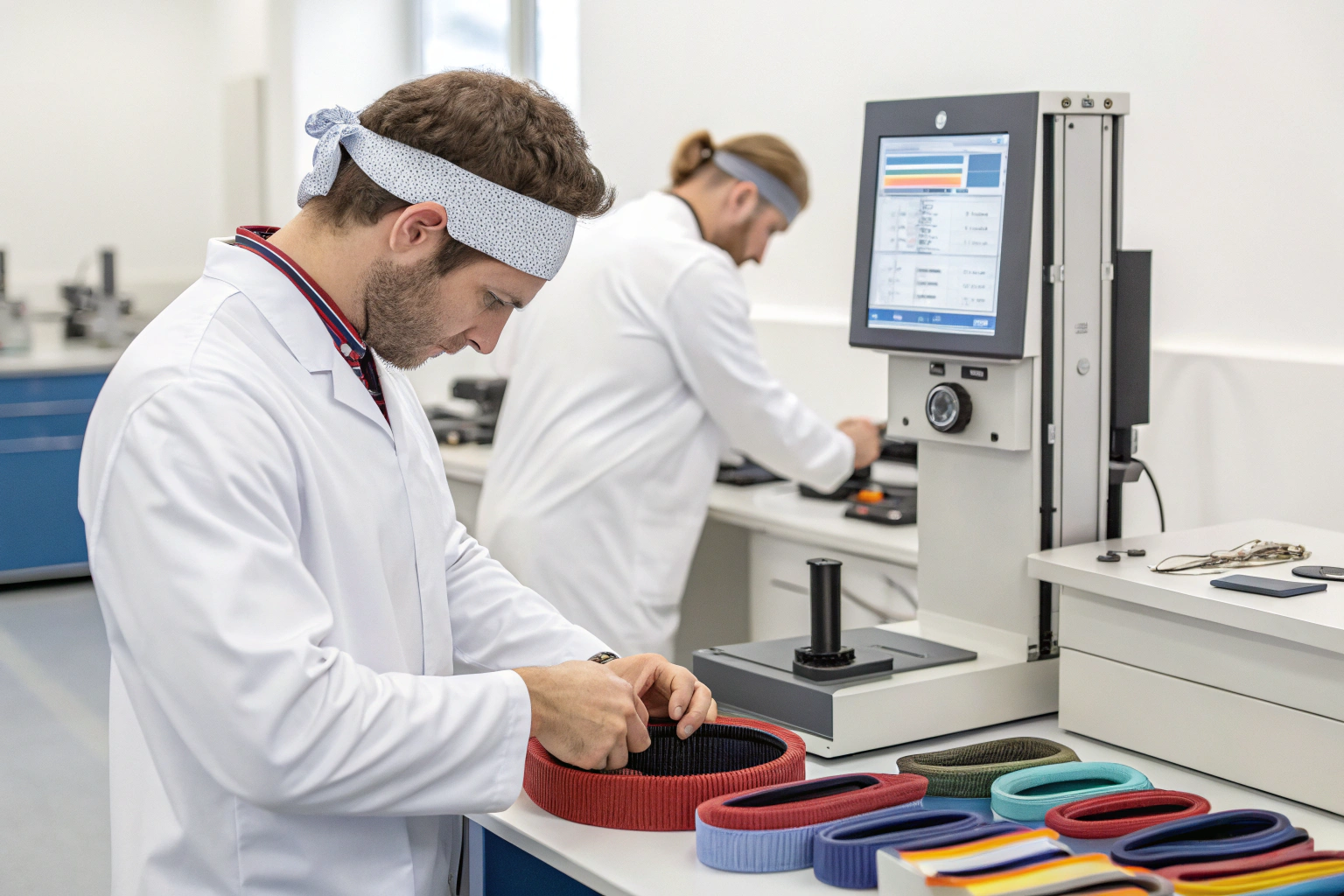
This is the primary test for a hair band's strength. The principle is straightforward: clamp a hair band sample in a machine that pulls it at a constant speed until it breaks. The maximum force it withstands before breaking is its Tensile Strength (often measured in Newtons, N). Concurrently, the percent increase in length at the point of break is its Elongation at Break.
Manufacturers and testing labs commonly use standardized methodologies to ensure consistency and accuracy. For the elastic components in a hair band, established protocols for testing rubber and elastomers provide a robust framework. For fabric-based headbands, the principles of textile tensile testing are relevant. Professional testing laboratories will adapt these standard protocols to the specific product.
Practical In-House Check: While you cannot replicate a lab's precision, you can perform a simple qualitative test. Mark a consistent point on a batch of hair bands. Have several people of different hand strengths firmly and steadily pull a new hair band to what they feel is a "reasonable" extreme (simulating a user pulling it over a large bun or ponytail). Does it break? Does the marked point return to its original position after 30 seconds of rest? Test samples from multiple production batches to check for consistency.
Why is Elastic Recovery and Permanent Set a Critical Metric?
A hair band's value is in its ability to return to its original size. The Elastic Recovery Rate measures this ability after a stretch. The inverse—the Permanent Deformation Rate or Set—measures how much it remains stretched out. A high permanent set means the band becomes "loose" quickly.
Standard Method: A standard test involves stretching the band to a specified percentage of its original length (e.g., 150% or 200%), holding it for a fixed time (e.g., 1 minute), releasing it, and then measuring its length after a recovery period (e.g., 1 minute). The difference between the original and final length indicates the permanent set.
In-House Simulation: You can mimic this with a marked band, a ruler, and a timer. Stretch a new band to double its length, hold for 60 seconds, release, wait another 60 seconds, and measure. Compare the result to an untested band. Repeat this test on a band that has been in use for a week. Significant growth in the permanent set over time is a clear durability red flag.
How to Simulate Real-World Wear with Fatigue and Long-Term Tests?
A hair band that survives one powerful stretch may still fail after a week of normal use. This is where fatigue testing comes in—it simulates the repetitive, lower-stress cycles of putting on, wearing, and taking off a hair band dozens or hundreds of times. This is arguably the most relevant test for predicting a customer's experience.
Fatigue tests are designed to reveal failure modes that single-event tests cannot: the gradual degradation of elastic polymers, the weakening of seams in fabric bands, and the onset of micro-tears. This type of testing provides fundamental insights into the contributing factors for breakage and models material failure under repeated stress.
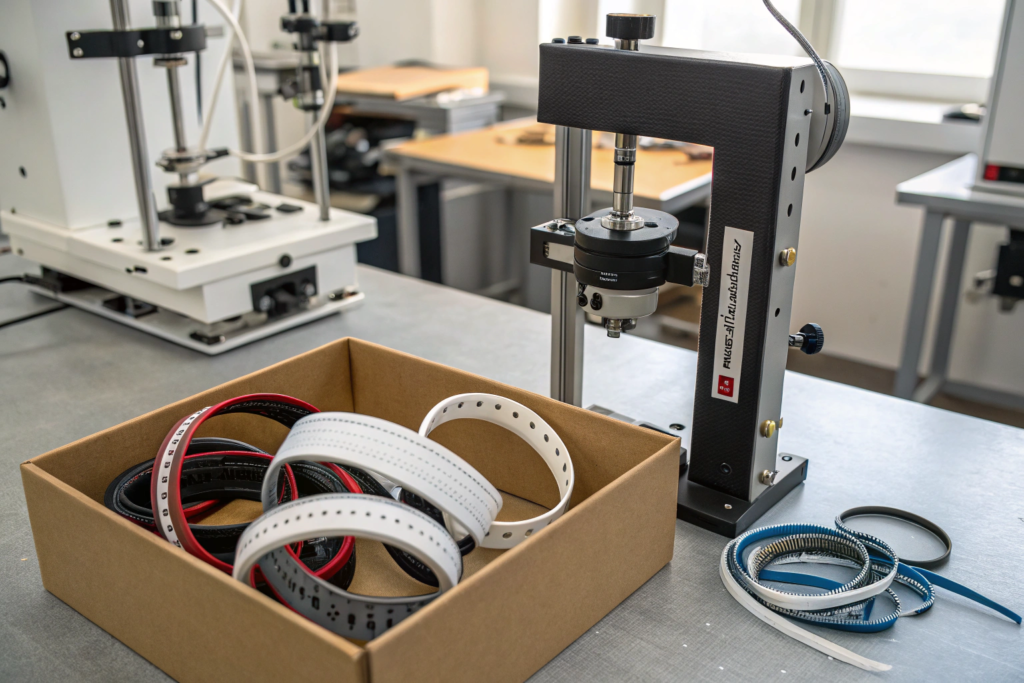
What is a Standard Cyclical Fatigue Test?
This is the cornerstone of long-term durability assessment. A specialized machine repeatedly stretches the hair band to a predetermined length or force and then returns it to its relaxed state for thousands of cycles. A testing lab performing a cyclic fatigue test would monitor for:
- Failure (Breakage): The number of cycles completed before the band breaks.
- Performance Degradation: The change in the force required to stretch it to the same length over time (indicating loss of elasticity).
- Physical Damage: Visual inspection for fraying, seam separation, or material cracking after a set number of cycles (e.g., 500, 1000).
Industry Context: Commercial equipment exists specifically for fatigue testing of fibers and small elastomeric products. For a wholesaler, outsourcing this test to a certified lab that can provide a fatigue test report is the most reliable option.
How Can You Perform a Simple Wear-and-Tear Simulation?
Without a machine, you can design a manual simulation test. The key is repetition and documentation.
- The "Office Drawer" Test: Create a test station with a mannequin head or a simple form (like a large can) that approximates a head's circumference. Designate a team member to put on and take off the same hair band 50 times a day, following a consistent method. Log any changes daily: Does it feel looser? Is the stitching coming undone? Are the ends fraying? Compare it weekly to a brand-new control sample.
- Seam and Edge Integrity: For fabric or woven headbands, the seams and edges are critical failure points. A simple pull test on the seam can be revealing. Grip the band on either side of a seam and apply a firm, steady pulling force. Does the stitching hold, or does the fabric start to tear? Check multiple seams per band.
What Environmental and Material Factors Affect Longevity?
Durability isn't just about physical force; it's about how a hair band withstands its environment. Sweat, washing, sunlight, and even the materials themselves can cause a band to degrade, discolor, or become unsafe. For a brand, failure in these areas can lead to customer complaints about skin irritation, ruined clothing, or a product that looks old after one summer.
These tests ensure that the hair band maintains its performance, appearance, and safety throughout its expected lifecycle. They are especially crucial for brands marketing products for sports, outdoor use, or sensitive skin.
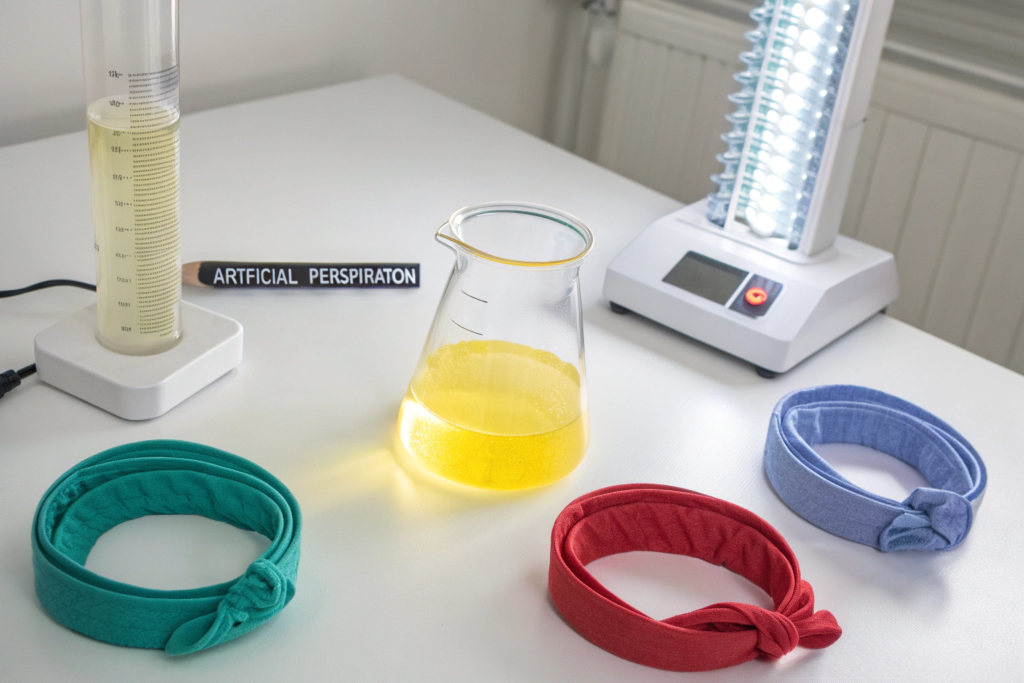
Why Test for Colorfastness, Laundering, and Environmental Resistance?
A durable hair band should retain its look as well as its function.
- Colorfastness: This includes resistance to perspiration, rubbing (crocking), and washing. A band that bleeds dye onto a user's forehead or stains a hat is a product failure. Labs perform standardized rub tests and washes to assess this.
- Laundering Durability: Will the band survive being washed? Testing involves subjecting the band to standard machine or hand-wash cycles and then re-evaluating its physical properties (size, elasticity, appearance). Significant shrinkage or distortion is a critical flaw.
- Light and UV Resistance: For products used outdoors, exposure to sunlight can cause colors to fade and materials to become brittle.
In-House Quality Checks:
- The "White Cloth Rub" Test: Vigorously rub a damp white cotton cloth against the hair band for 30 seconds. Is there any dye transfer? Repeat with a dry cloth.
- The "Sweat Simulation" Test: Soak a section of the band in a saline solution (simulating sweat) for several hours. Rinse and check for color change or bleeding. Does the material feel degraded?
- The "Home Wash" Test: Wash and air-dry a hair band according to its intended care instructions. Measure its dimensions and test its elasticity before and after. Repeat for 3-5 cycles to spot trends.
How to Ensure Material Safety and Compliance?
Durability also means safety over time. Harmful substances can sometimes leach out with wear, sweat, or washing. Testing for the following is essential for any accessory that contacts skin, especially in markets with strict regulations like the EU and North America:
- pH Value: The material's acidity/alkalinity should be skin-neutral to avoid irritation.
- Formaldehyde and Heavy Metals: These harmful substances must be below safe limits.
While this requires lab equipment (like a pH meter, gas chromatography, or atomic absorption spectroscopy), a responsible wholesaler should require test reports from their manufacturer proving compliance with relevant safety standards (e.g., CPSIA in the US, REACH in the EU). Do not rely on verbal assurances.
How to Build a Practical Durability Testing Protocol for Your Brand?
For an accessory brand or wholesaler, the goal is to translate these scientific principles into an actionable, cost-effective quality assurance (QA) program. You don't need a full laboratory, but you do need a systematic plan to catch major defects and validate supplier claims.
A good protocol combines pre-production validation, batch sampling, and clear acceptance criteria. The level of testing can be tiered based on product type (e.g., a basic elastic band vs. a premium fabric sports band) and risk.
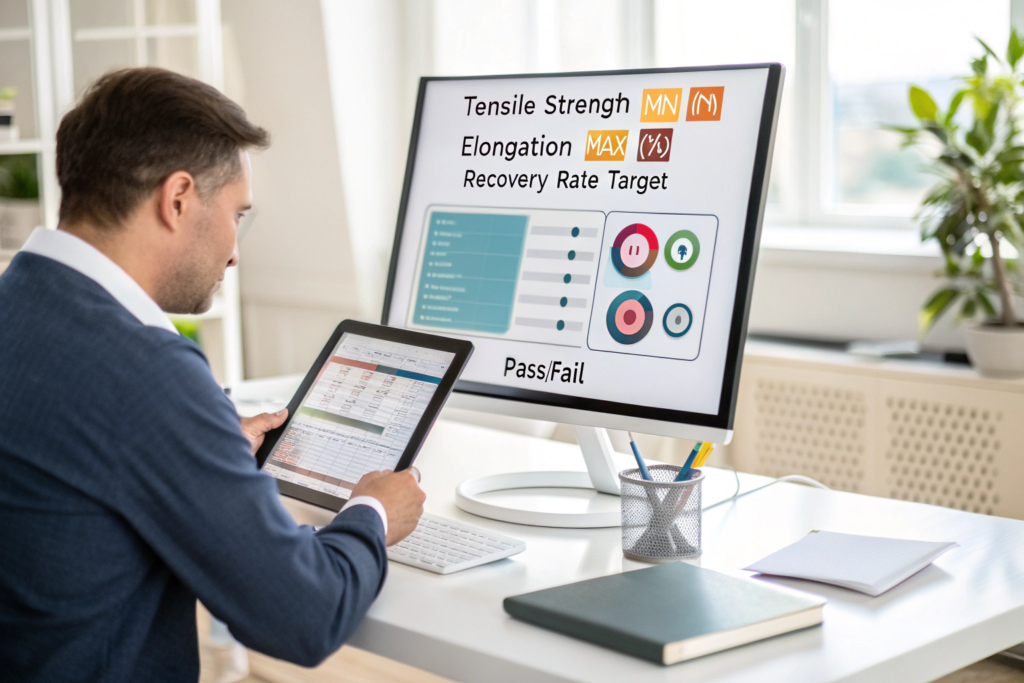
What Should Be in Your Internal QA Checklist?
For incoming shipments or new sample approvals, implement this checklist:
- Dimensional & Visual Inspection: Check size consistency, stitching quality, and absence of obvious defects.
- Simple Stretch & Recovery Test (As described above): Reject any batch where a significant percentage of sampled bands break under reasonable hand-stretching or show poor recovery.
- Seam Pull Test: Check multiple seams per sampled band for weakness.
- Colorfastness Rub Test: Use the white cloth method on dark or brightly colored bands.
- Review Supplier Documentation: Always obtain and file the manufacturer's Material Safety Data Sheets (MSDS) and recent third-party lab reports for safety compliance (pH, formaldehyde, heavy metals).
When Should You Invest in Professional Laboratory Testing?
Outsourcing to a certified testing laboratory is recommended in these key scenarios:
- New Product Development: Before mass production, validate the durability of prototypes.
- New Supplier Qualification: Objectively verify a potential manufacturer's claims.
- Annual or Bi-Annual Audit: Randomly select batches from current production for full compliance and performance testing.
- Investigating Customer Complaints: If a specific failure mode emerges (e.g., "bands keep breaking at the seam"), a lab can diagnose the root cause (e.g., inferior thread, improper stitch type).
Look for labs that explicitly list hair band elasticity testing or related physical testing of textiles and elastomers among their services. They can provide a formal, credible test report that is invaluable for both internal quality control and building trust with your retail clients.
Conclusion
Testing the durability of a hair band is a multifaceted process that moves from fundamental strength assessments to the simulation of real-life wear and environmental exposure. By understanding and implementing the core principles of Tensile Testing, Elastic Recovery, Fatigue Testing, and Environmental/Safety Checks, you shift from subjective guesswork to objective quality assurance. This disciplined approach allows you to weed out substandard products, validate your supplier's capabilities, and most importantly, deliver accessories that your customers can rely on day after day.
Building a reputation for durable, high-quality products starts with rigorous testing. It is an investment that pays dividends in reduced returns, stronger brand loyalty, and a more resilient supply chain.
If you are looking for a manufacturing partner who prioritizes material integrity, consistent quality control, and can provide the necessary compliance documentation for your hair band line, we can help. At Shanghai Fumao Clothing, we understand that durability is a key component of customer satisfaction. For a conversation about producing reliable, well-tested accessory collections, please contact our Business Director, Elaine, at elaine@fumaoclothing.com.