I have watched trends come and go in the fashion accessory world for over twenty years. Some are flashes in the pan. Others capture a feeling, a mood that resonates deeply with consumers. The Coquette aesthetic is one of those moods. It is feminine, playful, and deeply romantic, drawing inspiration from ballet, vintage lingerie, and 19th-century fashion. For a buyer like Ron, who is always looking for the next big thing for his retail clients, this trend represents a huge opportunity. But sourcing these delicate, specific items correctly is key. You cannot just buy any pink hair clip and call it Coquette.
To source trendy hair clips for the Coquette aesthetic, you need a manufacturer who understands the core design elements: bows, pearls, ribbons, floral motifs, and soft, muted color palettes like blush, cream, and powder blue. It requires a partner who can work with delicate materials like satin, velvet, and acetate, and who can execute fine details like intricate glue work for pearls or precise pleating for ribbon bows.
At Shanghai Fumao Clothing, we have been helping clients translate fashion trends into tangible products for years. We saw the Coquette trend building and prepared our design and sampling teams accordingly. Sourcing for a trend like this is not just about finding a factory; it is about finding a creative partner who can interpret the mood board and deliver a product that captures the delicate, romantic spirit of the trend while meeting the commercial demands of durability and cost.
What Defines the Coquette Aesthetic in Hair Accessories?
Every time a new aesthetic emerges, the first question is always: what does it actually look like? You need a clear definition before you can even start the sourcing process. The Coquette aesthetic is not just one thing. It is a blend of hyper-feminine symbols. Think of a ballerina's practice tutu, a vintage handkerchief, and a porcelain doll all mixed together. It is romantic, nostalgic, and intentionally "girly" in a way that feels fresh and empowering.
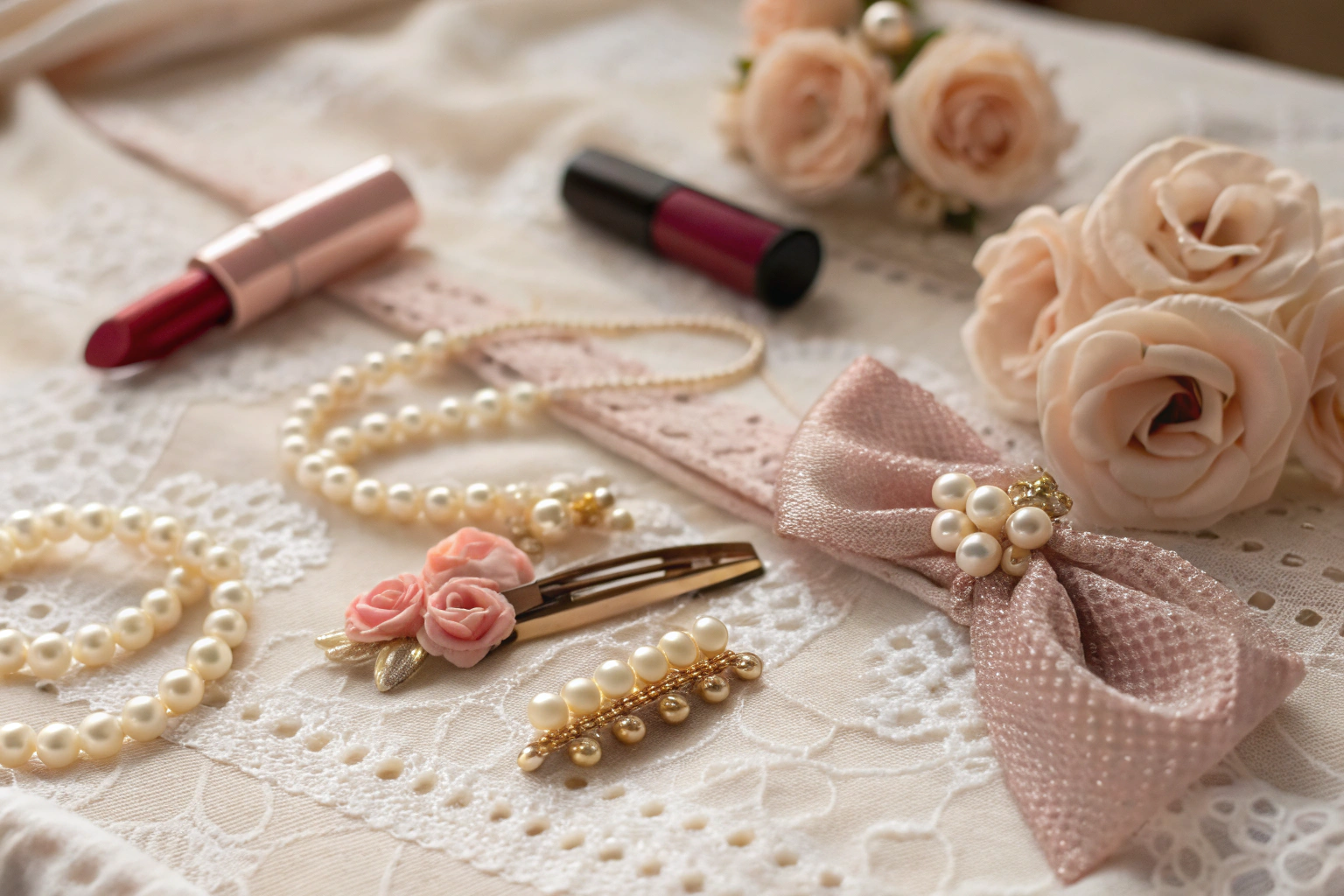
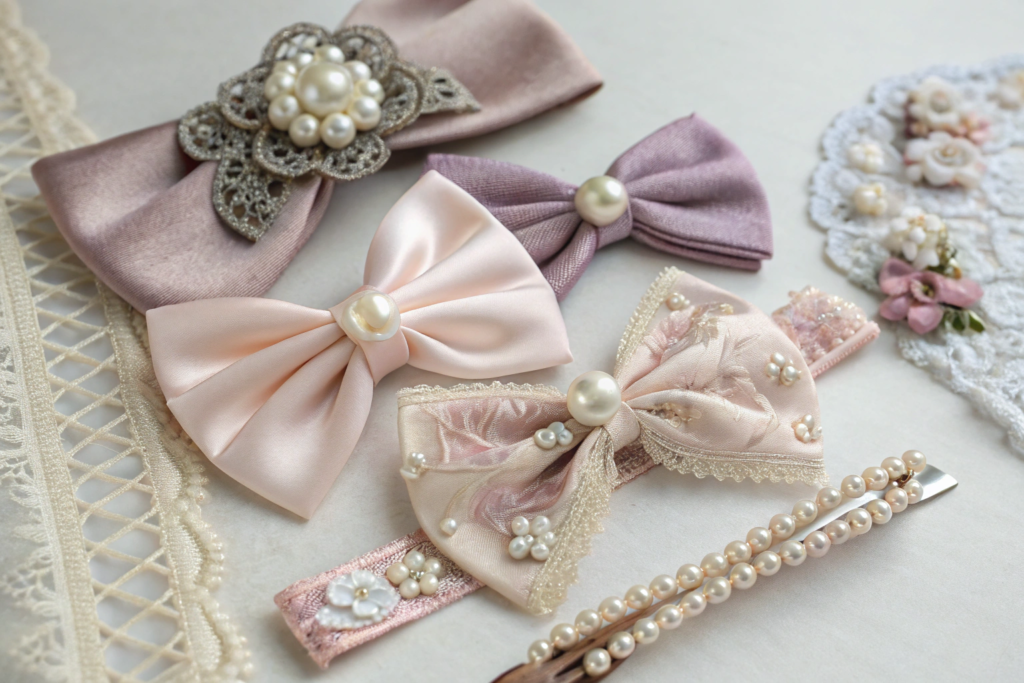
The Coquette aesthetic in hair accessories is defined by specific motifs and materials. Bows are the most iconic element, but they are not just any bows. They are made of luxurious materials like silk, satin, or velvet. Pearls are another key component, often adorning simple clips or barrettes. Lace, ribbons, and floral appliqués also feature heavily. The color palette is soft and muted, favoring off-white, blush pink, pale lavender, and soft dove gray over bright, saturated colors.
Understanding this visual language is the first step. You need to be able to look at a potential product and ask: does this feel Coquette? Or does it just feel pink? The difference lies in the details. The material choice, the quality of the embellishment, and the overall delicacy of the piece are what make it authentic to the trend.
What materials are essential for authentic Coquette hair clips?
The materials you choose will make or break the authenticity of your Coquette collection. Satin and silk are non-negotiable for bows and ribbon-wrapped clips. They have a soft sheen that catches the light beautifully and feels luxurious to the touch. Velvet is also a fantastic choice, especially for fall and winter collections, adding a rich, tactile element. For the bases of the clips themselves, acetate is often preferred over basic plastic. It has a higher quality feel and can be polished to a beautiful, smooth finish. The embellishments are just as important. You need high-quality faux pearls that look real, not cheap plastic beads. Glass or acrylic pearls have the right weight and luster. You can learn more about different material qualities on sites like The Spruce Crafts, which offers excellent guides on jewelry-making materials. These details signal to the end consumer that this is a special piece, not just a mass-produced novelty item.
How do color palettes differentiate Coquette from other trends?
Color is a powerful signal. The Coquette palette is distinctly soft and nostalgic. It draws heavily from the colors of vintage decor and ballet. You are looking at shades like ballet slipper pink, écru, champagne, and dusty mauve. These colors feel gentle and romantic. This is very different from other trends. For example, the "Y2K" aesthetic relies on bright, bold colors like hot pink, metallic silver, and electric blue. The "Cottagecore" aesthetic uses more earthy, natural tones like forest green, mustard yellow, and terracotta. By sticking to the correct muted, romantic palette, you immediately signal to the shopper that your product belongs to the Coquette world. A great resource for understanding color trends in fashion is the Pantone Color Institute, which provides insights into the psychology and forecasting of color. We work with these palettes every day in our design studio to ensure our clients' products are perfectly on-trend.
How to Find a Factory That Specializes in Trend-Driven Accessories?
Finding the right factory for a trend like Coquette is very different from finding a factory for basic, everyday hair bands. You are not looking for the cheapest option or the highest volume producer. You are looking for a partner with specific capabilities. A factory that only knows how to churn out simple plastic clips will struggle to execute the delicate details that this trend demands.
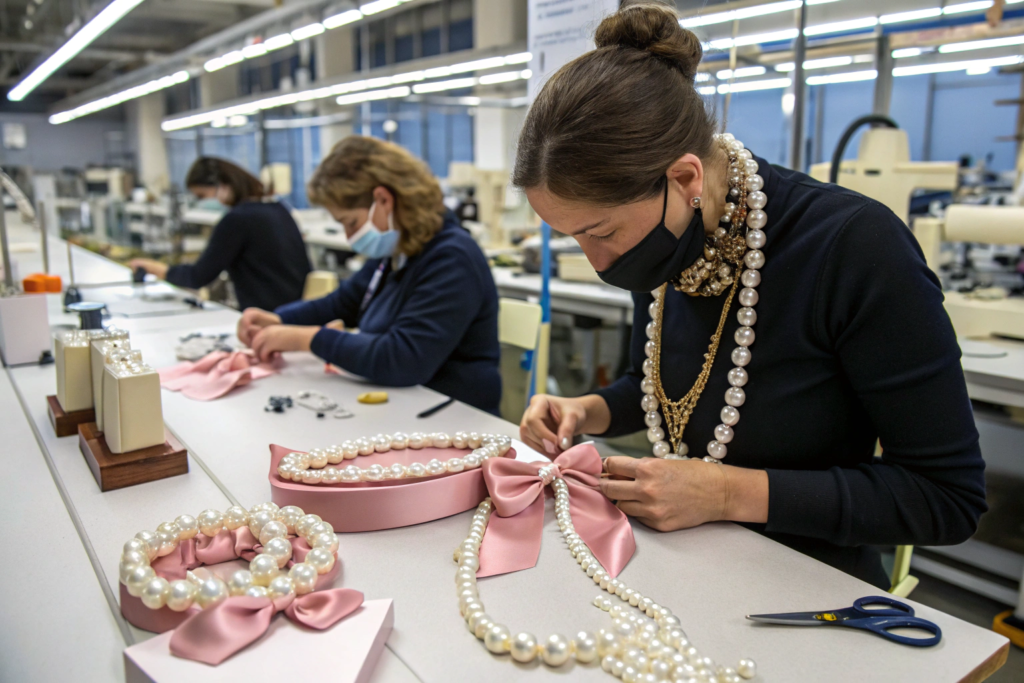
You need a factory with a strong in-house design team that actively follows fashion trends. They should be able to show you examples of similar work they have done, perhaps for other feminine or decorative accessory lines. You also need a factory with skilled artisans, not just machine operators. The hand-gluing of pearls, the precise tying of small satin bows, and the careful wrapping of ribbon around a clip base are skills that require experienced hands.
When you visit a potential supplier, ask to see their sample room. Look at the complexity of the samples they have produced. Ask about their capabilities with different materials. Can they source high-quality acetate? Do they have reliable suppliers for faux pearls and metal findings? The answers to these questions will tell you if they are truly equipped for trend-driven work.
What questions should I ask a supplier about their design and sampling process?
The sampling process is your best opportunity to vet a supplier. Do not just ask for a sample; ask about the process behind it. First, ask "How quickly can you produce a sample from a photo or a sketch?" For a fast-moving trend, speed is critical. A good supplier should be able to turn around a sample in 7-10 days. Second, ask "Can you help me refine the design for manufacturability?" A great factory will look at your inspiration image and suggest ways to make it stronger or more cost-effective without losing the aesthetic. For example, they might suggest a slightly different type of glue that will hold the pearls better over time. This shows they are thinking about the final product's durability. Finally, ask to see their "design library" or past trend collections. This gives you insight into their creative capabilities. Shanghai Fumao Clothing maintains an extensive archive of past designs and trend samples that we are happy to share with potential clients to demonstrate our range. You can also find general advice on working with suppliers on platforms like the International Trade Forum.
Why is a factory's in-house design team crucial for trend sourcing?
An in-house design team is your direct line to current market intelligence. They are not just replicating images you send them; they are actively researching trends on social media, at trade shows, and in street style. They can bring you ideas you hadn't considered. For the Coquette aesthetic, a good in-house designer might suggest a new way to combine ribbon and lace, or a different shape of pearl that is trending in Europe. They act as your creative partners. This collaboration speeds up the entire development process. Instead of going back and forth for weeks trying to explain a concept, you can work with a designer who already speaks the visual language. They can also create original designs for you, helping your brand stand out from competitors who are all sourcing the same few styles from basic suppliers. This creative collaboration is a core part of the service we provide to our clients.
How to Ensure Quality When Sourcing Delicate Hair Accessories?
Delicate accessories are beautiful, but they come with their own set of quality challenges. A heavy pearl glued to a thin metal clip can fall off with the first wear. A satin ribbon can fray or stain. The spring in a delicate claw clip might be too weak to hold hair securely. These quality issues can kill a trend before it even takes off for your brand. When sourcing for an aesthetic like Coquette, your quality control standards need to be even higher than usual.
You must focus on the points of failure unique to these products. How are the embellishments attached? Is the glue strong enough and invisible? How are the raw materials handled? Delicate satin can easily snag or get dirty on a rough factory floor. You need a partner who treats these materials with the care they deserve. This means a clean, organized workspace and skilled workers who understand they are handling premium components.

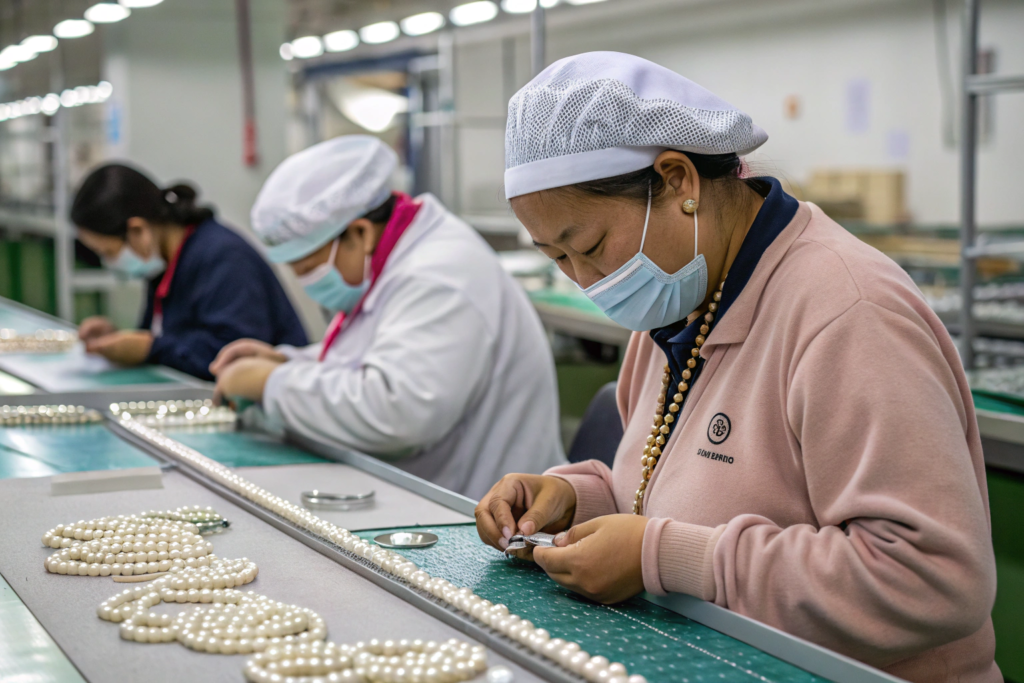
We build specific quality checks into our production line for these types of items. We test the adhesion of every pearl and gemstone. We inspect every inch of ribbon for pulls or stains. We test the spring mechanism of every clip multiple times. This attention to detail is what separates a product that looks good in a photo from one that actually survives in a customer's hands.
How do I test the durability of embellishments like pearls and bows?
Testing embellishment durability is simple but essential. For glued items like pearls on a bobby pin or barrette, we perform a "pull test." We try to gently, but firmly, pull the embellishment off with our fingers. If it moves or comes off with minimal force, the glue application or the glue itself is insufficient. We also perform a "drop test." We drop the finished clip onto a hard surface from a height of about three feet. This simulates what might happen if a customer drops it in their bathroom. Do the pearls pop off? Does the bow get crushed? For ribbon bows, we check the stitching or glue points. Is the bow securely attached to the clip base? Can it withstand being handled and bent? These simple tests, done on a sample from the production run, can save you from a major quality disaster. For more formal testing standards, organizations like ASTM International provide guidelines for testing the safety and durability of children's jewelry and accessories, which can be adapted for general use.
What are the common quality failures in ribbon and satin hair clips?
Ribbon and satin are beautiful but finicky materials. The most common failure we see is fraying. If the edges of a ribbon are not properly heat-sealed or treated with an anti-fray solution, they will start to unravel after just a few wears. Another common issue is staining. Satin, especially in light colors like blush and cream, is easily marked by oils from hands or by dust in the factory. We handle these materials with clean, white gloves during assembly to prevent this. A third failure is poor shaping. A beautiful bow needs to hold its shape. If it is made from cheap, flimsy ribbon or if it is not properly stiffened, it will go limp and look sad. We use interfacing or specialized stiffening sprays on certain bows to ensure they maintain their structure. Finally, the attachment point where the ribbon meets the clip is often a weak spot. It needs to be sewn or glued very securely, often reinforced with a small piece of felt or metal crimp to ensure it doesn't pull apart. Articles on Threads Magazine often discuss techniques for working with delicate fabrics, principles we apply directly to our accessory production.
What Are the Key Quality Checks for Coquette Hair Clips?
Beyond the general durability tests, the Coquette aesthetic demands its own specific set of quality checks focused on the look and feel of the piece. This is about ensuring the romantic, delicate vibe is executed perfectly. A crooked pearl or a poorly tied bow destroys the entire aesthetic. These checks are visual and tactile. They ensure that every piece that leaves the factory is worthy of the trend it represents.
The first check is for symmetry and placement. On a pearl-encrusted barrette, are all the pearls evenly spaced? Is the largest pearl in the center, as designed? On a bow clip, are both loops of the bow the same size? Is it sitting straight on the clip? The second check is for finish. Are there any visible glue marks? Are the cut ends of ribbons clean and sealed? Does the metal clip have any rough edges that could snag hair? These are the small details that separate a high-quality, on-trend accessory from a cheap imitation.
We involve our most experienced QC staff in these checks. They have the eye to spot a millimeter of imperfection that a less trained worker might miss. This commitment to visual perfection is what allows our clients to sell these products with confidence.
How do I check for secure glue adhesion on pearl hair clips?
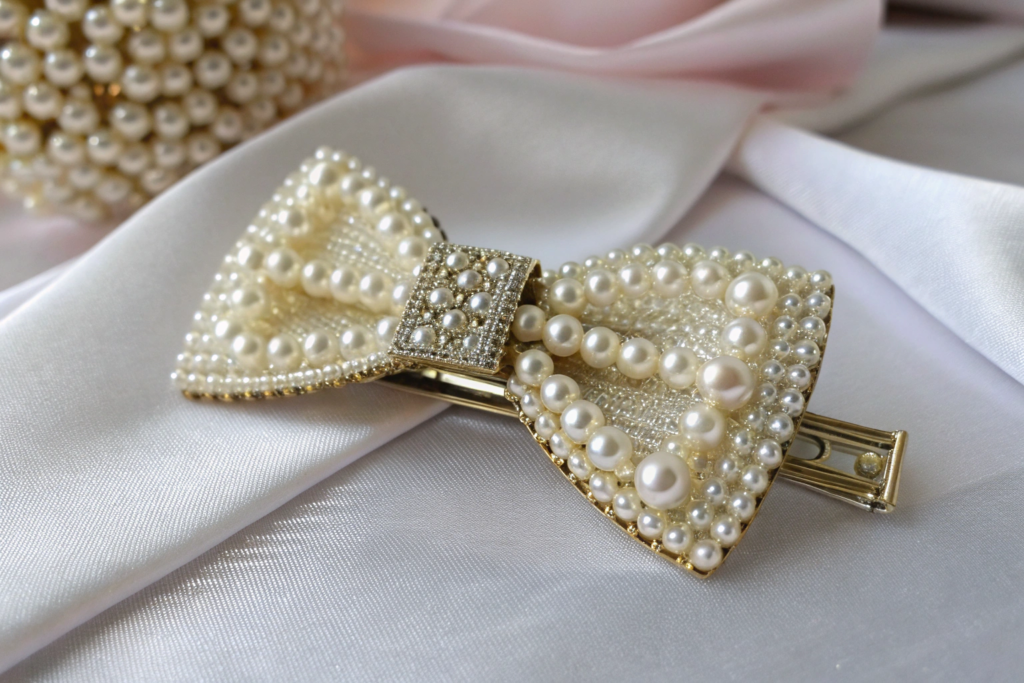
Checking glue adhesion on pearl hair clips requires a combination of visual inspection and physical testing. Visually, you want to look for "glue bleed," which is when excess glue seeps out from under the pearl and becomes visible. This ruins the clean, elegant look of the piece. A high-quality application uses just the right amount of glue so that it holds securely but remains invisible. For physical testing, we use a tool that mimics the stress of wear. We gently try to wiggle each pearl with a pair of soft-tipped tweezers. If the pearl moves, it is a reject. We also look at the glue itself. Is it yellowing? Some cheap glues will discolor over time, which will be visible through or around a light or clear-colored pearl. We use only high-quality, clear-drying, and flexible adhesives. This ensures the bond remains strong even when the metal clip is bent during use. For in-depth information on adhesive types and their applications, resources like Adhesives & Sealants Industry magazine provide technical insights that inform our material choices.
What is the correct way to inspect ribbon bow construction?
Inspecting a ribbon bow is an art. First, look at the ribbon edges. They should be clean and sealed, with no fraying threads visible. A simple pass over a flame or a hot knife should have sealed the synthetic ribbon edges perfectly. Second, examine the knot or center of the bow. Is it tight and neat? A loose, sloppy center makes the whole bow look cheap. The gathers in the ribbon should be even and consistent. Third, check how the bow is attached to the clip. Is it sewn on? If so, are the stitches invisible or neatly hidden? Is it glued? If so, is the glue only on the attachment point, not spread onto the visible parts of the bow? Finally, give the bow a gentle tug. Does it feel securely fastened, or does it wobble on its base? A well-constructed bow will feel like a single, solid unit, not a collection of parts barely held together. This level of craftsmanship is something we pride ourselves on, and it is a key reason why major brands choose to work with Shanghai Fumao Clothing. For inspiration on bow-making techniques, craft blogs like A Beautiful Mess often feature tutorials that highlight the principles of good construction.
Conclusion
Sourcing for a specific aesthetic like Coquette is more complex than buying basic accessories. It requires a deep understanding of the trend's visual language, a factory with the right material and production capabilities, and a rigorous approach to quality control that focuses on the unique details of these delicate items. It is about finding a partner who can translate a mood and a feeling into a physical product that resonates with consumers.
At Shanghai Fumao Clothing, we love this challenge. Our design team is constantly studying emerging trends, and our production floor is equipped to handle the delicate materials and intricate techniques that aesthetics like Coquette demand. We have the experience to guide you from a simple inspiration image to a finished, high-quality product that is ready for the shelves of major supermarkets and boutiques alike.
If you are ready to bring a beautiful, on-trend Coquette collection to your customers, let's talk. We can help you navigate the sourcing process and create something truly special. Please contact our Business Director, Elaine, directly at elaine@fumaoclothing.com to start the conversation.