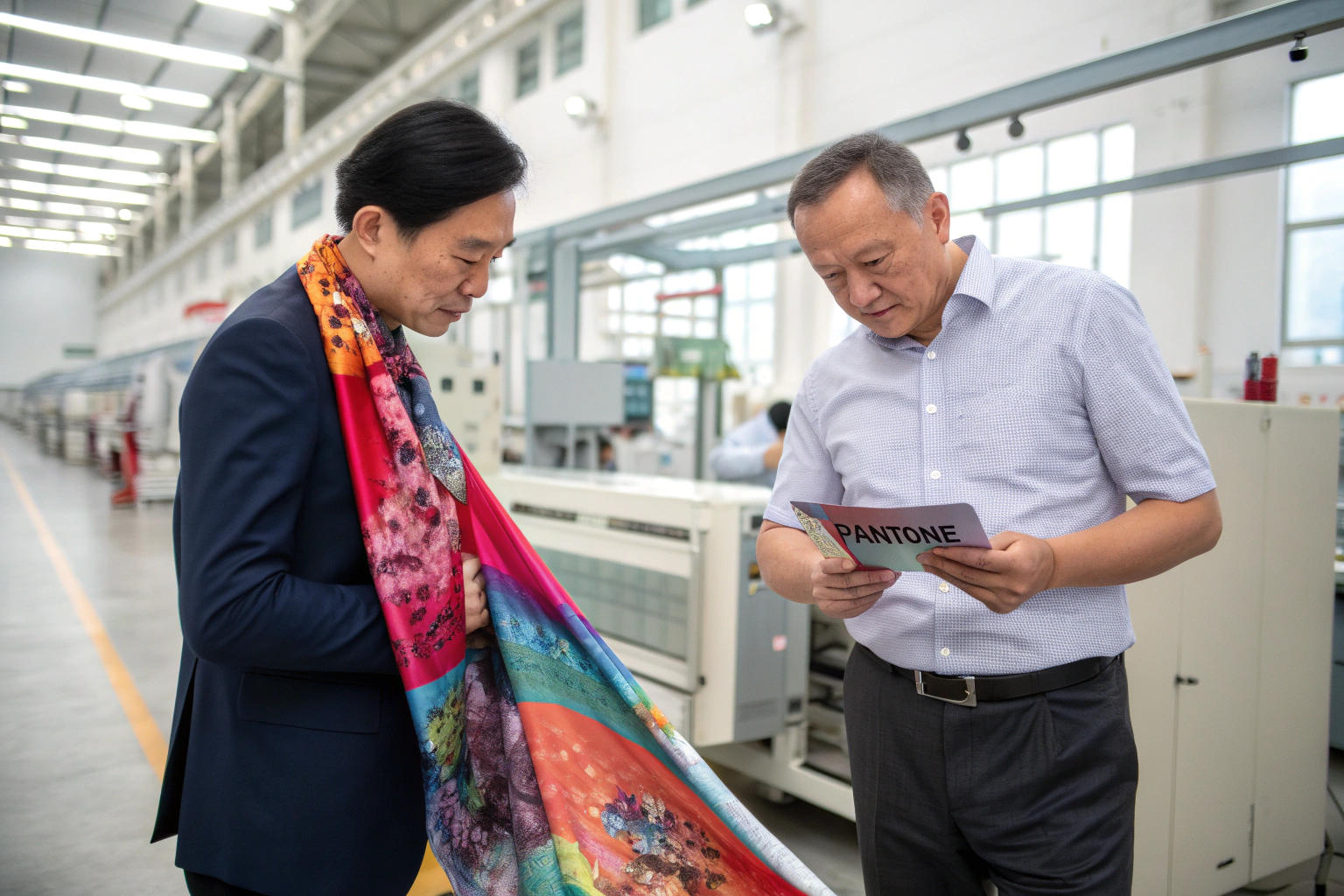
As a manufacturer of fashion accessories for over two decades, I've seen that nothing transforms a simple piece of fabric into a high-value fashion item like a unique print. I talk with experienced buyers like Ron from the US all the time, and a major pain point they face is the "print problem." They've all had experiences with sourcing printed scarves where the colors are wrong, the details are blurry, the print feels stiff, or worse, the factory uses their custom artwork for other clients. Sourcing unique prints is not just about sending a JPEG; it's about managing a technical and creative process to ensure quality, exclusivity, and consistency.
So, how do you source scarves with beautiful, unique prints reliably and safely? The key is to control the entire process, from artwork preparation to production. This involves four critical stages: first, providing Production-Ready Digital Artwork; second, choosing the Right Printing Method for your fabric and design; third, mastering the Color Matching and Sampling process; and finally, ensuring Artwork Exclusivity with your manufacturing partner.
This systematic approach turns a process fraught with risk into a predictable and successful collaboration. At my factory, we've built our printing department around these principles. In this article, I'll guide you through each of these essential stages.
Why is Production-Ready Artwork So Important?
The most common point of failure in the entire process happens before we even see the fabric. It's the artwork file itself. A buyer will send a low-resolution, web-quality image and expect a sharp, high-end result. It's like trying to print a giant movie poster from a tiny thumbnail. The source file is the blueprint for the final product; if the blueprint is flawed, the product will be flawed.
Providing a production-ready digital artwork file is the single most important step you can take to ensure a high-quality print. A production-ready file is a high-resolution, properly formatted file that includes precise color information. This means using vector formats for graphics and high-DPI raster files for photos, and specifying colors using a universal system like Pantone. When a client provides a professional file, it tells us they are serious about quality. At Shanghai Fumao Clothing, our design team can help clients clean up their files, but starting with a great file saves time and avoids misinterpretation.
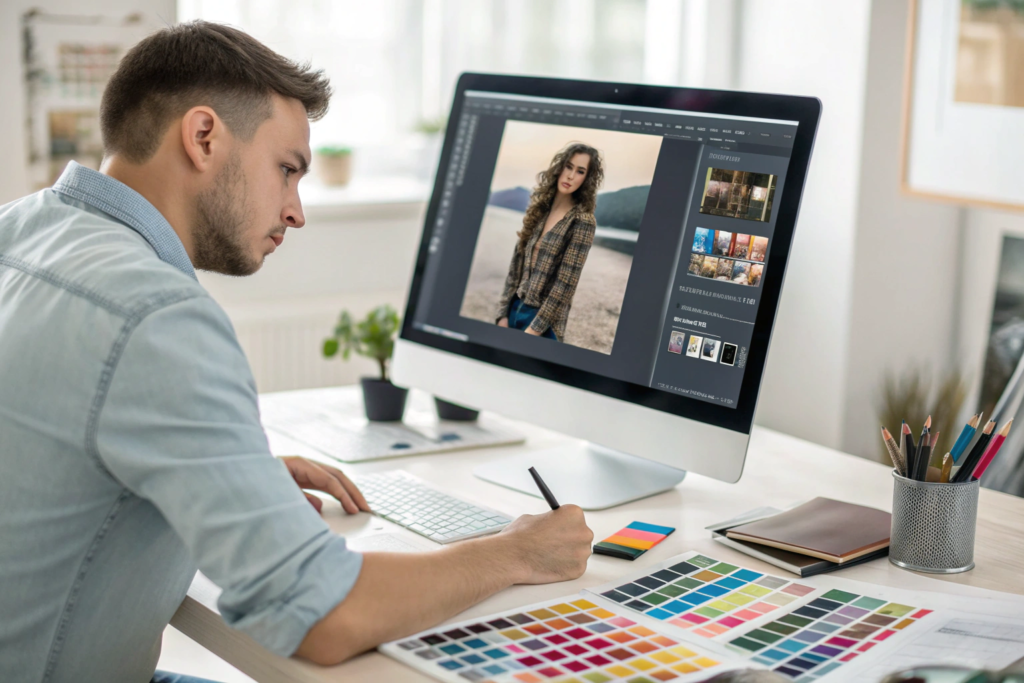
What is a Vector vs. a Raster file?
- Raster files (like JPEG, PNG, or PSD) are made of pixels. They are great for photographs. For printing, they must be very high resolution—at least three hundred DPI (dots per inch) at the final print size. Anything less will look blurry or pixelated.
- Vector files (like AI, EPS, or SVG) are made of mathematical paths. They are perfect for logos, text, and graphic illustrations. Their magic is that they can be scaled to any size—from a postage stamp to a billboard—with zero loss of quality. Whenever possible, artwork for printing should be in a vector format. This is a fundamental concept in graphic design.
Why must you specify Pantone colors?
Computer screens all show color differently. The "blue" on your screen could look completely different from the "blue" on my screen. To solve this, the industry uses the Pantone Matching System (PMS). This is a standardized color book, like a paint swatch book from a hardware store. When you specify "Pantone 18-3838 Ultra Violet," we can look at our physical Pantone book and know the exact shade of purple you want. Without Pantone numbers, color matching is just guesswork.
What Are the Main Printing Methods?
Once you have your artwork, the next step is to choose how it will be applied to the fabric. The printing method you choose will dramatically affect the look, feel, and cost of your scarf. Each method has its own strengths and weaknesses.
The choice of printing method depends on your design's complexity, your order quantity, and your chosen fabric. The two dominant methods for modern scarf production are Screen Printing for bold, simple graphics and large runs, and Digital Printing for complex, multi-color designs and smaller quantities. Understanding the difference between these two is crucial for budgeting and achieving your desired aesthetic.
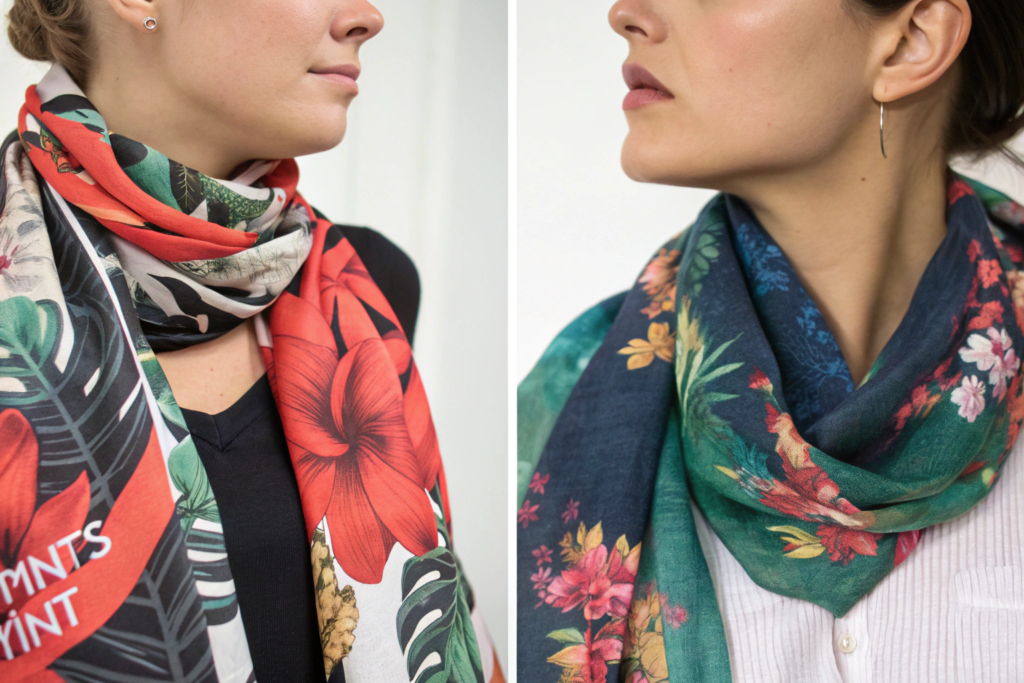
What is Screen Printing?
Screen printing is a traditional technique where a mesh screen is used to transfer ink onto the fabric. A separate screen must be created for each color in the design. This method is best for designs with a limited number of solid colors, like a logo or a bold geometric pattern. Because of the setup cost of creating the screens, it is most cost-effective for large production runs. The ink layer is often slightly thicker, which can give the print a high-quality, tactile feel. This method is a classic art form, with a history detailed by institutions like the Tate.
What is Digital Printing?
Digital printing is like using a giant, specialized inkjet printer that prints directly onto the fabric. Its biggest advantage is that it can reproduce an unlimited number of colors, gradients, and fine details, making it perfect for photorealistic images, intricate patterns, and watercolor effects. There are no screens to create, so setup costs are very low, making it ideal for small production runs and sampling. The ink is absorbed directly into the fibers, resulting in a print with a very soft feel. This technology has revolutionized the textile industry.
How Do You Master the Color Matching and Sampling Process?
This is the stage where you verify that the factory can execute your vision correctly before committing to a full production run. It is arguably the most important quality control step in the entire sourcing process. Never, ever skip the sampling stage.
Mastering the sampling process means being systematic and clear in your feedback. It involves two key phases: first, approving a "Lab Dip" to confirm the colors, and second, approving a full "Strike-Off" or pre-production sample to confirm the print quality and placement. This iterative process eliminates surprises and ensures the final product is exactly what you approved. This is a core part of the quality assurance protocol at Shanghai Fumao Clothing.
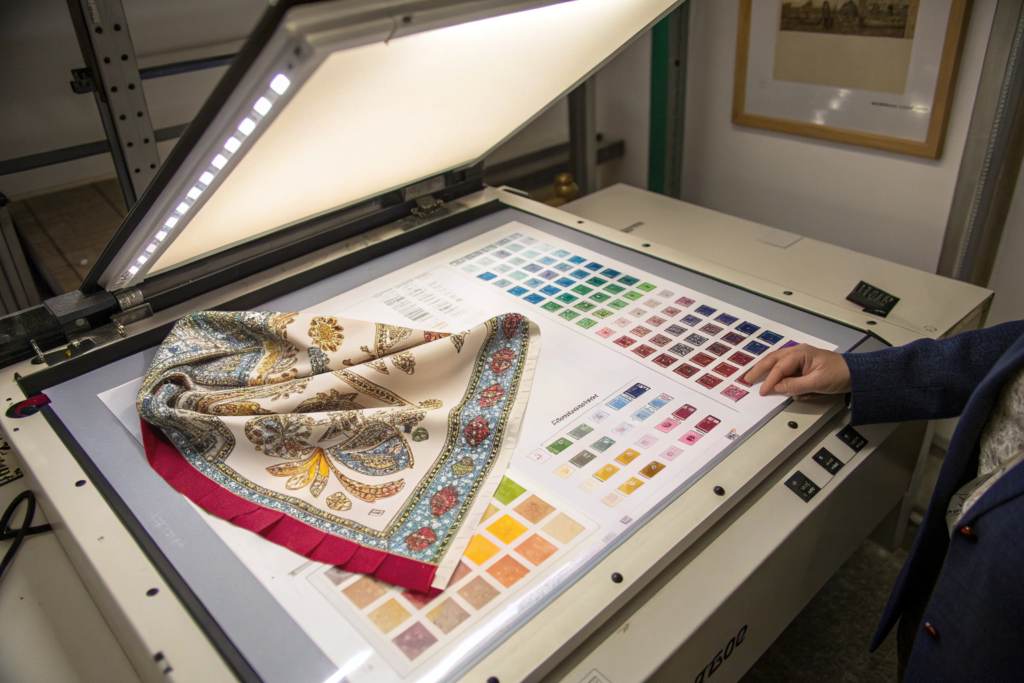
What is a "Lab Dip"?
A Lab Dip is a small swatch of your chosen fabric that the factory dyes to match your specified Pantone colors. They will create a swatch for each color in your print design. You will receive these physical swatches for approval. This step confirms that the factory can accurately reproduce your chosen colors on your specific fabric before they even begin printing. You might approve them, or you might say, "The blue is too dark, please try again."
What is a "Strike-Off"?
A Strike-Off is a test print. It is a small piece of your actual fabric, printed with a section of your final artwork. This allows you to check everything: the color accuracy (by comparing it to your approved lab dips), the sharpness of the details, the scale of the print, and the feel of the ink on the fabric. For a large scarf with a repeating pattern, the strike-off shows you one full repeat of the pattern. Approving the strike-off is like giving the green light for production to begin.
How Can You Ensure Artwork Exclusivity?
This is the biggest fear for any brand investing in custom design: you pay for a unique print, and a few months later, you see a slightly modified version of it being sold by another brand, sourced from the same factory. This is a valid concern and must be addressed professionally from the start.
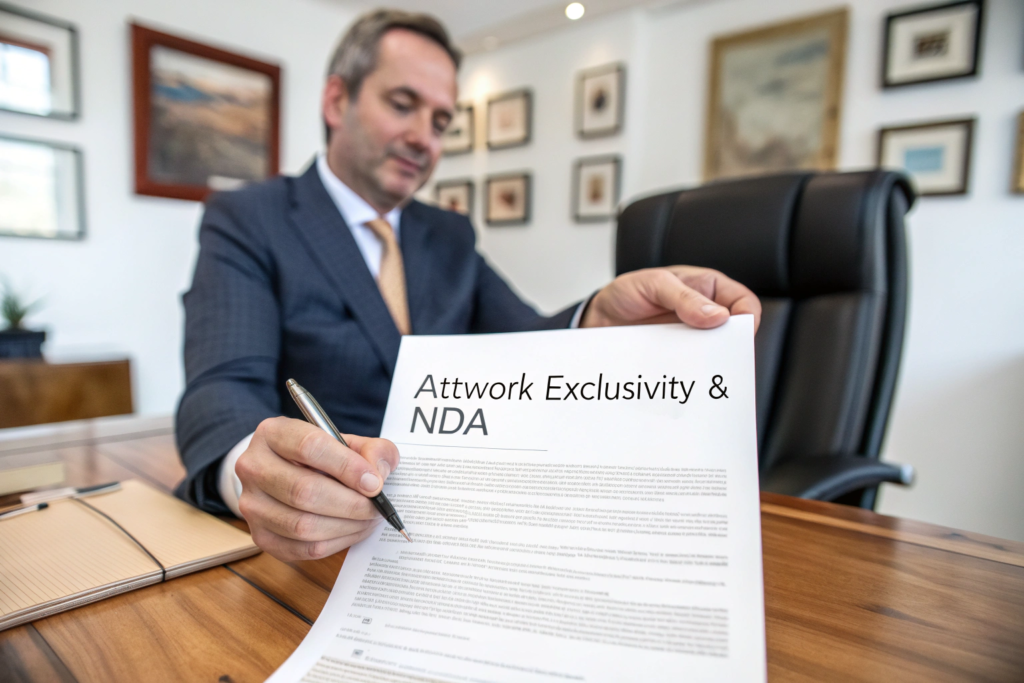
Ensuring artwork exclusivity requires a clear agreement and a relationship built on trust with your manufacturing partner. The most effective tool for protecting your intellectual property is a legally binding Non-Disclosure and Exclusivity Agreement (NDA). A reputable factory will have no problem signing such an agreement. It's a sign that they are a professional partner, not just a transactional vendor.
What should an NDA include?
Your NDA should be simple but clear. It should state that the artwork you provide is your exclusive intellectual property. It should explicitly forbid the factory from:
- Sharing the artwork with any other client or third party.
- Using the artwork to produce products for anyone other than your brand.
- Creating derivative works based on your design.
This is a standard business practice for protecting trade secrets and creative works.
How do you build a trusted partnership?
Beyond the legal document, the best protection is working with a factory that values long-term relationships. A factory that sees you as a partner in growth has a vested interest in protecting your designs because your success is their success. Look for transparency, clear communication, and a willingness to invest in a formal agreement. A factory that is hesitant to sign an NDA is a major red flag. This commitment to partnership is the foundation of our business model.
Conclusion
Sourcing scarves with unique prints is a rewarding process that can create immense value for your brand, but it requires a professional and systematic approach. It all starts with providing high-quality, production-ready artwork with precise color specifications. Next, you must choose the right printing method—Screen or Digital—that aligns with your design's complexity and your business needs. You must then engage in a rigorous sampling process, approving both lab dips for color and a final strike-off for print quality. Finally, and most critically, you must protect your creative investment with a clear exclusivity agreement. By controlling these key stages, you can confidently source beautiful, unique printed scarves that will delight your customers and set your brand apart.
If you are looking for a manufacturing partner who has mastered the technical art of printing and who respects and protects your intellectual property as a core business principle, my team at Shanghai Fumao Clothing is ready to collaborate with you. We are here to help you bring your unique vision to life, safely and beautifully. Please contact our Business Director, Elaine, at her email: elaine@fumaoclothing.com to start the conversation.