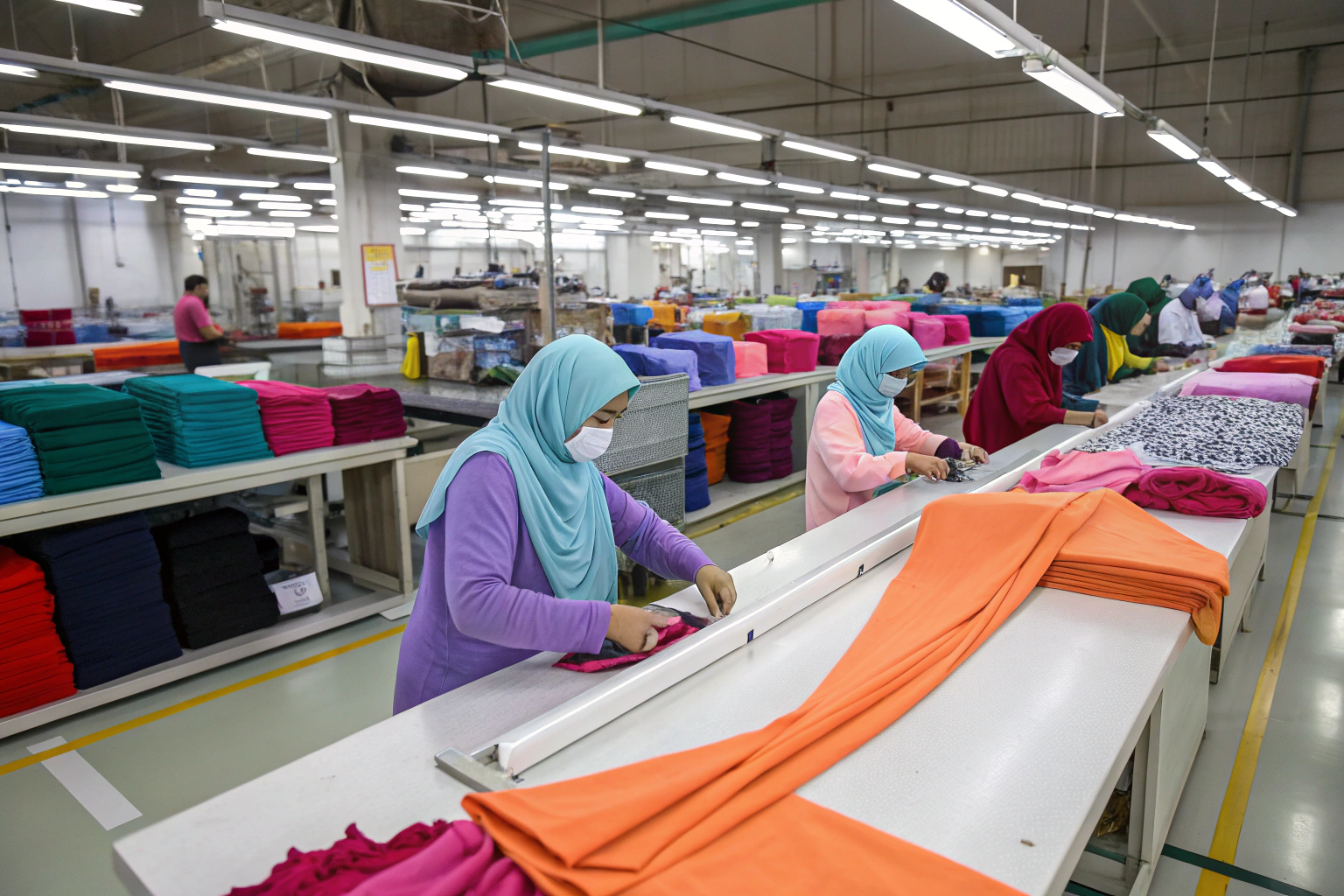
I remember a client from a major American supermarket chain. She came to me with a problem. She wanted to sell matching scarf and glove sets for the holiday season. Her previous supplier sent mismatched colors. The red on the scarves did not match the red on the gloves. She lost sales. She was frustrated. I told her we could help. We worked with our dye house. We controlled the entire production process. Every piece matched perfectly. She sold out her entire holiday order. That is when I learned that matching sets are not simple. They require precision.
Sourcing matching accessory sets like scarves and gloves requires a supplier with integrated production capabilities, strict color control, and coordinated manufacturing processes. The best suppliers handle multiple product categories under one roof. They use the same dye lots for all materials. They have quality control systems that ensure consistency across different items. At AceAccessory, we produce scarves, gloves, hats, and belts together. This integration allows us to create perfectly matched sets. This capability is a core part of our service at Shanghai Fumao Clothing.
You might think matching sets are easy. They are not. Different materials take dye differently. Different factories use different processes. The result is often mismatched colors. In this article, I will share how we achieve perfect matching across different accessory types.
Why Is Integrated Production Critical for Matching Sets?
A client from a European fashion brand once asked me why her matching sets from another supplier did not match. I explained that the supplier used different factories. One factory made scarves. Another made gloves. Each used different dyes. Each had different quality standards. The result was inconsistency. She moved her business to us. Now we make all her matching sets in one place.
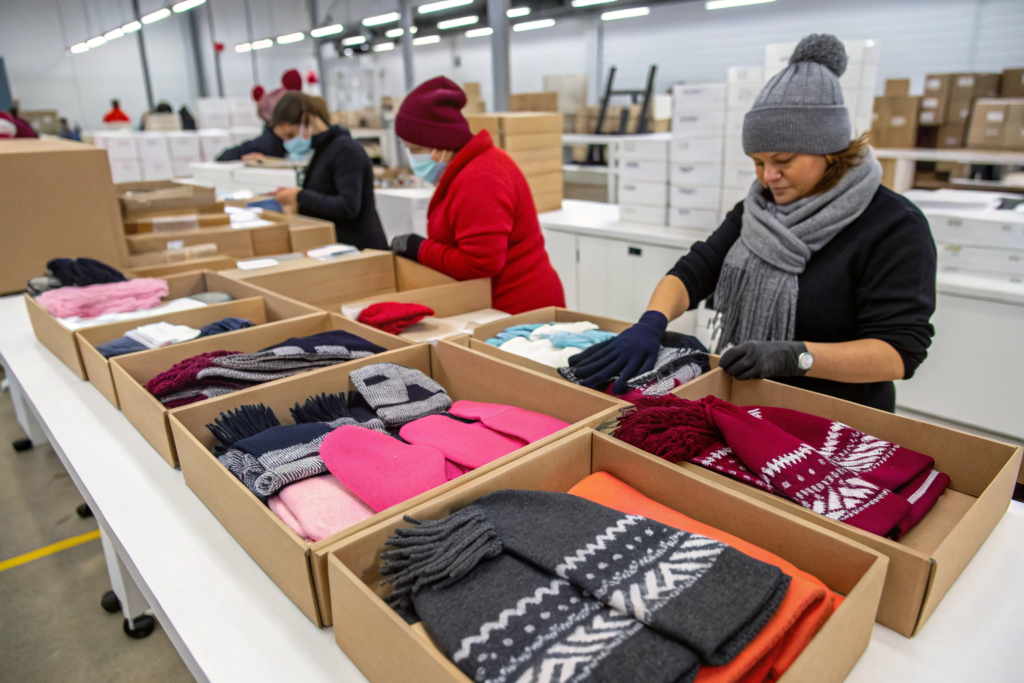
Integrated production means making all items in the same facility. This allows for consistent quality control. It ensures the same dye lots are used across products. It enables coordinated production scheduling. When scarves, gloves, and hats are made together, they come from the same materials, the same machines, and the same team. This creates true matching sets. I believe integrated production is essential. Let me explain why.
How Does Integrated Production Ensure Color Consistency?
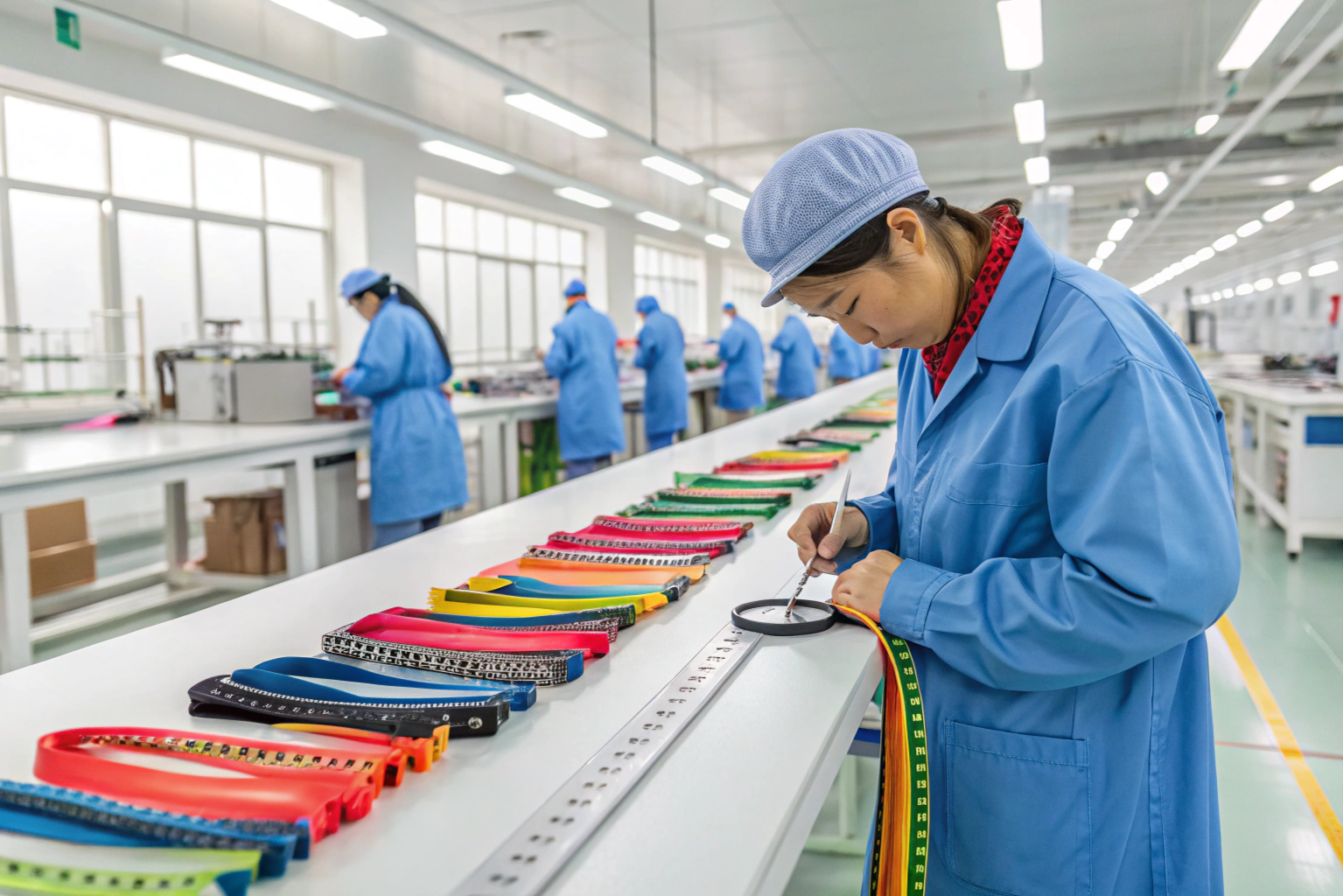
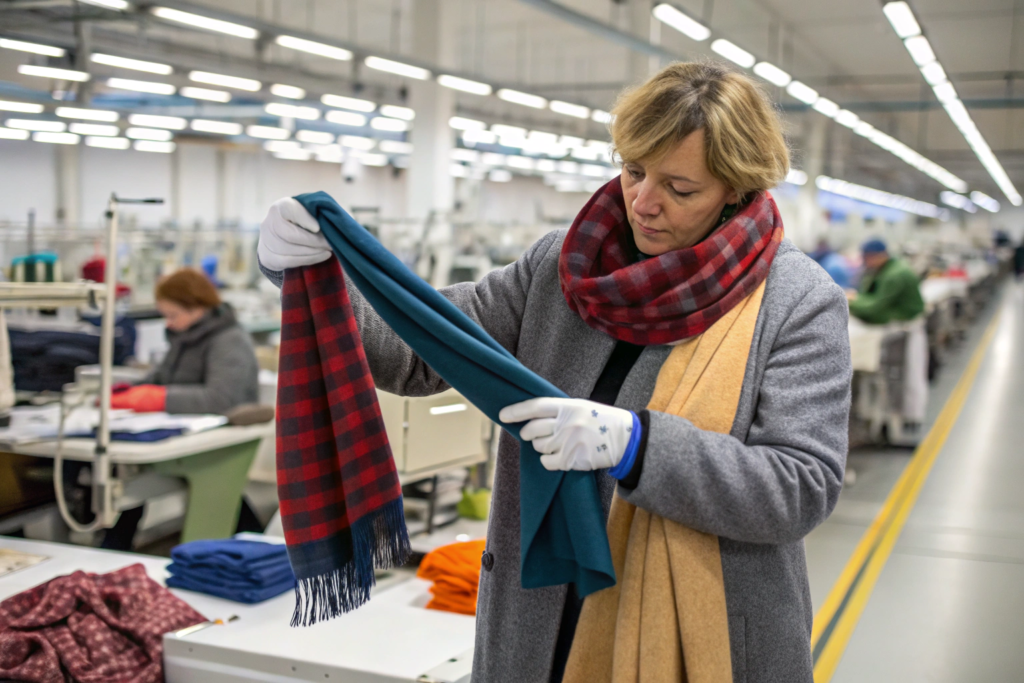
Color consistency starts with the dye house. When we make a matching set, we dye all the yarn or fabric together. They go into the same dye batch. This is called the same dye lot. The color is identical. If a scarf is knitted from yarn, the gloves use yarn from the same batch. If a hat is cut from fabric, the scarf uses fabric from the same roll. This is only possible when everything is produced together. You can learn about dye lot consistency standards from textile industry organizations. We follow these standards for every matching set.
What Are the Challenges of Using Multiple Suppliers?
Using multiple suppliers creates problems. Supplier A makes scarves. Supplier B makes gloves. They use different dye houses. They use different materials. Even if they use the same color code, the actual color can differ. One supplier might use a different base material. Cotton takes dye differently than acrylic. One supplier might have different water quality. This affects the final color. The result is sets that do not match. I have seen this happen many times. That is why we emphasize integrated production. For supply chain management insights, you can see why coordination matters. At Shanghai Fumao Clothing, we eliminate this problem by making everything together.
How Do You Control Color Across Different Materials?
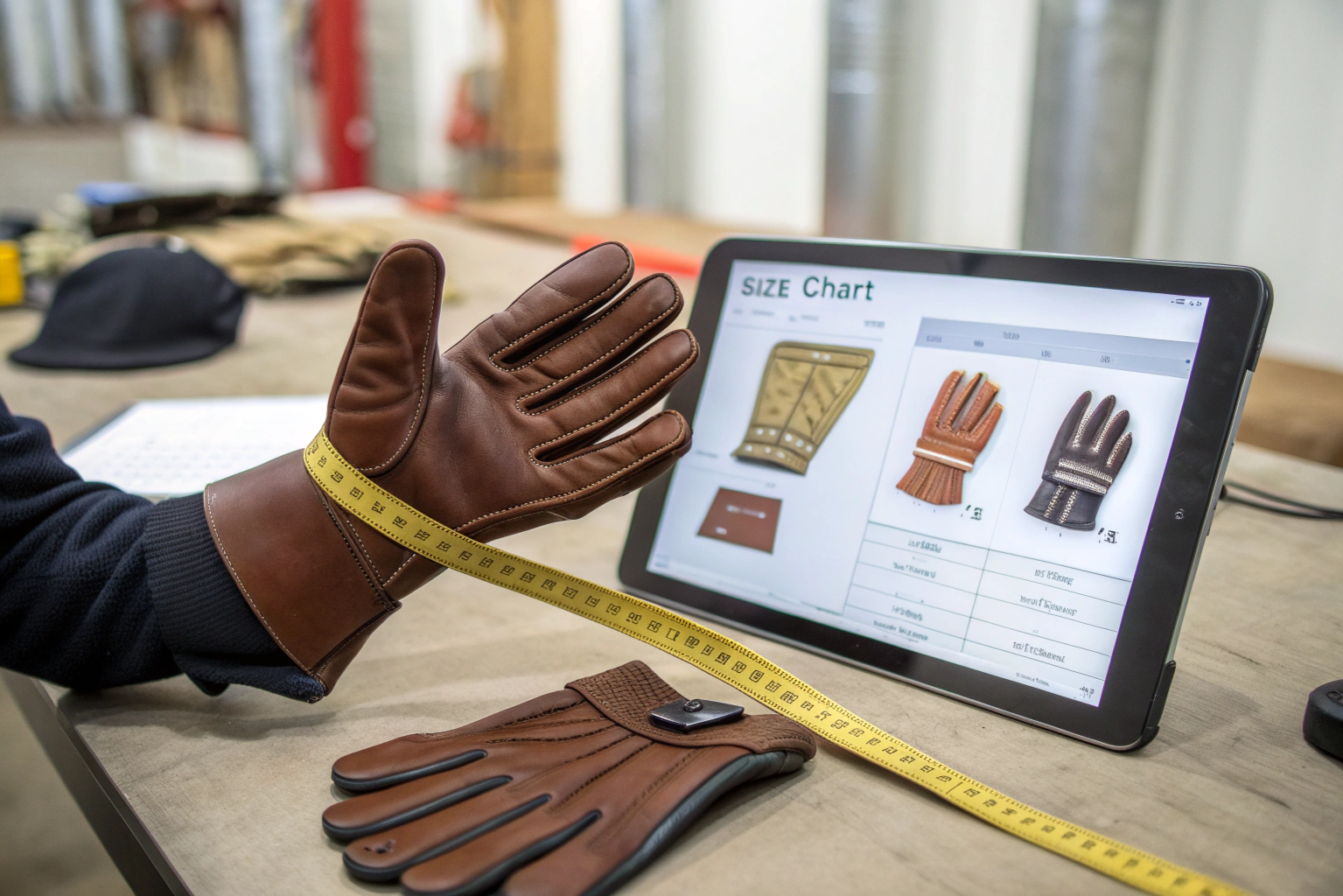
I had a client from a large online store. She wanted a set with a wool blend scarf and leather gloves. She was worried about color matching. Wool and leather take dye differently. I explained our process. We dye the wool to match the leather. We use color matching technology. We adjust until they match perfectly. She was impressed. The final products matched exactly.
Controlling color across different materials requires technical expertise. Different fibers absorb dye differently. Wool, cotton, acrylic, and leather each have unique dyeing properties. Professional suppliers use spectrophotometers to measure color precisely. They create dye formulas for each material. They adjust until colors match under all lighting conditions. This technical approach ensures consistent matching.
What Is Spectrophotometer Color Matching?
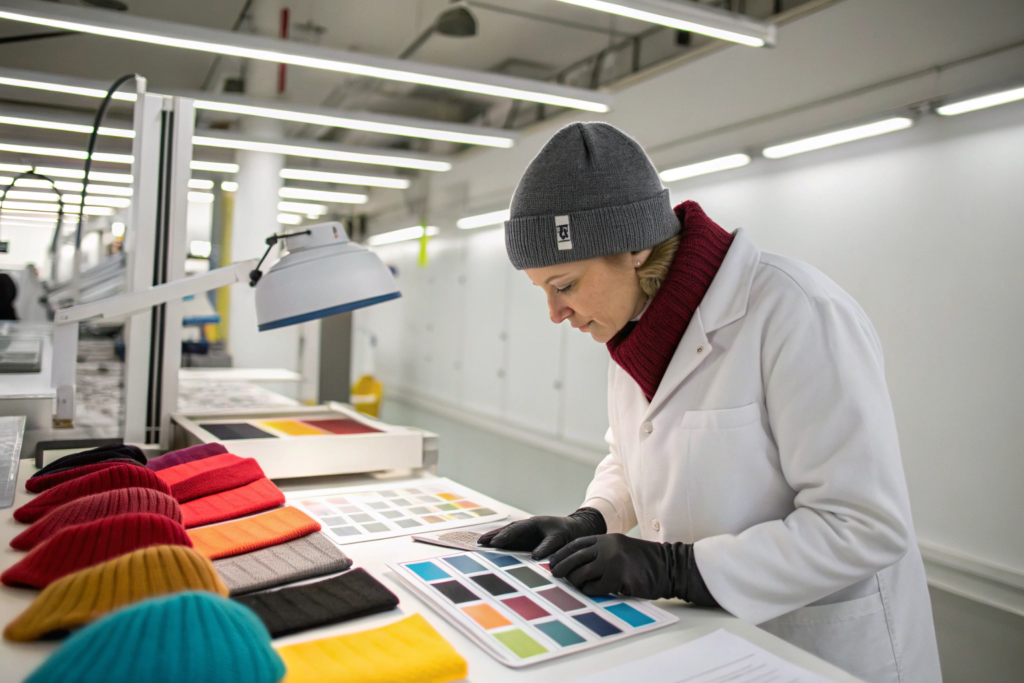
A spectrophotometer is a machine that measures color precisely. It reads the color values. It gives exact numbers. We use this to create dye formulas. We input the target color. The machine tells us the exact dye combination needed. For wool, we use one formula. For cotton, we use another. For leather, we use another. The result is the same visual color across different materials. This technology is used by major brands. You can learn about spectrophotometer technology from industry leaders. We use this equipment for all our matching sets.
How Do You Match Colors Under Different Lighting?
Colors look different under different lights. Sunlight is different from store lighting. Store lighting is different from home lighting. A good match looks consistent under all conditions. We test our colors under multiple light sources. We use light boxes with different settings. We check under daylight, fluorescent, and incandescent. If the color shifts, we adjust. This ensures your sets look matched everywhere. For color assessment standards, you can find detailed specifications. We follow these standards to ensure quality.
What Production Processes Ensure Consistent Quality Across Items?
A client from a Russian importer once visited our factory. She watched our scarf knitting line. Then she walked to our glove cutting area. She saw the same quality checklists. She saw the same inspectors. She was reassured. She knew her sets would be consistent.
Consistent quality across items requires standardized production processes. The same quality standards apply to scarves, gloves, and hats. The same inspection checklists are used. The same testing methods are applied. This standardization ensures that every item in the set meets the same quality level. No item is weaker than the others.
How Do You Standardize Quality Across Product Types?
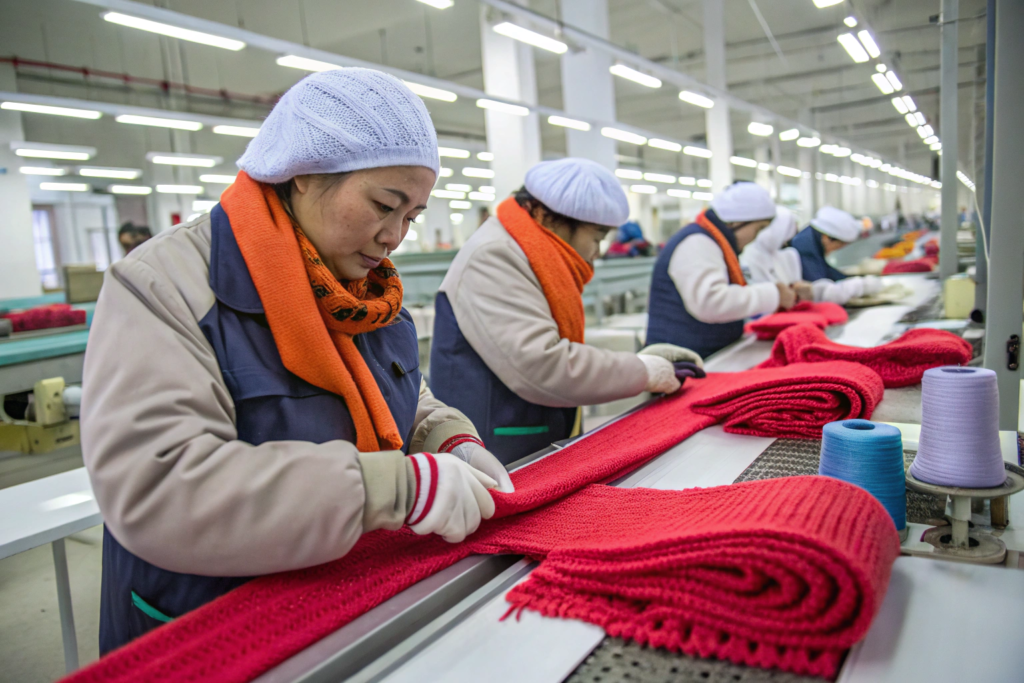
We have quality standards that apply to all products. Every item must pass the same durability tests. Every item must pass the same colorfastness tests. Every item must pass the same dimensional stability tests. Our inspectors are trained on all product types. They know what to look for on scarves. They also know what to look for on gloves. This broad training ensures consistency. You can learn about quality management systems from industry resources. We apply these principles across all our production lines.
How Do You Coordinate Production Timelines?
Matching sets must be completed together. If gloves finish two weeks before scarves, the sets cannot ship. We coordinate production timelines carefully. We schedule all items to finish at the same time. Our project managers track each product line. They adjust schedules as needed. If one line is delayed, they shift resources. The goal is synchronized completion. This allows us to pack and ship complete sets. For production scheduling best practices, you can find useful resources. We use these practices to ensure timely delivery.
How Do You Package and Present Matching Accessory Sets?
A client from a major European department store wanted special packaging for her matching sets. She wanted the sets to look gift-ready. We created custom boxes. We arranged the scarf, gloves, and hat together. The presentation was beautiful. Her customers loved the packaging. They bought them as gifts.
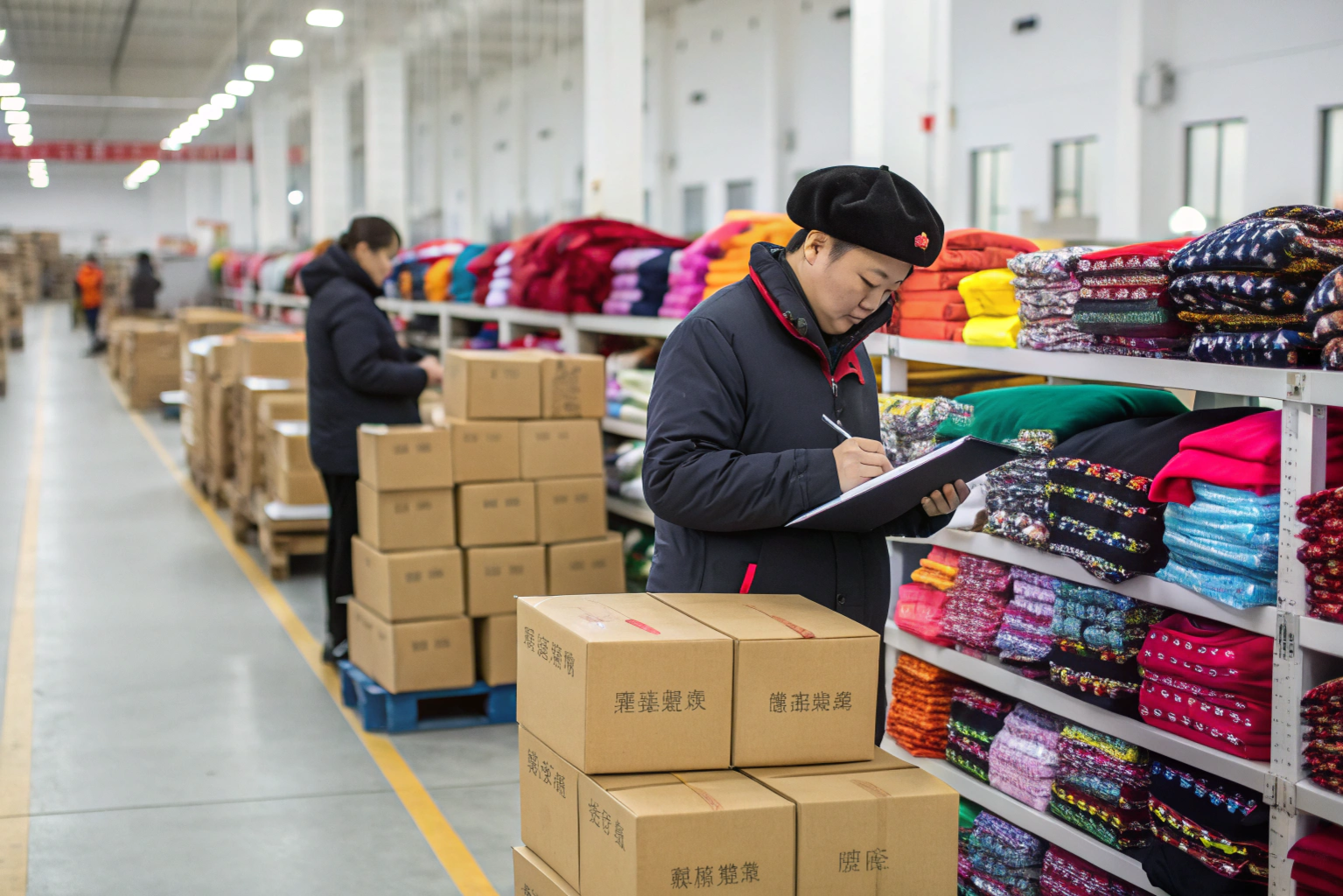
Packaging is important for matching sets. The presentation should reflect the coordinated nature of the products. Sets can be packaged together in a single box or bag. Custom packaging adds value. It makes the products gift-ready. Clear labeling helps customers understand what is included. Good packaging protects the products during shipping.
What Are the Best Packaging Options for Sets?
There are several options. Single box packaging is popular. All items go into one box. This is clean and professional. Gift bag packaging works for lower price points. It is simple but attractive. For premium sets, we use window boxes. Customers can see the products inside. We also offer poly bags for bulk orders. This is common for supermarket clients. We help you choose based on your market. For packaging design inspiration, you can see different options. We work with you to create the right presentation.
How Do You Label Matching Sets?
Clear labeling is essential. The label should list all items in the set. For example, "Set includes one scarf, one pair of gloves, and one hat." Size information is important. If items come in different sizes, they should be clearly marked. Care instructions should be included for each item. Barcode labeling should be consistent across the set. We help clients create labels that are clear and compliant. For labeling regulations in different markets, we stay informed. This ensures your sets meet all requirements.
Conclusion
Sourcing matching accessory sets is not simple. It requires a supplier with integrated production. It requires expertise in color control. It requires standardized quality processes. It requires coordinated packaging and sampling. At AceAccessory, we have built our factory to handle these challenges.
Our factory in Zhejiang produces scarves, gloves, hats, belts, and other accessories together. We control the entire process. We use the same dye lots. We apply the same quality standards. Our project managers coordinate timelines. Our quality control team checks every item. The result is perfectly matched sets that your customers will love. I have seen the difference this makes for our clients. Supermarket chains sell matching sets as holiday gifts. Fashion brands create coordinated collections. Online stores build customer loyalty with consistent quality. The demand for matching sets is growing.
If you are ready to add matching accessory sets to your product line, we are here to help. We can guide you through material selection, color matching, and production. We can show you samples. We can discuss your packaging needs. I invite you to reach out to our Business Director, Elaine. She can answer your questions and start the conversation. Contact her at elaine@fumaoclothing.com. Let us create perfectly matched sets for your brand.