I learned a valuable lesson about spandex hair bands about a decade ago. A client, a growing activewear brand, placed a large order for headbands. They specified "high quality." We sourced what we thought was good spandex, produced the bands, and shipped them. A few months later, the complaints started. The bands were stretching out. They were losing their grip. They were slipping off during workouts. It was a disaster for the client and a painful lesson for us. We had underestimated the demands of the sports market. A hair band for a casual day out is one thing. A hair band for a high-intensity workout is a completely different engineering challenge.
Sourcing high-quality spandex hair bands for sports requires a deep understanding of material performance, construction, and testing. The key is the elastic recovery, or how well the band returns to its original shape after being stretched thousands of times during a workout. This depends on the quality of the spandex fiber itself, the way it is knitted or woven into the fabric, and the construction of the finished band. You must look for a high percentage of premium spandex (like Lycra® brand fibers), a tight, consistent knit that provides even pressure, and a seamless or flat-seam construction that prevents chafing. Rigorous testing for stretch, recovery, and durability is non-negotiable. A sports hair band must perform when it matters most.
At Shanghai Fumao Clothing, we took that painful lesson to heart. We rebuilt our entire approach to sports accessories. We invested in better materials, better testing, and better training for our team. Today, we supply hair bands to some of the leading activewear brands in North America and Europe. We know what it takes to make a band that stays put, feels comfortable, and lasts through countless workouts. Let me share what we have learned.
What Makes A Hair Band Suitable For Sports?
Not all hair bands are created equal. The one you might wear to keep your hair back on a lazy Sunday is not the same as the one you need for a marathon or a high-intensity interval training session. The demands are completely different. Understanding these demands is the first step to sourcing correctly.
A hair band suitable for sports must meet several critical performance criteria. First and foremost is secure grip. It must stay firmly in place during intense movement, running, jumping, and sweating, without slipping. Second is comfort. It must not be so tight that it causes headaches or pain, and it must be made of materials that wick moisture away from the skin to prevent irritation. Third is durability. It must withstand repeated stretching, exposure to sweat, and frequent washing without losing its elasticity or shape. Finally, it should be non-damaging, meaning it should not snag, pull, or break hair. A sports hair band is a performance tool, not just an accessory.
Let's break down these requirements. Grip is achieved through a combination of the material's inherent friction and the construction of the band. A wider band distributes pressure and creates more surface area for grip. A band with a silicone strip or a textured inner surface can provide extra grip for very high-intensity activities. Comfort comes from the right balance of stretch and recovery. Too tight and it causes pain. Too loose and it slips. The fabric must also be breathable and moisture-wicking. Spandex blends with polyester or nylon are excellent for this. Durability is about the quality of the spandex fiber. Cheap spandex will fatigue and lose its "memory" quickly. Premium spandex, like Lycra®, is engineered to maintain its elasticity over thousands of stretches. Finally, hair-friendliness is often overlooked. A rough seam or a scratchy edge can cause breakage and damage. A seamless or flat-seam construction is essential. These are the performance standards of the sports world.
How Much Stretch Is Needed For A Sports Hair Band?
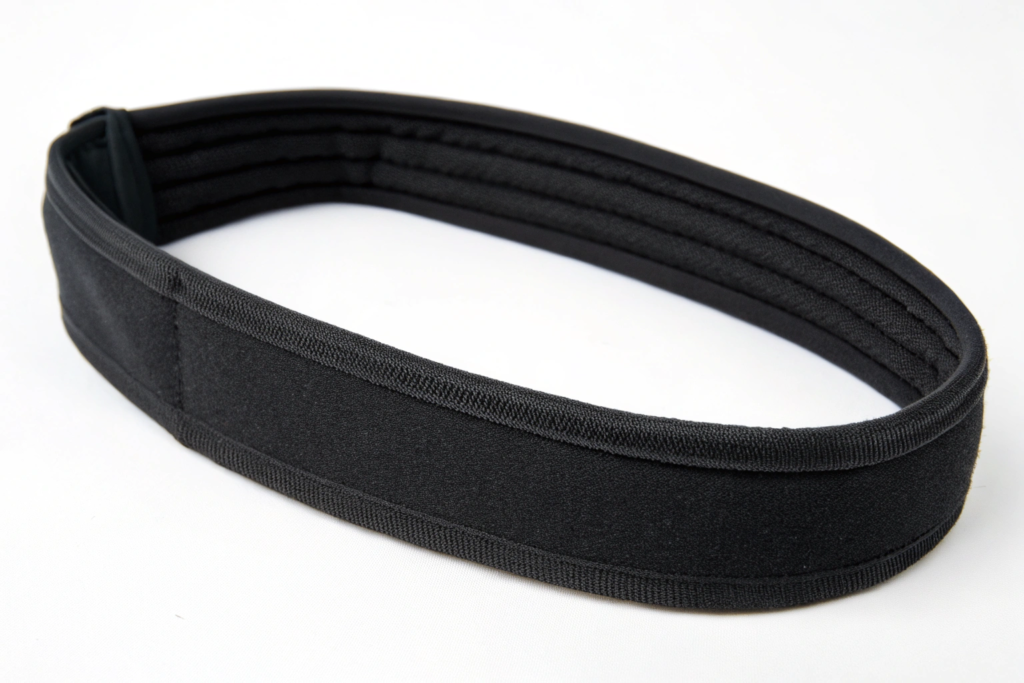
The amount of stretch is not a single number; it is about the relationship between stretch and recovery. A sports hair band needs to stretch enough to be put on and taken off easily, typically 1.5 to 2 times its original length. For example, a 10-inch band should stretch comfortably to 15-20 inches. However, the more critical factor is recovery. After being stretched to that length, it must snap back to its original 10 inches with very little "growth" (permanent stretching). A high-quality band will have less than 5% growth after being stretched repeatedly. This ensures it maintains its grip over time. We test this by stretching the band a set number of times and measuring the permanent change in length.
What Is The Ideal Width For A Sports Headband?
Width is a key design variable. It affects both grip and comfort.
- Narrow bands (under 1 inch / 2.5 cm): These are often used for a minimalist look or for keeping short hair back. They provide less surface area for grip and can sometimes feel tighter due to the concentrated pressure.
- Medium bands (1-2 inches / 2.5-5 cm): This is the most common width for sports. They provide a good balance of grip and comfort, distributing pressure over a wider area.
- Wide bands (over 2 inches / 5 cm): These offer maximum grip and are excellent for absorbing sweat, especially on the forehead. They can also be a fashion statement. They are popular for yoga, tennis, and running.
The ideal width depends on the activity and the wearer's preference. We offer a range of options to our clients, and we can help them choose based on their target market and product positioning.
What Materials Are Best For Sports Hair Bands?
The material is the heart of the product. It determines everything: the stretch, the recovery, the feel, the moisture management, and the durability. Choosing the right material composition is the most important decision you will make.
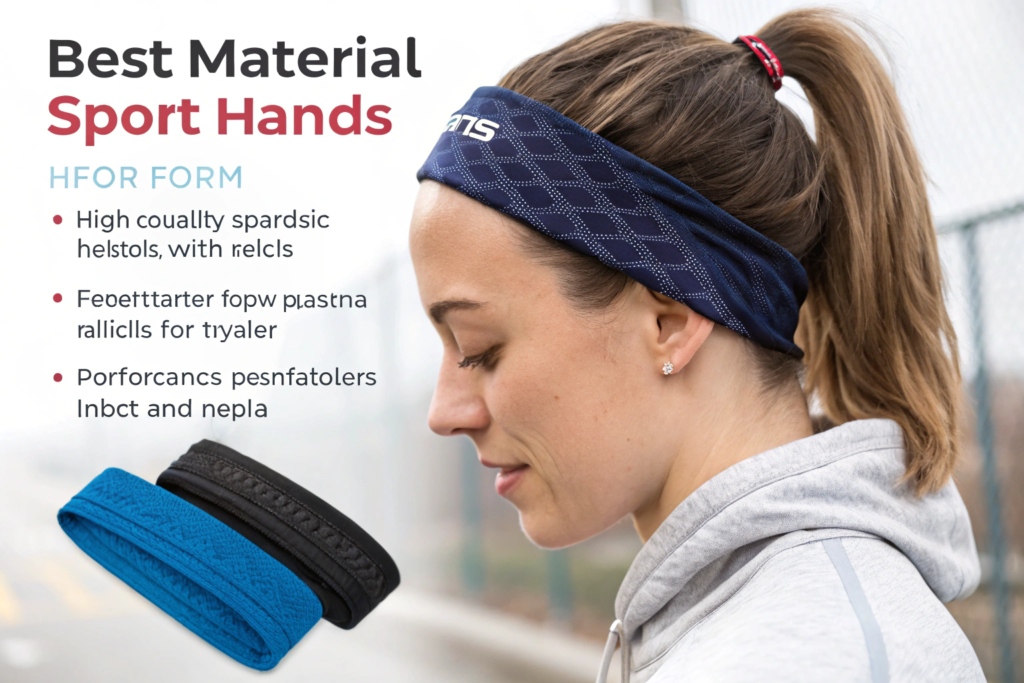
The best material for sports hair bands is a blend of high-quality spandex (elastane) and a performance fiber like polyester or nylon. Spandex provides the essential stretch and recovery. Polyester or nylon provides strength, durability, and moisture-wicking properties. A common and excellent blend is 85-90% polyester or nylon and 10-15% spandex. For the highest performance, look for spandex fibers from reputable brands like Lycra® (by Invista) or Creora®. These branded fibers are engineered for superior elasticity, recovery, and resistance to chlorine and sweat. The knit structure of the fabric also matters. A tight, dense knit will provide more even pressure and better durability than a loose, open knit.
Let's look at each component. Spandex (Elastane): This is the magic ingredient. It is a synthetic fiber known for its exceptional elasticity. A high-quality spandex can be stretched to over 500% of its length and still return to its original shape. The percentage of spandex in the blend is critical. Too little (under 5%) and the band will lack sufficient stretch and recovery. Too much (over 20%) and it can feel overly tight and may be less breathable. The 10-15% range is the sweet spot for most sports hair bands. Polyester/Nylon: These fibers provide the structure. They are strong, durable, and dry quickly. Polyester is excellent for moisture-wicking. Nylon is even stronger and has a slightly softer feel. The choice between them often comes down to the desired hand feel and cost. The quality of these fibers is just as important as the spandex.
Why Is Lycra® Brand Spandex Often Recommended?
Lycra® is not a type of fiber; it is a brand name for spandex owned by The Lycra Company (formerly Invista). It has become synonymous with high-quality spandex, much like Kleenex is for tissues. The reason it is so often recommended is that Lycra® fibers are manufactured to very high and consistent quality standards. They have a long-standing reputation for excellent elasticity, recovery, and durability. They also offer specialized fibers with added benefits, such as:
- Lycra® Xtra Life™: Offers superior resistance to chlorine and other pool chemicals, making it ideal for swim-related headbands.
- Lycra® T400®: A fiber that offers excellent stretch and recovery with a softer, more natural feel.
Using a branded fiber like Lycra® gives you, the buyer, an extra layer of assurance. It is a mark of quality that you can communicate to your customers. The fiber itself is certified and tested. While it comes at a premium cost, for performance sports products, it is often a worthwhile investment.
What Is The Difference Between Knitted And Woven Spandex Bands?
This is a fundamental construction difference.
- Knitted Spandex Bands: These are made on a circular knitting machine, creating a seamless tube. This is the most common construction for headbands. The knit structure is very stretchy and flexible in all directions. It conforms well to the head and is very comfortable. Seamless knitting means no irritating side seams.
- Woven Spandex Bands: These are made on a loom, with the spandex fibers incorporated into the warp or weft. Woven bands are generally stronger and more stable, with less stretch in one direction. They are often used for headbands that need a more structured look or for applications like watch straps or belt loops.
For most sports hair bands, a knitted, seamless construction is the preferred choice. It offers the best combination of stretch, comfort, and flexibility. The seamless design is a huge plus for preventing chafing and hair damage. This construction choice directly impacts the end user's experience.
How Can You Test The Quality And Performance Of A Hair Band?
You cannot rely on looks alone. A band might look perfect on a sample card but fail miserably in the gym. To ensure you are getting a high-quality product, you need to test it. There are simple physical tests you can do, as well as more rigorous lab tests.
Testing the quality and performance of a sports hair band involves evaluating its stretch, recovery, and durability. A simple at-home test is to stretch the band repeatedly, say 20-30 times, and then check if it has stretched out permanently. A good band will snap back to its original size. You can also check the tension by wearing it. It should feel snug but not painfully tight. For more rigorous assurance, we use standardized lab tests. These include a tensile strength test to measure the force required to break the band, a fatigue test to stretch it thousands of times and measure any loss of recovery, and a wash test to ensure it holds up after repeated laundering. We also test for colorfastness to sweat and light. These tests provide objective data that guarantees performance.
Let me explain some of these lab tests in more detail. The fatigue test is perhaps the most important. We mount the hair band on a machine that stretches it to a predetermined length and then releases it, over and over again. We might run this for 1,000, 5,000, or even 10,000 cycles. At the end, we measure the band's length. Has it grown? By how much? A high-quality band will show less than 5% growth. This test simulates months or years of actual use in a matter of hours. The tensile strength test is more about construction quality. It measures the force needed to break the band. A weak band might break at a seam or at a weak point in the knit. This test ensures the band is strong enough to withstand the rigors of being pulled on and off. We also do wash tests (AATCC 135) to ensure the band does not shrink, stretch, or lose its color after multiple washes. This is critical because sports bands get washed frequently. This battery of tests is our guarantee of quality.
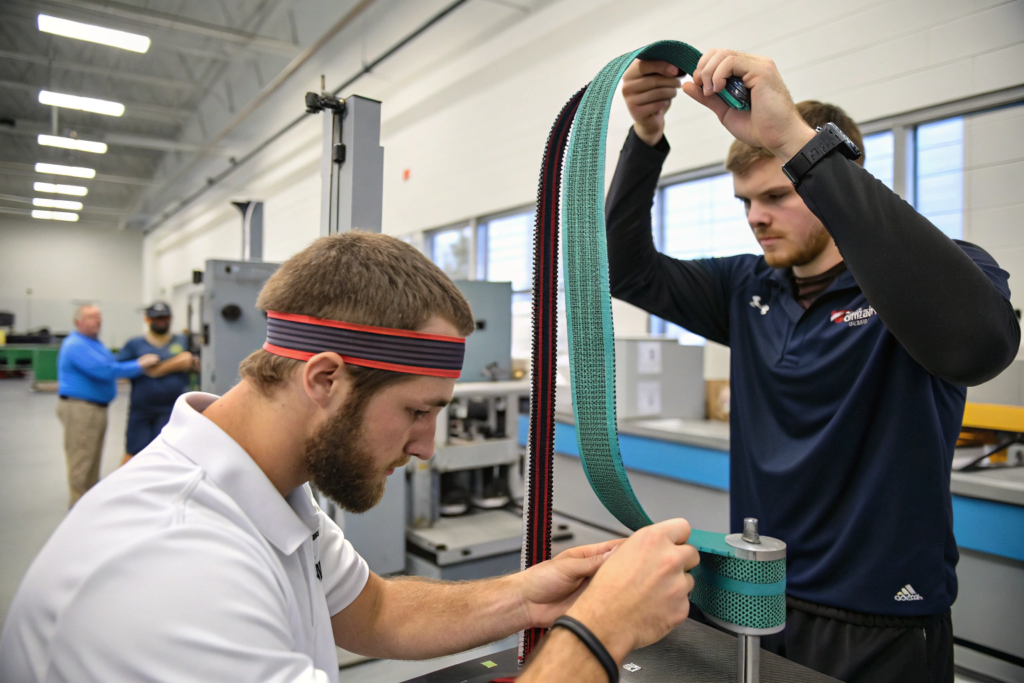
How Do You Perform A Simple Stretch And Recovery Test?
You can do this test yourself with any sample. Here is a simple method:
- Measure and Mark: Lay the hair band flat and measure its unstretched length. Mark this point on a ruler or a piece of paper.
- Stretch: Hold the band at both ends and stretch it gently but firmly to what feels like its maximum comfortable stretch (the amount you would stretch it to put it on your head). Hold it there for a few seconds.
- Measure Stretched Length: While holding it stretched, measure its length. This gives you the maximum stretch.
- Release and Wait: Let the band relax completely. Wait about 30 seconds.
- Measure Again: Measure the band's length again. Compare it to the original measurement.
If the band has stretched out permanently, the new length will be longer. A good band should return to within 1-2 millimeters of its original length. You can also repeat the stretch-and-release cycle 10-20 times and then measure again. This will show you if the band fatigues quickly.
What Is A Tensile Strength Test For A Hair Band?
A tensile strength test measures the maximum force a material can withstand while being stretched before it breaks. For a hair band, this test is done on a machine called a tensiometer or universal testing machine. A sample of the band (or the whole band) is gripped at both ends. The machine then pulls the ends apart at a constant speed. A sensor measures the force being applied. The test continues until the band breaks. The machine records the peak force (in pounds or Newtons) at the moment of break. This number is the tensile strength. For a sports hair band, you want a tensile strength high enough that it will not break under normal use, even when stretched forcefully. A low tensile strength could indicate a weak knit, poor-quality yarn, or a defect. This test is a standard quality control measure.
What Construction Details Prevent Slipping And Chafing?
The material and the fiber are the foundation, but the construction details are what make the difference between a good band and a great one. These are the small things that enhance comfort, improve grip, and prevent the band from becoming a nuisance during a workout.
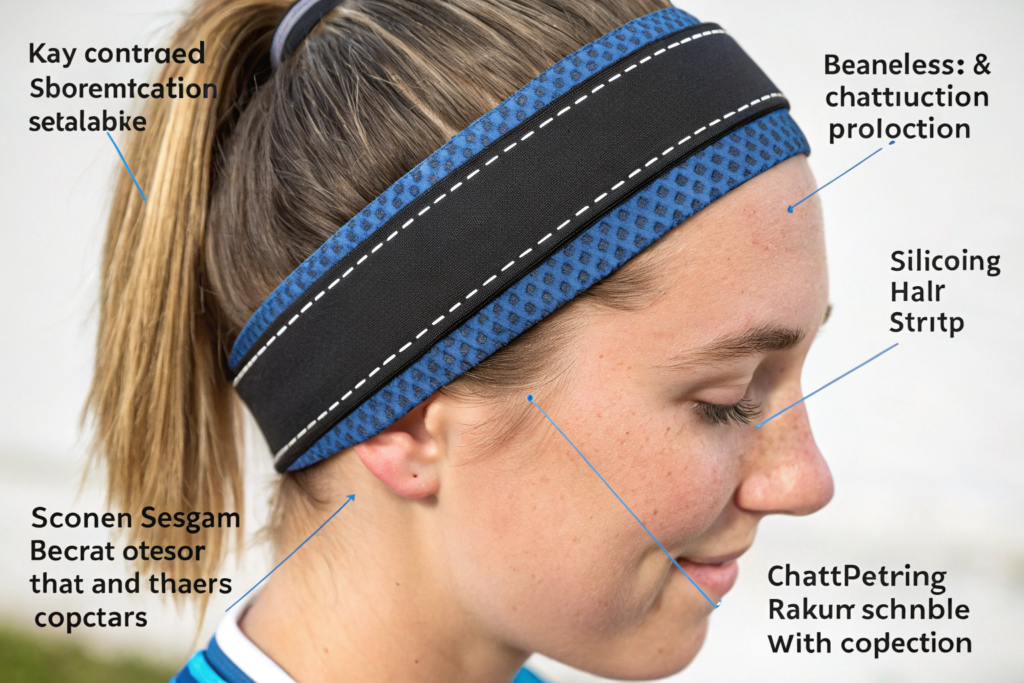
Key construction details for sports hair bands include the seam type, the inner grip, and the edge finish. A seamless or flat-seam construction is essential to prevent chafing and hair snagging. A raised seam can rub against the forehead and cause irritation, especially during sweaty, long-duration activities. For extra grip, some bands incorporate a silicone strip or a ribbed inner surface. This helps the band stay firmly in place, even when the hair and skin become wet. Finally, the edges of the band should be finished smoothly, often with a rolled or folded edge, to prevent them from curling up or digging into the skin. These details show that the manufacturer understands the needs of the athlete.
Let's look at each of these. Seamless construction is achieved by knitting the band in a tube on a circular knitting machine. There is no side seam to irritate. If a seam is necessary (for example, in a cut-and-sew band), it must be a flat, low-profile seam, often sewn with a flatlock or overlock machine using soft, stretchy thread. The seam should be placed where it will cause the least friction, perhaps on the side rather than the front. Silicone grips are a popular add-on for high-intensity sports. A thin strip of silicone is printed or adhered to the inner surface of the band. This provides a very high-friction surface that grips hair and skin tenaciously. The silicone must be of good quality so it does not peel off after washing. Edge finishing is the final touch. A raw-cut edge can fray and will be scratchy. A well-finished edge is either "hemmed" (folded over and sewn) or has a special knit structure that creates a naturally finished, non-raveling edge. This attention to detail is what defines a premium product.
Are Seamless Bands Always Better Than Those With Seams?
For sports and athletic use, the answer is almost always yes. Seamless bands offer a clear advantage in comfort. There is no ridge or bump to press into the skin. This is especially important during activities where the headband is worn for long periods, like a long run or a marathon. The constant rubbing of a seam can cause a painful friction burn or "chafing." Seamless construction also eliminates the risk of the seam splitting, which is a common failure point in cheaper bands. The only potential downside is that seamless knitting machines are more specialized, which can sometimes make seamless bands slightly more expensive. However, for a performance product, the benefit in comfort and durability is well worth the investment.
How Effective Are Silicone Grips For High-Intensity Workouts?
Silicone grips are highly effective. They are a game-changer for people who do high-intensity workouts like CrossFit, HIIT, or running, where a lot of sweat and movement can cause a standard band to slip. The silicone creates a very high coefficient of friction. It literally grips the hair and skin. However, there are a few things to consider:
- Placement: The silicone strip should be placed on the inner surface where it will make maximum contact, usually in the center.
- Width: A wider strip provides more grip than a thin line.
- Quality: The silicone must be of high quality and properly bonded to the fabric. Cheap silicone can peel, crack, or become less grippy over time.
- Comfort: For some people, a silicone grip can feel a little "sticky" or unusual at first, but most adapt quickly.
We often recommend silicone-grip bands for clients targeting the serious athlete market. For more casual sports like yoga or walking, a well-designed seamless band with a good knit texture may be sufficient. The choice depends on the activity level.
How Do You Ensure Consistent Quality In Production?
You have selected the perfect materials and specified the ideal construction. Now you are ordering thousands of bands. How do you ensure that band number 5,000 feels and performs exactly like band number one? This is the challenge of mass production, and it requires a robust quality assurance system.
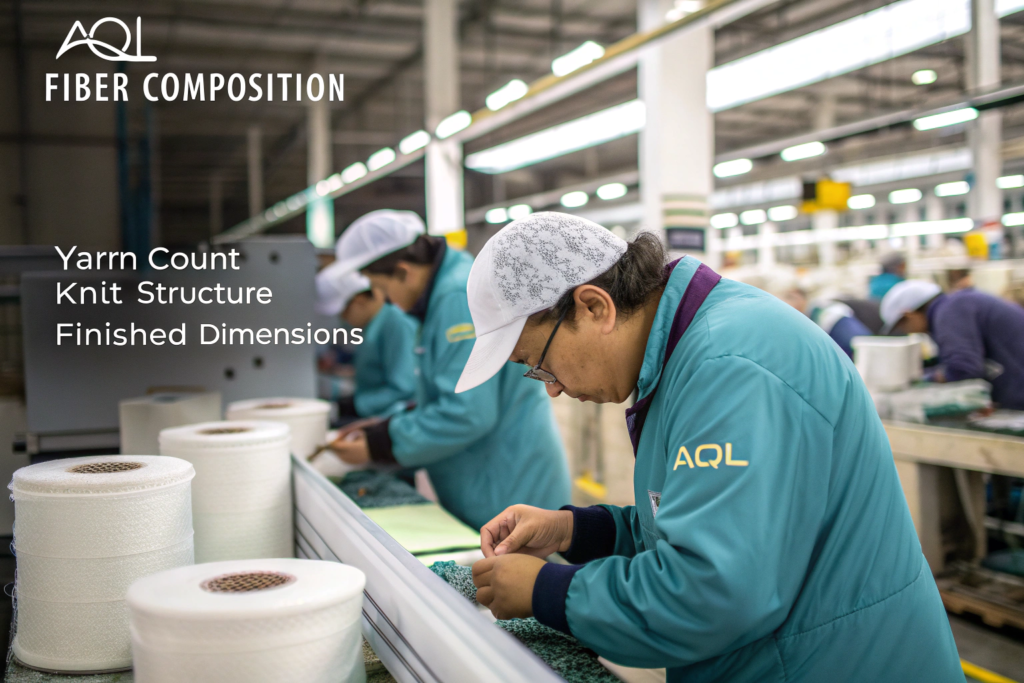
Ensuring consistent quality in production starts with clear, documented specifications for every aspect of the product: fiber composition, yarn count, knit structure, finished dimensions, and packaging. It continues with incoming material inspection, where we test every batch of spandex and polyester yarn to ensure it meets our standards. During production, we have in-line inspectors who regularly check bands for correct dimensions, consistent tension, and any defects like dropped stitches or uneven knitting. Finally, we perform a final random inspection (AQL) on finished, packed goods before shipment. This multi-layered system ensures that any variation is caught early and corrected, and that every shipment meets the agreed-upon quality standards. Consistency is not an accident; it is a process.
Let me walk you through our process at Shanghai Fumao Clothing. First, when a new batch of yarn arrives, we take a sample and test its denier (thickness), tensile strength, and elasticity. We also knit a small test swatch to check the finished fabric's hand feel and recovery. Only if it passes do we release it to production. On the production floor, our knitting machines are set to precise parameters for speed and tension. Our line inspectors walk the floor, pulling bands at random every hour. They measure the width and length, check the knit for any "ladders" or "tuck stitches," and feel for consistent tension. They also check the edges for curling. After knitting, the bands go through finishing (washing, drying, perhaps adding silicone grips). Another inspection point here. Finally, before packing, our QC team performs a random inspection based on AQL standards (ANSI/ASQ Z1.4). They pull a sample from the finished, packed cartons and inspect them for all pre-defined defects. Only then is the shipment approved.
What Are The Critical Measurements To Check On A Hair Band?
The critical measurements are:
- Unstretched Length: This determines the size and how it will fit. It must be consistent across all bands in an order.
- Unstretched Width: This affects the look and the surface area for grip. Consistency is key.
- Stretched Length: We stretch the band to a standard force (e.g., 5 pounds) and measure its length. This tests the elasticity.
- Recovery: After stretching, we let it relax and measure again. This tests for permanent growth.
- Weight: We weigh a sample of bands. Significant variation in weight can indicate a change in yarn thickness or knit density.
We record all these measurements for every batch. This data gives us a clear picture of the product's consistency and allows us to spot trends (e.g., a gradual drift in length) before they become a problem. This data-driven approach is essential for quality control.
How Do You Inspect For Defects Like "Ladders" Or "Tension Variations"?
"Ladders" (also called "runs") are a knitting defect that looks like a vertical line where a stitch has been dropped, creating a ladder-like appearance. They are a structural weakness and a cosmetic flaw. Our inspectors are trained to spot them by holding the band up to the light and looking for any breaks in the even pattern of the knit. "Tension variations" are harder to see but easy to feel. If the knitting tension is not consistent, the band might have loose sections that feel baggy and tight sections that feel constricting. Our inspectors feel each band in their hands, running it through their fingers to check for even tension. They also measure the width at several points along the band. A significant variation in width is a sign of tension problems. Any band with these defects is rejected and set aside for rework or scrap.
Conclusion
For a buyer like Ron, or any brand sourcing for the activewear market, a high-quality spandex hair band is a deceptively complex product. It is a piece of performance gear that must combine the right materials, the right construction, and rigorous quality control to deliver on its promise. It must stay put, feel comfortable, and last through countless workouts and washes. Getting it right builds trust with your customers. Getting it wrong leads to returns and a damaged reputation.
At Shanghai Fumao Clothing, we have made it our mission to get it right. We have learned from our mistakes and built a system that delivers consistent, high-performance sports hair bands. We work with the best fiber suppliers, we use precision knitting machines, and we have a quality control process that leaves nothing to chance. We are proud to be a partner to brands that demand the best for their active customers.
If you are looking for a reliable partner to source high-quality spandex hair bands for your sports line, I would love to hear from you. Let's discuss your performance requirements and how we can create a product that meets the highest standards. Please contact our Business Director, Elaine, at elaine@fumaoclothing.com to start the conversation.