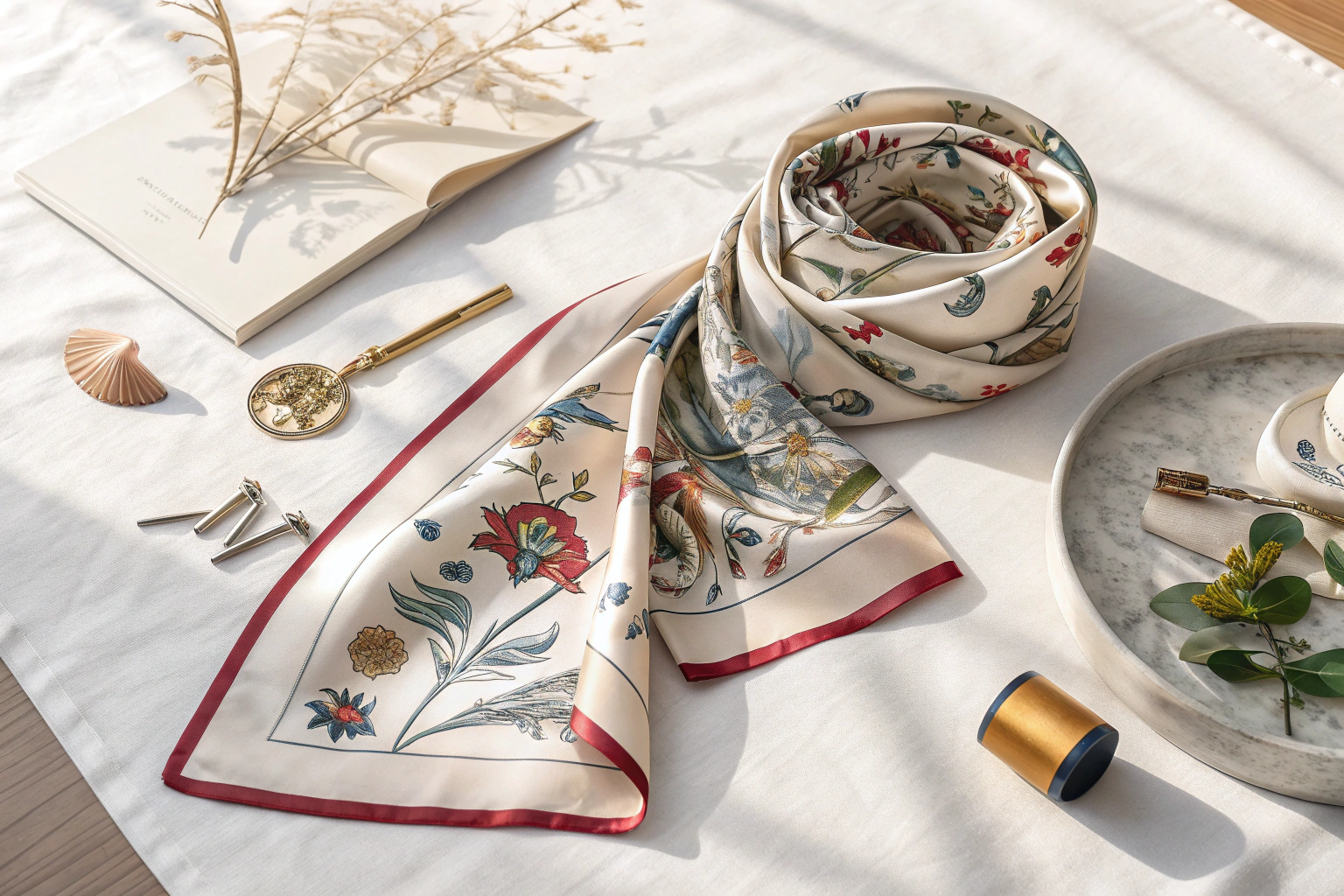
I've been in this business for decades, and I can tell you that a silk twill scarf is one of the most beautiful and desirable accessories you can own. But it's also one of the most challenging to source well. The difference between a cheap, flimsy scarf that feels rough and a luxurious, heirloom-quality piece that drapes beautifully is immense. And that difference is not always visible in a product photo.
Buyers like Ron, who source for high-end boutiques and department stores, know that their customers can tell the difference. They can feel it. A high-quality silk scarf is an investment piece. It should feel luxurious against the skin, drape perfectly, and hold its color and shape for years. Sourcing this level of quality requires deep knowledge of silk, printing, and finishing techniques.
At Shanghai Fumao Clothing, we have been sourcing and manufacturing silk accessories for decades. We work with the best silk mills and printers. We understand the nuances of momme weight, hemming techniques, and color registration. In this post, I'll share our expertise on how to source high-quality silk twill scarves, so you can offer your customers the very best.
What Is Silk Twill And Why Is It The Preferred Choice?
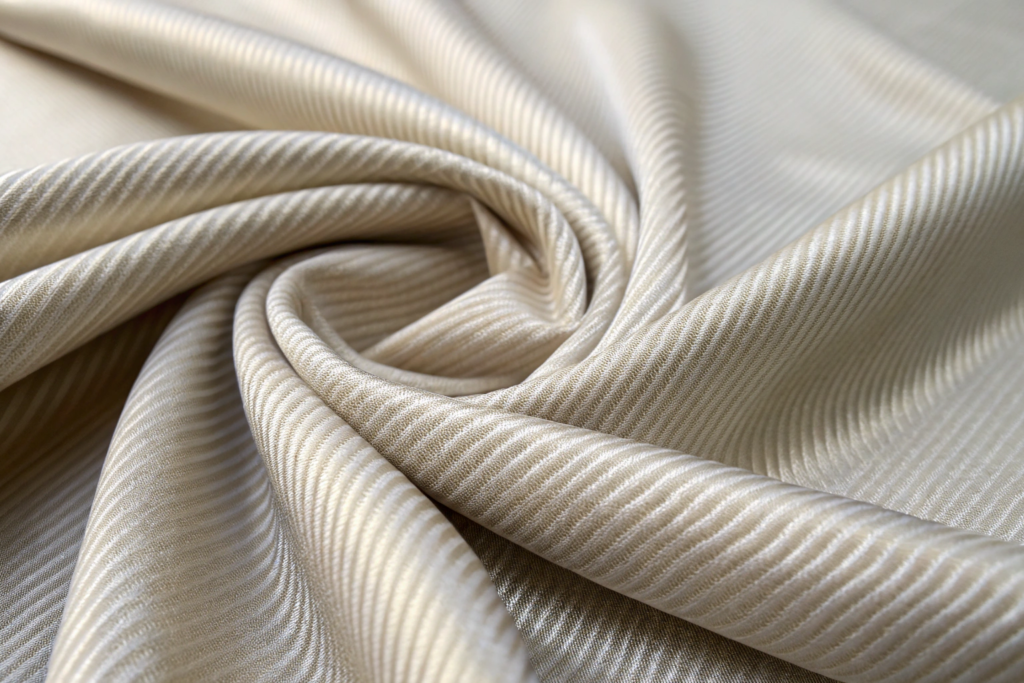
The first step is understanding the material itself. "Silk twill" refers to both the fiber (silk) and the weave (twill). It's a specific combination that has become the gold standard for high-end scarves for good reason. The twill weave gives the silk a beautiful, subtle texture, a bit of body and structure, and excellent durability.
A silk twill scarf drapes beautifully, holds its shape, and provides a perfect surface for printing intricate designs. It's not as flimsy as some other silk weaves (like chiffon), but it's still lightweight and luxurious. For more on silk and its properties, organizations like the International Silk Association are excellent resources.
What is the difference between silk twill and other silk weaves?
The weave determines the fabric's characteristics. Here's a quick comparison:
- Silk Twill: Characterized by a diagonal ribbed texture. It has more body and structure than plain-weave silk, is more durable, and takes prints beautifully. It's the classic choice for scarves.
- Silk Crepe de Chine: A plain-weave silk with a slightly crinkled, matte texture. It's very soft, fluid, and drapes beautifully, but it's also more delicate and less structured than twill.
- Silk Chiffon: An extremely lightweight, sheer, plain-weave silk. It's ethereal and floaty but very delicate and requires careful handling.
- Silk Satin: A weave that creates a very smooth, glossy surface on one side and a matte surface on the other. It's luxurious and has a beautiful drape but can be more prone to snagging.
For a classic, durable, and versatile scarf that holds its shape and displays prints vividly, silk twill is the superior choice. A silk twill scarf is an investment piece.
Why is the "hand feel" of silk so important?
"Hand feel" is the term we use to describe how a fabric feels to the touch. For a scarf, which will be worn against the skin, often on the neck, hand feel is everything. A high-quality silk twill should feel incredibly smooth, soft, and luxurious. It should glide through your fingers.
This feeling comes from the quality of the raw silk fibers (longer staple fibers are better) and the finishing processes. Cheap silk can feel rough, scratchy, or even "papery." The difference is immediately apparent to anyone who touches it. A customer who feels a cheap silk scarf will be disappointed. A customer who feels a high-quality one will be sold. This is why sourcing from reputable mills with strict quality control is essential.
What Is Momme Weight And Why Does It Matter?
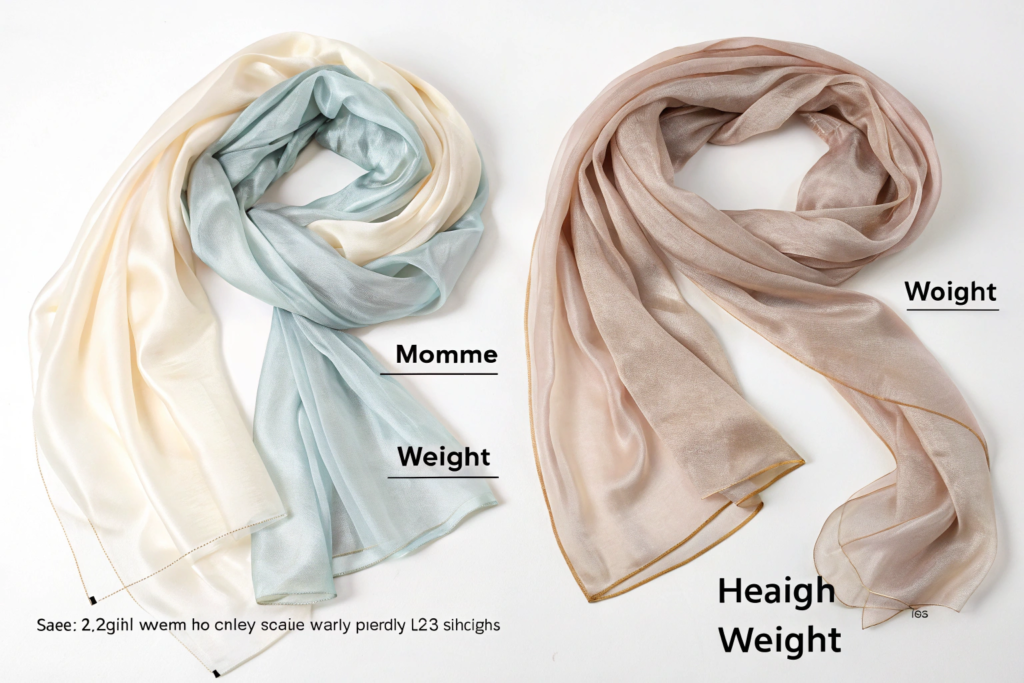
Momme (mm) is the unit of measurement for the weight of silk fabric. It's similar to "thread count" for cotton sheets, but it's a measure of weight, not thread count. Specifically, one momme is equal to 4.34 grams per square meter. A higher momme weight indicates a heavier, denser, and generally more durable and luxurious fabric.
For a silk twill scarf, the momme weight is a critical indicator of quality. A very low momme weight scarf will feel thin, flimsy, and may even be slightly translucent. It won't drape as well and won't be as durable. A higher momme weight scarf will feel substantial, luxurious, and will hold its shape beautifully. For more on silk grading, resources from organizations like The Silk Association of Great Britain can be helpful.
What is the ideal momme weight for a silk twill scarf?
For a classic, high-quality silk twill scarf, the ideal momme weight is typically between 16mm and 22mm.
- 16mm - 19mm: This is a good, standard weight for scarves. It's lightweight and drapes well, but still has enough body to hold a shape. It's a popular choice for many brands.
- 19mm - 22mm: This is considered a heavier, more premium weight. The scarf will feel more substantial and luxurious. It will be more durable and will hold its shape even better. This is often the choice for high-end, heirloom-quality scarves.
- Below 16mm: Scarves below 16mm can feel thin and flimsy. They may be more prone to wrinkles and may not print as vividly. They are often found at lower price points.
- Above 22mm: While beautiful, scarves above 22mm can feel quite heavy and are less common. They are very durable but may not have the same delicate drape.
For a truly luxurious feel and lasting quality, we recommend aiming for a momme weight of at least 19mm.
How does momme weight affect the scarf's drape and durability?
- Drape: A higher momme weight scarf will have a more substantial, structured drape. It will hold its shape when tied or knotted. A lower momme weight scarf will be more fluid and floppy. Both can be beautiful, but the choice depends on the desired look.
- Durability: A higher momme weight means more silk fibers per square inch. This makes the fabric stronger, more resistant to tearing and snagging, and better able to withstand wear and washing. A higher momme weight scarf is an investment that will last for years, even decades.
Choosing the right momme weight is a key decision that affects both the look and the longevity of the scarf.
How Do You Evaluate Print Quality And Color?
For many silk scarves, the design is the main attraction. A beautiful, intricate print is what draws the customer in. But the quality of that print is what separates a luxury item from a mass-market one. The printing process for silk is an art form, and there are significant differences in quality.
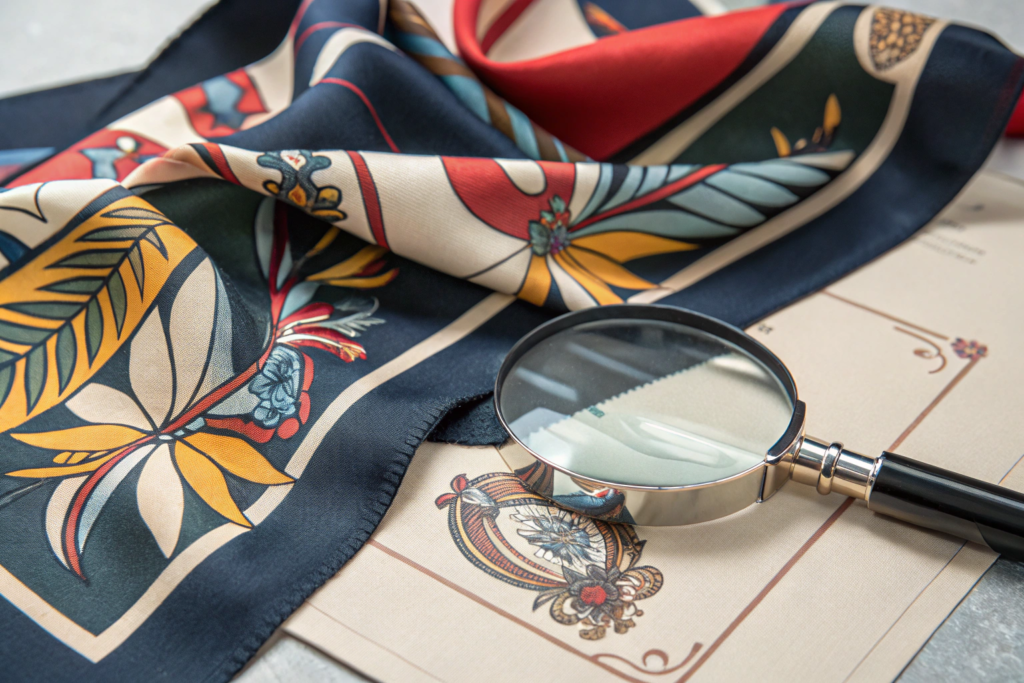
High-quality printing results in crisp, sharp lines, vibrant, true-to-color hues, and excellent registration (where different colors meet perfectly without overlapping or leaving gaps). Poor-quality printing will look fuzzy, muddy, or misaligned. For more on textile printing techniques, resources like AATCC are excellent.
What is the difference between digital and screen printing on silk?
There are two main methods for printing on silk scarves:
- Screen Printing: This is a traditional,手工 method where each color in the design is applied using a separate screen. It's a labor-intensive process that requires great skill. Screen printing results in vibrant, saturated colors that sit on top of the fabric, giving them a slight texture. The colors are incredibly rich and long-lasting. It's ideal for designs with relatively few, bold colors and is often used for higher-end, limited-edition scarves.
- Digital Printing: This is a modern method, similar to using a giant inkjet printer. The design is printed directly onto the fabric. It allows for photographic detail and an unlimited number of colors. It's faster and more cost-effective for smaller runs and complex designs. High-quality digital printing can be excellent, but the ink is absorbed into the fibers, resulting in a slightly less saturated look than screen printing.
Both methods can produce beautiful results. The choice depends on the design, the budget, and the desired aesthetic. A high-quality digital print can be just as stunning as a screen print, especially for very intricate, multi-colored designs.
How can you assess colorfastness and sharpness of print?
You can't always tell print quality from a photo. This is where sourcing from a reputable manufacturer with rigorous quality control is essential.
- Colorfastness: This refers to the dye's resistance to fading or bleeding when washed or exposed to light. A high-quality silk scarf should have excellent colorfastness. We test this by washing samples and exposing them to simulated sunlight. You should ask your supplier for colorfastness test reports.
- Sharpness of Print: Look closely at the edges of the printed design. Are the lines crisp and clean, or are they fuzzy and blurry? Is there any "bleeding" where one color has seeped into another? A high-quality print, whether screen or digital, will have sharp, well-defined edges.
- Color Registration: In multi-color prints, check where different colors meet. They should meet perfectly, with no white gaps and no overlapping. Poor registration is a sign of low-quality printing.
These details are what separate a premium scarf from a mediocre one. A vibrantly printed silk twill scarf from a quality manufacturer is a joy to behold.
What Finishing Details Indicate A High-Quality Scarf?
The final test of a high-quality silk scarf is in the finishing details. These are the small touches that show the manufacturer's commitment to craftsmanship. A poorly finished scarf can ruin the entire experience. A beautifully finished one elevates it to a work of art.
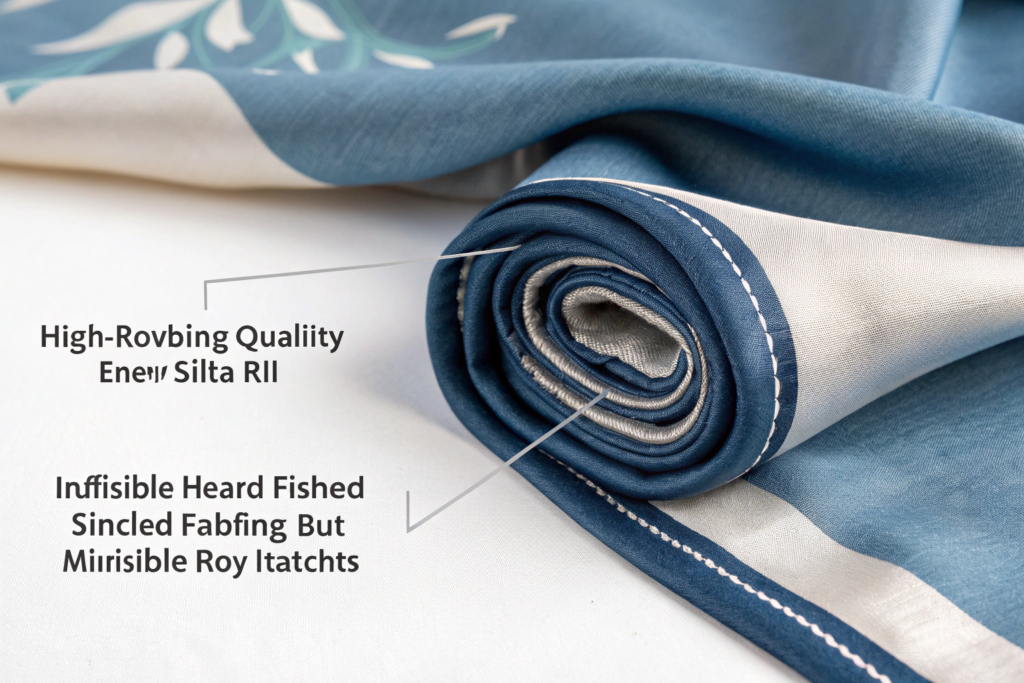
The most important finishing detail is the hem. A cheap scarf will have a simple machine-stitched hem that can be bulky and visible. A high-quality scarf will have a hand-rolled hem. This is a true mark of luxury.
What is a hand-rolled hem and why is it a mark of quality?
A hand-rolled hem is exactly what it sounds like. A skilled artisan rolls the very edge of the silk between their fingers, creating an incredibly tiny, tight roll, and then stitches it in place by hand with nearly invisible thread. This is a highly skilled, time-consuming process.
Why is it a mark of quality?
- It's a Sign of Craftsmanship: It shows that time and skill have been invested in the scarf. It's the opposite of mass production.
- It Creates a Beautiful Finish: The hand-rolled hem is almost invisible from the right side of the scarf. It's incredibly soft and flexible, and it allows the scarf to drape perfectly without any bulk or stiffness.
- It's Durable: When done correctly, a hand-rolled hem is very secure and will last for years.
If you see a scarf advertised as "hand-rolled," it's a strong indicator of high quality. This is a detail that luxury buyers know to look for.
What other finishing touches should you look for?
Beyond the hem, other details to examine include:
- The Corners: On a square scarf, the corners should be neatly finished, often with a small, sharp point. In a hand-rolled hem, this requires great skill.
- The Care Label: A high-quality scarf will have a discreet, well-attached care label, usually made of silk or a soft fabric, that won't irritate the skin.
- Overall Neatness: The entire scarf should be free of loose threads, pulled threads, or any other imperfections. It should feel perfect to the touch.
- The Packaging: While not part of the scarf itself, the way it is presented—folded neatly, perhaps in a branded box or pouch—also speaks to the brand's commitment to quality.
These finishing touches are the final proof of a well-made, luxurious product.
Conclusion
Sourcing a high-quality silk twill scarf is a matter of understanding and evaluating several key factors. It starts with the material itself: a true silk twill with its characteristic diagonal weave. It continues with the momme weight, aiming for 19mm or higher for a truly luxurious feel. It requires a critical eye for print quality, ensuring sharp, vibrant, and colorfast designs. And it culminates in the finishing details, most notably the presence of a beautiful, hand-rolled hem. When all these elements come together, you have a scarf that is not just an accessory, but a treasured piece of wearable art.
At Shanghai Fumao Clothing, we are experts in every aspect of silk scarf production. Our factory in Zhejiang works with the finest silk mills to source top-quality 19mm and 22mm silk twill. We offer both traditional screen printing and high-resolution digital printing, with meticulous attention to color accuracy and sharpness. Our skilled artisans create beautiful hand-rolled hems that are the hallmark of luxury. We are committed to producing scarves of the highest quality for our clients.
If you're ready to source truly exceptional silk twill scarves, let's talk. Please contact our Business Director, Elaine, at elaine@fumaoclothing.com. We'll help you create scarves that your customers will treasure.