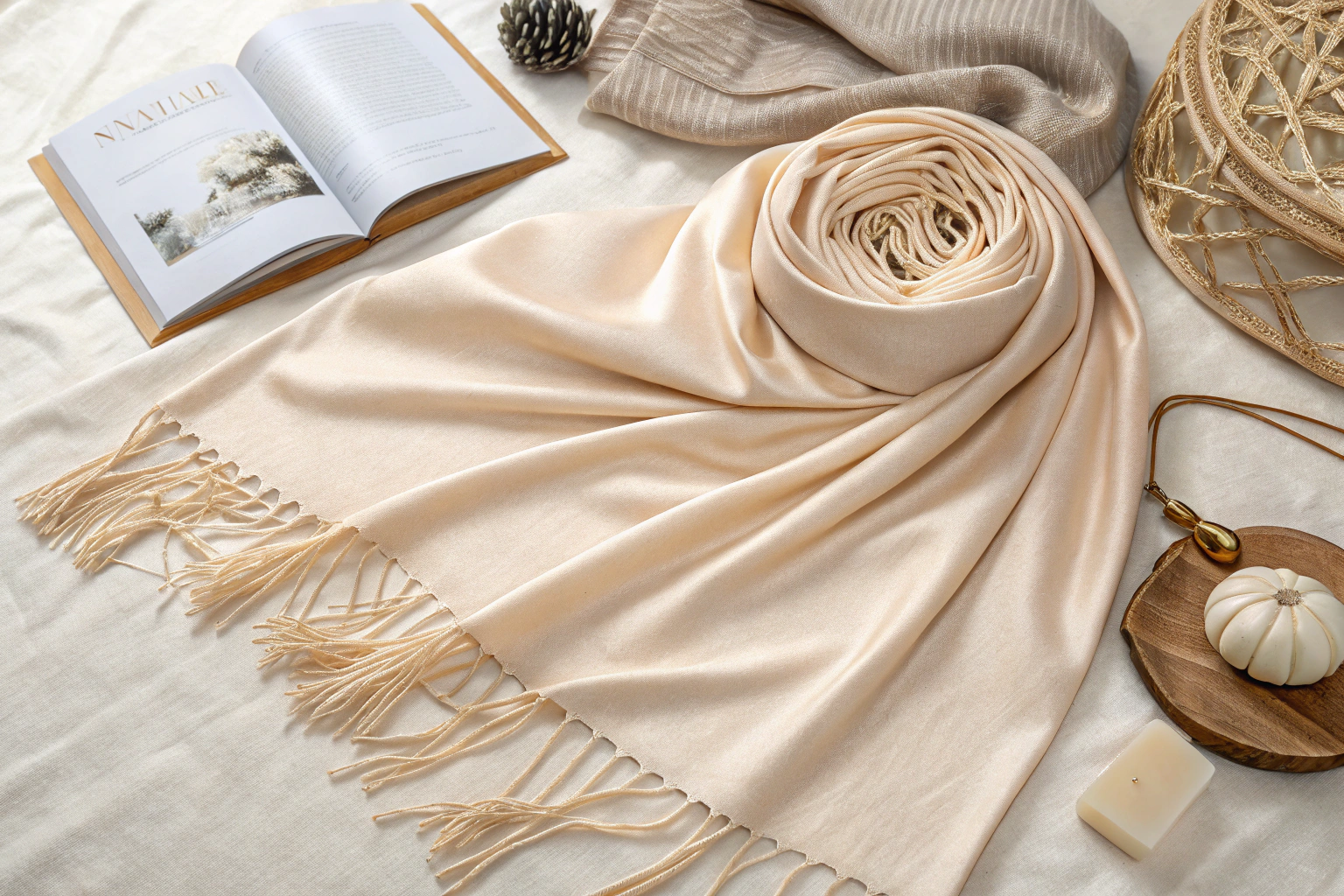
I've been in the textile business for decades, and I can tell you that few materials are as synonymous with luxury, warmth, and elegance as pashmina. A genuine pashmina shawl is not just an accessory; it's an heirloom, a piece of art that can be passed down through generations. But the market is flooded with imitations, blends, and products that use the name "pashmina" loosely. Sourcing the real thing requires knowledge, discernment, and a connection to the source.
Buyers like Ron, who are looking to offer their customers true luxury, need to understand what makes a pashmina shawl authentic. They need to know the difference between pure pashmina, pashmina blends, and other fibers like cashmere. They need to appreciate the craftsmanship involved in weaving and finishing. And they need to source ethically, supporting the artisans who keep this ancient tradition alive.
At Shanghai Fumao Clothing, we have a deep respect for the craft of pashmina making. We work directly with trusted suppliers and cooperatives in the Kashmir region and Nepal, the traditional homes of pashmina weaving. In this post, I'll share our expertise on how to source high-quality pashmina wool shawls.
What Is Pashmina And Why Is It So Special?
The first step in sourcing high-quality pashmina is understanding exactly what it is. The word "pashmina" comes from the Persian word "pashm," meaning "soft gold" or "wool." It refers to a specific type of cashmere wool, but not all cashmere is pashmina.
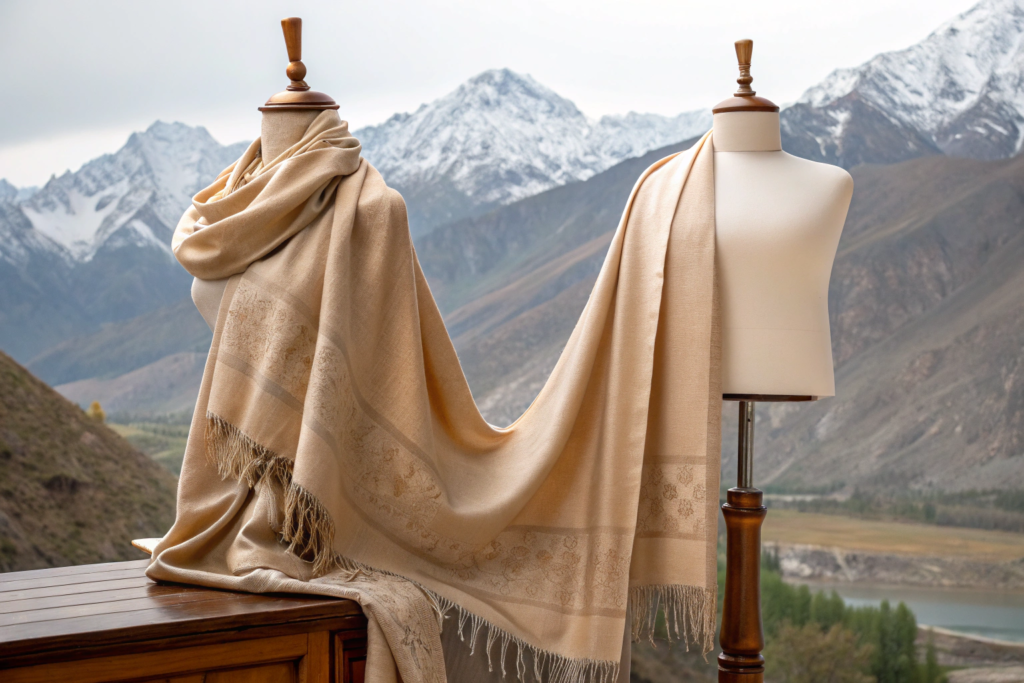
True pashmina comes from the undercoat of the Changthangi goat, a breed that lives in the high altitudes of the Himalayas, primarily in the Ladakh region of India and parts of Nepal and Tibet. The extreme cold causes these goats to grow an incredibly fine, warm undercoat. It is this specific fiber, from this specific goat, that is true pashmina. For more on the history and tradition of pashmina, resources like the Government of India's Ministry of Textiles and various artisan cooperatives provide valuable information.
What is the difference between pashmina and cashmere?
This is the most common point of confusion. All pashmina is cashmere, but not all cashmere is pashmina. The term "cashmere" refers to the fine undercoat of any cashmere goat. "Pashmina" refers specifically to the fiber from the Changthangi goat, which is generally considered the finest and softest type of cashmere.
- Fineness: Pashmina fibers are incredibly fine, typically ranging from 12 to 16 microns in diameter. (A human hair is about 70 microns). This extreme fineness is what gives pashmina its legendary softness.
- Length: The fibers are also relatively long, which contributes to the strength and durability of the yarn and the finished shawl.
- Rarity: Because it comes from a specific goat in a specific, harsh environment, true pashmina is rarer and more expensive than other types of cashmere.
When you buy a genuine pashmina shawl, you are buying the finest cashmere in the world.
Why is pashmina so highly valued?
- Exceptional Softness: The fineness of the fibers makes pashmina incredibly soft and comfortable against the skin. It's non-itchy and a pleasure to wear.
- Unparalleled Warmth: Pashmina fibers have excellent insulating properties. A pashmina shawl is incredibly warm, despite being lightweight.
- Lightweight and Drape: A high-quality pashmina shawl is lightweight and has a beautiful, fluid drape. It feels luxurious and elegant.
- Craftsmanship: Many pashmina shawls are hand-spun and hand-woven by skilled artisans, a tradition that has been passed down for centuries. This adds immense value and a story to the product.
- Timeless Elegance: A pashmina shawl is a timeless accessory that never goes out of style. It can be worn for generations.
A genuine pashmina shawl is an investment in quality, warmth, and timeless style.
What Are The Different Grades And Weaves Of Pashmina?
Not all pashmina shawls are the same. The quality can vary significantly based on the fineness of the fiber, the type of weave, and the finishing. Understanding these differences is key to sourcing the right product for your market.
What are the different grades of pashmina based on fiber fineness?
Pashmina is graded by the fineness of its fibers, measured in microns. The finest pashmina, often called "Royal Pashmina" or "Grade A," will have fibers consistently in the 12-14 micron range. Slightly less fine, but still excellent, pashmina might be in the 14-16 micron range. Anything above 16 microns is generally considered standard cashmere, not true pashmina.
When sourcing, you should ask your supplier for the micron count of the fibers. A reputable supplier will be able to provide this information. The lower the micron count, the finer, softer, and more expensive the shawl.
What are the main types of pashmina shawls by weave and design?
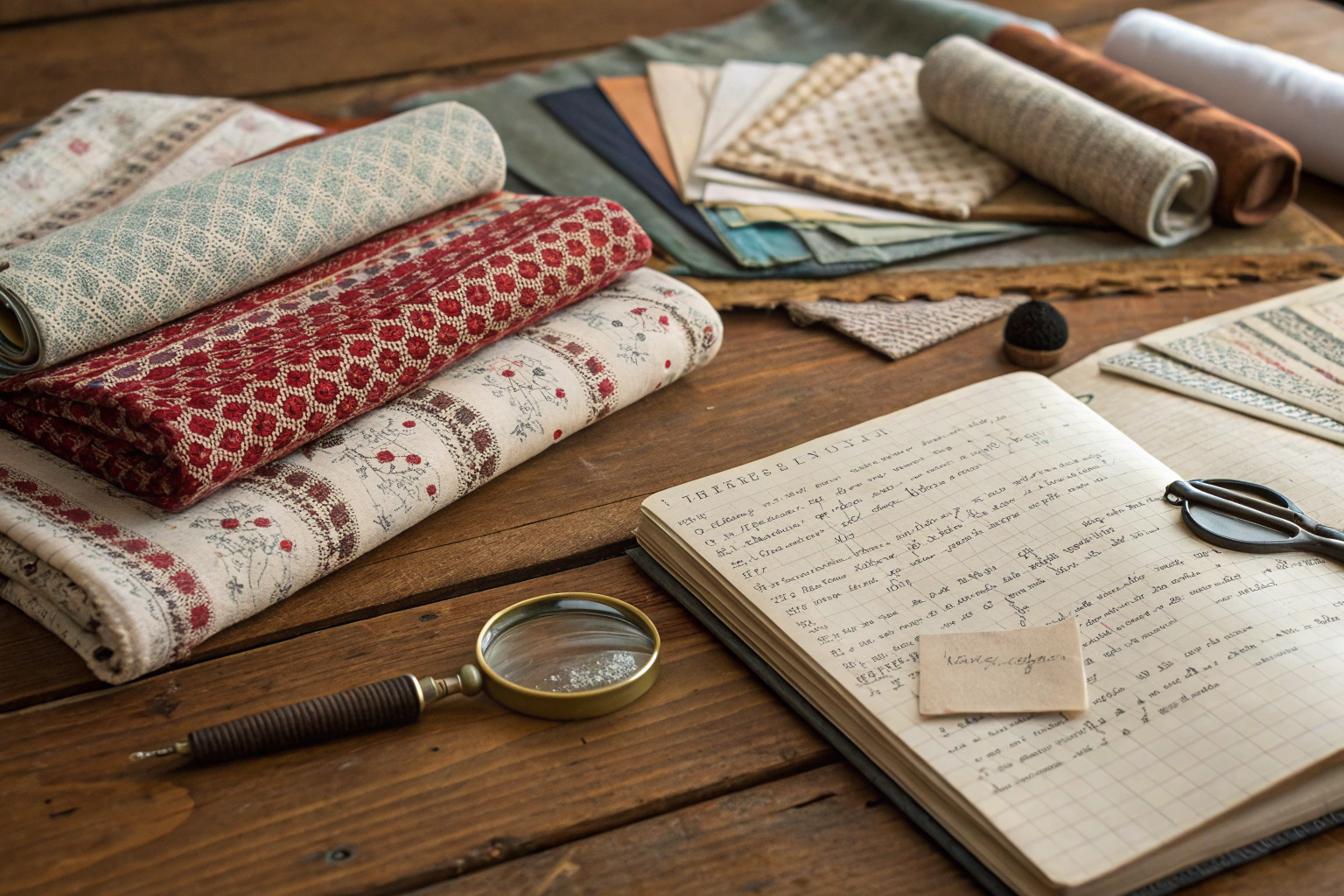
- Plain Pashmina (Woven): These are the most classic and versatile. They are woven on a loom, either by hand or by machine. A hand-woven plain shawl has a slightly irregular, more organic texture that many connoisseurs prefer. The weave should be even and tight, with no loose threads or gaps. The fringe (the ends) is typically hand-knotted, a mark of quality.
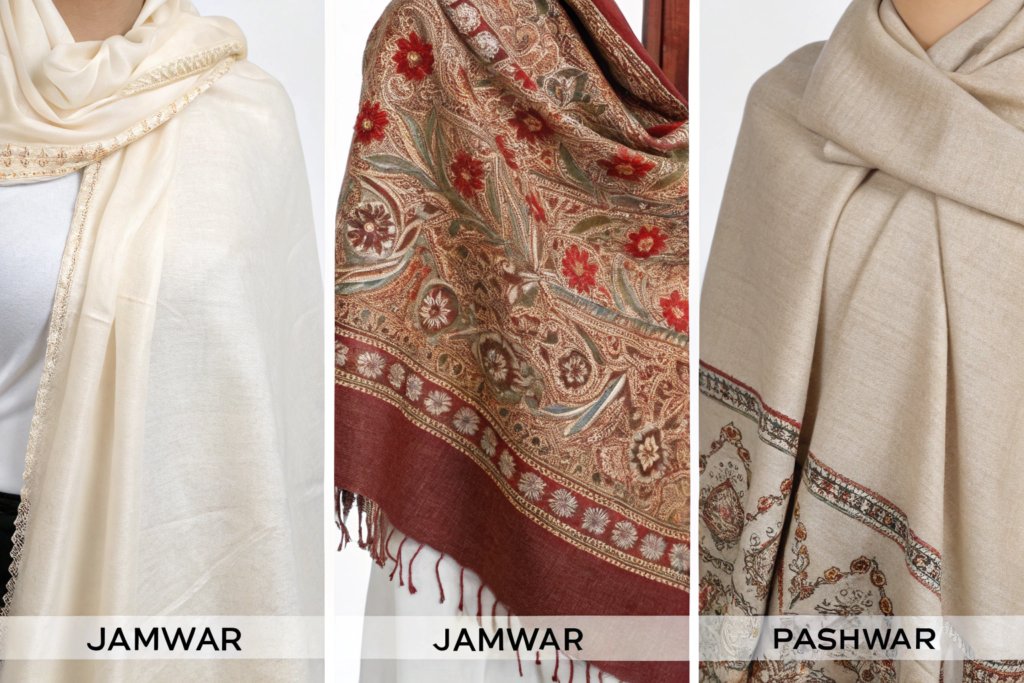
- Kani Shawls: These are the pinnacle of pashmina craftsmanship. They are woven on a special wooden loom called a "Kani," using small, bobbins of colored yarn to create intricate, tapestry-like patterns. A single Kani shawl can take months or even years to complete. They are extremely rare and valuable, true works of art.
- Jamawar Shawls: These are similar to Kani shawls but are often woven in larger pieces that are then cut and sewn to create shawls or dress fabrics. They also feature intricate, woven patterns.
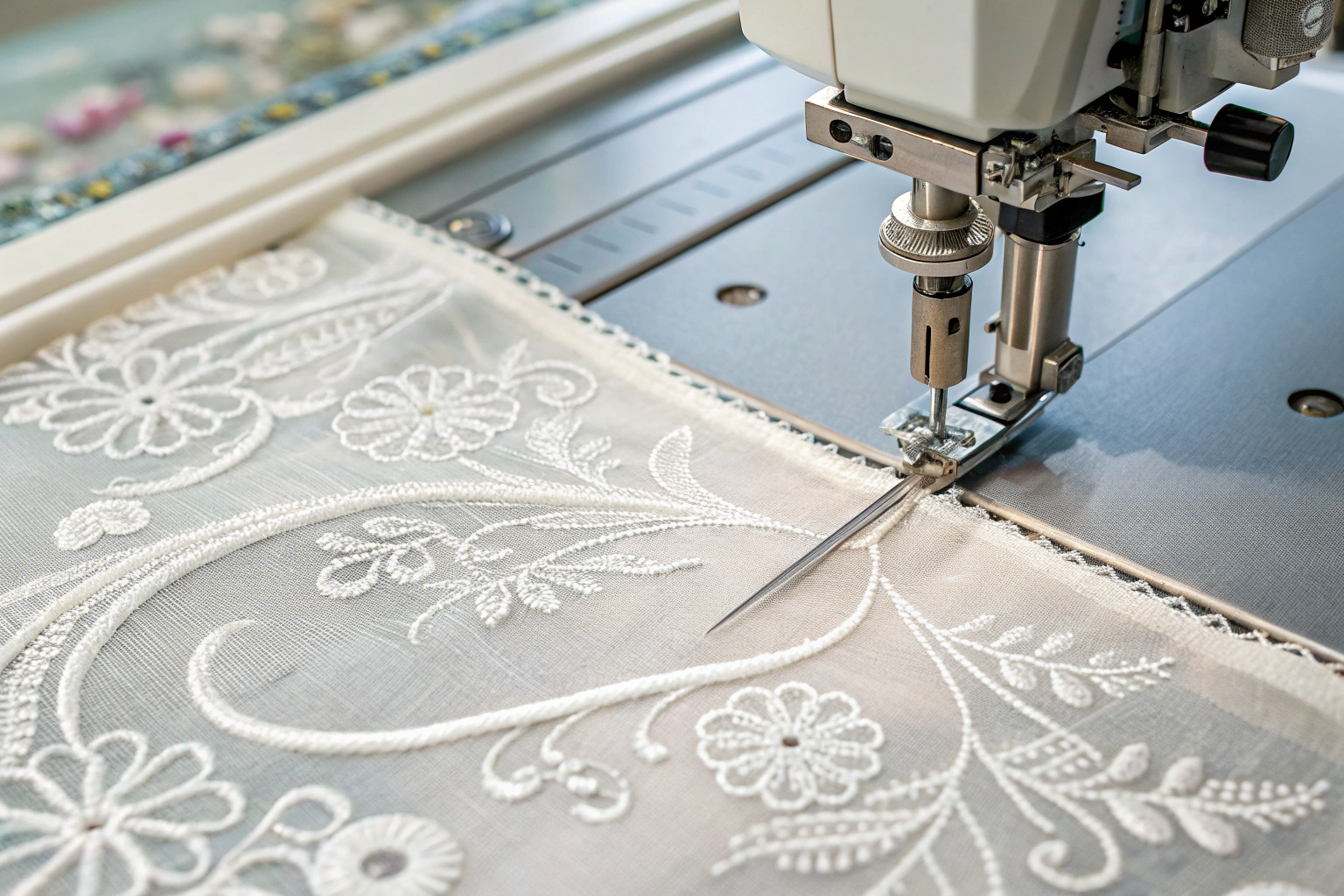
- Embroidered Pashmina: These are plain or woven pashmina shawls that are then hand-embroidered with intricate designs. The embroidery can be done with pashmina yarn itself, or with other threads like silk. The most famous type is "Sozni" embroidery, which is incredibly fine and detailed.
- Pashmina Blends: To make pashmina more affordable or to add different properties, it is sometimes blended with other fibers like silk. A pashmina-silk blend (often called "pashmina silk") has a beautiful sheen and drape, and is very popular. The percentage of pashmina in the blend is a key indicator of quality and price.
Understanding these different types will help you choose the right shawls for your customers. A hand-embroidered pashmina shawl is a true treasure.
How Can You Identify Authentic, High-Quality Pashmina?
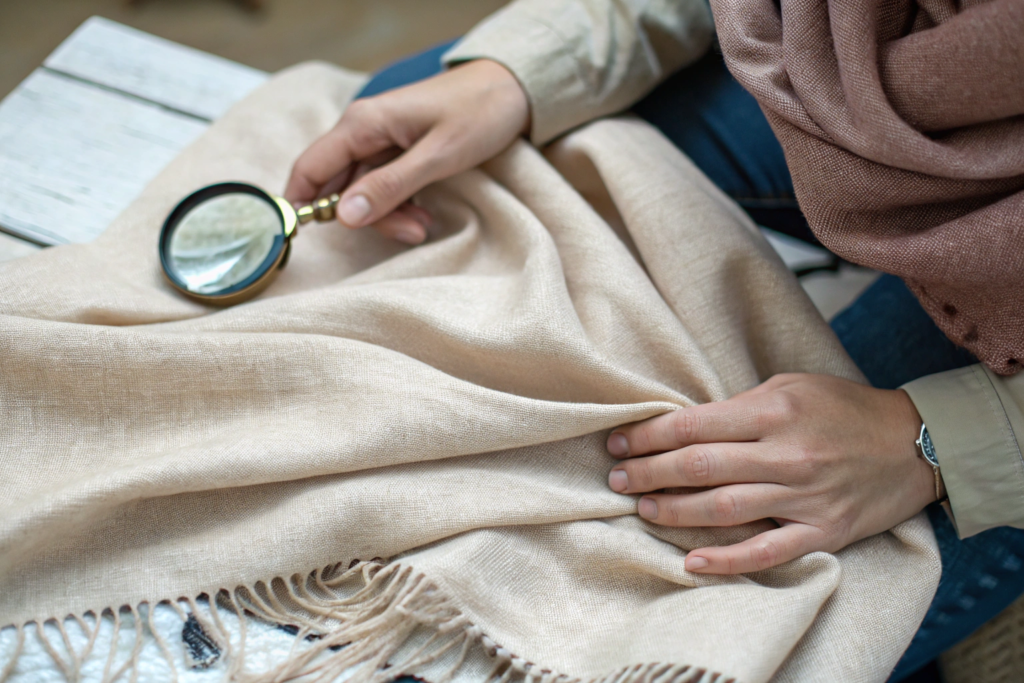
With so many imitations on the market, being able to identify authentic, high-quality pashmina is essential. There is no single test, but a combination of factors can give you a high degree of confidence. The best way is to develop a trained eye and a sensitive touch, but there are also some simple tests.
What are the key indicators of quality you can see and feel?
- Softness: This is the most obvious. Genuine pashmina should feel incredibly soft, smooth, and luxurious against your skin. There should be no itchiness or roughness. It should feel almost like a soft cloud.
- Weight and Drape: A high-quality pashmina shawl is lightweight and has a beautiful, fluid drape. It should not feel heavy or stiff. It should flow and move gracefully.
- The "Hand Feel": This is a term for the overall tactile experience. Pashmina has a unique, warm, and soft feel that is difficult to describe but easy to recognize with experience.
- Weave and Finish: Examine the weave closely. It should be even and tight, with no loose threads, gaps, or inconsistencies. The fringe (ends) should be neatly finished, often with hand-knotted tassels.
- Luster: High-quality pashmina has a subtle, natural luster. It's not a shiny, synthetic look, but a soft, warm glow.
Learning to trust your senses is the first step.
What are the simple tests to check for purity?
There are a few simple tests that can help you distinguish pashmina from synthetic imitations or blends with a low percentage of pashmina.
- The Feel Test: As mentioned, pashmina is uniquely soft. Synthetics like acrylic or polyester will feel much rougher, sometimes with a "plastic-y" feel.
- The Burn Test: This is a more definitive test, but you must be careful. Take a small fiber from the fringe and carefully burn it with a lighter.
- Pashmina (Animal Fiber): Will smell like burning hair. The ash will be dark, crisp, and will crumble easily into a powder.
- Silk (Animal Fiber): Will also smell like burning hair, but the ash may be slightly more bead-like.
- Cotton/Cellulose (Plant Fiber): Will smell like burning paper. The ash will be light, feathery, and gray.
- Synthetics (Acrylic, Polyester): Will melt, not burn. They will smell like burning plastic and leave a hard, melted bead.
- The Price Test: This is a simple but effective indicator. Genuine, high-quality pashmina is expensive. If the price seems too good to be true, it almost certainly is. The cost of the raw fiber alone is high.
Using a combination of these tests will give you a very good idea of the authenticity and quality of the pashmina.
What Are The Ethical Sourcing Considerations?
Beyond the quality of the product itself, ethical sourcing is a critical consideration for any brand today. The pashmina industry has a long and rich tradition, but it has also faced challenges related to fair wages, working conditions, and the preservation of traditional crafts. Sourcing ethically is not just the right thing to do; it's also a powerful part of your brand's story.
At Shanghai Fumao Clothing, we are committed to ethical sourcing. We work with suppliers and cooperatives that treat their artisans fairly and help preserve these ancient crafts.
Why is it important to source pashmina ethically?
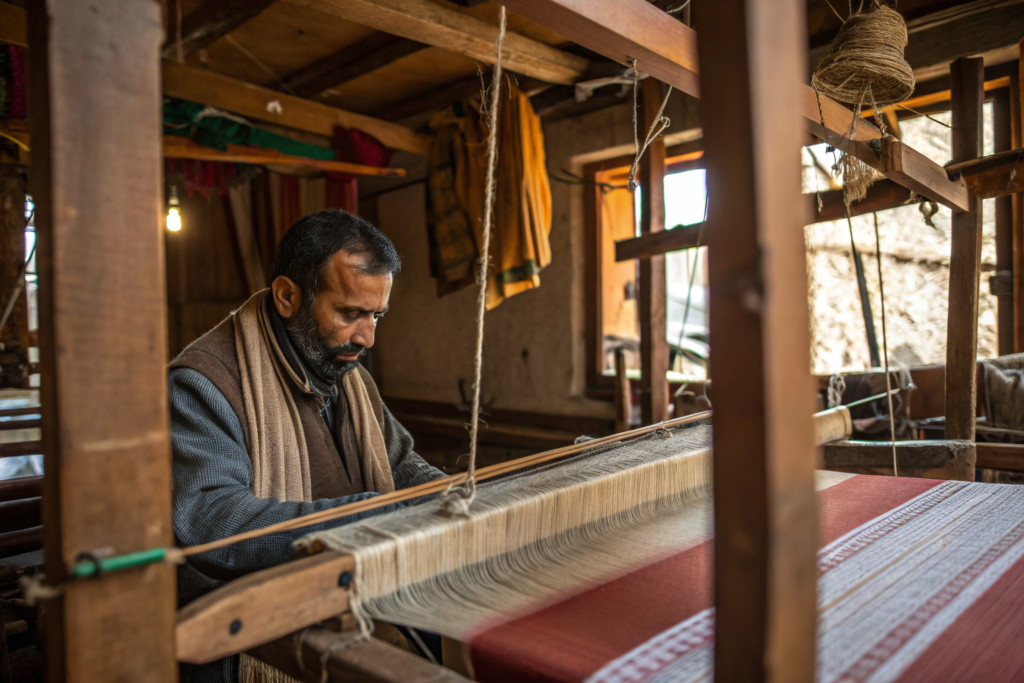
- Supporting Artisans: The weaving of pashmina is a highly skilled craft that has been passed down through generations. By sourcing ethically, you are directly supporting these artisans and their families, helping to keep this tradition alive.
- Fair Wages and Working Conditions: Ethical sourcing ensures that the people who make these beautiful products are paid fairly and work in safe, dignified conditions.
- Preserving a Cultural Heritage: Pashmina weaving is an intangible cultural heritage. Ethical sourcing supports the continuation of this heritage, preventing it from being lost to mass production.
- Brand Reputation: Consumers are increasingly conscious of where their products come from. Being able to tell a story of ethical sourcing and artisan partnerships adds immense value to your brand and builds trust with your customers.
- Product Quality: Artisans who are treated well and take pride in their work produce higher quality products. Ethical sourcing is often directly linked to superior craftsmanship.
An ethically sourced pashmina shawl is a product with a soul.
How can you work with artisan cooperatives and fair-trade suppliers?
The best way to ensure ethical sourcing is to work directly with artisan cooperatives or with suppliers who have established, transparent relationships with them.
- Direct Relationships: If possible, visit the regions where the shawls are made. Meet the artisans, see their workshops, and understand their process. This direct connection is invaluable.
- Work with Cooperatives: Artisan cooperatives are organizations that represent a group of artisans. They work to ensure fair wages, provide training, and market their products collectively. Working with a cooperative is a great way to support a larger community.
- Partner with Ethical Suppliers: If you cannot work directly, find suppliers who have a proven track record of ethical sourcing. Ask them about their relationships with artisans, their wage policies, and their commitment to fair trade.
- Look for Transparency: A good supplier will be transparent about their sourcing. They should be able to tell you where and how the shawls are made.
By prioritizing ethical sourcing, you are not just buying a product; you are investing in a community and a tradition.
Conclusion
Sourcing a high-quality pashmina wool shawl is a journey into a world of unparalleled luxury and ancient craftsmanship. It requires understanding that true pashmina comes from the fine undercoat of the Changthangi goat, and that it is the finest type of cashmere. It requires an appreciation for the different grades and weaves, from simple plain weaves to incredibly intricate Kani and embroidered masterpieces. It requires developing the ability to identify authentic pashmina through touch, sight, and simple tests. And most importantly, it requires a commitment to ethical sourcing, supporting the skilled artisans who keep this precious tradition alive.
At Shanghai Fumao Clothing, we are dedicated to bringing the beauty of authentic pashmina to the world. We have cultivated deep, trusted relationships with artisan communities and suppliers in the Kashmir region and Nepal. We understand the nuances of grading and weaving. We are committed to fair trade and ethical practices. We can help you source pashmina shawls of exceptional quality, each one a testament to the skill of its maker and a treasure for its wearer.
If you're ready to offer your customers the timeless luxury of a genuine, ethically sourced pashmina shawl, let's talk. Please contact our Business Director, Elaine, at elaine@fumaoclothing.com. We'll help you find shawls that are as beautiful as they are authentic.