I've been in this industry long enough to know that sourcing hats seems simple. It's not. A hat looks like a simple product, but getting it right takes experience. I've seen buyers order thousands of hats only to discover the brim is flimsy, the stitching is crooked, or the fit is wrong. By then, it's too late. The money is spent, and the customers are unhappy.
Sourcing high-quality cloth hats in bulk requires attention to materials, construction techniques, sizing consistency, customization options, and supplier reliability. Success comes from working with experienced manufacturers who understand the nuances of hat production and can deliver consistent quality across large volumes.
I'm the owner of Shanghai Fumao Clothing, and we run AceAccessory. We produce millions of hats every year for clients around the world. Let me share what we've learned about getting it right.
What materials make a high-quality cloth hat?
The material determines everything about a hat. How it looks. How it feels. How it wears over time. How well it holds its shape. For cloth hats, cotton is the most common material. But not all cotton is equal. Combed cotton is smoother and stronger than carded cotton. Higher thread count means tighter weave and better durability.
Wool blends are popular for winter hats. They're warm and have a nice texture. Polyester blends add durability and help hats retain their shape. The best hats often use blends that combine the benefits of multiple fibers. For example, a cotton-polyester blend gives you the softness of cotton with the shape retention of polyester. This material expertise is why Shanghai Fumao Clothing is trusted for bulk hat production.
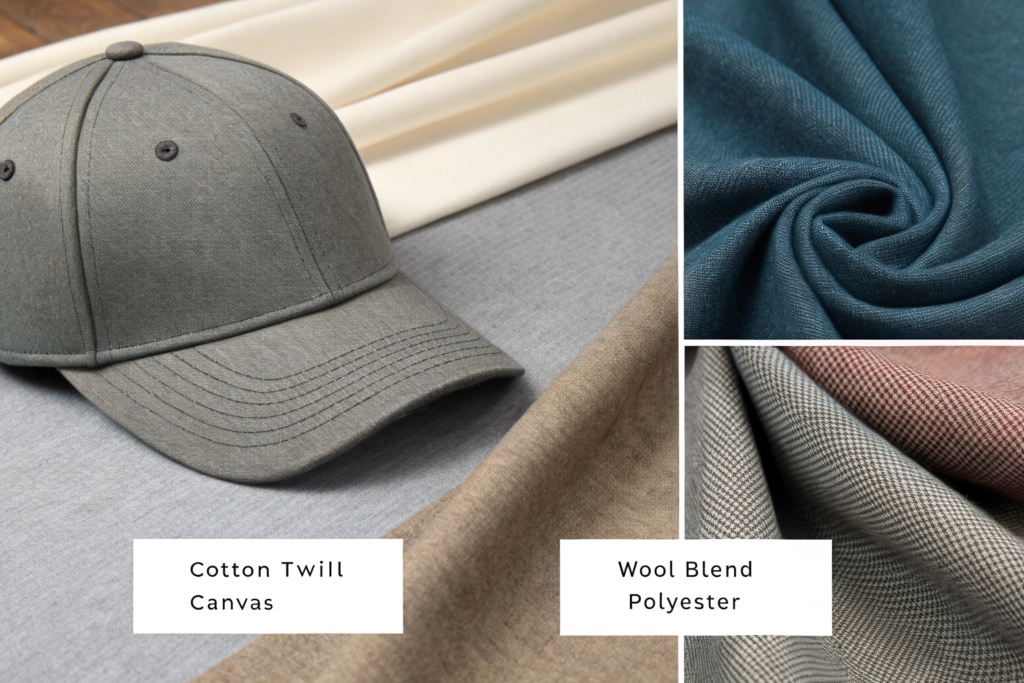
What is the difference between combed cotton and carded cotton?
Combed cotton goes through an extra process that removes shorter fibers and straightens the remaining ones. This creates a smoother, stronger yarn. Carded cotton is processed less, leaving shorter fibers that can lead to pilling and a rougher feel. For high-quality hats, we always recommend combed cotton. It costs a bit more but performs much better. The difference is noticeable in both look and feel.
How do wool blends compare to acrylic for winter hats?
Wool blends are warmer, more breathable, and feel more luxurious. They also wick moisture better. Acrylic is cheaper, lighter, and easier to care for. It can be machine washed, while wool often requires special care. For premium winter hats, we use wool blends. For value lines, acrylic works well. The choice depends on your target market and price point.
What construction features indicate quality?
Construction matters as much as materials. A hat made from great fabric can still fail if it's poorly constructed. Look at the stitching. It should be even, tight, and consistent. There should be no loose threads or skipped stitches. The sweatband inside should be comfortable and securely attached. The brim should be stiff enough to hold its shape but flexible enough for comfort.
For structured hats, the buckram inside provides shape. High-quality buckram holds its shape even after repeated wear. For unstructured hats, the fabric itself needs to be substantial enough to maintain its form. The way the panels are cut and joined affects how the hat sits on the head.
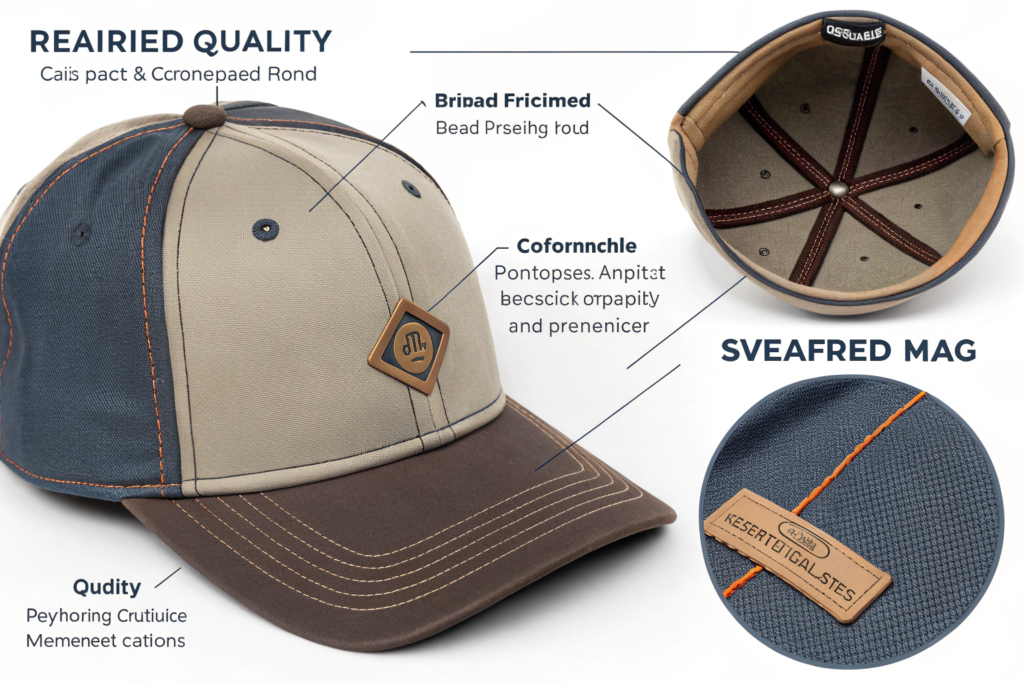
What should you look for in hat stitching?
Stitching should be even and consistent. The thread tension should be perfect, with no puckering or loose loops. Stitches per inch matter too. More stitches per inch generally means stronger construction. For a quality hat, look for 8-10 stitches per inch. The stitching on the brim and sweatband should be particularly secure, as these areas take the most stress. We inspect every batch for stitching quality.
How important is the sweatband for hat quality?
Very important. The sweatband touches the wearer's skin and absorbs sweat. A cheap sweatband can be uncomfortable and deteriorate quickly. A quality sweatband is made from soft, absorbent material like cotton or terry cloth. It should be wide enough to provide comfort and securely attached so it doesn't peel away. Some premium hats use leather sweatbands, which are durable and mold to the wearer's head over time. The sweatband quality is a reliable indicator of overall hat quality.
How do you ensure consistent sizing across bulk orders?
Sizing consistency is one of the biggest challenges in bulk hat production. A hat that fits perfectly in the sample might come out slightly different in mass production. The difference of half an inch can make a hat unwearable. This is where experience matters.
We use standardized sizing forms for every production run. We measure every critical point. Circumference, crown height, brim width. We track measurements throughout production, not just at the end. If we see variation, we stop and fix the problem before it affects the whole order.
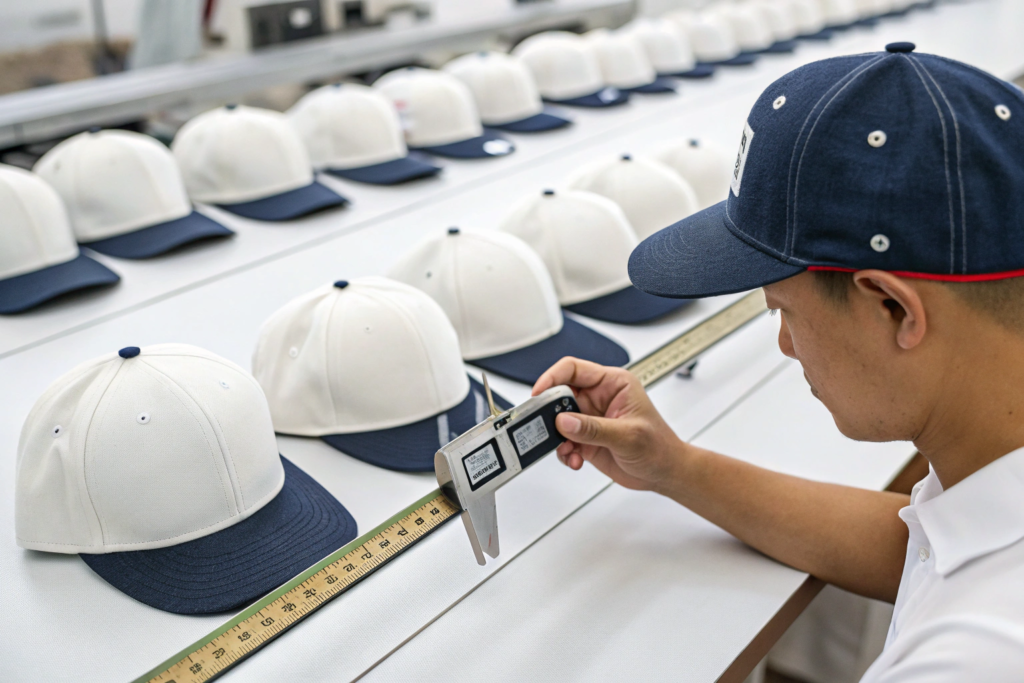
What measurements are critical for hat sizing?
Circumference is the most important. It determines whether the hat fits at all. Crown height affects how the hat sits on the head. Brim width affects style and sun protection. For adjustable hats, the closure length matters. For fitted hats, the size must be precise. We provide detailed measurement specs for every style and check them throughout production.
How do you handle sizing for one-size-fits-most hats?
One-size hats need to fit a range of head sizes. This requires careful design. The fabric needs enough stretch. The fit needs to be comfortable for both smaller and larger heads. We test one-size hats on multiple head forms representing different sizes. We also consider the closure. A good one-size hat has enough adjustment range to fit most people comfortably. This testing process ensures customer satisfaction.
What customization options are available for bulk hat orders?
Customization is often the reason buyers order hats in bulk. They want their logo, their colors, their unique design. The options are extensive. Embroidery is the most common. Thread colors, placement, and size can all be specified. Printed logos are another option, often used for more detailed designs.
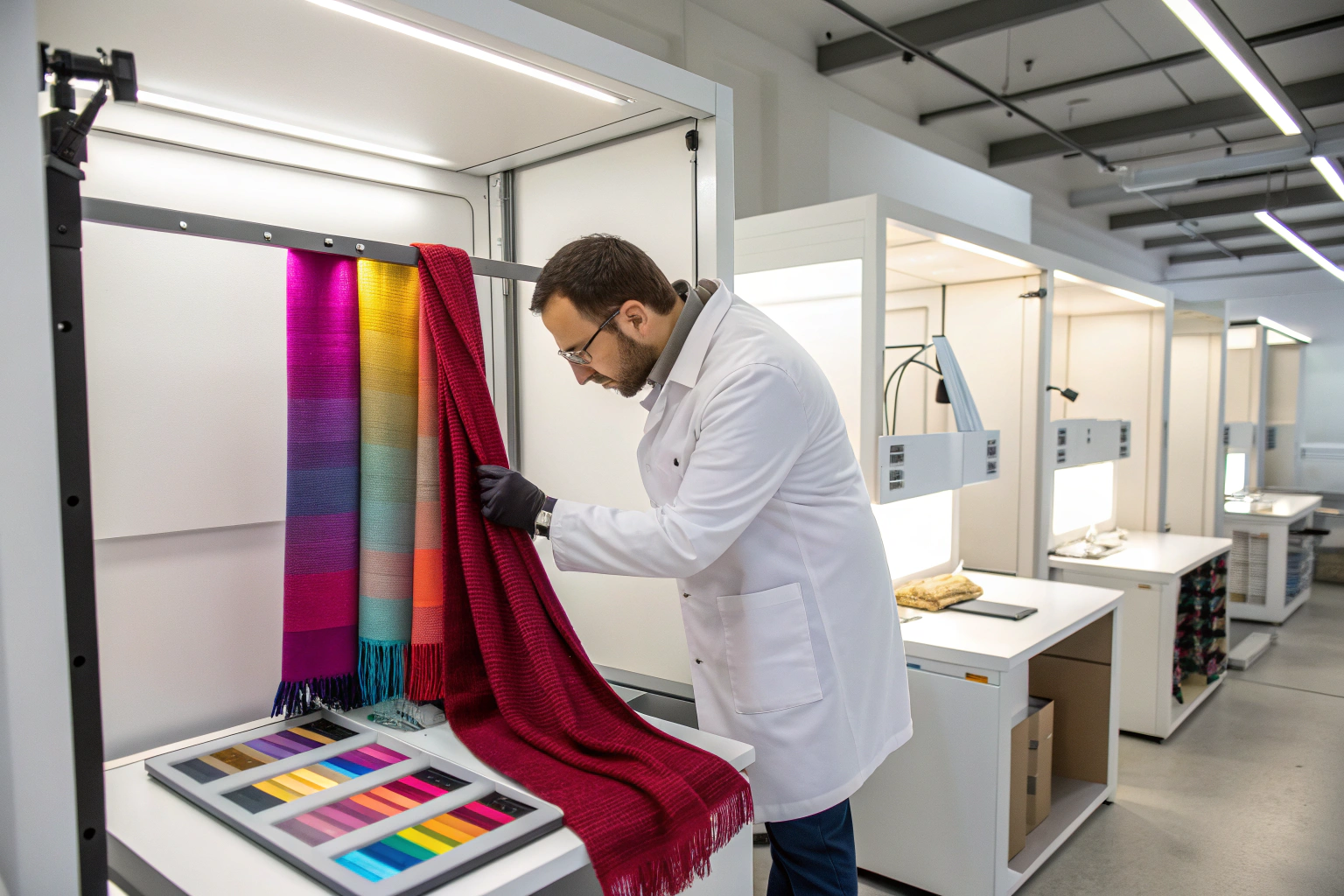
Color matching is critical. We use Pantone matching to ensure colors are consistent across production runs. Fabric choices, thread choices, and even button and eyelet colors can all be customized. The more specific you can be, the better we can match your vision.
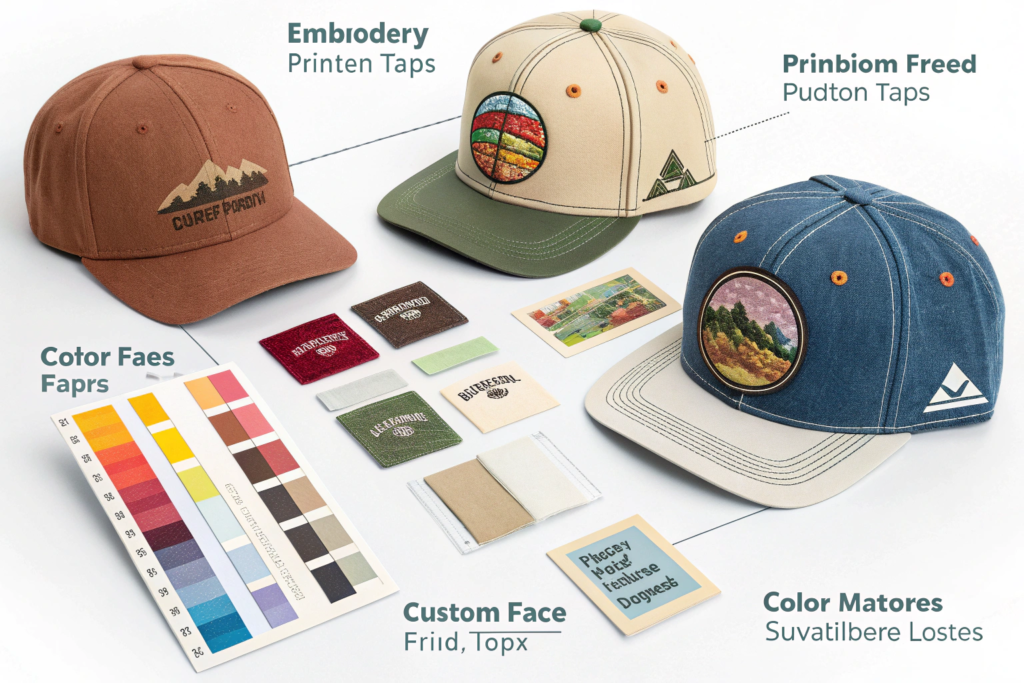
What are the differences between embroidery and printing for hat logos?
Embroidery is durable and looks professional. It's best for simple logos with solid colors. It adds texture and dimension. Printing allows for more detail, gradients, and fine lines. It's better for complex designs. The trade-off is that printing may not last as long as embroidery, especially with frequent wear. We help clients choose the right method based on their logo and budget.
How do you ensure color consistency across different hat styles?
We use Pantone matching for every color. Fabric is dyed to match the specified Pantone. Thread is selected to match. Even components like buttons and eyelets are color-matched. We keep records of every color formula so we can reproduce it exactly for reorders. This color management ensures your brand colors stay consistent across all products.
What quality control should you expect from hat suppliers?
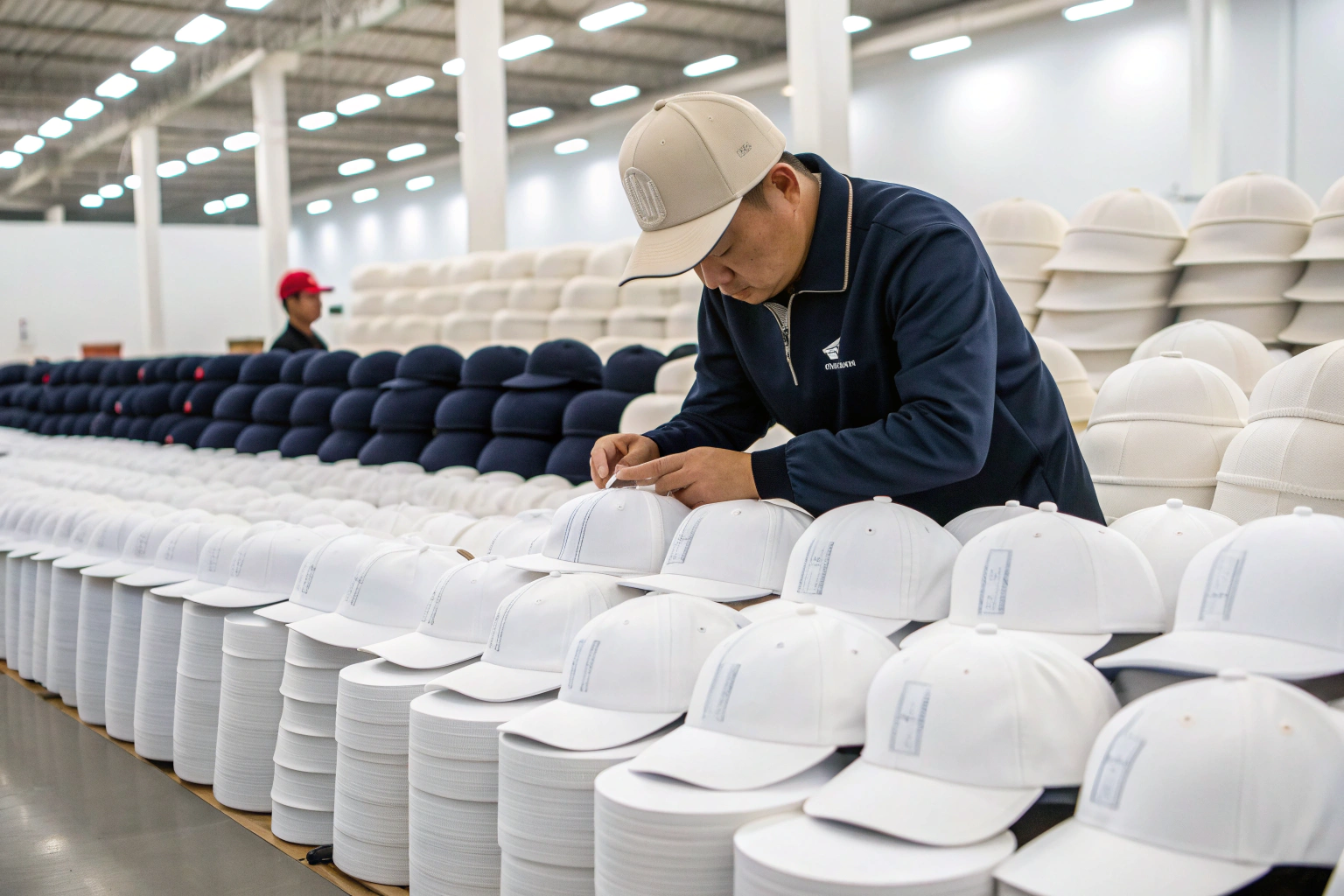
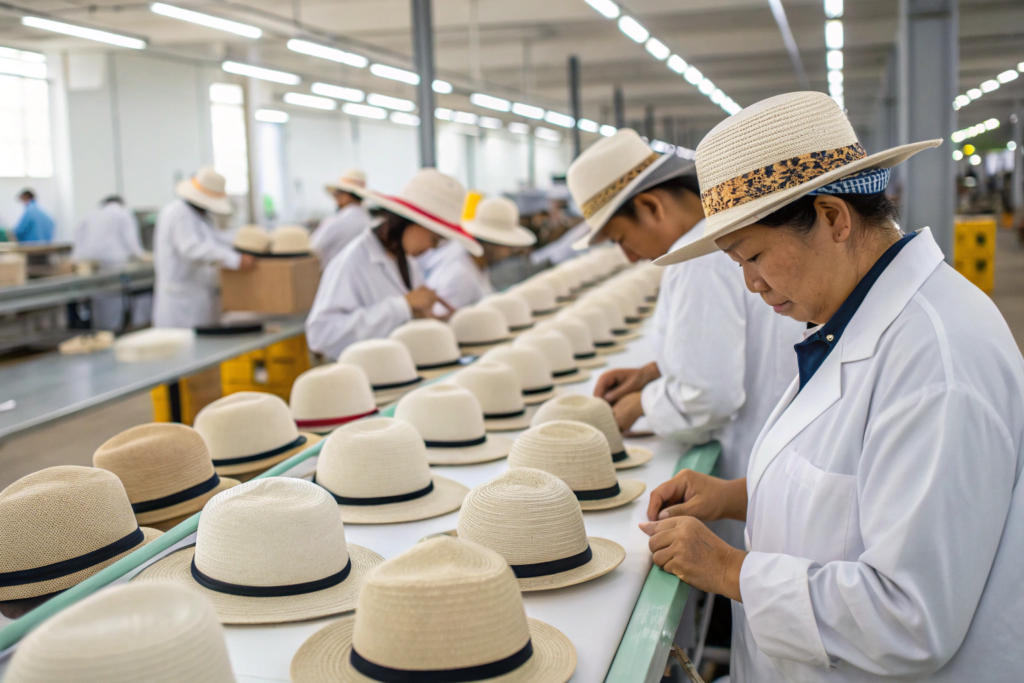
Quality control is not just a final inspection. It should happen throughout production. Materials should be inspected before cutting. Cutting should be checked for accuracy. Sewing should be monitored. Finished hats should be inspected individually, not just sampled.
We do all of this. We also provide reports to clients. Photos of production. Measurements from random samples. Videos of the process. We want our clients to see what we're doing. Transparency builds trust.
What inspections should happen during production?
First, material inspection. Fabric should be checked for defects before cutting. Then, cutting inspection. Pieces should be cut accurately and consistently. In-line inspection during sewing catches problems early. Final inspection of finished hats checks everything. We also do random testing of completed hats for things like colorfastness and shrinkage.
How do you handle defects found during inspection?
Defective items are pulled and not shipped. We analyze the cause. If it's a pattern, we adjust the process. If it's a one-off, we discard it and move on. We track defect rates and work to continuously improve. Our goal is zero defects shipped. We don't always achieve it, but we get close. This commitment to quality is why clients trust Shanghai Fumao Clothing for their bulk orders.
Conclusion
Sourcing high-quality cloth hats in bulk requires attention to many details. Materials, construction, sizing, customization, and quality control all matter. The best approach is to work with an experienced manufacturer who can guide you through these decisions and deliver consistent quality across large volumes.
At AceAccessory, we've been making hats for years. We know what works and what doesn't. Our factory in Zhejiang produces hats for clients around the world. We're transparent about our processes and committed to quality. If you're planning a bulk hat order, let's talk. Reach out to our Business Director, Elaine, at elaine@fumaoclothing.com. She'll connect you with a project manager who can help you get the hats you need.