As a manufacturer of performance accessories for over 20 years, I've seen a major shift in what customers expect from a product. It's no longer enough for a glove to just look good or provide basic protection. I often talk with buyers like Ron from the US, and a major pain point for his customers, especially for athletic or summer-use gloves, is dealing with hot, sweaty hands. A glove that doesn't breathe is uncomfortable, reduces grip, and ultimately leads to customer dissatisfaction.
The key is to strategically incorporate technical, breathable mesh panels into the design. Sourcing this correctly involves four critical steps: 1) Identifying the Right Type of Mesh for the function, 2) Specifying the Correct Placement for maximum airflow, 3) Ensuring High-Quality Construction at the seams, and 4) Verifying the Material's Performance.
This isn't just about cutting a hole and sewing in some netting. It's a technical design process that, when done right, dramatically elevates a glove's comfort and performance. At my factory, we've become experts in this type of construction. In this article, I'll walk you through the key considerations for sourcing performance gloves that actually breathe.
What Are the Key Types of Technical Mesh?
The first and most critical step is understanding that "mesh" is not a single material. Choosing the wrong type of mesh can ruin the glove's performance. A mesh that isn't durable will tear, and one that isn't stretchy will restrict movement.
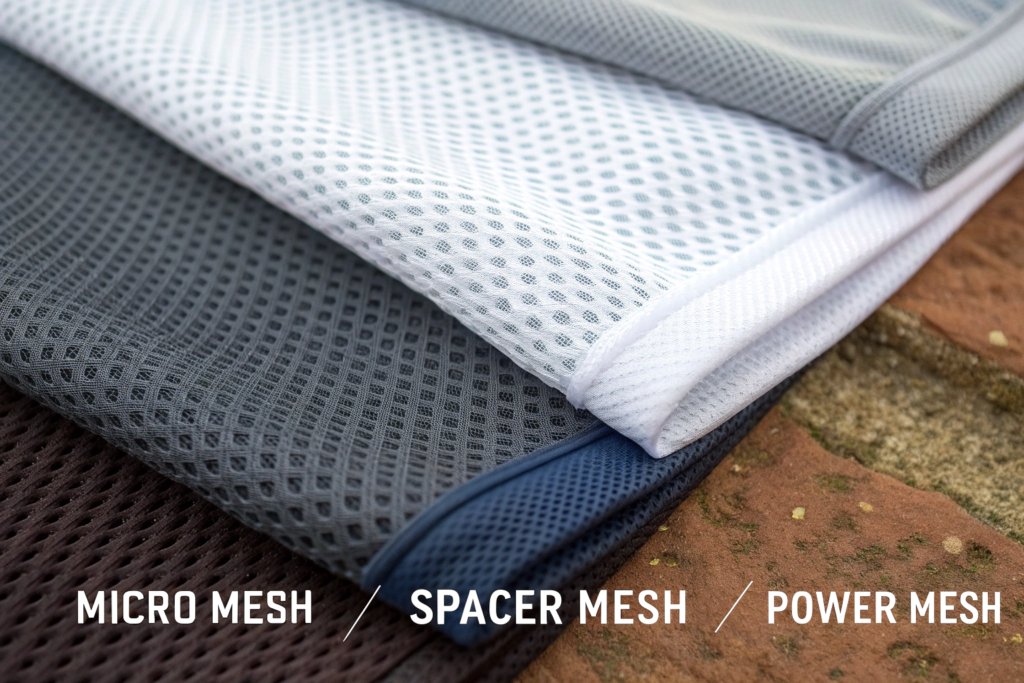
You must select the mesh based on the glove's intended use. The three most important types for gloves are: 1) Spacer Mesh for maximum airflow and cushioning, 2) Power Mesh for a compressive, four-way stretch fit, and 3) Micro Mesh for ultra-lightweight breathability. At Shanghai Fumao Clothing, our material library includes a wide range of technical meshes because we know that the right material is the foundation of a great performance product.
What is Spacer Mesh and when is it used?
Spacer Mesh (or 3D Mesh) is a multi-layered fabric where two outer layers are connected by a series of microfilaments, creating a thick, cushioned, and incredibly breathable structure. Think of it as a "ventilation sandwich." This three-dimensional construction allows air to circulate freely through the material. It's perfect for the back-of-hand panel on cycling or weightlifting gloves, where you want maximum airflow and a bit of protective cushioning without the bulk of foam.
What is Power Mesh and why is it for fit?
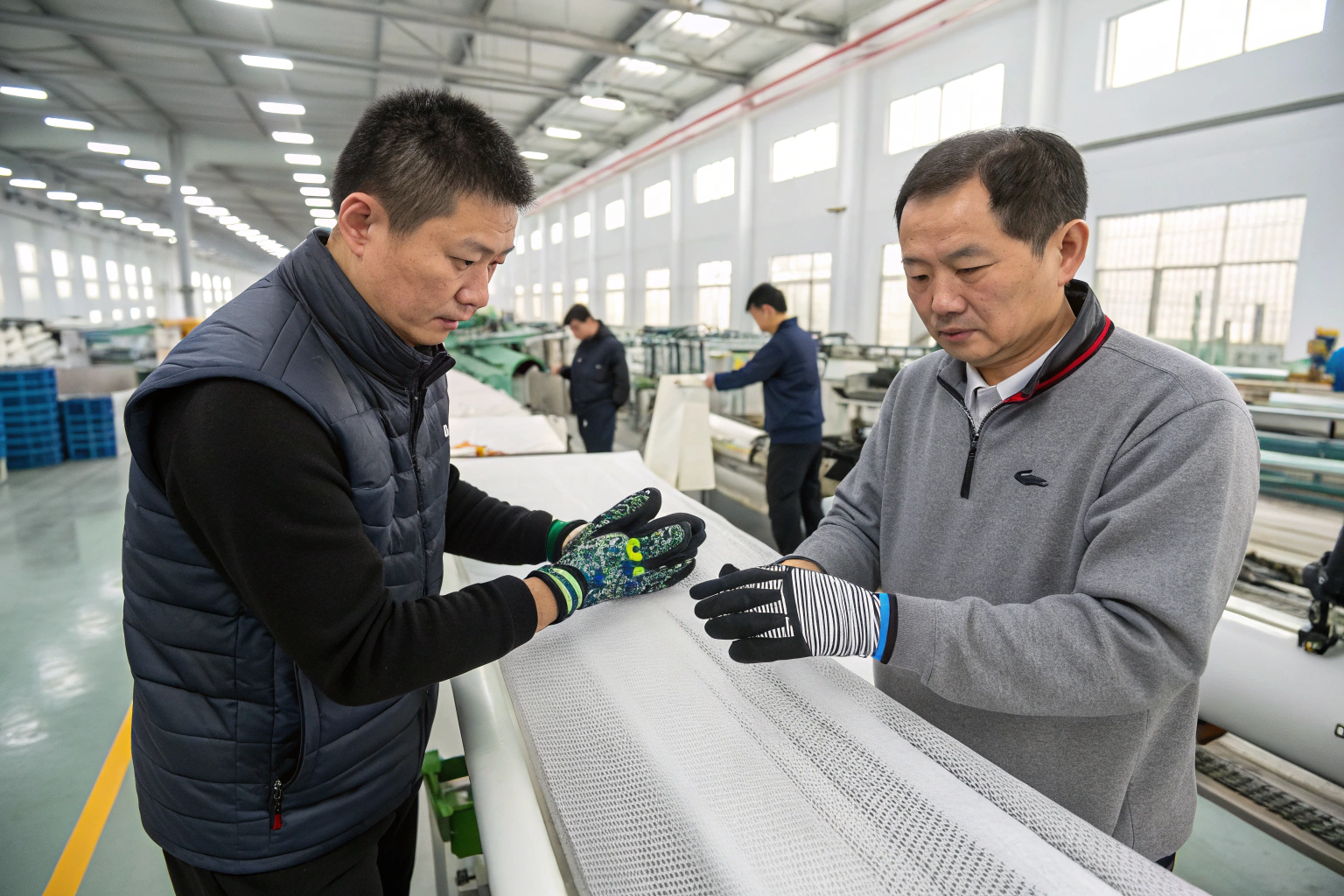
Power Mesh (or Stretch Mesh) is a fine, sheer mesh with a high percentage of spandex (elastane), giving it excellent four-way stretch and recovery. Its primary function is to provide a snug, compressive, and flexible fit. It's the ideal choice for panels across the knuckles or between the fingers (known as "fourchettes"). It allows the glove to stretch and move with the hand without bunching up, all while providing good ventilation. This material is a staple in activewear, as detailed by textile resources like The Business of Fashion.
What is Micro Mesh and when is it the right choice?
Micro Mesh is the lightest and often most breathable option. It's a very fine, lightweight knit with a pattern of small, open holes. It doesn't offer the cushioning of spacer mesh or the high compression of power mesh. Its sole purpose is to provide maximum ventilation with minimum weight. It's an excellent choice for the back panel of running gloves or summer driving gloves where the goal is simply to let heat and moisture escape as efficiently as possible.
Where Should Mesh Panels Be Placed?
Once you've chosen the right mesh, the next question is where to put it. Placing mesh in the wrong spot is a wasted opportunity. You need to think like an engineer and place your "vents" where they will be most effective.
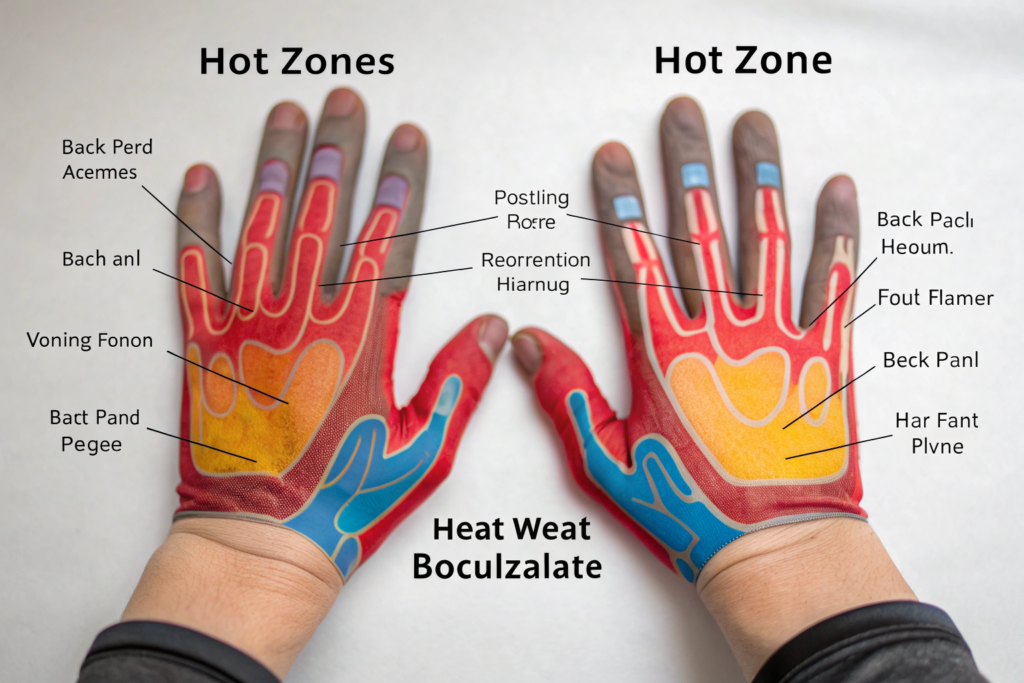
Mesh panels should be placed in the "hot zones" of the hand where heat and sweat accumulate and where flexibility is required. The most effective and common placements are: 1) Across the back of the hand for large-area ventilation, 2) Over the knuckles for flex and airflow, and 3) Between the fingers (fourchettes) for targeted moisture release. This strategic placement is what separates a truly technical glove from a fashion glove with a cosmetic mesh detail.
Why is the back of the hand the primary zone?
The palm of the glove is for grip and durability, so it's usually made of leather or a tough synthetic. The back of the hand, however, is the largest surface area available for releasing heat. Placing a large panel of spacer mesh or micro mesh here acts as a radiator for the entire hand, providing the most significant cooling effect.
Why are the knuckles a critical flex point?
When you make a fist or grip handlebars, the material across your knuckles needs to stretch significantly. Placing a panel of high-stretch Power Mesh here serves two purposes: it allows the glove to flex without restriction, preventing tightness and fatigue, and it provides a secondary zone for ventilation right at a point of high movement. This is a key feature in high-quality cycling and fitness gloves, a market analyzed by publications like Bicycle Retailer.
What is the purpose of mesh fourchettes?
The "fourchettes" are the small panels that form the sides of the fingers. This area is a major sweat zone, and using a solid, non-breathable material here can make the hand feel clammy and trapped. Using a thin, lightweight power mesh or micro mesh for the fourchettes allows moisture to escape from between the fingers, dramatically improving overall comfort and grip. It's a small detail that makes a huge difference in the glove's performance.
How to Ensure High-Quality Construction?
A performance glove is only as strong as its weakest seam. The point where a sturdy material like leather meets a stretchy, open material like mesh is a potential point of failure. Poor construction here will lead to torn seams and product returns.
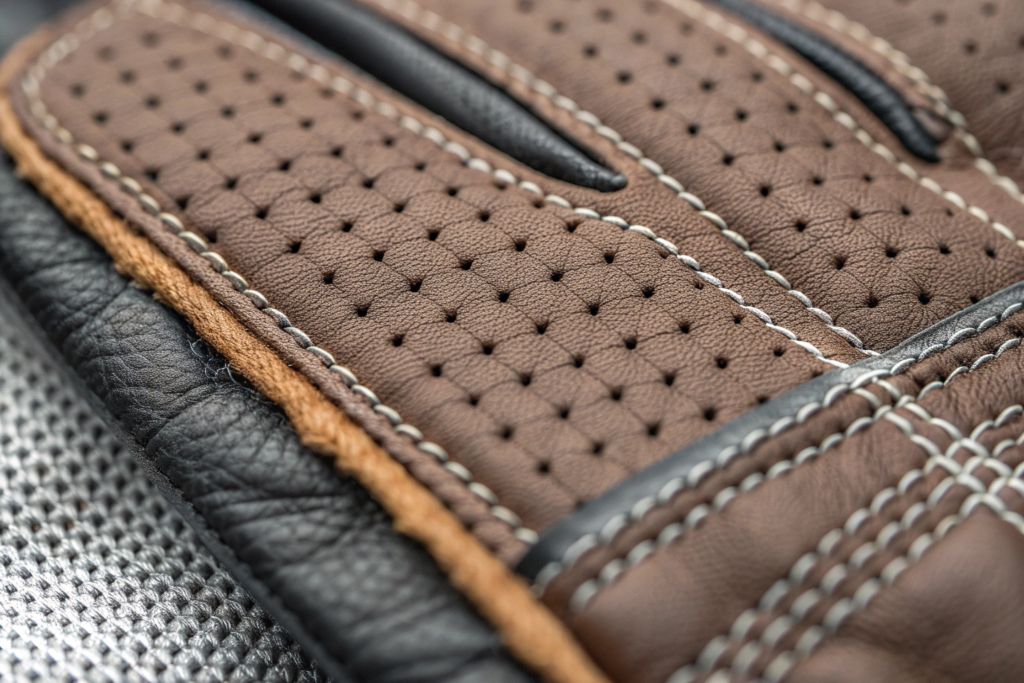
Ensuring high-quality construction means using the right stitching techniques to create a seam that is both strong and flexible. You must specify reinforced stitching, such as a double stitch or a flatlock stitch, at all mesh-to-solid-material seams to prevent tearing and ensure durability. This is a detail I am obsessive about with my QC team. A beautiful design is worthless if the product falls apart.
Why is a standard stitch not good enough?
A simple, single-needle lockstitch can put too much stress on the open structure of the mesh. The needle holes can become weak points, and the seam can tear or "run" under pressure, especially with a stretchy power mesh. Furthermore, a standard seam has a raised edge on the inside of the glove, which can cause chafing and irritation against the skin—a major problem for an athletic glove.
What are the best stitching techniques?
- Double Stitching: This involves sewing a second line of stitches parallel to the first. This distributes the stress across a wider area and provides a crucial backup if one line of stitching fails. It's a simple and effective way to add strength.
- Flatlock Stitching: This is the "gold standard" for performance apparel. A flatlock machine uses multiple needles and threads to create a seam that is incredibly strong and completely flat on both sides. This eliminates any internal ridge that could cause chafing, making it the most comfortable and durable option for joining panels on a high-performance glove.
When you write your tech pack, specifying "flatlock seams at all mesh panels" is a clear instruction to the factory that you require a high-quality, technical construction.
How Do You Verify the Material's Performance?
A supplier can claim their mesh is "durable" or "high-stretch," but you can't take their word for it. For a performance product, you need to verify these claims. A mesh that loses its stretch or tears easily will lead to unhappy customers.
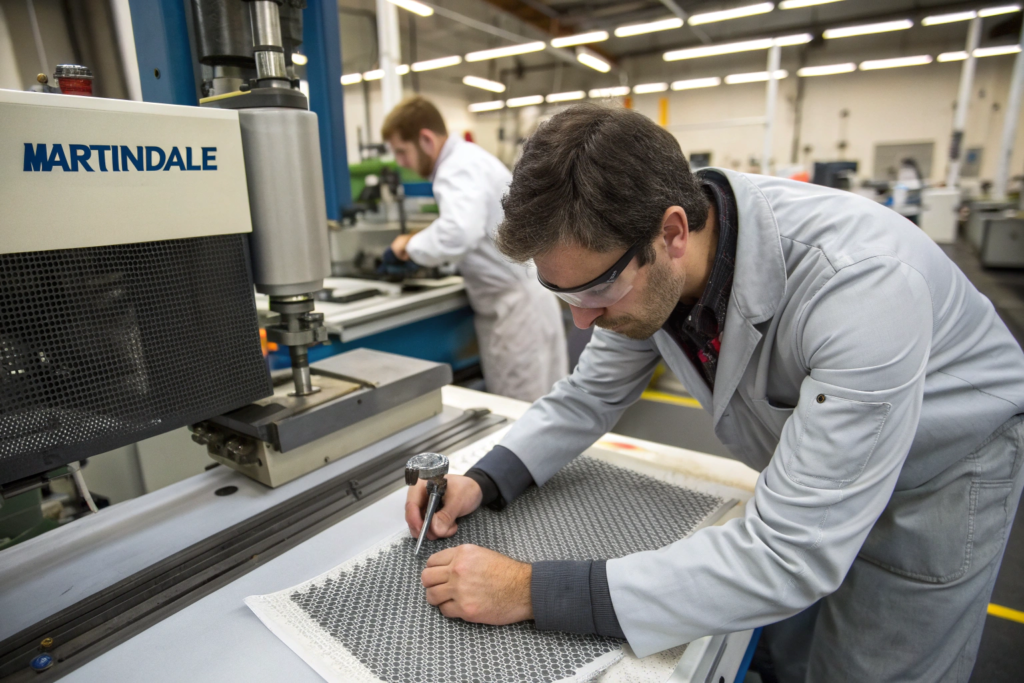
Verifying performance means asking your supplier for technical specifications and, for large orders, requesting standard material tests. Key performance metrics to verify are Abrasion Resistance (measured by Martindale tests) and Stretch & Recovery for power meshes. This step separates professional sourcing from amateur sourcing. It's about trusting, but verifying, the technical properties of the materials you are paying for.
How is Abrasion Resistance tested?
The standard test for abrasion is the Martindale test (ASTM D4966). In this test, a sample of the mesh fabric is rubbed against a standard abrasive surface with a set amount of pressure. The machine counts the number of "rubs" or cycles it takes until the fabric shows a certain level of wear (e.g., two yarns breaking). A higher Martindale rub count means a more durable fabric. For a glove, you want a mesh with a respectable rub count to ensure it won't wear out prematurely.
How do you test Stretch and Recovery?
For a power mesh, its ability to stretch and return to its original shape is its most important feature. This is tested according to standards like ASTM D2594. A strip of the mesh is marked, then stretched with a specific force for a set amount of time. The force is released, and after a recovery period, the strip is measured again. The "growth" or how much it failed to return to its original size is calculated. A good power mesh will have very low growth, indicating excellent recovery, which means your gloves won't get baggy and lose their fit over time.
Conclusion
Sourcing a high-performance glove with breathable mesh panels is a technical process that requires attention to detail at every stage. It begins with selecting the right type of mesh for the job—be it Spacer, Power, or Micro Mesh. It requires placing those panels strategically in the hand's "hot zones" to maximize both airflow and flexibility. It demands high-quality, reinforced construction like flatlock stitching to ensure the seams are durable and comfortable. And finally, it involves verifying the material's claimed performance through standardized testing. By following this systematic approach, you can move beyond simple aesthetics and develop a truly technical, comfortable, and high-performance glove that your customers will love to wear.
If you are looking for a manufacturing partner who understands the science of performance materials and has the technical expertise to build accessories that truly function, my team at Shanghai Fumao Clothing is ready to collaborate with you. We are committed to quality you can feel and performance you can measure. Please contact our Business Director, Elaine, at her email: elaine@fumaoclothing.com to discuss your next technical project.