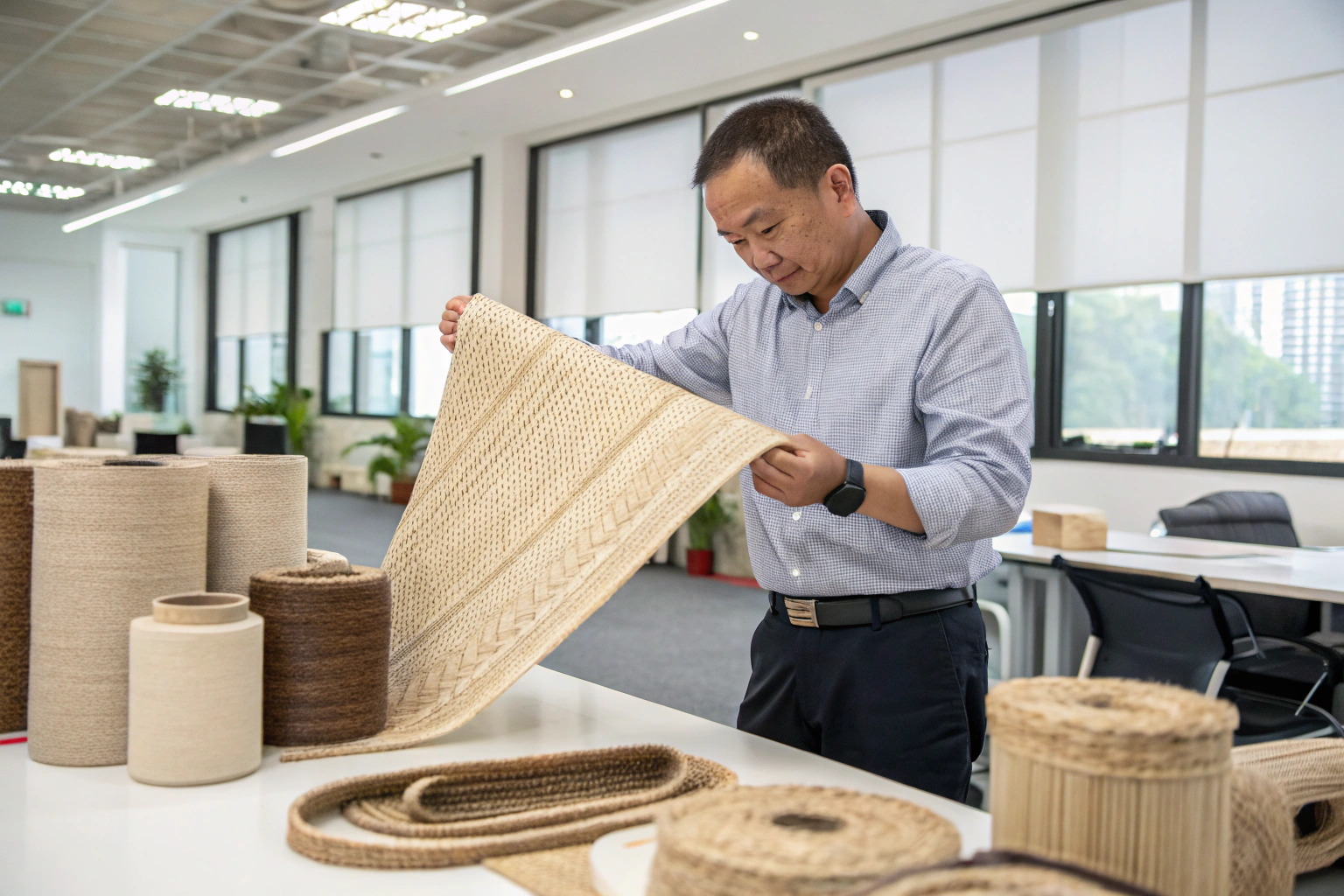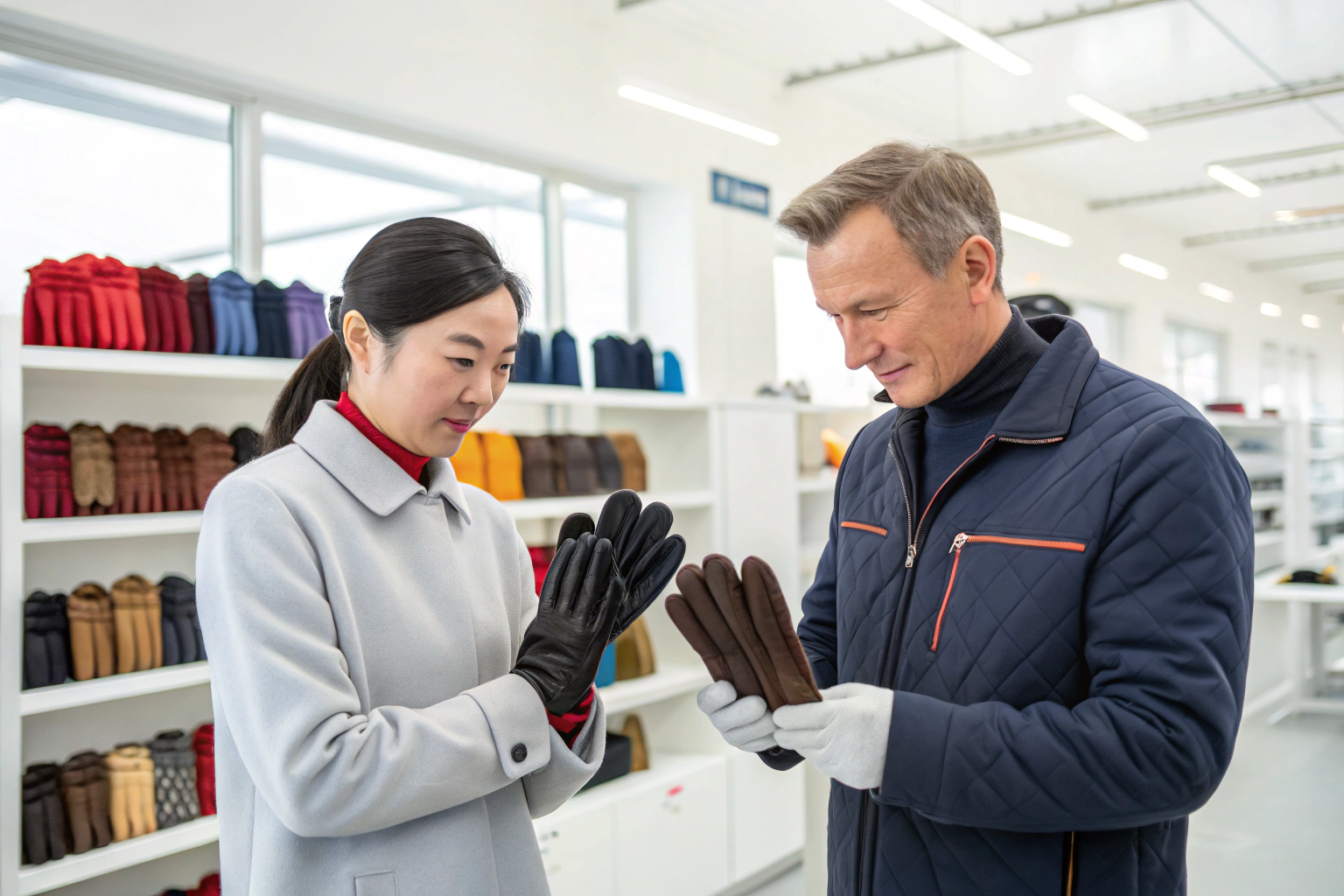
A buyer from a major US department store called me in July last year. His voice was anxious. He said, "I need 50,000 pairs of gloves for November delivery. I have no samples. I have no supplier. My boss just approved the budget. Can you help me?" I told him the truth. July is late for November gloves. But we could still make it work. We did. But the stress nearly killed him. Gloves are not like hats. They have fingers. Fingers are hard.
Yes, you can source high-quality winter gloves for retail collections, but you must start in February for delivery in September. Gloves require complex cutting, precise stitching, and multiple material tests. The best materials for 2026 are touchscreen-compatible merino wool blends, water-resistant goat leather, and recycled polyester fleece. At Shanghai Fumao Clothing, we produce 1.2 million pairs of gloves annually. We maintain dedicated glove production lines separate from our hat and scarf lines.
You might think gloves are just smaller versions of hats. They are not. A hat has two seams. A glove has fifteen to twenty seams. A hat uses one fabric weight. A glove uses different weights on the palm, the back, the thumb, and the cuff. A hat can stretch to fit. A glove must fit precisely or the customer cannot use their phone. This is why so many buyers fail at gloves. They treat them as an afterthought. I have made every mistake in glove sourcing. Let me show you how to avoid them.
Which Glove Materials Perform Best For Cold Weather Retail?
A buyer once told me, "Warmth is warmth. Wool is wool." I did not argue with him. I just sent him three gloves. One was 100 percent acrylic. One was 100 percent merino wool. One was a merino-nylon blend. I asked him to wear each pair for one hour in a cold room. He called me back. He said, "I had no idea the blend was warmer than the pure wool." I said, "Now you understand why material selection is everything."
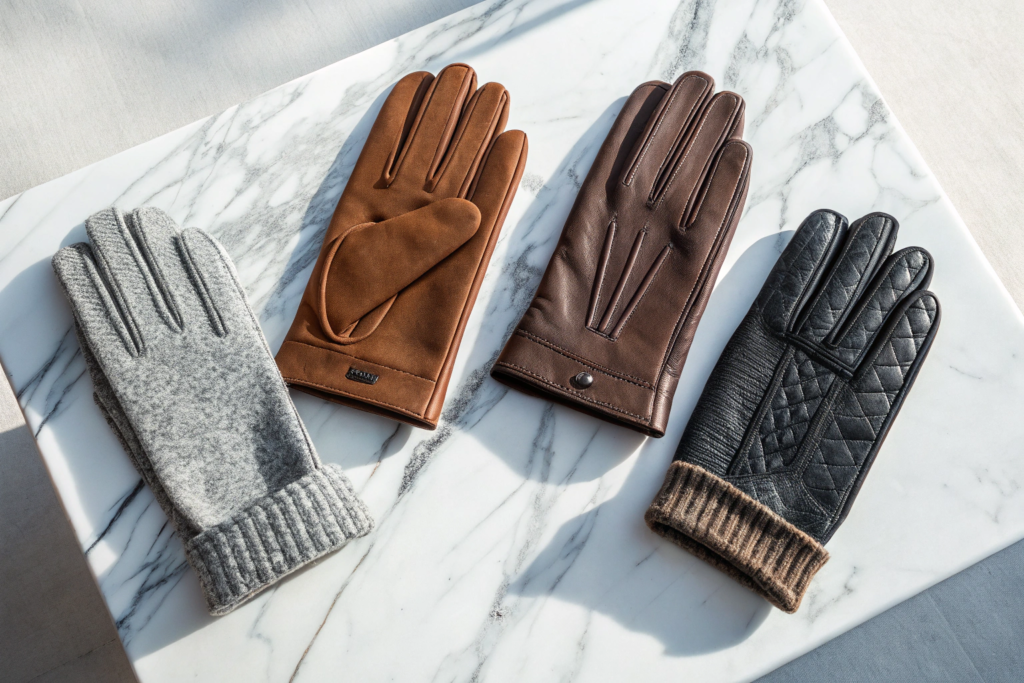
The best performing glove materials for 2026 retail are merino wool-nylon blends, water-resistant goatskin leather, and recycled polyester fleece with brushed backing. Merino blends offer warmth without bulk and accept touchscreen conductive yarn easily. Goatskin is thinner than cowskin, more dexterous, and naturally water-resistant. Recycled fleece is the value leader. It is warm, fast-drying, and carries a strong sustainability story. At Shanghai Fumao Clothing, we stock these materials year-round for quick-turn sampling.
Why Is Merino-Nylon Blend Better Than 100 Percent Merino?
Pure merino is soft. It is also weak. The fibers break under stress. Gloves stretch out. Thumbs develop holes. Nylon is the structural reinforcement. A 70 percent merino, 30 percent nylon blend retains the softness and warmth but triples the durability. It also holds conductive yarn better for touchscreen fingers. We learned this from a Swiss outdoor brand. They rejected our 100 percent merino sample. They taught us the blend ratio. Read this merino blend performance study. Also check this yarn engineering guide.
Is Vegan Leather A Viable Glove Material?
For fashion gloves, yes. For functional cold weather gloves, not yet. Most vegan leathers are PU-coated polyester. They do not breathe. Hands sweat. The sweat has nowhere to go. The glove becomes cold and wet from the inside. Also, vegan leather cracks in freezing temperatures. The coating stiffens and splits. We offer vegan leather gloves only for autumn weight or fashion-forward styles. We are honest with buyers about the limitations. Read this vegan leather cold weather test. If your customer needs real warmth, choose goatskin.
How Do You Ensure Touchscreen Compatibility Works Consistently?
I tested touchscreen gloves from five different factories at a trade show. I put on each pair. I tried to type "hello" on my iPhone. Only one pair worked correctly. The others required hard pressing. One pair only worked on the thumb. Another pair worked for one swipe then stopped. The buyers walking past did not test. They assumed it worked. Their customers would discover the failure at home. They would return the gloves.
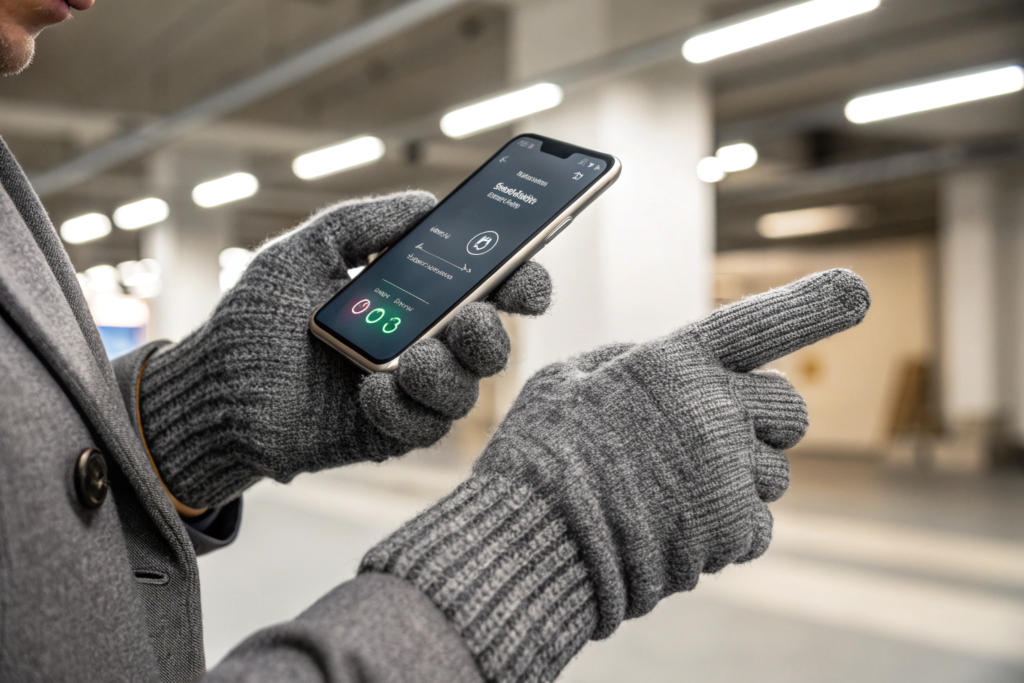
Touchscreen compatibility fails because of three reasons: insufficient conductive fiber density, incorrect yarn placement, or washing degradation. The solution is conductive yarn woven into the entire fingertip, not just embroidered on top. The yarn must be silver-plated nylon, 70 denier minimum. The connection must run continuously from fingertip to palm. At Shanghai Fumao Clothing, we test every glove production batch on both iOS and Android devices. We reject any batch with less than 98 percent success rate.
How Do You Test Touchscreen Gloves Before Shipment?
We use a robotic finger simulator. It swipes, taps, and types at consistent pressure. Human testers vary. Some press hard. Some press soft. The robot gives us objective data. We test 30 pairs per production batch. The pass standard is 98 percent successful touches. If the batch fails, we reject it. The factory must re-knit the fingertips with higher density conductive yarn. Read this touchscreen glove testing protocol. Also check this conductive yarn specification guide.
Can Touchscreen Function Survive Washing?
Yes, if the conductive yarn is properly integrated. Embroidered patches peel after three washes. Woven-in silver-plated nylon lasts 30 to 50 washes. The silver does oxidize over time. Conductivity gradually decreases. But most customers lose their gloves before the touchscreen fails. We recommend air drying only. Tumble drying accelerates oxidation. Include a care card in every pair. Read this conductive textile durability study.
What Are The Critical Fit And Sizing Standards For Gloves?
I have a confession. For my first five years in this business, I did not understand glove sizing. I thought small, medium, large was enough. Then a buyer from Germany sent me a 12-page glove size specification document. It included palm circumference, middle finger length, thumb crotch position, and fourchette width. I realized I was an amateur. I hired a glove technician. It was the best decision I ever made.
Glove sizing is not S-M-L-XL. It is millimeter precision. The critical measurements are palm circumference at the knuckles, middle finger length from crotch to tip, and thumb rotation angle. A difference of 3mm changes fit perception from "perfect" to "too tight." For knit gloves, recovery rate after stretching matters more than initial size. For leather gloves, the pattern cutting angle determines dexterity. At Shanghai Fumao Clothing, we maintain graded size masters for every glove style.
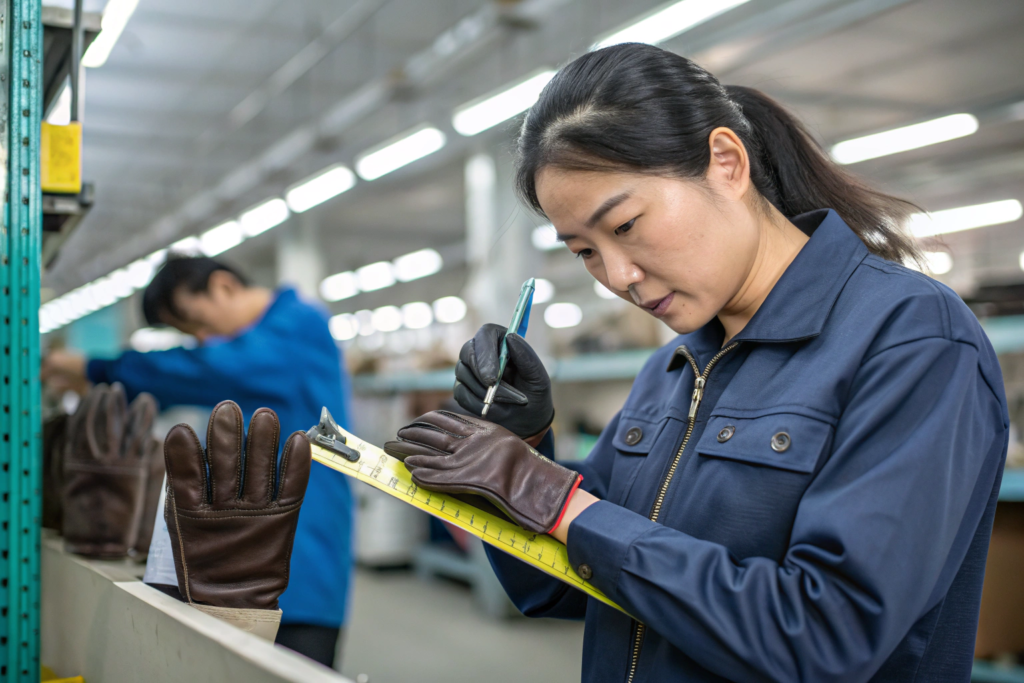
How Do You Create A Reliable Glove Size Chart?
Do not copy size charts from competitors. They are often wrong. Instead, measure 100 people in your target market. Record their palm circumference and finger length. Group the data. Find the range for small, medium, large, XL. This is expensive but necessary. We offer this service to major buyers. We send our QC team to their retail stores. We measure customer hands for three days. Then we engineer the size chart specifically for their demographic. Read this anthropometric glove sizing guide. Also check this ASTM glove fit standard.
Why Do Knit Gloves Stretch Out?
Knit gloves stretch because the yarn relaxes. Acrylic relaxes quickly. Nylon holds shape better. Merino wool relaxes slowly. The solution is pre-stretching. We mount finished knit gloves on hand forms for 24 hours before packing. This accelerates the relaxation process. The customer receives a glove that fits consistently from the first wear. Read this knit fabric relaxation study.
How Do You Balance Cost And Quality For Retail Price Points?
A buyer once told me, "My retail price is fixed at USD 29.99. I need a glove that costs USD 7.50 FOB. Make it work." I showed him three options. Acrylic knit with printed palm dots. Polyester fleece with basic cuff. Split leather with synthetic lining. He chose the fleece. It sold well. But his customer left reviews saying, "Warm but pills after two washes." He came back the next year with a USD 39.99 price point. He learned the lesson.
You cannot win on both price and quality. You must choose your customer. For opening price point under USD 25 retail, use recycled polyester fleece. It looks good, feels warm, and tells a sustainability story. For mid-tier USD 35 to USD 50, use merino-nylon blend with full touchscreen. For premium over USD 60, use goatskin leather with cashmere lining. At Shanghai Fumao Clothing, we help buyers map product tiers to material costs so you hit margin targets without disappointing customers.

How Do You Reduce Pilling On Budget Gloves?
You cannot eliminate pilling on 100 percent acrylic. It is inherent to the fiber. But you can delay it. Use high-twist yarns. Compact spinning compresses the fibers. They resist pulling apart. Also, add 10 percent nylon. Nylon is the pilling resistance champion. A 90/10 acrylic-nylon blend pills 60 percent less than pure acrylic. The cost increase is negligible. The customer satisfaction increase is significant. Read this pilling resistance guide. Also check this fiber blending strategy.
Should You Offer Gift Boxes For Premium Gloves?
Yes. Gloves are a common gift item. A man buys gloves for his wife. A daughter buys gloves for her father. Gift packaging increases perceived value. The same USD 45 glove in a cardboard box feels like USD 35. In a rigid magnetic closure box with tissue paper, it feels like USD 60. The box costs USD 1.20. The perceived value increase is USD 15 to 20. This is the highest ROI packaging investment you can make. Read this gift packaging psychology.
Conclusion
Gloves are the most technically difficult accessory to source. Hats stretch. Scarves drape. Belts buckle. Gloves must fit ten individual fingers, allow full dexterity, keep hands warm, and now operate smartphones. One wrong measurement. One failed conductive thread. One poor material choice. The customer returns them. The buyer loses money. The factory loses trust.
I have spent eighteen years learning gloves the hard way. I have rejected thousands of pairs that did not meet our standards. I have flown to tanneries to argue about leather grain. I have sat with knitting machine technicians until midnight fixing conductive yarn tension. I have measured thousands of hands to build better size charts. I do not claim to be the world's greatest glove expert. But I have made every mistake so you do not have to.
At Shanghai Fumao Clothing, we treat gloves as a separate craft, not an accessory afterthought. Our glove production lines are staffed by operators with ten-plus years of experience. Our quality checkpoints include material inspection, conductive testing, dimensional measurement, and fit validation on five different hand form sizes. We do not rush gloves. We respect them.
If you are tired of glove samples that do not fit, touchscreen claims that fail, or production delays because your factory does not understand finger construction, please contact us. Talk to our Business Director, Elaine. She will connect you with our glove specialist team. We will send you a size measurement kit. We will help you determine the right materials for your customer and your price point. We will develop samples that actually work. No guesswork. No excuses. Just gloves that perform.