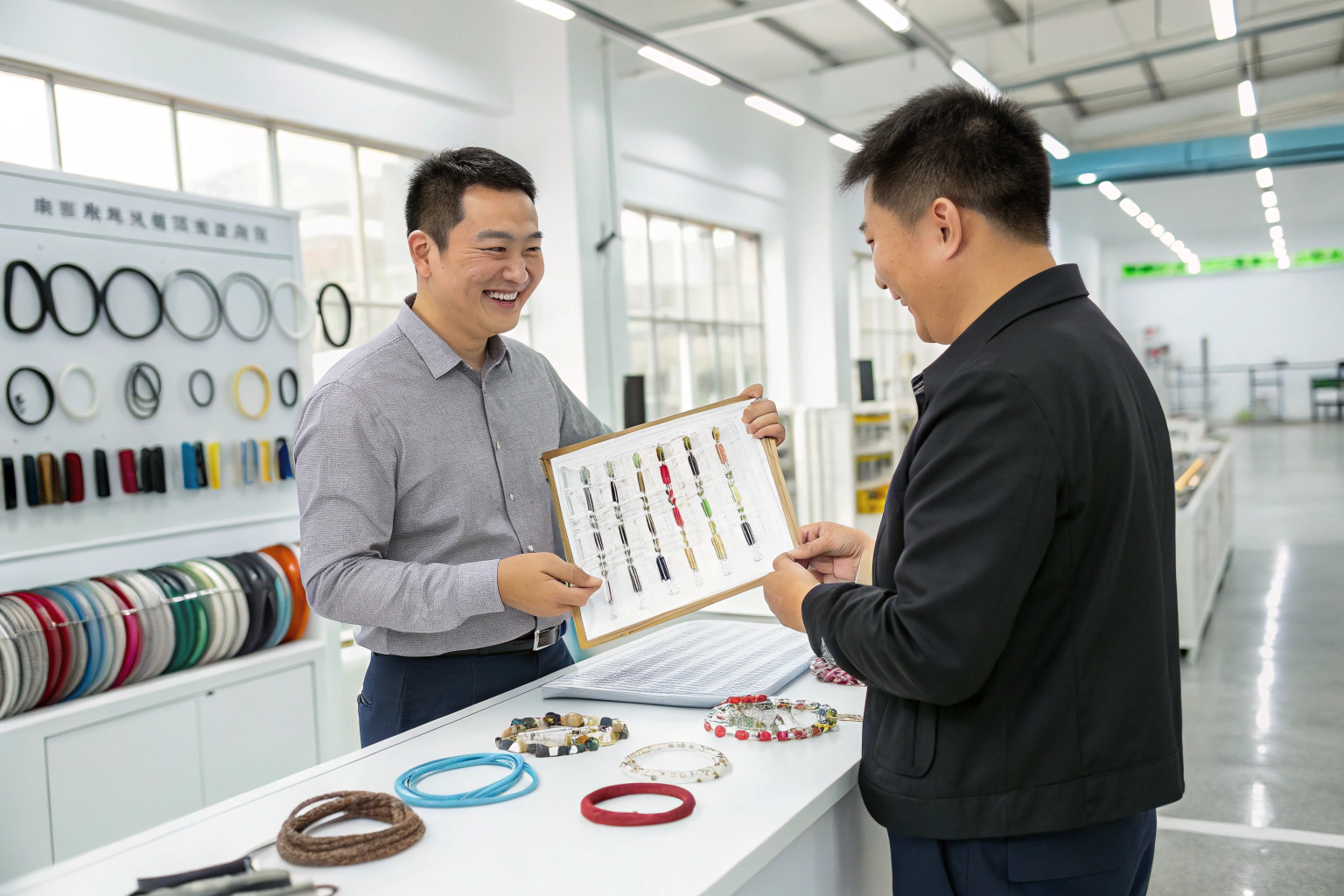
You are always looking for innovative ways to connect with your customers and create buzz. A pop-up shop is a brilliant, high-impact strategy. It's a chance to bring your brand to life, get direct feedback, and drive a surge in sales. But as you start to plan, a daunting logistical challenge emerges: sourcing. This isn't like stocking a permanent store or your online warehouse. A pop-up has a fixed, non-negotiable deadline and a unique set of inventory pressures. You're worried about timing, quantity, and product mix.
Sourcing for a pop-up shop requires a highly strategic, time-sensitive approach that is fundamentally different from routine inventory management. The key is to build a curated, high-impact collection through a "buy-shallow-and-wide" strategy, balancing proven best-sellers with exclusive, event-only "hero" products. This must be executed on a compressed timeline, demanding a close partnership with a fast, reliable manufacturer who can guarantee on-time delivery for your immovable launch date.
I'm the owner of Shanghai Fumao Clothing, and we've helped numerous brands execute successful pop-up shop strategies. I can tell you that the sourcing process is where most pop-ups either succeed brilliantly or fail quietly. It's a high-stakes game of precision and timing. Unlike your online store where you can list a product as "sold out," an empty shelf at your pop-up is a visible failure. A well-executed sourcing plan is your insurance policy for a vibrant, profitable, and buzz-worthy event. Let's break down the professional playbook for sourcing for this unique retail format.
How Do You Develop Your Pop-Up Product Strategy?
You can't simply take your entire online inventory and dump it into a pop-up space. A pop-up is a curated experience, a story you are telling in a physical space for a limited time. The product assortment is the main character in that story. You need a deliberate strategy to decide what to sell. How do you create a collection that feels special, drives urgency, and maximizes your sales per square foot?
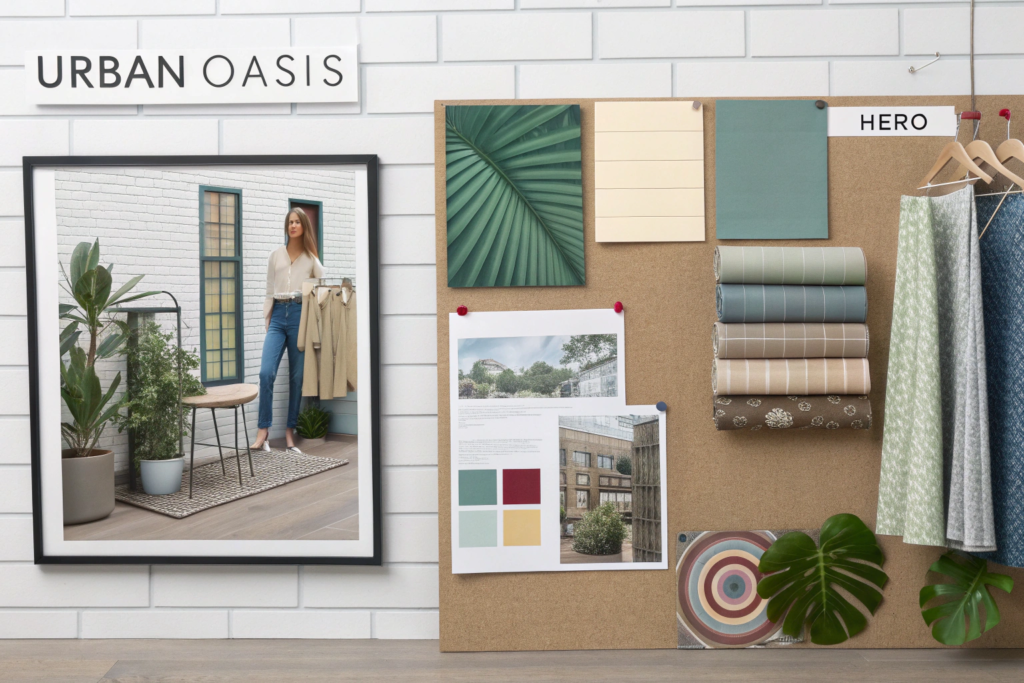
Your pop-up product strategy should be a carefully balanced mix of your established "Core Best-Sellers" and a limited run of new, "Pop-Up Exclusives." The best-sellers provide a reliable sales foundation, while the exclusives create the "fear of missing out" (FOMO) that drives event traffic and immediate purchases. This entire assortment should be unified under a clear theme and a tight color story that feels cohesive and intentional.
Let's break down this "curated collection" approach:
- Foundation: Core Best-Sellers (Approx. 60% of assortment): These are your tried-and-true winners. Analyze your online sales data from the past six months. Identify your top 5-10 SKUs that sell consistently with high margins. These are your safe bets. They are the products you know your customers already love, and they will form the backbone of your pop-up sales.
- Excitement: Pop-Up Exclusives (Approx. 10-20% of assortment): This is your "hero" product. It's the star of the show and the reason for people to visit now. This could be a new design, a best-selling item in a unique, limited-edition color, or a collaboration piece. This is the product you will feature heavily in your pre-event marketing. The scarcity of this item is its key selling point.
- Relevance: Seasonal & Trend Items (The remaining 20-30%): These are products that are relevant to the current season and location of your pop-up. If your pop-up is in Miami in the spring, this would be straw hats and lightweight scarves. If it's in New York in the fall, it would be beanies and leather gloves. This part of the assortment shows that you are in tune with the customer's immediate needs.
What is a "buy-shallow-and-wide" strategy?
This is a classic retail buying strategy that is perfect for a pop-up.
- "Wide" means you offer a good variety of different styles and products. This makes your shop look full, interesting, and appealing to a broader range of tastes.
- "Shallow" means you carry a limited quantity of each style. This reduces your financial risk if a particular style doesn't sell well. Crucially, it also creates an atmosphere of scarcity. When a customer sees there are only five of a particular hat left, it encourages them to buy immediately rather than "thinking about it."
How do I create the "Pop-Up Exclusive" product?
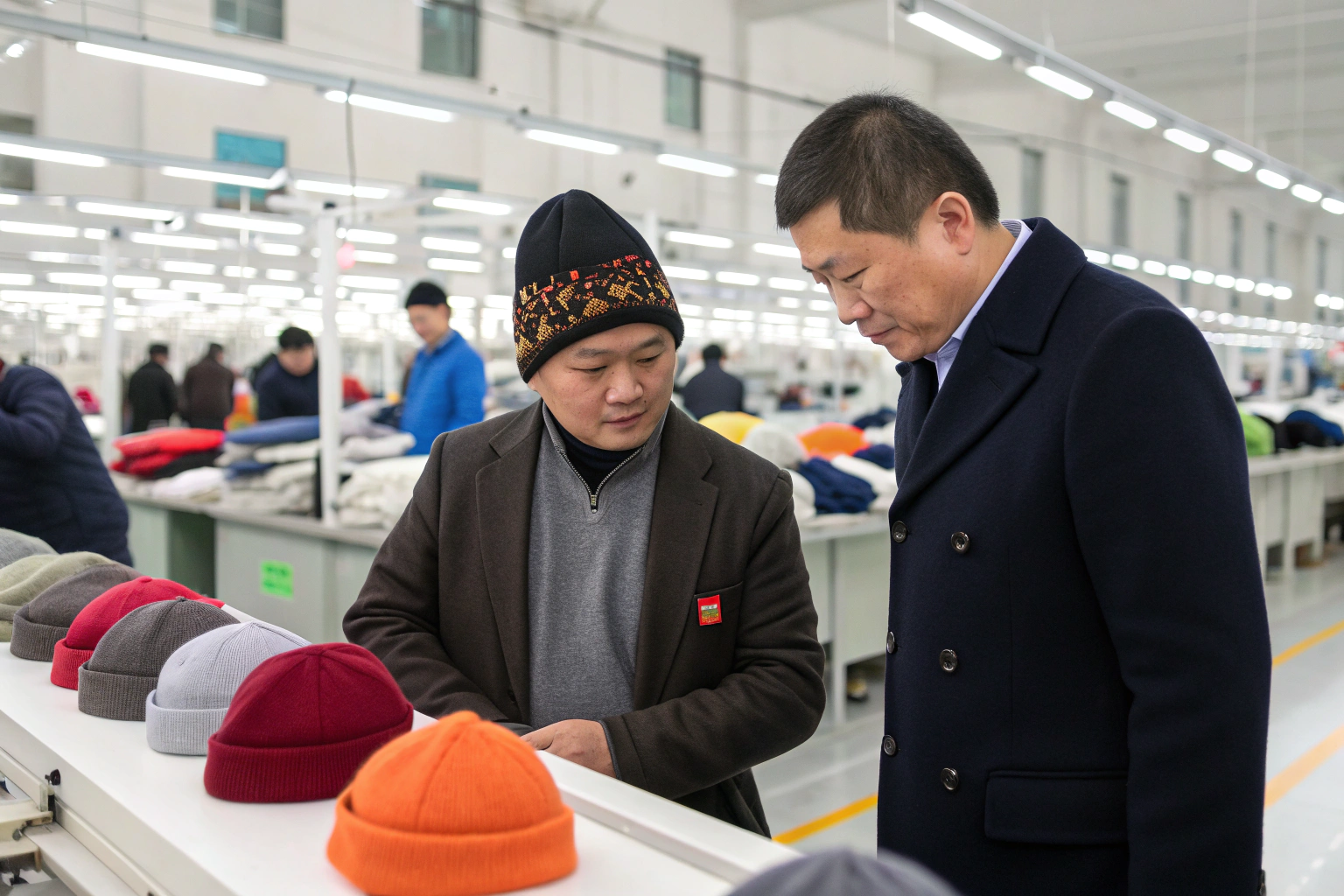
This is where a close relationship with your manufacturer is key. The fastest way to create an exclusive is to take one of your existing best-selling designs and have it produced in a unique color that you have never offered before. For example, if your best-selling beanie is usually offered in black, grey, and navy, work with your supplier to produce a limited run of 100 pieces in a trendy "burnt orange" for your fall pop-up. This is much faster and less risky than developing a completely new product from scratch.
How Do You Reverse-Engineer Your Sourcing Timeline?
This is the most critical and high-pressure aspect of sourcing for a pop-up. You have a launch date. This date is not flexible. It is set in stone by your venue rental, your marketing announcements, and your staffing plan. If your products do not arrive on time, you will be paying for an empty store. You must create a timeline that has zero room for error.
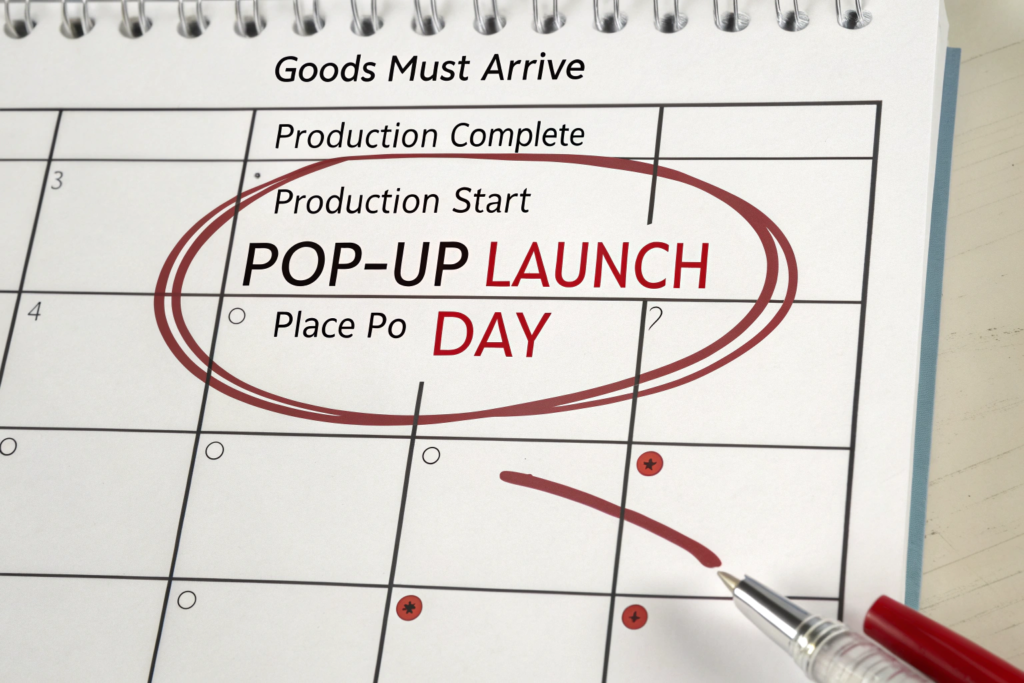
You must create a "backwards calendar" starting from your pop-up launch date to determine your final, non-negotiable sourcing deadlines. You need to calculate the time required for shipping, production, and sampling, and then add a buffer for potential delays. This timeline will dictate the absolute last day you can approve a sample and place your purchase order.
Let's build a sample backwards calendar for a pop-up launching on October 1st:
- Launch Day: October 1st
- Goods Must Be On-Site (Buffer Time): September 25th (5-6 days before launch). You need time to unpack, price, merchandise the store, and handle any potential shipping carrier delays. Never plan for goods to arrive the day before.
- Shipping Time (e.g., from China): Let's assume 30 days for standard ocean freight. This means goods must ship from the factory no later than August 25th. (Air freight is faster but dramatically more expensive and should be reserved as an emergency backup plan).
- Production Lead Time: A typical production run for accessories might be 30-45 days. Let's use 45 days to be safe. This means you must place your final, approved Purchase Order (PO) no later than July 10th.
- Sampling & Approval: Before you can place the PO, you need to approve your final samples (especially for any new "exclusive" products). This process can take anywhere from 2 to 4 weeks, including shipping time for the samples. This means you must be starting the sampling process with your supplier no later than early to mid-June.
What is the biggest risk in this timeline?
The biggest risk is an unexpected delay in production or shipping. Production can be delayed by raw material shortages or factory capacity issues. Shipping can be delayed by port congestion, customs inspections, or weather. This is why building in a buffer at every stage is not optional; it is essential. A good rule of thumb is to add a 10-15% time buffer to each major phase.
How do I communicate this urgency to my supplier?
You must be extremely clear and firm with your supplier about your deadlines. Your purchase order should include a "Must Ship By" date. You should also communicate the context: "This order is for a special pop-up event with a fixed launch date of October 1st. The 'Must Ship By' date of August 25th is critical and cannot be missed." A good partner like Shanghai Fumao Clothing will understand the importance of event-based deadlines and will work with you to prioritize your production schedule.
How Do You Calculate the Right Quantity of Inventory?
This is the million-dollar question. If you order too little, you'll sell out on the first day and leave money on the table for the rest of the event. If you order too much, you'll be stuck with a mountain of unsold inventory that you have to pay to ship back and store. How do you find the sweet spot?
Calculating your inventory quantity requires a data-driven forecast, not a gut feeling. You should analyze your online sales velocity for your best-sellers to create a baseline, factor in the expected "lift" from the physical retail experience, and then apply your "shallow-and-wide" strategy. It's a process of educated estimation, and it's always better to be slightly conservative.
Here's a simple forecasting model:
- Calculate Daily Sales Velocity: Look at your online store. Your best-selling beanie (SKU 123) sells, on average, 5 units per day.
- Determine Pop-Up Duration: Your pop-up will be open for 10 days.
- Baseline Forecast: Your baseline forecast for SKU 123 is 5 units/day x 10 days = 50 units.
- Apply a "Retail Lift" Factor: A physical retail experience often leads to higher sales than online. People can touch and feel the product, and there's a sense of event urgency. Let's apply a conservative lift factor of 1.5x to 2x. So, 50 units x 1.5 = 75 units.
- Apply the "Shallow" Principle: For this best-seller, ordering 75 units seems reasonable. For a new, untested seasonal item, you might order a much smaller quantity, perhaps only 20-30 units. For your "exclusive" hero product, you order a fixed, limited quantity (e.g., 100 units) and use that number in your marketing to create scarcity.
- Create a Budget: Do this for every SKU in your planned assortment. Add it all up. Does the total cost of this inventory fit within your event budget? If not, you need to reduce the depth ("shallows") of your buys, perhaps by cutting the quantities of your riskier seasonal items.
What do I do with leftover inventory?
You will almost certainly have some inventory left over. You must have a plan for this before the pop-up begins. The most common strategy is to simply absorb the leftover stock into your online store's inventory. After the pop-up ends, you can run a "Pop-Up Last Chance" online sale to sell through any remaining exclusives. The cost of shipping the goods back to your main warehouse should be factored into your pop-up's overall budget.
Should I have a system for tracking sales at the pop-up?
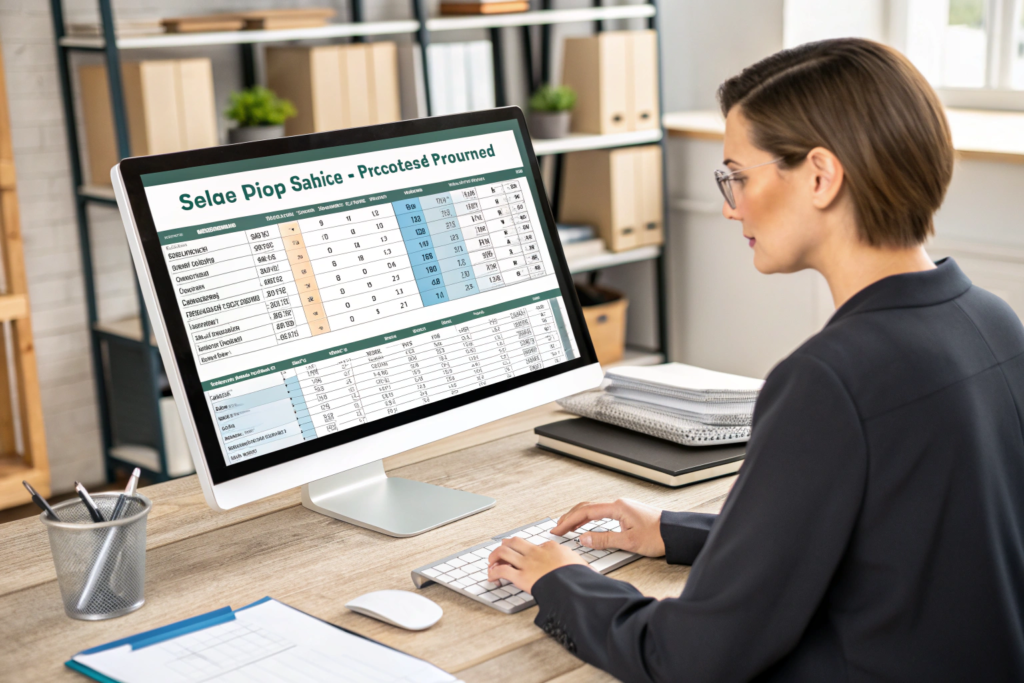
Absolutely. You must use a modern Point of Sale (POS) system (like Shopify POS or Square) that is integrated with your main inventory system. This allows you to track sales in real-time. If you see that a particular scarf is selling out much faster than expected, you can update your online store's inventory to reflect this, preventing you from accidentally selling an item online that you no longer have.
How Do You Choose the Right Sourcing Partner?
Given the intense time pressure and the absolute necessity of on-time delivery, your choice of sourcing partner is more critical for a pop-up than for any other sales channel. A cheap but unreliable supplier is a massive liability. A slightly more expensive but rock-solid reliable partner is an invaluable asset.
For a pop-up project, you must choose a sourcing partner who has proven experience with time-sensitive, event-based orders. You need to prioritize reliability, communication, and speed over pure price. A good partner will act as a true collaborator, understanding the stakes, helping you to solve problems, and offering solutions (like expedited sampling) to ensure you meet your critical deadlines.
Here's what to look for in a pop-up sourcing partner:
- Proven Reliability: Ask them for case studies or examples of when they have successfully produced for a time-critical project or product launch.
- Fast Sampling: Their standard sample lead time should be fast (e.g., 7-14 days). A factory that takes 30-45 days to make a sample is not suitable for a pop-up project.
- Excellent Communication: They should be highly responsive and proactive. They should warn you about potential delays (e.g., a national holiday) and work with you to find solutions.
- Logistical Support: A great partner doesn't just make the product; they help you get it there. They should have a strong relationship with reliable freight forwarders and be able to manage the shipping process efficiently, providing you with clear tracking and documentation.
- A "Can-Do" Attitude: When you explain your project, they should sound excited and confident, not hesitant or confused. You want a partner who sees your challenge as an exciting opportunity to perform.
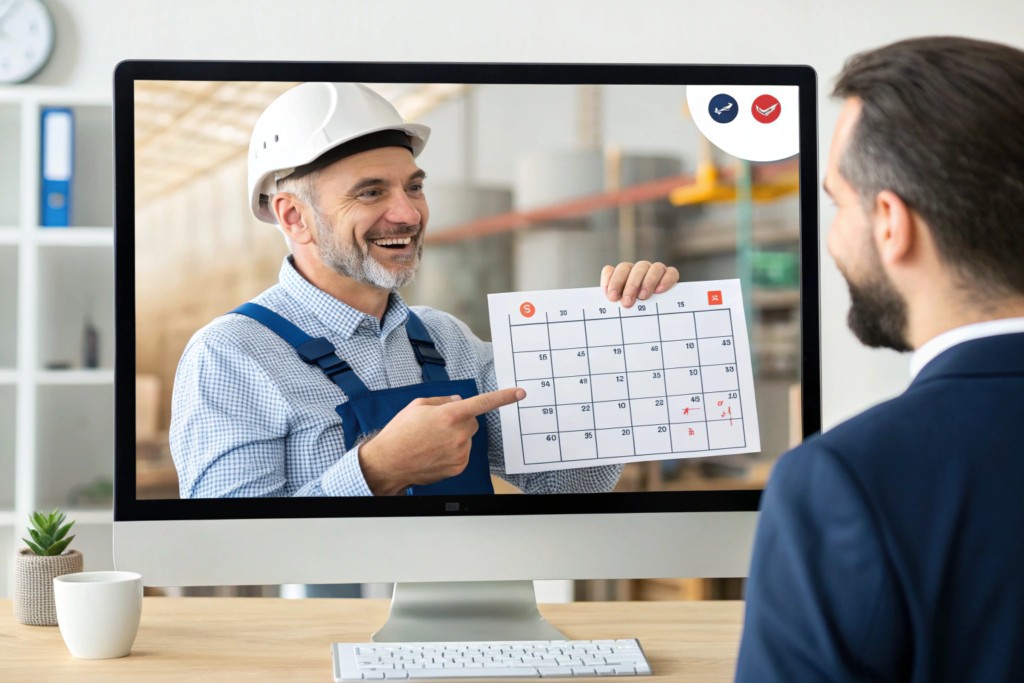
Should I use a domestic or overseas supplier?
This depends on your timeline. If you are planning with a very short lead time (e.g., under 2 months), a domestic supplier is a much safer bet. The production cost will be higher, but you will save a huge amount of time and risk on shipping. If you are planning well in advance (4+ months), a reliable overseas supplier like AceAccessory can offer significant cost advantages, but you must manage that longer timeline meticulously.
What if my supplier tells me a delay is unavoidable?
A good partner will tell you this as early as possible, not a week before the ship date. If a delay is truly unavoidable, you need to be ready with a contingency plan. This is where the extra cost of air freight comes in. Air freight can cut shipping time from 30 days to about 5-7 days. It is very expensive, but it can be the difference between having products for your launch day and having an empty store. You should get a quote for air freight early in the process so you know what your "emergency button" will cost if you have to press it.
Conclusion
Sourcing for a pop-up shop is a masterclass in strategic planning and operational precision. It requires you to think like a curator, a forecaster, and a logistics expert all at once. By developing a tight, thematic product strategy, meticulously reverse-engineering your timeline, making data-driven inventory calculations, and, most importantly, choosing a manufacturing partner who understands the high-stakes nature of event-based retail, you can mitigate the risks and set yourself up for a phenomenally successful event. A well-executed pop-up can create a powerful halo effect for your brand for months to come, and it all begins with a smart, disciplined, and timely sourcing plan.
At Shanghai Fumao Clothing, we thrive on these kinds of challenges. We understand the critical importance of deadlines and have the systems in place to deliver high-quality products on a tight schedule. We see ourselves as partners in our clients' success. If you are planning a pop-up and need a reliable, experienced manufacturer to help you bring your vision to life, on time and on budget, please reach out to our Business Director, Elaine, at elaine@fumaoclothing.com.