I used to believe that my factory's design team was a secret weapon I kept hidden. I thought buyers wanted to believe that all creativity came from their side. I told my designers to stay in the background, execute instructions quietly, and never challenge the customer's vision.
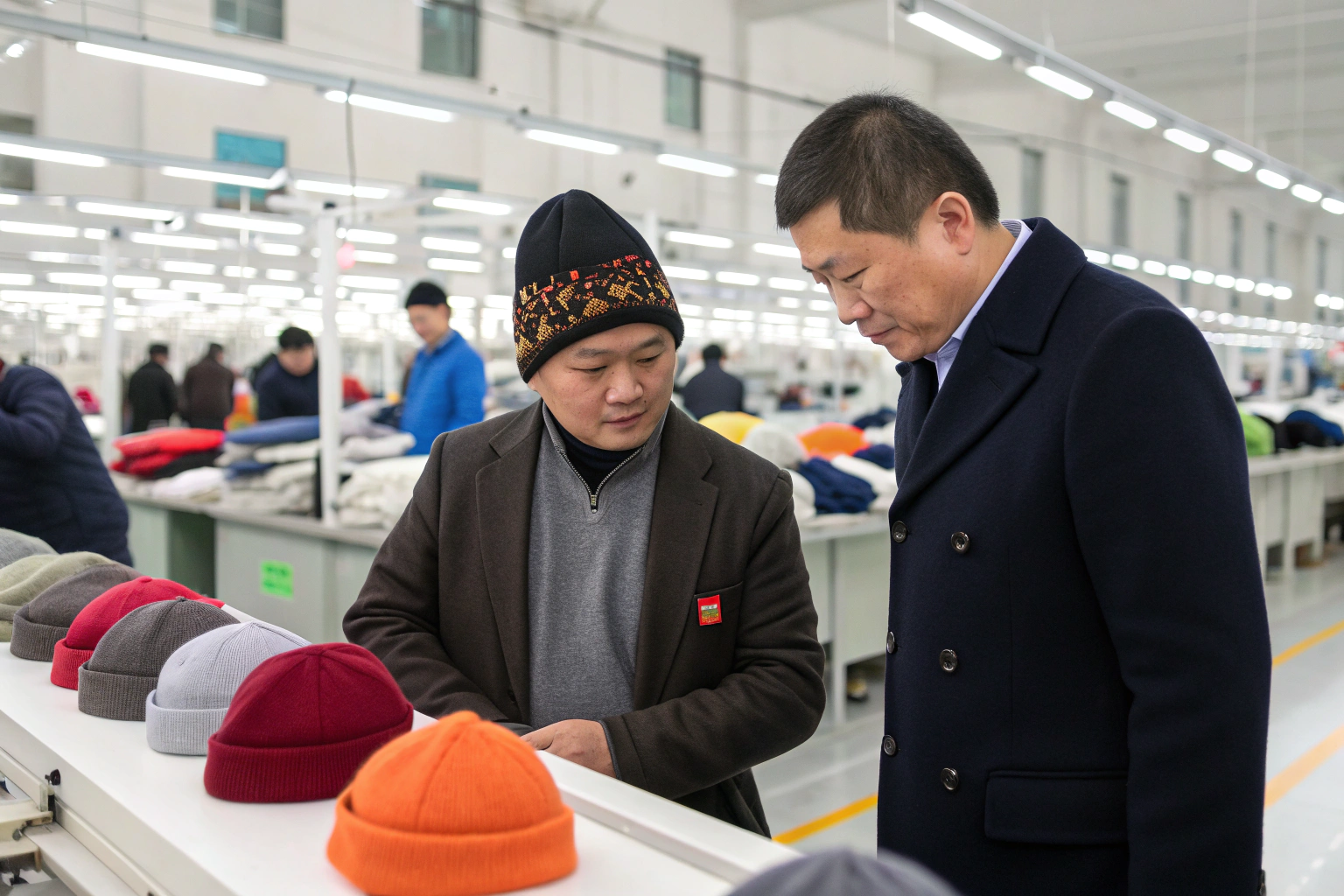
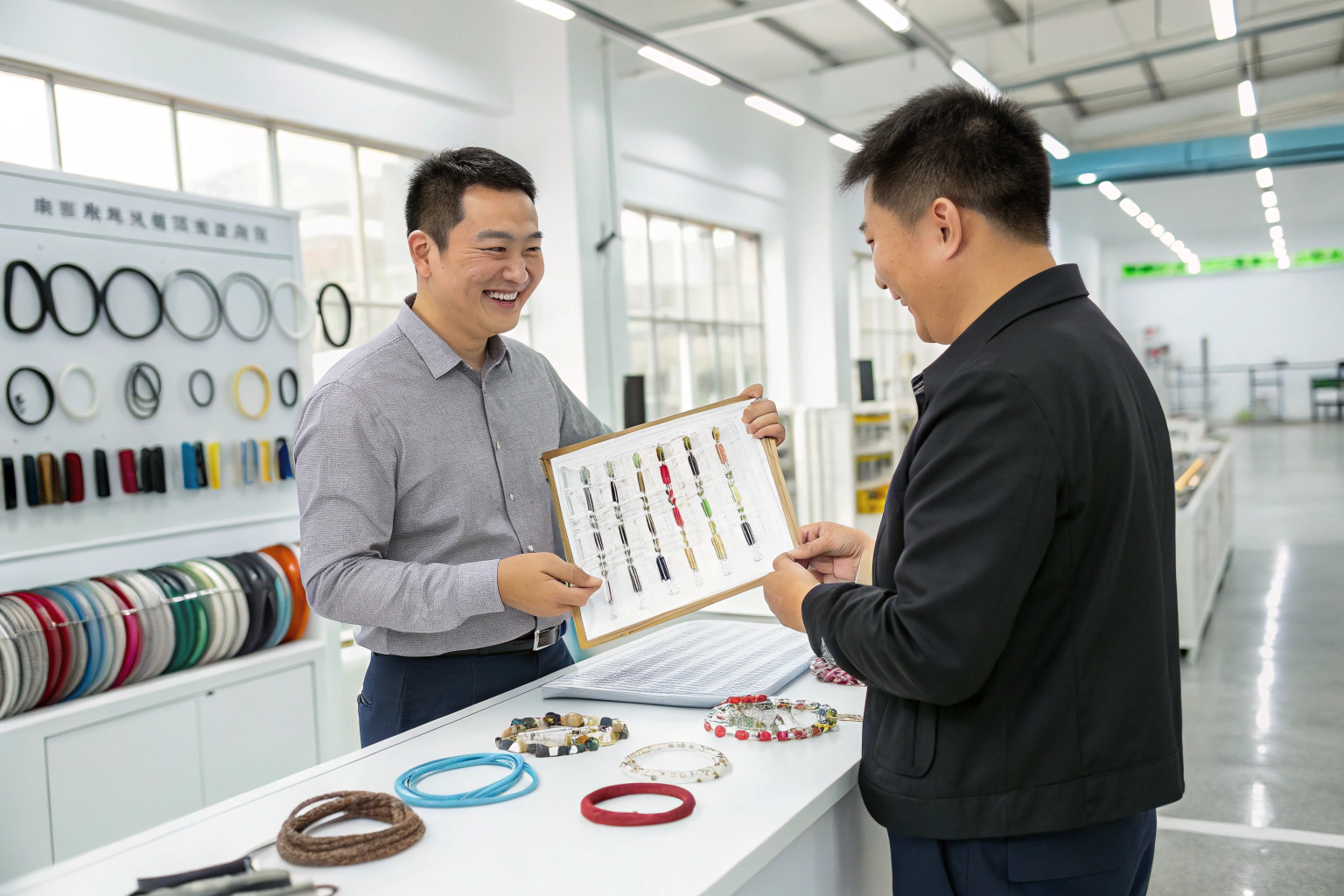
Three years ago, a young buyer from a London-based accessories brand visited our factory. She had a tech pack for a hair clip that was, frankly, impossible to manufacture at scale. The spring mechanism she specified would break after ten uses. The plating she selected would tarnish within weeks. I watched my senior designer gently explain these problems, offer alternatives, and sketch three better solutions on a notepad within fifteen minutes.The buyer did not get defensive. She got excited. She said, "I wish I had met your team months ago."
That conversation changed how I present Shanghai Fumao Clothing to the world. Today, I do not hide our design team. I lead with them. I have learned that buyers who leverage our in-house design expertise do not just save time and money. They create better products than they could alone.
In this guide, I will show you exactly how to partner with a factory's design team. I will explain what capabilities you should expect, how to communicate your vision effectively, and how to protect your intellectual property while still benefiting from your supplier's creativity.
What Design Capabilities Should You Expect From A Modern Accessory Factory?
Not all factory design teams are equal. Some factories call their salesperson who can sketch "the design team." Others employ trained fashion graduates, pattern makers, and mechanical engineers who specialize in small product mechanics.
You must know the difference. If you expect engineering consultation and receive only color advice, you will be disappointed. If you expect luxury-level styling and receive only cost-reduction suggestions, you will feel misunderstood. At our facility, we organize our design and development capabilities into four distinct layers. Each layer requires different expertise and serves a different customer need.
What Is The Difference Between Styling, Engineering, And Development?
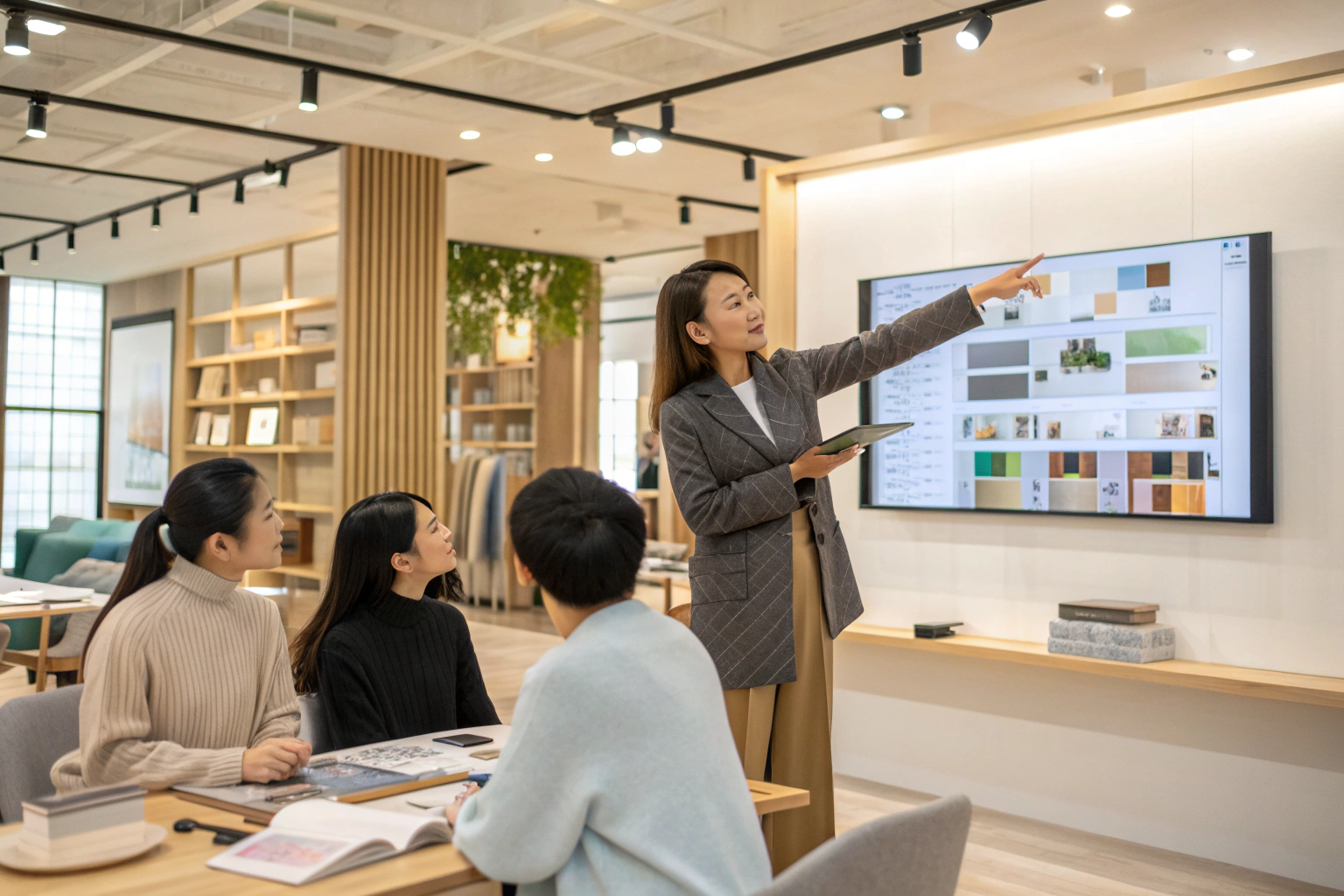
Styling is about aesthetics. Color combinations. Print placement. Proportions. Trim selection. This is what most buyers think of as "design." A styling-focused designer can take your inspiration image and create a matching accessory collection.
Engineering is about physics. How does this hair clip spring maintain tension after ten thousand openings? How does this hat brim hold its shape in high humidity? How does this belt buckle withstand repeated stress without cracking? Engineering ensures your product functions as intended.
Development is about manufacturing efficiency. How do we reduce stitching time by three seconds per piece without compromising strength? How do we nest pattern pieces to reduce fabric waste? How do we select materials that are available in stock rather than special order? Development makes your product profitable.
A full-service factory design team offers all three capabilities. A limited-service factory offers only styling, or only development, but not both.
| Capability | What It Delivers | Who Leads It |
|---|---|---|
| Styling | Mood boards, color palettes, print placement, trim selection | Fashion designers, textile graduates |
| Engineering | Mechanism design, material specifications, durability testing | Mechanical engineers, product developers |
| Development | Pattern making, sample construction, production efficiency | Pattern makers, industrial engineers |
How Do You Evaluate A Factory's Design Team Before Committing?
I encourage buyers to ask specific questions during factory audits.
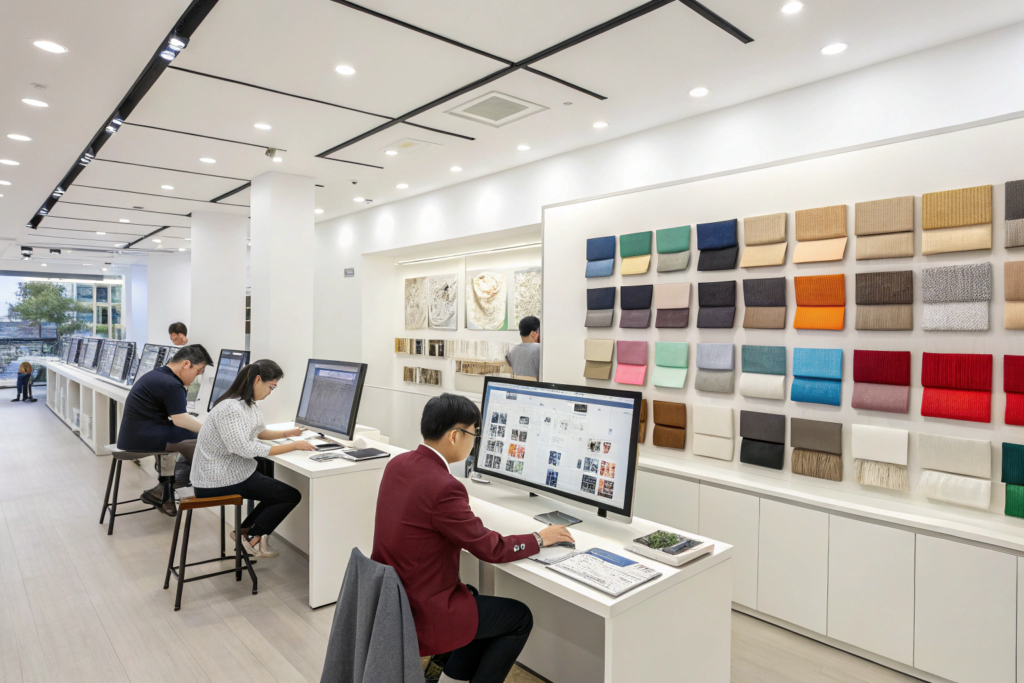
Ask to see the design studio. Not the showroom. The actual workspace where your products will be developed. Is it equipped with proper tools? Do designers have access to material libraries and 3D software? Are there fit models or head forms for testing?
Ask who trained the designers. Fashion school graduates bring different skills than engineers. Both are valuable, but you need the right mix for your product category.
Ask how many rounds of samples the team typically produces before production. A team that gets it right in one round may be experienced. A team that requires six rounds may be guessing. The sweet spot is usually two to three rounds for custom development.
Ask to see products they developed that are currently in market. Not samples. Actual retail products. This verifies that their designs actually sell, not just that they look good in a meeting.
We welcome these questions. When you visit Shanghai Fumao Clothing, we introduce you to the actual designer who would work on your account. You can assess their expertise directly. This transparency builds trust.
How Do You Brief A Factory Design Team Effectively?
The biggest mistake I see buyers make is giving either too little direction or too much.
Too little direction sounds like: "Make me something trendy for next spring." The design team has no idea what "trendy" means to your specific customer. They guess. You reject. Both sides become frustrated.
Too much direction sounds like: "Use exactly this material from this supplier, this stitch length, this Pantone color, this hardware, and this packaging." The design team becomes order-takers. They cannot apply their expertise. You miss opportunities for improvement.
The most effective briefs fall in the middle. They communicate the destination clearly but allow the factory's experts to choose the route.

What Information Must Your Creative Brief Include?
A complete creative brief for accessory development should answer six questions:
Who is the end customer? Age, gender, lifestyle, price sensitivity. "Women 25-40 who commute by train and need accessories that transition from office to evening" is a useful description. "Women" alone is not.
What is the use case? Daily wear. Special occasion. Gift. Outdoor activity. A hair clip for a wedding guest is designed differently than a hair clip for a spin class.
What is the inspiration? Provide 3-5 reference images. These can be competitor products, runway images, or even architecture photography. Explain what specifically you like about each image. "I like the matte finish of this clip" is more helpful than "I like this clip."
What are the must-haves versus nice-to-haves? Is a specific closure mechanism essential? Is a particular material non-negotiable? Clarify where you have flexibility.
What is the target price point? Be honest. If you need to retail at $29.99, we need to engineer to a specific factory cost. Hiding your target price leads to beautiful samples you cannot afford to produce.
What is the deadline? Include both the in-store date and the required factory ship date. We need to work backward from your customer's expectations.
What Role Do Tech Packs Play When Working With A Design Team?
Tech packs are essential documentation. They are not the starting point of collaboration.
I see buyers spend weeks perfecting a tech pack before contacting any factory. They specify every stitch and dimension. Then they send this tech pack to five suppliers for quoting.
This process treats factories as interchangeable manufacturers. It assumes the buyer knows everything necessary about how the product should be made. It leaves no room for the factory's expertise to improve the design.
A better approach: Share your concept and target specifications early. Ask the factory's design team to review your tech pack draft. They will identify potential manufacturing issues before you finalize the document. They will suggest alternatives that achieve the same aesthetic at lower cost or higher consistency.
Then you incorporate their feedback and finalize the tech pack. The factory quotes from this improved document. Everyone wins.
At Shanghai Fumao Clothing, we offer this tech pack review service to all potential clients at no charge. It is not charity. It is simply efficient. A correct tech pack saves us far more time than it costs us to review it.
How Do You Navigate The Sample Development Process?
The sample development process is where factory design teams provide the most value. This is also where communication breakdowns most commonly occur.
A typical custom accessory development cycle requires three to five sample rounds. Each round builds on the previous one. The goal is not to get it perfect immediately. The goal is to learn something from each iteration and apply it to the next.
What Should You Expect From The First Sample Round?
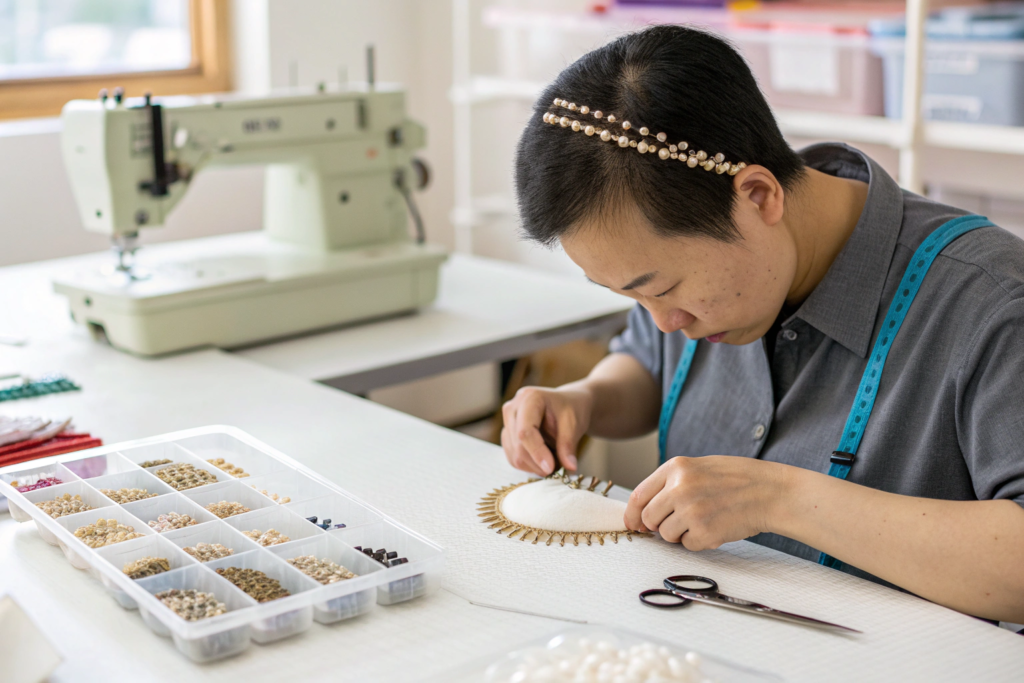
The first sample is a proof of concept, not a finished product. It answers basic questions: Does the construction method work? Does the proportion feel correct in three dimensions? Does the mechanism function?
At this stage, we prioritize speed over perfection. We may use substitute materials if your specified materials have long lead times. We may hand-fabricate components that will be mass-produced by machine. The sample will have flaws. This is expected.
Your role in the first sample round is to evaluate the overall concept, not minor execution details. Does the drape feel right? Is the scale appropriate? Does the color combination work? Save comments about loose threads and uneven stitching for later rounds.
When Should You Visit The Factory During Development?
Virtual collaboration is effective for most routine communication. For complex custom projects, nothing replaces in-person development sessions.
I recommend scheduling a factory visit at two critical junctures: the initial concept alignment meeting and the final sample approval.
During the initial meeting, you meet the actual designers and engineers who will work on your project. You see material options in person. You touch hardware samples. You build rapport that sustains the relationship through challenging moments.
During final sample approval, you inspect the production-ready sample on-site. You verify that all feedback has been incorporated. You discuss any last-minute adjustments. You leave with confidence that the production run will match your expectations.
For buyers who cannot travel, we offer live video walkthroughs. Our designers hold the sample up to the camera, demonstrate its features, and make real-time adjustments based on your verbal feedback. This is not as effective as being here, but it is far better than exchanging static photos.
How Do You Protect Your Intellectual Property While Collaborating?
I understand the fear. You share your product concept with a factory. They produce samples. Then you see your design on a competitor's website, priced twenty percent lower. This happens. It should not happen. But it can happen if you do not take appropriate precautions.
The solution is not to withhold information from your factory partner. The solution is to partner with factories that respect intellectual property and to formalize that respect in enforceable agreements.

What Legal Protections Should You Establish Before Sharing Designs?
At minimum, require a mutual non-disclosure agreement before sharing detailed product specifications. This binds both parties to confidentiality. We sign NDAs with all our clients without hesitation. It is standard business practice.
For truly novel designs, consider filing a provisional patent application before showing the product to any supplier. A provisional patent establishes your filing date and allows you to claim "patent pending" status. This deters copyists and strengthens your legal position if enforcement becomes necessary.
For design-driven products, register your copyright or design patent in your target markets. US design patents protect the ornamental appearance of functional products. EU registered community designs provide similar protection across European member states.
We respect these protections. Our reputation depends on being trusted partners. We do not copy our clients' designs. We do not share them with other buyers. We do not produce similar products for competitors.
What Red Flags Indicate A Factory May Not Respect Your IP?
Experience has taught me to watch for certain warning signs:
A factory that refuses to sign a reasonable NDA. There is no legitimate reason to resist basic confidentiality.
A factory that shows you other clients' active development samples. If they show you someone else's designs, they will show someone else yours.
A factory that pressures you to place large orders before protecting your IP. This traps you into production before you have secured your rights.
A factory that is vague about their other clients in your category. Transparency about potential conflicts of interest builds trust. Evasiveness does not.
At Shanghai Fumao Clothing, we maintain strict separation between client projects. Our design team does not work on competing products simultaneously. Your development files are accessible only to your dedicated project team. We treat your IP as we would want our own treated.
Conclusion
Your factory's design team is not a cost center you should minimize. It is a strategic resource you should leverage.
The most successful accessory brands do not treat factories as order-takers. They treat them as creative partners. They share their vision early. They welcome constructive challenge. They invest time in building relationships with the actual people who will engineer and sample their products.
This approach requires vulnerability. You must admit that you do not have all the answers. You must trust that your supplier's expertise can improve your product. You must invest time in collaboration rather than simply emailing tech packs for quote.
The return on this investment is substantial. You get products that are easier to manufacture, which means fewer quality problems and faster delivery. You get products that are engineered for durability, which means happier customers and fewer returns. You get access to innovations your factory has developed for other clients, adapted to your specific needs.
At Shanghai Fumao Clothing, our design team has helped hundreds of brands bring their accessory concepts to life. We have solved problems our clients did not know they had. We have suggested improvements that increased perceived value while reducing cost. We have caught potential failures before they reached the customer.
We are ready to do this for you.
If you are developing a custom accessory collection and you want to leverage our design expertise, contact us. Do not come with a finished tech pack. Come with your inspiration, your target customer, and your open mind. Our designers will help you build the rest.
Contact Elaine, our Business Director, directly at elaine@fumaoclothing.com. Tell her about your product vision. She will introduce you to the design team that will bring it to life.