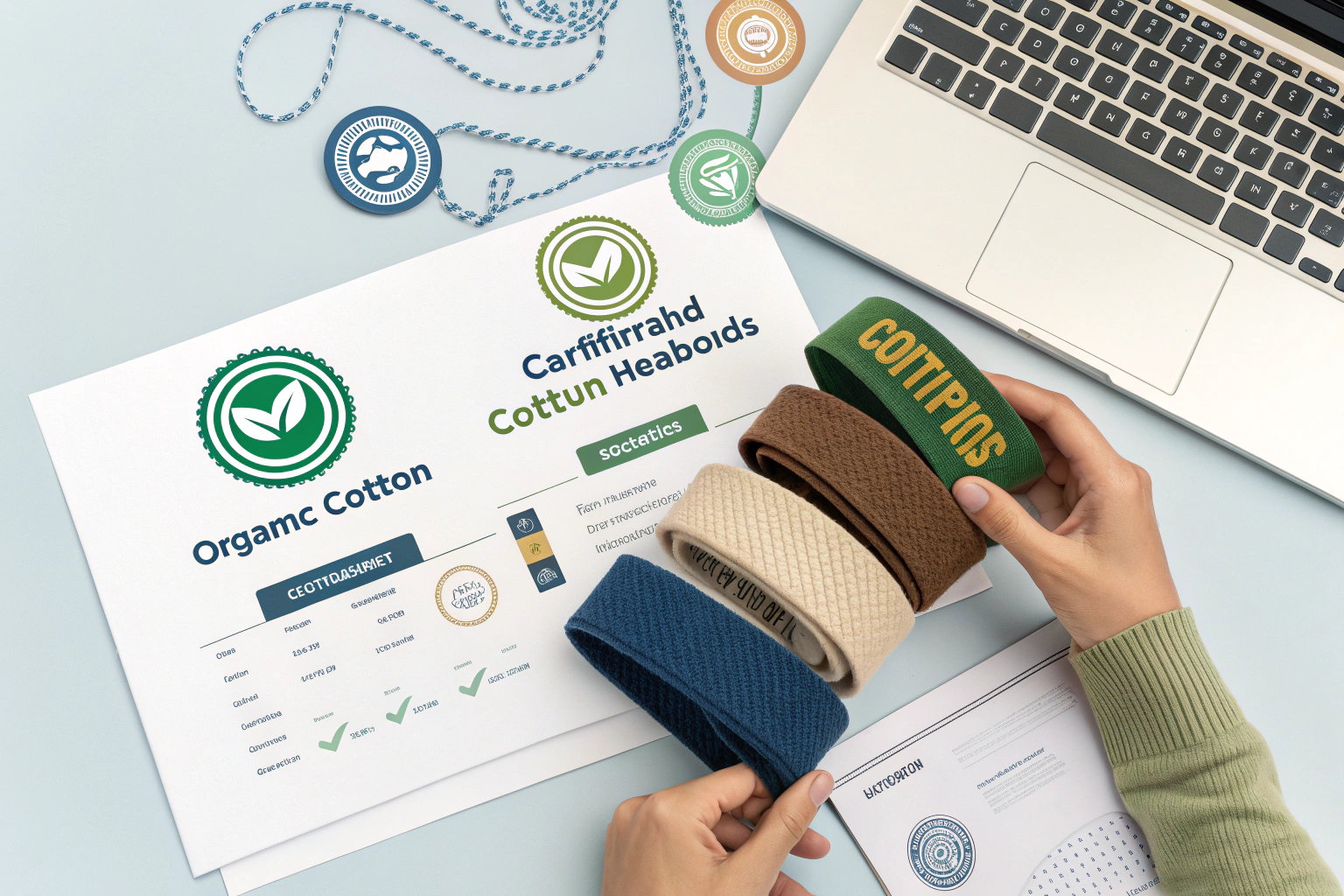
You have a keen eye for market trends. You've noticed a powerful shift in consumer preference towards products that are not only stylish but also sustainable and safe. The demand for organic products has moved beyond the kitchen and into the closet. You've identified a perfect product to capture this trend: organic cotton headbands. They appeal to the wellness, yoga, and eco-conscious demographics. But this is not like sourcing a standard accessory. You're now dealing with a product defined by a specific, certified material. You're rightly concerned: How do you find a legitimate supplier? How do you verify their claims of "organic" and avoid the nightmare of unknowingly selling a fraudulent product, destroying your brand's credibility?
To find a legitimate supplier for organic cotton headbands, you must adopt a certification-first sourcing strategy. The process involves specifically searching for manufacturers who can provide proof of a valid GOTS (Global Organic Textile Standard) certification for their supply chain. You must then rigorously vet this certification, demand certified materials for your samples, and ensure the entire process is documented to guarantee the authenticity of your final product.
I'm the owner of Shanghai Fumao Clothing, and we've guided many brands through the process of launching certified organic collections. I can tell you that the word "organic" is easy to say but difficult to prove. The entire supply chain, from the cotton seed to the finished headband, must be meticulously tracked and audited. A supplier who cannot provide clear, verifiable proof of this chain is not a true organic supplier. They are simply using a buzzword. Let's walk through the professional process for finding a genuine partner, so you can build your organic collection on a foundation of truth and trust.
What Is "Certified Organic Cotton" and Why Is GOTS the Gold Standard?
Before you can find the supplier, you must understand exactly what you are looking for. The term "organic" is thrown around loosely. You see products labeled "made with organic cotton" or "eco-friendly," but these claims can be vague and misleading. To protect your brand and your customers, you need to anchor your sourcing to a single, unimpeachable standard.
"Certified organic cotton" is cotton that has been grown, processed, and manufactured according to a strict set of verifiable standards. The most comprehensive and globally recognized certification for this is the GOTS (Global Organic Textile Standard). GOTS is the gold standard because it is not just a farm-level certification; it is a "field to fashion" standard that ensures the organic integrity of the product through every single step of the supply chain, while also enforcing strict social and environmental criteria.
Understanding why GOTS is superior is key to your sourcing strategy:
- Ecological Criteria: GOTS prohibits the use of genetically modified seeds, toxic pesticides, and synthetic fertilizers at the farm level. In processing and manufacturing, it bans a long list of harmful chemicals, including toxic dyes, formaldehyde, and heavy metals. This is a guarantee of both environmental responsibility and product safety.
- Social Criteria: This is a major differentiator. GOTS incorporates strict social standards based on the key norms of the International Labour Organization (ILO). This includes prohibitions on child labor and forced labor, the right to safe working conditions, and the right to fair wages. It ensures your product is made ethically, not just organically.
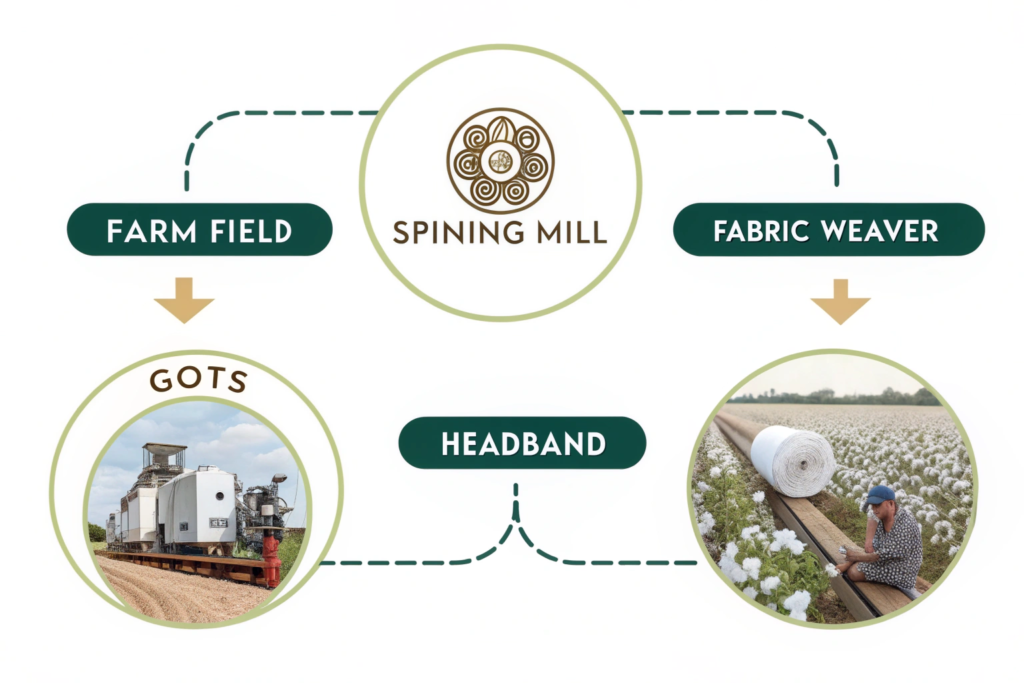
- Traceability (Chain of Custody): This is the most critical element for a buyer. Every single processor, manufacturer, and trader in the supply chain must be GOTS certified. They are audited annually and must have systems in place to track the organic material, keeping it separate from conventional material. This creates an unbroken, auditable chain of custody from the farm to the final factory.
What is the difference between GOTS and OCS?
You may also encounter the OCS (Organic Content Standard). The OCS is a good certification, but it has a narrower focus. It verifies the amount of organic material in the final product and tracks the chain of custody. However, unlike GOTS, the OCS does not have any requirements regarding the chemicals used in processing (dyes, finishes) and does not include any social criteria. For a brand that wants to make a comprehensive claim about safety, ethics, and sustainability, GOTS is the more powerful and complete standard.
What are the GOTS product labels?
There are two official GOTS labels you will see on a final product:
- "Organic": This label requires the product to contain a minimum of 95% certified organic fibers.
- "Made with organic materials": This label requires a minimum of 70% certified organic fibers.
When designing your headband, you will need to decide which of these two targets you are aiming for, as it will affect your material blend choices (e.g., a 95% organic cotton / 5% elastane blend would qualify for the "Organic" label).
How Do You Find and Vet a GOTS-Certified Supplier?
You now know you need a GOTS-certified supplier. But how do you find one? And more importantly, how do you protect yourself from a factory that falsely claims to be certified? This is where you need to become a detective and use the official tools available to you.
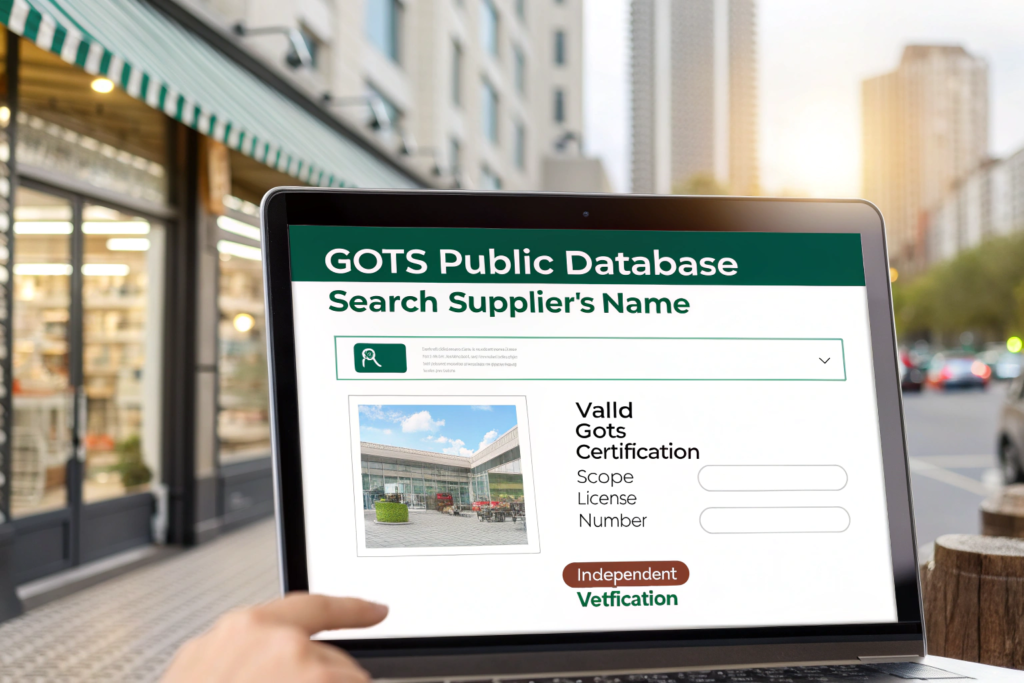
The most reliable way to find and vet a GOTS-certified supplier is to use the official GOTS Public Database. You should never take a supplier's word or a PDF certificate at face value. You must independently verify their certification status by searching for their company name in the database. A legitimate supplier will be listed, and their certification scope will explicitly include the product categories and processing steps required to make your headbands.
Here is your step-by-step vetting process:
- Initial Search: You can start by searching on platforms like Alibaba or Thomasnet using specific keywords like "GOTS certified headband manufacturer" or "organic cotton knit factory GOTS." This will give you an initial list of potential suppliers who claim to be certified.
- Request the Certificate: Ask your top potential suppliers to provide a copy of their GOTS certificate.
- INDEPENDENTLY VERIFY: This is the most important step. Go to the GOTS Public Database. Do not trust a link from the supplier. Search for the company name exactly as it appears on the certificate.
- Analyze the Search Result: If they are in the database, check the following:
- Certification Status: Is it "valid"?
- Scope of Certification: Does their scope include the necessary steps? To make a finished headband, they must be certified for "trading" and "manufacturing" or "cut/make/trim." They must also be certified for the product category "wearing apparel" or similar.
- Products: Does their listed product scope include "headbands," "accessories," or "knitted fabrics"?
A supplier who is not in the database, whose certificate has expired, or whose scope does not cover the making of finished apparel is not a legitimate GOTS supplier for your project.
What if the factory isn't certified, but their fabric mill is?
This is a common and complex situation. A factory that sews the headbands (a "cut and sew" operation) may not be GOTS certified itself, but it may source fabric from a GOTS-certified mill. In this case, the factory itself breaks the "chain of custody." You cannot legally label your final product as GOTS certified. To maintain the chain, the sewing factory must also be GOTS certified for manufacturing/trading. This is a critical detail that many brands get wrong.
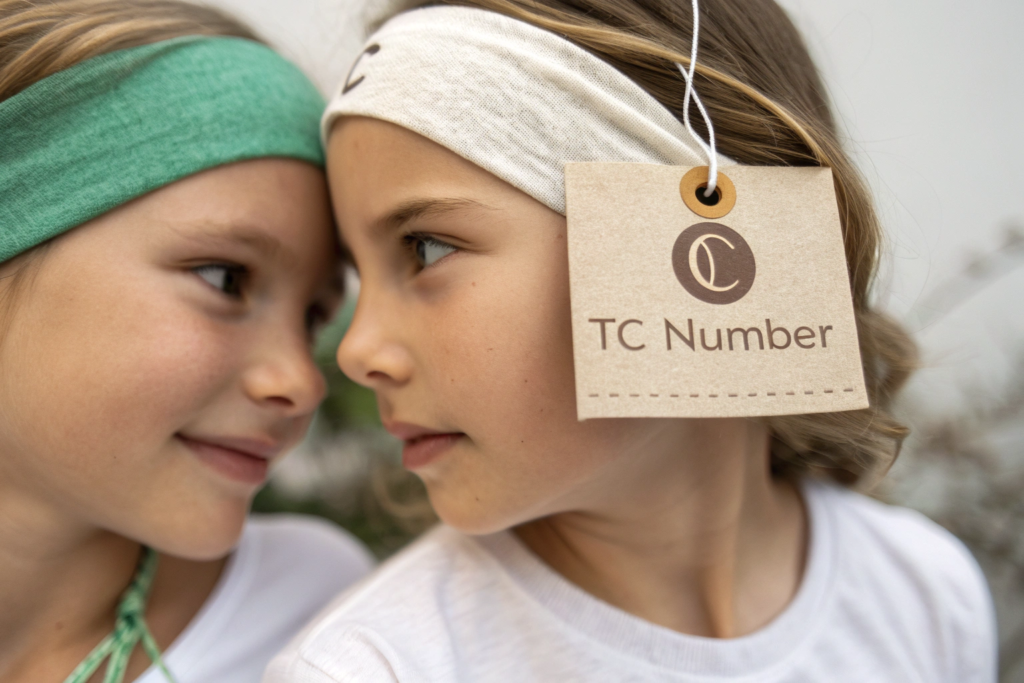
What is a "Transaction Certificate" (TC)?
A Transaction Certificate is the ultimate proof. It is a document issued by the certifier that tracks a specific shipment of GOTS material from one certified entity to another. When your GOTS-certified factory produces your headbands, they must have TCs for the organic cotton fabric they purchased. You can, and should, request copies of these TCs as part of your quality assurance process to have a fully documented, traceable supply chain for your records.
How Do You Ensure the Sample and Production Are Genuinely Organic?
You've found a supplier with a valid GOTS certification. You're ready to start sampling. How do you ensure that the sample they send you, and the subsequent bulk production, is actually made from the certified organic cotton you are paying a premium for, and not from cheaper, conventional cotton they have lying around?
You must be explicit in your communications and demand that the supplier use the certified organic material for your samples, not just for the bulk order. You should request a "sample TC" or a declaration that the sample was made from a specific GOTS-certified fabric lot. For bulk production, your purchase order must legally specify "GOTS-certified organic cotton," and you should make it a contractual requirement for the supplier to provide the final Transaction Certificate for your order.
Here's how to manage the process to ensure authenticity:
- Specify in the Sample Request: When you request your sample, state clearly: "This sample must be produced using your GOTS-certified organic cotton fabric. Please provide the fabric lot number used for this sample." This puts them on notice that you are monitoring the material from day one.
- Specify in the Purchase Order: Your bulk production PO is a legal contract. The product description must be precise. For example: "Item: Yoga Headband. Material: 95% GOTS Certified Organic Cotton / 5% Elastane, 180 GSM Jersey Knit. Color: Pantone 123-C (GOTS-approved dye)."
- Demand the Final TC: Make the delivery of the final GOTS Transaction Certificate for your specific production run a condition of your final payment. This TC is your ultimate proof that the goods you have received are genuinely certified. It will list you as the buyer, the certified factory as the seller, and the exact quantity and description of the goods.
Can I physically tell the difference between organic and conventional cotton?
No, not by sight or feel alone. There is no physical difference between the fibers of organic and conventional cotton. The difference lies entirely in the growing and processing methods. This is why you cannot rely on your senses to verify the material. You must rely on the paper trail of certification. Any supplier who tells you to just "feel the quality" is avoiding the real issue.
Does the dye color need to be certified too?
Yes. A key part of the GOTS standard is the prohibition of many common, toxic textile dyes. To comply with GOTS, your supplier must use dyes and processing chemicals that are on the GOTS "approved chemical inputs" list. A knowledgeable GOTS-certified supplier will already have a palette of GOTS-approved colors they can offer you, or they can work with their dye house to ensure a custom color meets the standard.
What Other Factors Are Important When Choosing a Supplier?
Finding a supplier with a valid GOTS certificate is the essential first step, but it's not the only step. The factory is still your manufacturing partner, and you need to evaluate them on all the other critical aspects of their business, just as you would for any other product.
Beyond the GOTS certification, you must evaluate the supplier on their communication skills, their manufacturing quality (stitching, finishing), their sampling speed, and their pricing. A valid certificate is meaningless if the factory cannot produce a high-quality product on time and communicate effectively. You are looking for a partner who has both the certified supply chain and the professional manufacturing expertise.
Don't let the GOTS certificate blind you to other potential red flags.
- Communication: Are they responsive to your emails? Do they answer your technical questions clearly? Is there a language barrier? Good communication is the foundation of a smooth production process.
- Manufacturing Quality: Request a sample of a similar product they have made for another client (a non-branded sample). This allows you to assess their stitching quality, the neatness of their finishing, and their general attention to detail before you even invest in your own custom sample.
- Sampling Speed & Cost: How quickly can they produce a sample, and what is the cost? As we've discussed, a fast sample turnaround is crucial for getting to market.
- Pricing and MOQs: Is their pricing for bulk production competitive? What is their Minimum Order Quantity (MOQ)? Ensure their business model aligns with yours.

Is it better to work with a factory or a trading company?
For a specialized product like a GOTS-certified headband, it is almost always better to work directly with a factory. A factory will have more direct control over the production process and a deeper understanding of the GOTS requirements. A trading company adds another layer to the supply chain, which can increase costs and make the chain of custody more complicated to verify.
Where are most GOTS-certified factories located?
While GOTS is a global standard, major hubs for GOTS-certified textile production include India, Turkey, China, and Pakistan. India, in particular, is a world leader in organic cotton production and has a vast number of GOTS-certified facilities, from spinning mills to finished garment manufacturers.
Conclusion
Finding a supplier for organic cotton headbands is a journey that requires more diligence than sourcing a conventional accessory, but the rewards—in brand trust, customer loyalty, and market differentiation—are immense. The entire process hinges on a "certification-first" mindset. By making the GOTS standard your non-negotiable starting point, learning how to independently verify a supplier's claims using the official database, and demanding a fully documented paper trail for your samples and production, you can confidently navigate the complexities of the organic market. This rigorous, professional approach ensures that when you label your headband "organic," you are making a promise that is backed by truth, transparency, and integrity.
At Shanghai Fumao Clothing, we have built the certified supply chains and the expertise necessary to produce genuine GOTS-certified accessories. We can provide the documentation, transparency, and high-quality manufacturing you need to launch your organic collection with complete confidence. If you are looking for a trusted partner to help you tap into the powerful and growing market for sustainable products, please reach out to our Business Director, Elaine, at elaine@fumaoclothing.com.