The licensed sports merchandise market is a high-reward but heavily regulated arena. For retailers, e-commerce stores, and even promotional goods buyers, the prospect of selling caps, jerseys, or scarves with beloved team logos is incredibly appealing. However, the journey to finding a legitimate supplier who can navigate the complex web of licensing agreements, uphold strict quality standards, and deliver on time is fraught with legal and logistical pitfalls. One wrong move with unlicensed goods can lead to severe legal action, hefty fines, and irreparable damage to your business reputation.
The key is to partner with an authorized and experienced manufacturer who either holds the license directly or is a certified subcontractor for a major licensee, ensuring full compliance from design to delivery. This isn't just about finding a factory; it's about finding a supply chain partner embedded within the official licensing ecosystem. They provide the legal safety net, design approval workflows, and quality consistency that your business depends on, transforming a high-risk venture into a secure and profitable product line.
Let's break down the systematic process of identifying, vetting, and partnering with a legitimate supplier for licensed sports apparel and accessories. We'll cover everything from verifying credentials to managing the unique production and compliance workflows.
What Are the First Steps in Verifying Licensing Legitimacy?
Before discussing product specs or pricing, your primary and non-negotiable focus must be on legal verification. Working with an unauthorized supplier, no matter how appealing their prices, is an existential risk to your business. The verification process involves checking the supplier's direct authorization from the league or their formal relationship with a master licensee.
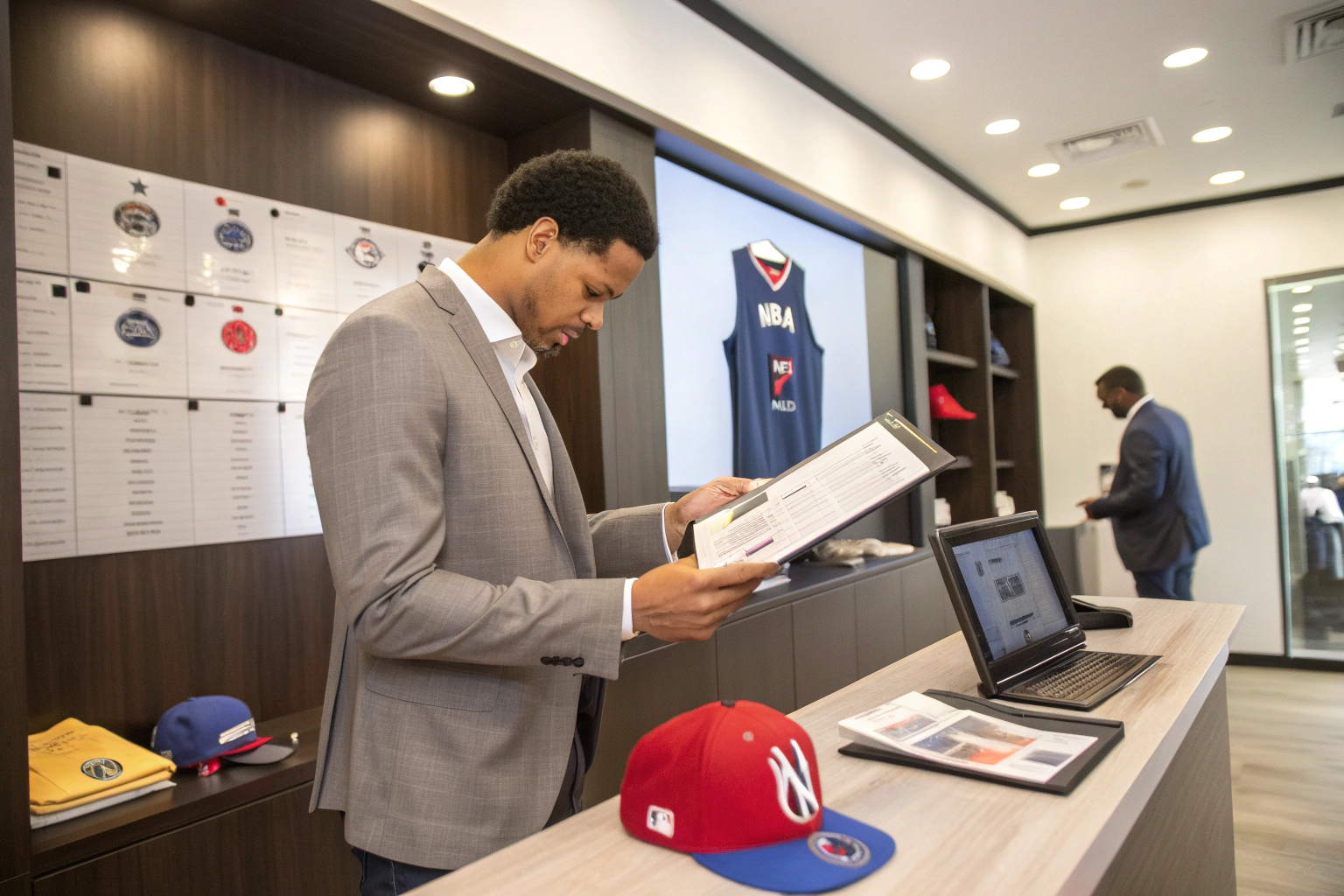
You must request and verify the supplier's Licensed Vendor Agreement or their Certificate of Authorization from the specific league (e.g., NFL, NBA, FIFA) or the master licensee (e.g., Fanatics, Nike). This document will specify the product categories, territories, and duration for which they are authorized. Do not accept vague assurances; insist on seeing the current, valid documentation. Furthermore, legitimate suppliers will have access to and strictly follow the league's official style guides, which dictate precise logo usage, color pantones (like PMS values), and approved garment bases.

How to Authenticate a Supplier's License Documents?
Authenticating these documents requires diligence. First, ask for a copy of the license agreement or certificate. Look for specific details: the legal name of the manufacturing entity (which should match their business license), the grantor's name (e.g., "NBA Properties, Inc."), authorized product categories (e.g., "headwear," "novelty knit scarves"), and the validity period. Cross-reference the supplier's factory address with the one on the license. For an additional layer of security, you can contact the licensing department of the sports league directly. Most major leagues, like the National Football League (NFL), have a public-facing licensing section that lists authorized licensees or provides contact information for verification. Understanding the structure of intellectual property in sports is crucial, as outlined by legal resources.
Why is Access to Official Style Guides Non-Negotiable?
The official style guide is the blueprint for legal production. It contains the exact technical specifications for every logo, wordmark, and color used by a team or league. A legitimate supplier will have the latest versions of these digital guides and will use them to create production-ready artwork. For example, the guide will specify that the Chicago Bulls' red is PMS 200, and it will provide vector files of the bull logo with clear space requirements. If a supplier cannot reference these guides or suggests "close enough" color matching, it is a major red flag. Adherence to these guides is enforced through league-mandated quality assurance audits. Resources on brand identity management, such as those from professional design associations, underline the importance of these standards.
How to Evaluate a Supplier's Production Capability for Licensed Goods?
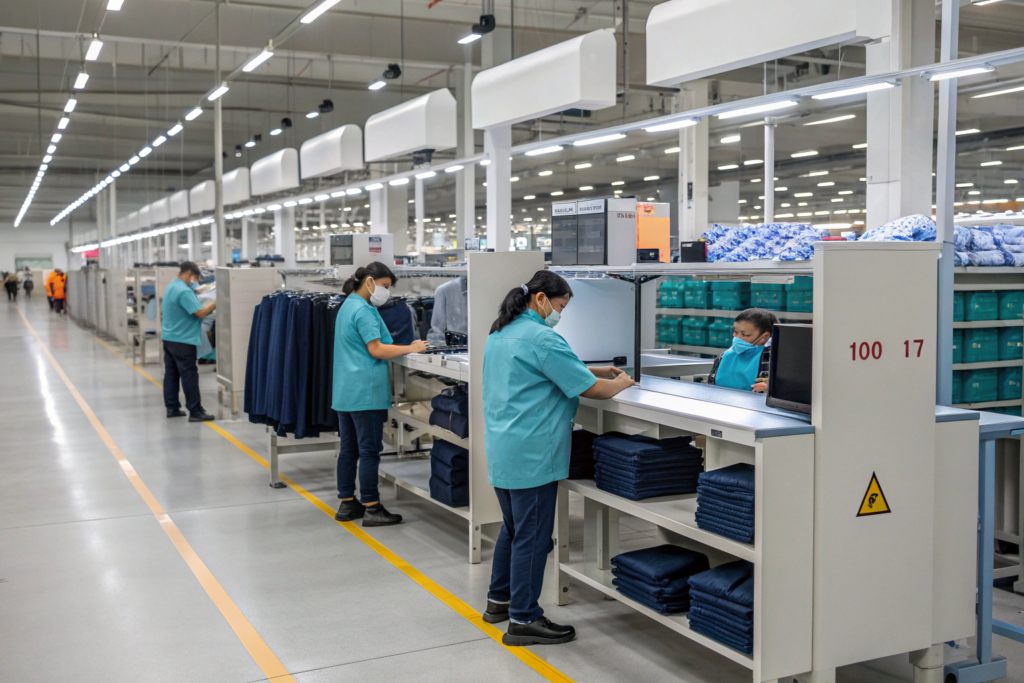
Once legitimacy is confirmed, you must assess whether the supplier has the specialized infrastructure to execute licensed orders. This goes beyond general garment manufacturing. It requires a disciplined system for handling licensed materials, stringent quality control aligned with league standards, and robust security to prevent logo theft or overruns.
Licensed production often involves using league-approved blank garment suppliers (for hats, t-shirts, etc.) and authorized trim sources (for branded patches and labels). The factory must have a secure area for storing and tracking licensed fabric rolls or embroidered patches. Their quality control team must be trained to inspect not just stitching, but the absolute fidelity of logo reproduction against the style guide. Furthermore, their project management must understand the added timeline of submitting pre-production samples to the licensee or league for design approval, which can add weeks to the schedule.
What Specialized QC is Required for Logos and Branding?
The QC for licensed goods is exceptionally rigorous. Every single logo application—whether it's embroidery on a baseball cap, a printed patch on a jersey, or dyed patterning on a scarf—must be perfect. This means checking for:
- Color Accuracy: Using Pantone swatch books under correct lighting.
- Logo Integrity: No broken stitches in embroidery, no blurring in prints, perfect alignment.
- Placement: Exact measurement from reference points as per the tech pack.
Suppliers like Shanghai Fumao Clothing, when acting as a certified partner, implement a double-check system where a dedicated QC inspector verifies all branding elements separately from general product inspection. This process mirrors the quality assurance protocols mandated by major licensors, details of which can be found in industry manufacturing standards.
How Does the Security and Compliance Process Work?
Security is paramount to prevent counterfeiting and unauthorized production runs. A reputable factory will have controlled access to areas where licensed logos are stored or applied. They should be able to explain their process for tracking and destroying excess logoed materials after an order is complete. They must also be transparent about their social compliance certifications (like BSCI or Sedex), as leagues often require audits to ensure ethical production. The entire chain, from material sourcing to final packaging, must be documentable. Industry frameworks for supply chain security, such as those promoted by organizations like ISO, are highly relevant here.
What Are the Realistic Costs and Lead Time Expectations?
Entering the licensed market requires a shift in financial and timeline expectations. The cost structure includes not just manufacturing, but also royalty fees paid to the league, which are typically baked into the price quoted by the authorized manufacturer. Lead times are longer due to mandatory approval steps. Understanding this upfront is critical for planning and profitability.
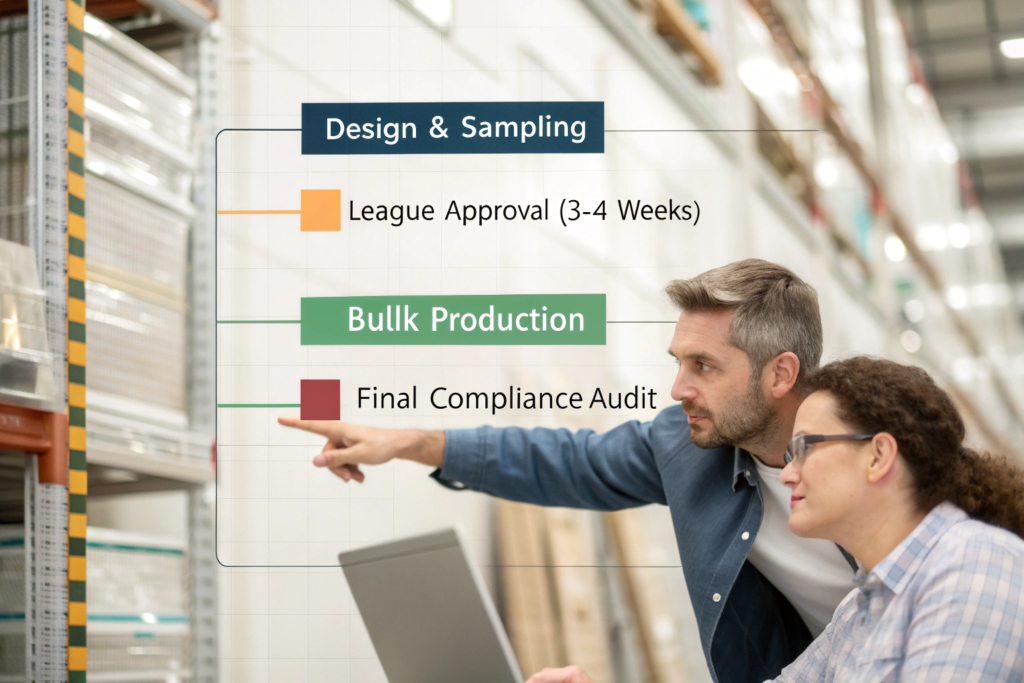
Your per-unit cost will be significantly higher than for unlicensed, generic accessories. This covers the licensing royalty (a percentage of the wholesale price), the cost of approved materials, and the supplier's compliance overhead. Lead times can be 30-50% longer than standard orders. The workflow is: 1) Design and sample creation, 2) Sample submission to licensor for approval (2-4 weeks), 3) Upon approval, bulk production begins, 4) Final inspection often includes a league-appointed agent or stricter standards, 5) Shipping. Rushing or skipping steps is not an option.
How are Royalty Fees Structured and Managed?
The royalty fee is a core component of the cost. Authorized manufacturers typically pay this fee directly to the licensor on a quarterly basis based on units sold. As their buyer, you will not pay this fee separately; it will be incorporated into your FOB price. A transparent supplier should be able to explain the general cost breakdown, assuring you that all royalties are accounted for. Attempts to offer prices that seem too good to be true often indicate that royalties are being avoided—a major legal risk. The structure of licensing agreements and royalties is a specialized area of contract law, often discussed in sports business publications.
Why is the League Approval Phase Critical for Timeline?
The league approval phase is a non-negotiable bottleneck that ensures every product meets brand standards before mass production. After your supplier creates a prototype, they must send it (with accompanying documentation) to the licensee or league office. This entity will check everything against the style guide. They may request revisions. This back-and-forth can take several weeks and must be factored into your sales and delivery planning. A professional supplier will manage this communication efficiently and keep you updated. This step is a perfect example of the unique project management required for licensed goods, differentiating it from standard manufacturing efficiency.
How to Initiate and Structure a First Order?
Starting with a small, manageable order is the wisest approach. This first order is a "test" of the partnership, the product quality, and the compliance process. It should be structured to minimize risk while providing a clear path to scaling if successful.
Begin with a low Minimum Order Quantity (MOQ) for a single product or a couple of SKUs (e.g., one style of cap for two different teams). Use this order to validate the entire process: design approval, production quality, packaging, and shipping. Ensure your contract includes clear clauses about licensing compliance, guaranteeing that all goods are fully authorized. Payment terms should be standard (e.g., 30% deposit, 70% before shipment), but always use traceable bank transfers. Never compromise on documentation; you must receive a certificate of authenticity or a letter of authorization for the shipment with your goods.

What Should a Pilot Order Include to Mitigate Risk?
A pilot order should be designed for maximum learning with minimum financial exposure. Key elements include:
- Clear, Simple Designs: Choose products with standard logo applications (e.g., front embroidery on a cap) before attempting complex all-over prints.
- Request Full Documentation: Insist on receiving copies of the submitted sample approval from the league as proof.
- Inspect Pre-Shipment Samples Thoroughly: Before bulk shipment, inspect a pre-production sample physically or via high-resolution photos against the approved prototype.
- Plan for Logistics: Licensed goods often require specific packaging and labeling. Discuss this upfront with your supplier to avoid surprises. This cautious approach aligns with best practices in new supplier onboarding and risk management in sourcing.
How to Ensure Ongoing Compliance and Relationship Management?
After a successful first order, maintain a proactive partnership. Schedule regular reviews. Stay informed about license renewals for your supplier to ensure continuity. Communicate your sales forecasts to help them plan material procurement. A good supplier will also inform you of new licensed product categories they gain access to or upcoming team or league design changes. This transforms them from a simple vendor into a strategic partner in your licensed merchandise business. Building such strategic supplier relationships is a topic covered in depth by supply chain management professionals.
Conclusion
Finding a supplier for licensed sports merchandise is a deliberate process that prioritizes legal verification over speed and cost. It requires identifying an authorized manufacturer, rigorously vetting their compliance and production systems, understanding the unique cost and timeline structures, and initiating the partnership with a carefully structured pilot order. Success in this field is built on legitimacy, quality, and secure partnerships.
By following this roadmap, you can confidently navigate the complexities of the licensed market, ensuring that your products honor the teams fans love while fully protecting your business from legal and reputational harm.
Ready to explore legitimate sourcing for licensed sports accessories? Partner with Shanghai Fumao Clothing. As an experienced manufacturer with established channels in compliant production, we can guide you through the intricacies of bringing authentic, high-quality team merchandise to market. Contact our Business Director, Elaine, at elaine@fumaoclothing.com to start a conversation about your licensed product needs.