Are you struggling to source high-quality retro style sunglasses that truly capture the vintage aesthetic without compromising on modern lens technology? Do you worry about finding a supplier who can deliver consistent quality, handle small to large orders, and navigate the complex export process? You're not alone. Many fashion buyers and brand owners face these exact challenges when trying to add this timeless category to their collections.
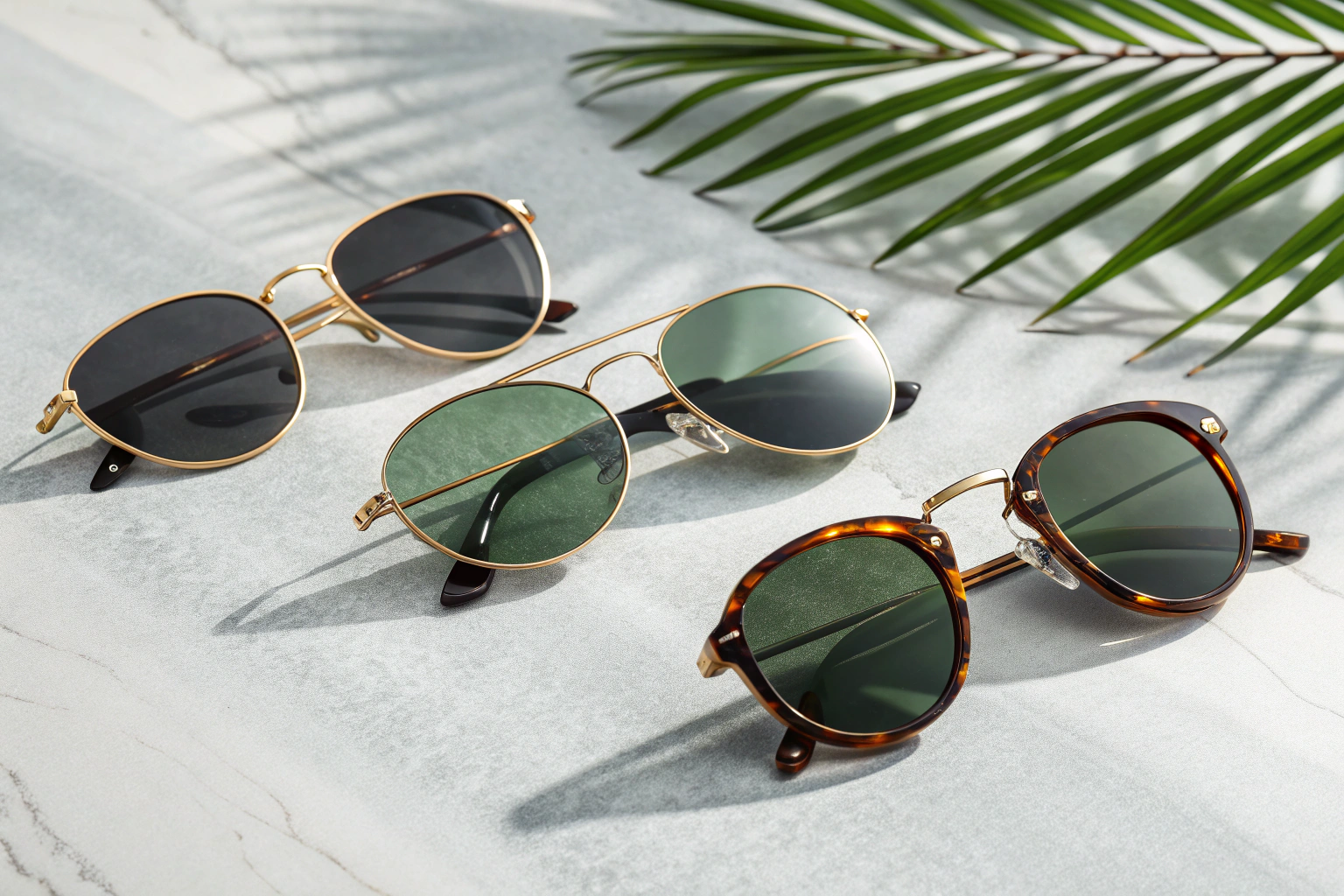
The key to success is moving beyond basic online directories and building a strategic sourcing process. A reliable supplier for retro sunglasses is more than a factory; they are a partner that understands vintage design cues, can source or produce classic frame materials like acetate and metal, and employs precise optical manufacturing standards. They ensure the product looks authentic and feels durable, with lenses that provide genuine UV protection.
This guide will walk you through a proven strategy. We'll cover how to identify truly capable manufacturers, verify their quality and compliance credentials, effectively evaluate samples and communication, and finally, negotiate terms that secure a profitable and sustainable partnership. Let's find the perfect partner to bring your vintage vision to market.
Where to Start Your Search for a Retro Sunglasses Manufacturer?
The initial search phase is critical. Casting your net in the right places separates serious manufacturers from resellers or trading companies. While platforms like Alibaba can be a starting point, they are often crowded with middlemen. For specialized products like retro sunglasses, you need to dig deeper. A more targeted approach yields better partners.
Begin with industry-specific trade shows, both physical and virtual. Events like Mido in Milan or SILMO in Paris are optical industry benchmarks where manufacturers showcase their technical capabilities and design prowess. Google searches with precise keywords like "acetate sunglasses OEM factory China" or "retro optical frames manufacturer" can also surface specialized suppliers. Don't underestimate the power of professional networks on LinkedIn; searching for "sunglasses production manager" or "optical factory" in key regions can connect you directly with decision-makers. The goal is to create a shortlist of companies that explicitly mention mold making, acetate sheet sourcing, and UV400 lens production in their capabilities.
Are Online B2B Marketplaces Effective for Finding Specialized Suppliers?
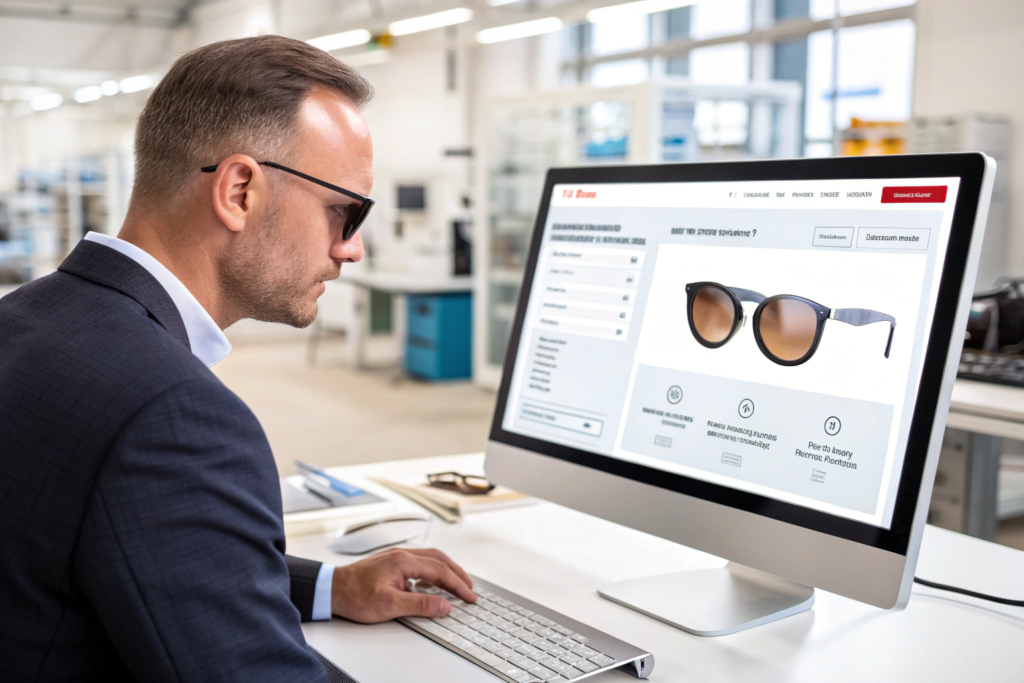
Online B2B platforms like Alibaba or Global Sources can be effective, but you must use advanced filters and scrutiny. Look for suppliers labeled as "Verified Supplier" or "Gold Supplier" with trade assurances. More importantly, prioritize those who are assessed as having an "On-site Check" completed. In their product listings, carefully examine if they show images of factory interiors, production machinery (like acetate block cutting or hinge assembly), and raw material stocks. Avoid suppliers whose product range is impossibly vast (e.g., selling sunglasses, electronics, and toys). A true specialist in retro sunglasses will have a focused, deep catalog of frame styles. Always initiate contact to ask specific technical questions about their injection molding process for plastic frames or their metal alloy composition. Their ability to answer knowledgeably is a first test.
How Can Industry Trade Shows and Networks Yield Better Partners?
Trade shows are unparalleled for supplier discovery. They allow you to physically inspect product quality, feel the materials, and assess the lens clarity firsthand. You can meet the engineers and designers behind the products, gaining instant insight into their expertise. Furthermore, these events reveal trends in materials and technology, such as new bio-acetate options or polarized lens innovations, which you can discuss directly with potential partners. Building a network within the eyewear industry provides referrals to trusted factories that may not actively advertise online. Attending these shows signals your seriousness as a buyer, attracting higher-quality manufacturers. For those unable to travel, many major exhibitions now offer comprehensive virtual showrooms and matchmaking services.
What Credentials and Capabilities Must a Reliable Supplier Have?
Once you have a shortlist, due diligence is non-negotiable. A reliable supplier for retro sunglasses must have a specific set of credentials that guarantee both quality and compliance. Their capabilities should cover the entire process from design to delivery. You are not just buying a product; you are investing in their manufacturing ecosystem and quality assurance systems.
Key credentials to demand include ISO 9001 certification (Quality Management Systems), which indicates structured processes. For eyewear, compliance with regional safety standards is essential: US FDA regulations for impact resistance and UV protection, CE marking for Europe, and AS/NZS 1067 for Australia. Their factory should have dedicated departments for mold design, acetate/metal frame production, lens fitting (edging and mounting), and a rigorous final inspection station. Ask for a virtual factory tour to see these departments in action. A capable supplier will also have a portfolio demonstrating their work on retro styles, showing understanding of design details like keyhole bridges, browline bars, and gradient lenses.
Why are Optical Compliance Certifications Non-Negotiable?
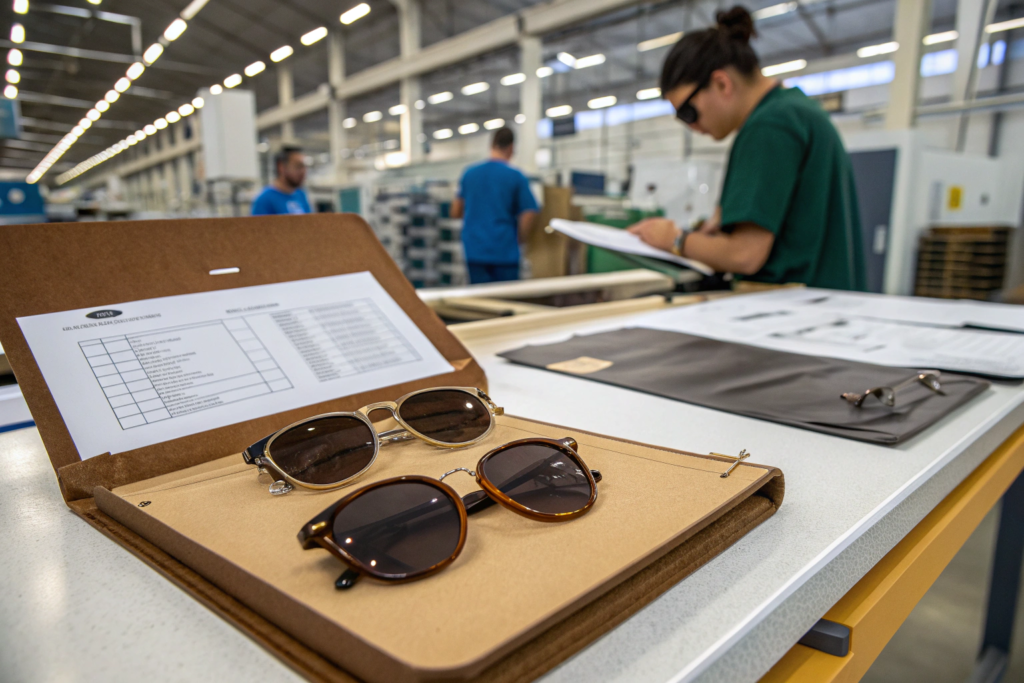
Optical compliance certifications are legal and safety requirements, not optional extras. Sunglasses are regulated medical devices in many countries because they protect eyes from harmful UV radiation. Supplier-provided sunglasses must meet strict standards. For the US market, the supplier must be able to provide test reports proving the lenses are UV400, blocking 99-100% of UVA and UVB rays, and that the frames pass the FDA's drop ball test for impact resistance. For the EU, they need CE certification documents. Working with a supplier that understands and consistently tests for these standards protects you from liability, costly recalls, and customs seizures. It’s a cornerstone of product liability management. Always request copies of recent test reports from an independent lab, such as SGS or Intertek, for the specific materials and lens types they propose to use.
What Factory Audits and Quality Processes Ensure Consistent Output?
Paper certifications are one thing; consistent on-the-ground execution is another. Before placing a large order, insist on a factory audit. This can be conducted by a trusted third-party inspection service (like the aforementioned SGS) or, if possible, by you or your agent. The audit should check: raw material storage and traceability, condition of injection molding machines, calibration records for lens coating equipment, AQL inspection procedures for final goods, and working conditions. Discuss their quality control process in detail. It should include incoming inspection of acetate sheets and metal parts, in-line checks during frame polishing and hinge assembly, and a final random inspection based on an agreed AQL level (e.g., Level II, AQL 1.0 for critical defects). A professional factory will have a clear QC flowchart and defect samples to train their inspectors.
How to Evaluate Samples and Communication Before Ordering?
The sample evaluation stage is your most powerful risk mitigation tool. It’s where promises meet reality. A professional supplier will expect and welcome a thorough sample review process. This phase also tests the critical soft skills of the supplier: their responsiveness, transparency, and willingness to collaborate on modifications.
When you request samples, be specific. Ask for your chosen retro styles in the exact colors and lens types you intend to order. Pay meticulous attention to detail: the comfort and weight on the nose and ears, the smoothness of the hinge movement, the clarity and absence of distortion in the lenses, and the accuracy of color matching to your Pantone references. Check the packaging, labels, and any custom logos for quality. Simultaneously, assess communication. Are they proactive with updates? Do they explain technical constraints clearly? Do they take ownership of problems? For instance, a good partner at Shanghai Fumao Clothing will not just send a sample but will include a report noting any deviations from your specs and suggestions for improvement.

What Specific Details Should You Scrutinize in a Sunglass Sample?
Go beyond looks. Use this checklist:
- Material & Finish: Is the acetate free of bubbles or streaks? Is the metal plating even and resistant to light scratching?
- Fit & Comfort: Do the temples have the right tension—firm but not too tight? Is the nose bridge padded if needed? Wear them for an extended period.
- Optical Quality: Look through the lenses at a straight line (like a door frame). Move your head up and down; the line should not bend or warp, indicating lens distortion. Verify the stated lens technology (polarized, mirrored) works as advertised.
- Durability: Gently apply pressure to the front and temples to test for flexibility and strength. Check the tightness of all screws.
- Logistics & Documentation: Are the CE markings, lens category labels, and UV protection stickers correctly applied? Is the packaging retail-ready?
How Does Supplier Communication Predict Future Partnership Success?
Communication style is a leading indicator. A supplier that responds within 24 hours, provides detailed answers, and uses clear English (or provides a competent project manager who does) will save you immense time and stress. They should be transparent about production lead times and minimum order quantities (MOQ), and not make unrealistic promises. Observe if they ask insightful questions about your target market or sales channels, indicating a desire to partner in your success. Effective communication is vital for navigating later stages, much like the clarity needed when navigating tariffs and logistics. A supplier who is difficult to reach during sampling will likely be worse during production crises.
What are the Key Negotiation Points Beyond Unit Price?
Negotiating with a sunglasses manufacturer involves a holistic view of cost and value. Focusing solely on the lowest unit price can lead to corner-cutting on materials, lens quality, or craftsmanship. Smart negotiation covers terms that affect your total landed cost, timeline, and long-term flexibility.
Key points include payment terms (aim for a split like 30% deposit, 70% before shipment), tooling/mold costs (clarify ownership—you should own the molds for custom designs), and packaging (is standard packaging included, or is custom packaging extra?). Crucially, discuss logistics responsibilities. Will they handle FOB shipping, or can they offer DDP services? Understand how they manage quality inspections—will they provide pre-shipment inspection reports? Also, negotiate flexibility on MOQs, perhaps by allowing color variations within a style to meet the minimum. Establishing a clear protocol for handling defective goods in shipment is essential.

How to Structure Payment Terms and MOQs for a First Order?
For a first order, balance risk and trust. A common and fair structure is 30% T/T deposit upon order confirmation, 40% T/T before production starts (or after sample approval), and 30% balance paid before shipment. This protects both parties. Regarding MOQs, be transparent about your volume expectations. A good factory might offer a higher unit price for a lower pilot order (e.g., 500 pieces per style) to build the relationship, with the understanding that prices will reduce at agreed-upon higher volume tiers (e.g., 2000+ pieces). You can also negotiate combining different styles or colors to meet a frame model MOQ. Always get these terms in a formal Proforma Invoice (PI) before transferring any money.
What Logistics and After-Sales Support Should Be Agreed Upon?
Logistics agreements define cost predictability. Clarify the Incoterm (e.g., FOB Shanghai). If you are new to importing, ask if the supplier can handle door-to-door (DDP) service and provide a all-inclusive quote. Discuss expected production lead times and buffer for inspections. After-sales support is crucial. Agree on a warranty period for manufacturing defects (e.g., 1 year for plating peeling, lens delamination, or hinge breakage under normal use). Establish a clear process and cost responsibility for replacement of defective items found upon your receipt of the goods. This level of detailed agreement, supported by a robust contract, is the foundation of a reliable partnership, similar to the principles of building a reliable partnership.
Conclusion
Finding a reliable supplier for retro style sunglasses is a deliberate process that prioritizes expertise, verification, and partnership over a quick, low-cost transaction. By targeting your search in specialized channels, rigorously checking credentials and quality systems, conducting meticulous sample evaluations, and negotiating comprehensive terms, you secure a supply chain that delivers authentic, high-quality products.
This strategic approach minimizes risk, ensures compliance, and builds a foundation for brand growth. Your sunglasses supplier should be a strategic asset, helping you capitalize on the enduring popularity of vintage style with products that are both beautiful and built to last.
Ready to partner with a manufacturer that combines vintage design expertise with modern quality standards? At Shanghai Fumao Clothing, our accessory division includes dedicated eyewear specialists who understand the nuances of retro style, from material selection to optical compliance. We manage the entire process, from design to delivery, with clear communication and rigorous quality control. Contact our Business Director Elaine today at elaine@fumaoclothing.com to discuss your retro sunglasses project and receive detailed sample guidance.