You're planning your next outdoor collection, and UV protection hats are a key item. The market demands style, comfort, and real sun safety. But finding a factory that can expertly blend fabric technology with fashion and deliver consistent quality can feel like searching for a needle in a haystack. You need a partner who understands that a UPF rating isn't just a label—it's a promise to your customers.
The most effective way to find a qualified manufacturer is to target suppliers with proven expertise in performance wear and accessory construction, not just generic hat makers. This means looking for factories with a dedicated focus on material sourcing, technical design, and certification compliance for sun-protective garments. At Shanghai Fumao Clothing, our development process for UV protection hats starts with the fabric science and builds the design around it, ensuring functionality is never compromised.
Let's break down the actionable steps to identify, vet, and partner with a manufacturer that can produce high-quality UV protection hats your customers will trust and love.
What Are the Essential Certifications for UV Protection Hat Manufacturing?
Before you even discuss styles or prices, you must verify the manufacturer's capability to produce a product that meets international sun protection standards. A hat claiming UV protection without proper testing and documentation is a significant liability for your brand. For serious buyers, certifications are the first and most critical filter in the sourcing process.
True UV protection manufacturing goes beyond sewing; it involves material knowledge, lab testing, and traceability. The right factory will have established relationships with certified testing laboratories and understand the specific standards required for your target market, such as the US or EU. They should guide you on the appropriate UPF (Ultraviolet Protection Factor) rating for your intended use and handle the entire compliance process.
What is the Difference Between UPF and SPF, and Which Standards Apply?
Understanding the terminology is crucial. SPF (Sun Protection Factor) measures protection against UVB rays primarily for sunscreens. UPF measures the UV radiation (both UVA and UVB) that penetrates a fabric. For clothing and hats, UPF is the relevant standard. The most common global benchmarks are the Australian/New Zealand Standard AS/NZS 4399:1996 and the more recent US ASTM D6603:2019 standard. A UPF rating of 50+, for example, means only 1/50th (or 2%) of UV radiation can pass through the fabric. A reputable manufacturer will design hats to meet these standards from the ground up, selecting inherently UV-blocking fabrics like tightly woven nylon or polyester, and ensuring design elements like seam coverage and minimal stretching. The Skin Cancer Foundation provides excellent resources on the importance of UPF-rated clothing.
How Do You Verify a Factory's Testing and Compliance Process?
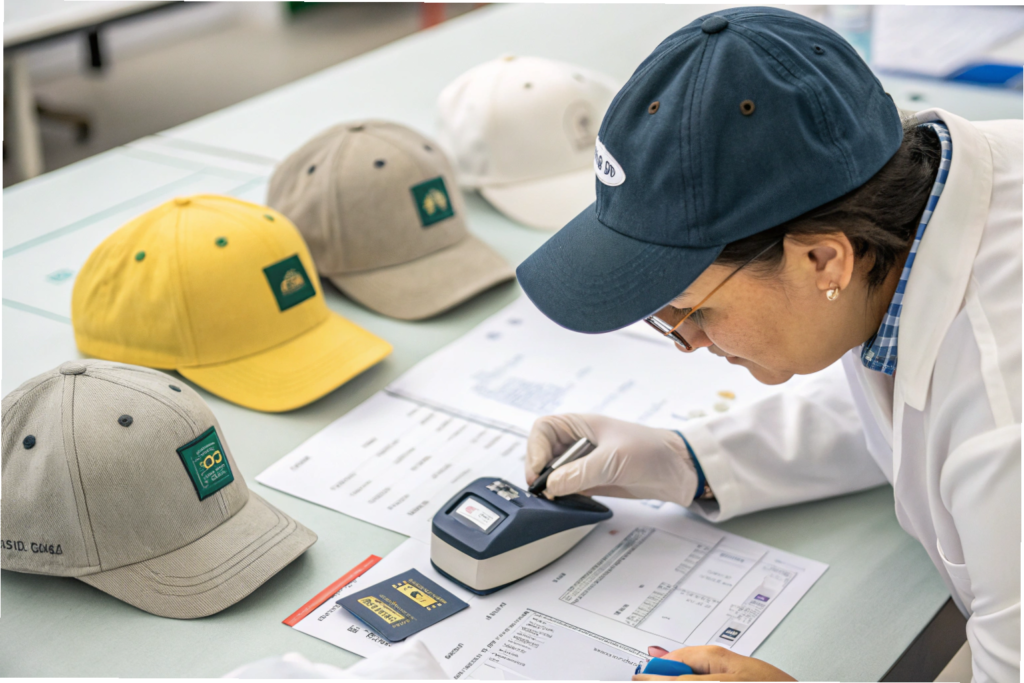
Never take a supplier's word for it. You must audit their compliance process. Ask direct questions: Do you conduct in-house preliminary UV testing? Which accredited third-party labs do you use for final certification (e.g., SGS, Bureau Veritas)? Can you provide sample test reports with the lab's seal? A professional factory, like Shanghai Fumao Clothing, will have a transparent protocol. They should test the base fabric, the finished hat in its most stretched state (like the crown), and even after multiple washes if claiming durability. They will also understand labeling requirements, ensuring the correct UPF rating logo and care instructions are permanently attached. This due diligence is non-negotiable for product integrity and your brand's security.
How to Evaluate a Hat Manufacturer's Design and Technical Capability?
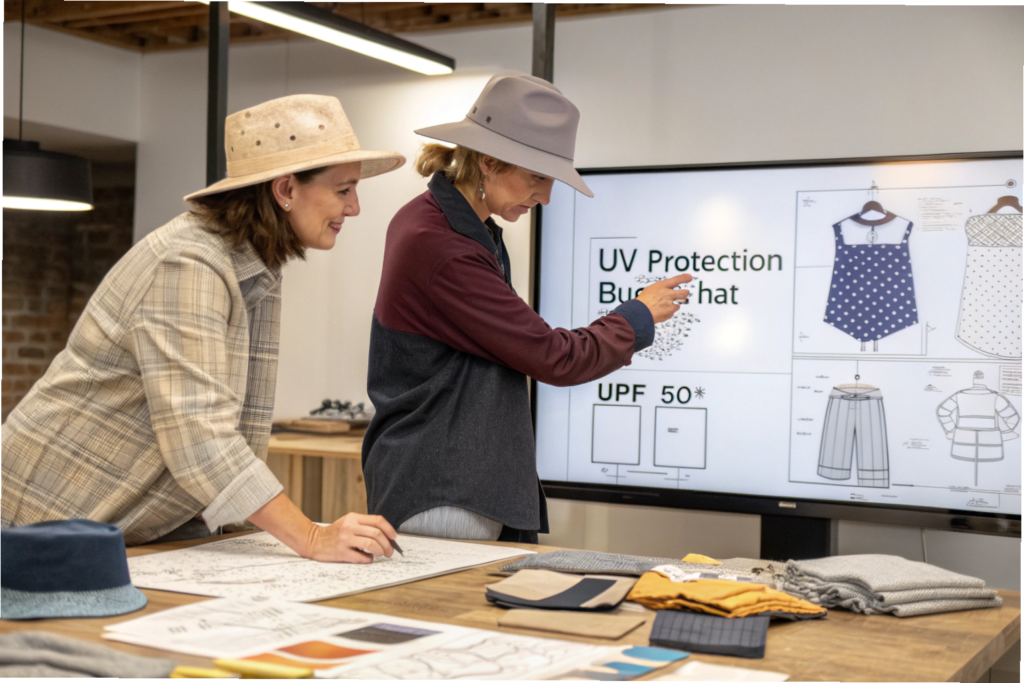
A UV protection hat must be technically sound and fashionable. A factory that only understands fabric but not fit, proportion, or style trends will deliver a product that is safe but unsellable. Your ideal partner has a strong in-house design team that works hand-in-hand with technicians. They should be able to translate a mood board into a tech pack that specifies everything from brim width and crown depth to stitching details and ventilation grommets, all while maintaining the hat's UPF integrity.
This capability is especially important for structured hats like wide-brimmed sun hats or baseball caps, where the interaction between the interlining, fabric, and construction directly affects both form and function. A manufacturer with strong OEM/ODM services can be a true extension of your team, suggesting fabric blends, offering value engineering on trims, and ensuring the design does not create weak points for UV exposure.
What Design Features Enhance Both UV Protection and Wearability?
Look for a manufacturer that proactively suggests design integrations for better performance. Key features include:
- Wide, Stable Brims: For maximum face and neck shade. A good factory will advise on the optimal brim width and how to use internal wiring or stiffeners to prevent drooping.
- Full-Coverage Styles: Designs like legionnaire hats with back neck capes or bucket hats with deep crowns.
- Ventilation Systems: Mesh panels or grommets must be placed strategically (e.g., on the crown top) without compromising coverage. The factory should source UV-blocking mesh.
- Moisture-Wicking and Quick-Dry Liners: For comfort, especially in sports caps. This requires sourcing the right functional fabrics.
The factory's ability to source and work with these specialized materials is a key indicator of their expertise. Resources from the Outdoor Industry Association often discuss the intersection of design and performance in sun-protective apparel.
Why is the Sample Development Process Critical for UV Hats?
The sampling process for a performance item is where problems are solved. A rigorous process includes:
- Prototype Sample: Made with a similar weight fabric to check pattern, proportions, and basic construction.
- Fabric-Tested Development Sample: Made with the actual selected UPF fabric, then sent for preliminary lab testing.
- Pre-Production (PP) Sample: Made with all correct materials, trims, and labels from the production line. This is the final standard for quality and must pass official lab tests.
A factory that rushes this process is a red flag. Each stage should involve your feedback and their technical input on improving wearability or manufacturability. This iterative process, as detailed in our guide on professional OEM/ODM services, is what ensures the final product is both beautiful and functional.
What Are the Key Factors in Sourcing UV-Blocking Fabrics and Materials?
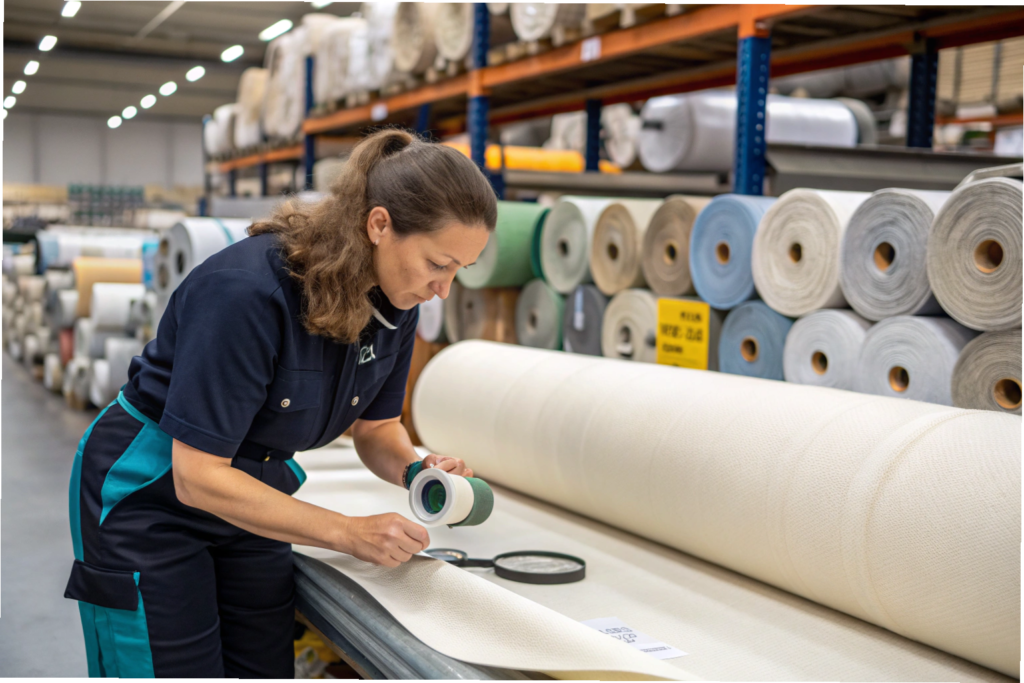
The foundation of any UV protection hat is its fabric. Not all materials are created equal. The factory's sourcing network and material knowledge are paramount. They should educate you on the difference between fabrics that achieve a UPF rating through chemical coatings (which may wash out) and those with inherent UV protection due to their dense weave, fiber type (like polyester or nylon), or solution-dyed pigments.
A competent manufacturer will have vetted suppliers for key materials: tightly woven nylon twill for structured caps, quick-dry polyester for sports hats, and soft, dense cotton blends for casual styles. They should provide you with fabric test reports and understand how factors like color (darker colors generally offer more protection) and stretch affect the final UPF rating. This deep material expertise directly impacts the hat's quality, durability, and cost.
How Does Fabric Construction Affect UPF Rating?
The construction is as important as the fiber. A tight weave or knit blocks more UV rays than a loose one. A factory expert should explain concepts like thread count and fabric weight (measured in gsm or oz/yd²) in relation to UPF. For instance, a common fabric for UV hats is a 210T nylon taffeta. The "T" stands for thread count per inch; a higher count generally means a tighter, more protective weave. They should also manage risks like fabric stretch. When a hat's crown is stretched over a head, the weave can open up. Good manufacturers pre-test fabrics in a stretched state or design patterns to minimize stretch in critical areas. Industry guidelines from ASTM International provide standardized test methods for evaluating the UV protective properties of textiles.
What About Additional Components Like Linings, Thread, and Trims?
UV protection is a full-product concept. A factory with true expertise will ensure all components contribute. This includes:
- Linings: Must be made of a similar UPF-rated fabric, not a generic, thin mesh.
- Thread: Should be color-matched and of high strength to maintain seam integrity, which is crucial for preventing gaps.
- Trims: Items like logos (patches or embroidery), eyelets, and buckles should be attached in a way that does not puncture the fabric excessively or create thin, worn spots.
The manufacturer's quality control team must inspect these components with the same rigor as the main fabric. Inconsistent components are a common point of failure in otherwise well-designed hats.
How to Ensure Consistent Quality and Reliable Logistics for Hat Orders?
You've found a great factory, perfected the sample, and placed your order. Now, the focus shifts to execution: ensuring every single hat in your 5,000-piece order meets the sample standard and arrives at your warehouse on schedule. This phase separates order-takers from true manufacturing partners. It requires a factory with a robust quality management system and a seamless logistics operation.
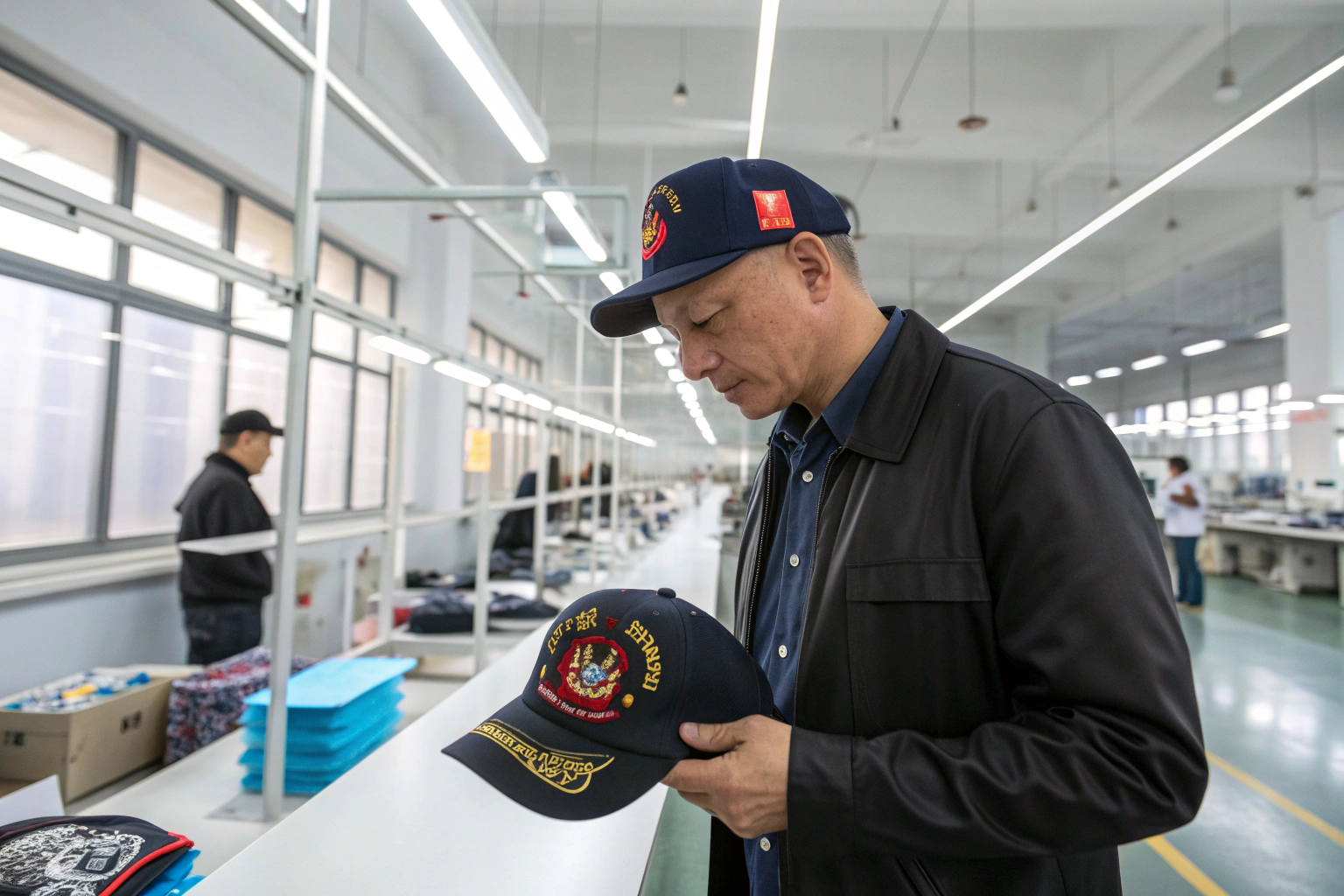
For UV protection hats, quality checks must include verifying the correct fabric is used, checking stitch density on seams (to prevent UV leakage), ensuring labels are accurate and securely attached, and performing a final random inspection against the PP sample. On the logistics side, the factory should offer clear options for sea freight to optimize cost for large orders, provide accurate sailing schedules, and handle all export documentation. Their experience in shipping accessories efficiently, as discussed in our section on ensuring fast logistics, is critical for your planning.
What In-Process QC Checks Are Vital for UV Hat Production?
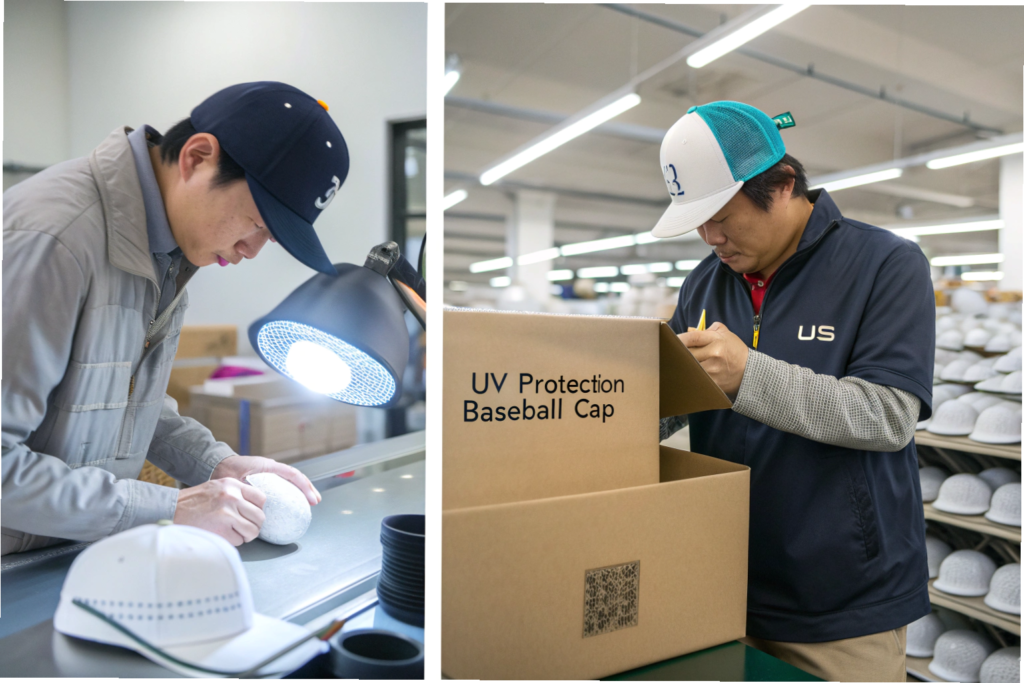
A final inspection is not enough. Critical in-process inspections must occur:
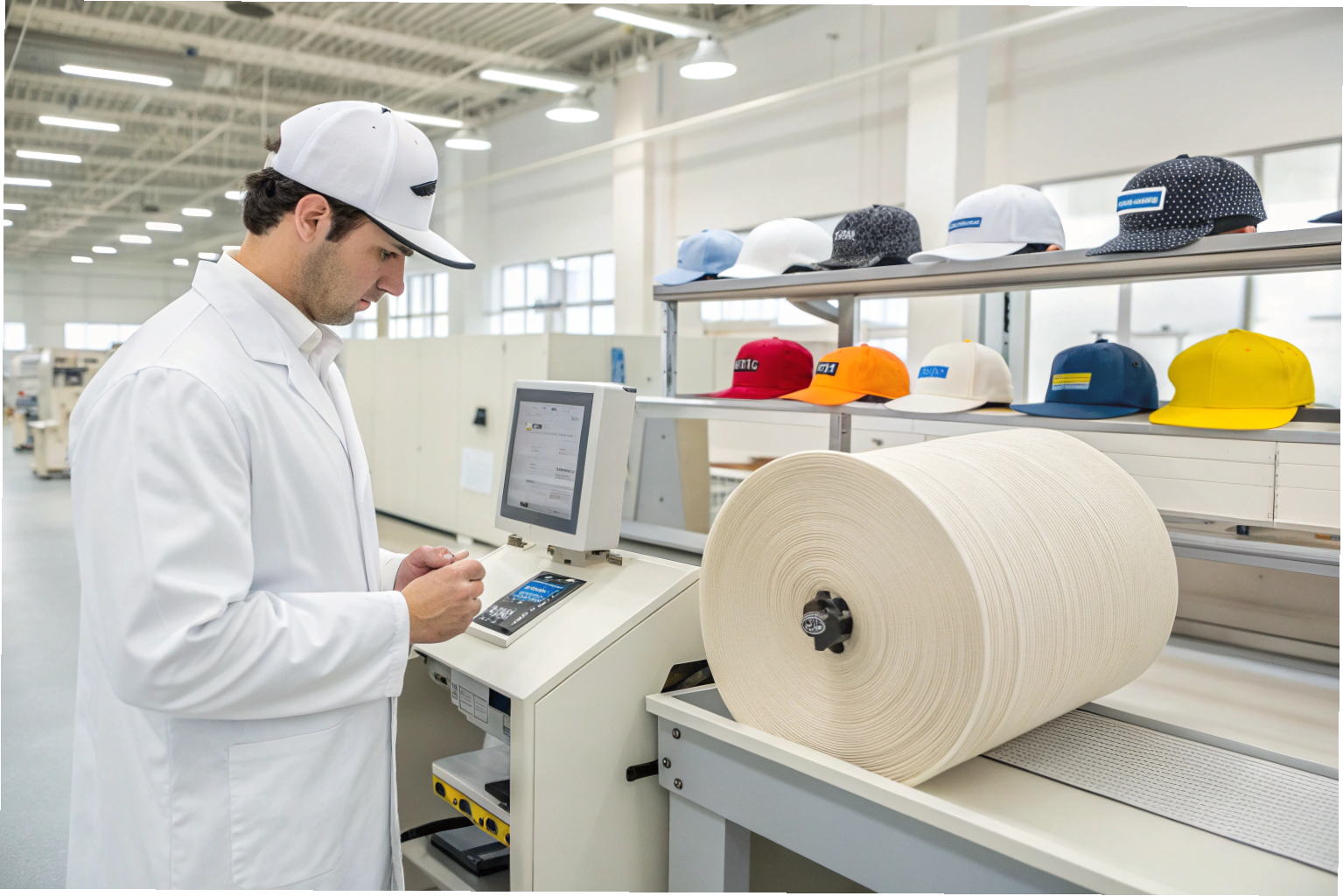
- Fabric Layering and Cutting: Verifying the correct, approved fabric roll is used.
- Panel Sewing: Checking that seams are flat and stitched with the correct thread count per inch.
- Brim Insertion and Crown Assembly: Ensuring no puckering or distortion that could stretch the fabric.
- Labeling and Trims Attachment: Confirming UPF labels and care instructions are correct and secure.
A professional factory will have checkpoints at each stage, with records. This prevents an entire batch from being sewn incorrectly before the error is caught, safeguarding your timeline and budget.
How Can You Plan Logistics to Avoid Peak Season Delays?
UV protection hats are often seasonal goods. Missing a shipping window can mean missing the summer sales season. Discuss the production timeline and logistics lead time with your supplier upfront. An experienced supplier will advise you to place orders well in advance of peak shipping seasons (like before Chinese New Year or the Q3 global rush). They should also offer solutions like consolidated shipping (LCL) if your order doesn't fill a full container, and recommend reliable shipping routes and ports. They must provide all necessary documents, including a detailed packing list and commercial invoice with the correct HS code for hats (typically 6505.90), which is essential for smooth US customs clearance and accurate duty assessment. Partnering with a factory that manages this complexity, like Shanghai Fumao Clothing, turns logistics from a pain point into a predictable process.
Conclusion
Finding the right manufacturer for UV protection hats is a detailed process that balances scientific rigor with design flair and operational excellence. The journey involves vetting for certifications, assessing technical design capability, understanding material science, and ensuring robust quality and logistics systems are in place. By prioritizing partners with specialized expertise in performance accessories, you secure more than a supplier—you gain a collaborative ally invested in the success and safety of your product.
Remember, the cheapest option is rarely the most cost-effective in this category. The value lies in a factory’s ability to deliver certified, well-designed, and consistently high-quality hats that protect your customers and your brand reputation. Taking the time to conduct thorough due diligence at each step outlined here will build a supply chain that drives growth and customer loyalty.
If you are looking for a manufacturing partner with proven expertise in developing and producing high-quality, certified UV protection hats and other accessories, we are here to help. Contact our Business Director, Elaine, to discuss your project requirements and how we can support your brand. Reach her at: elaine@fumaoclothing.com.