Your new line of high-performance running shorts or compression tops has the potential to revolutionize workouts. You have the designs, the market research, and the passion. But you're stuck at the most critical hurdle: finding a manufacturer that can translate your high-tech vision into durable, functional, and market-ready gear. The wrong partner could deliver fabrics that pill, seams that chafe, or moisture-wicking that fails—ending your brand before it starts. How do you navigate this complex sourcing landscape to find a factory that matches your performance standards?
Finding the right manufacturer for sports performance gear requires a targeted search for specialists in technical apparel manufacturing, not just general garment producers. You need a partner with proven expertise in high-performance fabrics (like moisture-wicking polyesters, compression blends, and breathable meshes), advanced construction techniques (flatlock seams, bonded hems), and a deep understanding of athletic ergonomics. The ideal factory will have a portfolio showcasing work for other sports brands, certifications for fabric testing, and an R&D team capable of prototyping with specialized materials. They must bridge the gap between athletic function and commercial production.
This process is more involved than sourcing basic t-shirts. It's a technical partnership where material science, human biomechanics, and precision manufacturing converge. You're not just buying sewing services; you're investing in a team's ability to engineer garments for movement, sweat, and repeated stress. The following guide breaks down the actionable steps to identify, evaluate, and partner with a manufacturer capable of elevating your performance gear from a concept to a trusted product for athletes.
Where to Look for Specialized Sports Gear Manufacturers?
Starting your search in the right places separates you from thousands of brands competing for attention at generic factories. Sports performance gear requires niche expertise. Casting a wide net on general B2B platforms will yield mostly suppliers of casual wear, wasting your time and potentially compromising your product's integrity from the outset.
Begin your search on industry-specific platforms and through verified networks. Trade shows remain a gold standard, particularly events like ISPO Munich, Outdoor Retailer, or Performance Days. Here, you can meet manufacturers, feel fabric swatches, and inspect construction quality firsthand. For online directories, prioritize platforms known for technical suppliers, such as Maker's Row or Kompass, and use precise search terms like "compression wear manufacturer," "technical outerwear factory," or "sublimation printing for sportswear." LinkedIn is a powerful tool for identifying factories by searching for key job titles like "Technical Director" or "Product Developer" at manufacturing companies in regions known for sportswear, such as certain areas of China, Vietnam, or Portugal. Always cross-reference findings with Alibaba's "Assessed Supplier" or "Trade Assurance" filters, but dig deep into their product galleries to ensure they showcase true performance apparel, not just active-inspired fashion.
Your sourcing message must immediately signal that you are a serious performance brand. When making first contact, avoid generic "I need a manufacturer" emails. Instead, prepare a concise brief mentioning key technical fabrics you're considering (e.g., Polartec Delta, Supplex, or specific elastane percentages), desired certifications (like OEKO-TEX®), and performance features (e.g., "4-way stretch," "anti-odor treatment"). This filters out factories that lack the requisite knowledge or supply chain. A manufacturer equipped for performance gear will respond with detailed questions about your performance requirements, not just your order quantity. They might ask about the intended sport, stress points, and desired moisture management levels, demonstrating their application-focused expertise.
Are trade shows still effective for finding niche manufacturers?
Yes, trade shows are uniquely effective for sourcing technical gear. They provide a condensed, high-value environment where you can evaluate a factory's capability beyond a website. You can physically assess the hand feel and recovery of fabric swatches, examine the precision of stitching on sample garments, and judge the quality of sublimation printing. More importantly, you engage in real-time technical discussions with factory engineers and designers. You can present a design challenge—like needing a seamless gusset for cycling shorts—and gauge their immediate problem-solving approach. The relationships forged face-to-face at shows like Outdoor Retailer often lead to more collaborative and trustworthy partnerships than purely online engagements. It's an investment that accelerates vetting and builds a foundation of mutual understanding.
How to use LinkedIn for targeted factory sourcing?
LinkedIn transforms sourcing from a blind inquiry into a strategic investigation. Use it to identify and research manufacturers before making contact. Search for companies with keywords like "technical apparel manufacturer," "sportswear factory," or "performance knitwear." Look at their page content: Do they post about new moisture-wicking technologies or sustainable fabric initiatives? Check the profiles of their employees, especially those in R&D, Production, and Quality Control. Their experience and qualifications reveal the factory's technical depth. You can then use LinkedIn to find a direct contact, such as a Head of Sales or Business Development manager, and send a personalized connection request or InMail referencing a specific post or project of theirs. This targeted approach demonstrates your seriousness and often gets your inquiry routed to the right person faster than a generic info@ email, setting the stage for a more professional dialogue from the start.
What Technical Capabilities Must You Vet For?
Once you have a shortlist of potential manufacturers, the real vetting begins. For performance gear, standard factory audits are insufficient. You must drill down into specific technical capabilities that directly impact the function, durability, and safety of the final product. A factory might produce beautiful lounge wear but lack the equipment or know-how to construct a durable, chafe-free seam for a marathon shirt.
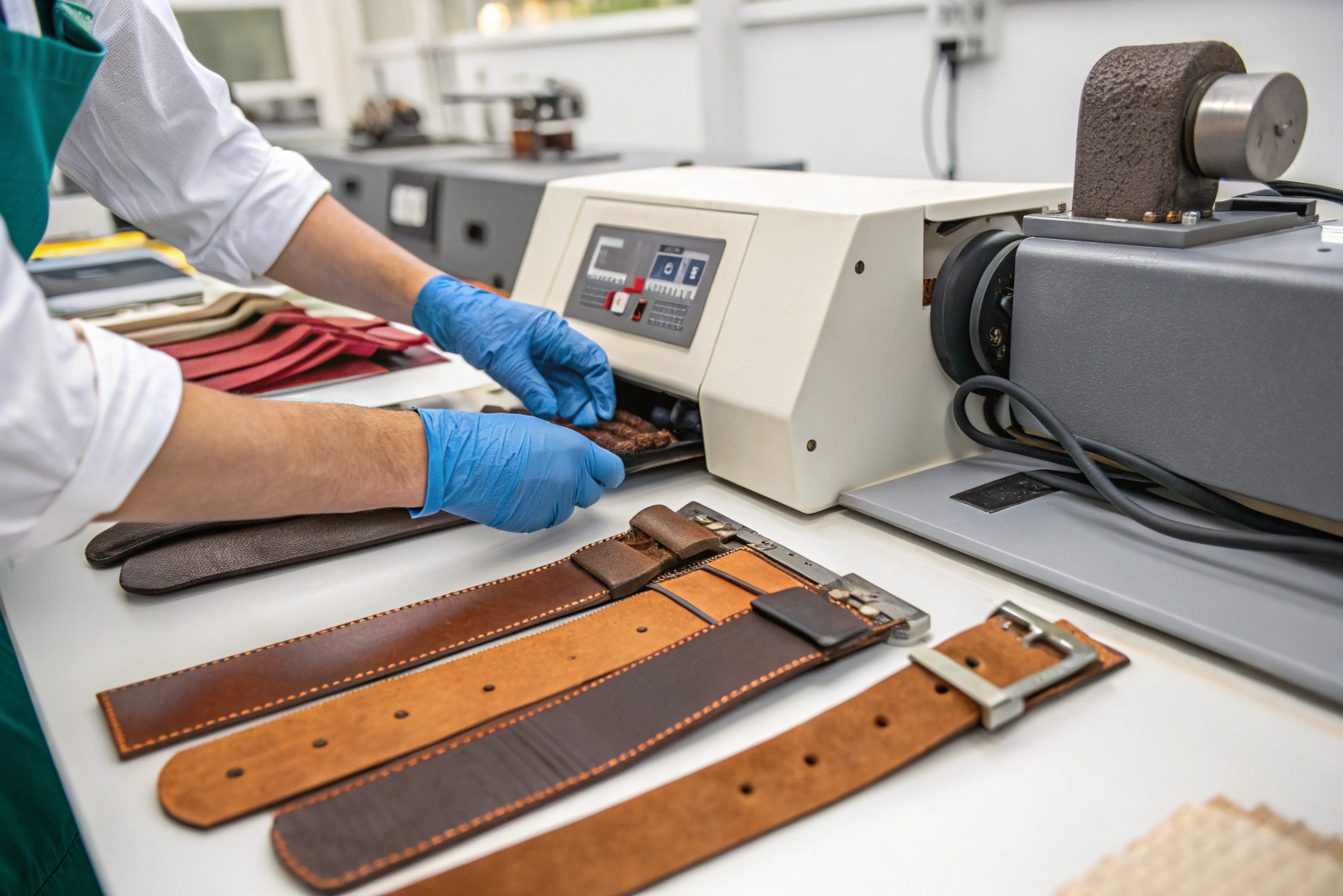
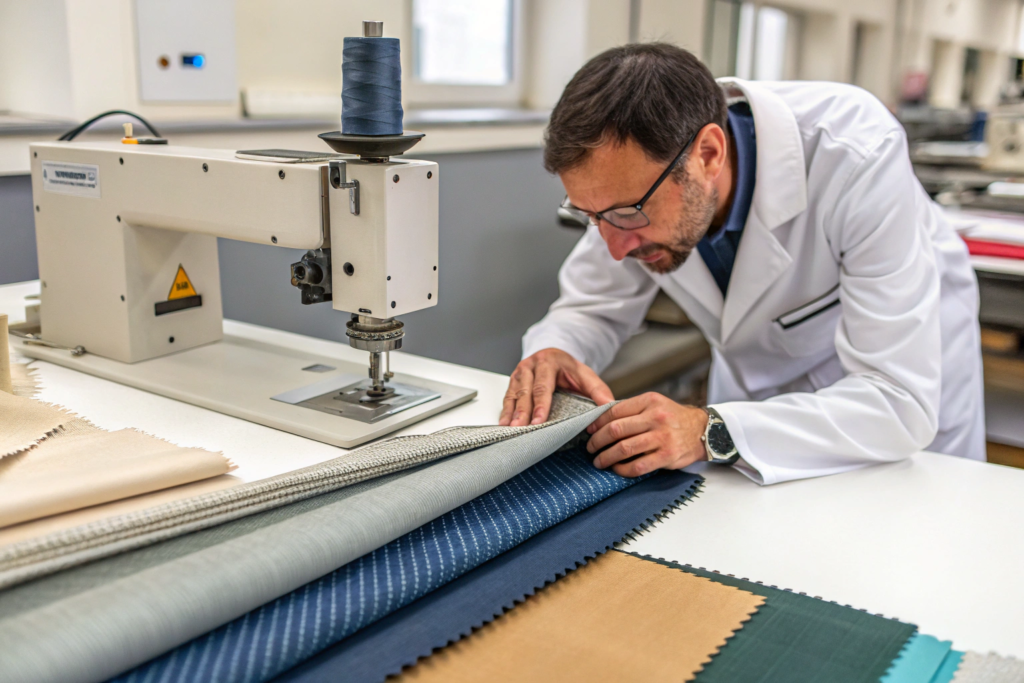
The non-negotiable technical capabilities to vet include fabric sourcing and testing, specialized construction, and printing/dyeing for performance. First, investigate their fabric library and supply chain. Do they have direct relationships with mills producing recognized technical fabrics? Can they provide test reports for key properties: moisture-wicking efficacy, UPF rating, colorfastness to perspiration and washing, and abrasion resistance? Secondly, inspect their production equipment. They should have flatlock and coverstitch machines for seamless, comfortable seams, ultrasonic cutting or laser cutting for precision with synthetic fabrics to prevent fraying, and heat bonding or welding equipment for creating seamless zippers or logos. Finally, for printed designs, ensure they specialize in sublimation printing, which dyes the polyester fiber itself for durable, breathable graphics that won't crack or peel.
Vetting should be hands-on. Request detailed capability presentations and insist on visiting the factory or conducting a live video audit. Ask to see their sample room and R&D area. A serious manufacturer will have technicians who can explain why a certain stitch type is used for a compression panel or how they test the bond strength of a welded seam. Request seam strength test results and pilling test reports. Ask for references from other performance brands they work with (they may provide anonymized examples). This level of scrutiny ensures they have a quality management system built for performance standards, not just basic assembly. This technical due diligence is as crucial as evaluating their communication and project management structure.
Why are fabric testing certifications critical?
Fabric testing certifications are your objective guarantee of performance and safety. They remove subjectivity from claims about a fabric's capabilities. Key certifications to require include OEKO-TEX® Standard 100, which verifies the fabric is free from harmful substances—critical for garments worn against sweating skin. GRS (Global Recycled Standard) is important if you use recycled polyester. For specific performance claims, look for test reports from accredited labs (like SGS, Intertek) proving moisture management (e.g., AATCC 195), quick-dry properties, UV protection (ASTM D6603), and dimensional stability after washing (AATCC 135). A manufacturer invested in performance gear will have these reports readily available for their common fabric bases and will understand the process and cost for testing new material combinations you propose. This documented proof protects your brand from liability and ensures your marketing claims are legitimate.
What sewing techniques differentiate performance gear?
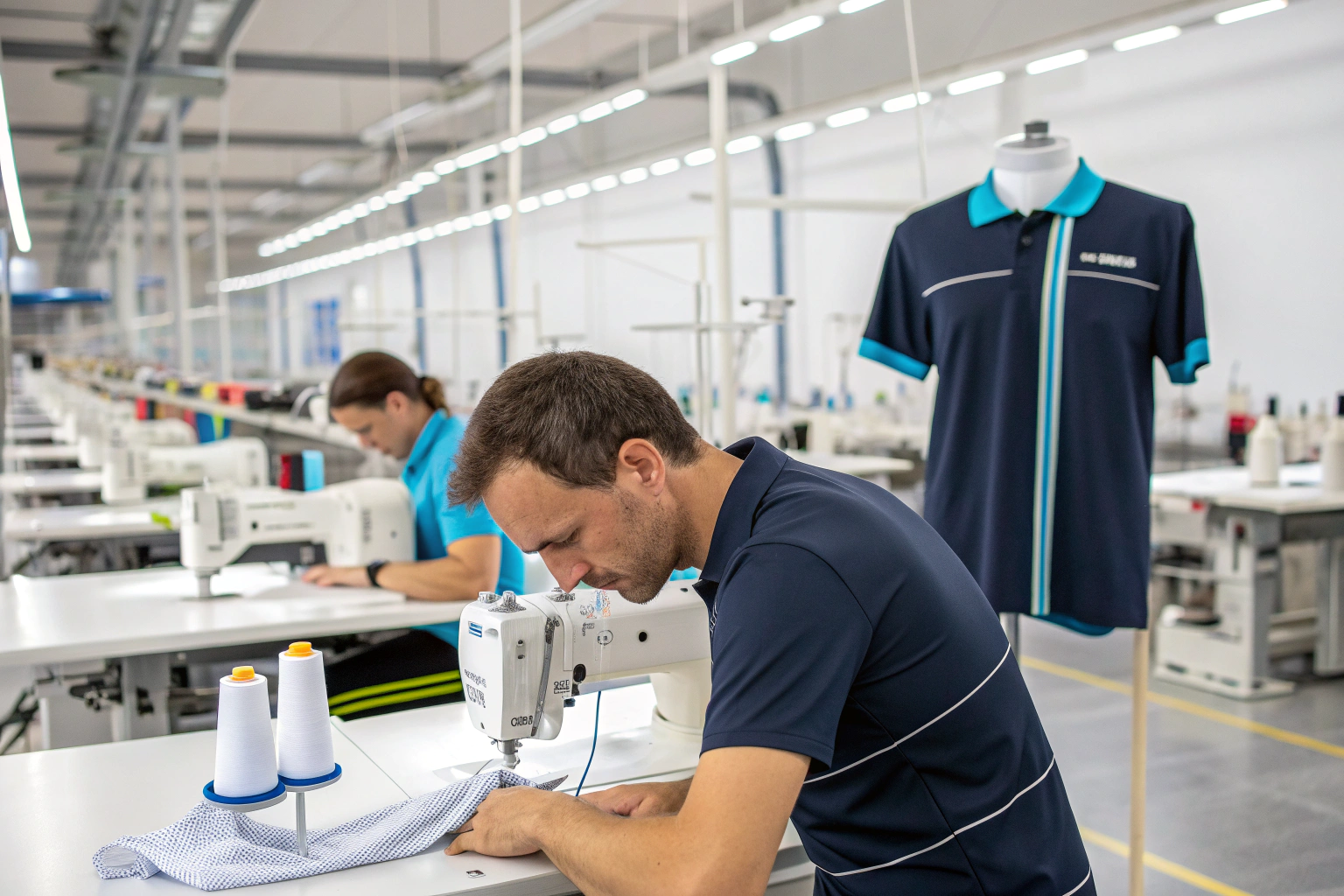
The sewing techniques used are what transform flat fabric into a dynamic, durable garment. For performance gear, standard overlook (serged) seams are often unacceptable as they can create ridges that cause chafing. You must look for factories proficient in flatlock stitching, which creates a flat, comfortable seam ideal for areas like the inner leg or underarm. Coverstitching is used for hems on stretchy fabrics, providing a professional finish that retains elasticity. For a fully seamless look or to reduce bulk, ultrasonic welding or heat bonding is used to fuse seams or attach components without thread. Ask the factory to show you samples of these different seam constructions and explain the application for each. Their ability to recommend the right technique for different parts of your garment—such as using a bonded seam for a backpack strap attachment point on a hiking shirt—is a clear indicator of advanced technical proficiency.
How to Evaluate a Factory's Sample and Development Process?
The sample stage is your most critical checkpoint before committing to full production. It's where theoretical designs and material specs meet physical reality. For performance gear, a sample isn't just about aesthetics; it's a functional prototype that must be tested under simulated use conditions. A factory's approach to sampling reveals their commitment to quality, collaboration, and getting the details right.
Evaluate the process by its structure, communication, and rigor. A professional factory will have a clear, multi-stage sampling protocol: a prototype sample (often in similar fabric) to check fit and pattern, a development sample in correct fabrics to test look and hand feel, and a pre-production sample (PP sample) made on the actual production line with all trims and techniques, representing the final product. At each stage, they should provide a measurement chart and high-resolution photos from all angles. Crucially, they must encourage and expect you to performance-test the development and PP samples. This means you should wear-test the garment during actual exercise, wash it multiple times, and check for issues like seam slippage, color bleed, or pilling. A good partner will want this feedback to perfect the product.
The cost and timeline for sampling are also telling. Be wary of factories that offer free samples with no commitment; they are often generic, pre-made items. A serious manufacturer will charge a reasonable fee for custom samples, covering material, labor, and shipping, as it represents significant development work. They should provide a clear timeline for each sample round. During this phase, assess their communication: Are they proactive in suggesting improvements? Do they explain why a certain adjustment is needed for production efficiency or durability? This collaborative development phase is where a factory like Shanghai Fumao Clothing demonstrates its value, acting as a consultancy to engineer your design for both performance and manufacturability. A smooth, transparent sample process builds confidence for the main production run.
What should you test in a performance gear sample?
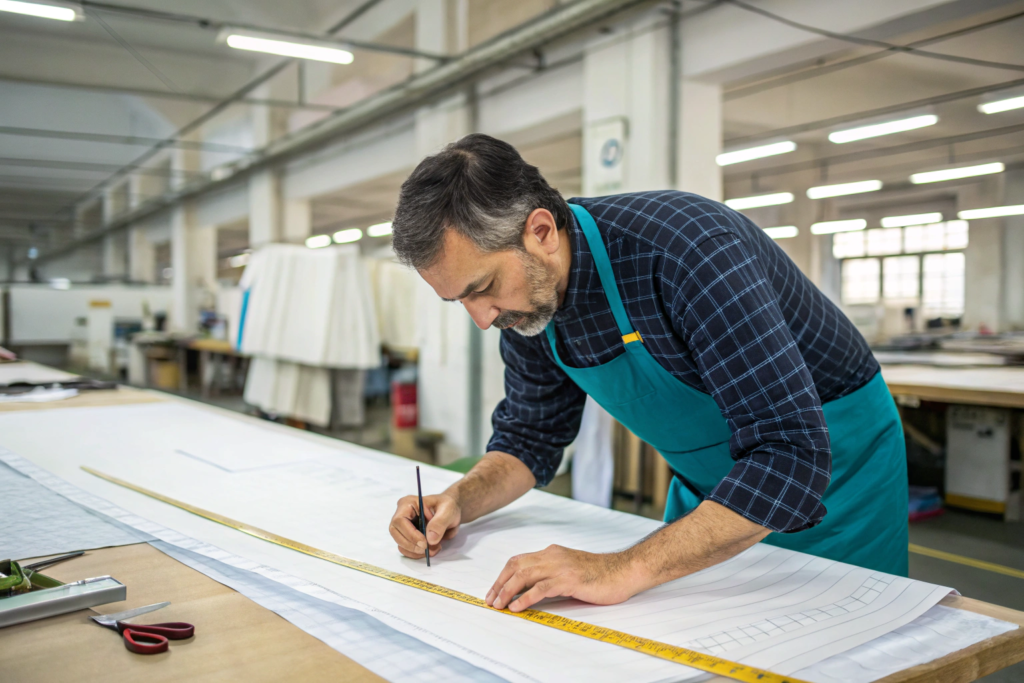
Go beyond a simple fit test on a model. Conduct rigorous performance testing that mimics real-world use. Key tests include: Movement Test: Have someone perform sport-specific movements (lunges, stretches, arm circles) to check for restriction, ride-up, or transparency. Sweat and Wash Test: Saturate the garment with water to test drying time and see if the outer fabric shows wet patches. Then, wash it 5-10 times according to care labels, checking for dimensional change (shrinkage/stretching), color fading, pilling, and seam integrity. Durability Test: Rub high-stress areas (like inner thighs) together repeatedly to check for abrasion resistance. Examine all stitching, bonds, and trim attachments (zippers, logos) for strength. Document everything with photos and notes. Present this structured feedback to the factory; their ability to understand and implement solutions (e.g., changing stitch density, using a stronger thread, or recommending a different fabric blend) is the ultimate vetting step.
How many sample rounds are typical for technical apparel?
For new, technical performance gear, three to four sample rounds are typical and should be budgeted for. Round 1 (Prototype): Focuses on fit, silhouette, and pattern. Major changes are expected. Round 2 (Development Sample): Incorporates correct materials. Focus shifts to fabric performance, trim functionality, and initial wear-testing. Round 3 (Pre-Production Sample - PP Sample): Made from final bulk fabrics on production lines. This sample is for final sign-off on every detail before mass production. Sometimes, a Round 4 (Production Sample) is taken from the first batch off the line to confirm consistency. Each round should have a clear objective and feedback loop. A factory that tries to rush you to approve a sample after one or two rounds may be cutting corners or lacks experience with the iterative nature of developing high-performance products. Patience and precision in sampling prevent costly mistakes in production of thousands of units.
What Are the Must-Ask Questions About Compliance & Logistics?
Before signing a contract, you must clarify how the factory handles the complex back-end of production: ensuring regulatory compliance and managing the physical shipment of your goods. For sports gear, compliance isn't just about general safety; it involves specific regulations for textiles and chemicals. Logistics must account for the often-bulky nature of apparel and your need for timely delivery to catch seasons or marketing campaigns.
On compliance, your questions must be specific. First, ask about product safety regulations for your target markets. For the US, this includes CPSIA (Consumer Product Safety Improvement Act) compliance, which covers lead and phthalate content, and flammability standards (e.g., for sleepwear-inspired athletic loungewear). For the EU, ask about REACH regulations concerning restricted chemicals. Demand to see lab test reports for the specific fabrics and components (like dyes and prints) used in your product. Secondly, discuss labeling requirements. They should know about care label rules, fiber content labeling (e.g., FTC rules in the US), and country-of-origin marking. A proficient factory will have a compliance officer or partner lab and can guide you on the necessary documentation for smooth customs clearance.
For logistics, delve into their shipping expertise. What Incoterms do they typically use? FOB is common, but for simpler logistics, a DDP (Delivered Duty Paid) quote can be invaluable. Ask about their experience shipping to your destination port and their relationship with freight forwarders. For performance gear, which can be seasonal, inquire about production lead times and their policy on partial shipments. Can they ship a portion of your order by air if you need it for a launch, and the rest by sea? How do they handle packing to minimize damage and volumetric weight costs? Their answers will reveal whether they see logistics as a mere service or as an integral part of delivering your product successfully to market. A factory that offers well-organized DDP service demonstrates a commitment to an end-to-end partnership.

What are the key compliance documents for US/EU sportswear?
The key documents serve as your proof of due diligence. For both markets, you need a General Certificate of Conformity (GCC) or a Supplier's Declaration of Conformity (SDoC) stating the product meets all applicable safety rules. Supported by this, you must have third-party lab test reports. For the US, these often test for CPSIA (lead, phthalates) and flammability (16 CFR Part 1610). For the EU, REACH SVHC (Substances of Very High Concern) testing is crucial. Additionally, for any performance claims (e.g., "UV 50+"), you need supporting test reports (like ASTM D6603 for UV). The factory should provide these for the materials used. For final shipment, a physical audit report from an inspection company like Asia Inspection can also be part of your compliance package, verifying that the shipped goods match the tested samples. Always keep these documents on file for retailer requests or regulatory inquiries.
How can DDP shipping simplify your supply chain?
Delivered Duty Paid (DDP) shipping is a powerful model for brands that want a predictable, hands-off logistics experience. When you agree to DDP terms with your factory, they provide a single, all-inclusive price that covers manufacturing, export clearance, international freight, import duties and taxes, and delivery to your warehouse door in your country. This simplifies your landed cost calculation to one number, eliminating surprise fees from customs brokers or last-mile carriers. It also saves you the time and complexity of having to hire and manage your own freight forwarder and customs broker. For a sportswear brand focused on design, marketing, and sales, this allows you to offload the entire logistical burden to your manufacturing partner, who, through high volume, often secures better freight rates. It creates a turnkey solution where you are only responsible for placing the order and receiving the goods, streamlining your operations significantly.
Conclusion
Finding the right manufacturer for sports performance gear is a deliberate process of seeking out specialized expertise, vetting technical capabilities with a critical eye, and fostering a collaborative partnership centered on quality and innovation. It requires moving beyond basic sourcing to engage with factories as engineering and development partners. The right manufacturer will not just sew your designs but will contribute knowledge on material selection, biomechanical design, and durable construction techniques that bring your performance vision to life.
The investment in thorough research, sample testing, and clear communication on compliance pays dividends in product integrity, brand reputation, and customer loyalty. By choosing a partner with proven experience in technical fabrics, advanced construction, and a robust quality management system, you build a supply chain that is as resilient and high-performing as the gear you aim to create. This foundation allows you to confidently bring innovative, reliable products to market that athletes can trust.
If you are developing technical sports performance gear and seek a manufacturing partner with the expertise, dedication, and systems to execute at the highest level, we invite you to connect with us. At Shanghai Fumao Clothing, our team specializes in translating advanced performance concepts into production reality, from material sourcing and precision sampling to compliant, efficient logistics. Let's discuss how we can help you build your line. Contact our Business Director, Elaine, to begin: elaine@fumaoclothing.com.