You've found a supplier with great prices and beautiful samples. You're ready to place a large order for your upcoming season. But a nagging thought keeps you up at night: what if they disappear? What if they suddenly close down, go bankrupt, or can't handle your order, leaving you with a massive production gap, a lost deposit, and no inventory during your peak season? This fear of supplier instability is one of the most significant and legitimate risks in the import business.
To evaluate the stability of a fashion accessory supplier, you must look beyond the product samples and assess their operational, financial, and relational health. This involves verifying their business history and certifications, analyzing their communication and transparency, and gauging their long-term viability through factory audits and client references. A stable supplier is a well-established, transparent, and invested partner, not just a low-cost producer.
As the owner of Shanghai Fumao Clothing, a factory that has been a stable partner to brands for decades, I know that stability isn't an accident. It's the result of sound business practices, investment in people and infrastructure, and a long-term vision. An unstable supplier is a ticking time bomb for your business. Your goal is to become an expert at spotting the signs of a solid foundation versus the cracks of a risky venture. Let's break down the key areas you must investigate.
How Can I Verify a Supplier's Business History and Credentials?
You're looking at a supplier's website, and it looks professional. They claim to have "10 years of experience." But how do you know if that's true? You're worried that you might be dealing with a brand-new, inexperienced operation, or worse, a temporary trading company that could vanish overnight. It's difficult to separate marketing claims from hard facts.
The solution is to act like a background investigator and look for verifiable, third-party proof of their history and legitimacy. Don't just take their word for it.
- Check their Business License: Ask for a copy of their business license. You can use online tools or a local consultant to verify its authenticity and check their official registration date. This is the most basic proof of their existence and age.
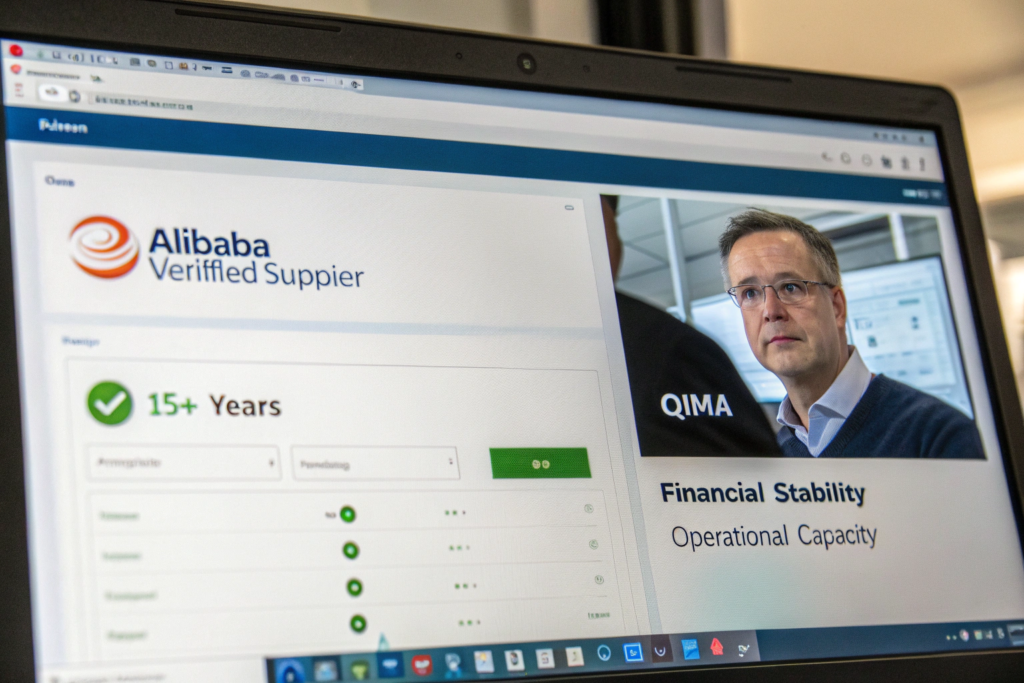
- Look for Longevity on Platforms: On sites like Alibaba, look for the "Years on Platform" badge. A supplier with 10+ years on the platform is far more likely to be stable than one who just signed up last month.
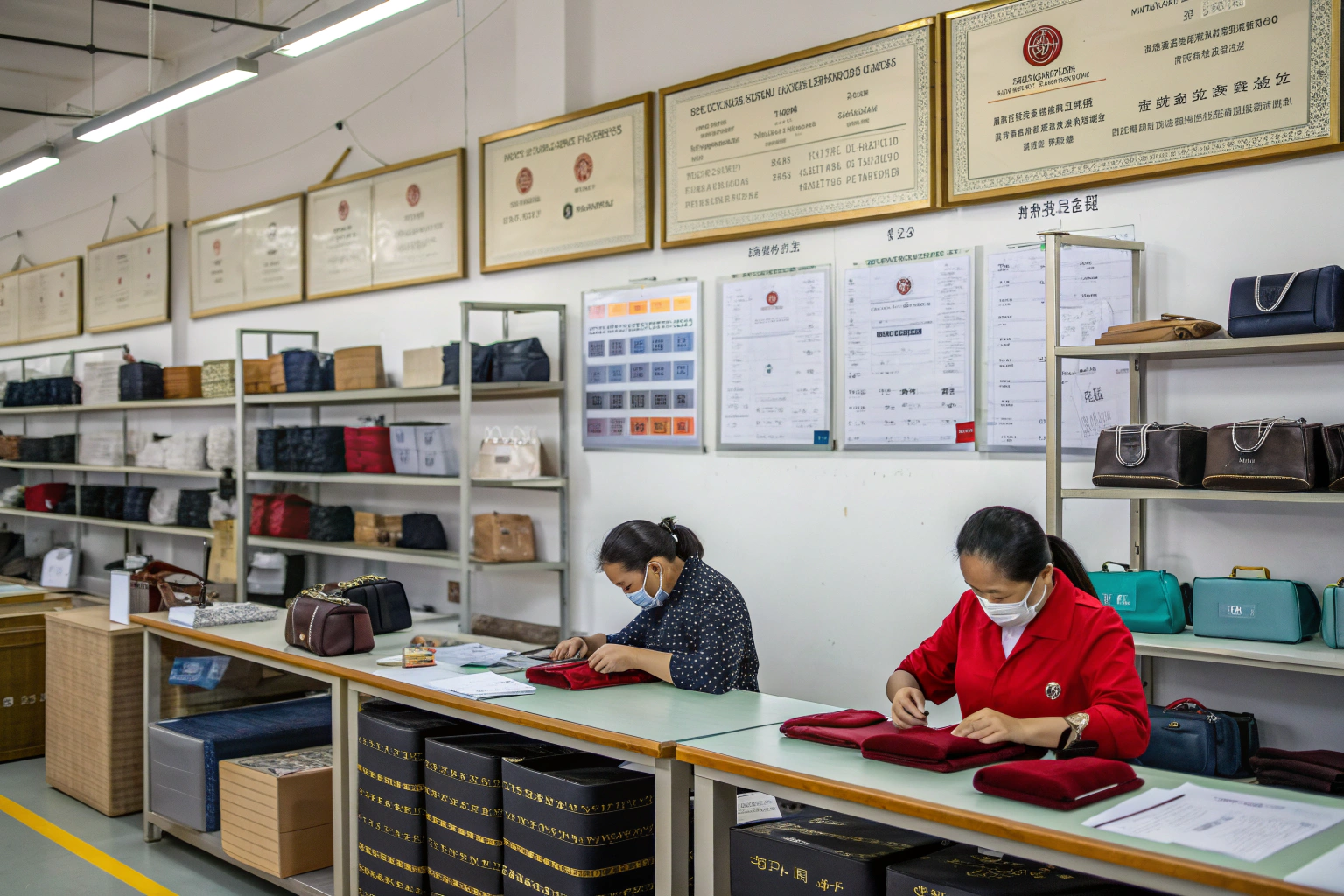
- Verify Certifications: Ask for certifications like ISO 9001 (for quality management systems) or BSCI (for social compliance). A factory that has invested the time and money to obtain and maintain these certifications is demonstrating a long-term commitment to professional operations.
At AceAccessory, we are proud of our history and are happy to provide these documents to potential partners. Transparency is a hallmark of a stable and confident business. A supplier who is hesitant or unwilling to share these basic credentials should be considered a major red flag. This initial screening is your first line of defense and a prerequisite before you even consider their communication and operational transparency.
What does an ISO 9001 certification tell me?
An ISO 9001 certification indicates that the supplier has a robust, standardized, and well-documented Quality Management System (QMS). It means they have formal processes for everything from handling orders to managing production and dealing with non-conforming products. This level of organization and process discipline is a strong indicator of a stable, professional operation that is built to last, not just a chaotic workshop. You can learn more about this standard from the International Organization for Standardization (ISO).
Why is a factory audit so valuable?
A third-party factory audit, conducted by a service like QIMA or SGS, is the ultimate verification tool. An auditor physically goes to the factory and assesses everything from their production capacity and equipment maintenance to their financial health and labor practices. The final report gives you an unbiased, on-the-ground assessment of their stability and capabilities. While it's an added cost, for a large or long-term partnership, the peace of mind it provides is invaluable.
How Do I Assess Their Communication and Operational Transparency?
You're emailing back and forth with a potential supplier. The sales representative is responsive, but their answers are vague. When you ask about their production process or their team structure, they change the subject. You're worried that this lack of transparency is hiding serious operational weaknesses.
A stable supplier is not a black box. They are open, communicative, and proud of their operations. The quality of their communication is a direct reflection of the quality of their organization. Look for these signs of transparency:
- Consistent Point of Contact: Are you dealing with a single, professional project manager, or are you being passed around to different people? A stable team structure is a sign of a stable company.
- Willingness to Show, Not Just Tell: Ask for a video call and a virtual factory tour. A confident manager will be happy to walk you through their showroom, their production lines, and their QC station.
- Clear and Proactive Updates: During the sample process, do they provide clear timelines and proactively inform you of any potential delays? Or do you have to chase them for information?
This is the standard we set for our project managers. They are our clients' window into our factory. We believe that proactive, transparent communication is the foundation of trust and the cornerstone of a stable, long-term partnership. A supplier who is cagey about their operations likely has something to hide—be it disorganization, subcontracting without your permission, or poor working conditions. This transparency is a crucial indicator of their financial health and investment.

What does employee turnover tell me?
High employee turnover, especially among sales reps or project managers, is a significant red flag. If you are dealing with a different person every few months, it suggests internal instability, poor management, or an unhealthy work environment—where communication is fragmented, goals feel unattainable, and the workplace buzzes with unspoken tension rather than collaboration. A factory that retains its key employees for years, however, demonstrates that it is a stable, well-managed organization. Here, the air hums with a sense of purpose; colleagues greet each other with familiar smiles, sharing insights over morning coffee breaks, and collaborative problem-solving sessions flow smoothly as trust has been built over time.
Employees seem engaged, their voices confident during meetings, and there’s a palpable energy of shared commitment to quality and efficiency. Such stability often translates into consistent performance, as experienced workers bring deep knowledge of processes, client relationships, and operational nuances that new hires take years to develop.
What is the danger of unauthorized subcontracting?
An unstable or overwhelmed factory might secretly subcontract your order to a smaller, cheaper, and unvetted workshop to get it done. This is a huge risk. You lose all control over quality, materials, and ethical labor practices. A transparent and stable supplier will have the capacity to produce your order in-house. Your contract should always include a clause that explicitly forbids unauthorized subcontracting. This is a common topic discussed on legal resources for importers, like the China Law Blog.
How Can I Gauge Their Financial Health and Investment?
You're considering two suppliers. One has rock-bottom prices but their factory photos look dated. The other is slightly more expensive, but they just sent you a video of their brand-new automated cutting machine in action. You're tempted by the lower price, but you're worried it's a sign of a factory that is struggling financially and cutting corners.
A company's financial health is directly visible in its willingness to invest in itself. A stable supplier is constantly reinvesting profits back into the business. Look for signs of this investment:
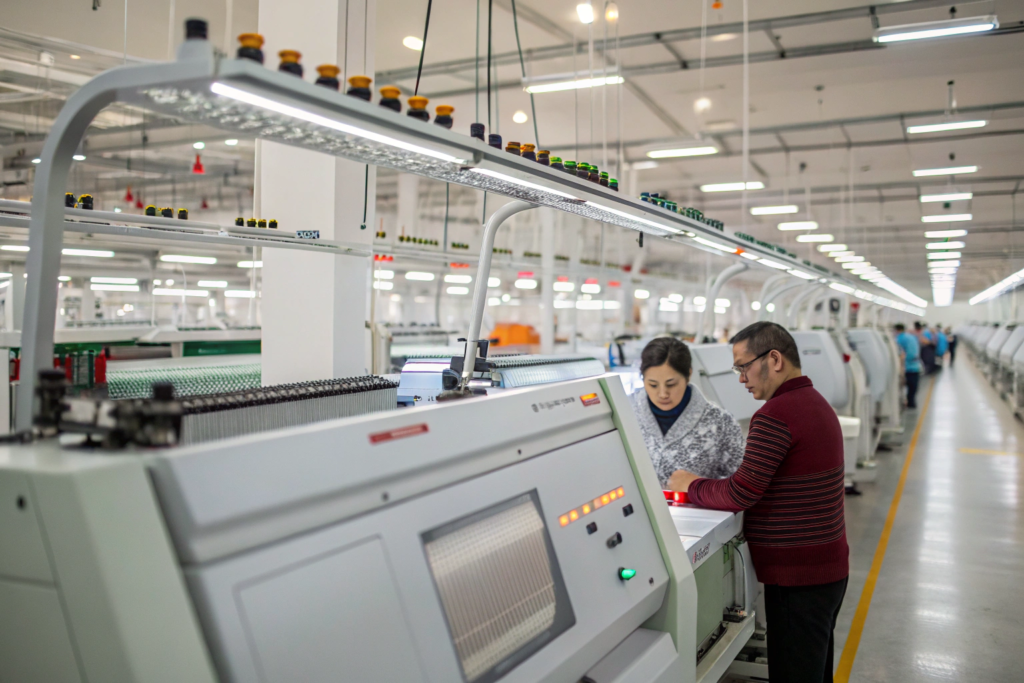
- Modern and Well-Maintained Equipment: Do they have up-to-date machinery? Is the factory floor clean and organized?
- Investment in Technology: Do they use any kind of software (like an ERP system) to manage their orders and inventory?
- Investment in People: Do they talk about training their staff? Do they have a dedicated R&D or design team?
At Shanghai Fumao Clothing, we are constantly upgrading our equipment and training our team. We see these as essential investments for staying competitive and providing the best possible quality and efficiency to our partners. A factory that is not investing is a factory that is stagnating or, worse, declining. Their equipment is more likely to break down, causing delays, and they are less likely to be able to innovate. While you may not be able to see their bank statements, you can see their investment—or lack thereof—all around you. This is a powerful clue to their long-term stability.
Why are payment terms a clue?
A financially unstable supplier may demand unusually high upfront payments (e.g., more than 50%) or full payment before production even begins. This can be a sign that they don't have enough working capital to purchase the raw materials for your order. A standard, stable supplier will typically ask for a reasonable deposit (e.g., 30-50%) with the balance due upon completion or shipment, as they have the financial stability to fund the production cycle.
How do client references help assess stability?
Speaking to a long-term client of the supplier is invaluable. Ask the supplier for a reference from a non-competing brand in your region that has worked with them for 3+ years. When you speak to the reference, ask them questions about stability: "Have they ever had sudden, unexplained price hikes?" "Have they consistently delivered on time?" "Have you noticed any changes in their quality or service over the years?" A history of consistency with another long-term partner is one of the strongest possible indicators of future stability with you.
How to Leverage Client References and Build Partnerships?
You've done your research, and a supplier looks good on paper. But you still need a real-world perspective. You're worried that you're only seeing the polished, "best-case" version of the company and that you don't have a true sense of what it's like to work with them day-to-day.
This is where social proof and relationship-building become your most powerful tools. A stable supplier is not just a vendor; they are a partner.
- Demand Client References: This is a non-negotiable step. Ask the supplier for a reference from a non-competing brand in your region that has worked with them for 3+ years. A stable factory will have a list of happy, long-term clients.
- Ask the Right Questions: When you speak to the reference, go deep. Ask about stability: "Have they ever had sudden, unexplained price hikes?" "Have they consistently delivered on time?" "How do they handle problems when they arise?"
- Start Small and Build Trust: Don't place your largest, most critical order on day one. Start with a smaller trial order. This allows you to test their processes, quality, and communication in a low-risk way. Their performance on this trial order will tell you everything you need to know about their ability to handle a larger, long-term partnership.
Ultimately, the most stable suppliers are those who see your success as their success. They move beyond a transactional relationship to a collaborative one. They offer advice, proactively solve problems, and invest in your growth. This partnership mindset is the ultimate sign of a stable, reliable company that you can build your business on for years to come.

What if a supplier refuses to provide references?
This is a massive red flag. A supplier who is proud of their work and has good relationships with their clients should be eager to provide references. A refusal suggests either that they don't have any long-term clients or that their clients would not speak favorably of them. In either case, it's a strong signal to walk away.
Why is a trial order so important?
A trial order is a real-world test. It moves your evaluation from theory to practice. How they handle a small, simple order—their communication, their attention to detail, their adherence to timelines—is a direct indicator of how they will handle a large, complex one. It's a small investment that can save you from a massive disaster down the line.
Conclusion
Evaluating the stability of a fashion accessory supplier is a critical exercise in risk management. It requires you to move beyond the allure of a low price or a pretty sample and become a diligent investigator. By thoroughly verifying their business history, demanding operational transparency, and looking for clear signs of financial health and reinvestment, you can confidently distinguish a solid, long-term partner from a risky, unstable operator. The goal is not to find the cheapest supplier, but to find the most reliable one. A stable partner is the bedrock upon which you can build a resilient and successful brand.
At Shanghai Fumao Clothing, we have built our reputation on being that stable, reliable bedrock for our clients. We welcome scrutiny because we are confident in our history, our processes, and our vision for the future.
If you are looking for a stable, transparent, and high-quality manufacturing partner for your fashion accessory line, I invite you to put us to the test. Please reach out to our Business Director, Elaine, at her email: elaine@fumaoclothing.com.