I remember a buyer from a major American department store who came to me with a problem. She had ordered twenty thousand pairs of winter gloves from another factory. When the shipment arrived, half of them did not fit. The smalls were too tight. The mediums were inconsistent. Her customers were returning them in droves. She told me, “I thought gloves were simple. How did they get this wrong?” That conversation changed how I thought about glove production. Gloves are not simple. They are one of the most precise accessories we make. A few millimeters in the wrong place can make a glove uncomfortable or unusable.
Ensuring gloves fit well and match size chart standards requires a combination of accurate hand measurement protocols, consistent pattern grading, rigorous in-line quality control, and clear communication between buyer and factory. The process begins with understanding the target market’s hand dimensions, moves to precise pattern development and sample approval, and continues through production where every pair is checked against established size standards. A reliable factory uses standardized measurement tools, maintains strict tolerance limits, and provides detailed size documentation with every shipment.
Let me walk you through exactly how we approach glove sizing at AceAccessory. Whether you are sourcing touchscreen gloves for a European retailer or winter mittens for a North American supermarket, these principles will help you avoid the fit failures that plague so many glove orders.
What Are the Critical Measurements for Proper Glove Sizing?
Before we cut a single piece of fabric or leather, we need to understand the dimensions of the hands that will wear the gloves. This sounds obvious, but many factories skip this fundamental step.
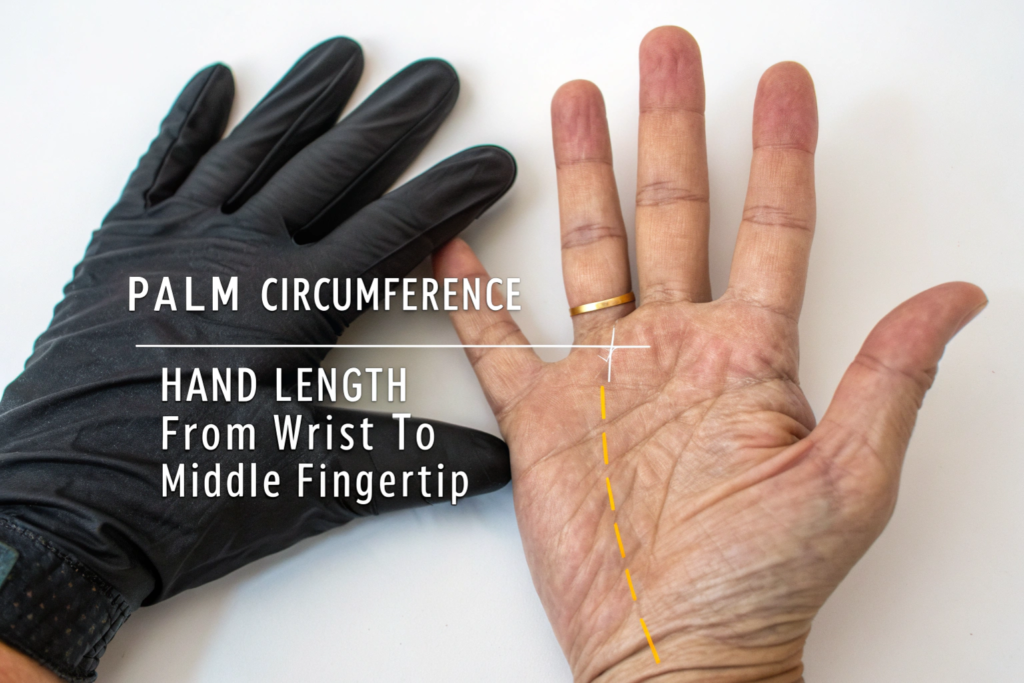
The critical measurements for proper glove sizing are palm circumference, hand length, and finger length. Palm circumference is measured around the widest part of the hand, excluding the thumb. Hand length is measured from the tip of the middle finger to the base of the palm or wrist crease. Finger length measurements vary by glove style but are essential for touchscreen gloves and precision-fit styles. These measurements must be standardized across all sizes and clearly documented in the tech pack. We use a standardized measurement protocol that aligns with international sizing standards. Let me explain how we handle each measurement.
How Do We Measure Palm Circumference Correctly?
Palm circumference is the most important measurement for glove fit. It determines how snugly the glove wraps around the hand.
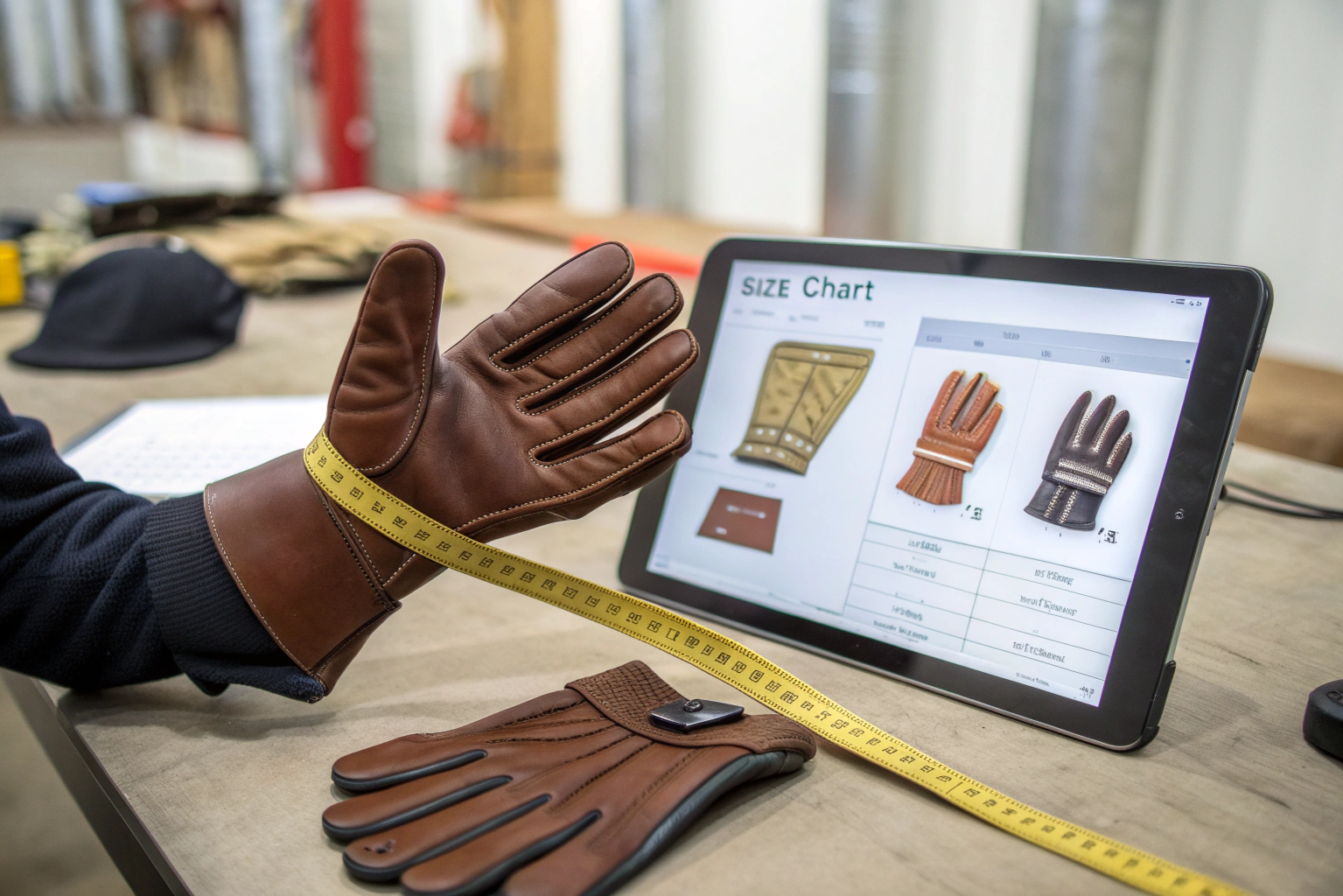
Our pattern makers measure palm circumference at the widest point of the hand, which is typically just below the knuckles. We use a flexible measuring tape that does not stretch. The tape is placed snug but not tight. This measurement is then used to determine the base size.
For a size small glove, we typically target a palm circumference of 7 to 8 inches. Medium targets 8 to 9 inches. Large targets 9 to 10 inches. Extra large targets 10 to 11 inches. These ranges vary slightly depending on the target market. European hand sizes tend to be slightly different from North American sizes. We maintain separate size charts for different markets.
We also consider the glove material. A leather glove will stretch slightly with wear, so we aim for a snugger fit. A knitted glove has more give, so the tolerance can be looser. This is where experience matters. Our pattern makers have developed these adjustments over thousands of production runs.
Why Does Hand Length Matter for Finger Fit?
Hand length is often overlooked, but it is critical for comfort. A glove that is too short in the fingers will feel tight and restrict movement. A glove that is too long will have loose fingertips that make gripping difficult.
We measure hand length from the tip of the middle finger to the crease at the base of the palm. For work gloves or winter gloves that require dexterity, we also measure individual finger lengths.
One of the most common fit problems we see from other factories is inconsistent finger proportions. A glove might have the correct palm circumference but fingers that are too short or too long. This happens when factories use generic patterns that are not properly graded for different sizes.
Our pattern grading system maintains consistent finger proportions across all sizes. When we scale a pattern from small to large, the finger lengths increase proportionally with the palm width. This ensures that a size large glove fits a large hand properly, not just a small hand with extra room around the palm.
How Does Pattern Development Impact Glove Fit Consistency?
I have seen factories try to shortcut the pattern development process by using the same pattern for multiple styles. This never works. A driving glove requires a different fit than a ski glove. A touchscreen glove needs precise finger tip construction that a standard glove does not.
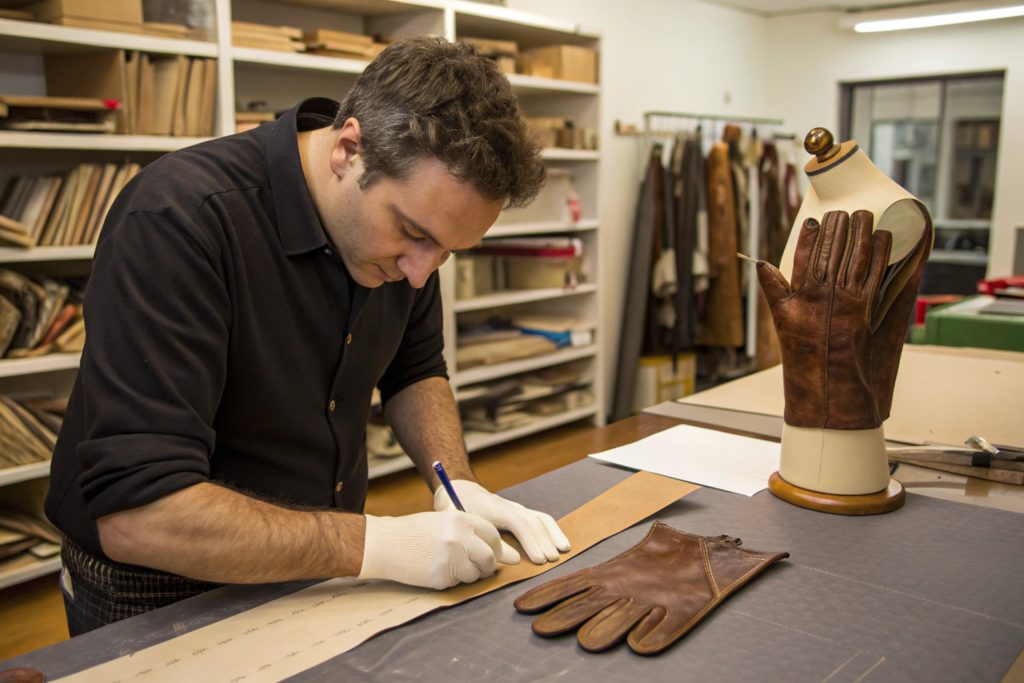
Pattern development is the foundation of glove fit consistency. A well-developed pattern includes accurate seam allowances, proper ease for hand movement, and correct proportions between palm, fingers, and thumb. The pattern must be tested through multiple sample rounds, with fit checked on real hands or hand forms that accurately represent the target market. Once approved, the pattern becomes the master for production, and any modifications during production require new sample approval.
Our pattern makers are among the most experienced in our factory. They have been developing glove patterns for over fifteen years. They understand how different materials behave. Leather stretches. Knits have memory. Synthetic materials have different drape characteristics.
What Role Do Sample Rounds Play in Fit Verification?
We never move to production without at least two sample rounds for a new glove style. The first sample is for fit and construction. The second sample confirms any adjustments.
During the first sample round, we make one pair in each size. We test them on hand forms and, when possible, on live models. We look for:
- Snugness around the palm without tightness
- Finger length that allows full extension without excess
- Thumb placement that aligns with natural hand movement
- Closure fit if the glove has a wrist strap or snap
We send these samples to the client with detailed measurement reports. The client then tests them with their own models or hand forms. This collaborative process is essential. We have had clients who wanted a looser fit for a specific market, or a tighter fit for a performance application. We adjust the pattern accordingly.
Only after the client approves the final sample do we proceed to production. That approved sample becomes the standard against which all production gloves are compared.
How Do We Grade Patterns for Different Sizes?
Pattern grading is the process of scaling a pattern up or down to create different sizes. This sounds simple, but it is one of the most technical aspects of glove manufacturing.
We use computer-aided grading that ensures consistent increments between sizes. The grading rules are based on extensive data about hand proportions. When we grade a pattern from medium to large, the palm circumference increases by a specific amount, and the finger lengths increase by a corresponding amount.
We do not simply scale the entire pattern uniformly. That would result in gloves that look like they were made for cartoon characters. Instead, we have specific grading rules for each part of the glove. The palm area scales differently than the fingers. The thumb gusset has its own grading rules.
Our grading system has been refined over years of feedback from clients and their customers. We track returns and complaints by size and use that data to adjust our grading. If we see a higher return rate for size large gloves because they are too tight, we adjust the grading for that size.
How Does In-Line Quality Control Maintain Size Consistency?
Once production begins, our QC team takes over the responsibility of maintaining size consistency. This is where the approved pattern and grading rules are put to the test.
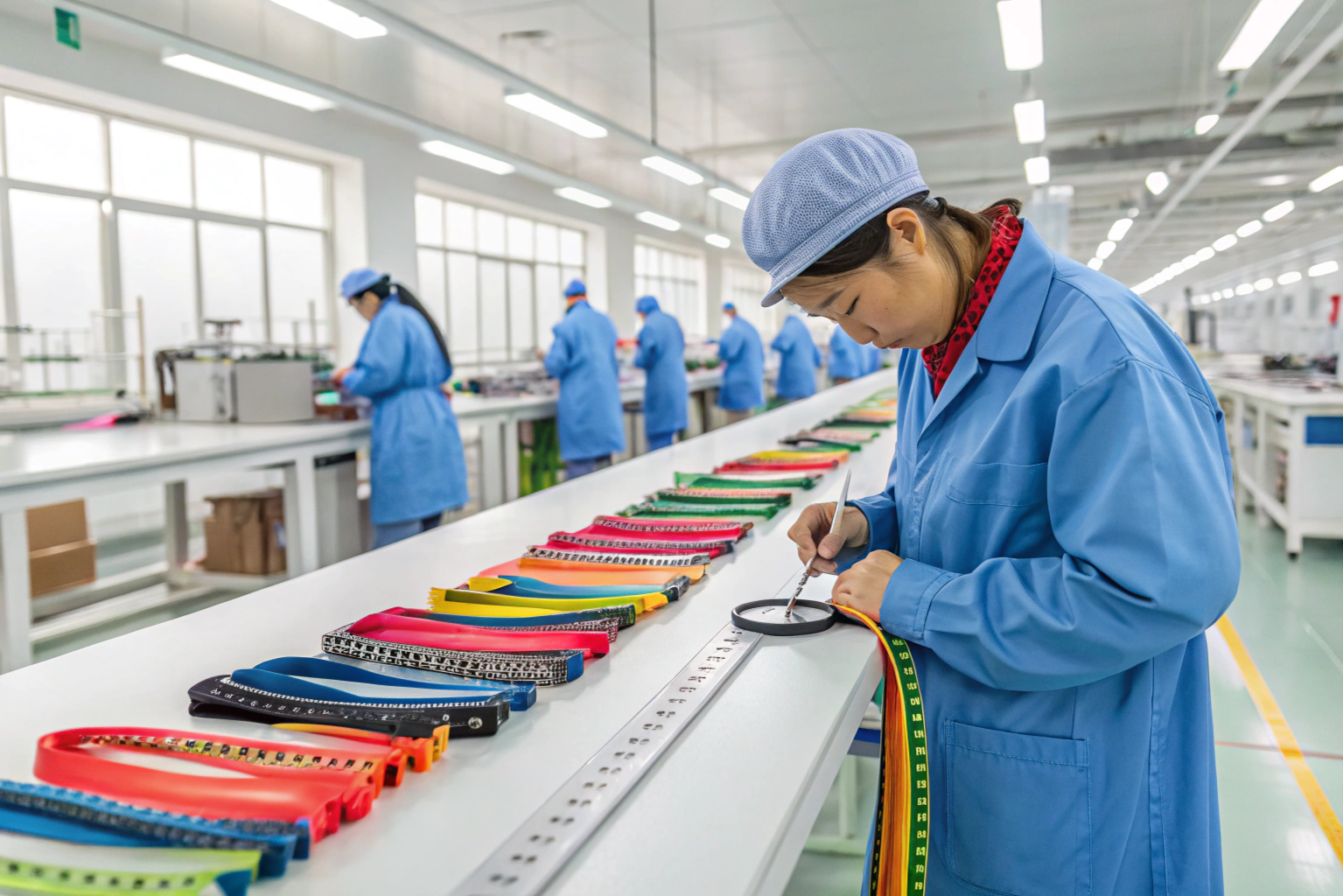
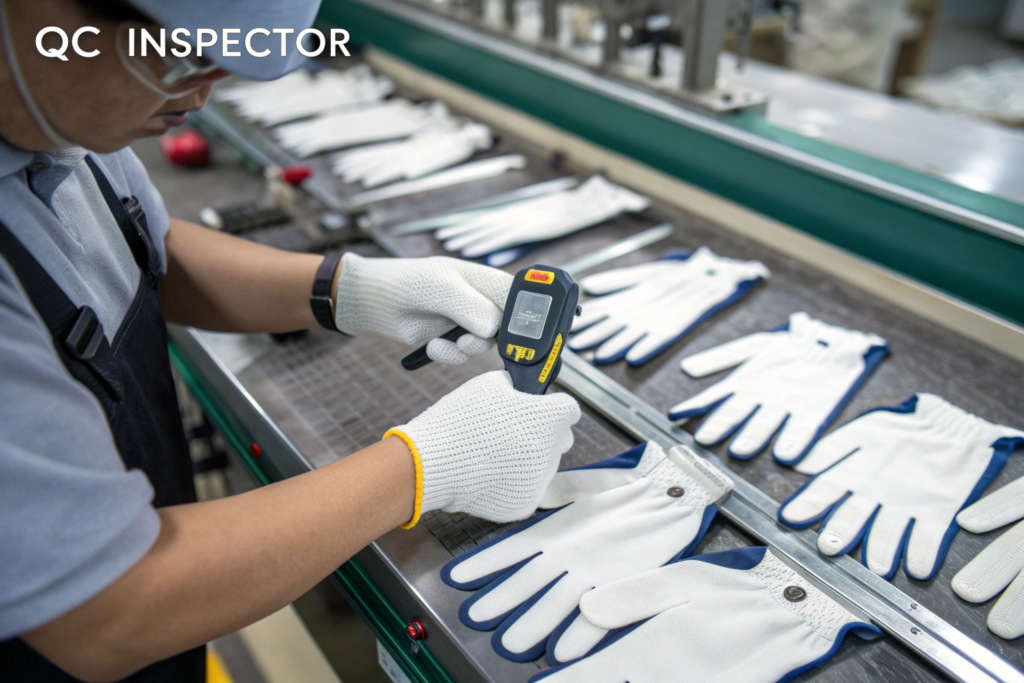
In-line quality control for gloves involves continuous measurement checks at multiple points in the production process. Inspectors measure key dimensions on randomly selected gloves throughout each production shift. They check palm width, finger length, thumb placement, and overall glove length. Any deviation beyond established tolerances triggers immediate corrective action. This real-time monitoring ensures that the first glove produced is identical to the last glove produced.
Our QC inspectors use specialized measurement tools designed for gloves. We have measuring boards that hold the glove flat while the inspector checks finger lengths. We have calipers for checking seam allowances and material thickness. We maintain measurement logs for every production run.
What Tolerances Do We Allow for Glove Dimensions?
This is a question every buyer should ask their factory. Tolerances are the allowable variation in measurements. A factory that does not have clear tolerances will produce inconsistent gloves.
Our standard tolerance for palm circumference is plus or minus 3 millimeters. For finger length, it is plus or minus 2 millimeters. These are tight tolerances. They reflect the precision required for a good fit.
We achieve these tolerances through careful material preparation and machine calibration. Cutting is the first critical step. Our cutting machines are calibrated at the start of each shift. The cutting dies are inspected for wear. Blunt cutting dies can distort material and create inconsistent shapes.
Sewing is the next critical step. Our sewing operators are trained to maintain consistent seam allowances. A seam that is one millimeter off can affect the entire fit. We use specialized sewing machines with guide attachments that help operators maintain consistency.
How Do We Handle Mixed Sizes in Production?
One of the biggest risks in glove production is size mixing. If a size small glove gets mixed into a box of size medium gloves, the customer experience is ruined.
We have strict size segregation protocols. Different sizes are produced on separate lines when possible. When they share a line, we change over completely between sizes. All materials for the previous size are cleared. The machines are recalibrated. The QC checklists are updated.
Our packing process also reinforces size segregation. After final inspection, gloves are packed by size into clearly labeled poly bags. The cartons are labeled with the size, quantity, and order number. We do a final carton count check to ensure the quantities match the packing list.
We also use size indicators on the gloves themselves. Many of our clients request size labels sewn into the gloves. Others use hang tags or printed size markings. This helps the end consumer easily identify the correct size.
What Documentation Should You Request to Verify Glove Sizing?
When you are sourcing gloves from a factory, you should never rely on promises alone. You need documentation that verifies the sizing process.
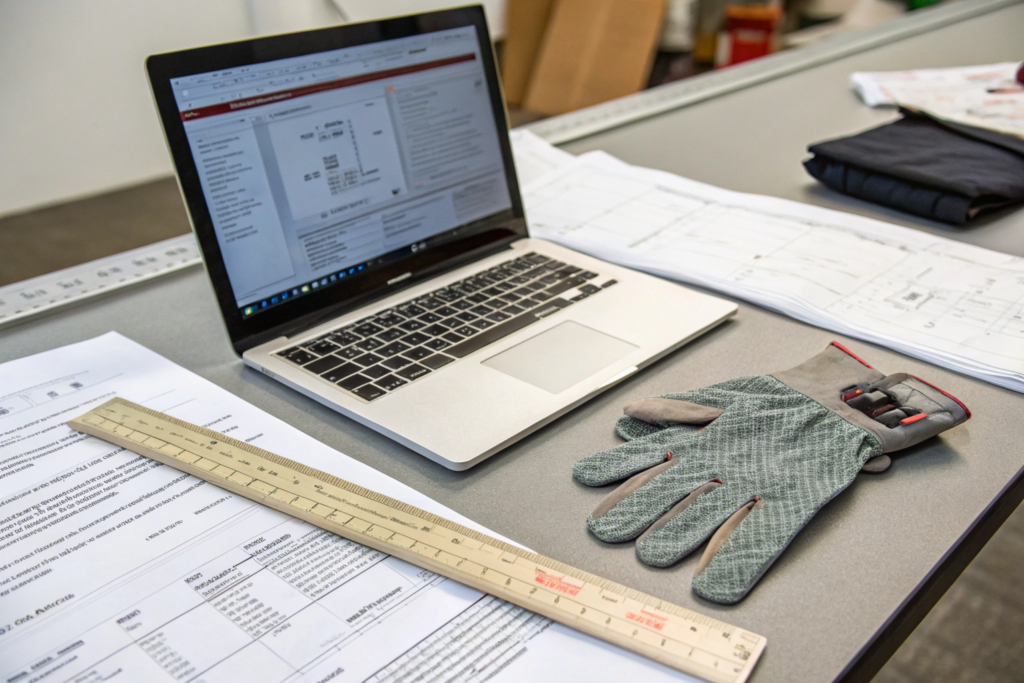
To verify glove sizing, buyers should request three key documents: a detailed size chart with measurements for each size, measurement reports from sample approval showing actual dimensions, and production measurement reports from in-line QC checks. These documents should be provided before production begins and again before shipment. A transparent factory will share this documentation without hesitation.
What Should a Complete Size Chart Include?
A proper size chart is more than a list of sizes. It should include:
- Palm circumference for each size, measured at the specified point
- Hand length from wrist to middle fingertip
- Finger length if applicable for the style
- Wrist or cuff circumference for gloves with closures
- Measurement methodology explaining exactly where and how measurements are taken
We provide this size chart at the beginning of the project, and it becomes part of the tech pack. The chart is used by our pattern makers, our QC team, and your own quality assurance team.
If you are sourcing for a North American market, make sure the size chart aligns with typical North American hand dimensions. If you are sourcing for Europe, the size ranges may shift slightly. We maintain separate size charts for different markets and can adjust based on your specific customer demographics.
How Do We Provide Measurement Reports?
For every sample round, we provide a detailed measurement report. This report lists the actual dimensions of the sample gloves in each size. The client can then compare these measurements against the size chart.
If the sample measurements are within tolerance, we proceed. If they are outside tolerance, we adjust the pattern and make another sample. This process continues until the measurements align perfectly.
For production, we provide similar measurement reports from our in-line QC checks. These reports show the range of measurements across the production run. A typical report might show that the palm circumference for size medium gloves ranged from 8.2 to 8.5 inches, well within our tolerance.
We can also provide third-party inspection reports if your company requires them. We work with all major inspection firms and welcome their involvement. In fact, many of our clients find that our internal QC reports are so thorough that they reduce or eliminate the need for third-party inspections.
Conclusion
Gloves are one of the most personal accessories a person wears. A poorly fitting glove is not just uncomfortable. It is a reminder that the brand behind it did not pay attention to the details. As a factory owner, I take that responsibility seriously.
Ensuring proper glove fit starts with accurate measurements. It continues through precise pattern development and grading. It is maintained through rigorous in-line QC with tight tolerances. And it is documented through clear size charts and measurement reports that give you confidence in every pair we ship.
This is not the easiest way to make gloves. It requires specialized knowledge, disciplined processes, and a commitment to precision that not every factory possesses. But it is the only way to deliver gloves that your customers will love to wear.
When I think back to that buyer whose glove order failed, I am reminded of why we do things the way we do. She eventually became one of our longest-standing clients. She trusted us to get it right. And we have delivered for her season after season, because we never cut corners on fit.
If you are looking for a factory that understands the precision required for proper glove sizing, I would love to show you how we work. To discuss your next glove order or any of our accessory lines, please contact our Business Director, Elaine, at elaine@fumaoclothing.com. She can provide detailed size charts, arrange sample development, and answer any questions about our quality control processes.