You've just spent months perfecting a new line of fashion accessories. The designs are fantastic, the quality is top-notch, and you're excited to get them into stores. But then you get an email from a major retail buyer, Ron. Your products have been rejected, not because of the accessories themselves, but because the packaging isn't "retail-ready." The boxes are the wrong shape for the shelves, the barcodes won't scan, and the branding is lost in the clutter. It's a frustrating, costly, and entirely avoidable setback.
To ensure your accessory packaging is retail-ready, you must design it for three key stakeholders: the retailer, the consumer, and the supply chain. This means creating packaging that is easy to stock, visually appealing on the shelf, protective during transit, and compliant with all technical requirements like barcodes and labeling. It's a strategic balance of logistics, marketing, and compliance.
As a manufacturer for major brands in North America and Europe, we at Shanghai Fumao Clothing have seen this scenario play out countless times. Great products fail because of poor packaging. That's why we treat packaging as an integral part of product development, not an afterthought. It’s the silent salesman on the shelf and the first physical interaction a customer has with your brand. Let's break down how to get it right.
What Are the Core Requirements for Retailer Compliance?
You've designed a beautiful, unique box for your new line of silk scarves. It's a triangular shape that you think is incredibly innovative. However, the retail buyer tells you it's a non-starter. It can't be stacked efficiently in the warehouse, it wastes precious shelf space, and it's difficult for stockers to handle. You're stuck with thousands of custom boxes you can't use, and your retail launch is delayed.
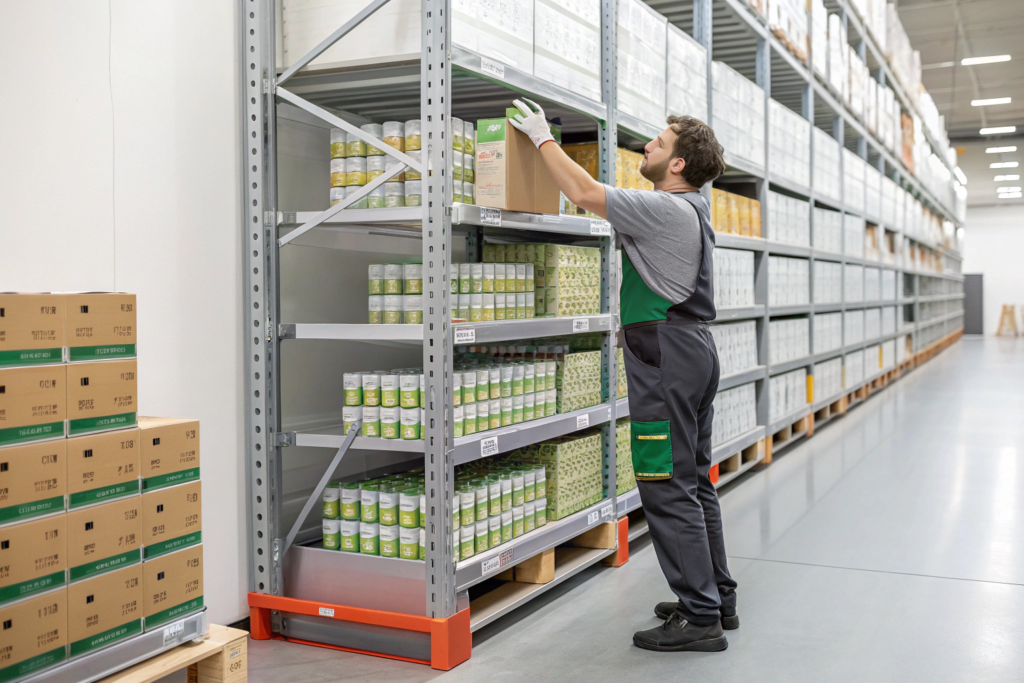
Retailer compliance boils down to efficiency and standardization. Your packaging must be easy to ship, store, stock, and scan. This means using standard shapes and sizes that maximize shelf space, incorporating clear and accurate barcodes (like UPCs), and designing shelf-ready trays or cases that minimize handling time for store employees. Retailers prioritize products that make their operations smoother and more profitable.
I always tell my clients to think from the retailer's perspective. A store like Target or Walmart has thousands of products and limited space.
Why are Barcodes and SKUs Non-Negotiable?
In modern retail, if your product can't be scanned, it doesn't exist. The Universal Product Code (UPC) is a globally unique barcode that allows retailers to track sales, manage inventory, and speed up the checkout process. [22]. It's the standard identifier for any product sold in major retail chains. Internally, you will use a Stock Keeping Unit (SKU), an alphanumeric code you create to track your own inventory by style, color, and size. [14]. While the SKU is for your use, the UPC barcode must be clearly printed or labeled on every single unit in a standardized format so it can be read by any retailer's scanner. [19]. Without a GS1-registered UPC, most major retailers won't even consider your product.
What is Shelf-Ready Packaging (SRP)?
Shelf-Ready Packaging (SRP), also known as Retail-Ready Packaging (RRP), is a game-changer for retailers. It refers to a shipping case that can be easily opened and placed directly onto the shelf as a self-contained display unit. For example, a box of 24 knitted hats might have a perforated front panel that a stocker can tear away, instantly creating a neat display without having to handle each hat individually. This dramatically reduces stocking time and labor costs for the retailer. When we design packaging for clients, we always ask about their target retailers. If they're aiming for big-box stores, designing effective SRP is a massive competitive advantage.
How Do You Create Packaging That Sells Itself?
You're walking down a retail aisle. Your product, a high-quality leather belt, is on the shelf next to five competing brands. Yours is simply wrapped in a plastic sleeve with a small, generic tag. A competitor's belt, however, is coiled in a handsome, branded box with a cut-out window that lets the customer feel the leather's texture. Which one do you think a customer is more likely to pick up? Your product might be superior, but its packaging failed to communicate its value.
Packaging that sells itself captures attention, communicates brand value, and creates an emotional connection with the consumer in seconds. This is achieved through a strategic combination of color, typography, structural design, and storytelling. It must stand out from the clutter, clearly state what the product is, and give the customer a reason to believe in your brand before they've even touched the product itself.
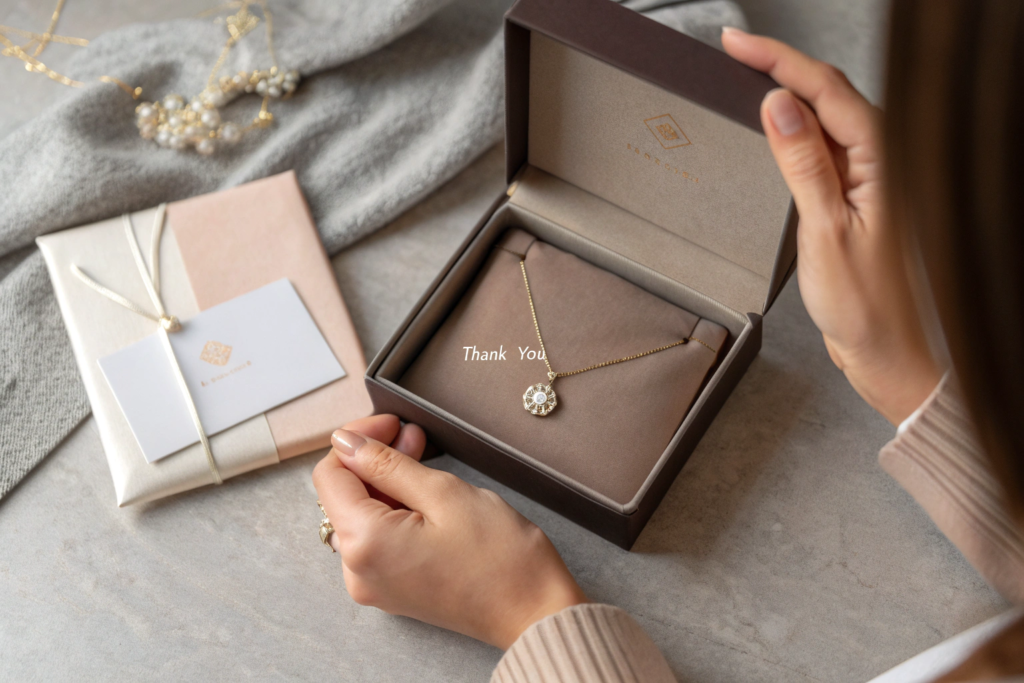
The "unboxing experience" has become a powerful marketing tool, especially with the rise of social media. We encourage our clients to think about the entire journey. What does the customer see first? How does the package feel in their hands? Is it easy and satisfying to open, or frustrating? We once designed packaging for a line of premium silk scarves that used a magnetic closure box. Inside, the scarf was wrapped in branded tissue paper sealed with a sticker. It felt like opening a gift. Customers loved it and shared photos online, creating free marketing for the brand. This attention to detail transforms packaging from a simple container into a memorable brand experience.
How to Use Design to Stand Out on the Shelf?
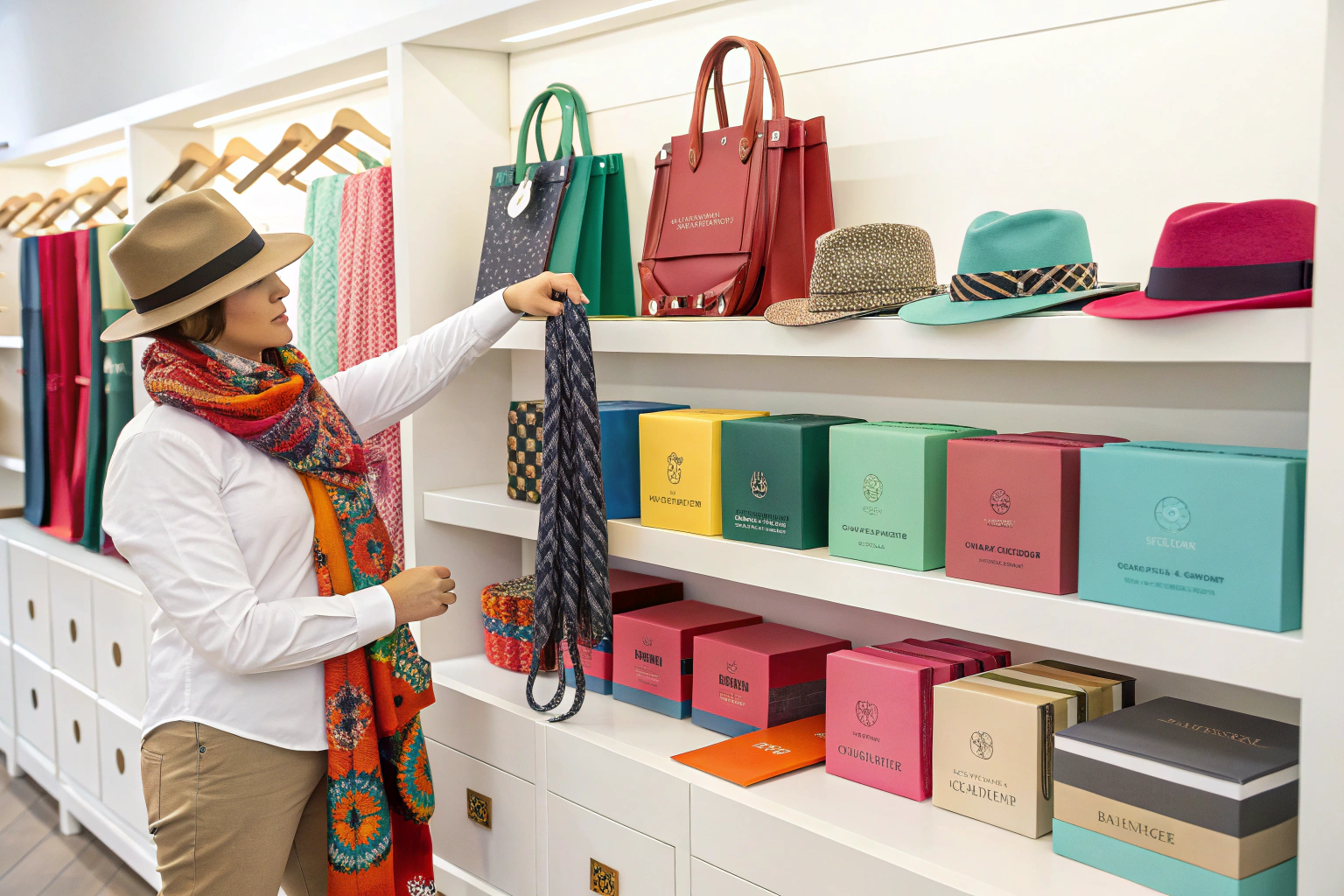
In a crowded retail environment, you have about three seconds to catch a shopper's eye. . Your packaging design is your first and best tool. Color is critical; bright, bold colors can attract attention, while minimalist, earthy tones can signal a natural or premium product. . The structure of the packaging can also make a difference. A unique box shape or a die-cut window that reveals the product can create intrigue. Finally, typography and messaging must be crystal clear. The customer should be able to understand what the product is and its key benefit (e.g., "100% Silk," "Handmade Leather") at a single glance.
What Information Must Be on the Label?
Beyond the barcode, your label must provide essential information clearly and honestly. Misleading packaging is a quick way to lose customer trust. Key information includes the product's identity (e.g., "Knit Beanie"), your brand name, and the country of origin ("Made in China"). Depending on the product and where it's sold, you may also need to include material composition (e.g., "100% Cotton"), care instructions, and any required safety warnings, such as suffocation warnings on poly bags. For products sold in the US, regulations like the Uniform Packaging and Labeling Regulation (UPLR) set standards for how this information must be displayed.
How Can Packaging Be Both Sustainable and Cost-Effective?
Your brand is built on being eco-conscious, and your customers expect it. But when you get quotes for sustainable packaging options like mycelium foam or custom-molded pulp, the costs are staggering. You're caught between your brand values and your budget, worried that choosing a cheaper, less sustainable option will be seen as "greenwashing" and alienate your customer base.
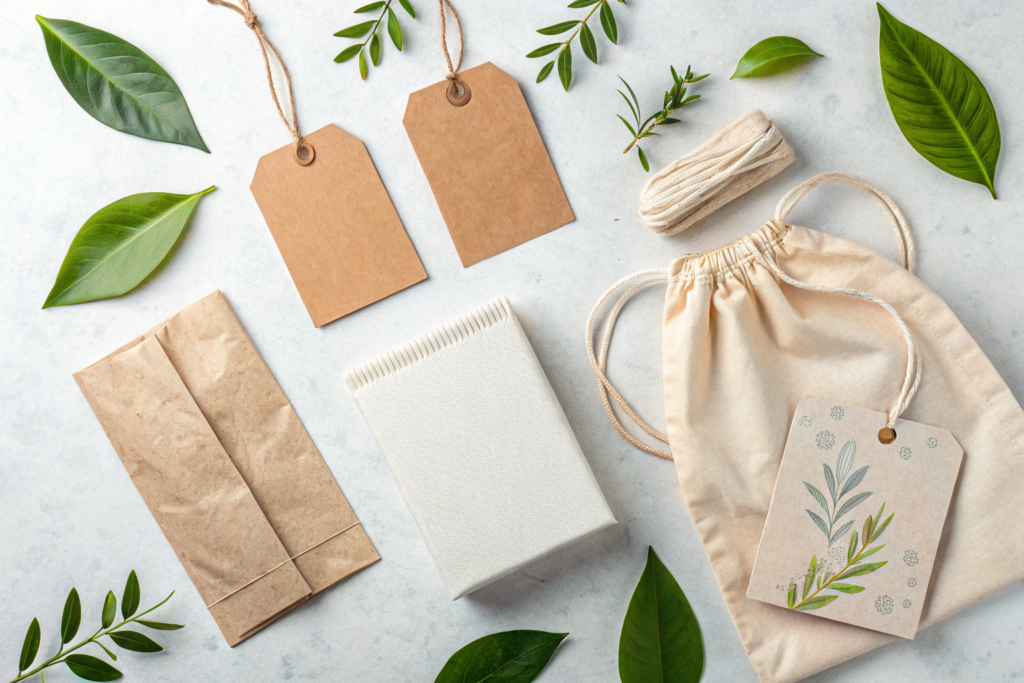
The key to cost-effective sustainable packaging is to focus on the principles of "reduce, reuse, and recycle." Opt for materials that are widely and easily recyclable, like FSC-certified cardboard. Reduce unnecessary layers and "double packaging." Consider reusable elements like a cloth pouch that adds value for the customer. Sustainability doesn't have to mean expensive, niche materials; often, the most eco-friendly choice is the simplest one.
This is a challenge we help our clients with every day. The world of "eco-friendly" materials can be confusing. For example, some "compostable" plastics only break down in industrial composting facilities, which aren't available to most consumers, making them a poor choice in practice. We often guide clients toward simpler, more effective solutions. For a line of baseball caps, we might suggest a simple recycled cardboard hangtag instead of a full box. For delicate jewelry, a small, reusable organic cotton pouch is both sustainable and adds perceived value. By focusing on smart design and proven materials, we can create packaging that is both green and budget-friendly.
What are the Best Recyclable Material Choices?
For most accessories, paper and cardboard are the most sustainable and cost-effective choices. Look for materials with a high percentage of post-consumer recycled content and ensure they are certified by an organization like the Forest Stewardship Council (FSC). This guarantees the paper comes from responsibly managed forests. For poly bags, which are often necessary to protect items from dust and moisture, choose options made from recycled plastics or clearly marked for store drop-off recycling programs. Avoid mixing materials (like a plastic window on a cardboard box) as this can make recycling difficult.
How Can You Reduce Packaging Waste?
The most sustainable packaging is often the least packaging. Avoid the "box-in-a-box" approach where a sturdy product is placed in an unnecessary secondary carton. Design your packaging to be as compact and lightweight as possible. This not only reduces material use but also lowers shipping costs and your carbon footprint. For e-commerce, using right-sized mailers and avoiding excessive filler material like plastic air pillows is crucial. Sometimes, the product itself can be part of the packaging—a beautifully designed hangtag on a scarf can be more effective than a bulky box.
How Do You Avoid Common Packaging Production Pitfalls?
You approved a beautiful digital mockup of your packaging. The colors were vibrant, and the logo was perfectly placed. But when the first production samples arrive from the factory, it's a disaster. The blue is more of a purple, the text is slightly blurry, and the box doesn't fold together correctly. Now you're facing a choice: accept subpar packaging that hurts your brand image or pay for a complete re-run, causing massive delays and cost overruns.
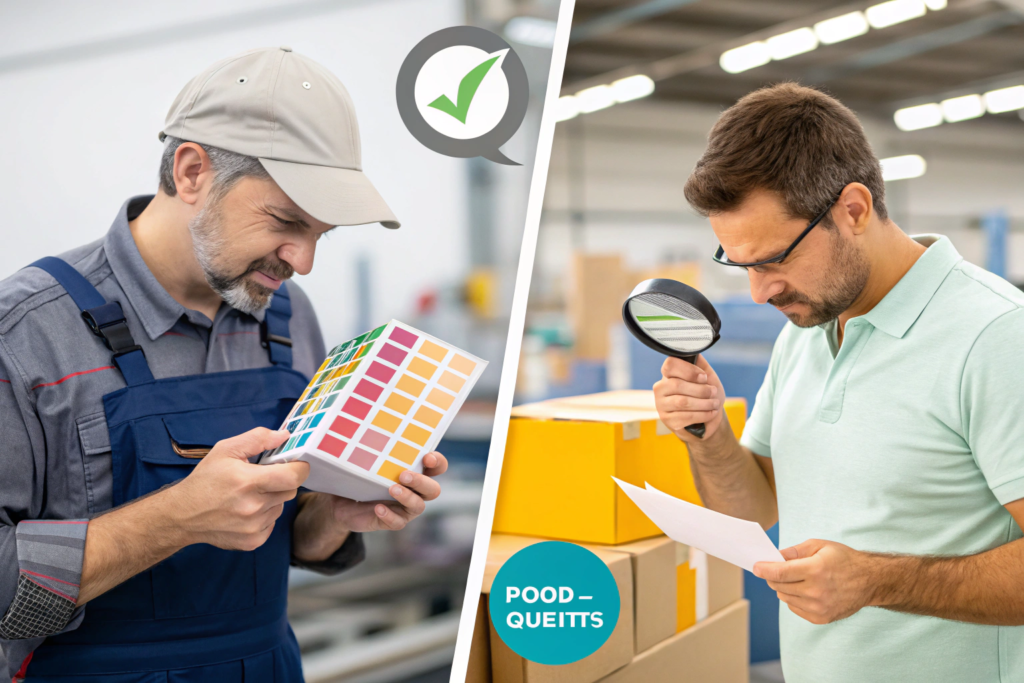
Avoiding production pitfalls requires meticulous pre-production planning and clear communication with your manufacturer. This includes providing print-ready artwork with precise color codes (like Pantone), creating physical prototypes for approval, and understanding the tolerances and limitations of the chosen materials and printing methods. Do not assume the factory will interpret your digital file correctly.
As a manufacturer, I can't stress this enough: clear specifications are everything. A file that looks good on your screen can print very differently. We always ask our clients for vector artwork files and specific Pantone (PMS) color codes. This allows us to match the color exactly, regardless of the screen it was designed on. We also create "white samples" (unprinted physical mockups) to test the structure and fit, followed by a fully printed pre-production sample for final approval before mass production begins. This multi-step approval process, a core part of our service at Shanghai Fumao Clothing, eliminates costly surprises and ensures the final product is exactly what you envisioned.
Why is a Physical Prototype Essential?
A digital mockup can't tell you how a package feels, how it folds, or how strong it is. A physical prototype, even an unprinted one, allows you to test the structural integrity and user experience. [9]. Is it easy to open? Does the product fit snugly inside? Does it feel flimsy or substantial? [17]. Catching a structural flaw at this stage is a simple fix. Catching it after 10,000 units have been produced is a catastrophe. It's a critical step to de-risk your production run.
How Do You Ensure Accurate Color and Print Quality?
Screens display colors in RGB (Red, Green, Blue), while printers use CMYK (Cyan, Magenta, Yellow, Black). This conversion can cause color shifts. To ensure consistency, designers should use the Pantone Matching System (PMS). A PMS code refers to a specific, standardized ink color, ensuring your brand's signature blue looks the same whether it's printed in Shanghai or Chicago. Furthermore, provide your manufacturer with high-resolution, print-ready files (typically Adobe Illustrator or PDF formats) with all fonts outlined and images embedded. This prevents issues with missing fonts or low-quality graphics.
Conclusion
Packaging is far more than just a box. It is a critical touchpoint that impacts your relationship with retailers, your connection with customers, and your bottom line. By designing with the retailer's efficiency in mind, creating a visually compelling and user-friendly experience for the consumer, embracing smart sustainability, and managing a meticulous production process, you can create retail-ready packaging that does its job perfectly. It protects your product, communicates your brand's value, and ultimately, helps you sell more accessories.
Thinking through these four key areas—retailer compliance, consumer appeal, sustainability, and production—will transform your packaging from a potential liability into one of your most powerful assets. At Shanghai Fumao Clothing, we integrate this thinking into every project, ensuring our clients' products arrive on the shelf ready for success.
If you're ready to develop accessory packaging that stands out for all the right reasons, we're here to help. Contact our Business Director, Elaine, at elaine@fumaoclothing.com to get started.