I remember a call I received from a client about ten years ago. He was furious. He had ordered a beautiful line of scarves in a specific shade of "camel." The first shipment sold well. He reordered. When the second batch arrived, he opened the cartons and his heart sank. The color was wrong. It was close, but not the same. Next to the original scarves in his store, the difference was obvious. He had to discount the entire second order. He lost money. I lost a client. That painful lesson taught me something I have never forgotten: color consistency is not a detail. It is the foundation of trust between a brand and its customers.
Ensuring scarves are color consistent across different dye lots requires a rigorous, multi-step system that starts long before the first production run and continues until the final shipment. It begins with establishing a clear, physical color standard. It requires precise recipe formulation and digital monitoring during the dyeing process. It demands that every batch of fabric be tested against the standard, using both calibrated instruments and trained human eyes, before it is cut. And it necessitates a traceability system that links every finished scarf back to its specific dye lot. There is no room for guesswork. Consistency is a science, and it must be practiced with discipline at every step.
At Shanghai Fumao Clothing, we built our reputation on recovering from that early mistake. We invested in the equipment, the training, and the processes needed to deliver color consistency, batch after batch, year after year. We know that for our clients, like major European and American brands, color is identity. If the color is wrong, the brand is wrong. Let me walk you through exactly how we ensure that every scarf we ship matches the one we approved, whether it is the first yard or the ten-thousandth.
Why Does Color Variation Happen Between Dye Lots?
Before we can solve a problem, we must understand its causes. Color variation between dye lots is not a sign of a lazy or incompetent factory, although it can be. It is a complex phenomenon with roots in chemistry, physics, and human error. The good news is that by understanding these causes, we can control them.
Color variation between dye lots happens for several reasons. The most common is variation in the raw materials themselves. Natural fibers like cotton and wool can absorb dye differently depending on their origin, the season they were grown, or how they were processed. Even synthetic fibers can have subtle batch-to-batch differences. The dye chemistry itself can vary slightly between batches from the dye manufacturer. Process variables, such as water temperature, pH levels, and dyeing time, must be precisely controlled. Even a small drift in any of these factors can shift the final color. Finally, human error in recipe calculation or process monitoring can introduce variation. Managing all these variables is the essence of color consistency.
Think of dyeing as baking a complex cake. You have many ingredients. The flour (the fiber) can vary in its protein content. The sugar (the dye) can have different crystal sizes. The oven temperature (the dyeing process) might fluctuate. Even the altitude (water chemistry) affects the result. A master baker knows how to adjust for these variables. A master dyer does the same. At our facility, we track every variable. We log the source and batch number of every fiber. We use water that is filtered and treated to ensure consistent pH and hardness. We calibrate our dyeing machines' temperature sensors daily. We do not assume consistency; we engineer it. This is the foundation of reproducible color.
How Do Natural Fibers Like Cotton And Wool Affect Dye Consistency?
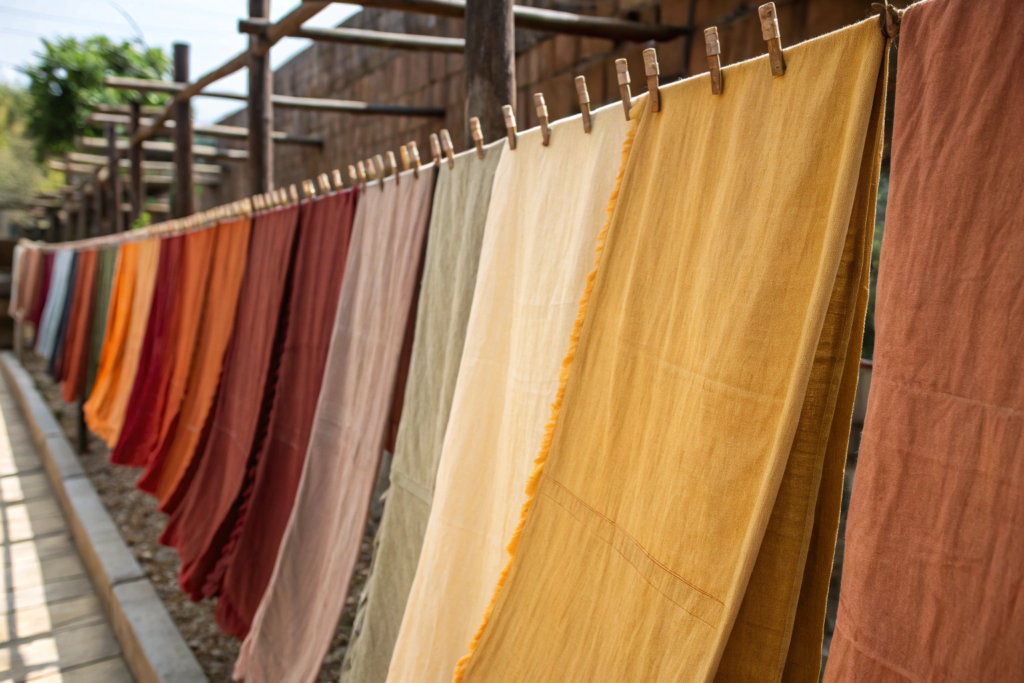
Natural fibers are living things, or they came from living things. As such, they are inherently variable. Cotton grown in a wet year will have different properties than cotton grown in a dry year. Wool from different parts of a sheep's fleece can take up dye differently. This is a reality of working with nature. To manage this, we take a two-pronged approach. First, we source our natural fibers from reputable suppliers who maintain consistent quality and can provide detailed specifications. Second, we do not assume that a new batch of fiber is identical to the last. We test it. We run small "strike-off" dye tests on every new batch of raw material before we commit it to a large production run. This allows us to detect any significant variation and adjust our dye recipe accordingly. This pre-testing of raw materials is essential for consistency.
What Role Does Water Quality Play In Dyeing?
Water is the medium in which all the dyeing magic happens. It is not just a passive carrier. The minerals and chemicals dissolved in water can have a profound effect on the dyeing process. Hard water, with high levels of calcium and magnesium, can interfere with dye uptake, leading to duller colors or uneven dyeing. Chlorine, often used in municipal water treatment, can react with some dyes and alter the shade. At our factory, we use a reverse osmosis water treatment system for all our dyeing. This removes virtually all dissolved minerals and impurities, giving us a consistent, pure water base. We also monitor the pH of our dye baths constantly and adjust it with precision. This investment in water quality control is a hidden but critical factor in our color consistency.
What Is The First Step In Ensuring Color Consistency?
You cannot hit a target you cannot see. The first and most important step in ensuring color consistency is establishing a clear, unambiguous target. This is not a Pantone number or a verbal description like "dusty rose." It must be a physical standard that everyone in the supply chain can refer to.
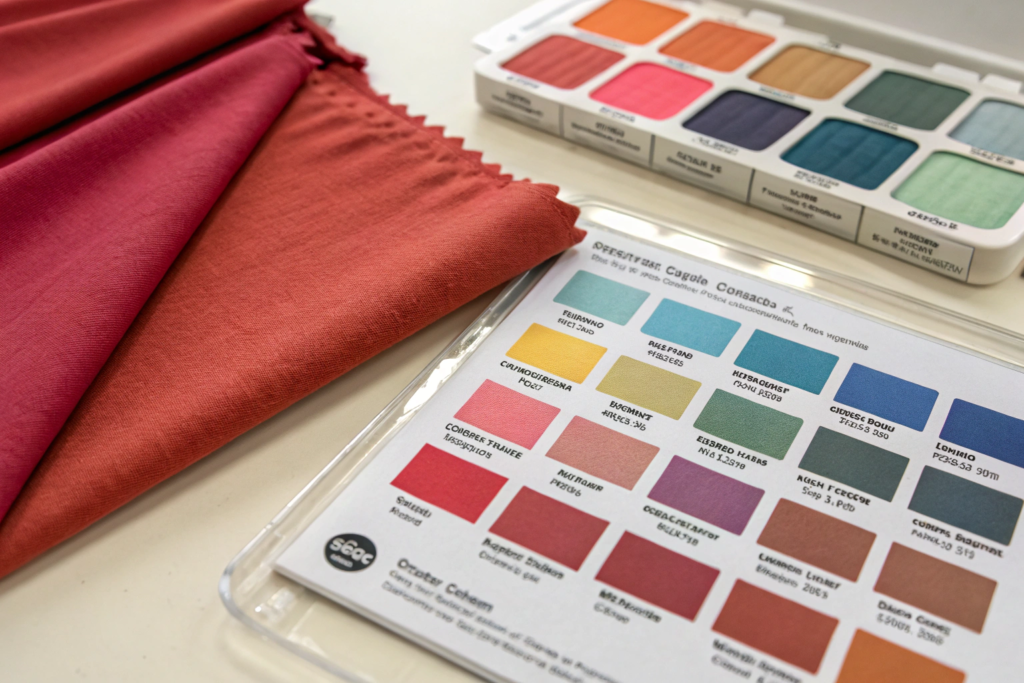
The first step in ensuring color consistency is creating and approving a physical color standard, often called a "swatch" or "lab dip." This is a physical piece of fabric, dyed to the exact target color, using the same fiber and construction as the final product. This physical standard is then kept in a light-protected, climate-controlled environment. It is the master reference. Every future dye lot, every batch of fabric, is compared directly to this physical standard. Pantone numbers are a useful starting point, but they are not precise enough for production. The physical swatch is the ultimate authority. It removes all ambiguity and gives everyone a single, clear target to aim for.
The process of creating the physical standard is called "lab dipping." Our colorists in the lab take the client's reference, whether it is a Pantone chip, a photo, or a previous sample, and they create a small dye recipe. They dye a small swatch of the exact fabric that will be used for the scarves. This swatch is then compared to the reference under standardized lighting conditions. If it is not a perfect match, they adjust the recipe and try again. This iterative process continues until the lab dip is approved, usually by the client. That approved lab dip is then signed, dated, and stored in our color archive. It becomes the master. When we dye the bulk fabric, we compare it to this master, not to a digital file or a memory. This physical standard system is the bedrock of color control.
Why Is A Physical Swatch Better Than A Pantone Number?
Pantone numbers are an excellent communication tool. They give a common language to designers and suppliers around the world. "Pantone 16-1334 TCX" is a universally understood code for a specific shade of peach. However, Pantone is a reference on paper, and paper is not fabric. The way light reflects off a glossy paper swatch is different from how it reflects off a matte, textured silk scarf. Also, the dye chemistry used to create that color on paper is different from what is used on fabric. A physical fabric swatch, dyed on the actual material, accounts for all these factors. It shows you exactly how the color will look on the final product. It is a more accurate and reliable standard for production.
How Do We Store Physical Color Standards To Prevent Fading?
Color standards are valuable, but they are also vulnerable. Light, especially sunlight and fluorescent light, will fade them over time. Heat and humidity can also cause degradation. We store our master color standards in a dedicated, dark, climate-controlled room. They are kept in opaque, acid-free envelopes or boxes. They are never exposed to light except when being used for comparison, and then only under controlled viewing conditions. For long-term archival, we also create a set of "working standards" that are used for daily comparisons. The true master is kept in the dark and only brought out for periodic verification. This careful preservation ensures that the standard remains accurate for years, allowing us to match colors even for reorders placed long after the original production.
How Do We Monitor And Control The Dyeing Process Itself?
With a clear standard in place, the next challenge is to execute the dyeing process with precision. Dyeing is not a set-it-and-forget-it operation. It requires constant monitoring and, in some cases, real-time adjustment. Modern technology has given us powerful tools for this.
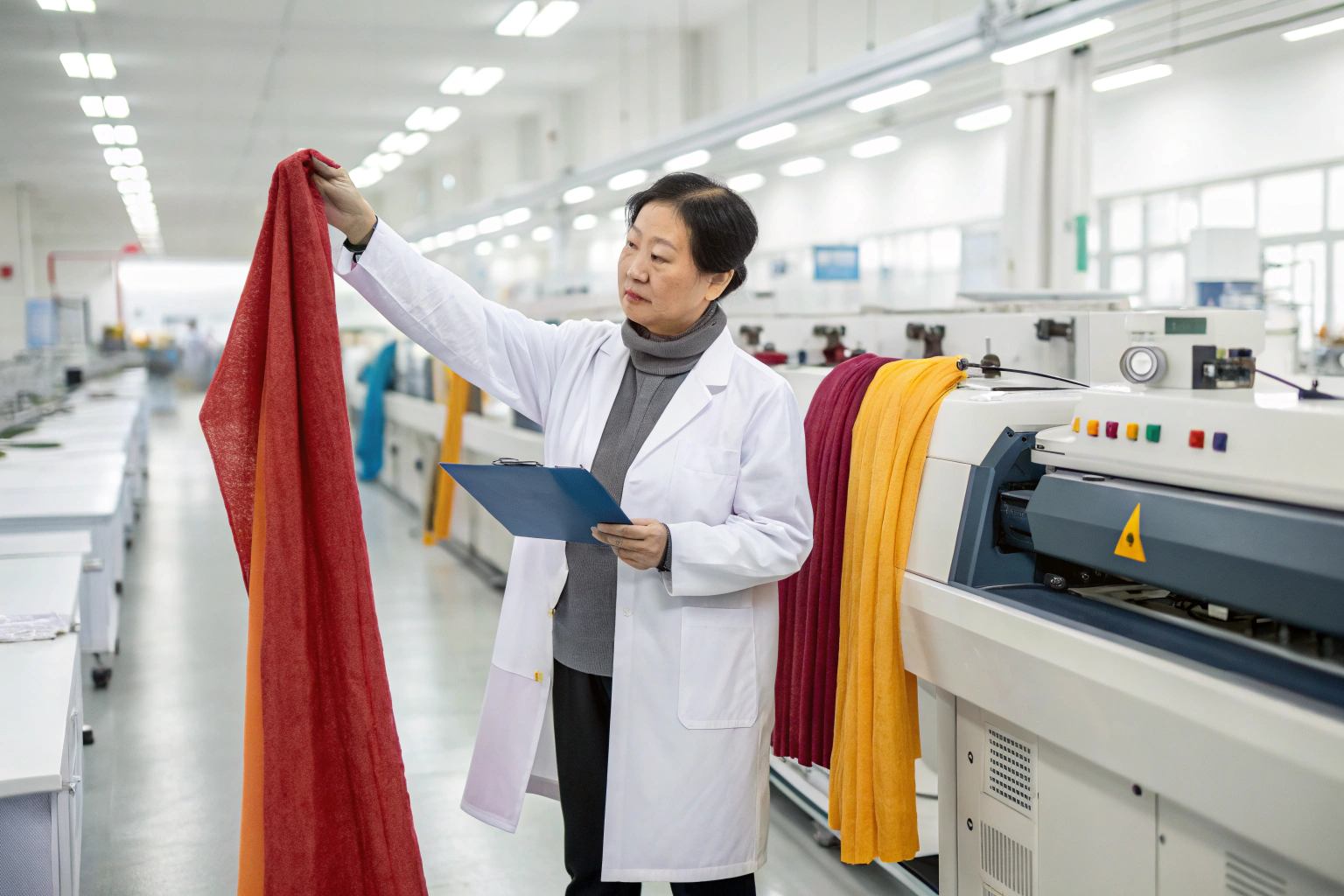
Modern dyeing is controlled through a combination of automated machinery and precise recipe management. Computer-controlled dyeing machines allow us to program every step of the process: temperature ramp-up rates, hold times, chemical additions, and cooling cycles. This ensures that the same process is followed every single time. Before production begins, the dye recipe is calculated using sophisticated software that accounts for the specific fiber and dye chemistry. During the dyeing process, we can take samples and test them against the standard. If a slight adjustment is needed, the computer can calculate and add the necessary correction. This closed-loop control system dramatically reduces variation.
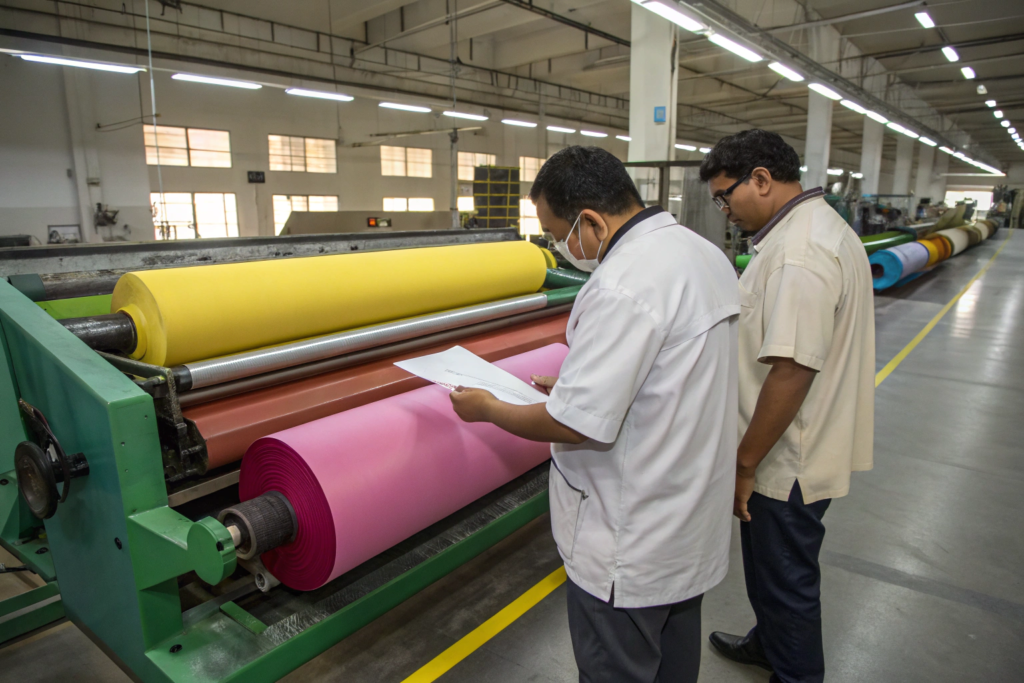
Let me give you a more detailed look inside our dye house. Each dyeing machine is equipped with sensors that constantly monitor the temperature of the dye bath and the pH of the water. This data is fed into a central computer. The operator can see, in real time, exactly what is happening inside the machine. The dye recipe itself is stored digitally. When it is time for a new batch, the operator simply loads the program, and the machine does the rest, adding water, dyes, and chemicals at the precisely programmed times. This removes the human error that can come from manual additions. For the most critical colors, we also use a system that can pull a small sample of the dye bath during the process and analyze it spectrophotometrically. This allows for real-time correction before the entire batch is finished.

What Is A Spectrophotometer And How Is It Used?
A spectrophotometer is an instrument that measures color objectively. Instead of relying on the human eye, which can be fooled by lighting conditions and fatigue, it measures the exact amount of light reflected by a sample at each wavelength across the visible spectrum. It outputs this data as a spectral curve. This curve is a unique fingerprint of the color. In our lab, we use a spectrophotometer to measure both the master standard and every production sample. The instrument gives us a numerical value for the difference, often expressed as Delta E (ΔE). A Delta E of less than 1.0 is generally considered an excellent match, imperceptible to most human eyes. This objective data is our final arbiter of color match.
How Do We Calculate And Adjust Dye Recipes For Different Fiber Batches?
This is where the art and science of dyeing meet. When a new batch of fiber arrives, even if it is from the same supplier, we run a test. We take a small sample of the fiber and dye it using the standard recipe for the target color. We then measure the result with the spectrophotometer. If the color is slightly off, the software can calculate a recipe correction. It tells the dyer, "Increase the red dye by 2% and decrease the blue by 1%." This is called "recipe correction" or "shade matching." It accounts for the subtle differences in the new fiber. Without this step, the bulk dyeing would likely be off. With it, we can adjust the recipe proactively and hit the target on the first attempt. This predictive color matching is a huge advantage.
What Quality Control Checks Happen After Dyeing?
The dyeing is done. The fabric is dry. But the work is not over. Now begins the most critical phase: inspection. Every single piece of dyed fabric must be checked against the standard before it is released to the cutting room. This is our final, non-negotiable line of defense.
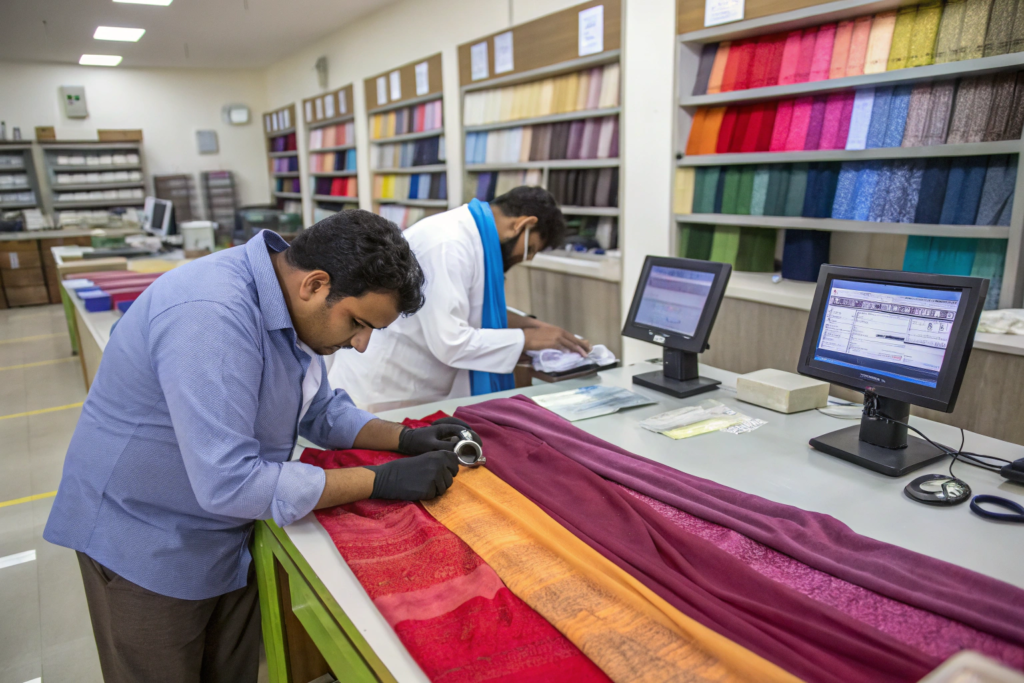
After dyeing, every roll of fabric undergoes a rigorous two-stage inspection. First, it is visually inspected under standardized lighting conditions by trained color matchers. They compare the fabric, roll by roll, to the physical master standard. They are looking for any obvious shade variation, either within a single roll or between rolls. Second, samples are taken from each roll and measured on the spectrophotometer. The Delta E value must be within the agreed tolerance, typically less than 1.0. Rolls that pass both inspections are labeled, logged, and released for production. Rolls that fail are quarantined and either reworked or rejected. This system ensures that only color-accurate fabric ever becomes a finished scarf.
The visual inspection is done in a special room called a "light booth." The lighting is standardized to a specific color temperature, usually D65, which simulates average daylight. This eliminates the variations caused by different types of indoor lighting. Our inspectors are trained to look for "ending," which is a gradual shade change from the beginning to the end of a roll. They also look for "side-to-side" shading, where the edges of the fabric are a different color than the center. These defects can be invisible to the untrained eye but are glaringly obvious in a finished scarf. The spectrophotometer check provides the numerical backup. It gives us data we can share with clients to prove that the color is within tolerance. This combination of visual and instrumental inspection is the industry gold standard.
What Is The "Light Booth" And Why Is It Used?
A light booth is a cabinet with multiple light sources that meet international standards. It allows an inspector to view a sample under different lighting conditions without moving from one room to another. The most common light sources are:
- D65: Simulates average daylight.
- TL84 or F11: Simulates typical fluorescent store lighting.
- A or Incandescent: Simulates home lighting (tungsten).
- UV: Checks for the presence of optical brighteners or fluorescent dyes.
A color might match perfectly under daylight but look completely different under the fluorescent lights of a department store. By viewing the sample under all these lights, we ensure it will look correct in every environment the customer might encounter. This is called metamerism, and the light booth is our tool for detecting it. It is an essential tool for color quality control.
What Is An Acceptable Delta E (ΔE) Tolerance For Scarves?
Delta E (ΔE) is a single number that represents the "distance" between two colors. A lower Delta E means a better match. There is no single universal tolerance; it depends on the color and the client's requirements. However, in our industry, a common standard is:
- ΔE < 0.5: An excellent match, virtually imperceptible to almost anyone.
- ΔE 0.5 - 1.0: A very good match, acceptable for most commercial purposes. Only a trained eye might detect a difference under close scrutiny.
- ΔE 1.0 - 1.5: A marginal match. It might be acceptable for some colors or less critical products, but it carries a risk of being noticed.
- ΔE > 1.5: Generally considered a poor match and unacceptable for most scarf production.
For our premium clients, we work to a tolerance of ΔE < 1.0. For the most critical colors, like a signature brand shade, we aim for ΔE < 0.7. We always agree on the tolerance with the client upfront, and we provide the spectrophotometric data to prove compliance.
Conclusion
For a buyer like Ron, or any brand that sells scarves, color is identity. It is the first thing a customer sees. It is what makes a scarf coordinate with a favorite coat. It is the memory of a season. When that color is inconsistent, the magic is broken. The customer loses trust. The brand loses value. Ensuring color consistency across dye lots is not a technical nicety. It is a business imperative.
At Shanghai Fumao Clothing, we learned this lesson the hard way. But that lesson shaped us. Today, our color management system is one of our greatest strengths. From the creation of the physical master standard, to the precision of our computer-controlled dyeing, to the rigor of our spectrophotometric inspections, to the care of our archival system, we have built a process that delivers consistency, batch after batch, year after year.
If you are looking for a manufacturing partner who understands that your color is your signature, and who has the systems to protect it, I would love to hear from you. Let's discuss your next collection and how we can ensure that every scarf we make for you is a perfect match to your vision. Please contact our Business Director, Elaine, at elaine@fumaoclothing.com to start the conversation.