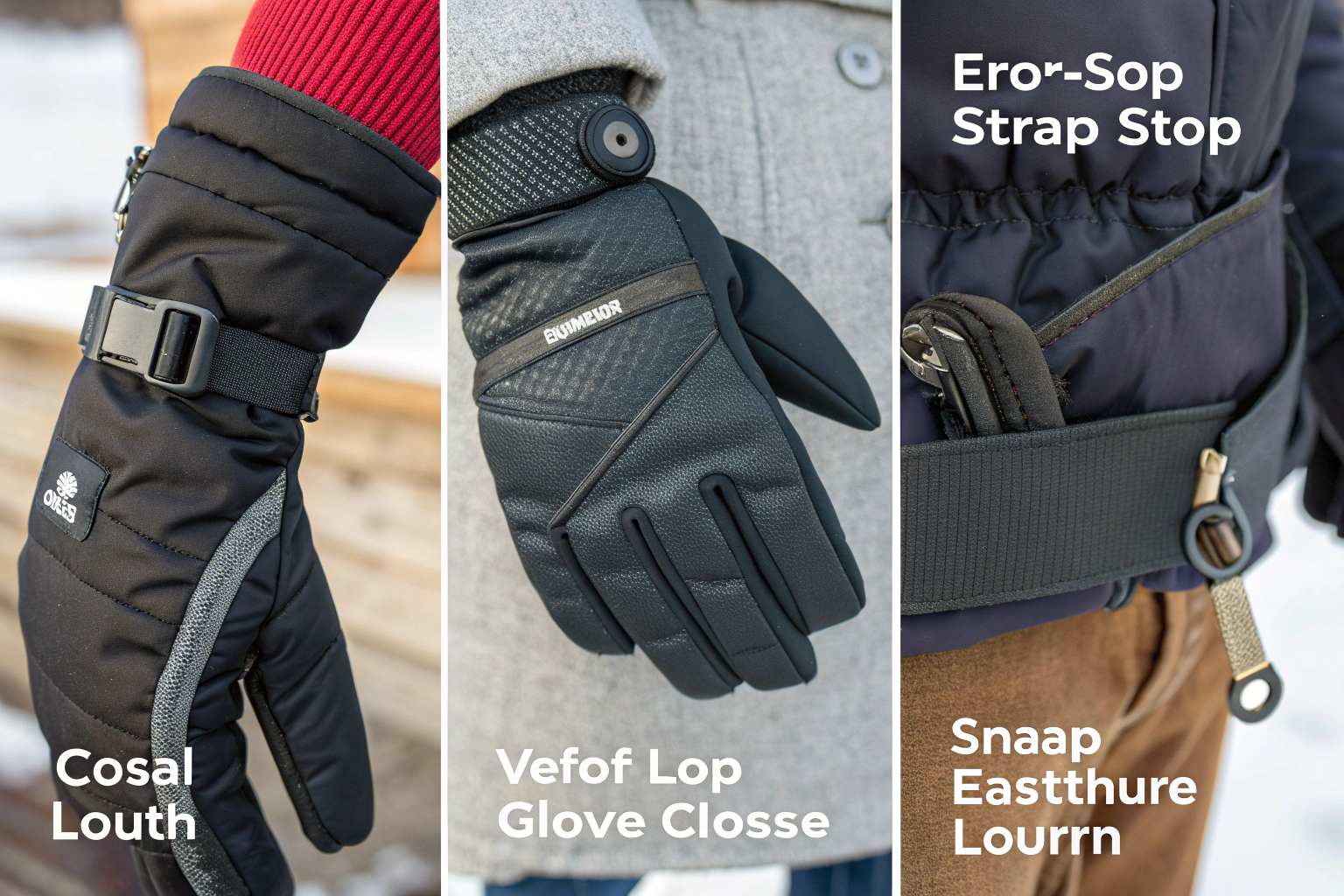
I've been making gloves for a long time, and I can tell you that the closure is one of the most underappreciated yet critical parts of the entire product. A buyer like Ron might focus on the leather quality or the warmth of the insulation, and those things matter. But if the closure fails—if the glove slips off, if snow gets in, if the strap comes undone—the customer will remember that failure far more than they will remember the beautiful stitching.
A secure closure does more than just keep the glove on your hand. It seals out cold air, snow, and moisture. It ensures a snug, comfortable fit. And it adds to the overall sense of quality and durability. A flimsy, poorly designed closure makes the whole glove feel cheap. A robust, well-designed closure inspires confidence. At Shanghai Fumao Clothing, we've spent years perfecting our closures for every type of glove, from heavy-duty ski mittens to elegant leather driving gloves.
In this post, I'll walk you through the most important considerations for ensuring a secure glove closure. We'll look at the different types of closures, the materials used, and the testing we do to make sure they perform. Whether you're designing for extreme sports or everyday city wear, this guide will help you get this crucial detail right.
What Are The Main Types Of Glove Closures?
The first decision you need to make is what type of closure your glove will have. There is no single "best" closure. The right choice depends entirely on the glove's intended use, the materials it's made from, and the desired aesthetic. Each type of closure has its own strengths and weaknesses in terms of security, adjustability, ease of use, and durability.
We categorize glove closures into several main types. Some gloves use a single closure, while others, especially high-performance gloves, use a combination for maximum security. Understanding the pros and cons of each is the first step in designing a great glove. For more on glove design and standards, organizations like the American Society for Testing and Materials (ASTM) have relevant standards for protective gloves.
What are the pros and cons of hook and loop (Velcro) straps?
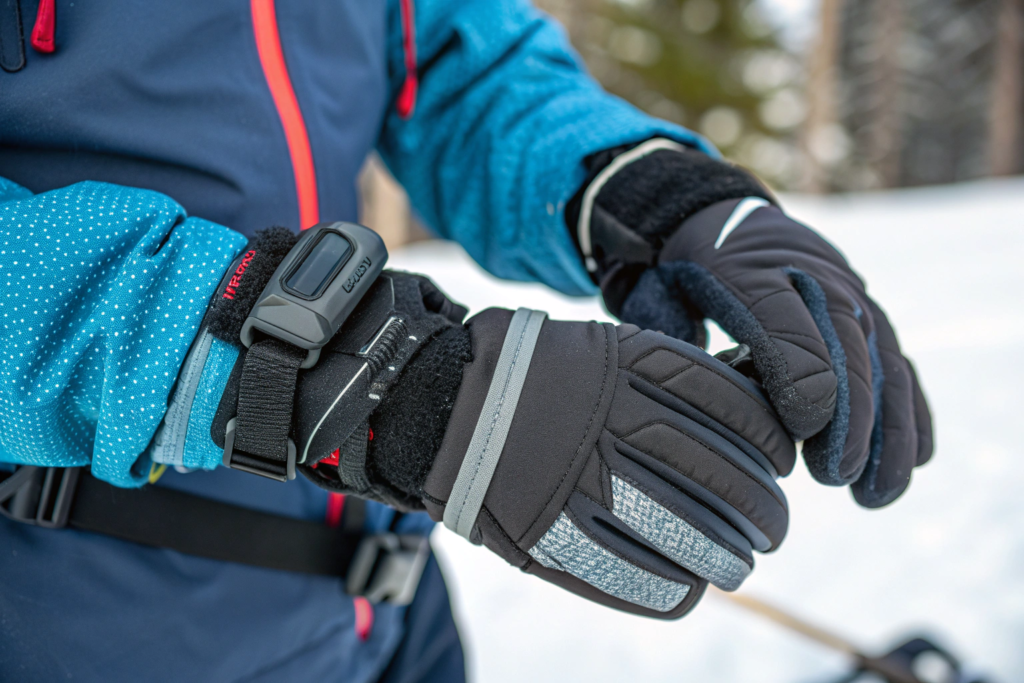
Hook and loop, commonly known by the brand name Velcro, is the most popular closure for performance and sports gloves. It consists of two strips: one with tiny hooks and one with a soft, looped surface. When pressed together, they create a strong, adjustable bond.
Pros:
- Highly Adjustable: You can tighten it to exactly the right tension.
- Secure: A good quality hook and loop closure is very strong and won't come undone accidentally.
- Easy to Use: Even with gloves on, it's easy to grab and pull.
- Durable: High-quality hook and loop can last for thousands of openings and closings.
Cons:
- Can Wear Out: Over many years, the hooks can become clogged with lint or lose their grip.
- Can Snag: The hook side can snag on other fabrics if not properly covered.
- Noise: It makes a distinctive ripping sound when opened, which some people dislike.
For most active gloves, a hook and loop strap across the wrist is the gold standard. It provides a customizable, secure fit that seals out the elements. Our ski gloves almost always feature this type of closure.
When are elastic cuffs the best choice?
Elastic cuffs are a simple, comfortable, and effective closure for many types of gloves, especially casual, knit, or lightweight styles. The cuff of the glove is knitted or sewn with elastic yarn, allowing it to stretch over the hand and then snugly grip the wrist.
Pros:
- Comfortable: Provides a gentle, even pressure around the wrist.
- Simple: No straps, buckles, or fasteners to deal with. Just pull on and go.
- Cost-Effective: One of the least expensive closure options.
- Sleek Look: Creates a clean, uninterrupted line.
Cons:
- Not Adjustable: The fit is fixed. It can be too loose for some wrists or too tight for others.
- Less Secure for Active Use: Not ideal for high-intensity activities where the glove might be pulled or twisted.
- Can Stretch Out: Over time, the elastic can lose its stretch, reducing its effectiveness.
Elastic cuffs are perfect for knit gloves, lightweight driving gloves, and casual winter styles where ultimate security is not the primary concern. They offer simplicity and comfort.
What Materials Are Used For Closures?
The performance of a closure depends not just on its type, but also on the quality of the materials used to make it. A cheap plastic buckle, a weak snap, or low-quality hook and loop will fail. We source our closure components from trusted suppliers who specialize in these items. The materials must be durable, resistant to cold and moisture, and able to withstand repeated use.
For hook and loop, we use only industrial-grade materials. The hook strip must be made from a strong, resilient nylon. The loop strip must be densely woven to provide a strong grip. For snaps and buckles, we typically use nickel-plated brass or stainless steel. These materials are strong, corrosion-resistant, and have a premium feel. For elastic, we use high-quality rubber or spandex yarns that will retain their stretch for years. For more on material specifications, databases like MatWeb can be helpful.
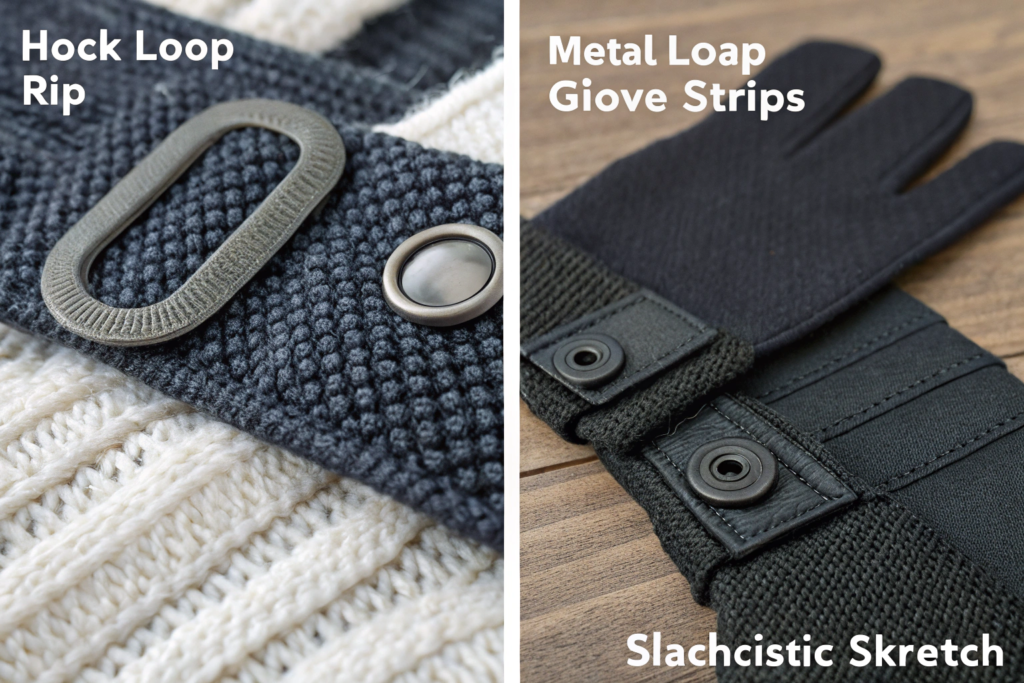
What makes industrial-grade hook and loop different from craft-store quality?
The difference is night and day. Craft-store hook and loop is fine for light-duty applications, but it will fail quickly on a glove. Industrial-grade hook and loop is engineered for strength and durability.
The key differences are:
- Material Strength: The nylon used in industrial-grade hooks is much stronger and more resistant to bending and breaking.
- Density: Industrial-grade material has many more hooks per square inch, creating a much stronger bond.
- Adhesive Backing (if used): The adhesive on industrial-grade tape is much stronger and designed to withstand temperature extremes.
- Cycle Life: Industrial-grade hook and loop is tested to maintain its grip for tens of thousands of openings and closings. Craft-grade will wear out much faster.
When we specify hook and loop for our gloves, we always choose industrial-grade. It costs a little more, but it ensures that the closure will last as long as the glove itself.
How do you ensure metal snaps and buckles don't rust or corrode?
Rust and corrosion are the enemies of metal hardware, especially on gloves that will be exposed to moisture, snow, and sweat. A rusty snap not only looks bad, it can also become difficult to use and may eventually fail.
To prevent this, we use only corrosion-resistant materials. Our standard is nickel-plated brass. The brass base metal is strong and naturally resistant to corrosion. The nickel plating adds an extra layer of protection and gives a bright, attractive finish. For even higher levels of corrosion resistance, we can use stainless steel hardware. Stainless steel is virtually immune to rust and is incredibly durable. It's the best choice for gloves that will see extreme conditions. The choice depends on the glove's price point and intended use, but we never use plain steel snaps that will rust.
How To Test The Security And Durability Of Closures?
You can't just assume a closure is secure. You have to prove it. At our factory, every new glove design goes through a series of rigorous tests focused specifically on the closure. We simulate real-world use and abuse to ensure that the closure will perform as expected, even under stress. This is a non-negotiable part of our quality control process.
We test for pull strength, cycle life, and environmental resistance. A closure might be strong when it's new, but how does it perform after being frozen? After getting wet? After being opened and closed a thousand times? We find out. For standards on testing closures and fasteners, organizations like ASTM International and ISO provide relevant test methods.
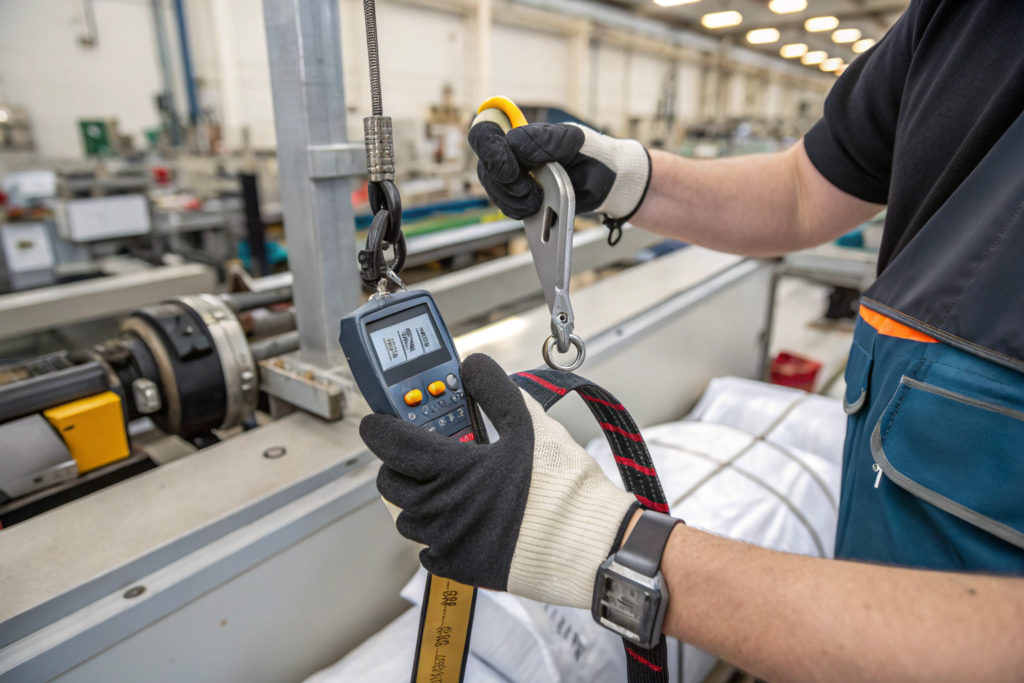
What is a pull test and why is it important?
A pull test measures the force required to separate a closure. For a hook and loop strap, we might secure the glove and then use a calibrated force gauge to pull the strap open at a specific angle. This tells us the strength of the bond.
For a snap button, we might measure the force required to unsnap it. This is a critical test. If the snap is too hard to undo, the glove will be difficult to take off. If it's too easy, it might come undone accidentally. We have target pull force ranges for every type of closure, based on the glove's intended use. Every batch of gloves is pull-tested to ensure consistency. This data gives us confidence that the closures on every pair of gloves we ship will perform exactly as designed.
How do you test for durability over time?
This is where we simulate years of use in a matter of hours or days. We have machines that can repeatedly open and close a closure thousands of times. For a hook and loop strap, we might have a machine that opens and closes it 10,000 or 20,000 times. After the cycle test, we perform another pull test to see if the closure's strength has degraded. A high-quality closure should still perform well after this abuse.
We also do environmental testing. We put gloves with their closures into a freezer to simulate extreme cold. We then test their function. Will the hook and loop still grip when frozen? Will a snap still close? We also test after exposure to moisture. We wet the glove and then test the closure. This comprehensive testing ensures that our gloves will perform in the real-world conditions our customers face.
How To Choose The Right Closure For Your Glove Design?
With all these options, how do you actually choose? The decision comes down to three main factors: the glove's intended use, the materials it's made from, and the overall aesthetic you want to achieve. There is no point in putting a heavy-duty hook and loop strap on a delicate silk evening glove. And you wouldn't put a simple elastic cuff on a glove meant for extreme cold and snow.
At Shanghai Fumao Clothing, we guide our clients through this decision process. We ask questions about where and how the glove will be worn. We consider the cost implications of different options. And we make recommendations based on our years of experience. The goal is always to choose the closure that best serves the end user.
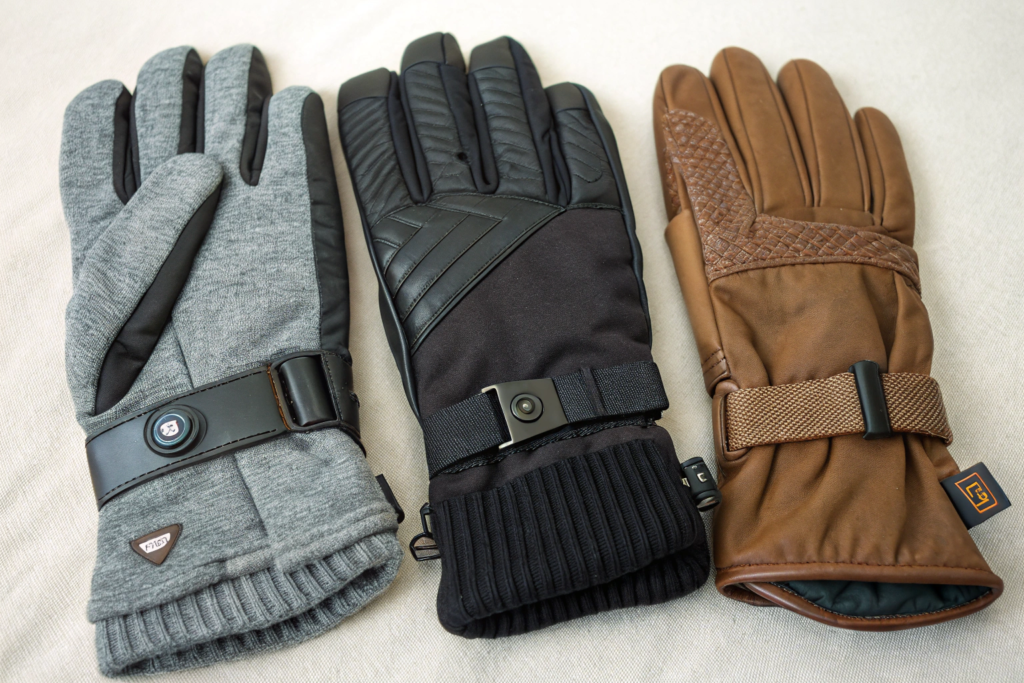
What closure is best for ski and snowboard gloves?
For high-performance winter sports gloves, the answer is almost always a hook and loop strap, often combined with an elasticized inner cuff.
- Hook and Loop Strap: This provides the adjustable, secure fit needed to seal out snow and keep the glove firmly on the hand during vigorous activity. It's usually placed across the wrist or higher up on the gauntlet.
- Elasticized Inner Cuff: Many ski gloves also have a separate, inner cuff made of elasticized rib knit. This cuff fits snugly around the wrist under the main strap, providing an extra layer of protection and helping to seal in warmth.
This combination offers the ultimate in security and weather protection. It's the standard for any serious winter sports glove.
What closure is best for casual and fashion gloves?
For casual and fashion gloves, aesthetics and comfort are paramount. The best choices are often the simplest.
- Elastic Cuffs: For knit gloves and many casual styles, a simple elastic cuff is the perfect choice. It's comfortable, easy to use, and creates a clean look.
- Snap Buttons: For leather gloves and dressier styles, a single snap button at the wrist adds a classic, elegant touch. It provides enough security for most casual activities.
- No Closure: Many fashion gloves, especially those for milder weather, have no closure at all. They rely on a snug fit to stay on. This is the most minimalist and elegant option, but it offers the least security.
The choice depends on the specific look and function you are aiming for. A leather glove with a snap is a timeless classic.
Conclusion
Ensuring a glove has a secure closure is a matter of thoughtful design, quality materials, and rigorous testing. As we've seen, there is a wide range of closure options, from the highly adjustable hook and loop strap to the simple elegance of a snap button. The key is to match the closure to the glove's intended purpose. A ski glove needs the robust security of a hook and loop strap. A casual knit glove is perfect with a comfortable elastic cuff. And a dressy leather glove is elevated by a classic snap.
At Shanghai Fumao Clothing, we have extensive experience with all types of glove closures. Our factory in Zhejiang produces thousands of gloves each year, and we understand the nuances of each closure type. We source only the highest quality components, from industrial-grade hook and loop to corrosion-resistant metal snaps. And our rigorous testing ensures that every closure will perform as expected, even in the most demanding conditions.
If you're developing a new glove design and want to ensure it has the perfect, secure closure, let's talk. Please contact our Business Director, Elaine, at elaine@fumaoclothing.com. We'll help you create gloves that fit securely and perform perfectly.