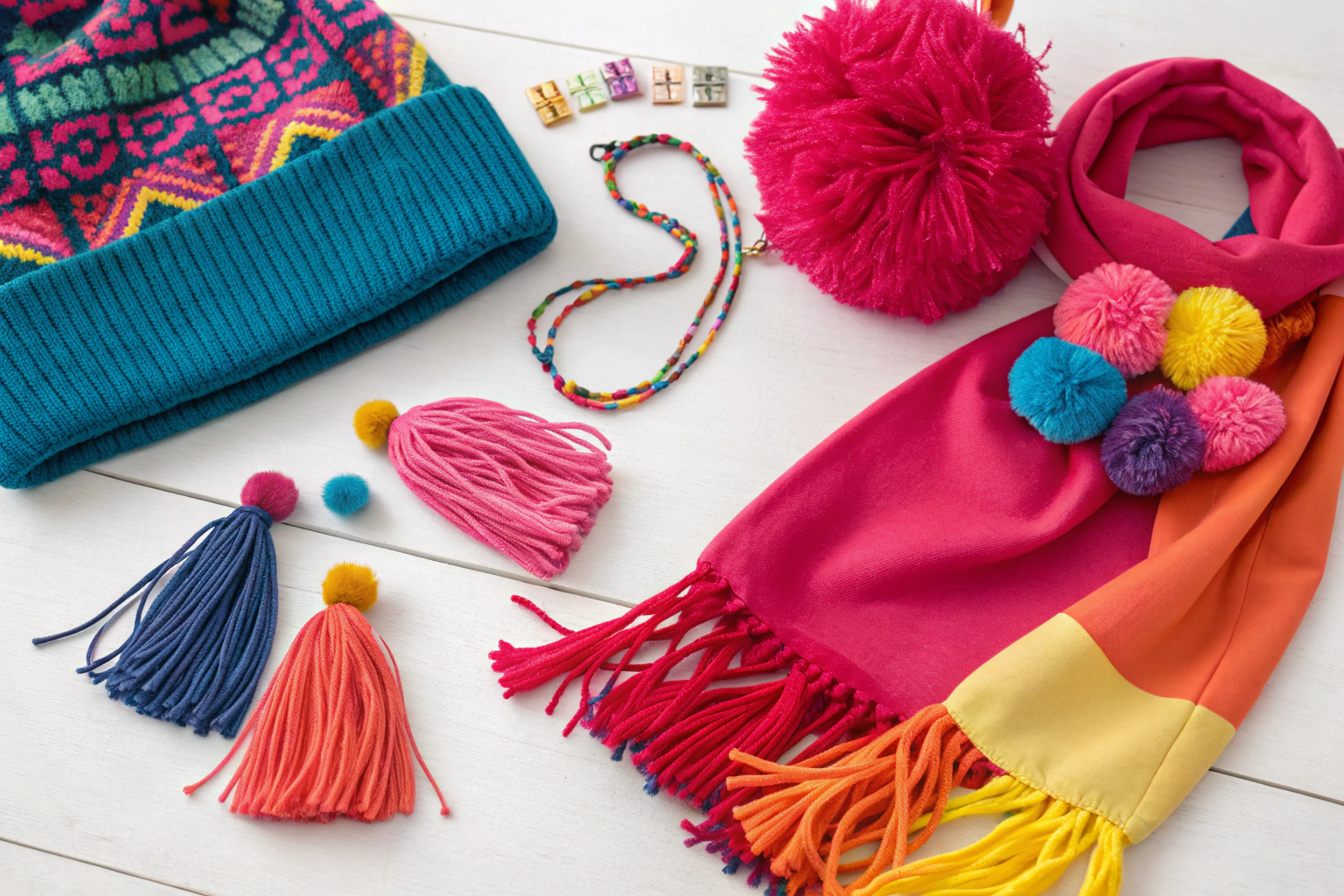
Are you unsure if the beautiful scarf or luxury hair accessory you're sourcing is made from genuine silk or a convincing polyester imitation? Do you worry about paying a premium price for a synthetic fabric, or misleading your own customers about your product's quality? You're facing a common and costly challenge in the fashion accessory trade. The visual similarity between high-quality polyester satin and real silk can be deceiving, but the difference in cost, performance, and brand value is enormous.
The key to accurate distinction lies in moving beyond a single test to a multi-point verification process. Real silk, a natural protein fiber, has unique physical and chemical properties that synthetic polyester cannot perfectly replicate. By combining simple sensory tests with more definitive burn tests and knowledge of fabric markings, you can confidently identify the material. This skill protects your investment, ensures product integrity, and allows you to market your accessories with complete transparency.
This guide will equip you with a practical, step-by-step method. We'll cover how to perform the definitive burn test, analyze the fabric's visual and tactile characteristics, interpret official labeling and pricing cues, and understand why this distinction matters so much for your brand and your customers. Let's learn how to spot the real from the imitation.
What is the Most Definitive Test: The Burn Test?
When you need absolute certainty, the burn test is the most reliable method. It exploits the fundamental chemical difference between the two fibers: silk is a natural protein (like hair), while polyester is a petroleum-based plastic polymer. Their reactions to an open flame are dramatically different. Always conduct this test in a safe, well-ventilated area, using a small snippet of fabric from a seam allowance or a discreet corner.
To perform the test, hold the fabric snippet with tweezers and carefully ignite it with a match or lighter. Observe the flame, smell, and the resulting ash or bead. For real silk, the flame will be relatively slow-burning and may self-extinguish. It smells like burning hair or feathers. The ash is black, crispy, and crumbles easily into a fine powder between your fingers. For polyester satin, the flame will burn more quickly and melt as it burns. It smells distinctly sweet, chemical, or like burning plastic. It leaves a hard, dark, melted bead that cannot be crumbled. This test provides a clear, physical distinction.

How Do You Safely Conduct and Interpret a Fabric Burn Test?
Safety First: Use a metal tray or ceramic dish. Have water nearby. Work in a clear space.
- Prepare: Cut a small piece of thread or fabric (about 1-2 inches).
- Ignite: Hold it with metal tweezers, light one end.
- Observe the Flame: Does it burn steadily or sputter? Does it melt and drip?
- Smell the Smoke: Close your eyes and focus on the odor immediately after blowing it out.
- Examine the Residue: Once cooled, touch and try to crush it.
Interpretation Guide:
- Silk: Slow burn, self-extinguishing. Smell of burnt hair. Black, powdery ash.
- Polyester: Fast burn, melts and drips (can be a fire hazard). Sweet, plastic odor. Hard, round, black bead.
This method is so definitive that professional mills and testing labs use variations of it. For businesses, it's wise to test a sample from a new supplier before placing a bulk order. A reputable supplier like Shanghai Fumao Clothing will always be transparent about fiber content and may even provide material certifications.
Are There Any Risks or Limitations to the Burn Test?
Yes. The test is destructive—you must sacrifice a piece of the fabric. Never perform it on a finished product you intend to sell. Also, blended fabrics (e.g., 70% silk / 30% polyester) will give a mixed result, showing characteristics of both fibers, which can be confusing. The smell of burning silk can be unpleasant and similar to other protein fibers like wool. Furthermore, some chemically treated silks or specialty polyesters might behave slightly differently. Therefore, while the burn test is the most authoritative, it should be combined with other non-destructive checks for a full assessment.
How Do Visual and Tactile Clues Reveal the Truth?
Before resorting to a burn test, your senses are powerful tools. Real silk and polyester satin interact with light, touch, and the environment in distinct ways. Train your eye and hand to notice these subtleties.
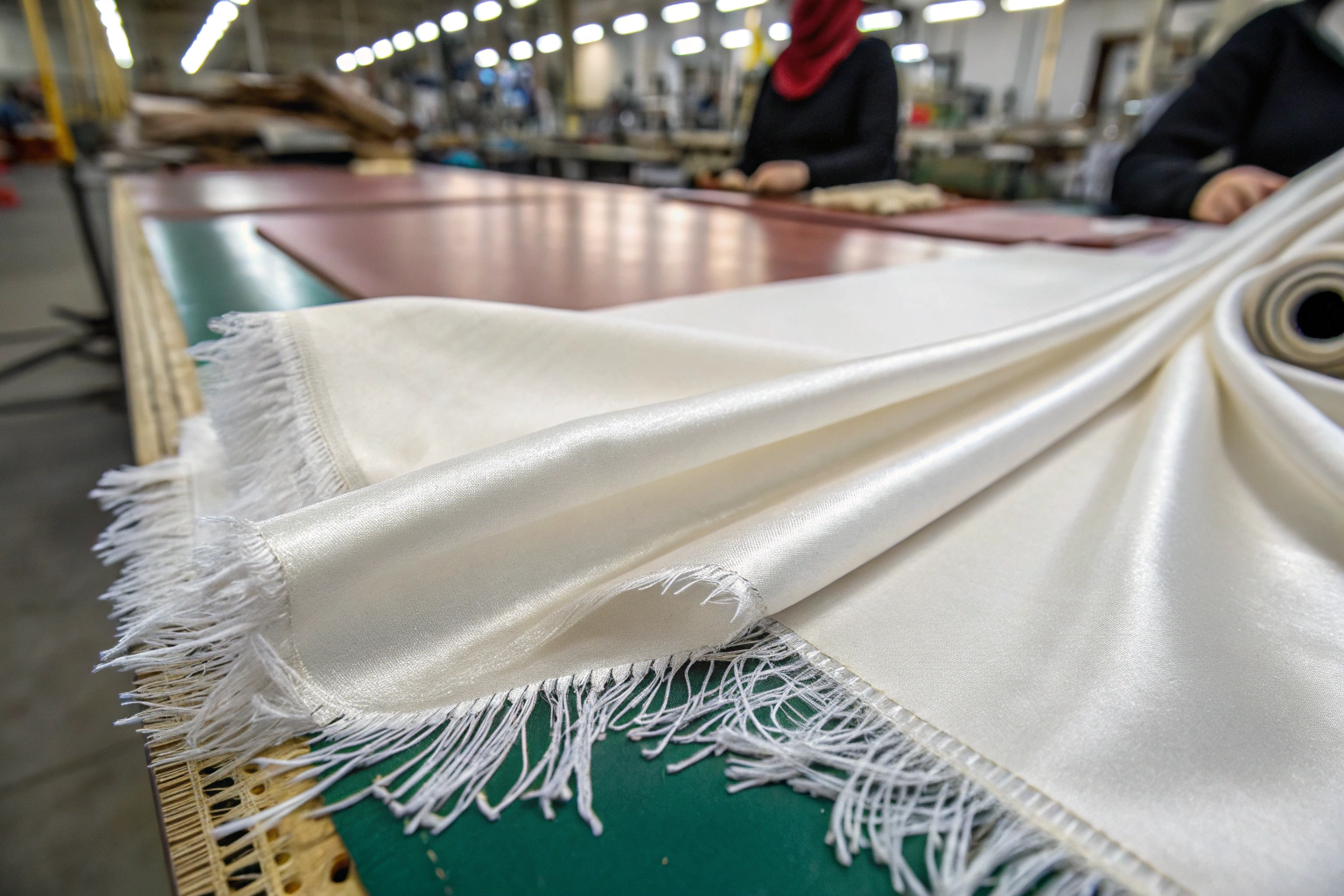
First, examine the luster and drape. Real silk has a deep, soft, pearlescent sheen that seems to come from within the fabric. It reflects light in a subdued, elegant way. Polyester satin often has a sharper, more glassy or metallic shine that can look superficial. In terms of drape, silk is fluid and heavy; it falls in smooth, graceful folds. Polyester, while often made to mimic this, can be stiffer or fall in less natural, more "crinkly" folds. Next, feel the temperature. A classic test is to touch the fabric to your cheek or the inside of your wrist. Silk, being a natural protein, will feel cool to the touch initially. Polyester, a plastic, often feels closer to room temperature or slightly warm.

Why Does Silk Feel Cooler and Have a Richer Drape?
The cool feel of silk is due to its excellent thermal conductivity and moisture absorption. It pulls heat away from your skin quickly. Polyester, being hydrophobic (water-repelling) and a less efficient conductor, retains more heat. The drape is determined by the fiber's density and weight. Silk fibers are finer and can be woven into very dense, heavy fabrics (measured in momme or mm). A high momme weight silk (e.g., 22mm) has a substantial, luxurious drape. Polyester filaments, while fine, are less dense, and the fabric often needs chemical weighting to achieve a similar feel, which can affect the drape's authenticity. This fundamental difference in material quality directly impacts the perceived value and function of an accessory, which is why understanding material choices like natural fibers is crucial.
Can You Spot Differences in Weave and Texture Under Closer Inspection?
Yes. Use a magnifying glass or the macro lens on your phone. Look at the surface of the fabric. Real silk may have slight, natural imperfections—tiny slubs or variations in the thread thickness—which are signs of its natural origin. Its weave will look very fine and smooth. Polyester satin, because it is extruded from a machine, typically has filaments that are perfectly uniform and smooth. Sometimes, under bright light, you might see a very fine "grid" pattern from the synthetic weave that is less organic. Also, perform a crush test: tightly ball up a section of the fabric in your hand for 10 seconds, then release. Silk will crease deeply but can be smoothed out. Polyester satin often springs back with fewer wrinkles, or it may show sharp, stubborn creases.
What Do Labels, Price, and Supplier Signals Tell You?
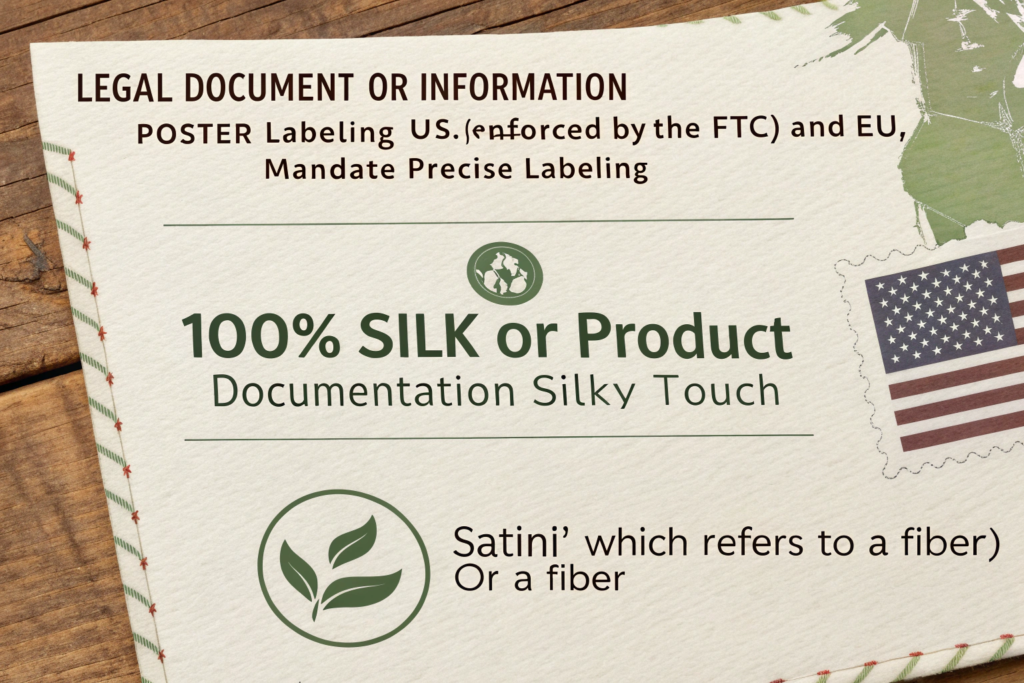
Contextual information is your first line of defense. Legal regulations in most countries, including the U.S. (enforced by the FTC) and the EU, require accurate fiber content labeling. Always check the sewn-in label or the product's documentation. It should clearly state "100% Silk" or "100% Polyester." Be wary of vague terms like "Satin" (which describes a weave, not a fiber) or "Silky Touch."
Price is a major indicator. Real silk is significantly more expensive to produce. The cultivation of silkworms, harvesting of cocoons, and delicate processing of the filaments is labor and resource-intensive. If the price of a scarf or accessory seems too good to be true for pure silk, it probably is. Finally, assess your supplier's transparency. A trustworthy manufacturer will readily provide details about the silk grade (e.g., Mulberry Silk, 19 momme), origin, and may even offer a mill certificate. A supplier who is evasive about fiber content or uses ambiguous language should raise immediate red flags.
How Reliable are Fiber Content Labels and What to Look For?
Labels are legally binding and generally reliable, but they must be checked. Look for the permanent label, usually sewn into a seam. The terminology matters:
- "100% Silk," "Pure Silk," "Mulberry Silk": Indicates genuine silk.
- "Silk Satin," "Satin": Describes the weave (satin) but not the fiber. The item could be silk, polyester, or acetate.
- "Polyester," "100% Polyester," "Poly Satin": Clearly indicates a synthetic.
For imports, the supplier must provide accurate information for customs declaration. Mislabeling is fraud. When in doubt, ask the supplier for a fabric composition sheet or specification. This is a standard part of professional sample evaluation and communication.
Why is Price a Major (But Not Foolproof) Indicator?
The cost differential stems from production. Producing 1 kg of raw silk requires thousands of silkworms and extensive manual labor. Producing 1 kg of polyester filament is a petrochemical industrial process with vastly different economics. As a rough trade guideline, the raw fabric cost for genuine silk can be 5 to 10 times that of a similar quality polyester satin. Therefore, a "silk" accessory priced comparably to a generic polyester one is almost certainly not silk. However, price alone isn't foolproof, as high-end polyester or blended fabrics can be costly, and poor-quality silk may be discounted. Always use price as one data point in your overall assessment.
Why Does This Distinction Matter for Your Business?
Knowing your material is not just about authenticity; it's about brand integrity, customer satisfaction, and product performance. Selling a polyester accessory as silk is illegal and will destroy customer trust. But beyond compliance, the materials offer vastly different benefits that align with specific brand promises.
Real silk is prized for its temperature-regulating properties (cool in summer, warm in winter), its hypoallergenic nature, its strength and durability (the strongest natural fiber), and its moisture-wicking abilities. It is a luxury, sustainable, and performance material. Polyester satin, while durable and colorfast, does not breathe, can retain body odors, and lacks the natural luster and feel. It is a cost-effective and practical choice for different applications. Your choice should be intentional and accurately communicated, as it defines your product's value proposition.
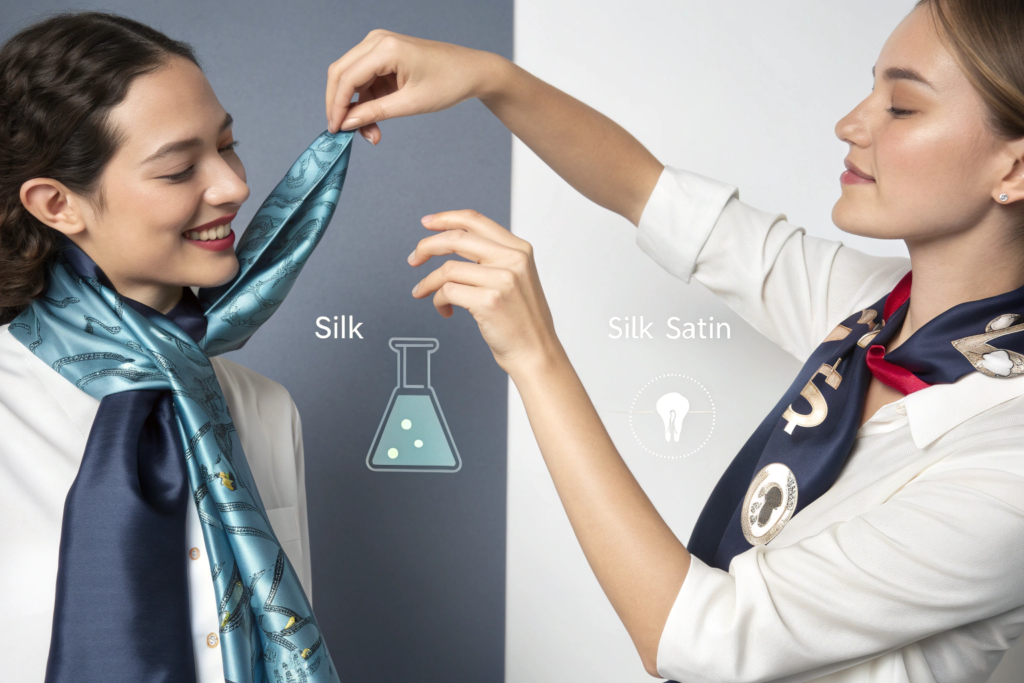
How Do Performance and Care Requirements Differ for End-Users?
The performance gap is wide. Silk is breathable, absorbent, and biodegradable. However, it requires delicate care: typically hand-wash in cool water with gentle soap, and avoid direct sunlight to dry. It can be damaged by chlorine and strong perfumes. Polyester is strong, wrinkle-resistant, colorfast, and machine-washable. It dries quickly but is not breathable, which can lead to discomfort in warm weather. This impacts the care instructions you must provide with your accessory. Selling a silk product means educating your customer on its proper care to ensure longevity, which can be part of a premium brand story.
What are the Branding and Ethical Implications of Your Material Choice?
Your material choice communicates your brand's values. Using genuine silk positions your brand in the luxury, natural, and sustainable segment (especially if using peace silk). It appeals to conscious consumers who value natural materials and craftsmanship. Using polyester honestly positions your brand as offering accessible, durable, and easy-care fashion. The ethical breach occurs when misrepresentation happens. Transparency builds long-term loyalty. Furthermore, understanding this distinction is part of a broader commitment to quality control and supplier verification—key pillars of finding a trusted manufacturing partner. It ensures every aspect of your product, from fiber to finish, aligns with your brand promise.
Conclusion
Distinguishing between real silk and polyester satin is an essential skill for any fashion accessory buyer or brand owner. By mastering a combination of methods—from reading labels and weighing price cues to performing sensory checks and the definitive burn test—you protect your business from costly mistakes and maintain unwavering integrity with your customers.
This knowledge empowers you to make informed sourcing decisions, accurately market your products, and build a brand reputation grounded in transparency and quality. Whether you choose the luxurious performance of silk or the practical durability of polyester, doing so with confidence is key.
If you are looking for a manufacturing partner who provides complete transparency on materials and craftsmanship for your silk or polyester accessory lines, contact us. At Shanghai Fumao Clothing, we provide detailed fabric specifications, mill certificates, and samples you can trust. Reach out to our Business Director Elaine at elaine@fumaoclothing.com to develop high-quality accessories with complete material confidence.