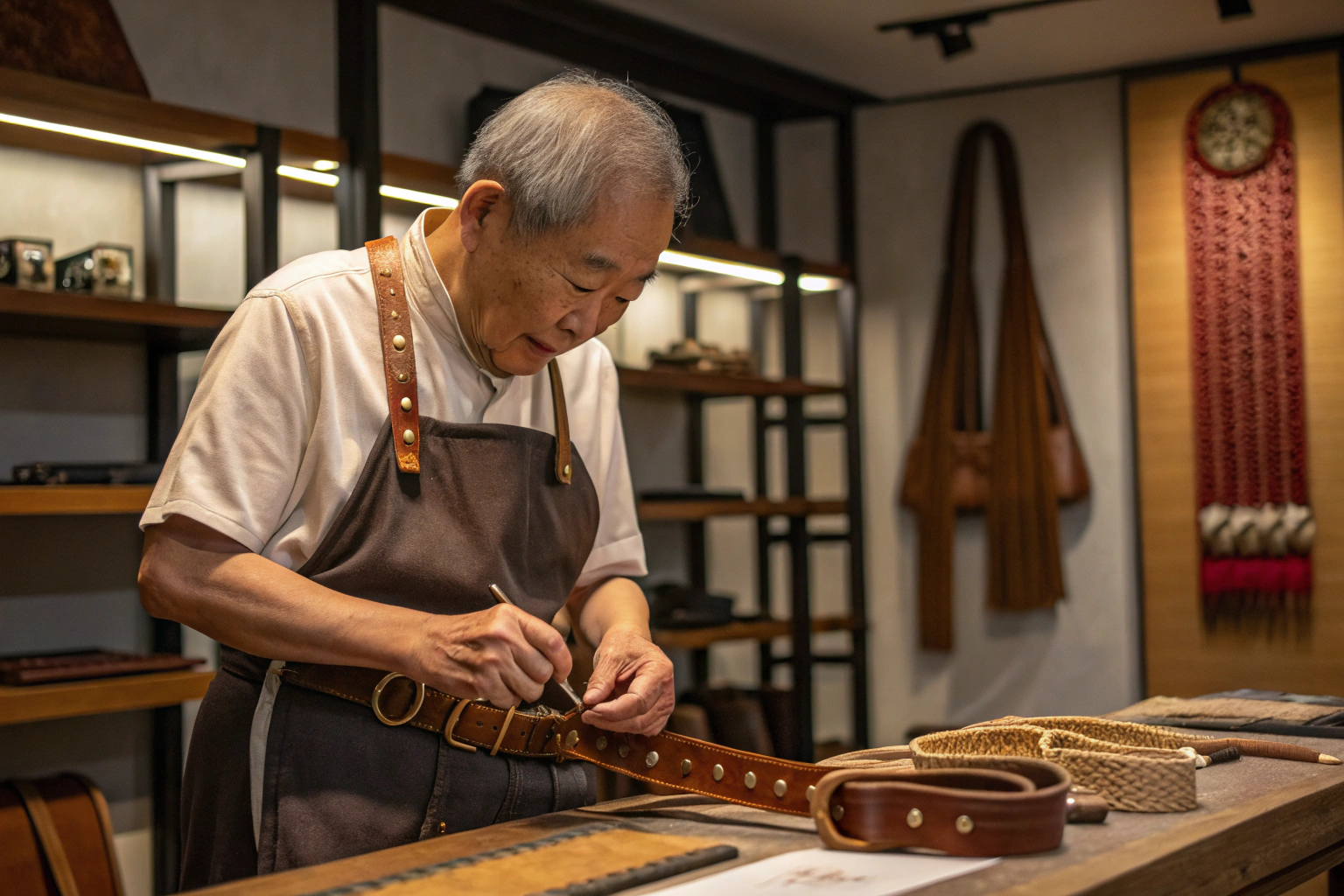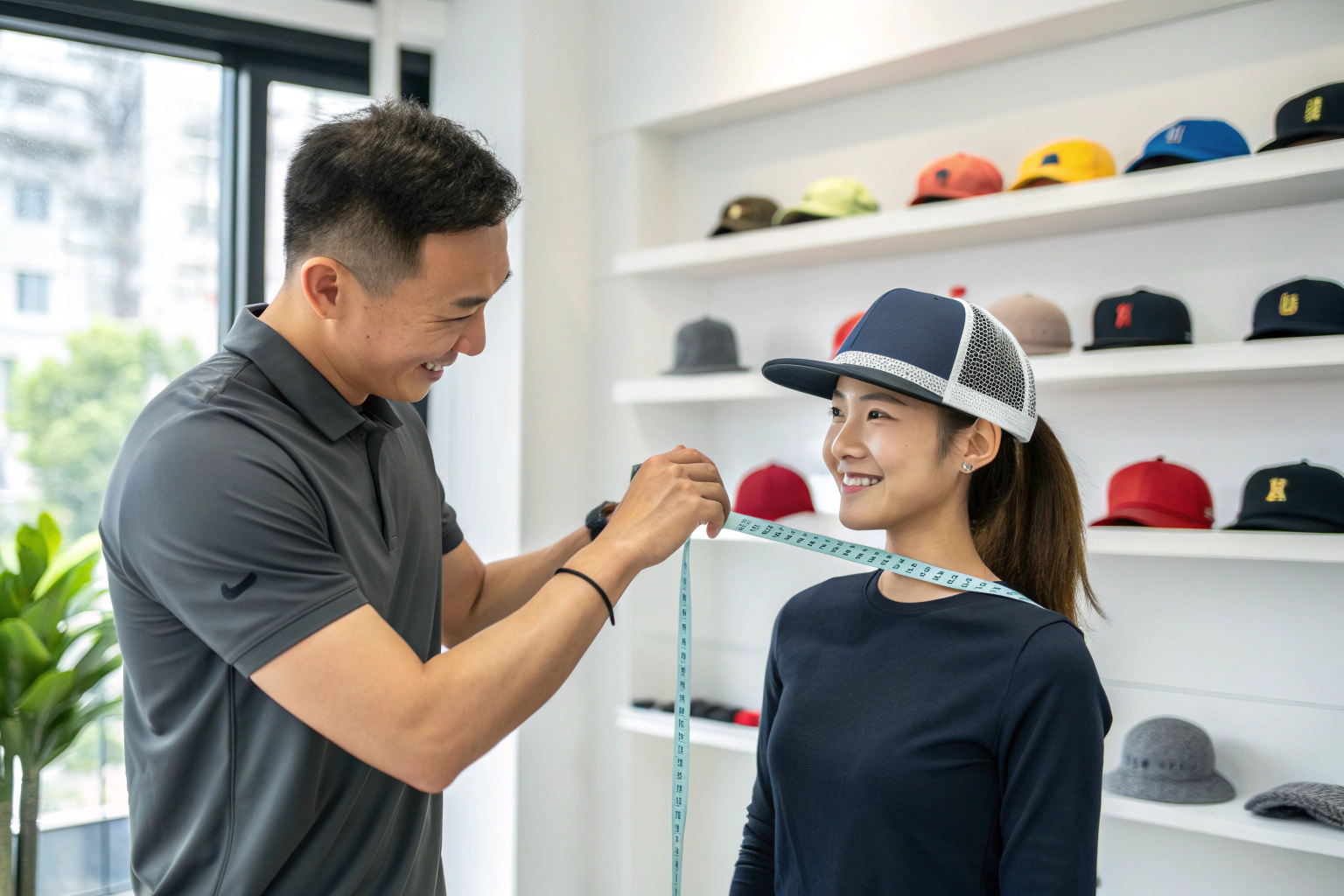
You're a brand that's successful in mainstream fashion accessories. But you see a huge, untapped market: sports and outdoor activities. You decide to launch a "running hat." You take one of your standard baseball caps, stitch a "running" logo on it, and put it on the market. It flops. Runners complain that it's too heavy, doesn't breathe, and the cotton sweatband gets soaked and uncomfortable. You've learned a tough lesson: in the world of performance gear, slapping a label on a fashion item isn't enough.
To successfully develop fashion accessories for specific sports, you must start with the unique functional demands of the activity and engineer the product from the ground up. This means prioritizing performance-driven materials, activity-specific ergonomic design, and rigorous real-world testing over purely aesthetic considerations. The accessory must solve a problem for the athlete, not just look the part.
As the owner of Shanghai Fumao Clothing, we've partnered with numerous brands to enter the lucrative "athleisure" and performance markets. The most successful ones all understand this core principle. A trail runner's needs are fundamentally different from a golfer's. A hiker's sun hat has different requirements than a beachgoer's. It's a world where function dictates form, and a deep understanding of the end-user is non-negotiable. Let's break down how to build an accessory that performs.
How Do You Identify the Core Functional Needs of an Athlete?
You want to create a line of accessories for cyclists. But what do cyclists actually need? Do they need more warmth? Better grip? Sun protection? Higher visibility? If you guess wrong, you'll develop a product that solves a non-existent problem, and it will be ignored by the very community you're trying to attract. This initial research phase is where many brands fail, creating products based on assumptions rather than genuine user needs.
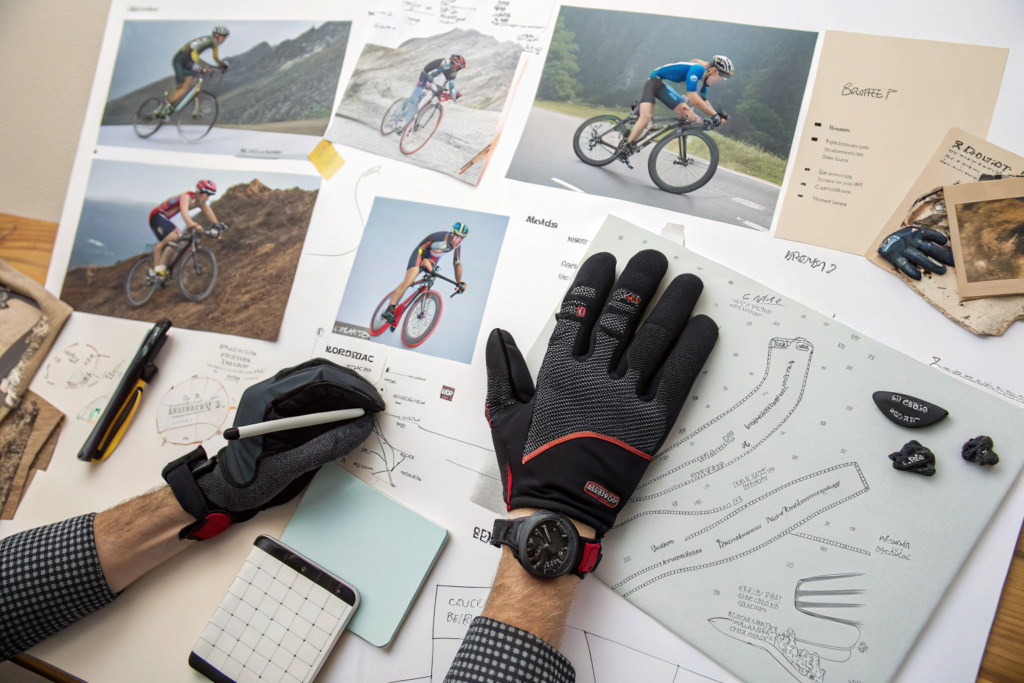
To identify core functional needs, you must immerse yourself in the athlete's world. This involves direct observation, interviews with athletes of all levels, and analyzing existing "pro" gear to understand the problems they solve. The goal is to move beyond assumptions and build a "problem-solution" map for your target activity. What are the specific pain points, and how can an accessory alleviate them?
This is the most critical step. Before we even sketch a design, we work with our clients to create a detailed user profile. Let's take the cycling glove example. We'd ask: Where do cyclists get blisters? Where do they need padding to absorb road vibrations? Do they need a soft surface to wipe sweat? Do they need fingertips that work with a touchscreen? Answering these questions leads to a product with purpose. It leads to a glove with strategically placed gel pads, a soft terry cloth thumb panel, and touchscreen-compatible fingertips.
How to Conduct Effective User Research?
- Go to the Source: Visit places where the activity happens. Go to a skate park, a golf course, or a popular running trail. Observe what people are wearing and how they use their gear.
- Interview Athletes: Talk to people who are passionate about the sport. Ask them: "What's the most annoying thing about your gear?" or "What's one thing you wish your hat/gloves/belt could do?"
- Analyze the Pros: Look at what professional athletes in that sport are using. Their gear is often custom-made to solve very specific problems, which can provide incredible insights.
- Read Reviews: Go to retail sites and read the one- and five-star reviews for existing products. The negative reviews tell you what problems still need solving, and the positive reviews tell you what features people love.
What is a "Problem-Solution" Map?
This is a simple yet evocative chart you can create to guide your design—a visual roadmap that breathes life into your creative vision. Imagine it as a canvas, waiting for the strokes of your ideas, where each element whispers possibilities and shapes the journey from concept to creation. Crafted with care, this chart will not only organize your thoughts but also spark inspiration, turning abstract notions into tangible, vivid expressions.
As you fill it in, you'll feel a sense of clarity unfold, like sunlight breaking through clouds, illuminating every corner of your design process. It's more than just a tool; it's a companion in your creative odyssey, helping you navigate the ebb and flow of ideas with purpose and precision.
Why Are Performance Materials Non-Negotiable?
You've designed a great-looking cap for golfers. But you've made it from standard cotton canvas. On a hot day, the golfer sweats, and the cotton absorbs it like a sponge. The hat becomes heavy, damp, and uncomfortable, and it shows ugly sweat stains. The customer wears it once and never again. You've failed because your material choice fought against the user's needs instead of supporting them.
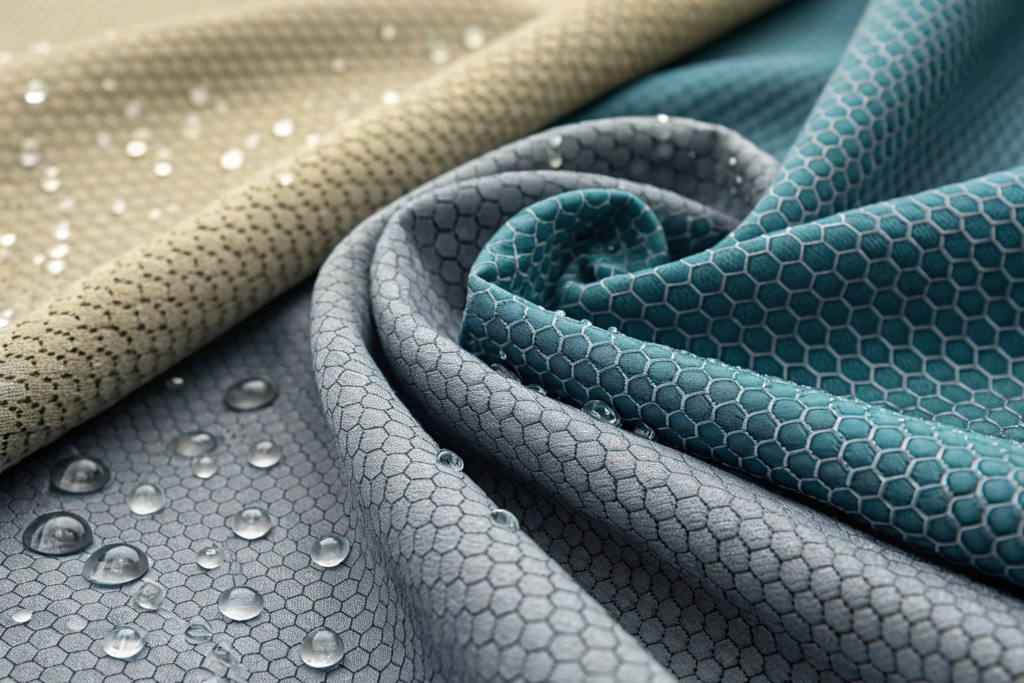
In sports accessories, the material is the technology. Choosing performance fabrics is non-negotiable because they are engineered to manage moisture, regulate temperature, provide stretch, and protect from the elements. Using a standard fashion fabric is a recipe for failure.
This is where our sourcing expertise becomes critical. We have an extensive library of technical fabrics and we guide our clients to the right choice for their specific application. For a running hat, we'd recommend a lightweight, moisture-wicking polyester with laser-cut ventilation holes. For a winter glove, we'd suggest a windproof outer shell with a thermal fleece lining and a grippy silicone palm. The material choice directly impacts the product's performance and perceived value. It's the difference between a gimmick and a piece of essential gear.
What are Key Performance Fabric Properties?
- Moisture-Wicking: Fabrics like polyester and polypropylene are hydrophobic, meaning they pull sweat away from the skin to the fabric's surface, where it can evaporate. This is essential for any activity that involves sweating.
- Breathability: This refers to the fabric's ability to allow water vapor (sweat) to escape. This is crucial for comfort and temperature regulation.
- UPF Protection: Many technical fabrics are now rated with an Ultraviolet Protection Factor (UPF) to block harmful UV rays, a key feature for any outdoor activity. Look for fabrics with a UPF of 30 or higher.
- Stretch and Recovery: Fabrics blended with spandex (Lycra) offer stretch for a comfortable, non-restrictive fit and recovery so the item retains its shape.
What About Hardware and Trims?
The same performance mindset applies to hardware. Zippers on a running belt should be lightweight and water-resistant. Buckles should be low-profile to avoid chafing. The thread used should be strong and durable. Even the type of elastic used is a critical decision. Every single component must be chosen for its ability to perform under stress.
How Does Ergonomics Shape the Design?
You've designed a running belt. It's a simple tube of fabric with a zipper. But when someone tries to run with it, it bounces uncontrollably, the phone inside digs into their back, and the buckle chafes their skin. The design is a failure because it doesn't account for the dynamic movement of the human body during the activity.
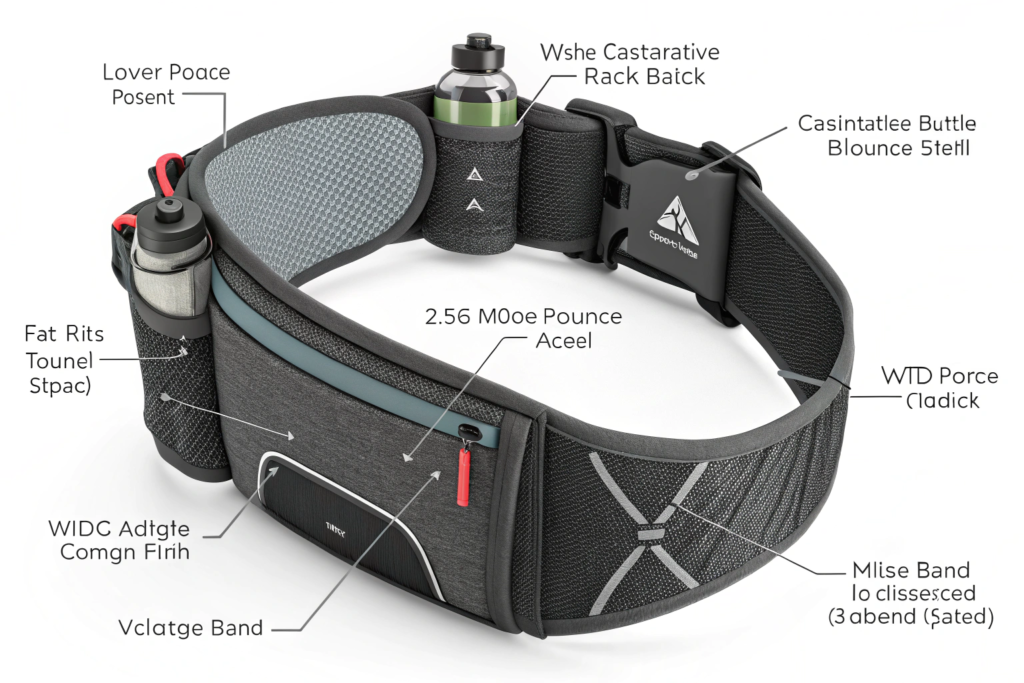
Ergonomics—the science of designing for human efficiency and comfort—is paramount in sports accessories. The design must be contoured to the body, allow for a full range of motion, and minimize friction and bounce. An ergonomic accessory feels like a natural extension of the body, not a foreign object strapped to it.
When we prototype a new performance accessory, we're obsessed with fit and feel. We create multiple samples to test how a hat sits on the head, how a belt curves around the hips, or how a glove flexes with the hand. We use anatomical data and feedback from testers to refine the shape and construction. For example, a well-designed running hat will have a pre-curved brim and a multi-panel construction that conforms to the head, rather than a stiff, flat baseball cap design.
What are Key Ergonomic Considerations?
- Fit and Adjustability: The accessory must be able to be adjusted for a secure, personalized fit. This could be a micro-adjustable strap on a cap or multiple sizes for gloves.
- No-Bounce Construction: For items like running belts or vests, the design must hold contents close to the body's center of gravity to prevent bouncing.
- Friction and Chafing Reduction: Use flatlock seams, seamless construction, and soft, low-profile trims in any area that comes into contact with the skin.
- Freedom of Movement: The design must not restrict the natural movements required for the sport. A golfer needs a glove that allows for a full wrist hinge, for example.
How Does "User Interface" Apply to Accessories?
Think about how the user interacts with the accessory during the activity. Can a runner easily grab a water bottle from their belt without breaking stride? Can a cyclist open a pocket on their pack with one hand? Can a skier adjust the goggle strap while wearing gloves? The "user interface" of your product—its pockets, zippers, and adjustment points—must be intuitive and easy to use mid-activity.
Why is Real-World Testing the Final, Crucial Step?
You've designed what you believe is the perfect hiking hat. The materials are top-notch, and the ergonomic design looks great on paper. You launch the product. The first real-world feedback comes in: a strong gust of wind on a mountain ridge pulls the hat right off the wearer's head because the chin strap wasn't strong enough. The product has a fatal flaw that you never discovered because you never tested it in the real world.
Real-world testing by your target users is the final, non-negotiable step to validate your design. Lab tests can't replicate the unpredictable conditions of a windy mountain, a hot tennis court, or a rainy marathon. Getting prototypes into the hands of real athletes is the only way to uncover hidden flaws and confirm that your product truly performs as intended.
This is a core part of our development process at Shanghai Fumao Clothing. Once we have a functional prototype, we encourage our clients to get it to a small group of trusted product testers. We want them to use it, abuse it, and give us honest, critical feedback. Did the color run when they sweated? Did a seam rub them the wrong way after two hours? Did the pocket hold their specific phone model securely? This feedback loop is invaluable. It allows us to make those final, crucial tweaks before committing to a large production run. It's the difference between launching with confidence and launching with your fingers crossed.

How to Set Up a Product Testing Program?
- Find Your People: Identify a small group of people (5-10 is often enough) who are passionate and knowledgeable about your target sport. You can find them at local clubs, on social media groups, or through specialty retail stores.
- Provide Clear Instructions: Give them the prototype and ask them to use it in specific conditions. Ask them to track things like comfort, durability, and ease of use.
- Ask Specific Questions: Don't just ask "Did you like it?" Ask "On a scale of 1-10, how was the fit? Did you experience any chafing? "
- Listen and Iterate: Take the feedback seriously, even if it's harsh. Use it to make improvements to the design. The goal is not to hear praise; the goal is to find problems so you can fix them.
Was the pocket easy to access while moving?
Imagine yourself in a bustling city street, your steps quick and purposeful as you weave through crowds, or perhaps you're hiking along a winding trail where every shift of your body feels intentional. The question lingers like a quiet doubt: would that pocket, tucked away in the fabric of your jacket or pants, be a convenient reach when you need it most? As you reach back, your fingers brushing against the cool, slightly textured material, do they find the opening with ease, or do they fumble, the pocket feeling like a hidden treasure just out of grasp? Picture the scenario—your hand darting behind you, the weight of your phone or keys pressing gently against your palm, the satisfying click of a zipper or the soft give of a flap as you pull it free.
Or maybe it's the opposite: a sudden jolt as you turn, and the pocket slips from your mind, leaving you momentarily disoriented, searching for that small, essential item. The answer hinges on more than just placement; it's about the rhythm of movement, the way your body adapts, and whether that pocket becomes an extension of your motion or a source of minor frustration in the dance of daily life.
Conclusion
Developing fashion accessories for sports and outdoor activities is a rewarding but demanding process. Success requires a fundamental shift in mindset—from fashion-first to function-first. By starting with a deep understanding of the athlete's needs, selecting high-performance materials engineered for the task, designing with a relentless focus on ergonomics, and validating everything through real-world testing, you can create accessories that don't just look good, but become essential pieces of gear. These are the products that build loyal communities and establish your brand as an authentic and trusted name in the performance market.
We thrive on this challenge. Our team has the technical expertise and sourcing network to help you navigate the complexities of performance accessory development from concept to production.
If you're ready to create a line of sports accessories that truly performs, let's talk. Contact our Business Director, Elaine, at elaine@fumaoclothing.com to begin your next design adventure.