I remember the email that changed how I thought about our business. It came from a buyer at a major American department store, and it wasn't asking about pricing or delivery dates. She wanted to know if we could develop a line of accessories that supported mental health awareness. Her customers were asking for products that meant something, that showed solidarity, that started conversations. She said, "People don't just want to look good anymore. They want to feel seen, and they want to show they see others."
That message hit me hard. I thought about my own team, about the stress of production deadlines, about friends and family who had struggled silently. I realized that accessories could be more than just decoration. They could be a way of saying "you're not alone." They could raise awareness, spark conversations, and even provide comfort.
At Shanghai Fumao Clothing, we've spent the last few years learning how to develop products with purpose. Mental health awareness isn't just a trend to us. It's a responsibility. We've worked with therapists, advocates, and people with lived experience to understand how to create accessories that are respectful, meaningful, and genuinely helpful. Let me share what we've learned about developing an accessory line that truly supports mental health awareness.
What Symbols and Colors Represent Mental Health Awareness?
When we started researching mental health awareness symbols, I was surprised by how many exist. Each one carries specific meaning for different communities and conditions. Getting this right matters because these symbols are deeply personal. Using them incorrectly can feel disrespectful or performative.
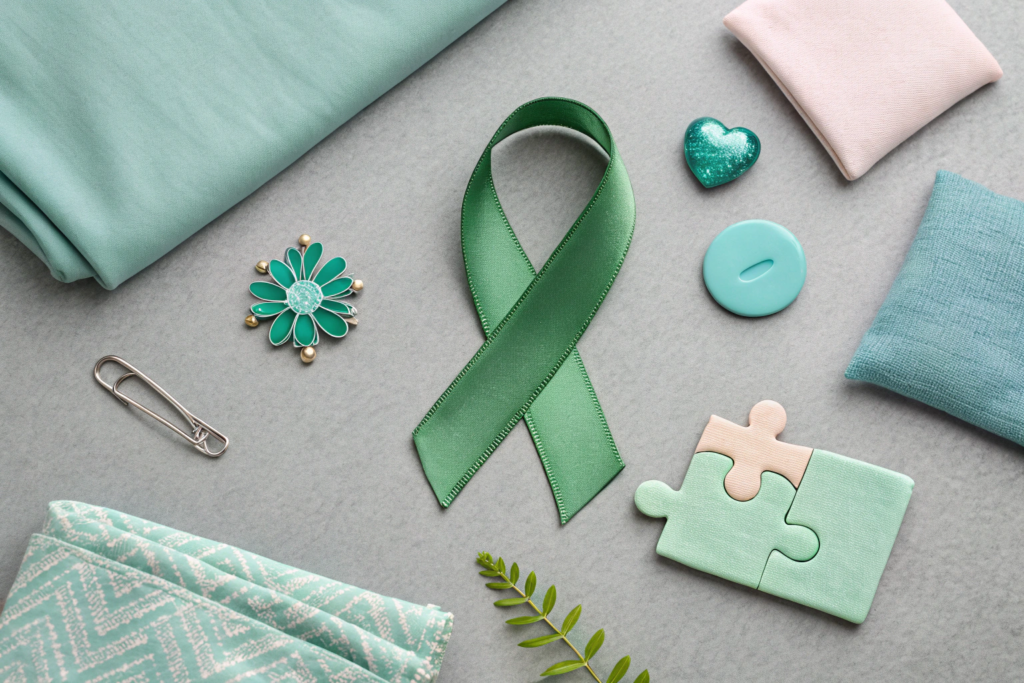
The most recognized symbol is probably the green ribbon, which represents mental health awareness broadly. It's safe, inclusive, and widely understood. But there are others with specific meanings. The semi-colon has become powerful for suicide prevention and mental health recovery. It represents a sentence the author could have ended but chose to continue. That's your life. The puzzle piece is associated with autism awareness, though some in the community prefer other symbols now.
Color matters too. Different mental health causes have their own colors. Green for general awareness. Purple for eating disorder recovery. Turquoise for addiction recovery. Yellow for suicide prevention. Silver for brain disorders. Understanding these nuances helps you create products that resonate authentically with specific communities.
What does the green ribbon mean in mental health?
The green ribbon is the international symbol for mental health awareness. It's been used for decades to show solidarity, reduce stigma, and start conversations. When someone wears a green ribbon, they're signaling that mental health matters to them, whether they have personal experience or just want to be an ally.
For accessory designers, the green ribbon offers versatility. It can be incorporated as an actual ribbon pin, woven into bracelets, printed on scarves, or used as a color accent in any product. The key is making it recognizable while keeping the design appealing.
We've found that green ribbon accessories work well for corporate orders, fundraising events, and awareness campaigns. They're non-controversial and widely accepted. Organizations like the Mental Health Foundation use the green ribbon and can provide guidance on appropriate use.
How is the semicolon used in accessory design?
The semicolon project started in 2013 as a way to show support for people struggling with suicide, depression, and mental illness. The idea is simple but profound. A semicolon is used when a sentence could end but doesn't. That's the author's choice. The semicolon represents your choice to continue your story.
In accessory design, the semicolon appears most often as a charm on bracelets or necklaces. It's small, subtle, and meaningful only to those who understand it. This insider quality makes it powerful. When someone sees your semicolon bracelet, they know you're part of the same community.
We've also seen semicolons incorporated into hair clip designs, embroidered onto hats, and printed on scarf ends. The key is keeping it recognizable as a semicolon, not just a random punctuation mark. The size and placement matter. The Semicolon Project offers resources and guidelines for using this symbol respectfully.
How Do You Design Accessories That Avoid Tokenism?
Here's the challenge I wrestled with most. How do you create products that support a cause without looking like you're just cashing in? Tokenism is real, and consumers can spot it from a mile away. They've seen too many companies slap a ribbon on a product in June and forget about the cause by July.
The answer, I've learned, is authenticity. You have to genuinely care about the cause, not just the sales. You have to listen to the communities you're trying to support. And you have to design products that people actually want to wear, not just cause-related merchandise that sits in a drawer.
We started by consulting with mental health advocates and people with lived experience. We asked them what they wanted to see, what felt respectful, and what felt exploitative. Their feedback shaped everything from our color choices to our packaging. We learned that subtlety often matters more than bold statements.

Should mental health accessories be subtle or bold?
This is one of the most common questions I get from buyers, and the answer depends on your audience. Some people want bold statements. They wear "End the Stigma" t-shirts and bright green ribbons because they're ready to advocate publicly. Others prefer subtle cues, a small semicolon on a bracelet, a ribbon in a lining only they can see, because their journey is more private.
The best approach is to offer both. Have statement pieces for advocates and subtle pieces for those who want personal meaning without public declaration. A scarf with a green stripe along the edge means one thing to those who know and nothing to those who don't. A pin that says "Mental Health Matters" leaves no doubt.
We've found that subtle pieces often sell better for everyday wear. People can incorporate them into their regular style without feeling like they're wearing a uniform. Bold pieces sell well for events, awareness months, and gift-giving. Both have their place. For insights into consumer preferences, Psychology Today often publishes articles on how people express identity through accessories.
How do you involve mental health communities in design?
Involving the community isn't just nice. It's necessary. Without input from people with lived experience, you risk creating products that miss the mark or worse, cause harm.
We started by reaching out to local mental health organizations and asking for volunteers to participate in focus groups. We showed them prototypes and asked honest questions. Does this feel respectful? Would you wear this? What would make it better? Their answers surprised us. Colors we thought were calming felt depressing to some. Symbols we thought were universal felt exclusionary to others.
We also established a practice of donating a portion of proceeds from mental health lines to relevant organizations. This isn't just marketing. It's a way of ensuring that our products actually support the cause financially. We list the organizations on our packaging so customers know exactly where their money goes. Organizations like NAMI (National Alliance on Mental Illness) can provide guidance on appropriate partnerships and community engagement.
What Materials and Features Support Mental Wellness?
Beyond symbols and messages, accessories can support mental wellness through their physical properties. This was a revelation to me. The right materials and features can actually provide comfort, reduce anxiety, and support sensory needs.
We started exploring this after hearing from customers with anxiety who wanted accessories that wouldn't make them feel worse. They talked about scratchy tags, uncomfortable fastenings, and materials that felt wrong against their skin. We realized that mental health awareness isn't just about what a product says. It's about how it feels to wear it.This led us to develop products with sensory considerations. Soft, tagless scarves.
What makes an accessory "sensory-friendly"?
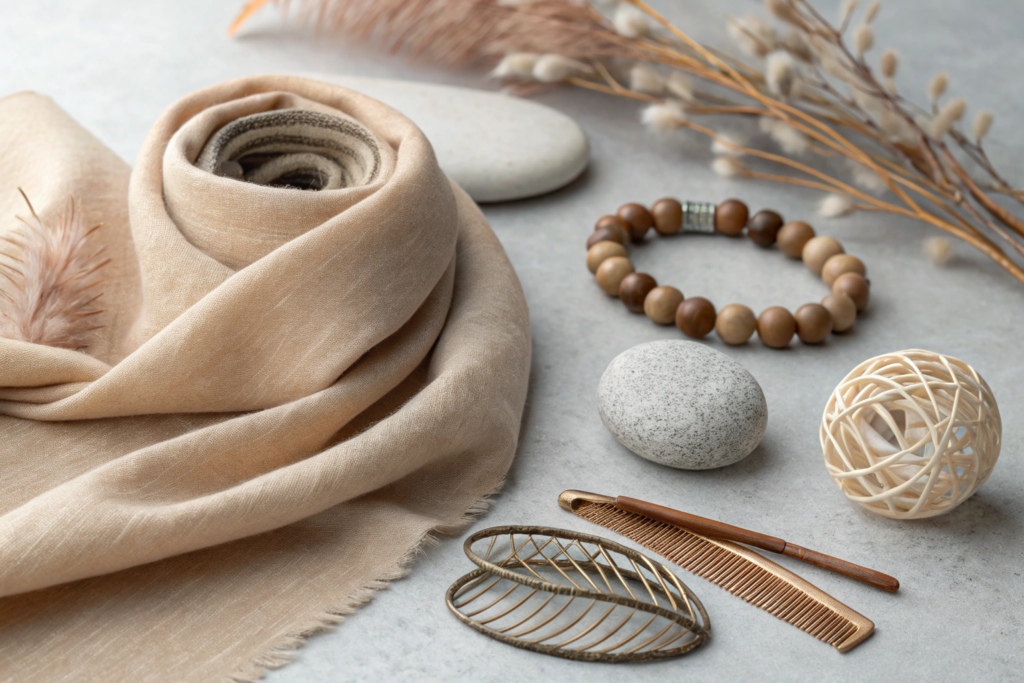
Sensory-friendly accessories are designed for people who experience the world differently. This includes individuals with autism, sensory processing disorders, anxiety, and many other conditions. For them, standard accessories can be sources of discomfort or even distress.
The key features of sensory-friendly design include soft, non-irritating fabrics. No scratchy tags or rough seams. Smooth edges on hard components like clips and buckles. Adjustable features that let the wearer control fit and tension. Weighted elements that provide calming deep pressure stimulation. And materials that feel pleasant to touch, not slippery or sticky.
We've found that these features benefit everyone, not just those with diagnosed conditions. Everyone appreciates a soft scarf or a smooth hair clip. Designing for sensory needs creates better products for all customers. For guidelines on sensory-friendly design, organizations like Autism Speaks offer resources on creating inclusive products.
How can weighted accessories help with anxiety?
Weighted blankets have become well-known for anxiety relief, but weighted accessories are a newer development. The principle is the same. Deep pressure stimulation activates the parasympathetic nervous system, which calms the body's stress response.
We've experimented with weighted elements in scarves, shawls, and shoulder wraps. A subtle weight distributed across the shoulders can provide a grounding, calming effect without being obvious or uncomfortable. Weighted lap pads work well for desk workers. Even weighted hair clips, though the weight must be carefully balanced, can provide a gentle reminder of presence.
The key is making the weight subtle and distributed. Too much weight in one spot becomes uncomfortable. Too little weight has no effect. We work with occupational therapists to understand appropriate weight ranges for different products. For research on deep pressure stimulation, the American Occupational Therapy Association provides evidence-based resources.
What Messaging Resonates in Mental Health Accessories?
The words we put on accessories matter tremendously. A message that feels empowering to one person might feel trite or even hurtful to another. Getting this right requires thoughtfulness and often, consultation with the communities you're trying to reach.
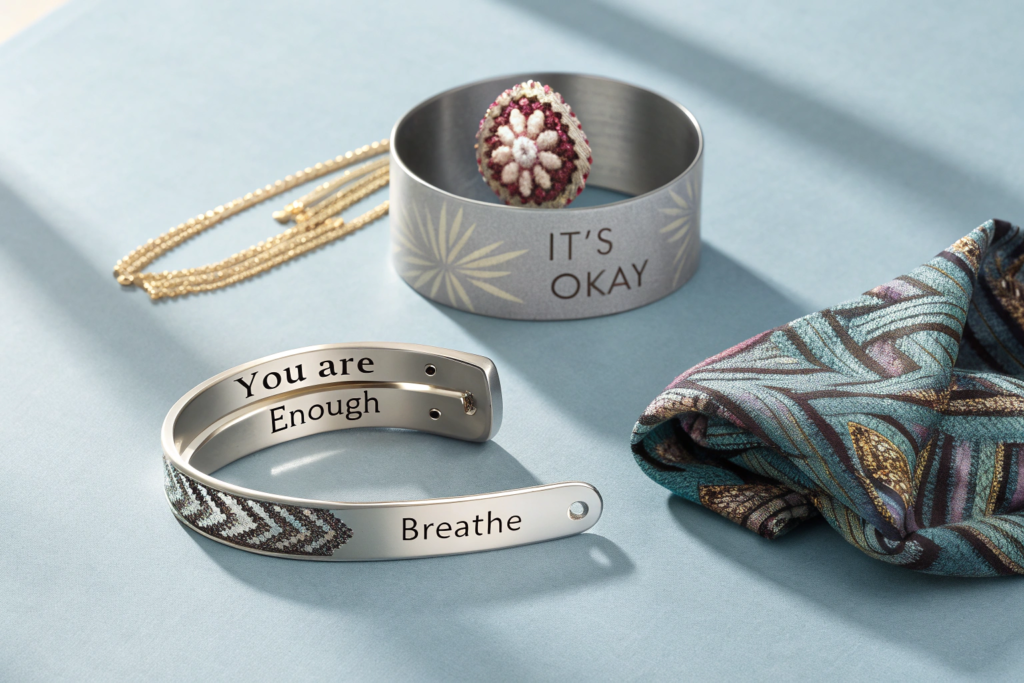
We've learned that simple, affirming messages work best. "You Are Enough." "It's Okay Not To Be Okay." "Breathe." "This Too Shall Pass." These phrases acknowledge struggle while offering hope. They don't promise solutions or minimize anyone's experience. They just say, "I see you, and you're not alone."
Messages that feel prescriptive or dismissive should be avoided. "Just Be Happy" or "Think Positive" can feel like they're minimizing real pain. Messages that reference specific religious or spiritual beliefs may not resonate across diverse audiences.
What phrases work best for mental health awareness?
Through testing and feedback, we've identified several phrases that consistently resonate. "You Are Enough" speaks to the imposter syndrome and self-doubt that many people experience. "It's Okay Not To Be Okay" normalizes struggle and reduces the pressure to always appear fine. "Breathe" is simple and universal, a reminder to pause and center yourself.
"Stay Strong" works for some audiences but can feel like pressure to others. We use it selectively, usually paired with other messages that acknowledge the difficulty of staying strong. "Hope" is another powerful word, simple and open to interpretation.
For specific conditions, more targeted messages can work. "Recovery Is Possible" for addiction and eating disorder communities. "You Matter" for suicide prevention. "Different Not Less" for autism acceptance. The key is knowing your audience and testing messages with them before production. For inspiration, organizations like TWLOHA (To Write Love On Her Arms) have developed powerful messaging over years of advocacy.
Should you include crisis resource information?
This is a sensitive but important question. Including crisis hotline numbers or QR codes linking to resources can literally save lives. But it must be done thoughtfully. You don't want your accessory to feel like a warning label or to trigger someone who's struggling.
We've found that including resource information on packaging rather than the product itself works well. A small card inside the box with crisis numbers, website links, and QR codes provides help without being intrusive. For products sold in sets, including one card per set is sufficient.
Some clients request QR codes printed on hang tags or sewn-in labels. This can work if done discreetly. The key is making the information accessible without making it the focus of the product's design. The product itself should be beautiful and wearable. The resource information is a silent partner, there when needed but invisible when not. Crisis Text Line and 988 Suicide & Crisis Lifeline offer resources and guidelines for partners.
How Do You Market Mental Health Accessories Respectfully?
Marketing mental health products requires a completely different approach than marketing fashion accessories. The usual tactics, creating urgency, highlighting exclusivity, emphasizing appearance, can feel wrong or even exploitative in this context.
We've learned that the most effective marketing for mental health accessories is authentic, educational, and community-focused. It's about starting conversations, not closing sales. It's about showing real people in real situations, not idealized models in impossible settings. It's about acknowledging struggle while celebrating strength.
Transparency matters too. If you're donating portion of proceeds, be clear about how much and to whom. If you're working with advocates, introduce them and let them speak. If you have personal connections to the cause, share them. People can tell when you're genuine, and they respond to that authenticity.

What imagery should you avoid in marketing?
There are definite pitfalls to avoid. Don't use images that stereotype mental health struggles. The person curled up alone in a dark room. The tear-streaked face. These images can be triggering and they reinforce harmful stereotypes about what mental illness looks like.
Don't use "before and after" imagery that suggests your product solves mental health problems. A hair clip won't cure depression. Suggesting otherwise is misleading and disrespectful. Your product is a symbol of support, not a treatment.
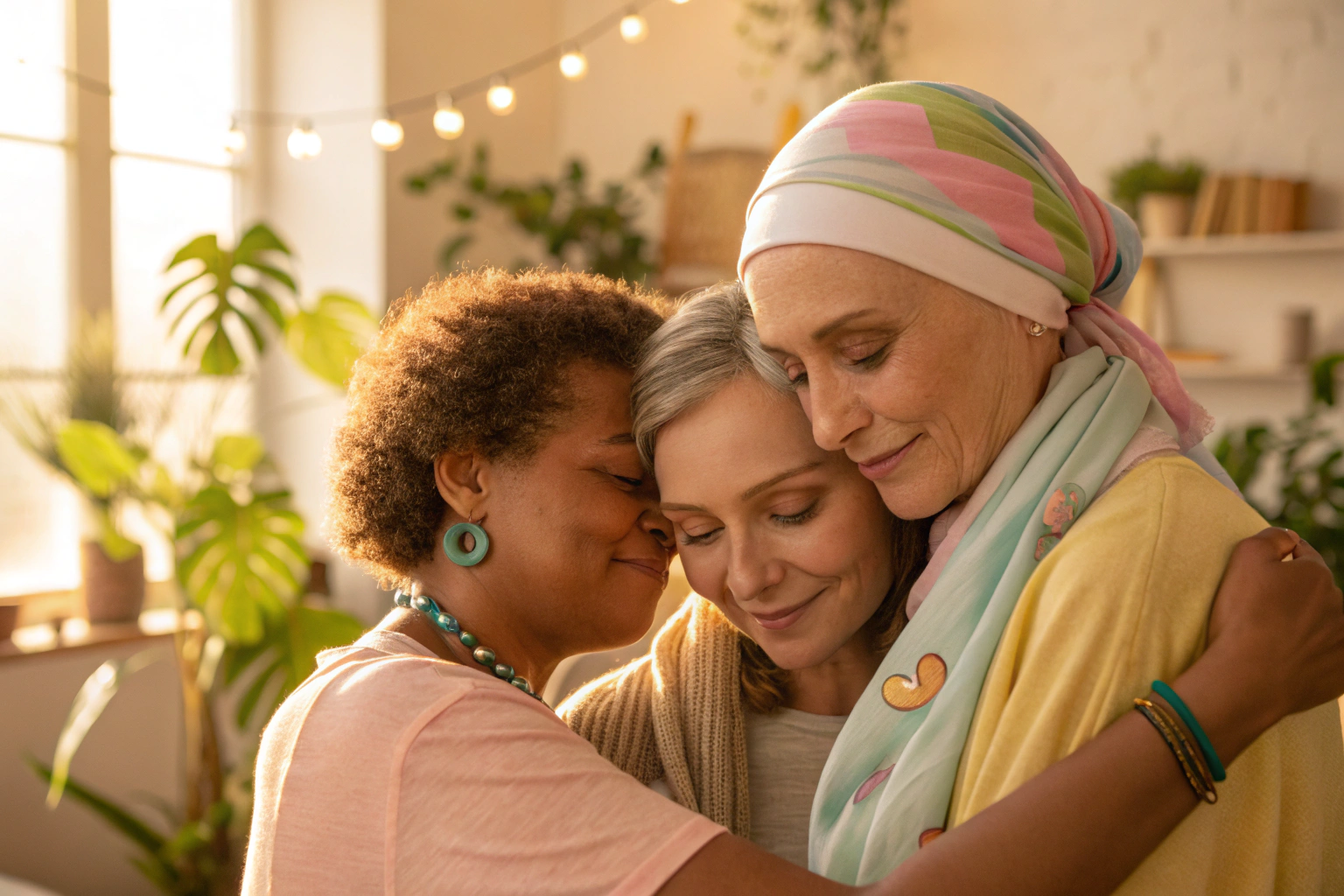
Don't use models who don't reflect your audience. Mental health affects people of all ages, races, genders, and backgrounds. Your marketing should reflect that diversity authentically, not as tokenism.
Don't create urgency around mental health products. "Limited time offer" feels wrong when attached to suicide prevention. These products should feel accessible and enduring, not like a flash sale. For guidance on responsible marketing, the Ad Council has experience with public health campaigns and can offer insights.
How do you collaborate with mental health advocates?
Collaborating with advocates isn't just about getting endorsements. It's about building genuine partnerships that benefit both sides. The advocates bring authenticity and expertise. You bring resources and reach. Together, you can amplify messages that matter.
Start by identifying advocates whose values align with yours. Look for people with lived experience who speak publicly about mental health. Reach out respectfully, explaining why you value their perspective and what you hope to accomplish together. Be prepared to compensate them for their time and expertise. This is their work, and it deserves fair payment.
Involve advocates early in the process, not just at the end for promotion. Ask them to review designs, suggest messaging, and help shape the overall approach. Their input will make your products better and more authentic. And when you launch, give them platforms to share their own stories, not just promote your products. The Mental Health Coalition brings together organizations and advocates working in this space.
Conclusion
Developing an accessory line that supports mental health awareness is one of the most meaningful things we've done at Shanghai Fumao Clothing. It's taught us that accessories can be more than decoration. They can be conversation starters, comfort providers, and symbols of solidarity. They can tell someone "you're not alone" without saying a word.
The key is authenticity. Use symbols and colors correctly, respecting their meanings and the communities they represent. Design with input from people with lived experience, not just for them. Choose materials and features that provide real comfort, not just symbolic support. Craft messages that affirm without minimizing. Market respectfully, avoiding stereotypes and exploitation. And price fairly, with transparency about where money goes.
This isn't easy work. It requires listening, learning, and sometimes admitting when you've gotten it wrong. But the rewards are real. I've received emails from customers who said a simple bracelet helped them start a conversation they'd been avoiding for years. I've heard from advocates who appreciated seeing their community represented authentically. I've watched our team grow more thoughtful and compassionate through this work.
If you're considering developing a mental health awareness line, I'd encourage you to do it. But do it right. Take the time to understand what you're supporting. Involve the community. Design with care. And commit to the cause beyond just selling products. We'd be honored to help you on this journey. Please reach out to our Business Director, Elaine, at elaine@fumaoclothing.com. Let's create something meaningful together, something that supports mental health awareness in ways that are genuine, respectful, and beautiful.