As a manufacturer, I talk to buyers like Ron from the US every single day. They all face the same core challenge: the hair clip market is incredibly crowded. A quick search on any major retail site reveals thousands of similar-looking products, often selling for rock-bottom prices. The biggest pain point for any serious brand is the fear of launching a new design only to have it get lost in a sea of "me-too" products, forcing them to compete on price alone, which is a race to the bottom.
You must move beyond simply choosing a shape and color. The key is to create a "design story" by strategically combining three elements: 1) a unique silhouette or form, 2) innovative and premium materials, and 3) a focus on functional superiority and a quality feel. It's not about having one of these elements; it's about how you blend them to create a product that is immediately recognizable and feels more valuable.
For over two decades, my factory has been more than just an order-taker; we are a design partner. We've helped countless North American and European brands develop unique hair accessories that command attention and a better price point. In this article, I'll share my hands-on approach to designing standout clips, moving from initial concept to a product that truly shines in a saturated market.
Why is a Unique "Silhouette" Your First Priority?
When a customer is scrolling quickly online or glancing at a store display, what's the very first thing they notice? It's not the material, not the spring quality—it's the shape. The overall form, or "silhouette," is your first and best chance to make an impression.
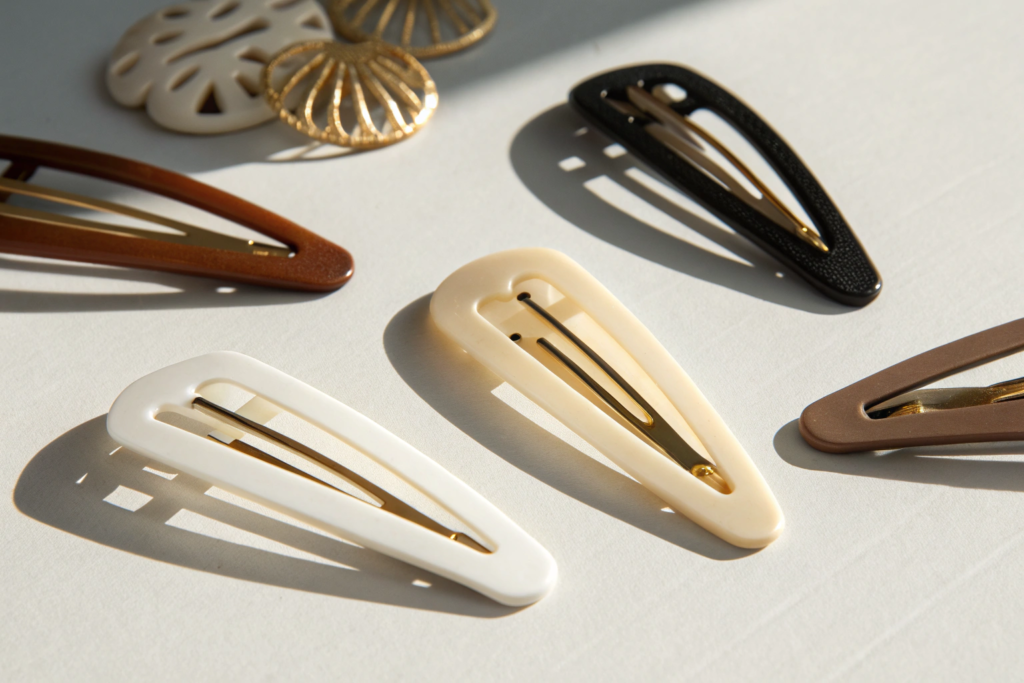
A unique silhouette is your top priority because it's the most powerful visual differentiator. In a market flooded with generic shapes (the standard rectangle, the simple oval), a distinctive and memorable form is what will make a customer stop and look closer. It creates an immediate sense of novelty and design intent that a common shape cannot.
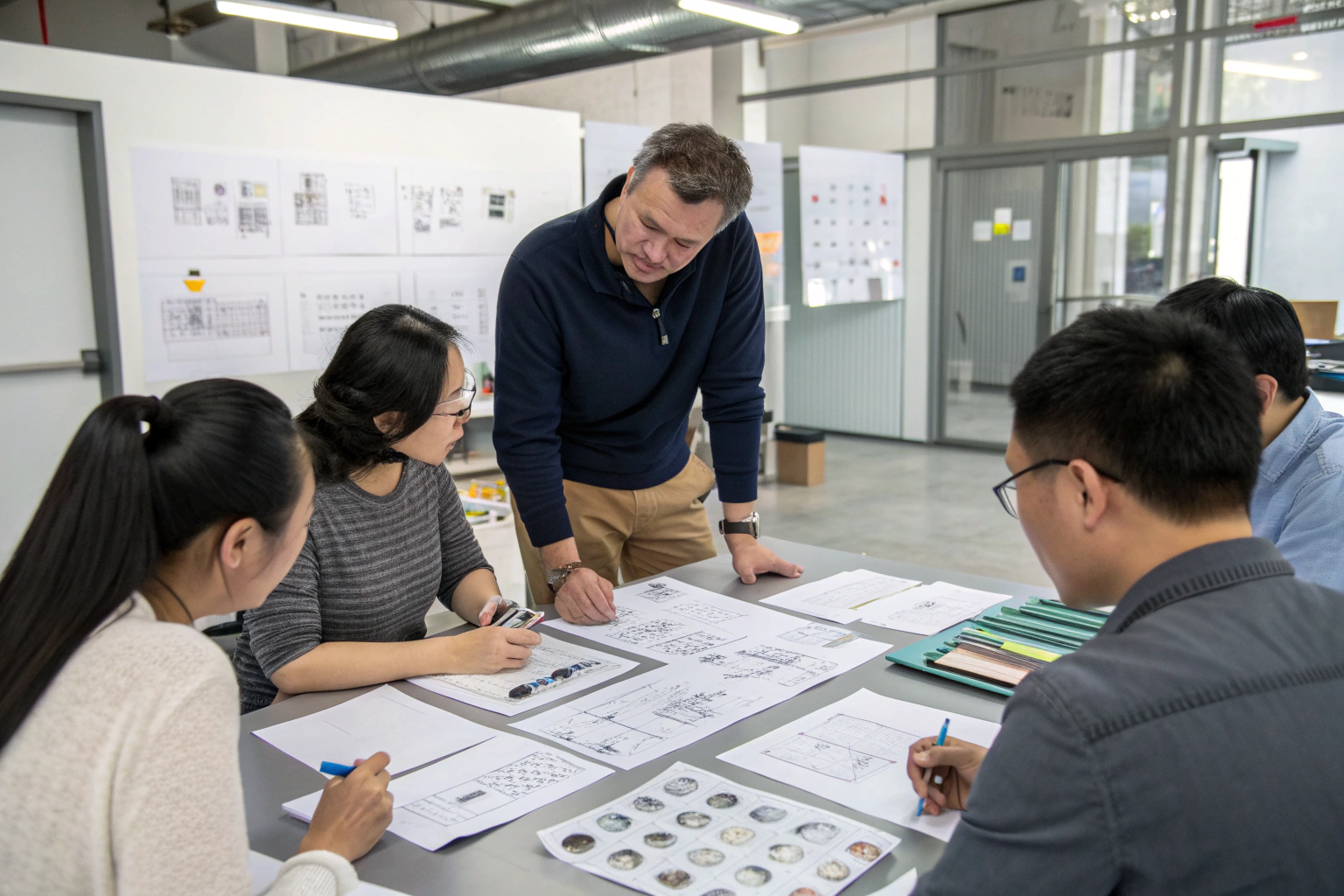
At my factory, Shanghai Fumao Clothing, the design process always begins with sketching forms. A great material on a boring shape is a missed opportunity. A unique shape is the foundation of a standout product. Let's explore how to develop one.
How do you move beyond generic shapes?
The key is to look for inspiration outside of existing hair clips. Instead of looking at what your competitors are doing, draw inspiration from other fields:
- Architecture: Think of the clean lines of modern buildings or the curves of organic architecture. This can inspire geometric or sculptural clips.
- Nature: Look at the shapes of leaves, shells, or pebbles. An asymmetrical, nature-inspired form can feel both organic and sophisticated.
- Art: Abstract sculpture can provide a wealth of ideas for unique, artistic forms that can be translated into a wearable accessory.
The goal is to create a shape that is ownable—something that, over time, customers will associate with your brand. This is a core principle of good product design, as highlighted by design resources like Core77.
What is the role of 3D prototyping in developing a shape?
Sketches are a great start, but a 2D drawing can be deceptive. A shape that looks great on paper might be awkward or uncomfortable to wear. This is where 3D prototyping is essential.
Before we invest in expensive molds or tooling, our team creates 3D-printed prototypes of the new design. This allows us and our clients to hold the clip, feel its proportions, and even test it in the hair. This crucial step helps us refine the ergonomics and visual balance of the silhouette, ensuring the final product is not only beautiful but also functional and comfortable. It's a small investment that prevents costly mistakes down the line.
How Can Material Choice Elevate a Design?
Once you have a unique silhouette, the next step is to bring it to life with the right material. Using the same cheap, standard plastic as everyone else will instantly undermine your unique shape. A buyer's pain point is a product that looks good in photos but feels cheap in hand.
Material choice is critical because it dictates the product's tactile quality, visual depth, and perceived value. Choosing a premium material like cellulose acetate, metal, or even wood can instantly elevate a simple design, making it look and feel more luxurious and durable. It's the difference between a disposable item and a cherished accessory.
This is a conversation I have with every client. The material is not just a technical choice; it's a brand statement. Let's look at how different materials can transform your design.
Why is cellulose acetate considered a premium choice?
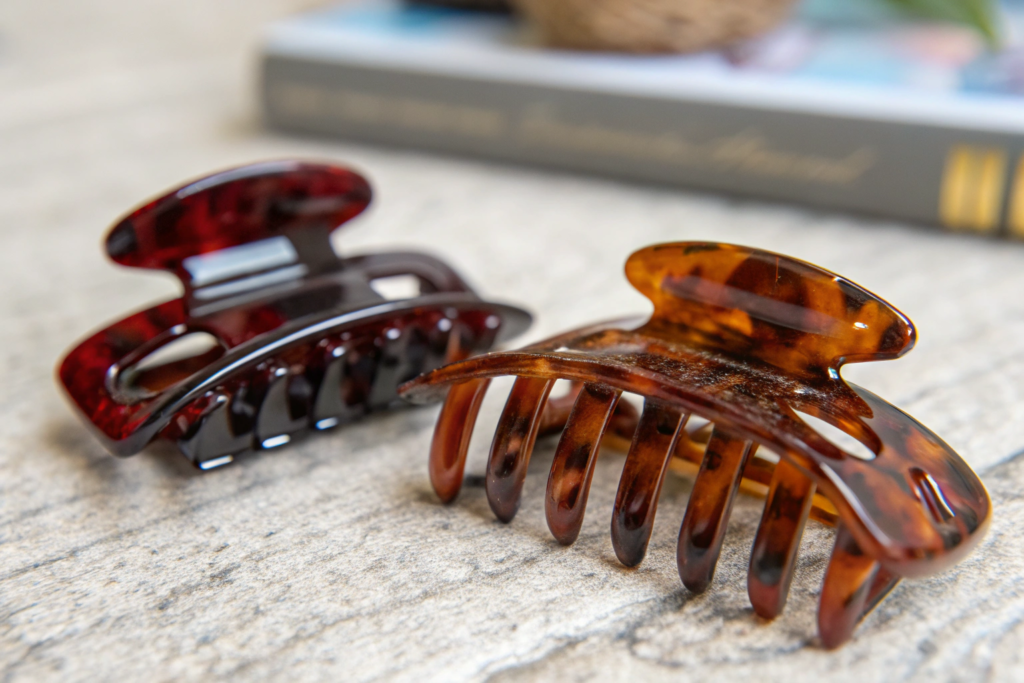
Cellulose acetate is a high-quality, plant-based bioplastic that is the gold standard for luxury hair accessories. Unlike standard injection-molded plastic, it is cut from large, patterned blocks, which gives it several key advantages:
- Rich, Deep Patterns: Acetate allows for stunningly complex and unique patterns, like tortoiseshell, that have a depth and translucency that cannot be replicated with cheap plastic. Each piece is slightly different, making it feel unique.
- Superior Feel: It has a satisfying weight and a smooth, polished finish that feels substantial and high-quality in the hand.
- Hair-Friendly: It's flexible and has smooth, rounded edges, so it glides through hair without snagging or causing breakage.
Choosing acetate immediately signals to the customer that this is a premium, well-crafted product, justifying a higher price point.
What role do metal and other materials play?
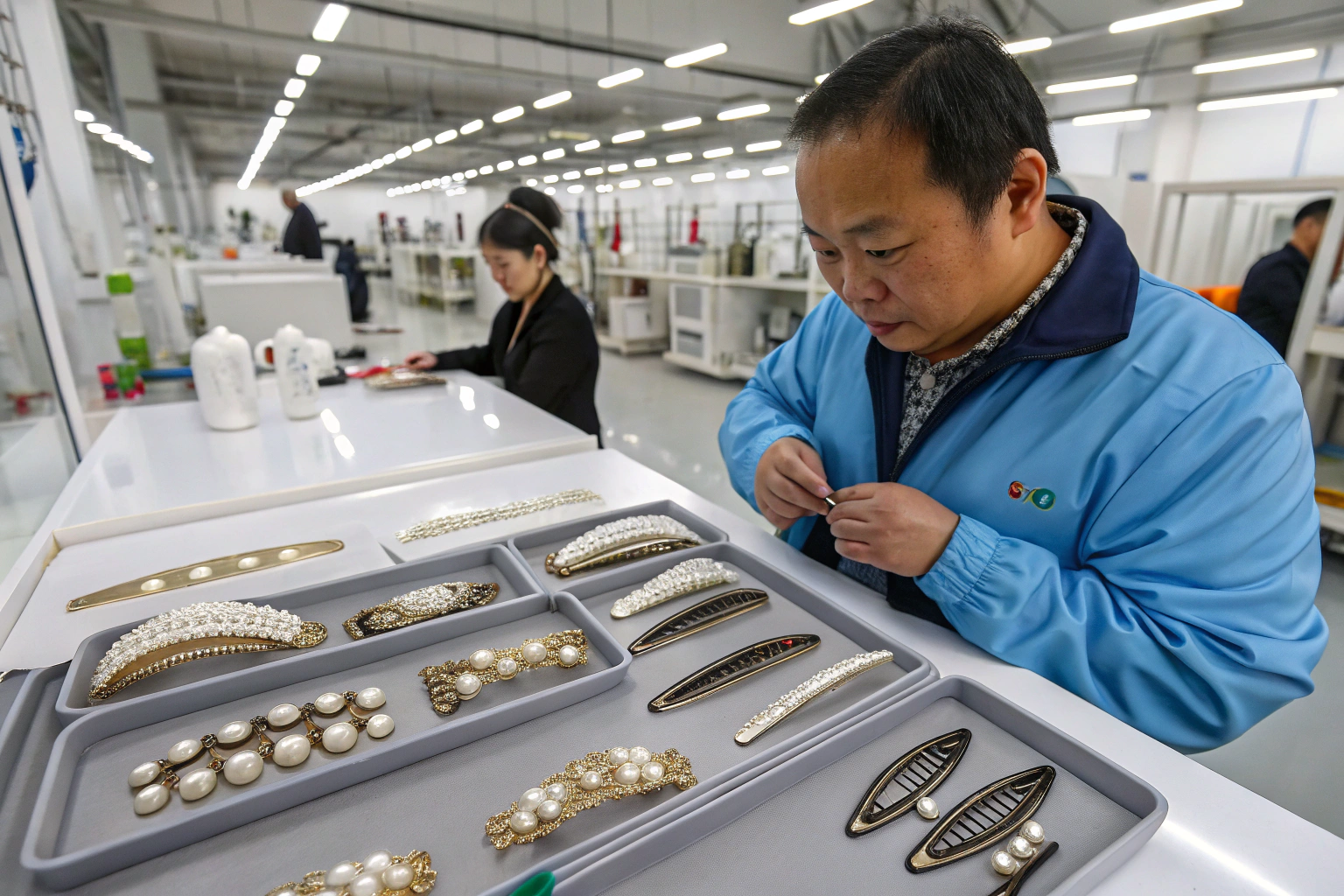
Metal is another key trend for creating a standout, modern look. Sleek, sculptural clips made from polished metals like brass or stainless steel can create a minimalist, jewelry-like aesthetic. They feel cool to the touch and have a satisfying heft.
Don't be afraid to explore other materials as well. We've created beautiful clips from sustainable wood for eco-conscious brands, and even combined materials, such as a wooden clip with a metal hinge. The key is to choose a material that reinforces your brand's story. An outdoor brand might choose wood, while a minimalist, modern brand might choose brushed steel. For more on material innovation, it's worth following publications like MaterialDistrict.
Why is Functional Superiority the Silent Differentiator?
You have a unique shape and a beautiful material. But if the clip slides out of the hair or the spring breaks after a week, you'll lose the customer forever. A major pain point for consumers is a beautiful clip that simply doesn't work.
Functional superiority is the silent differentiator that builds long-term brand loyalty. While a customer is initially attracted by the look, they will repurchase and recommend based on the performance. This means investing in a high-quality spring, ensuring a strong grip, and designing teeth that hold hair securely without snagging.
This is where our experience as a manufacturer at Shanghai Fumao Clothing becomes a huge asset for our clients. We know what makes a clip work, not just what makes it look good. Let's focus on the details that create a superior user experience.

What makes a "good" spring?
The spring is the engine of a claw clip. A cheap spring is the number one point of failure. A high-quality spring should be:
- Strong but Not Stiff: It needs to provide enough tension to hold the hair securely, but not be so stiff that it's difficult to open, especially for users with arthritis or limited hand strength.
- Durable: It should be made from high-grade steel that can withstand thousands of open-and-close cycles without breaking or losing tension. We often look for springs with more coils, as this can distribute the stress more evenly.
- Well-Seated: The spring must be securely anchored within the body of the clip so it doesn't pop out.
We source our springs from specialized suppliers and conduct cycle testing to ensure they meet our durability standards. It's a small, hidden detail that makes a world of difference.
How do you design for a better grip?
A great grip is about the design of the teeth. Simply having more teeth isn't always the answer. The design needs to be thoughtful. For example, we often design clips with interlocking rows of teeth. When the clip closes, the teeth from each side nest together, creating a secure cage for the hair that prevents it from slipping.
We also pay close attention to the finish of the teeth. They must be perfectly smooth and polished, with no sharp edges or "flashing" from the molding process. This ensures the clip can be inserted and removed without pulling or snagging the hair, a detail that users with fine or delicate hair deeply appreciate. This focus on user experience is a core principle of human-centered design.
How Do You Combine These Elements into a Cohesive Design?
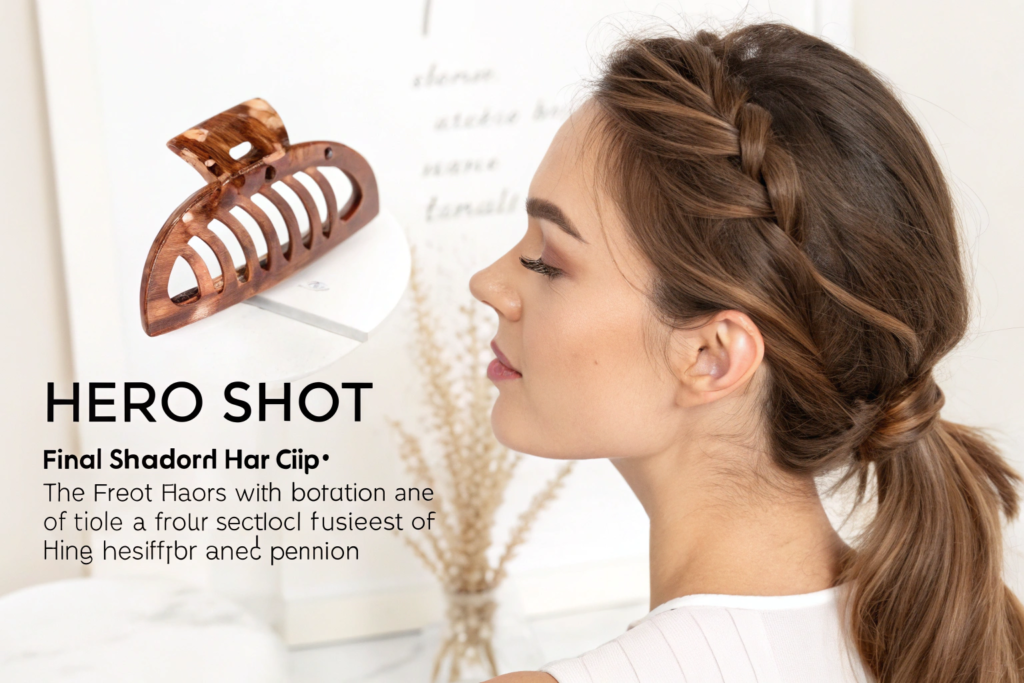
You have the three core ingredients: a unique silhouette, a premium material, and superior function. The final step is to ensure they work together to tell a single, cohesive story.
You combine these elements by ensuring they all serve the same brand vision. The goal is to have the shape, material, and function all reinforce each other. A minimalist, architectural shape should be paired with a clean, modern material like brushed metal. A soft, organic shape should be paired with a natural material like wood or a warm-toned acetate. This final blending is where a good design becomes a great product. It's about ensuring there are no contradictions in your design language.
Can you give an example of a cohesive design?
Imagine a brand that is all about modern, urban minimalism.
- Silhouette: We would design a clip with a clean, geometric, asymmetrical shape. Very sharp lines, no frills.
- Material: We would choose a matte-finished metal, like a brushed silver or a powder-coated black. The feel would be cool and solid.
- Function: The hinge would be completely hidden within the design to maintain the clean lines. The grip would be firm and secure, designed for a quick, no-fuss updo for a person on the go.
Every element serves the "modern minimalist" story. The product feels intentional and whole.
How do you test the final combination?
Once we have a final prototype that combines all three elements, we conduct user testing. We give samples to people with different hair types (thick, fine, curly, straight) and get their feedback on:
- Aesthetics: "Does it look high-quality? Is the design appealing?"
- Feel: "How does it feel in your hand? Does it feel durable?"
- Function: "Does it hold your hair all day? Does it snag or pull?"
This real-world feedback is the ultimate test. It allows us to make final tweaks before starting mass production, ensuring the product we deliver is not just beautiful on paper, but beloved by the end user.
Conclusion
Designing a hair clip that stands out in a crowded market is not about finding a gimmick. It's a thoughtful process of strategic design. It begins with creating a unique and memorable silhouette that captures attention. It's elevated by choosing premium, tactile materials that communicate quality and value. And it's solidified by an obsessive focus on functional superiority—the springs, the grip, the feel—that builds trust and loyalty. By weaving these three elements together into a single, cohesive story, you can create a product that doesn't just compete on price, but truly stands apart in both form and function.
If you are a brand ready to move beyond generic designs and create a custom hair clip collection that makes a real impact, my team at Shanghai Fumao Clothing is here to be your design and manufacturing partner. We have the experience, creativity, and the technical expertise to help you succeed. Please contact our Business Director, Elaine, at her email: elaine@fumaoclothing.com to start designing your next standout accessory.