For fashion accessory importers and brand buyers, customizing bulk belts with accurate, multi-size labels is a critical but often overlooked detail. The challenge lies not just in sourcing high-quality belts, but in ensuring each one is perfectly matched to its designated size, streamlining the logistics of your customers. Getting this wrong leads to costly returns, damaged brand reputation, and operational headaches.
The most efficient way to customize bulk belts with multiple size labels is to engage directly with specialized manufacturers who offer integrated OEM services. This process involves clear design specifications, material selection for both the belt and its label, and a structured workflow from sampling to bulk production. By managing the entire process under one roof—from weaving or cutting the belt to attaching the precise size label—you guarantee consistency, reduce lead times, and maintain strict quality control over the final product.
As an experienced manufacturer in the accessory sector, we at Shanghai Fumao Clothing have managed countless such projects. This guide will walk you through the key steps, from selecting the right labeling solution to executing a flawless bulk order, ensuring your branded belts arrive market-ready.
What Are the Most Effective Labeling Solutions for Multi-Size Belt Orders?
Choosing the right label is the first step in a successful customization project. The label must be durable, aesthetically pleasing, and integrated seamlessly into the belt's design. For fashion belts, the industry standard leans heavily towards woven or printed fabric labels that are sewn into the product, offering a premium feel and longevity that outlasts the belt itself.
For basic size indication, a simple sewn-in label is sufficient. However, for brands targeting higher-value markets or requiring advanced inventory control, RFID-enabled labels present a powerful, though more technical, solution. These "smart labels" contain a tiny chip and antenna, allowing for instant scanning of size, style, and other data throughout the supply chain. While more common in large-scale apparel retail, they represent the cutting edge of item-level identification for accessories.
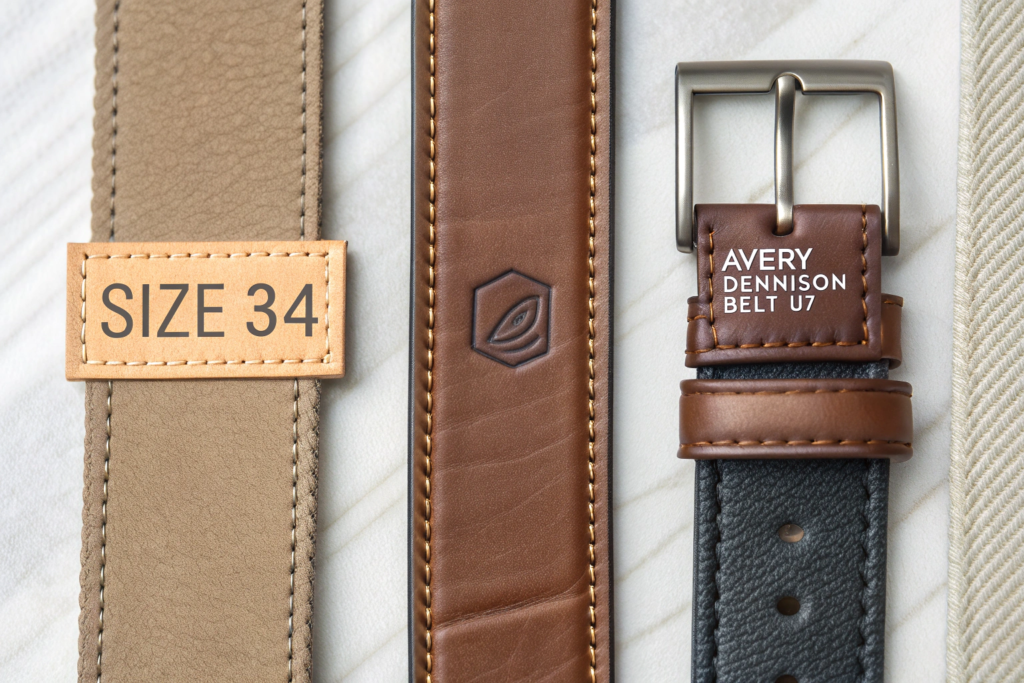
Why Are Woven and Printed Fabric Labels the Industry Standard?
Woven labels, made from materials like polyester or cotton, are prized for their durability and premium look. The size information is woven directly into the fabric with colored threads, making it virtually impossible to fade or rub off. This method is ideal for brands that value a classic, high-quality finish. Suppliers on platforms like Alibaba offer extensive customization, including logos, care symbols, and size text, with Minimum Order Quantities (MOQs) that can start as low as 50 to 100 pieces for basic designs.
Printed fabric labels offer more design flexibility for complex graphics or color gradients at a potentially lower cost, especially for smaller runs. The key is to specify high-quality, fade-resistant inks and a durable base fabric. Whether woven or printed, the label must be securely sewn or heat-sealed onto the belt. The standard placement is on the non-showing side of the belt tail, about 2-3 inches from the end, ensuring it is visible when trying on the belt but discreet when worn.
What Role Do Advanced Solutions Like RFID Labels Play?
For clients in the large-scale retail or luxury sectors, RFID (Radio-Frequency Identification) labels offer transformative benefits. Products like the Avery Dennison "Belt" series UHF RFID inlays are designed specifically for item-level tagging in retail. These compact, high-performance labels can be encoded with a unique ID containing size, style, color, and a serial number.
Integrating an RFID label into a belt typically involves sewing it into a fabric loop or embedding it within a layered leather or fabric belt during production. The primary advantage is automated inventory management. A store associate can instantly scan an entire box of belts without unpacking them, ensuring the shipped sizes match the purchase order with 100% accuracy. This drastically reduces receiving time and eliminates manual errors. While this adds a per-unit cost, the savings in logistics efficiency and loss prevention can be significant for large-volume buyers.
How to Plan and Execute the Customization Workflow with Your Manufacturer?
A smooth customization project hinges on a clear, step-by-step workflow agreed upon with your manufacturer. Treating this as a collaborative partnership, not just a purchase order, is key to avoiding misunderstandings and delays. The process typically follows a cycle of specification, sampling, approval, and production.
Clear communication is paramount. Your manufacturer should assign a dedicated project manager to be your single point of contact. This person will guide you through each phase, from initial tech pack review to arranging pre-shipment inspections of the final bulk goods. A professional factory, like ours at Shanghai Fumao Clothing, views this structured workflow as essential to delivering exactly what the client envisions.
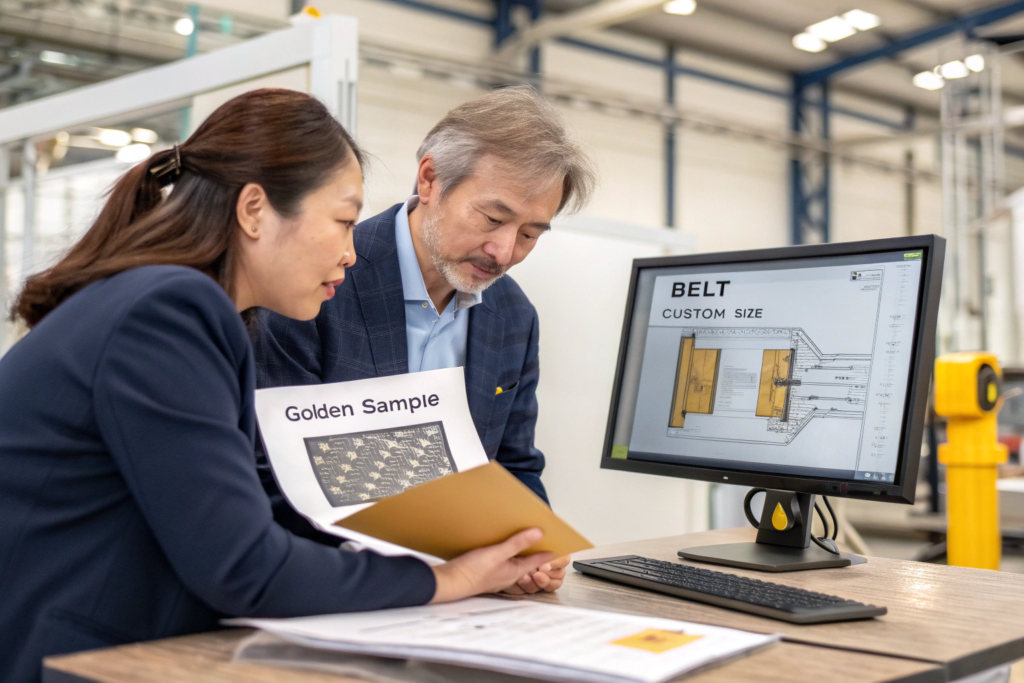
What Should Be Included in Your Initial Design Specification (Tech Pack)?
Your tech pack is the blueprint for the entire order. For a belt with custom size labels, it must include two interconnected sections:
-
Belt Specifications:
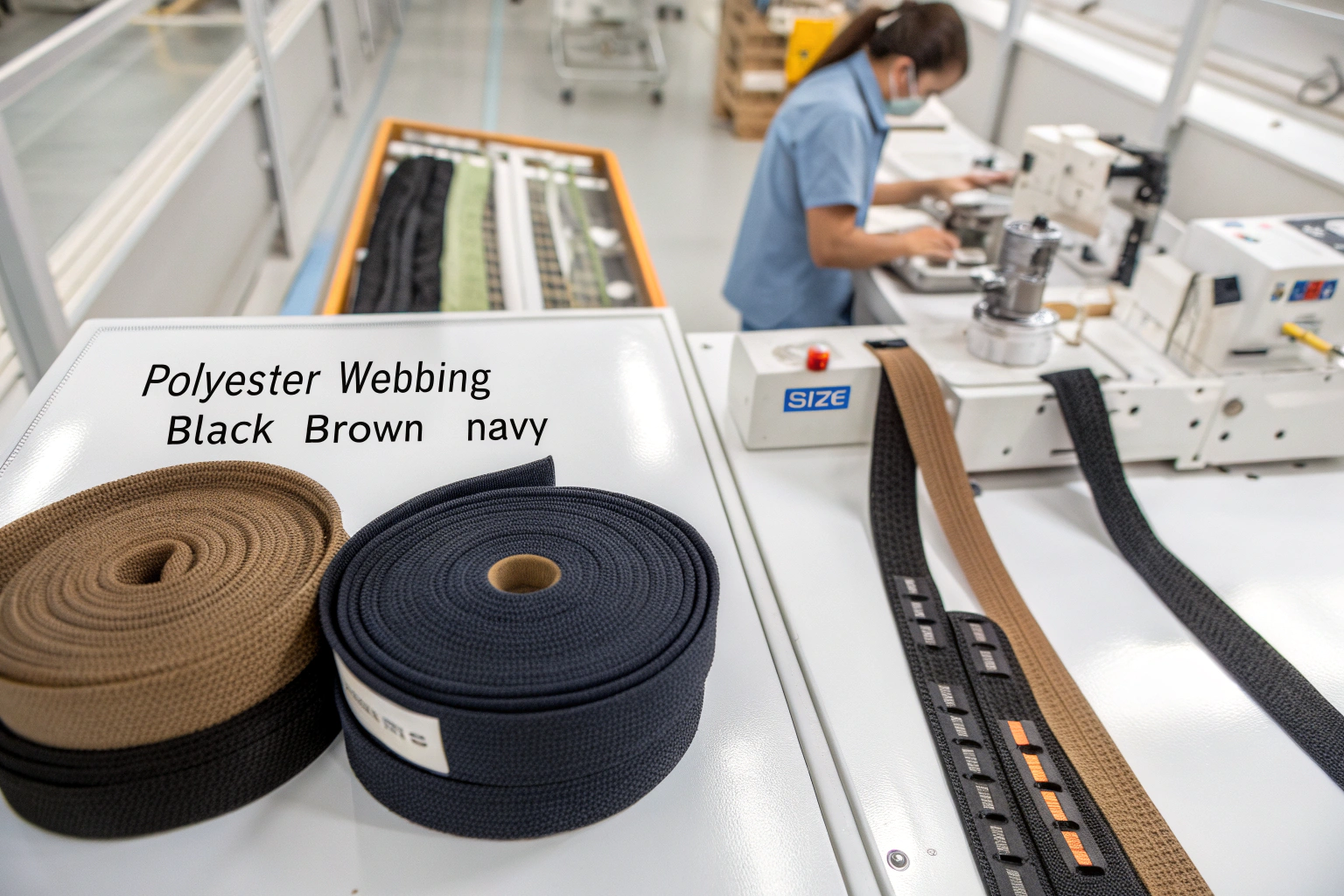
- Material: Full description (e.g., full-grain leather, 1.5" wide polyester woven webbing, recycled elastic).
- Dimensions: Total length, width, thickness, and the exact hole spacing for adjustable belts.
- Hardware: Buckle type, finish (e.g., antique brass, polished nickel), and attachment method.
- Color: Provide physical swatches or Pantone codes for all materials.
- Finishing: Edge painting, stitching thread color and type.
-
Label Specifications:
- Type: Woven, printed, or RFID.
- Content: Exact text for each size (e.g., "SIZE 32", "34/86", "MEDIUM").
- Design File: Provide a high-resolution vector file (AI or EPS) of the label design, including logo.
- Dimensions: Label height and width.
- Material & Color: Fabric type and thread/Pantone colors.
- Attachment Method: Sewn on (specify stitch type and position) or heat-sealed.
- Placement: Precise measurement from a defined point on the belt (provide a diagram).
The more detailed your tech pack, the more accurate the initial quote and the first sample will be.
Why Is the Sampling Stage Non-Negotiable?
Never proceed to bulk production without approving a "golden sample." This is a complete, finished prototype of the belt with the actual size label attached. The sampling stage has two critical parts:
- Label Proof Approval: Before any physical sample is made, the factory should provide a digital or physical proof of the label design for each size. Check for spelling, font, color accuracy, and alignment.
- Physical Golden Sample: Once the label proof is approved, the factory will produce 1-3 complete belt samples. You must physically inspect these for:
- Label quality, clarity, and attachment security.
- Accuracy of the size indicated (measure the belt!).
- Overall craftsmanship, material feel, and color matching.
- Functionality of the buckle and fit.
Only after you have signed off on this golden sample should production begin. This sample then becomes the legal standard for the quality of your entire bulk order.
What Are the Key Logistics and Quality Control Checkpoints?
After sample approval, the focus shifts to managing the bulk production and ensuring the final shipment meets your standards. This phase is about oversight and verification. For an order with multiple sizes, the risk of size mix-ups is high, making a rigorous Quality Control (QC) protocol essential.
A professional manufacturer will have a QC team that conducts inspections at critical stages: when labels are received, during assembly, and before packing. As the buyer, you have the right to specify a Final Random Inspection (FRI) before shipment, conducted either by the factory's QC team or a trusted third-party inspector you hire.
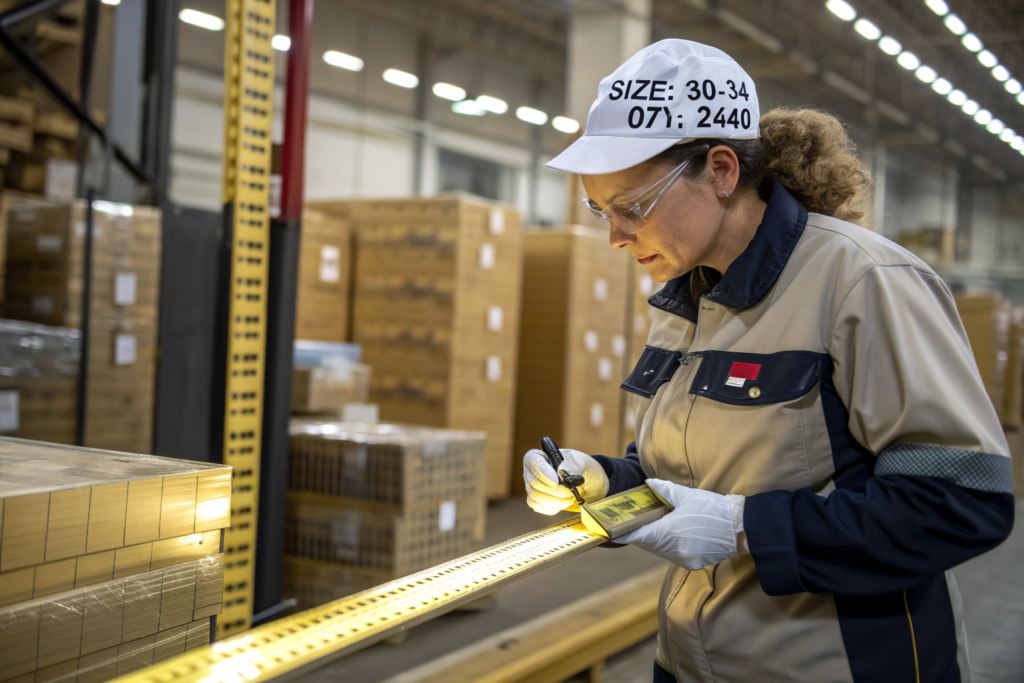
How Do You Prevent Size Mix-Ups During Production and Packing?
Prevention starts with organization. Your manufacturer should have a system to keep different sizes segregated throughout the production line. Discuss and agree on the packing method in advance. The most secure methods are:
- Polybagging & Boxing: Each individual belt is placed in its own polybag with a size sticker on the outside of the bag. Then, a specific quantity of each size (e.g., 12 belts of size 32) is packed into a master carton. The carton must be clearly marked on the outside with the size range and quantity (e.g., "BELTS - SIZE 30-34, QTY: 60 PCS").
- Size-Specific Cartons: For very large orders, consider packing each size into its own dedicated carton. This simplifies receiving and inventory for your warehouse.
Request photos or video of the packing process as part of your QC report. This provides visual evidence that the agreed system was followed.
What Should a Pre-Shipment Inspection Specifically Check?
If you conduct a pre-shipment inspection, the checklist must be tailored to your customization. The inspector should randomly select belts from packed cartons (based on an AQL statistical sampling plan) and verify:
- Label Accuracy: Does the sewn-in size label match the actual, measured length/waist size of the belt? This is the #1 check.
- Label Quality: Is the label securely attached? Is the text legible and free of defects?
- Workmanship & Function: Overall construction, buckle function, and matching to the golden sample.
- Packing Compliance: Does the inner and outer packaging match the agreed method? Are carton marks correct?
A failed inspection at this stage allows you to request re-work before the goods leave the factory, protecting you from the far greater cost of dealing with errors at your destination port.
How to Calculate Costs and Navigate Customization Lead Times?
Understanding the cost structure and timeline is crucial for planning your inventory and marketing. Customization inherently adds cost and time compared to buying generic, pre-made goods. The key is to understand what you're paying for and to build realistic buffers into your schedule.
The largest cost drivers are typically the belt materials (like leather) and the custom tooling for unique buckles. Label customization, while important, is often a smaller portion of the overall unit cost. However, its impact on perceived value and operational efficiency is enormous.

What Are the Main Components of a Custom Belt Cost?
A transparent quote should break down costs clearly:
- Belt Material Cost: Based on the type of leather, webbing, or elastic per meter/foot.
- Hardware Cost: Cost per buckle, keeper loop, and any other metal parts.
- Label Cost: This includes:
- Setup Fee: A one-time charge for creating the loom file or print setup for your custom label design.
- Per-Unit Cost: The cost of each physical label, which decreases at higher quantities (e.g., price breaks at 5000, 10000 pieces).
- Labor & Production Cost: The cost of cutting, sewing, attaching labels, and finishing each belt.
- Tooling/Mold Cost (if applicable): A one-time fee for creating a custom buckle mold.
- Packaging Cost: Cost of polybags, boxes, and any custom printing on packaging.
Always factor in the "landed cost" by adding estimated shipping, insurance, and import duties to the factory price.
What Is a Realistic Timeline from Order to Shipment?
Rushing customization leads to errors. Build a timeline with your manufacturer based on these typical phases:
- Sample Development & Approval: 2-4 weeks. This includes creating label proofs, producing physical samples, and shipping them to you for review and feedback.
- Bulk Production Lead Time: 4-8 weeks. This begins after you approve the sample and pay the production deposit. The time depends on order complexity and factory capacity. A factory offering "7-day rapid prototyping" for labels can help speed the initial phase.
- QC, Packing & Shipping: 1-2 weeks. Allow time for the final inspection, any re-work, packing, and booking freight.
Total realistic timeline: 7 to 14 weeks. Communicate this schedule clearly to your sales or retail teams to manage expectations.
Conclusion
Customizing bulk belts with accurate, durable size labels is a strategic process that elevates your product from a generic accessory to a professionally branded item. The journey involves selecting the right label solution—be it classic woven, flexible printed, or high-tech RFID—and then partnering closely with a manufacturer through a detailed workflow of specification, sampling, and rigorous quality control.
Success lies in the details: a comprehensive tech pack, an unwavering commitment to the sample approval process, and a QC protocol that specifically hunts for size-label discrepancies. By managing this process with diligence, you ensure that every belt that reaches your customer reinforces your brand's reputation for quality and reliability.
If you are looking for a manufacturing partner with the expertise to seamlessly manage the entire customization process for your next belt order—from material sourcing and label creation to final QC and packing—we are here to help. At Shanghai Fumao Clothing, we specialize in turning detailed specifications into flawless bulk reality. For a consultation, please contact our Business Director, Elaine, at elaine@fumaoclothing.com.