As someone who has helped hundreds of brands develop and manufacture their accessory lines, I've seen a common and costly mistake: designing in a vacuum. A client will come to us with a product idea they are passionate about, but they have no real data on the existing market. They don't know who their main competitors are, what prices their products command, or what customers are saying about them. This lack of knowledge is a huge gamble. It's like trying to navigate a new city without a map—you might eventually find your way, but you'll likely make a lot of expensive wrong turns.
Effective competitor analysis isn't about copying what others are doing. It's a strategic process of gathering market intelligence to identify opportunities, mitigate risks, and make informed decisions about your product, pricing, and marketing. It’s about finding the gaps in the market that your brand is uniquely positioned to fill.*
For a savvy buyer like Ron, who is focused on quality and development, this process is not just a preliminary step; it's an ongoing strategy for staying ahead. At Shanghai Fumao Clothing, we encourage our clients to engage in this research because it leads to better products and more successful partnerships. A well-informed client is a client who knows exactly what they want to build. Let's break down how you can conduct this analysis effectively for your accessory niche.
How Do You Identify Your True Competitors?
The first hurdle in competitor analysis is figuring out who you're actually competing against. It's not always as obvious as it seems. A common mistake is to only look at brands that sell the exact same type of product. But this misses a huge part of the picture. You'll end up with a skewed view of the market, potentially ignoring major threats and opportunities.
The key is to think in terms of "direct" and "indirect" competitors.
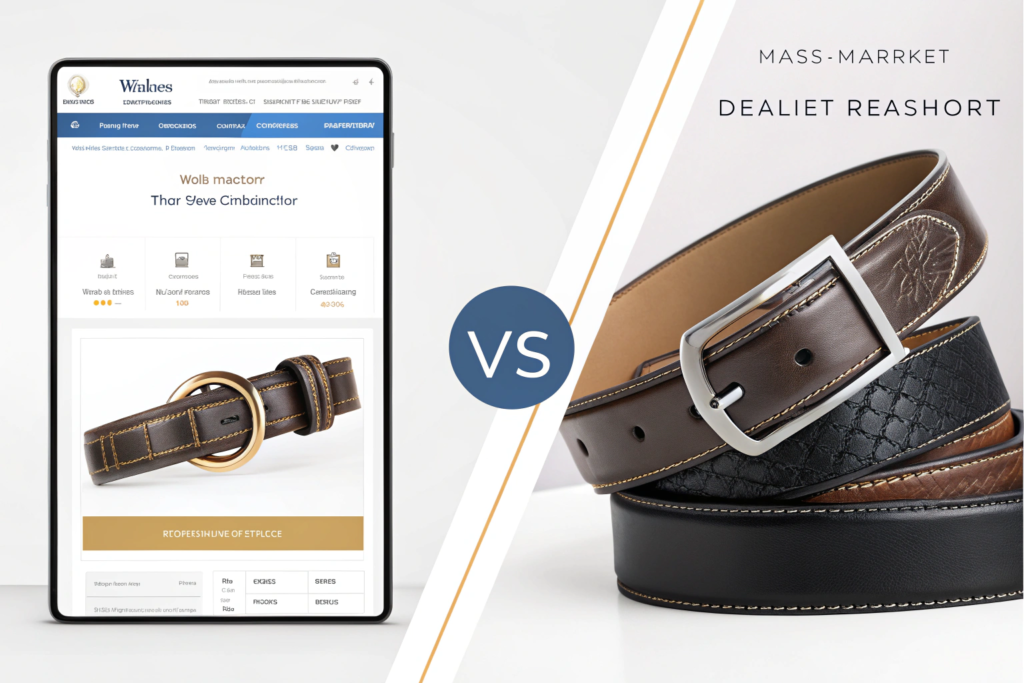
- Direct Competitors: These are the brands that sell similar products to the same target audience at a similar price point. If you're launching a line of mid-priced, sustainable straw hats for women, your direct competitors are other brands doing the same.
- Indirect Competitors: These brands solve the same customer problem but with a different product or at a different price point. For your straw hat brand, an indirect competitor could be a company selling high-SPF baseball caps (different product, same problem: sun protection) or a luxury brand selling designer hats for 5x your price (different price point, same product category).
Start by brainstorming a list of 5-10 direct competitors and 3-5 indirect ones. You can find them through simple Google searches ("women's wool felt fedora"), browsing social media hashtags on platforms like Instagram, or looking at the "customers also bought" sections on e-commerce sites like Amazon. Creating this initial map is the foundational step that informs your entire analysis. It ensures you're looking at the whole playing field, not just one corner of it.
What is a "niche down" strategy?
"Niching down" means focusing on a very specific segment of a larger market. Instead of selling "hats," you might sell "packable, wide-brim sun hats for female travelers over 40." This strategy, as explained in business resources like Forbes, allows you to become a specialist. It makes identifying your direct competitors much easier and helps you tailor your product and marketing to a highly targeted audience that is often underserved.
How can you use social media for competitor discovery?
Social media is a powerful discovery tool. Go to Instagram or TikTok and search for keywords related to your niche (e.g., #silkscarf, #beanie). See which brands are consistently showing up in the top posts or running ads. Look at which influencers in your space are promoting certain brands. This will quickly give you a list of active, relevant competitors and a real-time view of who is capturing your target audience's attention.
How to Analyze Competitor Product and Pricing Strategies?
Once you know who your competitors are, you need to become an expert on their products. The biggest pain point for new brands is misjudging the market's expectation for quality and price. You might think your product is worth $50, but if your top competitors offer a similar or better product for $35, you're going to have a very hard time making sales.
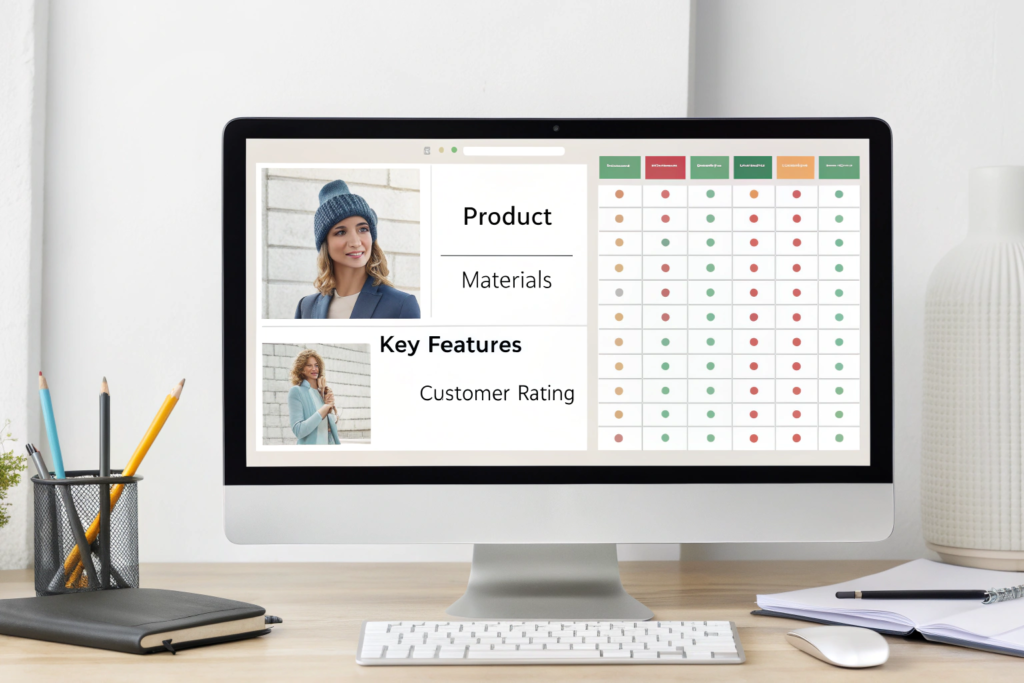
The most effective way to do this is to create a competitor analysis matrix—a simple spreadsheet. List your competitors in the rows. In the columns, create categories like:
- Product Range: What specific types of accessories do they sell? (e.g., only beanies, or a full range of winter hats?)
- Materials Used: Are they using premium materials like cashmere and leather, or more affordable ones like acrylic and PU leather?
- Pricing: What is the price range for their key products?
- Key Features & Gimmicks: Do they have a unique selling proposition (USP), like being waterproof, made from recycled materials, or having a special patented clasp?
- Promotions: Do they frequently offer discounts or run sales?
To get this information, you need to do more than just browse their websites. Buy their products. There is no substitute for having a competitor's product in your hands. You can assess the stitch quality, the feel of the fabric, the quality of the hardware, and the packaging experience. This tactile research gives you an incredible advantage and provides a real-world benchmark for your own product development.
What is a Unique Selling Proposition (USP)?
A Unique Selling Proposition, or USP, is the one thing that makes your business better than the competition. It’s a specific benefit that other brands don't or can't offer. For an accessory, a USP could be "the only fully waterproof leather belt" or "a knit hat made from 100% post-consumer recycled yarn." Having a clear USP, as emphasized by marketing resources like HubSpot, is critical for standing out in a crowded market.
Why is analyzing packaging important?
Packaging is the first physical interaction a customer has with your brand. It's a crucial part of the customer experience. Analyzing a competitor's packaging tells you about their brand positioning. Is it a cheap polybag or a luxurious, custom-printed gift box? Does it include marketing inserts or a thank-you note? A great unboxing experience can create loyal customers and generate social media buzz, and it's an area where you can often innovate and stand out.
Where Can You Find Customer Pain Points and Opportunities?
Your competitors' customers are your most valuable source of free market research. They will tell you exactly what they love and, more importantly, what they hate about the products currently on the market. The biggest opportunity for a new brand is to solve a problem that competitors are ignoring. These "pain points" are gold.
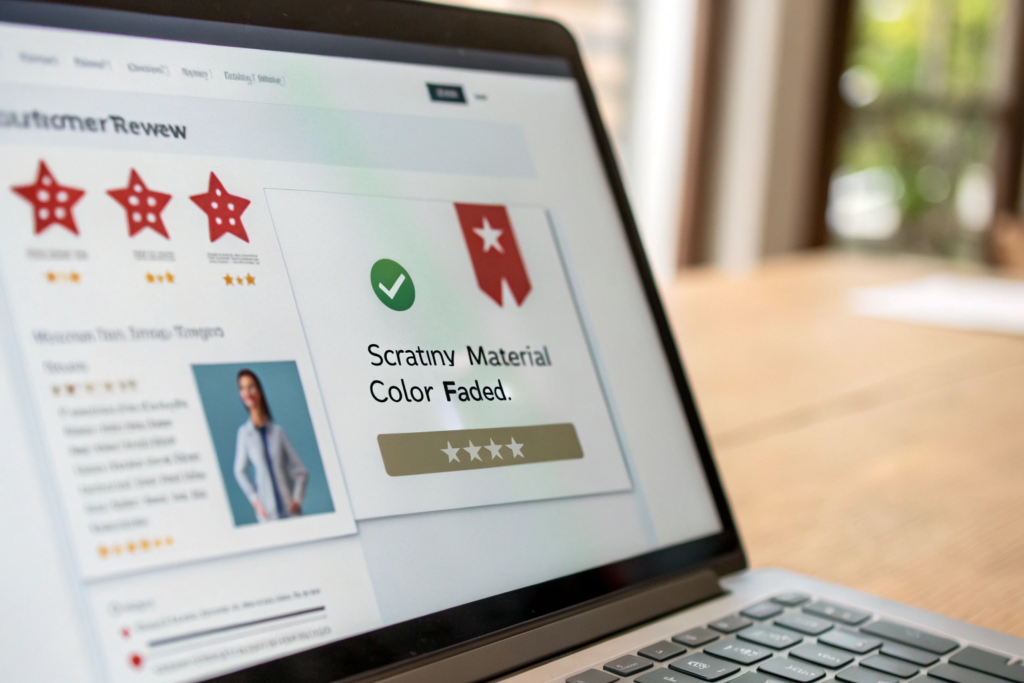
The best place to find this information is in customer reviews. Go to your competitors' product pages, Amazon listings, or third-party review sites. Ignore the 5-star "I love it!" reviews and the 1-star "shipping was late" reviews. Focus on the 2, 3, and 4-star reviews. This is where customers give detailed, constructive feedback. Look for recurring themes and phrases:
- "I love the design, but the material feels scratchy." (Opportunity: Use a softer material.)
- "The hat is great, but it's one-size-fits-all and it's too tight." (Opportunity: Offer multiple sizes.)
- "The color in the photo was a vibrant red, but what I got was a dull orange." (Opportunity: Focus on color accuracy in production and photography.)
- "The clasp on the belt broke after a month." (Opportunity: Use higher-quality hardware.)
Each one of these complaints is a roadmap for how to build a better product. You can compile these pain points in your spreadsheet. When you see the same complaint over and over again across multiple competitors, you've found a significant gap in the market. As a manufacturer, this is the kind of data we at Shanghai Fumao Clothing love to see from a client. It gives us a clear target for development and quality control.
What is a SWOT analysis?
SWOT stands for Strengths, Weaknesses, Opportunities, and Threats. It's a strategic planning framework used to evaluate a company's competitive position. When analyzing a competitor, you can do a quick SWOT: What are their Strengths (e.g., brand recognition)? What are their Weaknesses (e.g., poor customer service, as seen in reviews)? What Opportunities do their weaknesses create for you? What Threats do they pose to your business? It's a simple but effective way to structure your findings, as detailed by resources like the Corporate Finance Institute.
What are some tools for tracking customer sentiment?
For a small business, manual review is often enough. But as you scale, you can use tools to monitor brand mentions and customer sentiment across the web. Services like Brand24 or Mention can track keywords (like a competitor's brand name) across social media, forums, and blogs, giving you a high-level view of what people are saying.
How Do You Use This Data to Position Your Brand?
The final step is to synthesize all this data into a clear position for your own brand. The goal of your analysis was not to become a copycat, but to find your unique space in the market. Now that you know the landscape, you can confidently plant your flag.
Look at your analysis and answer these key questions:
- Where is the gap? Is there an underserved price point? A customer need that no one is meeting? A desire for more sustainable options?
- What can you do better? Based on the customer pain points you identified, what specific improvements can you make? Can you offer better materials, more inclusive sizing, or superior durability?
- What is your story? How can you weave your unique advantages into a compelling brand narrative that will connect with your target audience?
Your brand positioning should be a direct answer to these questions. For example, after your analysis, you might decide to position your brand as: "The only mid-priced belt brand that uses high-quality, waterproof vegan leather and offers an industry-leading 5-year warranty." This position is strong because it's specific, it addresses common pain points (durability, material concerns), and it gives customers a clear reason to choose you over the competition.
This clear positioning statement becomes your North Star. It guides your product development, your marketing messages, and your conversations with partners like us. When a client comes to us with this level of clarity, we can immediately get to work sourcing the right materials and developing prototypes that align perfectly with their strategic vision.

What is brand positioning?
Brand positioning is the process of creating a distinct identity for your brand in the minds of your target customers. It's how you want to be perceived relative to your competitors. A strong positioning statement, as defined by marketing experts like Philip Kotler, is a crucial element of your overall marketing strategy. It's the foundation upon which you build your brand's image and messaging.
How often should you conduct competitor analysis?
Competitor analysis is not a one-time task. The market is constantly changing—new competitors emerge, existing ones launch new products, and customer preferences evolve. You should plan to do a major review at least once a year and smaller check-ins every quarter. Setting up alerts or periodically checking on your top 3-5 competitors will help you stay on top of the market dynamics without it becoming an overwhelming task.
Conclusion
Effective competitor analysis is an essential discipline for any successful accessory brand. It transforms your business strategy from one based on hope and guesswork to one based on data and insight. By systematically identifying your competitors, dissecting their products and pricing, listening to their customers' frustrations, and carving out your unique position, you create a powerful advantage. You build a brand that is not just another "me-too" product but a thoughtful solution to a real market need.
This is the level of strategic thinking we love to partner with. Our role as your manufacturer is to take your clear vision and turn it into a high-quality, tangible product. With our experience and our prime location in Zhejiang's manufacturing ecosystem, we are perfectly equipped to help you build an accessory line that stands out for all the right reasons.
If you have done your research and are ready to build a brand with a clear, competitive edge, we are ready to help you manufacture it. Contact our Business Director, Elaine, at elaine@fumaoclothing.com to start the conversation.