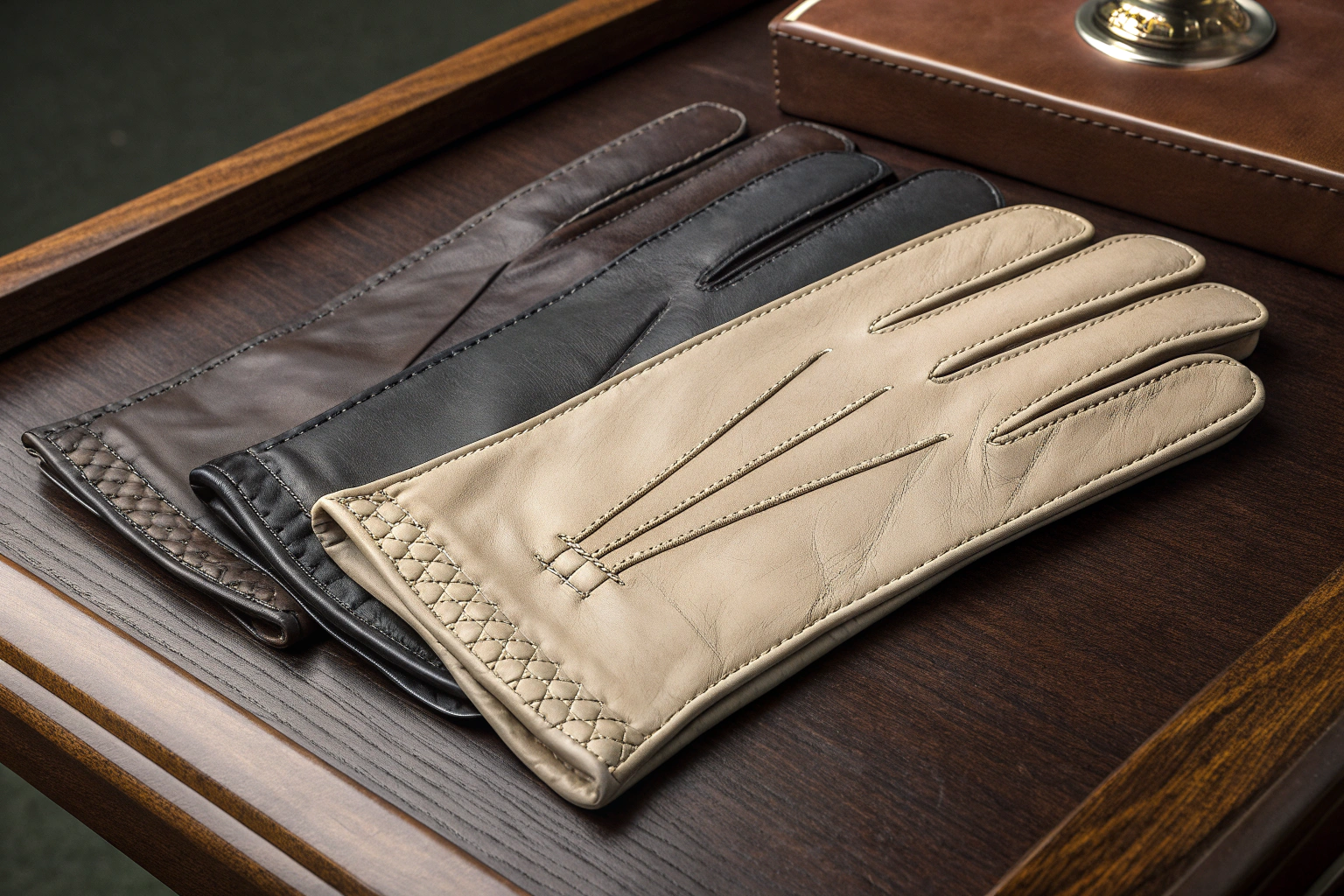
Are your premium leather gloves failing to keep hands warm or becoming uncomfortable after a short time? Does the interior feel clammy, itchy, or just not right? The secret to exceptional glove performance and comfort often lies hidden on the inside. Choosing the wrong lining can undermine even the finest leather exterior, leading to dissatisfied customers and product returns.
The right lining for leather gloves is chosen by balancing four key factors: the desired thermal insulation, moisture management, tactile sensitivity, and durability against wear. For instance, thin silk or bamboo linings offer smooth comfort and dexterity for dress gloves, while fleece or wool provide substantial warmth for winter, and GORE-TEX® or similar membranes add critical waterproofing for performance use. The choice must align with the glove's intended purpose, ensuring the lining complements rather than conflicts with the leather's own properties.
This decision is critical for both user experience and product longevity. A poorly matched lining can cause premature wear, odor buildup, and thermal discomfort. In this guide, we will navigate the world of glove linings, compare material properties for different use cases, explain the impact on manufacturing and feel, and provide a practical framework for specifying the perfect lining for your leather glove line.
What are the primary functions of a glove lining?
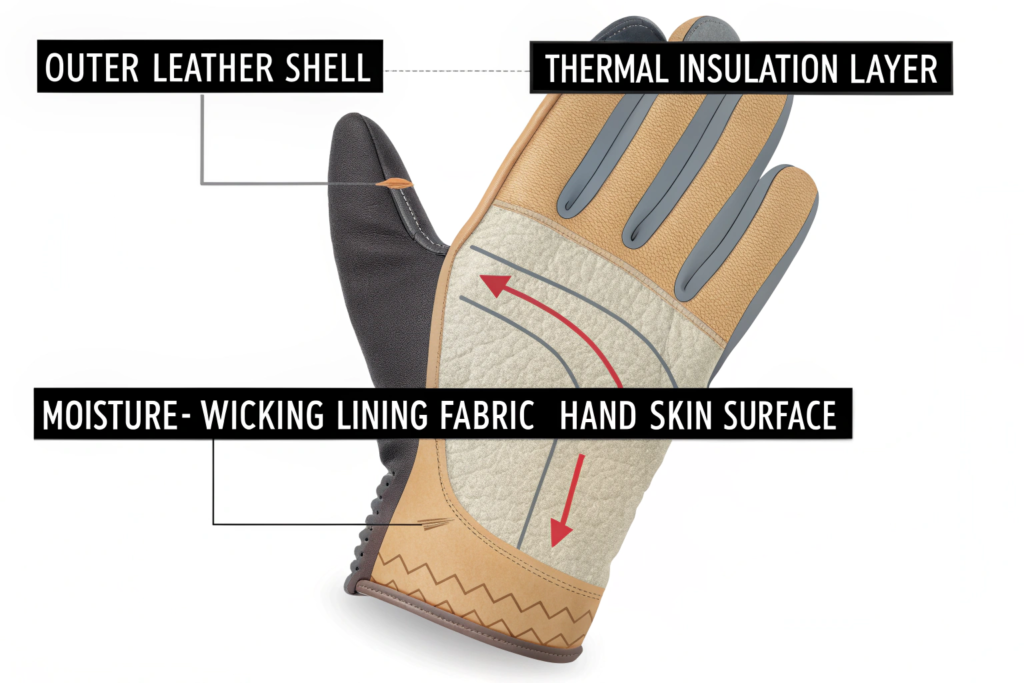
The lining is the interface between the hand and the leather shell. Its role extends far beyond simply covering seams. A high-quality lining performs multiple simultaneous functions that define the glove's overall utility. First and foremost, it provides thermal regulation. It traps a layer of air next to the skin, creating insulation against cold. Conversely, for lighter gloves, it should offer breathability to prevent overheating.
Secondly, it manages moisture and comfort. The lining must wick perspiration away from the skin to keep hands dry, preventing the clammy feeling that leads to cold hands. It should also feel pleasant against the skin—smooth, non-irritating, and with minimal friction to allow easy donning and removal. Finally, it contributes to structural integrity. A good lining protects the leather from the oils and acids on skin, which can degrade leather over time. It also adds a layer of abrasion resistance, helping the glove maintain its shape and extending its lifespan by reducing internal wear.
How does lining impact thermal insulation and warmth?
The lining is the primary driver of a glove's warmth, not the leather itself. Leather is a wind-resistant barrier, but the insulation comes from the lining's ability to trap air. The principle is simple: still air is an excellent insulator. Linings create this trapped air through loft (thickness/fullness of the material) or through fibrous structures that hold air pockets.
- High-Loft Materials: Fleece (brushed polyester), acrylic pile, and wool have a deep, brushed surface that creates significant loft, trapping a thick layer of air. These are used for sub-zero or winter sport gloves.
- Moderate Insulators: Thinsulate™ or other microfibre insulation is a thin, lightweight sheet of very fine fibres that creates immense surface area to trap air without bulk. It offers excellent warmth for its thickness.
- Minimal Insulation: Silk, bamboo viscose, and cotton are flat, woven fabrics. They provide a bare minimum of insulation mainly by blocking wind, making them ideal for cool-weather dress gloves or liners.
The choice directly dictates the glove's market positioning—a cashmere-lined driving glove versus a Thinsulate™-lined ski glove serve entirely different purposes. Resources like the Outdoor Industry Association often publish insights on insulation technologies for outdoor gear.
Why is moisture management critical for comfort?
If thermal insulation is about keeping heat in, moisture management is about keeping sweat out. A hand that is wet, even from perspiration, loses heat up to 25 times faster than a dry hand. Therefore, a lining that retains moisture guarantees cold hands, regardless of insulation. Effective linings use hydrophilic (water-attracting) or capillary action principles.
Wool is a champion here; it can absorb up to 30% of its weight in moisture vapor without feeling wet and retains its insulating properties when damp. Silk and bamboo are also excellent at wicking moisture away from the skin. Synthetic fleece dries very quickly, moving moisture to the outer layers where it can evaporate. For high-activity gloves, a dual-layer system is often used: a soft, wicking inner fabric (like polyester mesh) paired with an insulating mid-layer. This keeps the skin-contact layer dry. Failure to manage moisture leads to discomfort, odor from bacterial growth, and ultimately, leather damage from retained salts and acids. The American Society for Testing and Materials (ASTM) has standards, such as E96, for measuring water vapor transmission, relevant for breathable membranes.
How to match lining materials to glove types?
Selecting a lining is not a one-size-fits-all process. It is a strategic decision that aligns with the glove’s intended use, target customer, and price point. A misalignment here is a common sourcing error—putting a bulky fleece in a sleek dress glove, or a thin cotton in a mountaineering glove. The match must be intentional.
Understanding the core use case allows you to prioritize features. Is maximum dexterity key (e.g., for touchscreen use or fine motor skills)? Is maximum waterproofing non-negotiable (e.g., for snow sports or utility work)? Or is luxury and style the primary driver (e.g., fashion accessories)? By answering these questions first, the field of suitable lining materials narrows considerably, leading to a product that performs as expected.
What linings are best for dress and fashion gloves?
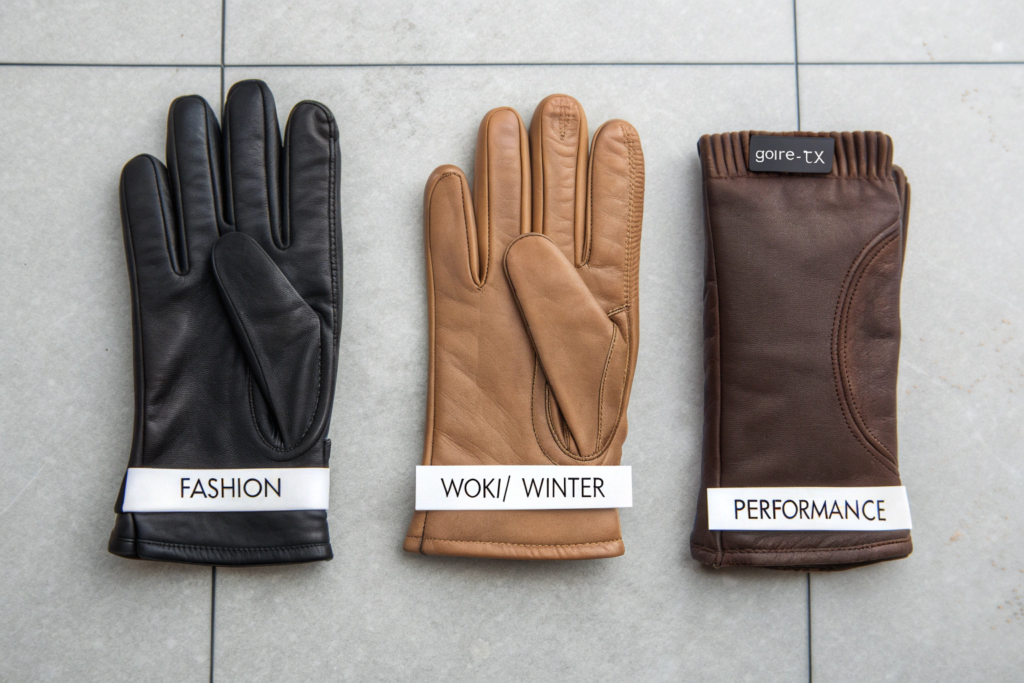
For dress gloves, the lining must prioritize sensory experience, dexterity, and elegance. Bulk is the enemy. The goal is a second-skin feel that enhances the glove's sleek silhouette.
- Silk: The traditional gold standard. It is luxuriously smooth, naturally temperature-regulating, and allows for exceptional dexterity and tactile sensitivity. It is, however, delicate and requires careful cleaning.
- Bamboo Viscose: A modern alternative gaining popularity. It shares silk's smooth, soft hand-feel, has natural antibacterial properties, and is highly breathable and moisture-wicking. It is often more durable and easier to care for than silk.
- Fine Cotton or Polyester: A cost-effective option for everyday fashion gloves. A high-thread-count cotton sateen or a smooth, lightweight polyester microfibre can provide adequate comfort and a clean interior look.
At Shanghai Fumao Clothing, when developing fashion accessory lines, we advise clients that the lining is a key part of the "unboxing experience." A smooth, beautifully finished interior signals quality and care in craftsmanship, justifying a premium position. It’s a detail noticed immediately by the wearer.
What linings are essential for winter and performance gloves?
Here, function dominates fashion. The lining must create a reliable microclimate for the hand in harsh conditions.
- Insulating Layers: Fleece, wool, and synthetic insulations like Thinsulate™ are the workhorses. Wool provides excellent warmth even when wet. Fleece is lightweight, quick-drying, and provides consistent loft. Thinsulate™ offers the highest warmth-to-thickness ratio, preserving dexterity.
- Waterproof/Breathable Membranes: For activities involving snow or wet conditions, a laminate (e.g., GORE-TEX, Sympatex) is crucial. This microporous film is bonded between the leather and the lining. It blocks liquid water from entering while allowing sweat vapor to escape, keeping hands dry from both outside and inside.
- Wicking Inner Layer: Next to the skin, a polyester or nylon mesh or a soft brushed tricot is often used to rapidly move sweat away into the insulating layer.
This construction is more complex and requires precise pattern engineering to accommodate the extra layers without compromising fit. Our factory’s project managers specialize in overseeing these technical builds, ensuring that the quality control process includes seam taping and waterproof testing where required.
What are the manufacturing considerations for different linings?
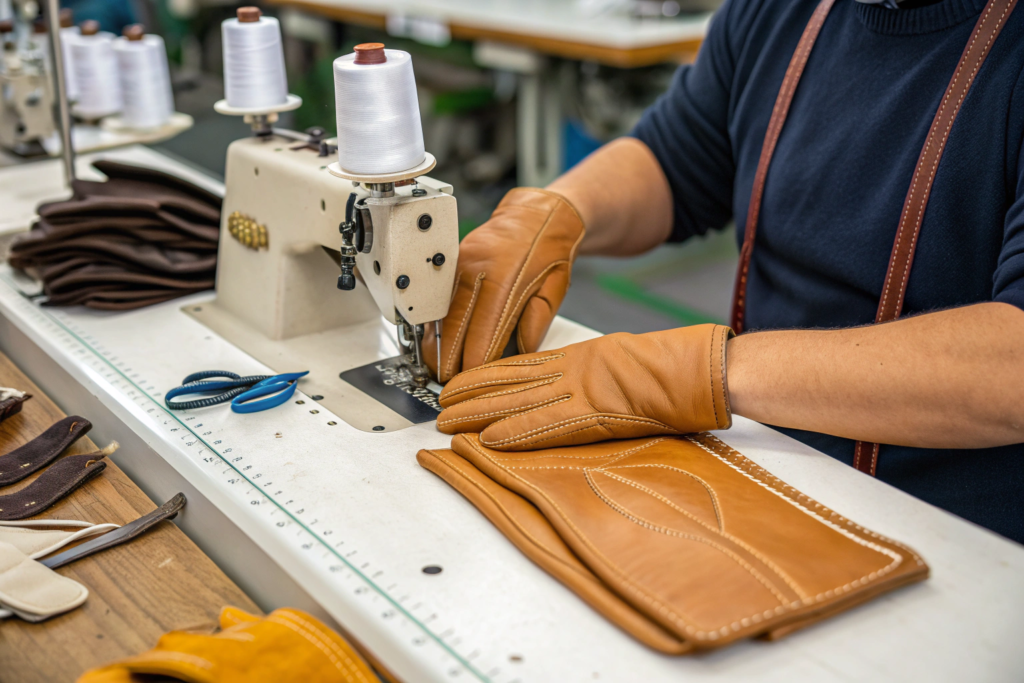
The choice of lining has direct and significant implications for the manufacturing process, cost, and final fit of the glove. A lining is not merely inserted; it is engineered into the product. Different materials behave differently when cut, sewn, and turned, and they interact with the leather shell in unique ways. Overlooking these factors can lead to production delays, cost overruns, and a flawed final product.
Key considerations include the shrinkage rate of the lining fabric during cleaning or steaming, its slipperiness during the sewing process, and its thickness, which affects how much extra allowance must be built into the glove pattern. A thick, bulky fleece requires a larger shell pattern than a thin silk lining to achieve the same internal hand volume.
How does lining choice affect glove fit and patterning?
The lining effectively becomes part of the glove's interior volume. This is a critical concept in glove patterning, known as "allowance."
- Thin Linings (Silk, Bamboo, Lightweight Polyester): These add minimal bulk. The glove pattern can be cut very close to the actual hand measurements for a snug, form-fitting "second skin" feel. This is ideal for dress and driving gloves.
- Medium Linings (Wool Jersey, Light Fleece): These require a slight increase in the pattern size (a few millimeters per panel) to accommodate the fabric's thickness without making the glove too tight.
- Thick Linings/Insulations (Heavy Fleece, Pile, Thinsulate™): These require significant pattern enlargement. If the shell pattern is not expanded accordingly, the glove will be tight, restrictive, and uncomfortable, causing hand fatigue.
A proficient manufacturer will have a library of pattern adjustments for their standard lining materials. When you request a sample, ensure it's made with the intended lining to properly assess the final fit. This is a core part of our product development service at Shanghai Fumao Clothing—we create and approve fit prototypes before bulk production.
What are the cost and complexity implications?
Lining choice is a major driver of both material cost and labor complexity.
Adding a waterproof membrane is the most complex step. It involves laminating the membrane to a lining fabric, then constructing the glove in a way that all seams are sealed—often with heat-activated tape. This requires specialized equipment and expertise, increasing the unit cost significantly but also enabling a premium performance price point. Understanding these trade-offs is essential for effective pricing and market positioning.
How to specify and test glove linings for quality?
Finalizing a lining choice should never be based on a swatch alone. Rigorous specification and testing are required to ensure performance and durability align with marketing claims and customer expectations. This involves defining clear technical parameters and then validating them through standardized tests.
The specification sheet for your lining should include: Fiber Content (exact percentages), Fabric Weight (in grams per square meter - GSM), Finish Requirements (e.g., anti-pilling, pre-shrunk), Colorfastness standards, and any specific Performance Certifications (e.g., Oeko-Tex 100 for skin safety, Bluesign® for environmental impact). This clarity prevents misunderstandings with the mill and ensures consistency across production runs.
What performance tests are non-negotiable?
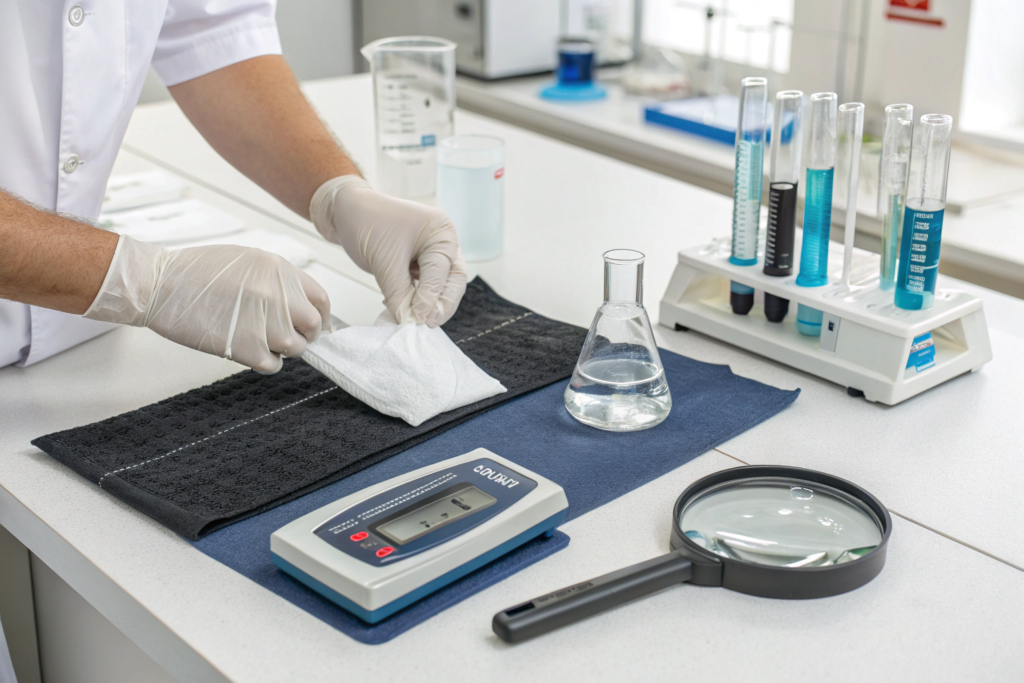
To trust your lining, it must pass these fundamental tests:
- Colorfastness to Crocking (Dry & Wet): Rub a white cotton cloth against the lining under controlled pressure. Minimal color transfer is essential to prevent staining hands or lighter leather interiors.
- Dimensional Stability (Shrinkage): Wash and dry a fabric swatch according to care instructions. Measure the percentage of shrinkage. High shrinkage (>3-5%) can cause the finished glove to pucker or become misshapen after the first clean.
- Martindale Abrasion Test: For linings in high-wear areas (fingertips, palm), this test simulates long-term wear. A low abrasion resistance will cause the lining to wear through prematurely.
- Moisture Wicking Test: A simple vertical strip test, where one end of the fabric is dipped in water, shows how quickly and how far moisture travels along the fibers.
Requesting test reports from your lining supplier or conducting independent third-party tests is a standard part of due diligence. Reputable manufacturers will provide these. Organizations like SATRA, a leading footwear and leather goods research institute, offer extensive testing protocols for components like linings.
How to assess comfort and hand-feel subjectively?
While tests provide data, the subjective experience is paramount. This assessment must be part of your sampling process.
- Wear Trial: Have individuals from your target demographic wear the prototype gloves for an extended period in conditions similar to intended use (e.g., outdoors in cold for winter gloves).
- Donning/Ease of Use: Is the glove easy to put on and take off? Does the lining cause excessive friction? A poor lining can make a glove frustrating to use.
- Tactile Feedback: For gloves requiring dexterity (like driving or phone-use gloves), test the ability to perform fine motor tasks. A thick, spongy lining will deaden sensation.
- Odor Check: After a wear trial, note if any persistent odor has developed, indicating poor moisture management or bacterial growth.
Incorporating this human-factor feedback into your product development cycle is what separates good products from great ones. It allows for refinements before the costly bulk production phase begins.
Conclusion
Choosing the right lining for leather gloves is a decisive act of product engineering that directly defines user satisfaction. It requires a clear understanding of the glove's purpose, balancing the core needs of thermal insulation, moisture management, dexterity, and durability. From the luxurious slip of silk in a dress glove to the robust, climate-managing system of a waterproof performance glove, the lining is the hidden hero of comfort and function.
This choice carries through to manufacturing, affecting pattern dimensions, production complexity, and final cost. Therefore, a successful selection process combines objective material specification and testing with subjective comfort assessment. By methodically evaluating these factors, you can specify a lining that perfectly complements your leather, ensuring the gloves are not only beautiful but also a joy to wear in their intended environment.
If you are looking to develop a line of leather gloves with linings that deliver on both promise and performance, let's combine your design vision with our technical expertise in materials and construction. Contact our Business Director Elaine at Shanghai Fumao Clothing to discuss how we can craft exceptional gloves for your brand. Reach out to Elaine at elaine@fumaoclothing.com to start the conversation.