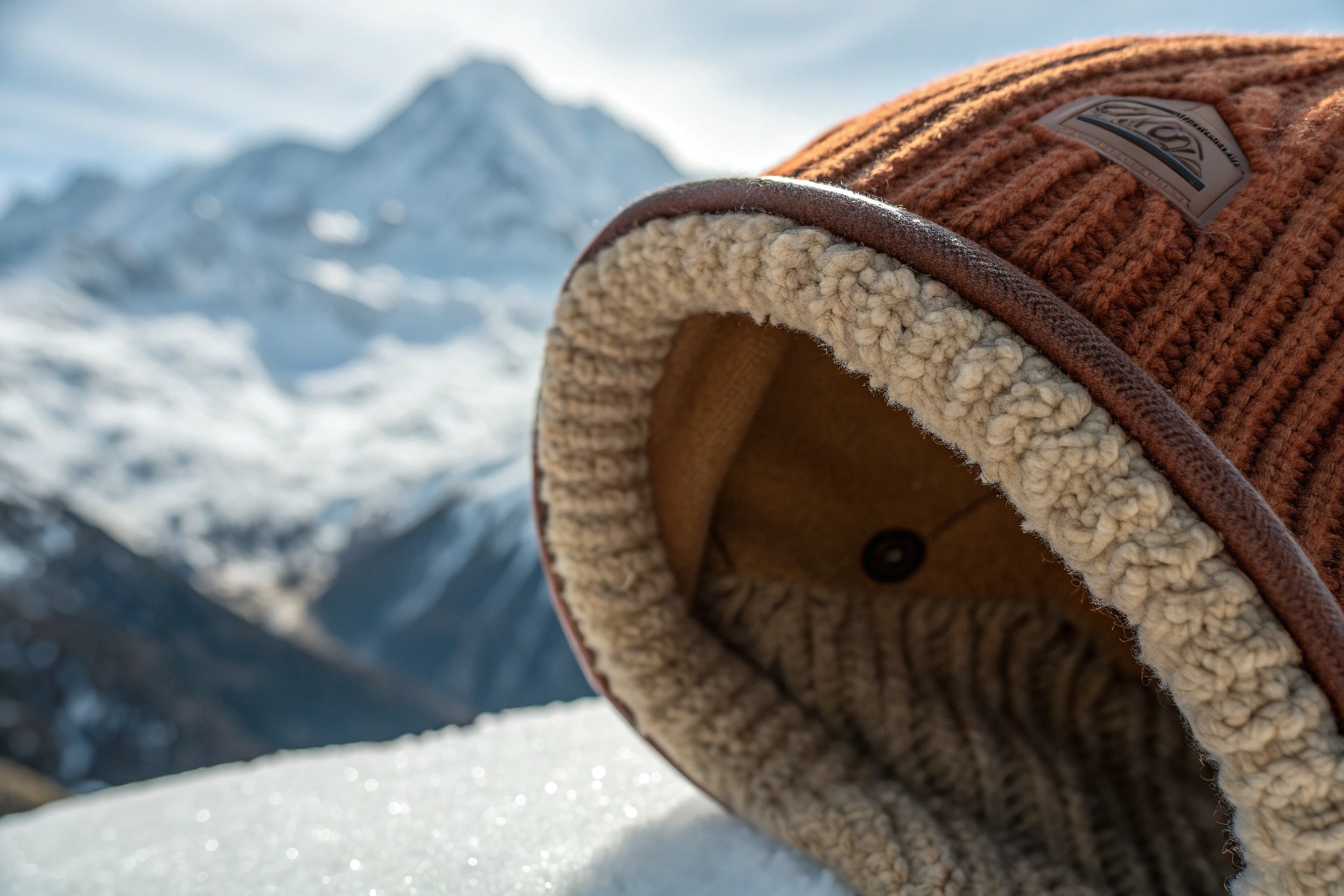
You're deeply involved in designing your new winter hat collection. You've spent weeks perfecting the outer shell—selecting the perfect chunky knit pattern, sourcing a beautiful merino wool blend, and getting the color palette just right. But now you're faced with a critical decision that will ultimately define the hat's comfort, performance, and perceived value: the lining. You might be tempted to think of the lining as an afterthought, a hidden detail. But you know that for the end consumer, the lining is the part they will actually feel. Choosing the wrong lining can lead to a hat that is itchy, sweaty, or not warm enough, resulting in customer dissatisfaction and returns.
Choosing the right lining for a winter hat is a strategic decision that balances four key factors: thermal insulation (warmth), moisture management (breathability), skin-feel (comfort), and the overall cost and quality positioning of the product. The best choice is not a single material, but the one that best serves the hat's intended purpose. For high-performance athletic hats, a moisture-wicking technical fabric is essential, while for casual, everyday luxury, a soft, plush fleece or a natural fiber like merino wool offers unparalleled comfort and warmth.
I'm the owner of Shanghai Fumao Clothing, and I can tell you from decades of experience that the lining is where a good hat becomes a great hat. It's a detail that customers notice instantly. The moment they try it on, they can feel the difference between a cheap, scratchy acrylic and a soft, premium fleece. The lining is your secret weapon for creating a product that feels more luxurious, performs better, and earns customer loyalty. Let's explore the top lining options and how to choose the right one for your specific needs.
Why is Fleece the Go-To Lining for All-Around Comfort and Warmth?
If there is one "king" of winter hat linings, it is fleece. Walk into any store and examine the majority of quality winter hats, and you will find some variation of a fleece lining inside. Why has this synthetic material become the undisputed industry standard for casual and everyday winter hats?
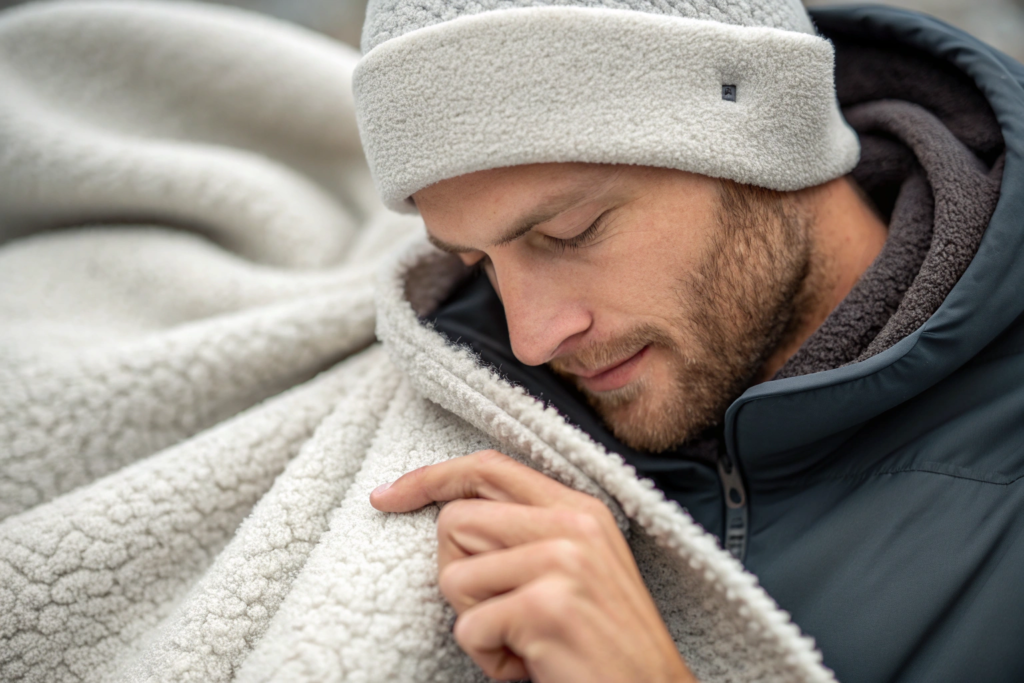
Fleece is the go-to lining for its unbeatable combination of excellent thermal insulation, superior softness, and outstanding value. This synthetic knit fabric, typically made from polyester, has a deep, plush pile that traps air effectively to provide warmth, while its hydrophobic nature means it does not absorb moisture and dries quickly. Its incredibly soft, non-itchy feel against the skin makes it a universally comfortable choice that dramatically increases a hat's perceived quality and comfort.
Let's break down the key advantages that make fleece so dominant:
- Exceptional Warmth-to-Weight Ratio: The structure of fleece is designed to mimic the insulating properties of natural wool. The fibers are knitted and then brushed to create a deep, fuzzy pile with millions of tiny air pockets. This trapped air is what provides excellent insulation, keeping the wearer's head warm without adding significant weight or bulk to the hat.
- Unmatched Comfort & Softness: This is its biggest selling point. Fleece is incredibly soft to the touch and feels wonderful against the forehead and ears. For hats made from potentially "itchy" outer materials like traditional wool or coarse acrylic, adding a fleece lining is a game-changer. It completely eliminates the itch factor, making the hat comfortable for everyone, even those with sensitive skin.
- Moisture Resistance: Polyester, the primary component of fleece, is a hydrophobic fiber. This means it absorbs very little moisture (typically less than 1% of its weight). So, while it's not a "wicking" performance fabric, it won't get soaked with sweat and feel cold and clammy like cotton would. It dries very quickly, which is a major advantage in cold, damp conditions.
- Durability and Value: Fleece is a durable, long-lasting material that is easy to wash and care for. It is also very cost-effective to produce, meaning you can add this significant upgrade in comfort and warmth to your hat for a very reasonable increase in manufacturing cost.
What are the different types of fleece?
Not all fleece is created equal. The terminology can be confusing, but here are the key types to know:
- Microfleece: This is the most common and ideal type for hat linings. It has a thinner profile and a very soft, plush, velvety feel. It provides excellent warmth without being too bulky.
- Polar Fleece: This is the thicker, fluffier fleece you often see used for jackets and blankets. It is generally too thick and bulky to be used as a full lining in a hat, but it can be used for earflaps on trapper-style hats.
- Sherpa Fleece: This type is designed to mimic the look and feel of sheep's wool. It has a very deep, fluffy, "teddy bear" texture on one side and a smooth knit back on the other. It is incredibly warm and has a very trendy, cozy aesthetic. A sherpa-lined hat is a major selling point.
For most applications, specifying "100% polyester microfleece" is the correct technical request for your supplier.
Should the lining cover the whole hat or just the ears?
This is a key design choice.
- Full Lining: A full lining provides the maximum warmth and comfort. This is the best choice for very cold climates or for customers who are particularly sensitive to itchiness.
- Fleece Band / Ear Band: Only lining the bottom 2-3 inches of the hat with a band of fleece is a very common and cost-effective technique. This provides the crucial softness and warmth over the ears and forehead (the most sensitive areas) while leaving the crown of the hat unlined, which can improve breathability. This is an excellent compromise that delivers most of the benefits at a lower cost.
What Lining is Best for High-Performance Athletic Hats?
An athlete running, skiing, or hiking in the winter has a very different need than someone walking to a coffee shop. Their body is generating a huge amount of heat and sweat. A standard fleece lining, while warm, can become overwhelmed, leading to a sweaty, uncomfortable feeling. For this customer, moisture management is just as important as warmth.
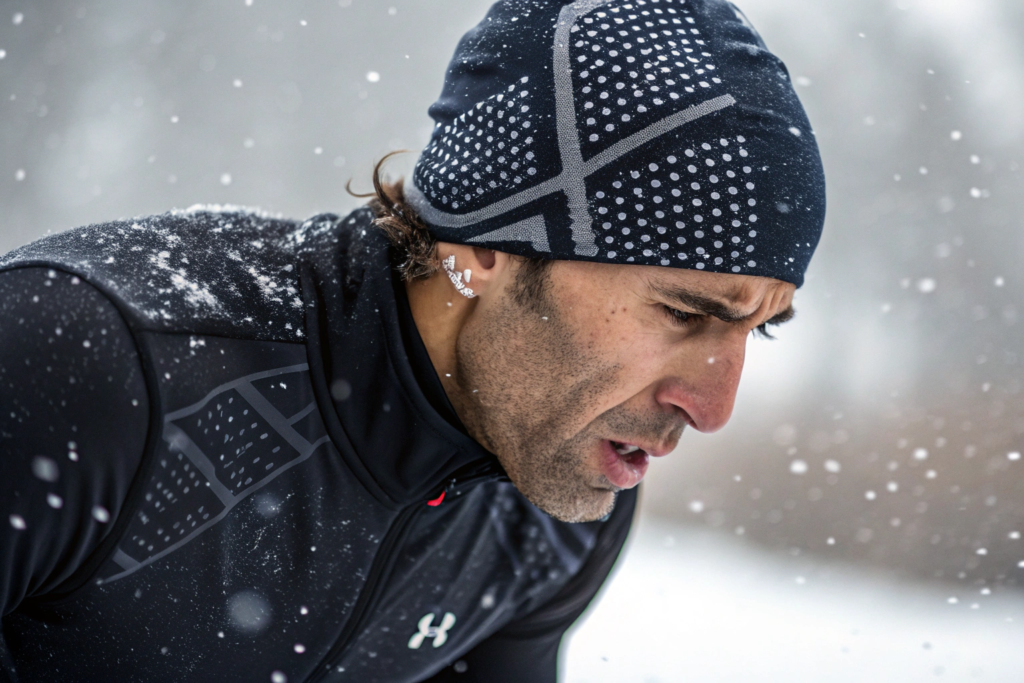
For high-performance athletic winter hats, the best lining is a technical, moisture-wicking fabric, often with a grid or channelled texture. These fabrics are specifically engineered to pull sweat away from the skin and move it to the outer surface of the hat to evaporate. This active moisture management keeps the athlete's head dry and comfortable, preventing the dangerous chill that can occur when sweat cools against the skin.
This is about performance, not just passive warmth.
- Active Sweat Transport: These fabrics work via capillary action. The structure of the knit creates tiny channels that actively pull liquid sweat away from the skin. This is the "wicking" process. A great example of this technology is Polartec's Power Grid™ fabric, which is famous for its grid pattern that enhances both wicking and breathability.
- Breathability: Performance linings are also highly breathable, allowing water vapor (the gaseous form of sweat) to escape easily. This prevents a build-up of hot, humid air inside the hat, which is a major source of discomfort during intense activity.
- Preventing a "Flash Chill": The most important safety function of a wicking lining is preventing a "flash chill." When an athlete stops moving, any sweat trapped against their skin will rapidly cool, which can be uncomfortable and even dangerous in very cold conditions. By keeping the skin dry, a wicking lining dramatically improves safety and comfort.
What are these fabrics made of?
Like performance fabrics for shirts and leggings, these are typically synthetic blends. A mix of polyester and spandex is very common. The polyester provides the moisture-wicking properties, and the spandex provides the stretch needed for a snug, athletic fit. Some premium versions may use nylon for its softer hand-feel.
Can a hat be both warm and wicking?
Yes, and this is the goal of a great athletic winter hat. The outer layer (like a knit acrylic or wool) provides the primary thermal insulation, while the inner lining is responsible for the moisture management. The two layers work together as a system. The lining moves the sweat to the outer layer, where it can then evaporate into the cold, dry air.
When Should You Use a Natural Fiber Lining?
For a certain segment of the market, "natural" is synonymous with "luxury." These are customers who are wary of synthetic materials and are willing to pay a premium for the feel and performance of natural fibers. While fleece is a great all-arounder, a natural fiber lining can elevate your hat into a true luxury product.
A natural fiber lining, such as merino wool or a jersey knit cotton blend, should be used when your brand positioning is focused on natural materials, sustainability, or ultimate luxury. Merino wool, in particular, offers a unique combination of natural warmth, softness, and impressive moisture-wicking and anti-odor properties, making it the ultimate high-performance natural lining. A soft cotton jersey lining is a good choice for a more casual, comfort-focused "wellness" positioning.
Let's look at the top natural fiber choices:
- Merino Wool: This is the superstar of natural performance fibers. Unlike traditional, coarse wool, merino wool fibers are incredibly fine, making them soft and itch-free against the skin.
- Performance: Merino has a unique ability to absorb a significant amount of moisture vapor before you even feel sweaty, and it can still insulate when damp. It is also naturally odor-resistant, a huge plus for an athletic accessory.
- Positioning: A hat with a merino wool lining (or a hat made entirely of merino wool) can be marketed as a premium, high-performance, natural alternative to synthetics. It appeals to the discerning outdoor enthusiast and the eco-conscious consumer.
- Cotton Jersey / Cotton Blends: Think of the soft, comfortable feel of your favorite t-shirt. A lining made from a soft, stretchy cotton jersey (often blended with modal for extra softness and spandex for stretch) is a great choice for casual, lifestyle hats.
- Performance: It is very breathable and feels great against the skin. However, it is important to remember that cotton absorbs moisture and does not wick it away, so it is not suitable for high-intensity sports where you will be sweating heavily.
- Positioning: It's perfect for a "wellness" or "loungewear" story, emphasizing natural comfort for low-intensity activities or just cozying up at home.
Is a 100% wool lining a good idea?
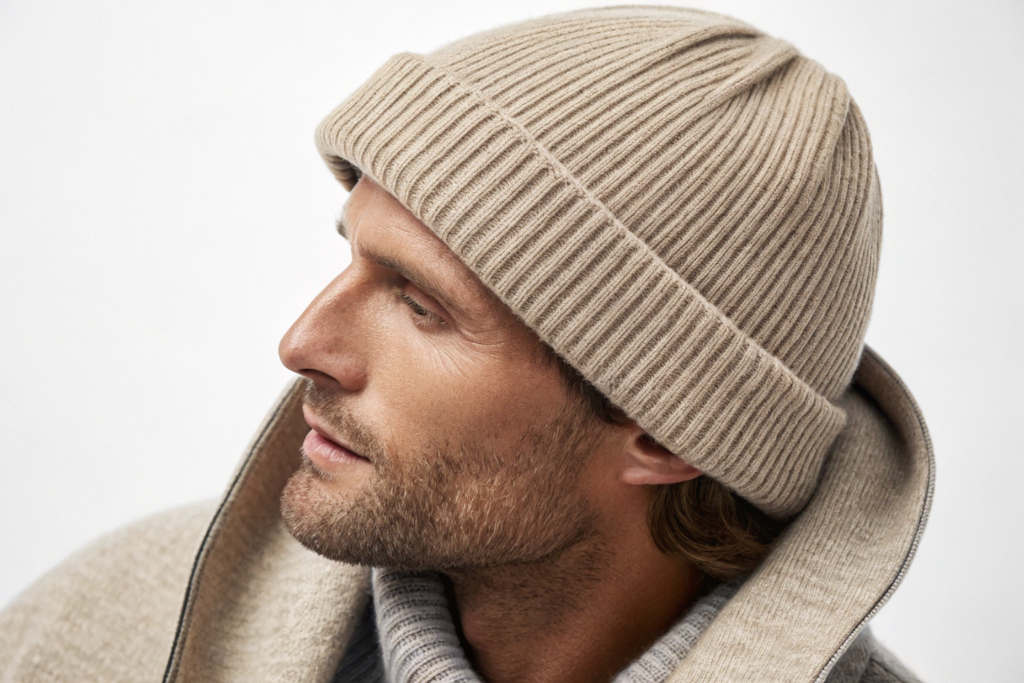
It depends entirely on the type of wool. A lining made from fine merino wool is excellent. A lining made from standard, coarser wool would be incredibly itchy and uncomfortable and should be avoided at all costs. This is why a fleece ear band is so often added to traditional wool hats—to solve the itch problem.
What about silk linings?
A silk lining is the ultimate in luxury and softness, and it is excellent for preventing hair frizz and static (often called a "hair-friendly" lining). However, it offers very little in terms of warmth and insulation. It is a very niche, high-luxury choice, best suited for a fashion-focused, lightweight "dress" hat rather than a true winter hat designed for warmth.
What Are the "Unlined" and "Self-Lined" Options?
Does every winter hat need a separate, sewn-in lining? Not necessarily. In some cases, the material and construction of the hat itself can serve as the lining. Understanding when this is appropriate can help you create a wider range of products at different price points.
A hat can be "unlined" if the outer material is inherently soft, non-itchy, and warm enough on its own, such as a hat made from high-quality, extra-fine merino wool or cashmere. A "self-lined" or "double-layer" hat is one where the hat is constructed from a single piece of fabric that is folded over on itself, creating a two-ply construction where the soft inner face of the fabric acts as its own lining. This is a common and effective technique for both knit beanies and fleece hats.
Let's explore these options:
- The Unlined Option: This is only suitable for the most premium of materials.
- When it works: If your hat is knit from 100% cashmere, extra-fine merino wool, or a similarly luxurious and soft yarn, adding a separate lining would be redundant and might even detract from the natural qualities of the primary material. The material itself is the selling point.
- When it doesn't work: An unlined hat made from standard wool or a basic, scratchy acrylic will be uncomfortable and feel cheap.
- The Self-Lined (Double-Layer) Option: This is a very common and effective construction method.
- How it works: A beanie is often knit as a long tube, which is then folded back inside itself and closed at the top. This instantly creates a double layer of fabric, doubling the insulation and ensuring the soft, finished side of the knit is against the skin.
- Benefits: This method is efficient from a manufacturing perspective (no separate cutting and sewing of a lining piece). It provides excellent warmth and ensures a consistent feel inside and out. It's a great choice for both acrylic and wool-blend beanies. A hat made entirely from fleece is also often constructed this way.

How can I tell if a hat is self-lined?
Turn the hat inside out, a simple yet revealing gesture that transforms the ordinary into a study of craftsmanship and design. In a self-lined hat, the fabric and knit pattern on the inside will be identical to the outside—smooth, familiar, as if you’re peering into a mirror of the exterior.
The same soft wool or delicate cotton stretches gently under your fingers, the same intricate stitch patterns (whether cable-knit, ribbed, or jacquard) repeat in perfect symmetry, creating a seamless continuity that feels both intentional and comforting, like a secret shared between the front and back. In contrast, a hat with a separate lining offers a different narrative: here, you’ll see a different fabric altogether, perhaps a plush fleece that feels like a cloud against your palm, its fuzzy texture a stark contrast to the crisp outer material.
Is an unlined acrylic hat a good product?
Generally, no. While some modern acrylic yarns are very soft, many can have a slightly scratchy or "plasticky" feel. An unlined acrylic hat is a hallmark of a very low-cost, budget item. Adding even a simple fleece ear band to an acrylic hat is one of the most cost-effective ways to dramatically increase its comfort and perceived value, lifting it out of the "budget" category.
Conclusion
The lining of a winter hat is far more than a hidden detail; it is the core of the customer's comfort and performance experience. Your choice of lining is a powerful tool that allows you to tailor your product to a specific customer and a specific use case. For all-around warmth and unbeatable, itch-free comfort in an everyday hat, a soft microfleece is your most reliable and valuable choice. For the serious athlete who demands performance, a technical moisture-wicking lining is the only option. For the luxury consumer or the wellness-focused customer, a natural fiber lining like merino wool or soft cotton jersey tells a story of premium quality and mindful comfort. By making a deliberate, informed choice about your lining, you can create a product that doesn't just look good on the shelf, but feels incredible on the head, earning you the positive reviews and repeat business that build a truly successful brand.
At Shanghai Fumao Clothing, we are experts in hat construction, and we understand the critical role the lining plays. We can source a wide variety of lining materials, from high-performance technical fabrics to luxurious sherpa fleece, and our team can advise you on the best choice for your design, your target customer, and your cost objectives. If you are ready to create a winter hat collection that delivers on every level of quality and comfort, please reach out to our Business Director, Elaine, at elaine@fumaoclothing.com.