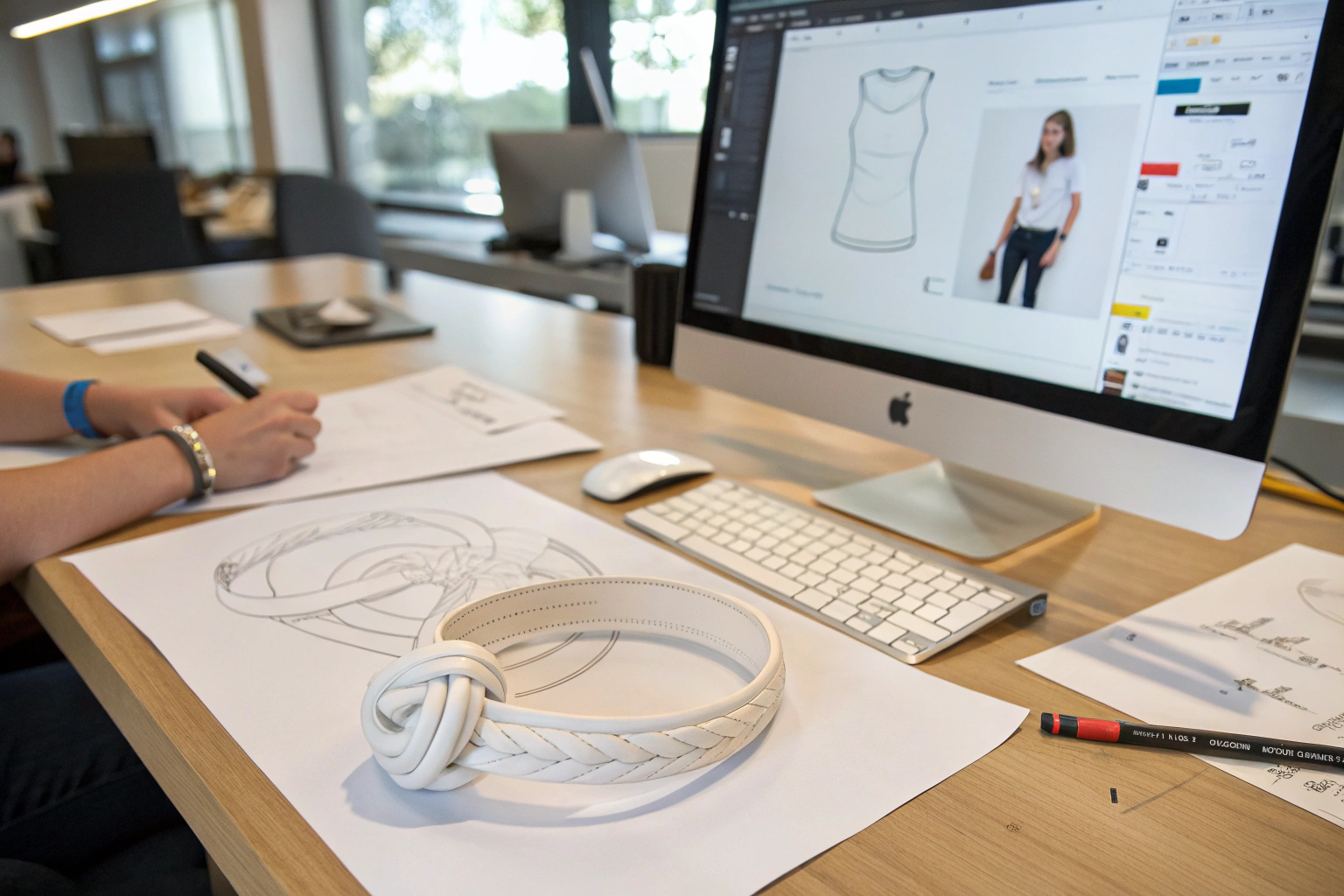
A brand founder from a New York-based accessories label once sent me a photograph of a napkin. She had been at a restaurant, had an idea for a headband shape, and sketched it on her napkin. It was a knotted front design with a twisted detail and a specific profile she had not seen on the market. She asked me if we could turn that napkin sketch into a physical sample she could hold in her hands. She had a buyer meeting in three weeks. She needed the sample to show the buyer. I told her we could do it.
A new headband shape can be developed from a hand sketch to a finished physical sample in 5 to 10 working days. The timeline depends on the complexity of the shape, the material, and whether a new mold is required. A simple fabric-covered headband with an existing frame can be sampled in 3 to 5 days. A fully custom injection-molded shape requiring a new mold takes 10 to 15 days. We also offer a 72-hour express sampling service for urgent buyer presentations.
At Shanghai Fumao, our sample room has turned countless sketches, napkin drawings, and mood board references into wearable headband samples. We know that a sketch is the first expression of an idea, and speed to sample is often the difference between winning and losing a retail placement. Let me walk you through exactly how we translate a hand sketch into a finished sample.
What Is the Step-by-Step Process from Sketch to Sample?
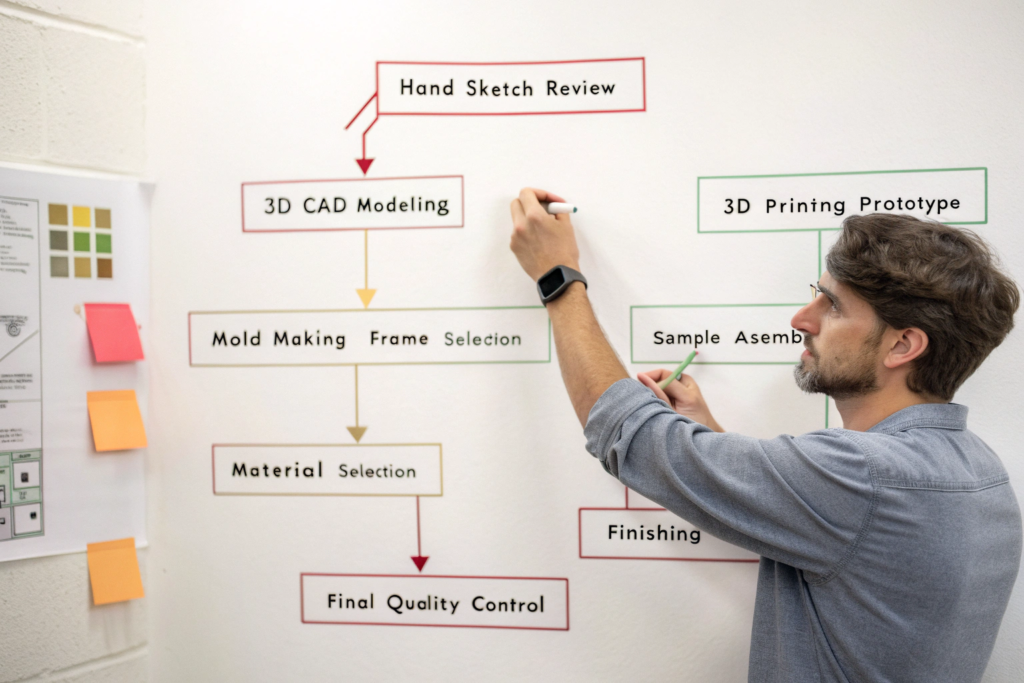
Turning a hand sketch into a physical headband sample involves a sequence of stages. Each stage translates the design closer to a wearable product. The process moves from concept, to digital model, to physical prototype, to final sample. We manage this process with a dedicated sample team that specialises in headwear and hair accessories.
The first stage is design interpretation. Your sketch arrives, whether it is a detailed drawing with dimensions or a rough concept with a few notes. Our design team reviews it immediately. We ask clarifying questions if needed. What is the intended width? What is the material? Is there a specific fit requirement? Should the headband sit behind the ears, on top of the head, or wrap around? The answers guide the technical development.
How Does 3D CAD Modeling Translate a Sketch into a Precise Design?
The reviewed sketch is handed to our CAD modeller. Using Rhino 3D or SolidWorks software, the modeller creates a three-dimensional digital model of the headband shape. The 2D sketch becomes a 3D object that can be rotated, measured, and refined on screen. This is where the design becomes precise.
The CAD model defines every curve, every dimension, and every surface. The headband’s inner diameter, which determines fit, is specified to the millimetre. The cross-section of the band, whether it is flat, rounded, or sculptural, is modelled. The attachment points for any decorative elements are defined. The modeller sends rendered images of the 3D model to you for review. You see the shape from every angle. You can request adjustments. Make the band wider. Increase the curve. Soften the edges. The modifications are made in hours, not days. Once you approve the 3D model, we move to the physical prototype stage. Professional 3D CAD for accessory design compresses the design iteration cycle dramatically.
What Is the Role of 3D Printing in Rapid Headband Prototyping?
The approved 3D CAD file is sent to our in-house 3D printer. The printer produces a physical prototype of the headband shape in a hard resin or a flexible photopolymer, depending on the intended material of the final product. The print time is typically 2 to 6 hours for a headband.
The 3D-printed prototype is a functional design verification tool. You can hold it. You can try it on a mannequin head or a live model. You can check the fit, the proportions, and the silhouette. The prototype is not wearable as a final product. The material is not production-grade. But it answers the critical design questions. Does the shape look like the sketch intended? Does it sit correctly on the head? Are the proportions right? If adjustments are needed, the CAD file is modified and a new prototype is printed. This rapid iteration cycle, sketch to CAD to 3D print to review, can happen in 24 to 48 hours. It is the fastest way to validate a new shape before investing in tooling. Understanding 3D printing in fashion accessory prototyping is essential for brands that need speed to market.
How Do Material and Construction Choices Affect the Timeline?
The material and the construction method determine how the headband is made and how long the sample takes. A fabric-covered headband uses an existing metal or plastic frame. The frame is selected from our library, and the fabric is wrapped and stitched around it. This is the fastest construction method. A sample can be produced in 3 to 5 days.
An injection-molded plastic headband requires a mold. The mold is cut from steel based on the approved 3D CAD file. Mold making takes 10 to 15 working days. The molded sample is then produced, polished, and finished. This is a longer process, but it is necessary for a fully custom shape in acetate, polycarbonate, or a similar rigid material. A resin-cast headband uses a silicone mold poured from a master pattern. The silicone mold takes 1 to 2 days to make. The resin casting and curing takes another 1 to 2 days. This method is faster than injection molding for small sample quantities and allows for unique colour effects like marble or terrazzo.
What Is the Fastest Path for a Fabric-Covered Headband Sample?
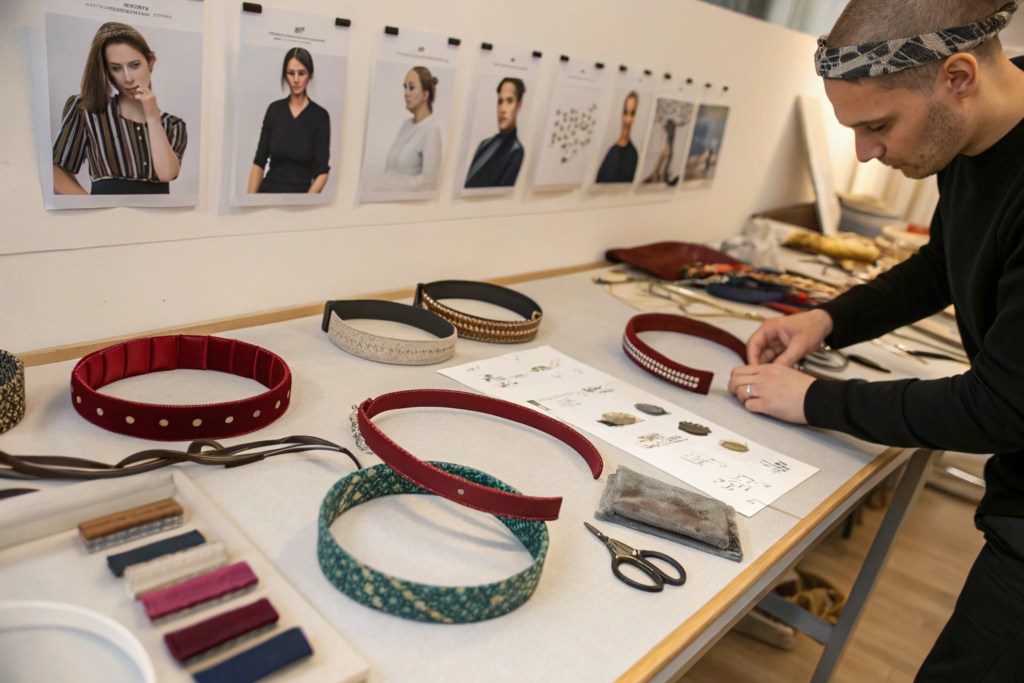
The fastest path to a sample is to use an existing frame from our library. We have frames in dozens of profiles: narrow, wide, curved, flat, with teeth, without teeth. You choose the frame that best matches your sketch. We wrap it in your chosen fabric. We add any decorative elements such as knots, bows, twists, or embellishments. The sample is finished and shipped within 3 to 5 working days.
This method is ideal for brands that are customising the fabric, the colour, and the decorative detail, but not the fundamental frame shape. The headband looks custom because the fabric and the detail are unique to the brand. The underlying frame is standard. This is the most common path for fashion headbands where the fabric and the colour story change every season, but the silhouette remains consistent. If you need a custom fabric headband sample, the frame library is the key to speed.
When Is a Custom Mold Necessary for a Headband Shape?
A custom mold is necessary when your sketch depicts a shape that does not exist in our frame library. A unique sculptural profile. A specific cross-section that is not standard. A headband that integrates functional features such as a phone grip, a light, or a specific non-slip texture. If the shape is new, the mold must be new.
The mold is a precision tool that injects molten plastic into the exact shape of your design. The mold-making process is the same as for any custom injection-molded product. The CAD file drives the CNC machine that cuts the mold cavity. The cavity is polished. The mold is tested. The first molded samples are inspected. The timeline is 10 to 15 working days for the mold, plus sampling time. The mold cost is a one-time investment. It is amortised over the production volume. For a unique headband shape that will define a brand’s collection, the custom mold is the right investment. Professional custom injection mold development provides the shape exclusivity that brands need to differentiate in the market.
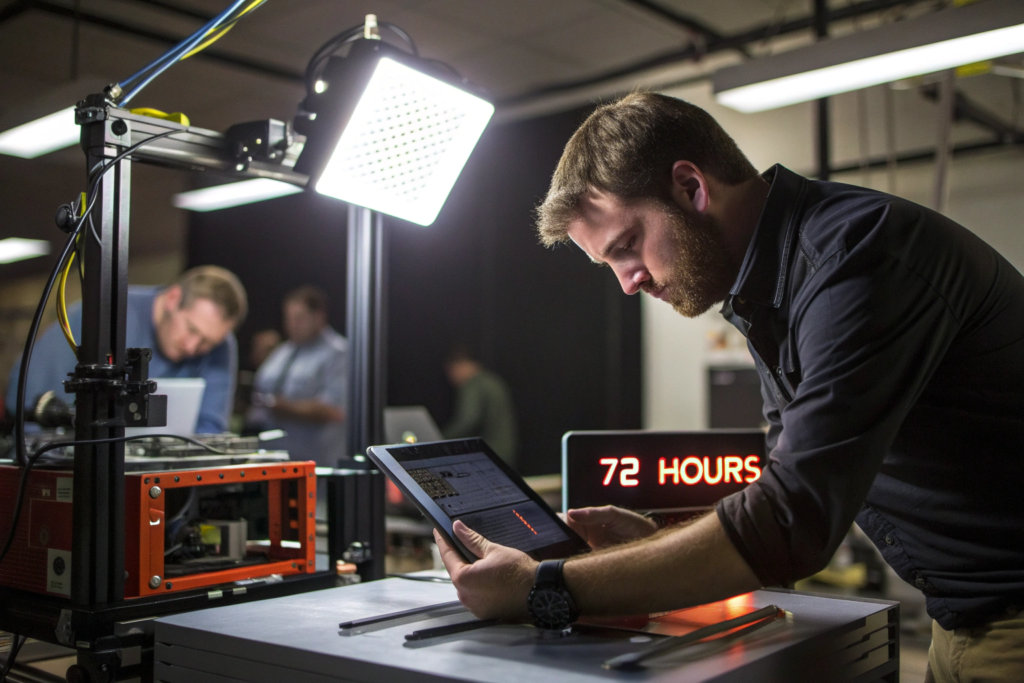
How Does Our Express Sampling Service Deliver in 72 Hours?
Our 72-hour express sampling service is designed for the moments when a deadline is absolute. A buyer presentation. A trade show. A celebrity styling opportunity. A Kickstarter campaign photoshoot. When three days is all the time you have, we compress the sampling workflow by dedicating a senior technician to your project and making decisions in parallel that would normally be made sequentially.
The express service is for fabric-covered headbands using an existing frame, or for resin-cast headbands using a silicone mold. It is not available for injection-molded headbands that require a steel mold, because the mold-making time cannot be compressed below 10 days without compromising quality. The express sample is a finished, wearable, presentation-quality headband. It is not a rough prototype. It is the product you would show to a buyer.
What Process Accelerations Make 72-Hour Sampling Possible?
The 72-hour express process accelerates every stage. The design review happens within one hour of receiving your sketch. The CAD modelling is done immediately and sent to you for review. You provide feedback within hours, not days. The 3D prototype is printed overnight. You review photos of the prototype on a mannequin head the next morning.
Material selection happens in parallel with the 3D printing. The fabric is pulled from our sample material library. The frame is selected. The sample technician begins wrapping and finishing as soon as the design is confirmed. The work continues through extended hours. The sample is finished, inspected, photographed, and shipped by the end of the third day. The express service has a premium charge that reflects the dedicated technician time and the disruption to the standard sample schedule. For clients facing a hard deadline, the premium is an investment in the opportunity. Professional rapid sampling for fashion accessories is a competitive advantage that opens doors.
What Are the Limitations of an Express Sample?
The express sample is a visual and functional representation of the design. It is perfect for a buyer presentation, a design review, or a photoshoot. It is not a pre-production sample. It was made by a sample technician working at maximum speed, not by the production line working at standard speed. The express sample demonstrates the design, the material, and the finish. It does not demonstrate production-line consistency or long-term durability.
We communicate these limitations clearly. The express sample is the first step. Once the design is approved based on the express sample, we proceed to a standard pre-production sample that is made using the production process. The express sample opens the door. The pre-production sample locks in the production standard. Understanding the difference between prototype and pre-production samples ensures you use each sample for its intended purpose.
Conclusion
A new headband shape can be developed from a hand sketch to a finished sample in 5 to 10 working days for standard development, or in as little as 72 hours for express sampling of fabric-covered or resin-cast designs. The timeline depends on the complexity of the shape, the material, and whether a custom mold is required. The process moves through design interpretation, 3D CAD modelling, 3D printing for prototype validation, material and frame selection, and sample finishing.
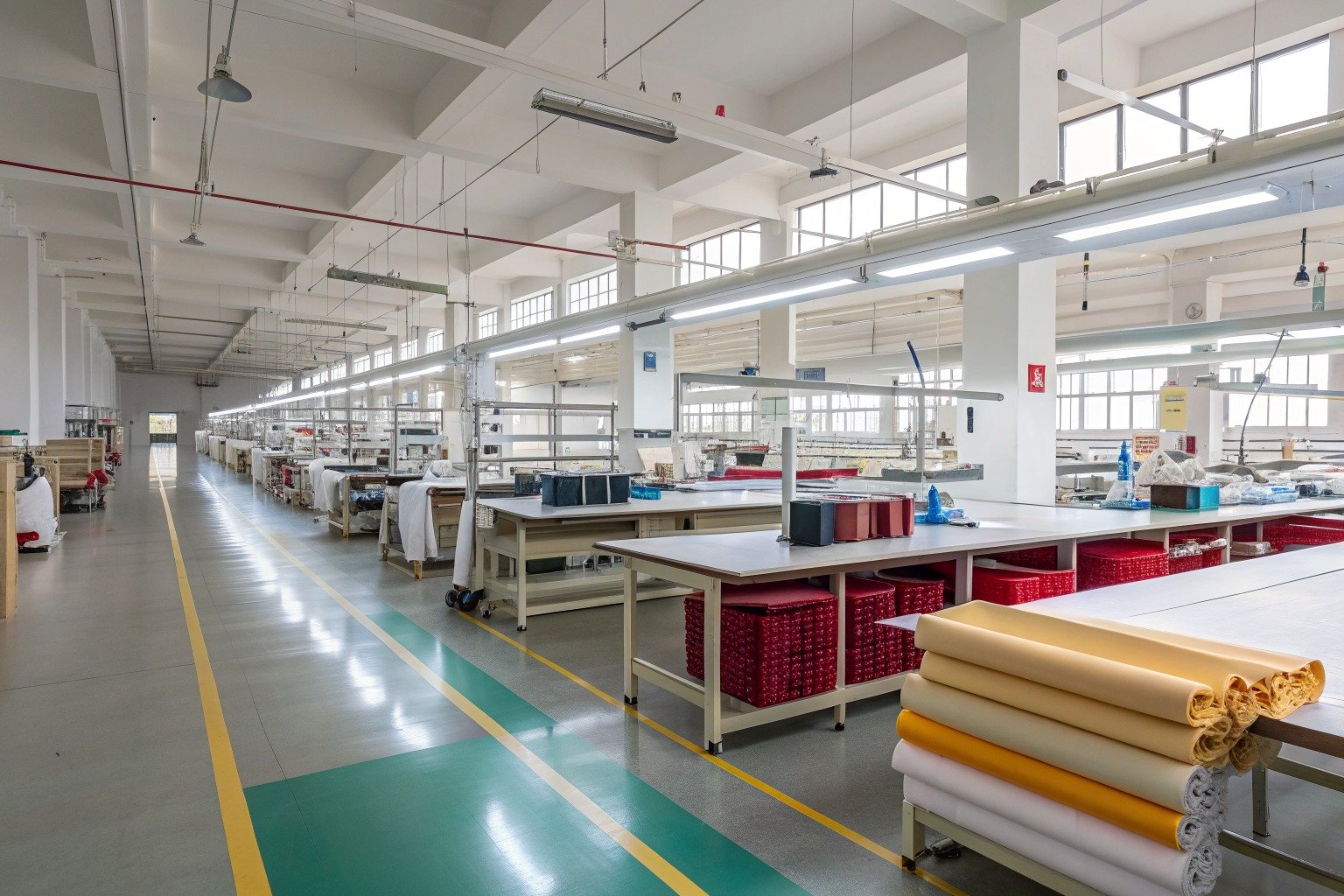
Speed comes from having all the necessary capabilities in-house and from a disciplined, parallel workflow. The design team, the CAD modeller, the 3D printer, the sample technicians, and the project manager all work in the same facility. There are no handoffs to external suppliers. There are no communication delays across time zones. The sample moves from one station to the next without waiting.
At Shanghai Fumao, our sample room is the engine of our product development. We have turned thousands of sketches into samples for brands across North America and Europe. Our team understands the urgency of a buyer meeting. We treat every sample as if a retail placement depends on it, because it often does.
If you have a headband design on a sketch, a napkin, or a mood board, and you need a sample in your hands quickly, please contact our Business Director Elaine at elaine@fumaoclothing.com. Send her your sketch, your material preferences, and your deadline. She will confirm the fastest possible sampling timeline, provide a quotation, and assign a senior technician to your project. Your buyer presentation deserves a sample that brings your sketch to life.