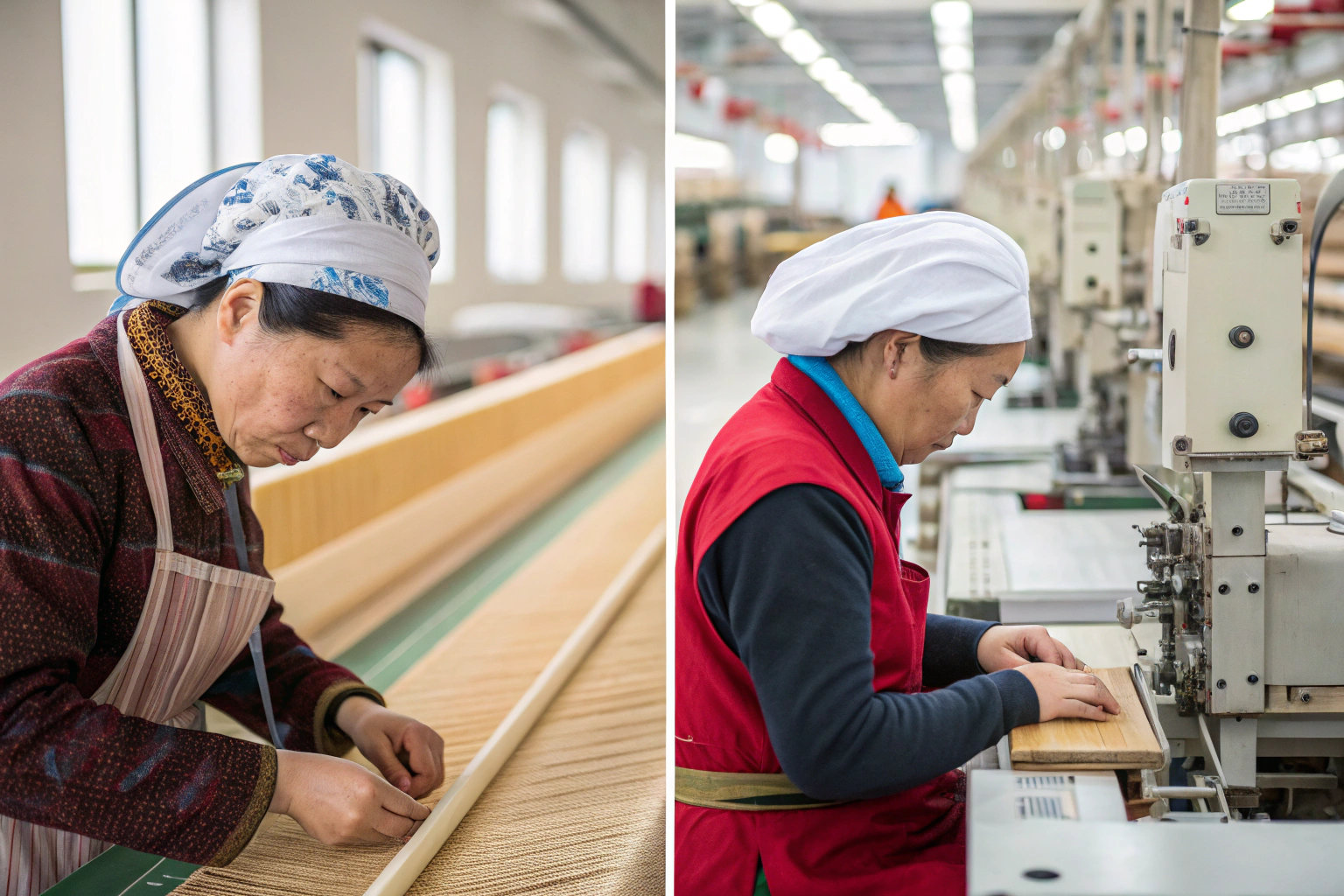
I grew up in a family of artisans. My grandmother hand-embroidered silk scarves that took weeks to complete. She taught me that some things can only be done by hand, the human touch, the imperfect perfection that makes each piece unique. Later, when I entered the manufacturing world, I saw the other side. Machines that could produce thousands of identical pieces in a day, with precision no human hand could match.
For years, I thought these two worlds were separate. Factories either did handcraft or they did machine production. You chose your path and stayed on it. But as our business grew at Shanghai Fumao Clothing, I realized that our clients needed both. They wanted the soul of handcraft for some products and the efficiency of machines for others. Sometimes they wanted both in the same product, hand-finished details on machine-made basics.
That realization pushed us to become something different. We invested in preserving traditional handcraft skills while also building state-of-the-art machine production lines. It wasn't easy. These are different mindsets, different training, different workflows. But mastering both has become our greatest strength. Let me show you why.
How Does Handcraft Create Value That Machines Cannot?
When a buyer asks me why handcraft matters in a world of machines, I tell them about a client who came to us for a limited edition collection of silk scarves. They wanted something special, something that couldn't be found in every mall. We produced the scarves on our finest machines, perfect, consistent, beautiful. The client was happy, but not thrilled.
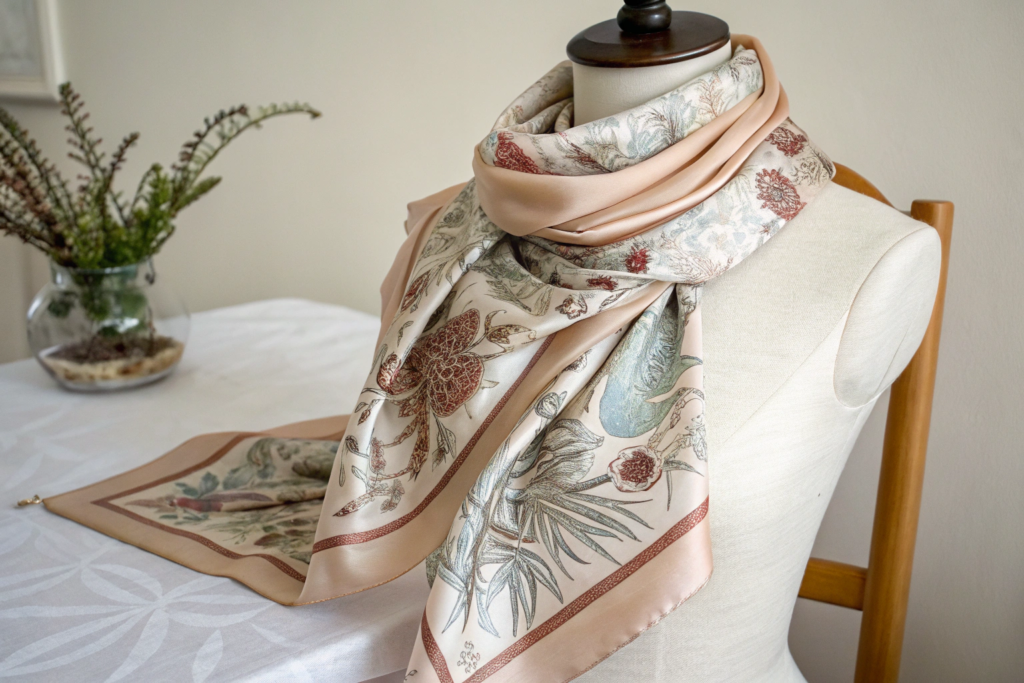
Then we showed them a version with hand-rolled edges, finished by artisans who had learned the technique from their mothers and grandmothers. The difference was subtle but real. The edges had a softness, a slight irregularity that felt human. The client's eyes lit up. They ordered the hand-finished version at three times the price, and they sold out in weeks.
That's the value of handcraft. It's not about being better or worse than machines. It's about being different. Handcraft carries meaning. It tells a story. It connects the wearer to the maker in a way that mass production cannot. For certain products, for certain customers, that connection is worth paying for.
What products benefit most from handcraft techniques?
Through years of experience, we've learned which products benefit most from handcraft. These aren't rigid rules, but patterns that hold true across many clients and markets.
Luxury items almost always benefit from handcraft. Scarves with hand-rolled edges, bags with hand-stitched handles, accessories with hand-applied embellishments. The handwork signals quality and justifies premium pricing.
Limited editions and special collections are another sweet spot. When a client wants something unique, something their customers can't find elsewhere, handcraft delivers. Each piece is slightly different, which is exactly the point.
Products with complex details often require handwork. Intricate embroidery, delicate beading, complicated ribbon work. Machines can do some of this, but hand artisans can handle greater complexity and variation.
Repair and customization work naturally falls to handcraft. When a client needs a small batch of something unusual, or when existing products need modification, hand skills are essential.
The key is matching the technique to the product. Not everything needs handcraft, and using it where it doesn't add value just increases cost. But for the right products, it's transformative. For inspiration, Vogue's craft section regularly features designers who incorporate handwork into their collections.
How do you preserve traditional skills in a modern factory?
This is a challenge we think about constantly. Traditional handcraft skills are disappearing worldwide. Young people don't learn them. Older artisans retire. The knowledge dies.
Our approach has been to create a bridge between generations. We employ master artisans who are approaching retirement and pair them with younger workers who want to learn. The masters teach, the apprentices learn, and the skills pass on.
We also document everything. Video recordings of techniques, written instructions, detailed photographs. If a master retires, their knowledge doesn't disappear with them. It's preserved in our training materials.
We pay fair wages and create dignified working conditions. Handcraft isn't sweatshop labor. Our artisans work in clean, well-lit spaces with proper seating and reasonable hours. They're respected professionals, not hidden away.
And we celebrate their work. We share their stories with clients. We put their names on products when appropriate. We make sure they know their skills are valued, not just exploited. Organizations like UNESCO's Intangible Cultural Heritage offer resources on preserving traditional crafts worldwide.
What Advantages Does Machine Production Offer?
If handcraft is about soul, machine production is about scale. There's no shame in that. Most of the world's accessories are made by machines, and that's a good thing. It makes quality products affordable for ordinary people.
The primary advantage of machine production is consistency. A machine doesn't get tired, doesn't have good days and bad days. Every piece it produces is identical to the last. For clients who need uniform products across thousands of units, this consistency is essential.
Speed is the other big advantage. Machines work faster than human hands, much faster. A task that takes an artisan an hour might take a machine seconds. This speed translates directly into lower costs and faster delivery. Machine production also enables complexity that would be impossible by hand. Computer-controlled cutting can create shapes no human could replicate consistently. Automated embroidery can execute patterns with thousands of stitches per minute.
For basic products, for large volumes, for consistent quality, machines are the right choice. The key is knowing when to use them and when handcraft adds more value.
How does automation improve consistency and speed?
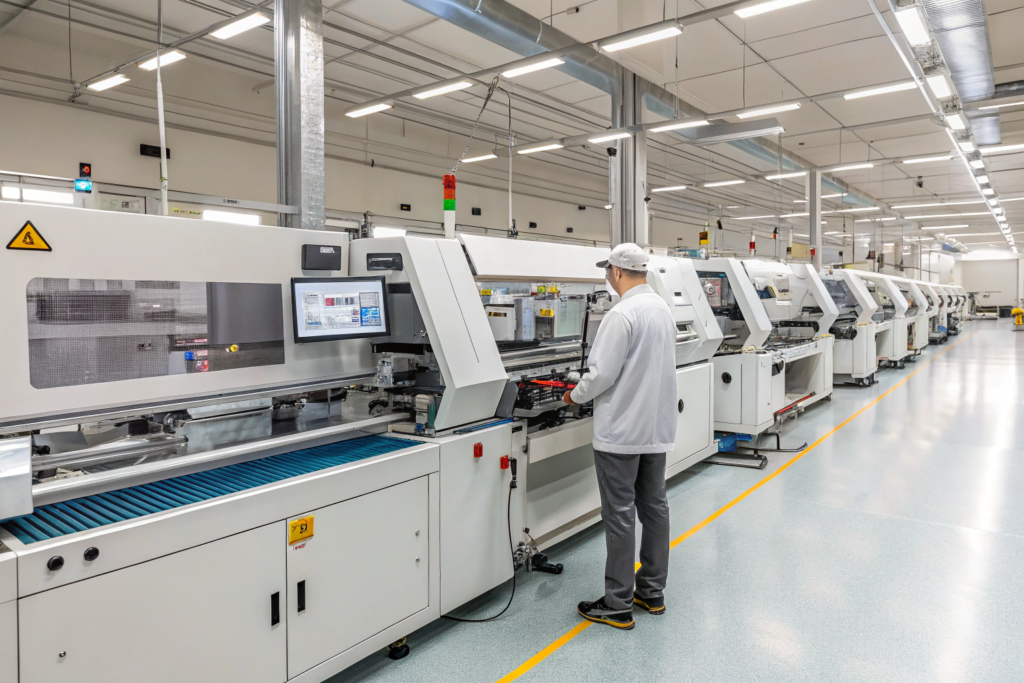
The numbers tell the story. A skilled artisan might produce 20 hand-finished scarves in a day. An automated cutting and sewing line can produce 2,000. That's 100 times the output.
But it's not just about quantity. The automated line will produce those 2,000 scarves with microscopic precision. Every stitch placed exactly where it should be. Every cut following the pattern exactly. The variation between pieces is measured in fractions of millimeters.
This consistency matters for clients who sell through multiple channels. A customer who buys online and a customer who buys in a store should receive identical products. Machines make that possible.
Automation also reduces human error. A tired worker might make a mistake. A distracted worker might miss a defect. Machines don't get tired or distracted. They follow their programming perfectly every time.
At Shanghai Fumao Clothing, we've invested in the latest automated equipment for our core production lines. This lets us deliver consistent quality at competitive prices for our volume clients. For insights into manufacturing technology, publications like Automation World cover advances in industrial automation.
What products are best suited for machine production?
Just as some products cry out for handcraft, others are perfect for machines. The key is matching the product to the production method.
High-volume basics are the obvious category. Simple hair clips, standard ribbons, basic belts. When you need thousands of identical pieces, machines are the only practical choice.
Products with precise specifications benefit from machines. If a client requires exact dimensions, exact colors, exact stitching, machines deliver that precision consistently.
Simple designs with minimal variation are machine-friendly. The more complex the product, the more likely it needs human intervention. But straightforward designs run beautifully on automated lines.
Products with strict quality standards often require machines. When every piece must pass the same tests, machines provide the consistency that makes quality assurance possible.
Products at competitive price points need machine efficiency. If your target retail price is low, your production costs must be lower. Machines make that possible.
The art is knowing when to use each approach. At Shanghai Fumao Clothing, we don't see handcraft and machine as competing. They're complementary tools in our toolkit, each suited to different jobs.
How Do You Combine Handcraft and Machine Production?
The real magic happens when you combine both approaches. Machine efficiency for the basics, handcraft soul for the details. This hybrid model gives clients the best of both worlds.
Think about a luxury hair bow. The base ribbon might be machine-cut to exact specifications, ensuring every bow starts with consistent materials. The clip might be machine-attached for security. But then an artisan hand-ties the bow, adding the subtle variations that make each piece unique. Or hand-sews a decorative element that catches the eye.
This hybrid approach works for many products. Scarves can be machine-woven but hand-finished. Bags can be machine-stitched for strength but hand-embellished for beauty. Belts can be machine-cut but hand-burnished.
What products work well with hybrid production?
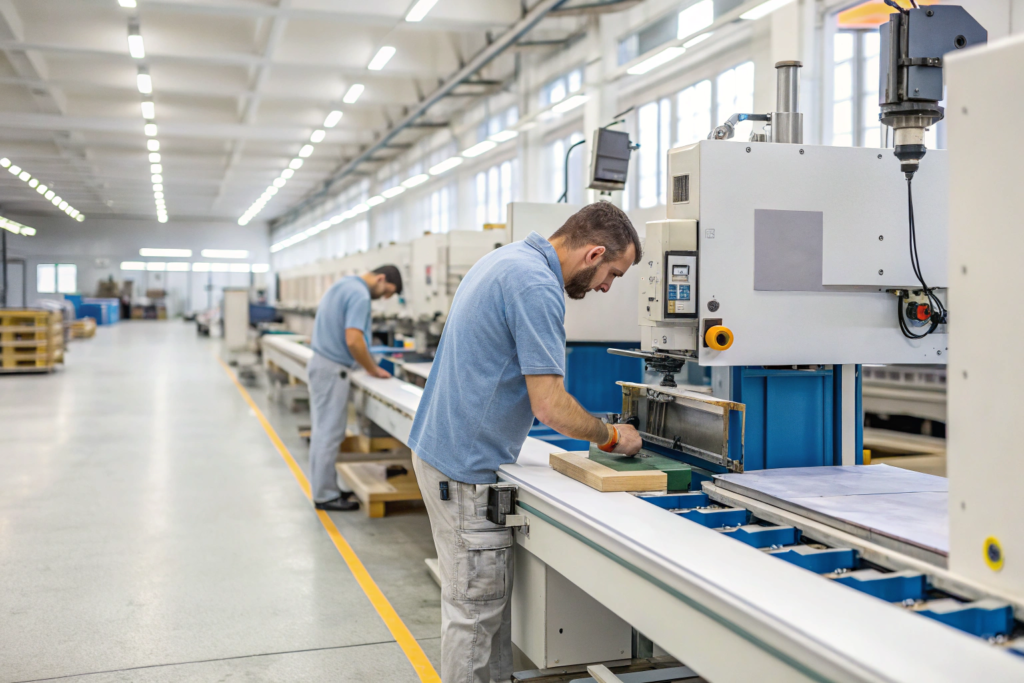
We've found that hybrid production works best for mid-to-upper tier products. Products that need both quality and character.
Hair accessories are a perfect example. The clip and base ribbon can be machine-produced for consistency and strength. Then artisans add hand-tied bows, hand-placed embellishments, or hand-finished edges. The result is a product that's both reliable and special.
Scarves and wraps work beautifully in hybrid production. Machine-woven fabric ensures consistent quality and reasonable cost. Hand-rolled edges, hand-embroidered details, or hand-painted accents add luxury appeal.
Bags and belts benefit from hybrid approaches too. Machine stitching provides structural integrity. Hand finishing on edges, hand-applied hardware, or hand-painted details elevate the product.
The common thread is that the machine does what machines do best, consistency and speed. The hand does what hands do best, detail and soul. Together, they create products that neither could achieve alone.
For examples of hybrid production in action, brands like Hermès are famous for combining machine and hand techniques in their luxury goods.
How do you train artisans to work with machine-made components?
This requires a different mindset than traditional handcraft. Artisans who are used to creating from raw materials must adapt to working with pre-made components.
The key is precision. Machine-made components are consistent, so the handwork must be consistent too. A hand-tied bow on a machine-made ribbon must match the others in the collection. This requires training and practice.
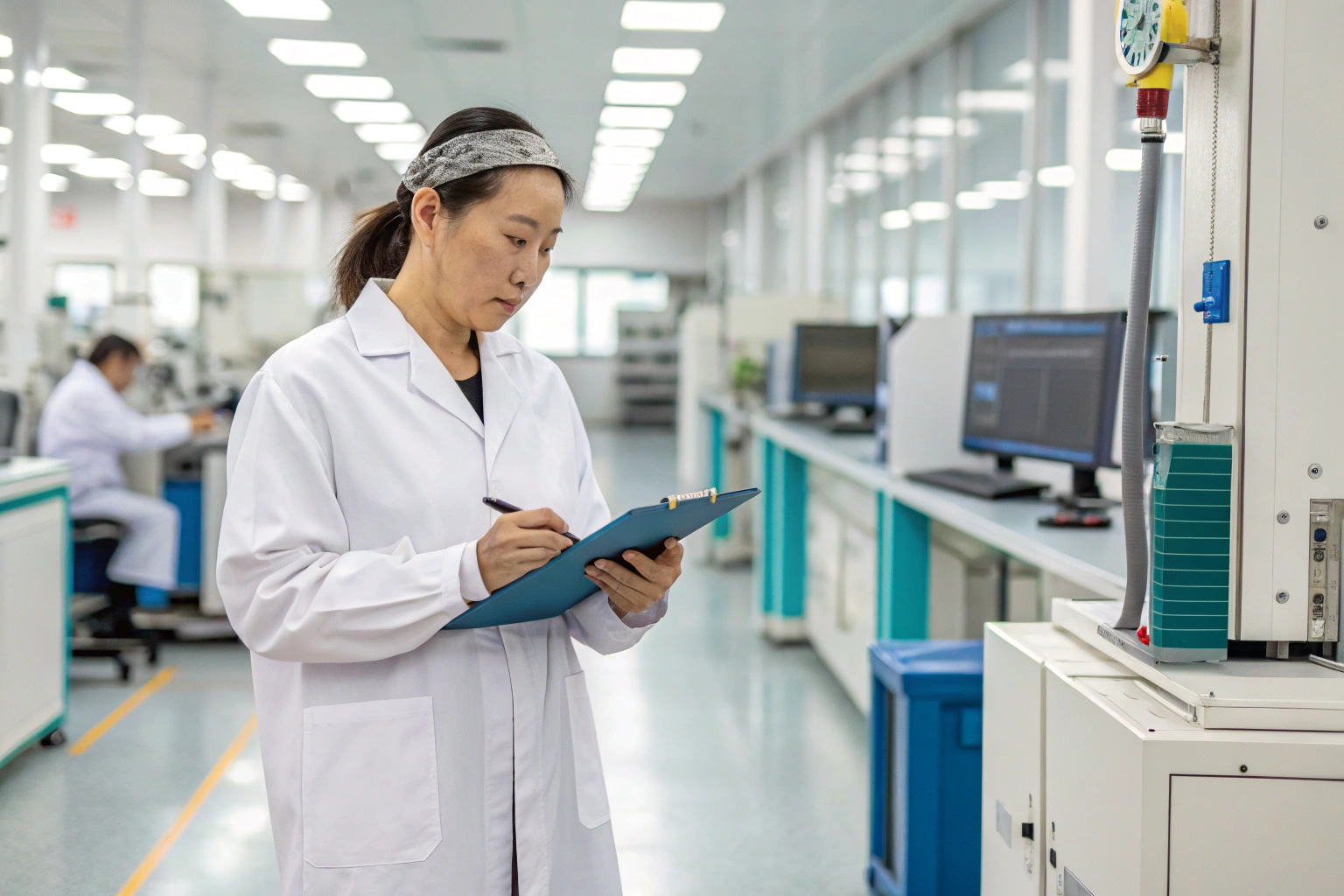
We've developed specific training programs for artisans who work in hybrid production. They learn to work with machine-made components, to understand their tolerances, to adapt their techniques accordingly. They also learn quality standards that combine machine precision with handcraft character.
The best artisans in hybrid production develop a kind of partnership with the machines. They understand what the machines can do and where their skills add value. They see themselves as completing the product, not starting from scratch.
This partnership extends to our production planning. We schedule machine runs to feed handwork stations at the right pace. We communicate specifications clearly so artisans know exactly what they're working with. It's a team effort, machine and human together. For training resources, organizations like The Craft Council offer programs that help artisans adapt to contemporary production environments.
How Does Production Flexibility Help During Peak Seasons?
Every buyer knows the stress of peak seasons. Holiday orders, back-to-school rushes, unexpected demand spikes. Factories that can't flex with demand become bottlenecks. Clients miss windows, lose sales, and look elsewhere.
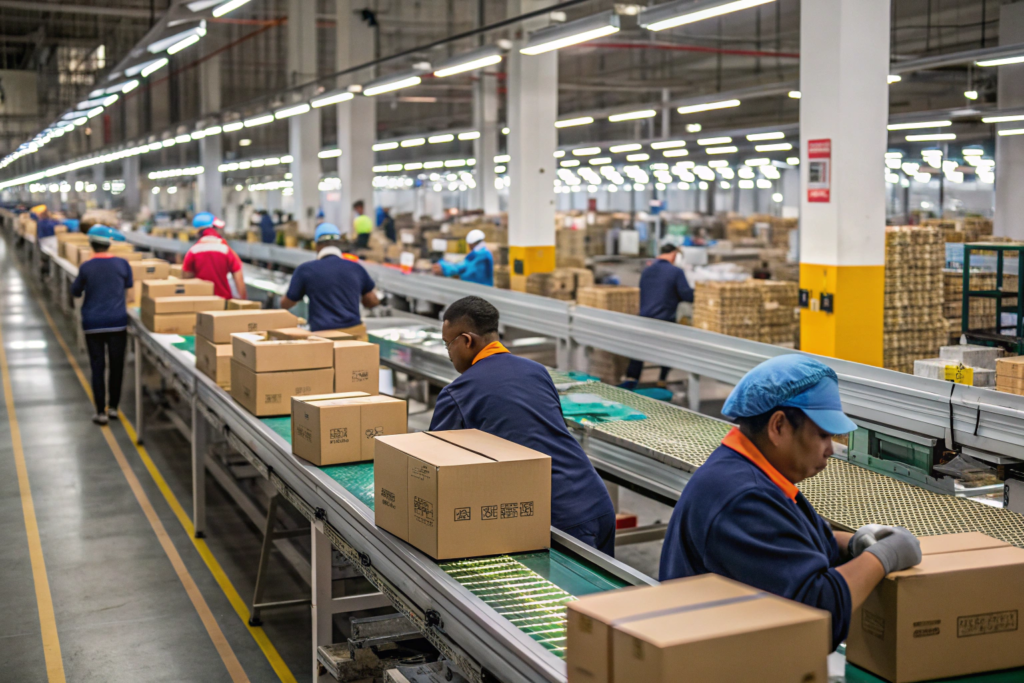
Having both handcraft and machine capabilities gives us tremendous flexibility during these peaks. We can shift production between methods based on demand, capacity, and product requirements. When a client needs a massive volume rush, we ramp up machine production. Automated lines run longer shifts, produce faster, and handle the volume. When a client needs a quick-turn special order, we deploy artisans. They can start immediately without waiting for machine setup.
We can also split orders strategically. Machine production handles the base volume while artisans handle the finishing touches. This parallel processing gets products out faster than either method alone. The flexibility extends to our workforce. Machine operators and artisans have different skills, but cross-training means we can shift people where needed. When machine demand is high, artisans who are trained on equipment can help. When handcraft demand spikes, machine operators with hand skills can contribute. This workforce flexibility is a huge advantage. For insights on managing peak demand, Supply Chain Quarterly offers case studies and strategies.
Can you scale handcraft production for large orders?
This is one of the most common questions we hear. Handcraft seems inherently small-scale. How can it possibly handle large orders?
The answer is through organization and training. Handcraft doesn't have to mean one artisan making one product from start to finish. We break handcraft tasks into stages, like an assembly line for artisans. One person cuts, another assembles, another adds details, another finishes. Each becomes expert at their specific task.
We also maintain a pool of trained artisans who can be called in when needed. Some work full-time. Others work part-time or on-call, ready to help during peak seasons. This flexible workforce lets us scale handcraft production dramatically.
Training is ongoing. We're always teaching new artisans, building our bench strength. When a big order comes, we have people ready to step in.
The key is planning. Handcraft takes time, so we need to know about large orders well in advance. But with proper planning, we've successfully delivered thousands of hand-finished products to clients. It's not as fast as machines, but it's faster than most people expect.
For examples of scaled handcraft production, brands like Johnstons of Elgin produce thousands of hand-finished cashmere products annually through organized artisan work.
How do you balance machine and handcraft during rushes?
Balancing production during rushes requires constant communication and flexibility. We can't just set a schedule at the beginning of the season and stick to it. Things change, priorities shift.
Our production managers meet daily during peak seasons. They review order status, capacity, and deadlines. They decide which products go to machines and which to artisans based on current needs.
Sometimes we shift work mid-stream. If a handcraft order is falling behind, we might move some of the simpler tasks to machines or to artisans who can work faster. If a machine order is delayed by maintenance, we might hand-produce a small batch to keep the client happy.
We also maintain buffer capacity in both areas. Machines aren't scheduled at 100% capacity. Artisans aren't fully booked. This buffer lets us respond to unexpected demands without disrupting existing orders.
The most important factor is relationships. We know our clients' patterns, their peak seasons, their typical volumes. We plan ahead based on this knowledge. When surprises happen, we're ready because we've already thought about scenarios. For production planning strategies, resources like APICS offer certification and education in operations management.
Conclusion
Mastering both handcraft and machine production has transformed how we serve our clients at Shanghai Fumao Clothing. It's given us flexibility that single-method factories simply don't have.
When clients need volume, we have machines that deliver. When they need soul, we have artisans who create. When they need both, we have hybrid workflows that combine the best of each. When peak seasons hit, we can flex between methods to keep deliveries on time.
This flexibility isn't just about having different equipment. It's about having different mindsets, different skills, different ways of thinking about products. It's about knowing when machine precision matters and when human touch adds value. It's about training people who understand both worlds and can move between them.
The cost of maintaining both capabilities is real. Machines need investment. Artisans need training and fair wages. Production planning becomes more complex. Quality standards must be nuanced. But for our clients, the value of this flexibility far exceeds its cost. They come to us with products that don't fit neatly into either category. Products that need both efficiency and soul. Products that need to be special but also affordable. Products that need to scale for peaks but maintain quality for basics. And we can say yes, we can do that.
If you're looking for a partner who understands both worlds, who can flex between handcraft and machine based on your needs, I'd love to talk. Please reach out to our Business Director, Elaine, at elaine@fumaoclothing.com. Let's discuss how our hybrid capabilities can work for your products.