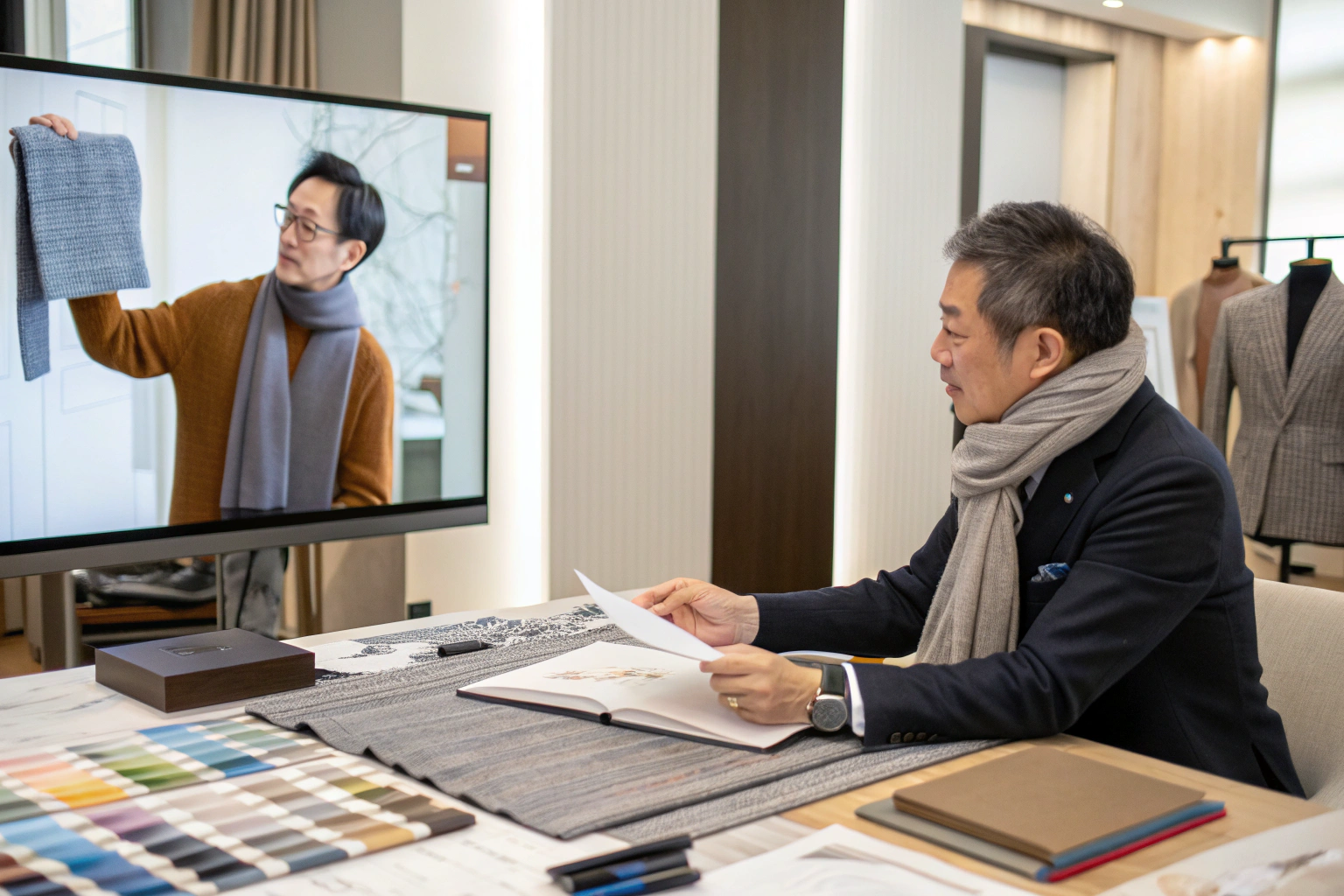
You have a powerful vision for your next best-selling scarf collection. You see the colors, the patterns, the textures. But you're facing a classic, critical challenge: how do you translate that vision from a mood board in your office into a tangible, high-quality product, manufactured halfway across the world in China, that perfectly meets the exacting standards of the North American or European fashion market? You're rightly concerned. You've heard stories of miscommunication, quality fade, and final products that look nothing like the original concept.
A modern China factory customizes scarves to global fashion standards by implementing a structured, collaborative, and technology-driven development process that moves from macro-level trend analysis to micro-level material and production execution. This process involves four critical stages: 1) Trend & Material Forecasting, 2) Precise Digital Design & Sampling, 3) Controlled Production & Quality Assurance, and 4) Compliant & Efficient Logistics. It is a partnership built on clear communication, technical expertise, and a shared commitment to quality, not just a simple transactional order.
I'm the owner of Shanghai Fumao Clothing, and this is the question we answer for our partners every single day. The old stereotype of a Chinese factory as just a low-cost order-taker is dead. Today, a true manufacturing partner acts as an extension of your brand. We are your design consultants, your material experts, your production managers, and your logistics specialists. Our job is to take your creative spark and apply a rigorous, professional manufacturing process to it, ensuring the final product is not only beautiful but also commercially viable and compliant with all international standards. Let's pull back the curtain and show you exactly how this collaborative customization process works.
How Do We Translate Trends into Tangible Materials?
A fashion-forward scarf is not just about a print; it's about the feel of the fabric, the way it drapes, and the story the material tells. A great design on a cheap, inappropriate fabric will fail. The first step in customization is to bridge the gap between the abstract world of fashion trends and the physical world of textile manufacturing.
We begin by acting as your material trend forecasters, translating macro trends like "sustainability" or "quiet luxury" into a curated selection of specific, high-quality, and commercially viable fabric options. We don't just ask what you want; we present you with what the market is demanding—be it GOTS-certified organic cotton for the eco-conscious consumer or a buttery-soft cashmere blend for the luxury market. This material consultation phase is critical for aligning your design vision with a tangible, on-trend product from day one.
This is a consultative, not a passive, process:
- Trend Analysis: Our team constantly monitors global runway shows, subscribes to trend forecasting services like WGSN, and analyzes real-time market data. When you come to us with a concept, we can provide immediate feedback. For example, if you say you want a "cozy winter scarf," we can tell you that the current trend is leaning towards oversized blanket scarves in brushed, recycled polyester blends or classic, ribbed-knit merino wool.
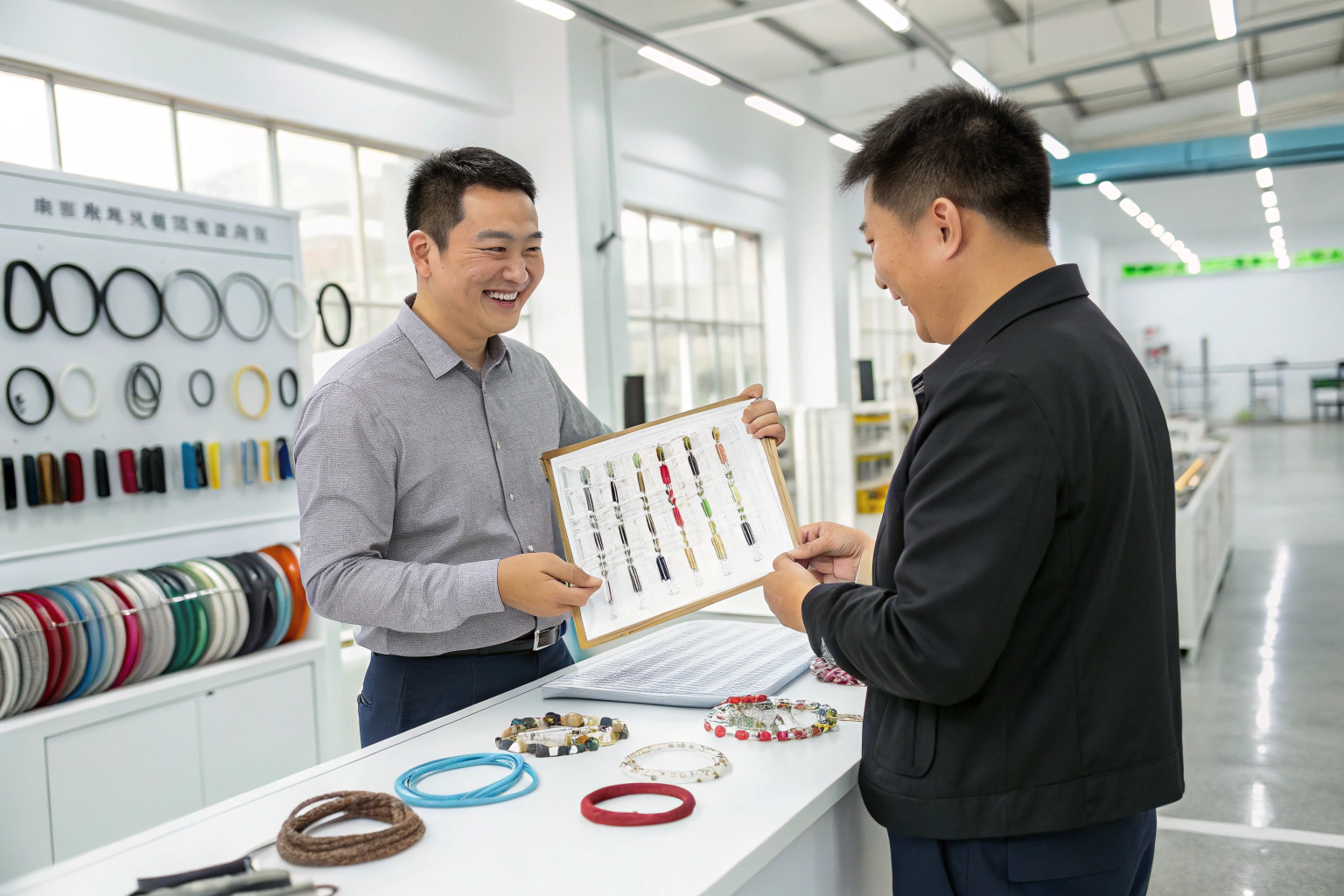
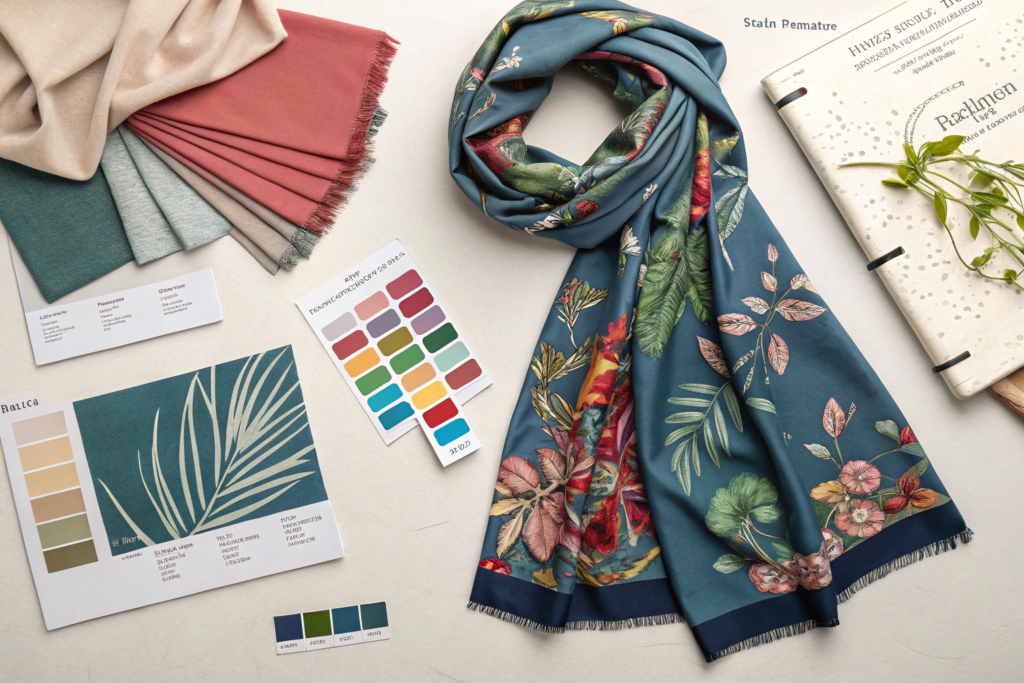
- Curated Material Options: Based on your target price point and brand positioning, we will present you with a physical "swatch card" of 3-5 recommended materials. For each swatch, we provide the key data: composition (e.g., 80% Viscose / 20% Wool), weight (in GSM - grams per square meter), and price per meter. This allows you to make a fully informed decision based on feel, quality, and cost.
- Sustainability & Compliance: The modern fashion standard includes sustainability. We can proactively source and provide certification for a wide range of eco-conscious materials, including Recycled Polyester (rPET), Organic Cotton (GOTS certified), and Lenzing™ Ecovero™ Viscose. This allows you to build a powerful, authentic sustainability story into your brand identity.
What is GSM and why does it matter?
GSM (Grams per Square Meter) is a measure of a fabric's weight and density. It is a critical technical specification. A lightweight silk scarf might be 40-50 GSM, while a thick, cozy winter blanket scarf could be 250-350 GSM. Specifying the GSM is essential for ensuring the final product has the exact drape, feel, and substance you envisioned. It's a number that translates the subjective feeling of "thickness" into an objective, measurable manufacturing standard.
How do you ensure color accuracy?
Color is notoriously difficult to manage via a screen. We eliminate this problem by working with a universal, physical color standard: the Pantone Fashion, Home + Interiors (FHI) system. You provide us with a Pantone TCX code (e.g., Pantone 19-4052 Classic Blue), and we use that physical color swatch to dye the fabric. This ensures that the color of your final scarf in California is a perfect match to the color standard we are using in our factory in China. It removes all subjectivity and guesswork from the color approval process.
How Do We Ensure the Design Is Perfectly Replicated?
Once the material and colors are chosen, we move to the most detailed phase: replicating your unique pattern or design. This is where miscommunication can often happen. A low-quality factory might just take a low-resolution JPEG and produce a blurry, disappointing result. A professional factory uses a precise, digital-first workflow.
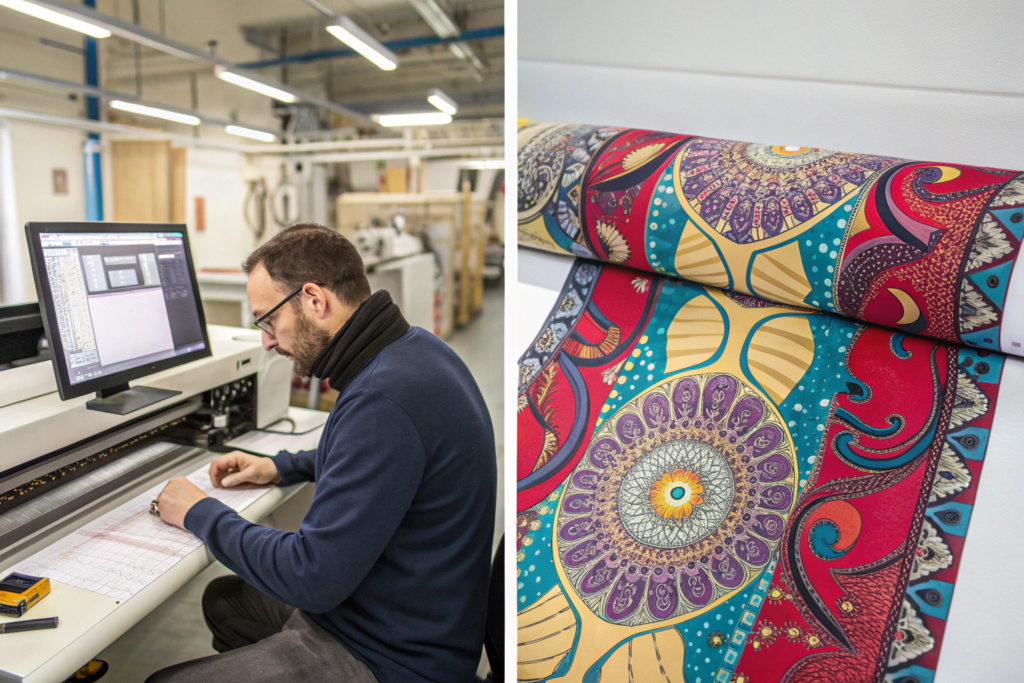
To ensure perfect design replication, we require a high-resolution, "production-ready" digital file, typically an Adobe Illustrator (.ai) or .eps vector file with all colors specified by Pantone TCX codes. This digital blueprint is then used to create a "strike-off"—a small, pre-production sample of the printed fabric. You approve this physical strike-off before we proceed to bulk production, giving you complete control and a 100% guarantee that the final product will match your vision.
This is a zero-compromise process:
- The Digital Blueprint (Tech Pack): Your Tech Pack is our bible. For a printed scarf, it must include the final, full-scale artwork file. For a knit scarf, it must include a "knit-down" diagram showing the pattern and a specification for the yarn thickness. The more detail you provide in this digital file, the better.
- Choosing the Right Method: Based on your design, we recommend the best production method.
- Digital Printing: Perfect for complex, multi-colored, photographic, or painterly designs. It works like a giant inkjet printer for fabric and offers unlimited colors and incredible detail.
- Screen Printing: Better for designs with fewer (e.g., 1-5) solid, distinct colors. It can be more cost-effective for very large runs and can produce very vibrant, saturated colors.
- Jacquard Weaving: For patterns that are woven into the fabric itself (not printed on top). This is a premium technique used for high-end scarves with intricate, often reversible patterns.
- The Critical "Strike-Off" Approval: We will produce a small square (e.g., 12x12 inches) of your final design on the final, approved fabric. We then ship this physical sample to you. This is your moment of truth. You can feel the fabric, see the print quality, and check the colors against your Pantone book. Bulk production only begins after you have signed off on this strike-off. This single step eliminates almost all risk of a disappointing final product.
What is the difference between a "lab dip" and a "strike-off"?
A lab dip is a small swatch of fabric that has been custom-dyed to match your requested solid color. You approve the lab dip to confirm the base color of the fabric. A strike-off is a sample of the printed pattern on the approved, dyed fabric. You approve the strike-off to confirm the print quality, scale, and colors. They are two separate but equally important approval steps.
What about the finishing of the scarf?
The "finishing" refers to the edge of the scarf, and it's a critical detail that signals quality. Your Tech Pack should specify this. Common options include:
- Machine-Rolled Hem: A clean, standard, and durable finish.
- Hand-Rolled Hem: A hallmark of a true luxury scarf. The edge is meticulously rolled and stitched by hand. It is a much more expensive and time-consuming process but creates a beautiful, plump edge.
- Eyelash Fray: A short, delicate frayed edge, common on lightweight wool or viscose scarves.
As your manufacturing partner, Shanghai Fumao Clothing can produce all of these finishes and can provide samples to help you choose the one that best fits your brand's aesthetic and price point.
How Do We Guarantee Quality and Consistency at Scale?
You've approved a perfect sample. But how do you ensure that the 1,000th scarf produced is just as perfect as the first one? This is the challenge of scaling production, and it can only be solved with a robust, multi-stage Quality Control (QC) system.
We guarantee quality at scale by implementing a comprehensive QC process that includes raw material inspection, in-line production monitoring, and a final AQL-based inspection of the finished goods. We don't just check the products at the end; we build quality into every step of the process. This documented system ensures that every scarf in your shipment meets the exact specifications of the "golden sample" you approved.
Our QC process is a multi-layered defense against defects:
- Incoming Quality Control (IQC): Before production even begins, we inspect the raw materials. We check the rolls of fabric for any weaving defects, stains, or color inconsistencies. We inspect the threads and dyes to ensure they match the specifications. We don't start with bad ingredients.
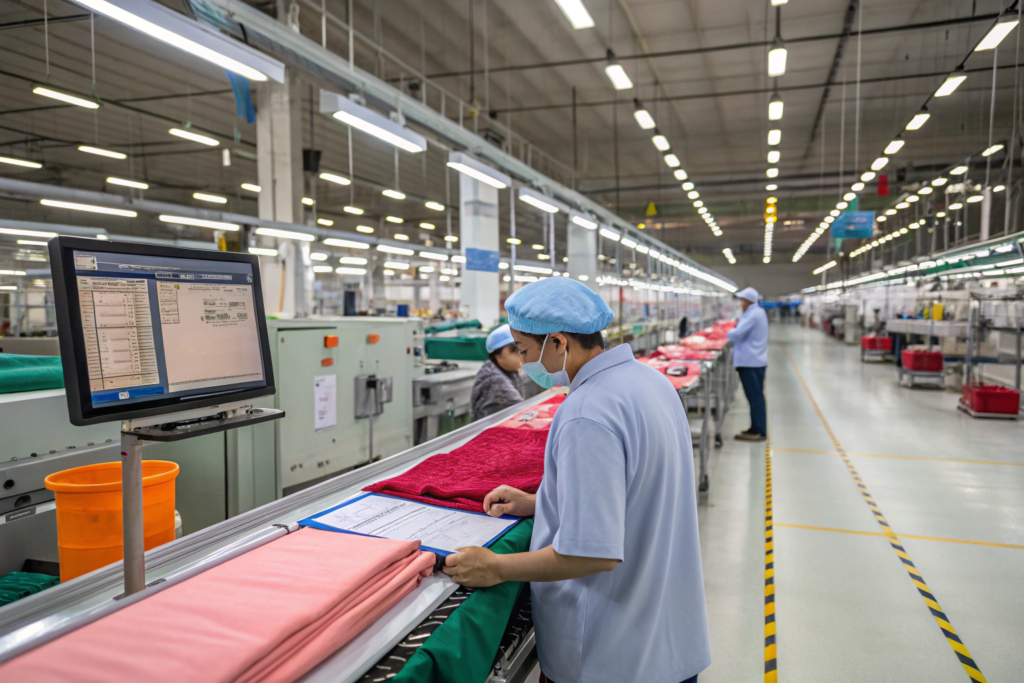
- In-Process Quality Control (IPQC): During the printing and finishing process, our line supervisors conduct "in-line" checks. They will pull a scarf off the line every hour to check it against the approved strike-off. This allows us to catch any potential problems (like a printer nozzle getting clogged) in real-time, before thousands of defective units are produced.
- Final Quality Control (FQC): This is the final, rigorous inspection. Our dedicated QC team inspects a statistically significant portion of the finished, packed scarves based on a standardized system called AQL (Acceptable Quality Limit). They check for everything:
- Dimensions: Is the scarf 90cm x 90cm as specified?
- Print Quality: Are there any smudges, blurs, or color bleeds?
- Color Accuracy: Does it match the approved strike-off?
- Hemming/Finishing: Is the stitching neat, secure, and consistent?
- Labeling: Is the correct brand label and care label attached in the correct location?
Only after a shipment has passed this final AQL inspection is it approved for packing and shipping.
What is AQL?
AQL (Acceptable Quality Limit) is an international standard (part of the ISO 2859-1 standard) for statistical sampling. It defines the maximum number of defective units that can be considered acceptable in a batch. For example, an AQL of 2.5 is a common standard for consumer goods. It provides a clear, objective, and statistically valid method for accepting or rejecting a production run, removing subjective arguments about what is "good enough."
Can I hire my own third-party inspector?
Yes, and we welcome it! We are confident in our processes. For brand owners who want an extra layer of security, hiring a third-party inspection company to perform their own final inspection is a great idea. They act as your independent eyes and ears in our factory. A factory that is hesitant or unwilling to allow a third-party inspection is a major red flag.
How Do We Handle Packaging, Labeling, and Logistics for Global Brands?
The customization process doesn't end when the scarf is made. The product still needs to be labeled, packaged, and shipped in a way that meets your brand standards and the legal requirements of the destination country. A great factory manages this final, crucial mile for you.
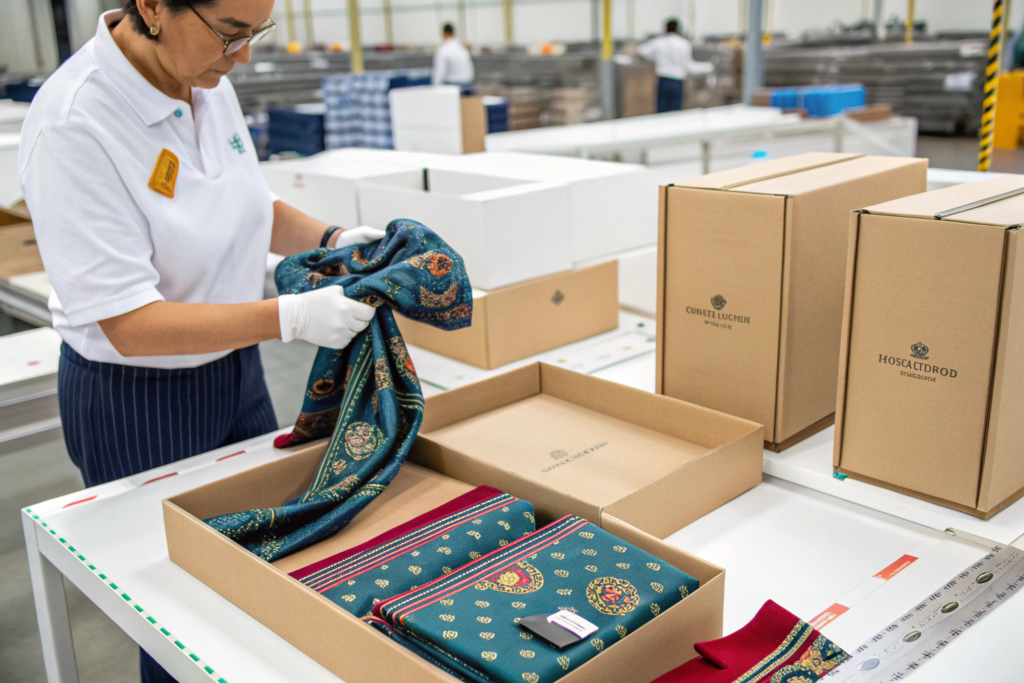
A full-service factory partner handles the entire post-production process, including the precise application of custom brand labels and hang tags, expert folding and packing into custom-designed packaging, and the management of all export documentation and logistics. We ensure that the product arrives not only looking perfect but also fully compliant with the labeling laws and import requirements of your target market, such as the FTC regulations in the USA.
This end-to-end service is what makes sourcing from a modern China factory so efficient:
- Custom Labeling: We work with you to produce your custom woven brand labels and care labels. We then sew them into the exact location you specify in your Tech Pack. This ensures brand consistency and legal compliance. For example, U.S. law, under the Textile Fiber Products Identification Act, requires the fiber content and country of origin to be clearly stated. We ensure this is done correctly.
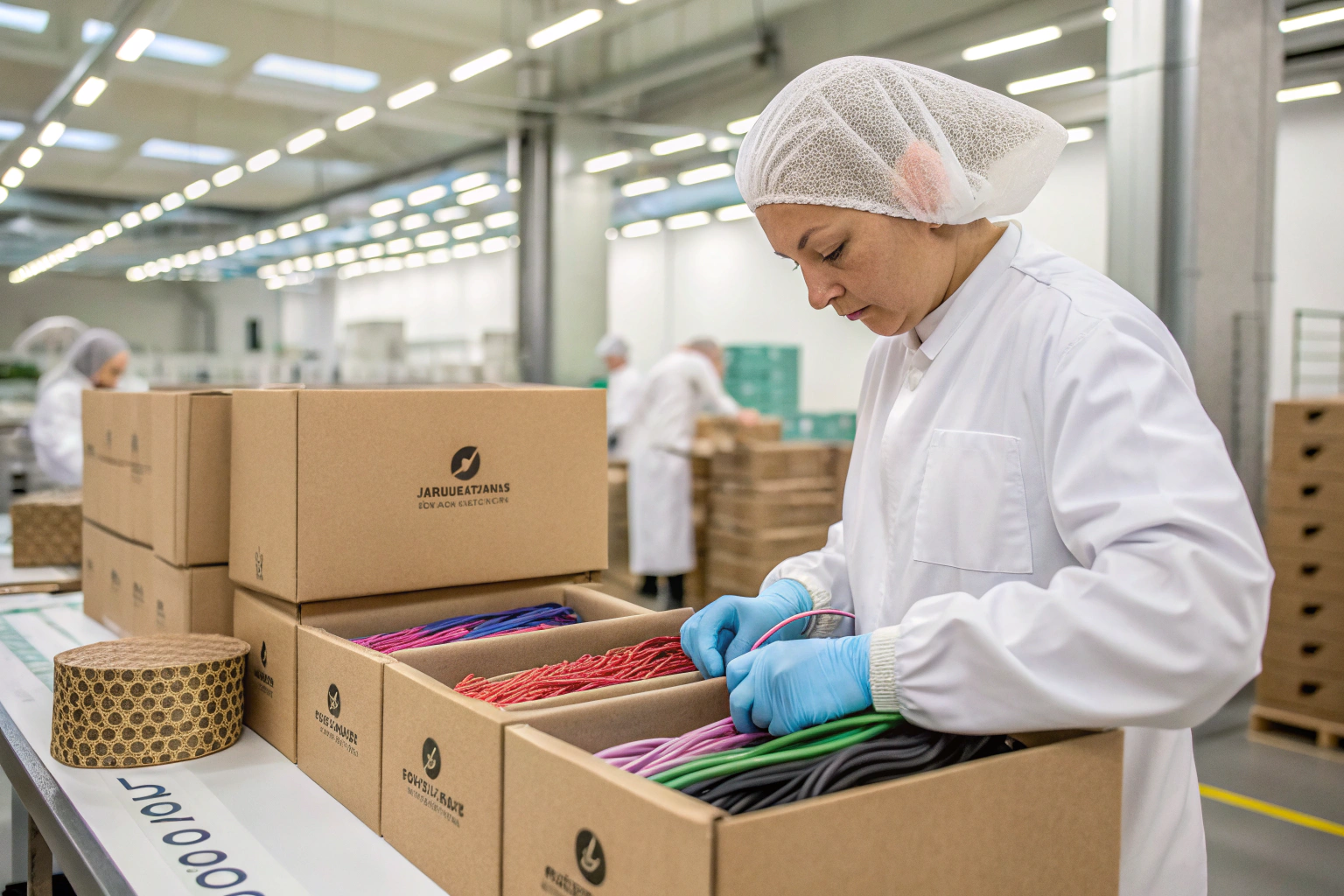
- Custom Packaging: The "unboxing experience" is a key part of your brand identity. We can source and produce custom-printed boxes, branded tissue paper, or elegant envelopes for your scarves. We then ensure each scarf is folded and packed according to your exact specifications, so the customer receives a beautiful, professional package.
- Retail-Ready Preparation: We can apply SKU barcode stickers, price tags, and any other required labeling, so the product that arrives at your warehouse is "floor-ready" and can be immediately checked into your inventory system without any additional prep work on your end.
- Logistics & Documentation: We have an experienced logistics team that manages the relationship with freight forwarders. We prepare all the necessary export documents, such as the Commercial Invoice and Packing List, and we can arrange shipping to your door (DDP - Delivered Duty Paid) or to the port of your choice (FOB - Free On Board).
What is the difference between FOB and DDP?
These are shipping incoterms that define who is responsible for the shipment at different stages.
- FOB (Free On Board): We are responsible for getting the goods to the port of export in China. You are responsible for arranging and paying for the ocean freight, insurance, customs clearance, and final delivery in your country. This gives you more control but requires more work.
- DDP (Delivered Duty Paid): We handle everything. We arrange and pay for the entire journey, including shipping, customs duties, and final delivery to your warehouse door. This is a hassle-free, all-in-one service that is very popular with our clients.
Can you ship directly to my fulfillment center, like Amazon FBA?
Yes. We have extensive experience with preparing and shipping goods to meet the strict requirements of third-party logistics (3PL) and Amazon FBA warehouses. This includes specific carton labeling, palletizing, and booking delivery appointments.
Conclusion
Customizing a scarf that meets the highest global fashion standards is a journey of partnership and precision. It is a structured process that transforms your creative vision into a commercial reality. It begins with a deep, collaborative dive into trends and materials, moves through a meticulous digital design and physical sampling phase, is scaled through a rigorous, multi-stage quality control system, and is completed with a comprehensive approach to packaging and global logistics. The era of "throwing a design over the wall" and hoping for the best is over. By engaging with a modern, transparent, and technically proficient manufacturing partner in China, you gain the ability to execute your vision with confidence, knowing that every detail, from the fiber to the final fold, is being managed with professional care.
At Shanghai Fumao Clothing, this is our daily work. We have built our reputation on being a true partner to our clients, providing the expertise, communication, and systems needed to bring beautiful, high-quality, and fashionable accessories to the global market. If you are ready to build your next scarf collection on a foundation of trust and manufacturing excellence, please reach out to our Business Director, Elaine, at elaine@fumaoclothing.com.