In the world of handwear, lightweight cotton gloves occupy a unique and essential niche. They are not designed for extreme warmth or heavy-duty protection but for a specific, pervasive need: all-day, breathable comfort during moderate tasks and seasonal transitions. For buyers sourcing for retailers, corporate gifts, or uniform programs, these gloves solve a fundamental comfort equation by balancing softness, breathability, and unobtrusive fit. They meet the buyer's needs by delivering a product that feels like a second skin, addressing pain points of bulkiness, sweatiness, and restricted movement common in heavier gloves.
The core comfort proposition of lightweight cotton gloves is built on three pillars: next-to-skin softness, superior temperature regulation, and adaptive, non-restrictive dexterity. They excel in environments where the hand needs to "breathe" and feel free, not bundled up.
What Inherent Material Properties Deliver Core Comfort?
The comfort of these gloves starts at the fiber level. Cotton's natural characteristics are perfectly aligned with the needs of light hand protection and comfort-focused wear.
Key comfort properties of cotton include:
- Breathability: Cotton fibers are hollow, allowing air to circulate. This prevents the buildup of heat and moisture (sweat) inside the glove—a primary cause of discomfort and clamminess.
- Softness & Hypoallergenic Qualities: High-quality, combed cotton has a smooth, plush feel against the skin and is naturally less likely to cause irritation or allergic reactions compared to synthetic fibers or wool.
- Moisture Absorption: Cotton can absorb a significant amount of moisture (sweat) from the skin, helping to keep hands feeling dry. (Note: It retains the moisture, so for very sweaty tasks, this can become a downside unless blended with a wicking fiber).
- Thermal Regulation: It provides a light barrier against cool air without trapping excessive body heat, making it ideal for cool—not cold—environments.
How Does Fabric Weight Directly Impact Wearer Comfort?
The "lightweight" designation is not just marketing; it's a critical spec. Lightweight cotton fabrics, often measured in grams per square meter (GSM), create a glove that is barely there. This low profile minimizes any feeling of bulk or "muffling" of the hands, preserving the wearer's natural tactile sensation. For tasks requiring fine motor skills—such as handling retail items, light assembly work, or using a touchscreen—this is paramount. From a manufacturing standpoint at shanghaifumaoclothing, achieving consistent thinness without compromising durability requires precise knitting techniques and quality control to eliminate thick seams or uneven weaving that can create pressure points.
Why is a Cotton Blend Sometimes Preferred for Enhanced Comfort?
Pure 100% cotton is beloved for softness but can lack stretch and may lose shape over time. To enhance comfort and functionality, buyers often seek cotton blends:
- Cotton-Spandex/Lycra Blends (e.g., 95% Cotton, 5% Spandex): This small addition of elastic fiber is a game-changer. It provides memory stretch that allows the glove to conform perfectly to any hand shape, ensuring a snug yet never tight fit. It also improves recovery, meaning the glove retains its shape wash after wash.
- Cotton-Polyester Blends: Polyester can add durability and improve wicking performance, pulling moisture away from the skin faster than cotton alone, which simply absorbs it.
Which Design and Construction Features Eliminate Discomfort?
Material choice is only half the story. Intelligent design and meticulous construction are what transform a good fabric into a supremely comfortable glove. Discomfort often arises from seams, poor fit, and irritating closures—all of which can be engineered away.
Essential comfort-focused design features include:
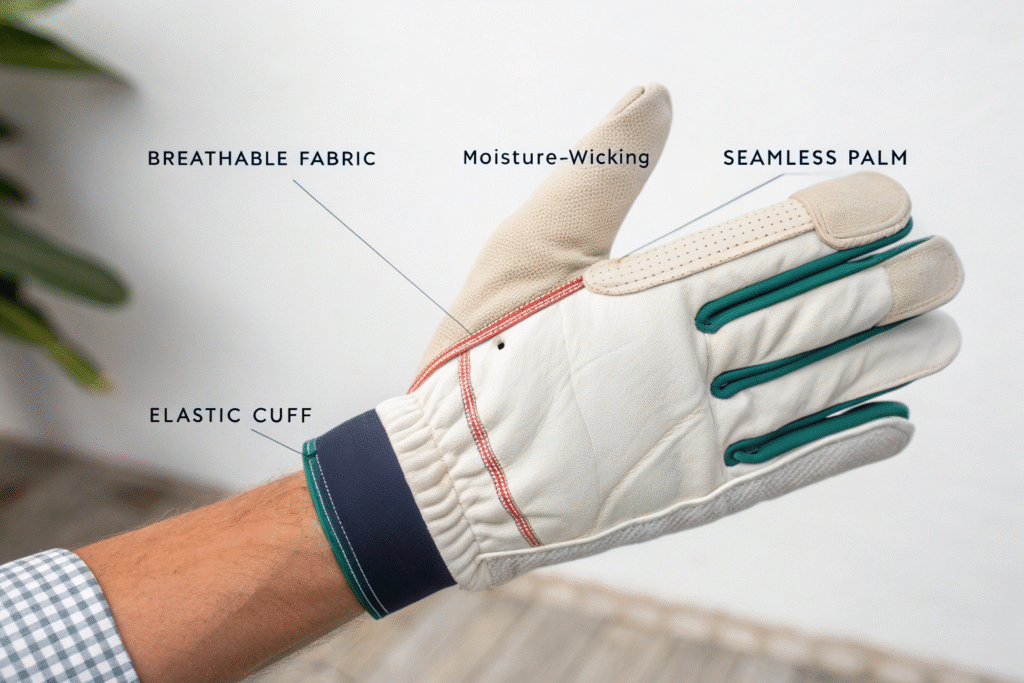
- Flatlock or Seamless Knit Construction: Especially in the palm and fingers, flatlock seams lie flat against the skin, preventing rubbing and blisters. The best lightweight gloves are knit in one piece on circular machines, creating a truly seamless palm.
- Ergonomic Pre-Curved Finger Design: Gloves knit or cut with a slight curve to match the hand's natural resting position reduce fabric bunching and tension, enhancing comfort during prolonged wear.
- Flexible, Non-Binding Cuffs: A simple, wide rib-knit cuff made with elastic thread provides a secure fit without digging into the wrist. Avoid stiff elastic bands or tight binding.
- Minimalist Stitching and Tagless Labels: Internal tags are a major irritant. Comfort-driven gloves feature printed labels or are completely tagless. All stitching should be smooth and non-abrasive.
How Does a "Second Skin" Fit Contribute to All-Day Comfort?
The goal is adaptive fit. A glove that is too loose will slip, create friction, and reduce dexterity. One that is too tight will restrict circulation and cause fatigue. Lightweight cotton gloves, especially with spandex, achieve a second-skin fit that moves synchronously with the hand. There is no lag or drag. This eliminates the subconscious energy spent on adjusting or fighting the glove, which translates directly into reduced hand fatigue over an 8-hour work shift or a long day of errands. For buyers supplying corporate or uniform programs, this directly impacts user compliance and satisfaction.
Why Are Touchscreen-Compatible Options Now a Standard Comfort Need?
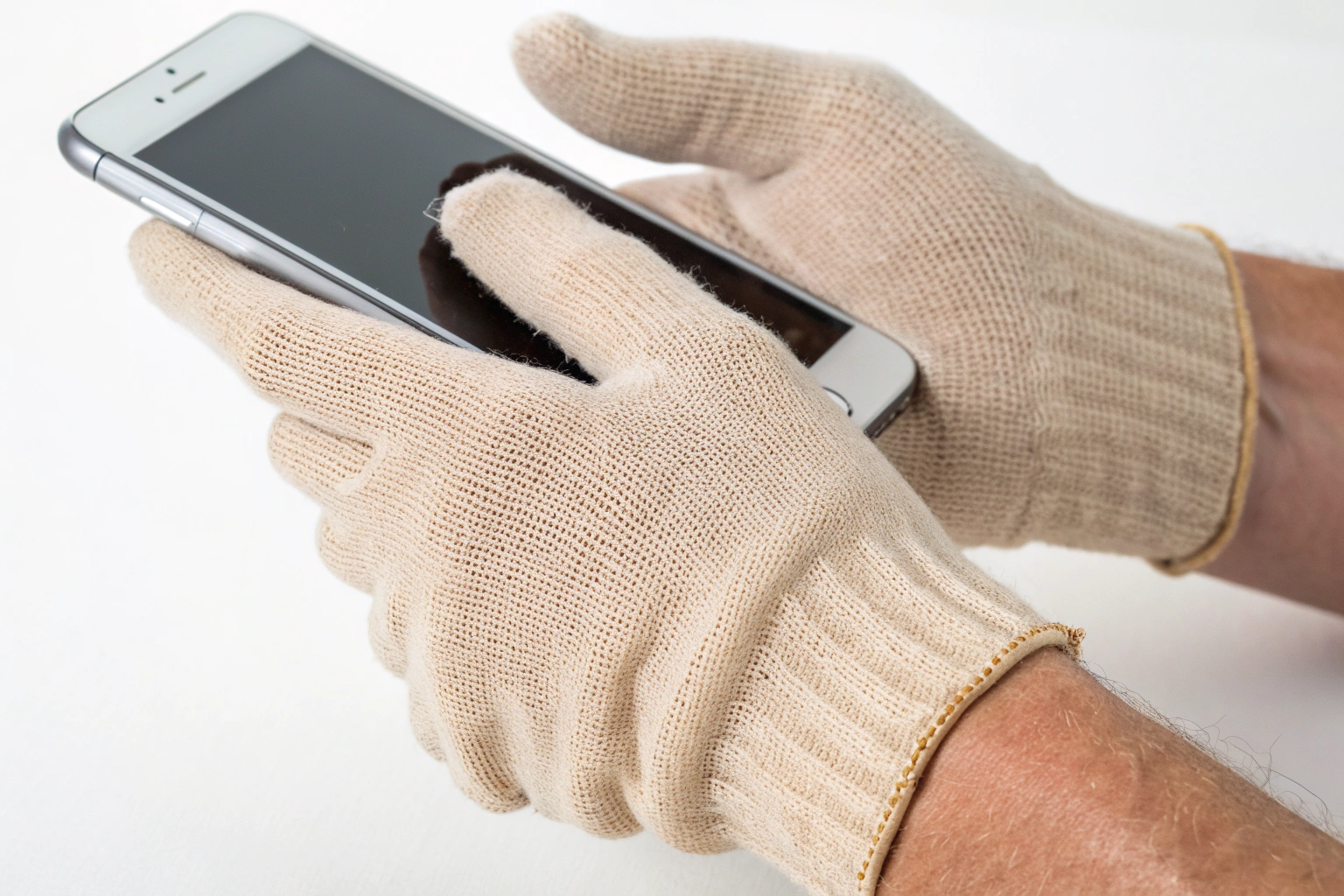
In the digital age, tactile connectivity is a non-negotiable aspect of hand comfort. Having to remove a glove to use a phone, tablet, or terminal is an interruption and an annoyance. Lightweight cotton gloves are ideal candidates for integrating conductive fiber tips (usually on the index finger and thumb). This feature, once a premium add-on, is now a standard expectation for many buyers. It allows for uninterrupted, comfortable wear in modern environments, from warehouse scanners to outdoor photography. Our product development includes rigorous testing of these conductive patches to ensure they work across various screen types without compromising the glove's breathability or soft feel.

In Which Use Cases Do These Gloves Excel at Providing Comfort?
Lightweight cotton gloves are the comfort solution of choice for specific scenarios where heavy insulation or robust protection is unnecessary or counterproductive. They meet buyers' needs by perfectly matching product capability to user activity.
Primary comfort-driven use cases include:
- Light Duty Work & Assembly: In electronics, pharmaceutical, or cleanroom settings (often as liners under nitrile gloves), they protect products from skin oils while keeping workers' hands comfortable.
- Retail & Stock Handling: They prevent paper cuts, keep hands clean from dust, and provide a professional look without sacrificing the dexterity needed to tag merchandise or handle fabrics.
- Driving & Outdoor Leisure: They provide grip on the steering wheel and protect from sun exposure during spring/fall driving, cycling, or gardening.
- Personal Care & Moisturizing Treatment: Worn overnight after applying lotion, they help lock in moisture, with cotton's breathability preventing overheating.
- Corporate & Uniform Gifting: As a low-cost, universally sized comfort item in corporate gift packs or hotel welcome amenities.
How Do They Address the "Too Hot for Hands" Problem?
Many tasks create warm hands. Using tools, driving, or even typing can raise hand temperature. A heavy glove turns this warmth into stifling heat. Lightweight cotton acts as a temperature moderator. Its breathability allows excess heat to escape, maintaining a comfortable micro-climate around the hand. This makes it the preferred choice for indoor wear in climate-controlled environments or for outdoor use in mild, breezy conditions where sun protection or light windbreaking is needed without thermal overload.
Are There Different Comfort Profiles for Men's vs. Women's Gloves?
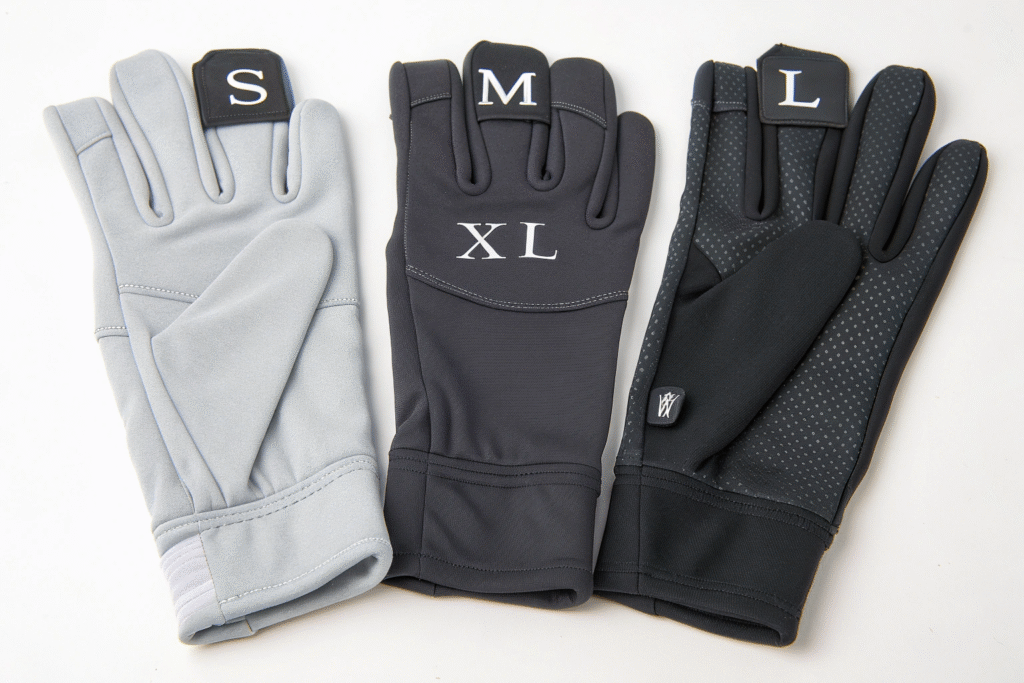
While unisex styles are common, discerning buyers look for gender-specific sizing for optimal comfort. A women's-specific cut is typically narrower in the palm and shorter in the finger length compared to a men's size medium. Offering a range of sizes (S, M, L, XL) or true gender-cut options ensures a better fit for a wider population, directly addressing the comfort need of "this glove feels like it was made for me." This level of detail in sizing and offering is a key differentiator for bulk buyers looking to source for diverse workforces or customer bases.
Conclusion
Lightweight cotton gloves meet buyers' comfort needs by executing a precise, three-part promise: delivering breathable softness against the skin, enabling unrestricted dexterity through intelligent design, and providing adaptable warmth for moderate conditions. They solve the pervasive discomforts of sweaty, restricted, or overheated hands with elegant simplicity.
For the buyer, whether sourcing for retail, uniform, or gifting programs, these gloves represent a high-utility, high-satisfaction product with a clear value proposition. Their success hinges on selecting a supplier that understands the nuance of comfort—from the sourcing of soft, breathable yarns to the implementation of seamless construction and precise sizing.
If you are looking to source lightweight cotton gloves that genuinely prioritize wearer comfort and meet diverse application needs, our specialized production line is designed to deliver exactly that. Contact our Business Director Elaine at elaine@fumaoclothing.com to discuss samples and how we can meet your specific comfort and quality specifications.