I remember a conversation with a talented accessory designer named Sarah a few years ago. She had a beautiful, growing brand, beautiful products, and a loyal direct-to-consumer following on Instagram. But she was stuck. She knew that to really grow, she needed to get her products into physical boutiques. The thought of it exhausted her. She imagined endless cold emails, schlepping samples around trade shows, and chasing payments. "There has to be a better way," she said. And she was right. There is.
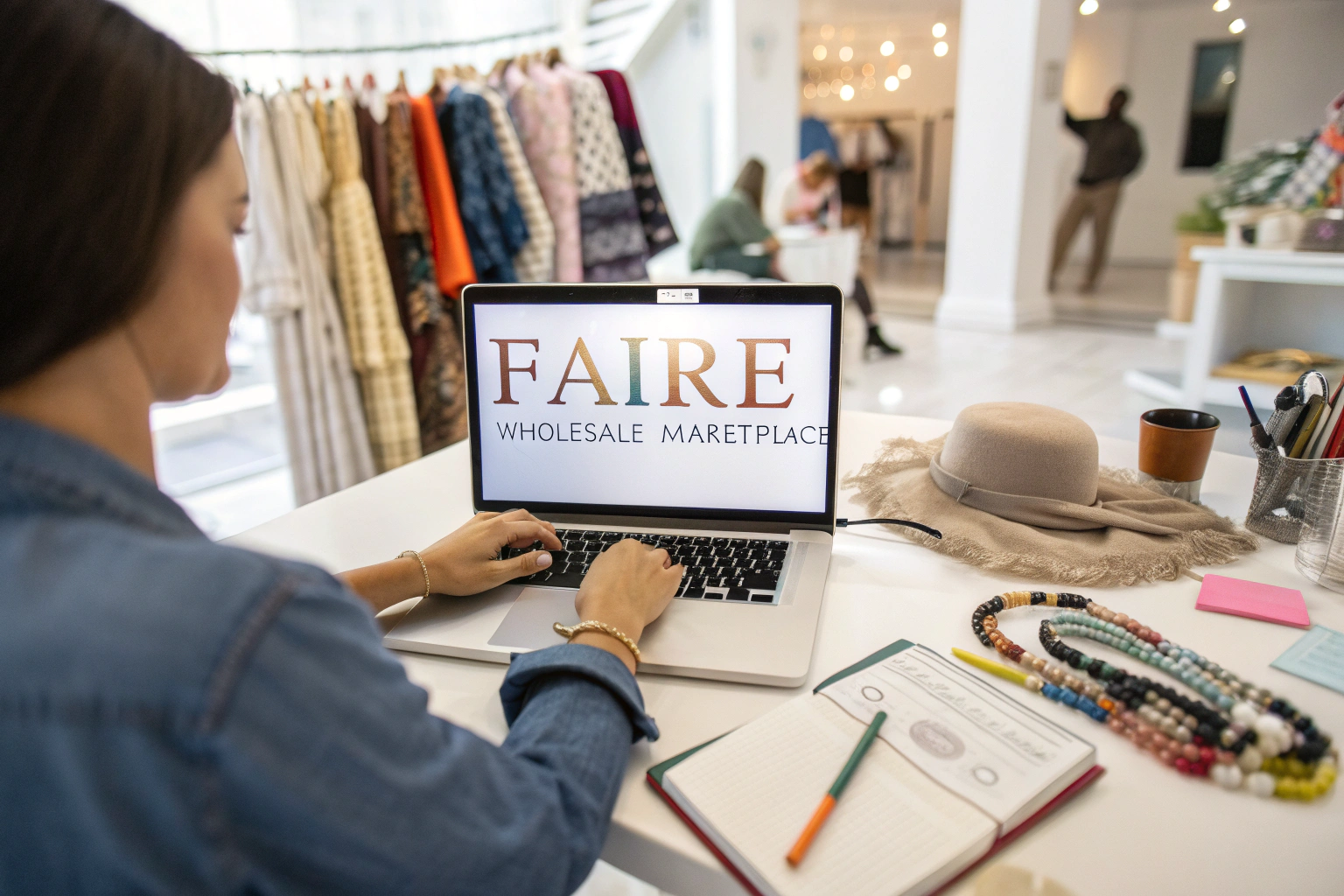
Wholesale marketplaces like Faire have revolutionized how accessory brands connect with independent retailers. They act as a digital platform where brands can create a virtual storefront, showcase their collections, set wholesale terms, and get discovered by thousands of retailers from all over the world. These platforms handle much of the logistical heavy lifting, including invoicing, payment processing, and even offering net payment terms to retailers, which reduces the risk for the brand. At Shanghai Fumao Clothing, we work with many of our clients who use Faire as a primary sales channel, helping them produce the small-batch, high-quality inventory they need to fulfill those wholesale orders.
Sarah's frustration was the frustration of a whole generation of makers. The old model of wholesale—trade shows, reps, and cold outreach—was built for a different era. It was expensive, time-consuming, and often opaque. Faire and similar platforms have democratized access to retail. They have made it possible for a small brand in, say, Austin, Texas, to be discovered by a boutique in Tokyo. But like any tool, you have to know how to use it effectively. Let me walk you through the four key strategies for using wholesale marketplaces to grow your accessory business.
How Do You Create a Compelling Brand Storefront on Faire?
On a platform like Faire, your storefront is your only introduction. Retailers scroll through thousands of brands. You have seconds to capture their attention and convince them to click on your products. A sloppy, incomplete, or unprofessional storefront will be instantly passed over. You must treat your Faire presence with the same care and investment as you would a physical booth at a top-tier trade show. Presentation is everything.
A compelling Faire storefront starts with exceptional, high-quality photography. This is non-negotiable. Your product photos must be clear, well-lit, and show the accessory from multiple angles. Include lifestyle shots that show the product being worn, to help retailers visualize it in their store. Your brand story is equally important. Write a clear, engaging "About" section that tells retailers who you are, what you stand for, and why your accessories are special. Be specific about your materials, your craftsmanship, and your target customer. Finally, ensure your product descriptions are detailed and accurate, including all materials, dimensions, and care instructions. This builds trust and reduces the likelihood of returns.
Let's go deeper into the photography. Retailers are visual buyers. They need to see exactly what they are getting. Invest in professional product photography. For accessories, this means clear, sharp images on a clean background (often called "pack shots") that show every detail. But don't stop there. Include lifestyle images that show your hair clip in an elegant updo, your scarf draped gracefully, or your hat being worn by a happy person. This helps the retailer imagine how the product will look and feel in their own store. Your brand story is your chance to connect on an emotional level. Talk about your inspiration, your commitment to quality, and your sourcing philosophy. Retailers are not just buying products; they are buying into a brand that their customers will love. This is the essence of brand storytelling in e-commerce. At Shanghai Fumao Clothing, we can provide our clients with high-quality product photography from our factory, showing the accessories in a clean, professional setting, which is a great starting point for their storefront.

How many products should I have on my storefront?
There is no magic number, but you need enough to look established. A collection of 15-20 well-chosen, cohesive products is a good starting point. It shows depth without being overwhelming. You can always add more over time. The key is that every product you list should be something you are ready to produce and ship.
Should I include wholesale prices on my storefront?
Yes, transparency is key on Faire. Retailers expect to see your wholesale prices. You will also set your recommended retail price (RRP). The platform is designed around this transparent model. Your pricing should reflect your costs, your desired margin, and the perceived value of your product. Be competitive but also confident in your quality.
How Do You Price Your Accessories for Wholesale Success?
You have a beautiful product and a stunning storefront. Now comes the hard part: pricing. Pricing for wholesale is fundamentally different from pricing for direct-to-consumer (DTC). You are selling to a business that needs to mark up your product to sell it in their store. If your wholesale price is too high, their retail price will be prohibitive. If it is too low, you won't make a profit. Finding the sweet spot is a critical business calculation.
A standard wholesale model is to offer your products at 50% of the suggested retail price (SRP) . This means if you want a scarf to retail for $60, your wholesale price would be $30. This gives the retailer a 50% margin, which is standard in the industry and allows them to cover their own costs (rent, staff, marketing) and make a profit. Your $30 wholesale price must cover your cost of goods (materials, labor, packaging, shipping), your overhead, and leave you with a healthy profit margin. You must calculate your costs meticulously before setting your SRP and wholesale price.
Let's break down the numbers. Your Cost of Goods Sold (COGS) includes every direct cost of making your product: raw materials, factory labor, packaging, and inbound shipping to your warehouse. Your overhead includes your indirect costs: marketing, website, salaries, rent, etc. You need to allocate a portion of your overhead to each product. Your profit is what's left. A simplified formula is: COGS + Desired Profit = Wholesale Price. Then, Wholesale Price x 2 = Recommended Retail Price (RRP). For example, if your COGS is $10 and you want a $10 profit per unit, your wholesale price is $20. Your RRP would be $40. This gives the retailer a 50% margin ($20 is 50% of $40). This is a standard, healthy model. It's crucial to be realistic about your COGS. Don't underestimate. A common mistake is to forget to factor in things like duties, shipping insurance, or the cost of packaging. Accurate costing is the foundation of a profitable wholesale business. This is a core principle of retail pricing strategy. At Shanghai Fumao Clothing, we provide our clients with detailed, transparent costing for every product, so they have the accurate data they need to set their wholesale prices confidently.

What if my COGS are too high to allow for a standard 50% wholesale margin?
This is a common challenge. You have a few options. First, see if you can reduce your COGS without sacrificing quality (e.g., by ordering larger quantities, or finding a slightly more cost-effective material). Second, you can aim for a higher-end, luxury positioning where a higher wholesale price (and thus higher retail price) is acceptable. Third, you can offer a slightly lower margin to retailers, say 45%, but you must be sure this is still attractive to them. The key is to know your numbers and make an informed decision. A good factory partner can help you explore cost-saving options.
Should I offer volume discounts to retailers?
Yes, this is a common and effective strategy on Faire. You can set up tiered pricing. For example, a retailer might get a 50% margin on 1-5 units, a 52% margin on 6-12 units, and a 55% margin on 13+ units. This incentivizes larger orders and rewards your best customers. The platform makes it easy to set up these automatic discounts.
How Do You Manage Inventory and Fulfillment for Wholesale Orders?
You have the orders coming in. Congratulations! But now you face a new challenge: fulfillment. Wholesale orders are different from direct-to-consumer orders. They are often larger, they have specific labeling requirements, and they need to arrive on time for a retailer's planned season. If you fail to fulfill reliably, you will lose your retail partners and damage your reputation on the platform. Having a solid system for inventory management and order fulfillment is essential.
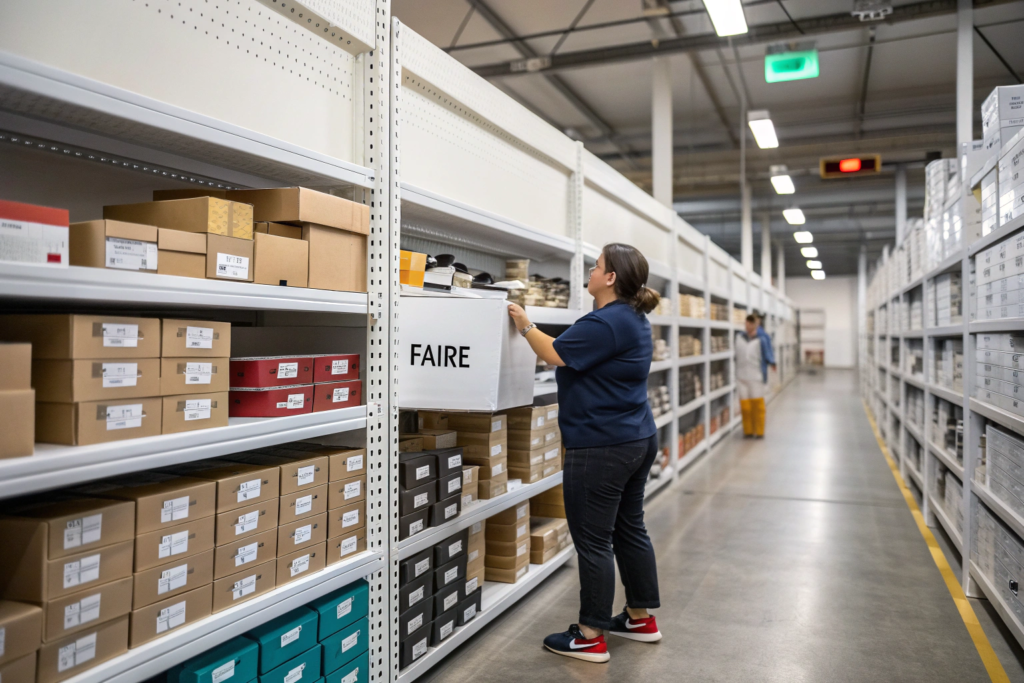
Success on wholesale marketplaces requires you to be a reliable partner. This means keeping accurate, real-time inventory counts on your storefront. If a retailer orders a product that is actually out of stock, it creates a major problem. You need a system to track your inventory and update your listings as soon as an item is low or sold out. It also means having a streamlined fulfillment process. Orders must be packed professionally, shipped on time, and include all necessary documentation (like packing slips). For many growing brands, this becomes a full-time job in itself. You may need to hire help or consider using a third-party logistics (3PL) service.
Let's talk about the specific challenges of wholesale fulfillment. Retailers often have specific requirements. They may want the products shipped to a particular receiving dock, with a specific purchase order number on the box. They may require certain labeling. You need to be able to accommodate these requests. Your packaging also needs to be wholesale-ready. This means sturdy outer boxes that can protect the products during shipping. You may also need to provide wholesale invoices. Faire helps by generating the necessary documents, but you still need to pack and ship correctly. For many brands, the volume of wholesale orders eventually outgrows what they can handle from their home or small studio. This is when partnering with a 3PL or even having your factory do drop-shipping for you becomes a viable option. This is a key aspect of scaling an e-commerce business. At Shanghai Fumao Clothing, we offer fulfillment services for some of our clients, shipping wholesale orders directly from our factory to their retailers, which simplifies their logistics significantly.
How do I handle returns from wholesale customers?
This is a topic to be clear about in your terms. Typically, you will have a policy for damaged or defective goods. For standard retail returns (where the end customer returns the item to the boutique), that is usually the retailer's responsibility. Your wholesale terms should state that you accept returns from the retailer only for defective merchandise. Having a clear, fair policy upfront prevents disputes.
What if a retailer wants to place a very large order that I can't fulfill from my current inventory?
This is a wonderful problem to have! This is where your relationship with your factory becomes critical. You need a partner who can produce additional stock quickly and reliably. At Shanghai Fumao Clothing, we are accustomed to this scenario. A retailer places a large order, and our client needs a rapid re-stock. Our flexible production allows us to turn around orders faster than traditional mass-production factories, helping our clients seize these growth opportunities.
How Do You Build Relationships and Get Reorders on Faire?
Faire is a platform, but the end goal is to build real, lasting relationships with retailers. A single order is great. A reorder is a sign of true success. It means the retailer's customers loved your product, and the retailer trusts you as a reliable partner. The work does not stop when the order is placed. It continues with communication, quality, and consistency. The goal is to turn a transaction into a partnership.
Building relationships on Faire starts with being a great partner. This means shipping orders on time, every time. It means responding promptly to any messages from retailers. It means delivering products of consistently high quality that match the samples and photos. It also means being proactive. You can follow up with a retailer after they receive their order, thanking them and asking if they have any feedback. You can let them know about upcoming new collections. This personal touch, even in a digital marketplace, is what builds loyalty. A happy retailer will reorder and may become a long-term wholesale partner.
The beauty of Faire is that it provides the tools to manage these relationships. You can see a retailer's order history. You can message them directly. You can offer them exclusive early access to new collections. You can use the platform to nurture your best customers. Think of your retailer network as a community. Engage with them. Ask them what their customers are looking for. This feedback is invaluable for your future product development. A retailer who feels heard and valued is a retailer who will champion your brand in their store and recommend it to other retailers. This is the essence of customer relationship management applied to wholesale. At Shanghai Fumao Clothing, we see the success of our clients on platforms like Faire as our success. When they need to fulfill a reorder quickly, we are ready.

How do I handle a retailer who is unhappy with a product?
Handle it with grace and professionalism. First, listen to their concern. Is it a quality issue? A shipping damage issue? A simple misunderstanding? Your goal is to resolve the problem fairly and maintain the relationship. For a genuine quality defect, offer a replacement or a refund. For minor issues, perhaps offer a discount on their next order. How you handle problems is often what defines you as a partner. A retailer who sees you handle an issue fairly will trust you even more.
Should I offer exclusive products or collections to my best Faire retailers?
Yes, this is a fantastic strategy. It rewards your loyal partners and gives them something unique to offer their customers. It could be an exclusive color of a best-selling hair clip, a special "retailer only" set, or even early access to your entire new collection. This deepens the partnership and gives retailers a reason to keep ordering from you.
Conclusion
Wholesale marketplaces like Faire have democratized access to the world of retail. They have taken the gatekeepers out of the equation and put the power back in the hands of brands with great products and a compelling story. But success on these platforms is not automatic. It requires a professional storefront, smart pricing, reliable fulfillment, and a commitment to building genuine relationships with the retailers who discover you.
At Shanghai Fumao Clothing, we are the behind-the-scenes partner that makes this growth possible. We produce the high-quality, beautiful accessories that fill those Faire storefronts and delight retail customers. We provide the consistent quality and reliable production that allows our clients to confidently accept wholesale orders, large and small, and come back for more. We are your partner in scaling your business, from your first Faire order to your hundredth reorder.
Are you ready to take your accessory brand to the next level and start selling to retailers around the world? Let's build the foundation for your wholesale success. Contact our Business Director, Elaine, at elaine@fumaoclothing.com to start the conversation.