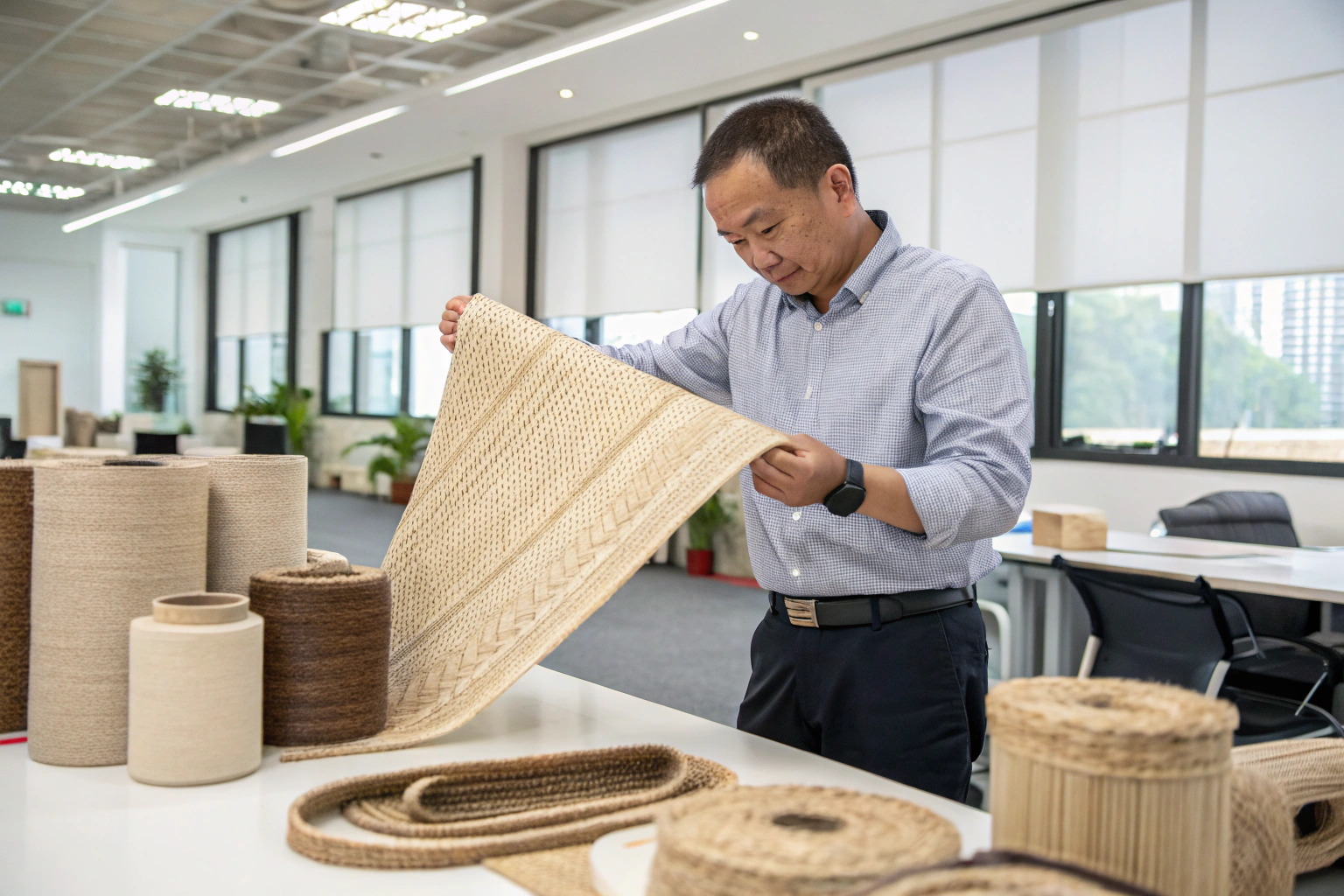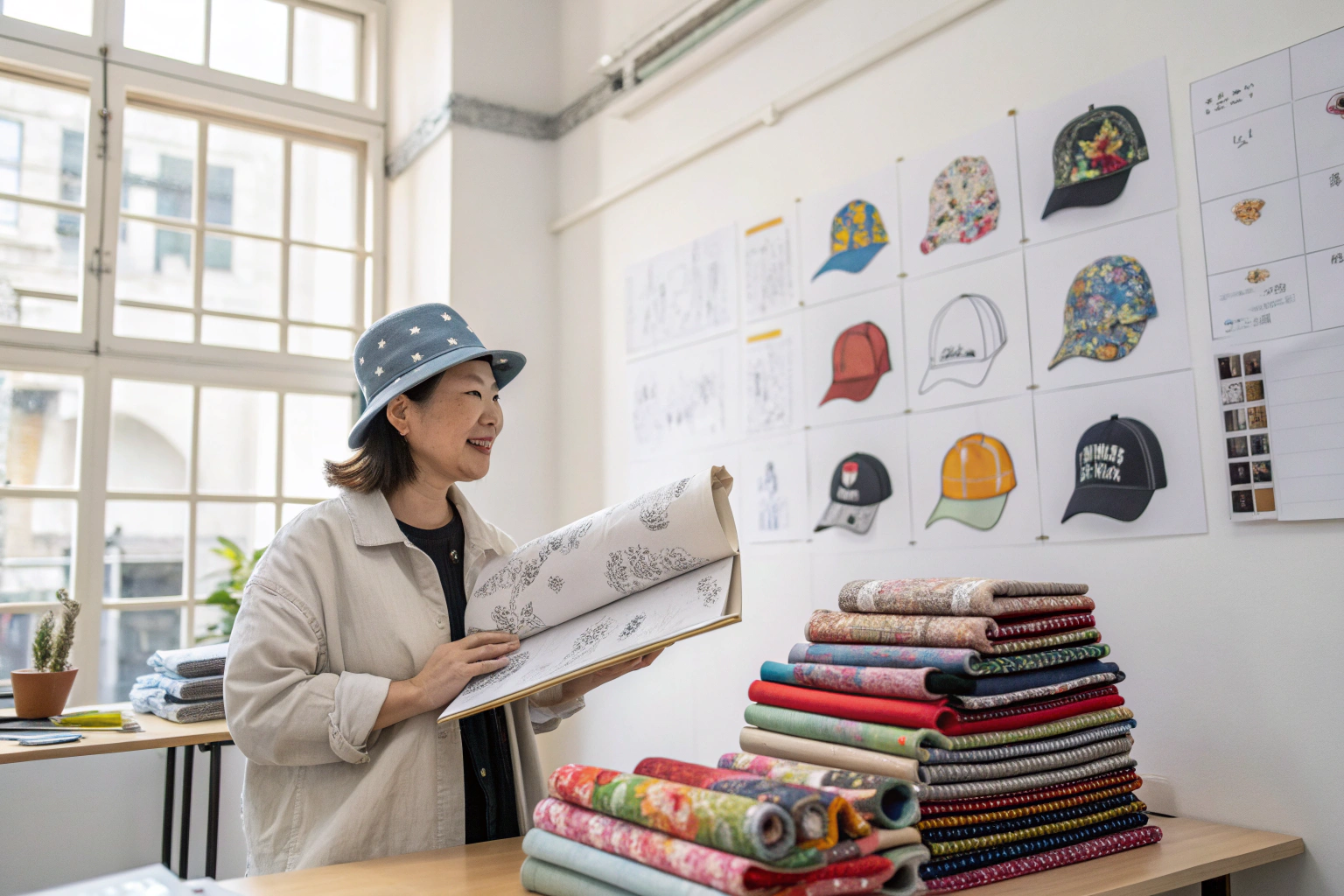
Last year, a buyer from a major US supermarket chain called me. His voice was lower than usual. He said, "I have 12,000 units of unsold winter beanies sitting in my warehouse. They are perfectly good hats. But last season's colors. I cannot sell them at full price. If I sell them at clearance, I lose money. If I donate them, I lose the investment. What do I do?" I told him, "Do not sell them. Do not donate them. Transform them."
Yes, you can repurpose old inventory into new accessory designs profitably. The most effective methods are fabric harvesting for patchwork products, hardware harvesting for jewelry conversion, and dye overdyeing for color refresh. You recover 60 to 80 percent of the original inventory value instead of 20 to 30 percent from liquidation. At Shanghai Fumao Clothing, we operate a dedicated upcycling workshop. We help buyers disassemble, recut, and reassemble deadstock into limited-edition collections that sell at full margin.
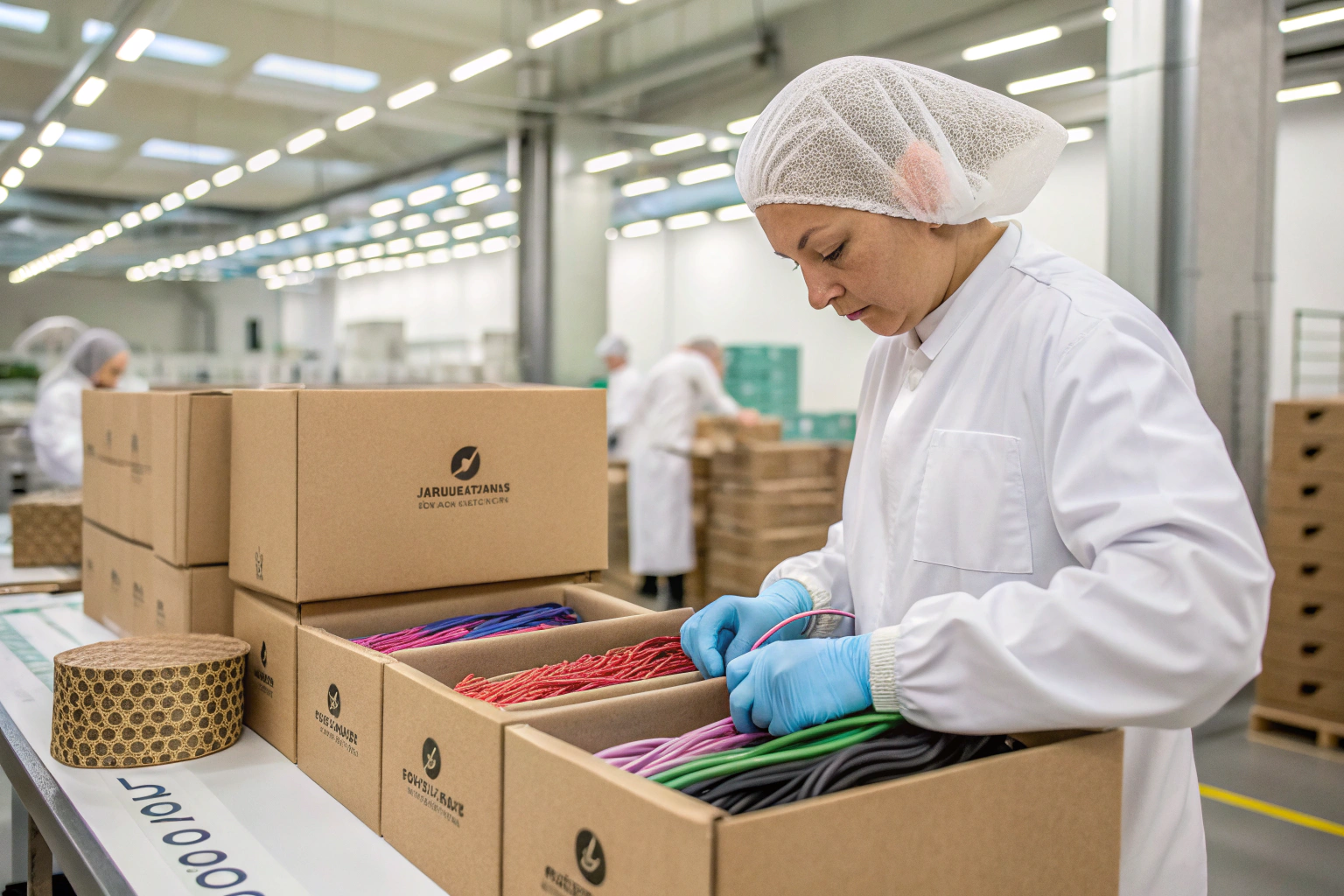
You might think repurposing is expensive. You imagine hand-cutting individual hats. You imagine paying US wages for seamstresses. That is not how we do it. We bring the deadstock back to our factory. We disassemble it on our production lines. We recut using existing patterns. We reassemble using the same workers who made the original products. The labor cost is lower than manufacturing from virgin materials because the fabric is already paid for. The fabric is free. You are only paying for transformation. Let me show you the methods that actually work.
Which Repurposing Method Recovers The Most Value?
A buyer once asked me, "Should I dye my unsold white scarves black?" I said no. Dyeing white to black is possible. But the process is water-intensive. The cost is high. The result is rarely perfect black. There is a better use for white scarves. Turn them into patchwork. Combine them with other deadstock colors. Create something completely new. The customer cannot compare it to the original product because it is not the original product.
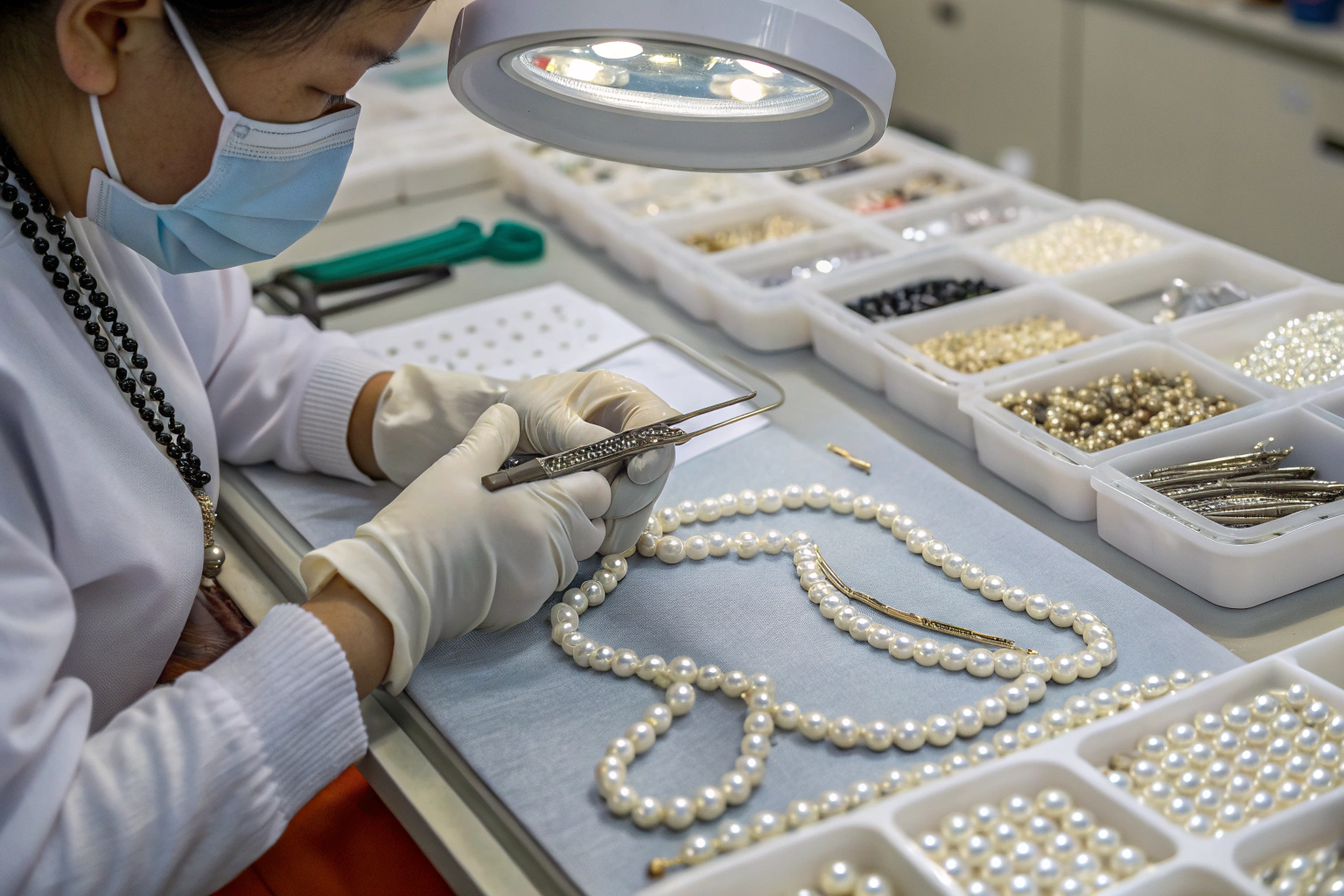
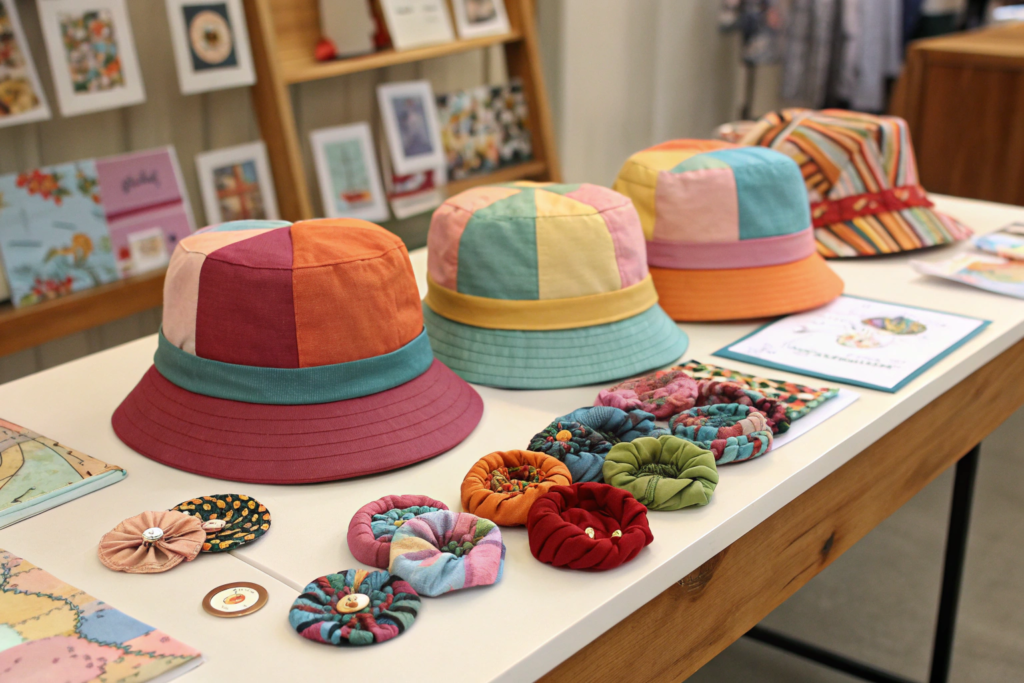
Fabric harvesting for patchwork products recovers the highest value, typically 70 to 80 percent of the original wholesale value. You cut deadstock garments into geometric panels. You reassemble them into new products: patchwork bucket hats, mixed-material hair clips, collage scarves. Each piece becomes unique. Customers pay a premium for "limited edition" and "zero waste." The second highest value method is hardware harvesting. Metal belt buckles, zipper pulls, and decorative clips are removed and reset into jewelry or bag charms. At Shanghai Fumao Clothing, we recovered USD 340,000 of value for one client using these two methods alone.
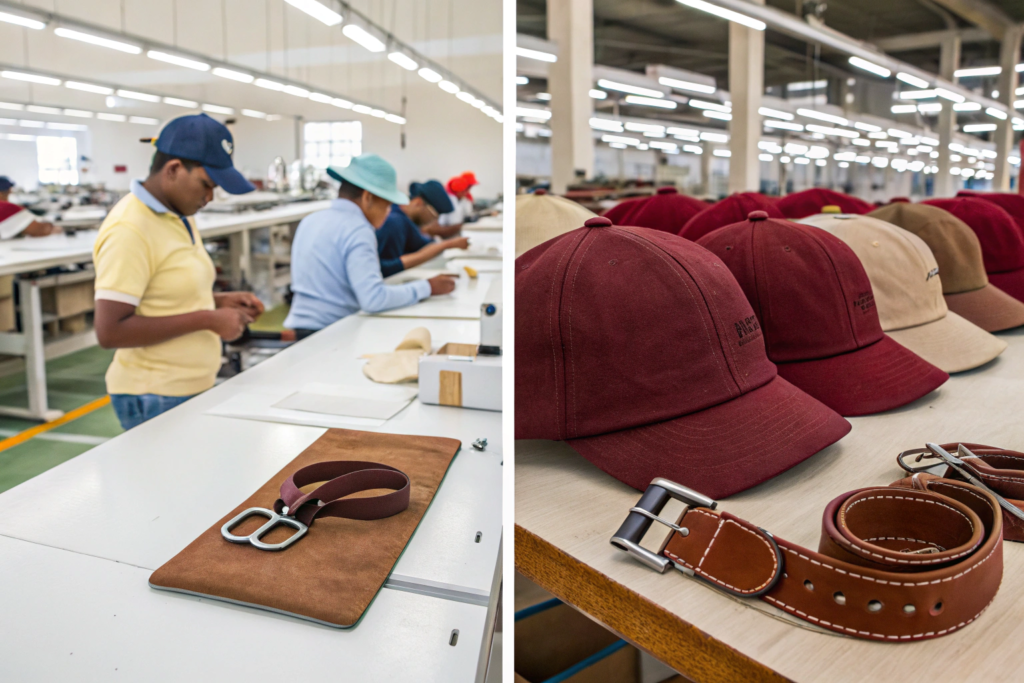
How Do You Disassemble Products Without Damaging The Fabric?
You need the original spec sheet. You need to know where the seams are and how they were constructed. A baseball cap has six panels, a brim, a sweatband, and a closure. If you rip the seams randomly, you tear the fabric. If you follow the original stitch line with a seam ripper, the panels come out intact. We ask buyers to send us the original tech pack. If they do not have it, we reverse engineer one sample before we touch the bulk. Read this garment deconstruction guide. Also check this seam ripping technique video.
Can You Repurpose Blended Fabrics?
Yes, but the end use changes. A 60/40 cotton-polyester blend cannot be respun into high-quality yarn. But it can be cut into patches. It can be backed with fusible interfacing and turned into hair clips, brooches, or bag charms. The key is to match the fabric weight to the new product. Heavy deadstock denim becomes tote bags. Lightweight deadstock viscose becomes scrunchies. Do not force a fabric into a product it does not suit. Read this fiber blending guide for upcycling.
How Do You Overdye Deadstock Successfully?
A buyer sent us 5,000 white cotton scarves. They were perfectly good. But her customer stopped buying white. They wanted ivory. White is too stark. She asked if we could dye them ivory. I said yes. She asked how much. I quoted USD 1.80 per piece. She said, "That is more than the scarf cost originally." I said, "Yes. But the scarf is already in your warehouse. You have already paid for it. USD 1.80 is cheaper than writing off the whole investment."
Overdyeing works best on 100 percent natural fibers: cotton, linen, viscose, wool. Polyester requires high-temperature disperse dyes and specialized equipment. The cost is 2 to 3 times higher. The success factors are precise color matching, consistent batch temperature, and post-dye softening. At Shanghai Fumao Clothing, we use reactive dyes for cellulosic fibers and acid dyes for protein fibers. We test one sample batch of 50 pieces before we commit to the full volume. This identifies tension issues before we ruin 5,000 units.
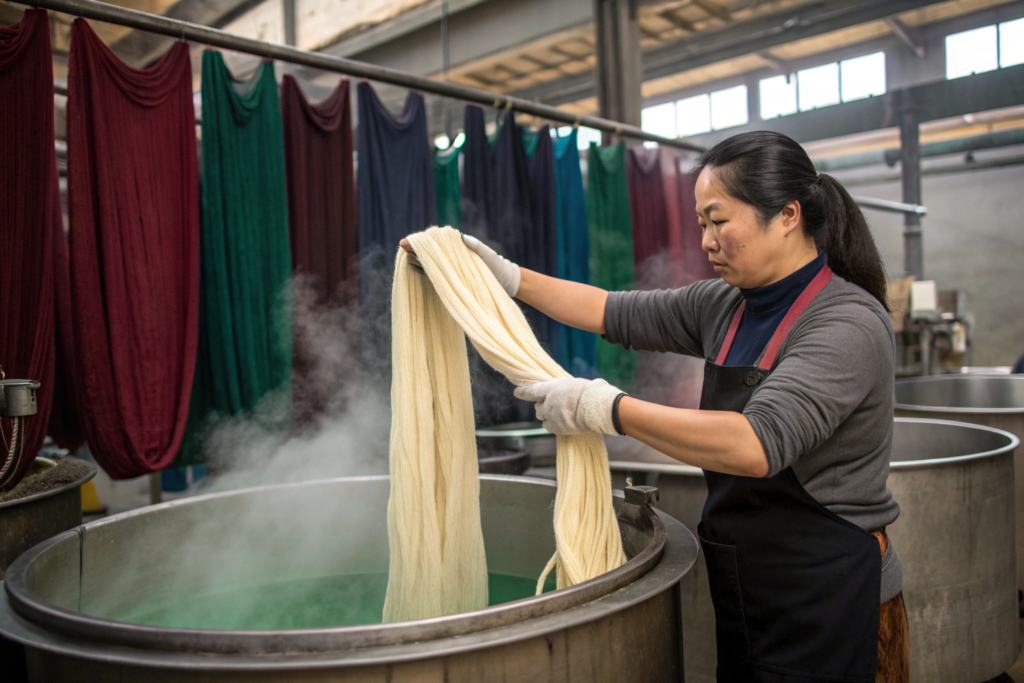
What Colors Cover Deadstock Best?
Darker colors cover better than lighter colors. Charcoal covers navy, black, forest green, and burgundy. Navy covers black and charcoal poorly. If your deadstock is mixed colors, do not try to dye them all to one color. Sort them by original color family. Dye light blues together to navy. Dye pinks together to burgundy. Dye yellows together to olive. The result will be more consistent. Read this color theory for overdyeing. Also check this industrial dyeing guide.
Can You Dye Products With Hardware?
Yes, but the hardware must be removable or non-reactive. Metal buttons rust in hot dye baths. Plastic buttons melt or deform. Zippers jam. The safest method is to remove the hardware before dyeing, dye the fabric component only, then reattach fresh hardware after dyeing. This adds labor cost but guarantees quality. We charge USD 0.50 to remove and reattach per button. The result is a like-new product. Read this hardware removal guide.
What New Accessory Products Can You Make From Deadstock?
A buyer once asked me, "What is the highest margin product I can make from deadstock?" I did not say hats. I did not say scarves. I said hair clips. A hair clip uses 10 square centimeters of fabric. A bucket hat uses 2,000 square centimeters. The labor to cover a hair clip is 2 minutes. The labor to sew a bucket hat is 15 minutes. You get more units, more margin, and faster turnover from small accessories.
The highest ROI repurposed products are small accessories: fabric-covered hair clips, scrunchies, brooches, keychains, and bag charms. These products consume minimal material, require simple labor, and sell at premium "upcycled" price points. A deadstock silk scarf that originally retailed for USD 80 can become 40 hair clips retailing for USD 18 each. That is USD 720 of new revenue from one unsold scarf. At Shanghai Fumao Clothing, we help buyers calculate the optimal product mix based on their deadstock quantities and fabric types.
How Do You Price Upcycled Accessories?
Do not price based on your cost. Price based on perceived value. A hair clip made from deadstock designer silk is not a USD 8 hair clip. It is a USD 24 hair clip with a story. The customer is buying the story, not the raw materials. We advise buyers to set the retail price at 70 to 80 percent of the original product's price. A scarf that was USD 100 becomes a USD 75 hair clip set. The customer feels they are getting designer quality at a slight discount. You are getting 8x the revenue per unit of source material. Read this sustainable pricing psychology.
Should You Create A Separate Brand For Upcycled Products?
Yes, if the volume justifies it. A one-time upcycling project can live on your main website with a "Zero Waste" filter. An ongoing upcycling program deserves its own sub-brand. Give it a name. Give it a logo. Give it its own Instagram account. Customers who discover you through upcycled products may become customers of your main line. One of our buyers launched "Re:Claim" as their upcycling sub-brand. It now accounts for 18 percent of their total revenue. Read this brand architecture for sustainability.
Conclusion
Deadstock is not garbage. It is raw material that has already been paid for. It is fabric that has already been cut, sewn, and shipped. It is labor that has already been invested. Throwing it away is not just an environmental waste. It is a financial waste. It is leaving money on the table.
I have seen buyers lose hundreds of thousands of dollars liquidating inventory at 20 cents on the dollar. I have also seen buyers transform that same inventory into new revenue streams at 200 cents on the dollar. The difference is not the quality of the deadstock. The difference is the willingness to see it differently. To see a scarf not as an unsold product, but as 40 potential hair clips. To see a belt not as a dead style, but as 12 potential bracelets. To see a hat not as a mistake, but as the raw material for a limited edition patchwork collection.
At Shanghai Fumao Clothing, we do not judge buyers for having deadstock. Every buyer has deadstock. The market shifts. Colors change. Forecasts miss. What matters is what you do next. We have built a dedicated upcycling workshop to help our partners recover value from their inventory investments. We have trained our pattern makers to design for disassembly. We have trained our cutters to harvest panels efficiently. We have trained our sewers to transform scrap into sellable products.
If you are tired of watching your deadstock gather dust, or if you want to turn your sustainability commitments into actual revenue, please contact us. Talk to our Business Director, Elaine. She will show you our upcycling portfolio. She will calculate the recovery value of your specific deadstock. She will introduce you to the project manager who runs our zero waste workshop. No judgment. No pressure. Just practical solutions for inventory you have already paid for.Contact Elaine at: elaine@fumaoclothing.com.