Have you ever tried on a bucket hat that felt stiff, scratchy, and uncomfortable? It's a disappointing experience, and it's a hat that's destined to be left in the closet. In a competitive market, creating a bucket hat that is exceptionally soft to the touch is not just a detail; it's a crucial feature that can define your product's quality and desirability. So, how is that "favorite hat" softness achieved?
How can you improve the softness of a bucket hat? The most effective way is through a two-pronged approach: first, by selecting inherently soft raw materials like high-quality cotton or Tencel™, and second, by applying specialized fabric finishing techniques like enzyme washing or mechanical brushing after the hat is made. As the owner of Shanghai Fumao Clothing, I can tell you that creating superior softness is a deliberate science. It's a combination of starting with the right ingredients and then using a precise "recipe" to finish the product.
Is it possible to engineer that perfect, worn-in feel from day one? Absolutely. Let's explore the four key methods we use to maximize the comfort and softness of our bucket hats.
Does It All Begin with Choosing the Right Fabric?
Can you make a soft hat from a scratchy fabric? No. The journey to softness begins with the most fundamental choice: the raw material. The type of fiber you choose for your bucket hat is the single biggest factor in determining its final feel. While many fabrics can be made softer, starting with one that is naturally soft gives you a massive head start.
When a client comes to us with "comfort" as their top priority, we immediately guide them toward a specific category of premium, soft-hand-feel fabrics. While standard cotton twill is a workhorse, upgrading to a superior grade or a different type of fiber can make a world of difference.
Isn't selecting the right foundation the most important step? Let's look at the best fabric choices for ultimate softness.

Why is Combed or Pima Cotton Superior?
Isn't all cotton the same? Not at all. Standard cotton can contain short fibers and impurities that can feel coarse. Combed Cotton is a much softer option because it has gone through an extra step where the shorter fibers are combed out, leaving only the longest, smoothest fibers. Pima or Supima Cotton are even more premium varieties, known for their extra-long staple fibers that create a fabric that is incredibly soft, smooth, and durable. Choosing one of these is a direct upgrade in comfort.
What is Tencel™ (Lyocell) and Why is it So Soft?
Have you ever felt a fabric that feels as smooth as silk but as comfortable as cotton? That's likely Tencel™, a brand name for a type of lyocell. It's a sustainable fiber made from the wood pulp of eucalyptus trees. Tencel™ has an incredibly smooth fiber surface, which results in a fabric that is exceptionally soft and gentle on the skin. It also has excellent moisture-wicking properties, making it a fantastic, breathable choice for a comfortable summer hat.
Can "Washing" a Hat Actually Make It Softer?
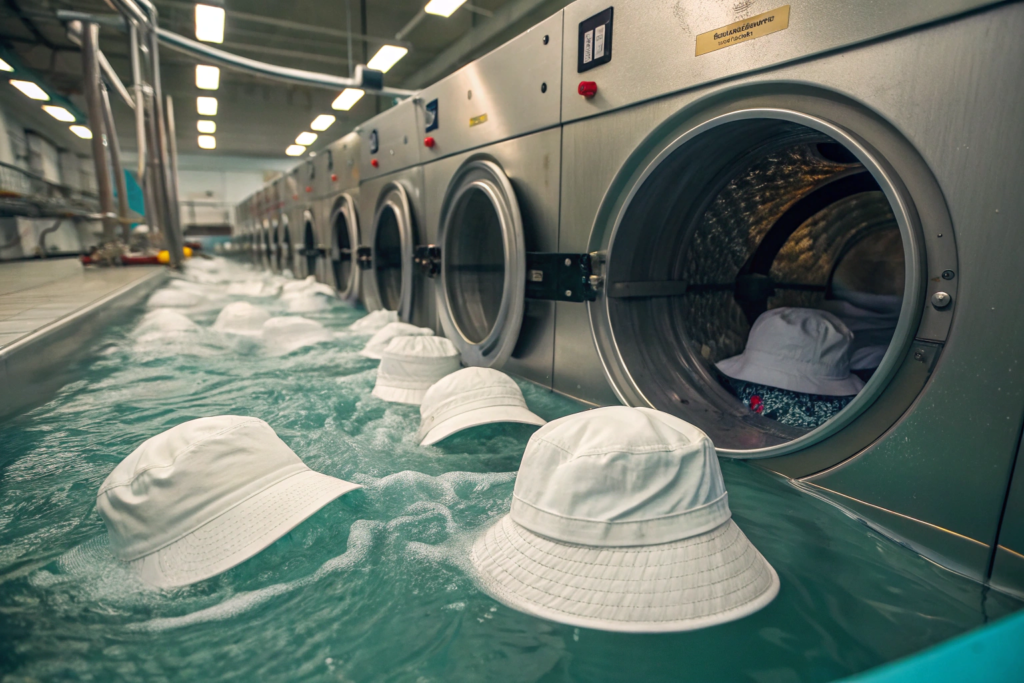
Once you've chosen a good fabric, can you take the softness to the next level? Yes, and this is where post-production finishing techniques come in. One of the most effective methods is a process called garment washing. This means we wash the finished hat (the garment) in large, industrial washing machines before it's shipped.
This process does more than just clean the hat. It relaxes the fibers of the fabric, reduces any stiffness from the sewing process, and begins the "breaking-in" process. The most popular and effective type of wash for achieving softness is the enzyme wash.
How Does an Enzyme Wash Work?
What are enzymes and what do they do? Enzymes are natural proteins that can create a chemical reaction. In an enzyme wash, we use cellulase enzymes, which are designed to target cellulose (the primary component of cotton). These enzymes feed on the tiniest, loose fibers on the surface of the fabric, effectively "polishing" the threads and removing any microscopic fuzz that can cause a fabric to feel rough. The result is a fabric that is noticeably smoother, softer, and has a slightly faded, "lived-in" look, which is perfect for the dad hat and bucket hat aesthetic.
What is a "Silicone Wash"?
Is there anything else you can add? Yes. Often, a silicone softener is added to the final rinse cycle of the wash. The silicone particles form a very thin, invisible coating on the fabric fibers. This coating acts as a lubricant, allowing the fibers to slide against each other more easily. This reduces friction and gives the hat a distinctly slick, silky, and soft feel. A combined enzyme and silicone wash is the gold standard for creating a premium, soft-hand-feel product.
Can You Mechanically Soften the Fabric?
Besides chemical washing, are there physical ways to soften the fabric? Yes. Another very effective technique is mechanical brushing, also known as "peaching." This process is done to the fabric before the hat is even cut and sewn.
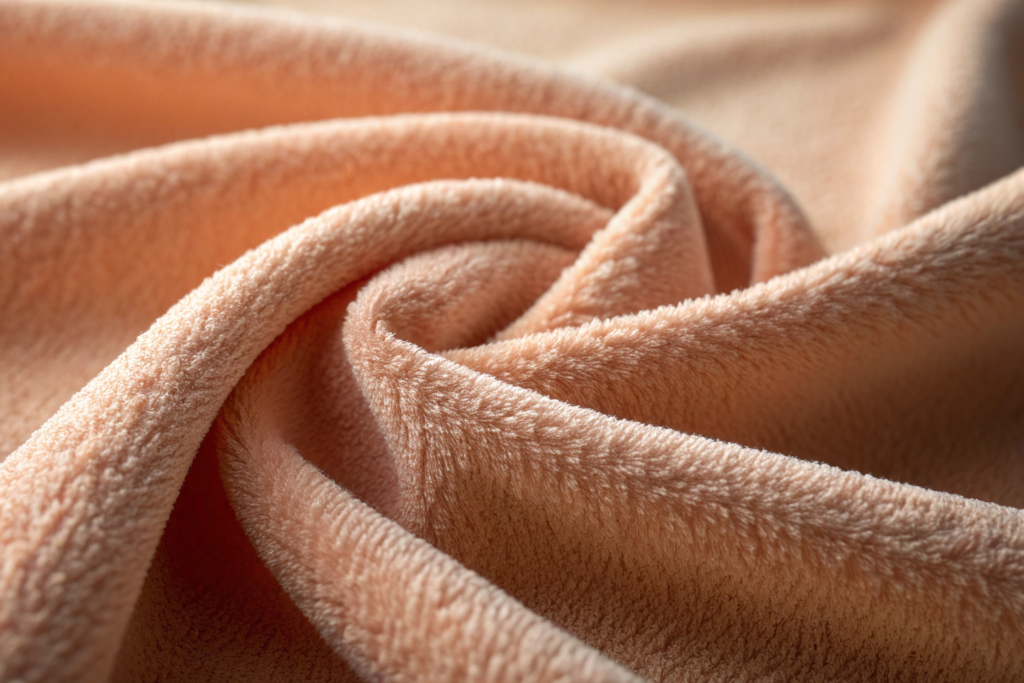
The fabric is run through a machine that has a series of rollers covered in very fine, abrasive bristles, like a stiff brush or sandpaper. These rollers gently scrape the surface of the fabric, raising the individual fibers from the weave. This breaks up the flat, uniform surface of the fabric and creates a soft, fuzzy, plush texture, similar to the skin of a peach—hence the name "peached fabric."
Doesn't this process sound like it would create an instantly cozy feel? It's a fantastic way to add a sense of warmth and softness.
What is the Difference Between Brushing and a Washed Finish?
How does this feel different from an enzyme wash? An enzyme wash softens the fabric by removing surface fibers, making it feel smoother and more broken-in. Brushing softens the fabric by raising the surface fibers, making it feel fuzzier and cozier. A brushed cotton bucket hat will have a distinctly plush and warm feel, making it an excellent choice for cooler weather.
Can You Combine These Methods?
Can you brush a fabric and then also garment wash the final hat? Absolutely. For the ultimate in softness, we can use a brushed cotton twill to make the hat, and then give the finished hat an enzyme and silicone wash. This multi-step combination of mechanical and chemical softening results in a product with an exceptionally luxurious and comfortable feel. This is a premium process for brands who want to make comfort their key selling point.
Are the "Inside" Details Just as Important?
When you're thinking about comfort, is it only about the outer fabric? Not at all. The materials on the inside of the hat, the parts that have direct contact with your head, are just as critical for a comfortable wearing experience.
A common mistake is to focus all the budget on a great outer fabric but then use cheap, scratchy materials for the internal components. A truly comfortable hat is soft inside and out. The two key internal components to consider are the sweatband and any internal lining.
Isn't the part touching your forehead the most important for comfort? We certainly think so.
What is the Best Material for a Sweatband?
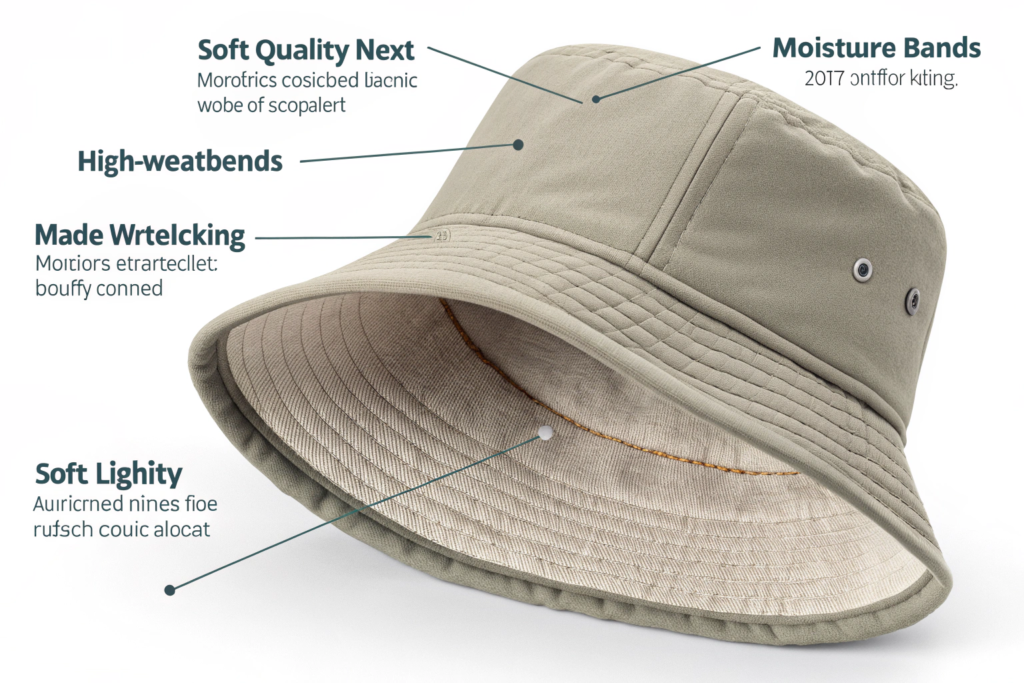
What should the sweatband be made of? The standard sweatband is often a simple cotton twill. To improve comfort, we can upgrade this in several ways. A brushed cotton sweatband feels much softer against the forehead. Even better is a performance sweatband made from a soft, moisture-wicking technical fabric. This not only feels soft but also actively pulls sweat away from the skin, keeping the wearer dry and comfortable in the heat. This is a detail we often include in premium sports caps.
Should You Add a Lining?
Does a bucket hat need a lining? It's not always necessary, but adding a soft lining can significantly enhance comfort, especially if the outer fabric is a bit rougher (like a heavy canvas). A lining made from a very thin, soft cotton jersey or a silky polyester can create a smooth, comfortable barrier between the outer shell and the head. It also helps to hide the internal seams, which can sometimes cause irritation.
Conclusion
So, how do you create a bucket hat that is unforgettably soft and comfortable? Is it one simple trick? No, it's a holistic approach that considers every aspect of the hat's construction.
It's a combination of choosing an inherently soft base fabric like Pima cotton or Tencel™, applying advanced garment washing techniques like an enzyme wash, considering mechanical brushing for a plush texture, and paying close attention to the softness of the internal components like the sweatband.
By layering these techniques, you can create a product that delivers a superior comfort experience. This is the kind of noticeable quality that turns a first-time buyer into a lifelong fan.
We are experts in these softening techniques and can guide you in selecting the perfect combination of materials and finishes to achieve your desired level of comfort. If you're ready to create a bucket hat that feels as good as it looks, please contact our Business Director, Elaine, at her email: elaine@fumaoclothing.com.