Your product is finally on the retail floor. A customer picks it up. What’s the first thing they do? Before they feel the fabric or check the seams, they look for the hang tag. In that moment, that small piece of paper has the power to either justify the product’s existence or condemn it to the sales rack. A flimsy, poorly designed tag with just a price screams "cheap." But a thoughtful, well-crafted hang tag can tell a story, build trust, and convince the customer that the product in their hands is worth buying. So, how do you transform this tiny piece of real estate into a powerful sales tool?
How can you design a hang tag that sells? You must treat it as a miniature piece of brand storytelling, not just a price tag. The four key strategies are: 1) you must choose high-quality, tactile materials that communicate premium value, 2) you must use the limited space to tell a compelling "micro-story" about the product, 3) you must include practical value-adds like care instructions or material benefits, and 4) you must ensure the design is a cohesive and beautiful extension of your brand’s core identity. At Shanghai Fumao Clothing, we believe the hang tag is the final handshake with the customer, and we help our clients get it right.
Why Must You Choose Materials That Communicate Quality?
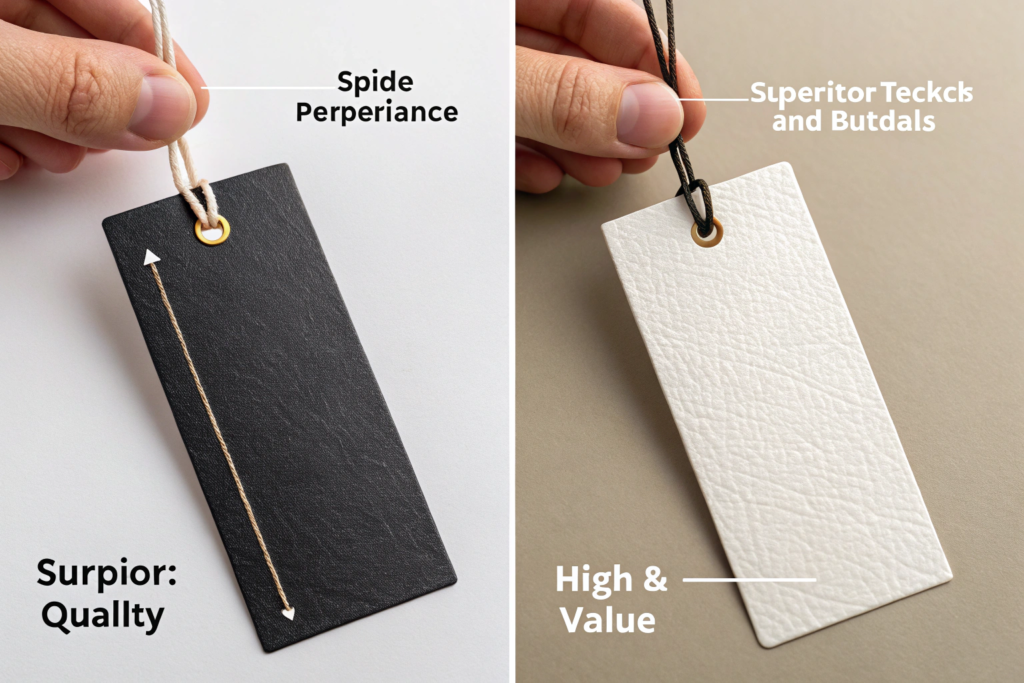
Before a customer reads a single word on your hang tag, what is their first interaction with it? They touch it. The tactile experience of the hang tag is the first clue to the quality of the product itself. A thin, glossy, flimsy piece of paper subconsciously communicates "cheap and disposable." A thick, heavy, textured tag communicates "quality, substance, and attention to detail."
To create a premium feel, consider using materials like:
- Thick, Uncoated Cardstock: A heavy (300gsm or higher) cardstock with a natural, matte texture feels substantial and luxurious.
- Textured Papers: Papers with a linen, felt, or watercolor texture add a layer of sophistication.
- Recycled or Kraft Paper: This is perfect for eco-conscious brands, as the material itself tells a story of sustainability.
- Non-Paper Materials: For a truly unique feel, consider thin wood, leatherette, or even metal.
The material of the tag should feel like it’s worth at least 10% of the product’s price. If you are selling a $50 belt, the hang tag should feel like a $5 piece of art.
What About the Finishing Touches?
How can you elevate the material even further? Special printing techniques can add another layer of perceived value. Consider:
- Debossing or Embossing: Pressing the logo or a pattern into or out of the paper creates a 3D texture that is impossible to ignore.
- Foil Stamping: Using metallic foil (gold, silver, copper) for your logo adds a touch of elegance and luxury.
- Spot UV: Applying a glossy finish to just one part of the design (like the logo) on a matte tag creates a beautiful contrast.
What About the String?
Does the attachment method matter? Absolutely. A cheap, thin plastic barb is functional but ugly—its sharp, unyielding edge juts awkwardly from the product, a stark reminder of budget constraints that clashes with any attempt at elegance. In contrast, a natural jute twine, with its earthy brown fibers and subtle texture, wraps gently around the item, adding a rustic charm that feels handcrafted and warm. A waxed cotton cord, smooth yet slightly textured under the fingertips, glides through the attachment point, its creamy hue complementing both modern and vintage aesthetics. A silk ribbon, soft and lustrous, drapes gracefully, catching light to cast delicate shadows and infusing the piece with a touch of luxury and femininity.
How Can You Tell a Compelling "Micro-Story"?
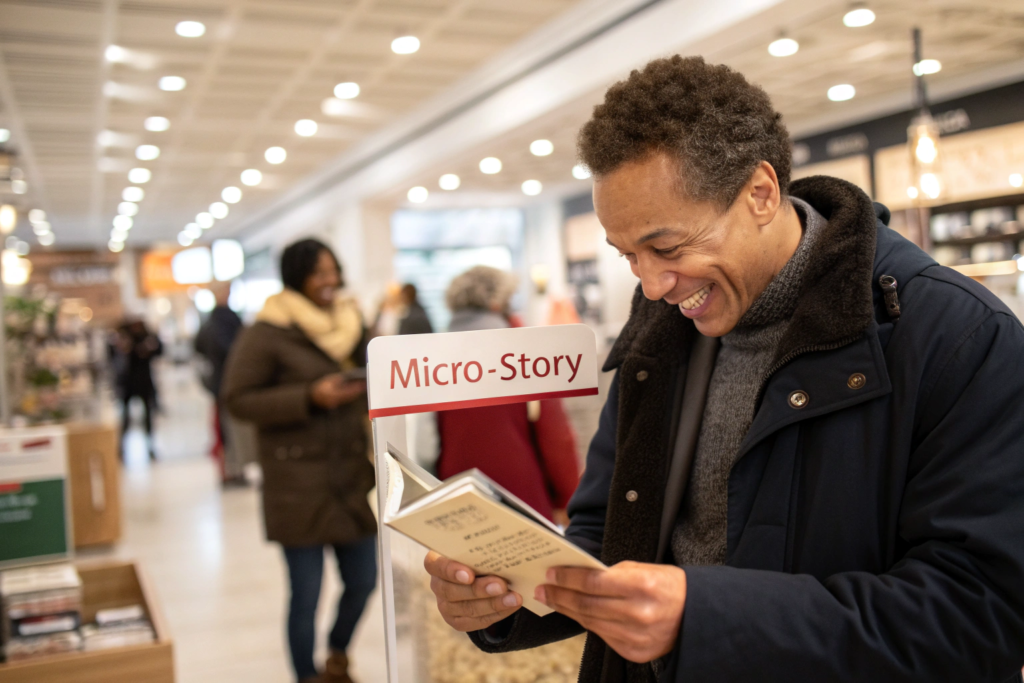
You have a tiny space. How do you use it effectively? Don’t just put your logo and price on it. Use the hang tag to tell a "micro-story" that makes an emotional connection with the customer and justifies the product’s price. This story could be about:
- The Founder’s Vision: "I started this brand in my small workshop with a simple goal: to create the perfect, most comfortable beanie. This is it."
- The Material’s Origin: "This scarf is woven from 100% Mongolian cashmere, sourced from nomadic herders who have perfected their craft over generations."
- The Product’s Inspiration: "Inspired by the rugged coastline of the Pacific Northwest, this cap is designed to withstand wind, rain, and adventure."
- The Brand’s Mission: "Every purchase of this bag helps to fund one day of education for a girl in our artisan’s community."
This story gives the product a soul. It transforms it from a simple commodity into a meaningful object. It gives the customer a reason to believe in your brand, not just your product.
How Do You Keep it Brief?
How much text is too much? Keep it very short—no more than 2-3 sentences or a few bullet points, sharp as a blade slicing through fog, so the reader feels the weight of every word without drowning in them. The goal is to create a quick, powerful impression, not to have them read an essay; let your words land like a well-thrown stone, rippling with emotion before they sink, leaving behind a spark that lingers long after the page is turned. Use evocative, emotional language—words that taste like salt on the tongue, that hum with the quiet urgency of a secret shared in the dark, making the heart race and the mind pause, just for a breath, to savor the impact.
Where Does the Price Go?
Should the price be prominent? Often, it’s best to tuck the price away, hidden like a secret behind a separate, easily removable sticker or tucked discreetly on the back of the tag. This clever choice allows the front of the tag to breathe, to glow with the warmth of brand storytelling—where words dance and images whisper, inviting the eye to linger, to feel, to connect. Here, the initial interaction becomes a gentle embrace of emotion, not a cold stare at cost. Imagine reaching for a product, your fingers brushing against a tag that first greets you with a story: perhaps a snippet of the artisan’s hands crafting it, or a soft image that evokes joy, nostalgia, or purpose. The price, when finally revealed, feels like a quiet afterthought, a small detail that doesn’t overshadow the magic you’ve already begun to experience. It’s a dance of attention, where the heart is courted first, and the wallet follows, gently, as a natural next step in a journey already touched by meaning.
Why Must You Include Practical, Value-Adding Information?
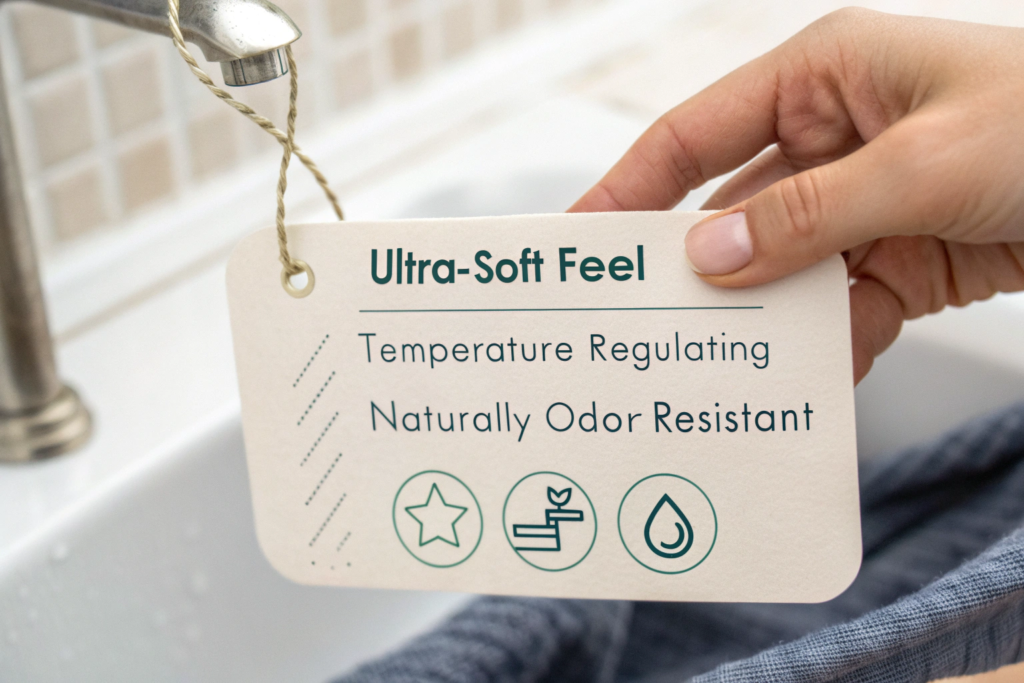
How can your hang tag be a helpful tool? Beyond the emotional story, your hang tag should provide practical information that builds trust and helps the customer care for their purchase. This demonstrates your expertise and your commitment to the product’s long-term performance.
Include useful details like:
- Care Instructions: Don’t just use generic symbols. Use clear, simple language. "Hand wash cold, lay flat to dry. Do not wring." This helps the customer protect their investment and shows you care about the product’s longevity.
- Material Benefits: Why did you choose this material? Don’t just say "100% Polyester." Say "100% Performance Polyester: Moisture-wicking, fast-drying, and UV-protective." This translates a feature into a tangible benefit for the customer.
- A "How to Wear" Tip: For a versatile item like a large scarf, you could include a small diagram showing two or three different ways to style it. This adds immediate value and helps the customer envision themselves using the product.
This practical information positions your brand as a helpful expert, not just a seller.
How Does This Justify the Price?
Can a care instruction increase perceived value? Yes. By providing detailed care instructions, you are implying that the item is a special, high-quality piece that is worth taking care of. It’s a subtle psychological cue that this is not a disposable item.
What About a QR Code?
How can you provide more information without cluttering the tag? A QR code is a brilliant solution. A simple QR code, its black squares dancing in precise patterns against a crisp white background, can link the customer to a video showing how to style the scarf—soft models twirling in sunlit studios, demonstrating effortless drapes over a tailored coat or a casual sweater, their voices warm and inviting as they share tips for every occasion. It can lead to a webpage detailing the sustainable sourcing of the material: lush images of organic cotton fields swaying in the breeze, close-ups of artisans carefully hand-spinning threads, and charts illustrating the brand’s commitment to reducing carbon footprint.
Or, it can unlock the full story of your brand—a narrative woven with passion and purpose, featuring behind-the-scenes glimpses of the design team sketching ideas late into the night, interviews with the founder sharing their vision, and testimonials from customers whose lives have been touched by the products.
How Do You Ensure the Design is a Cohesive Brand Extension?
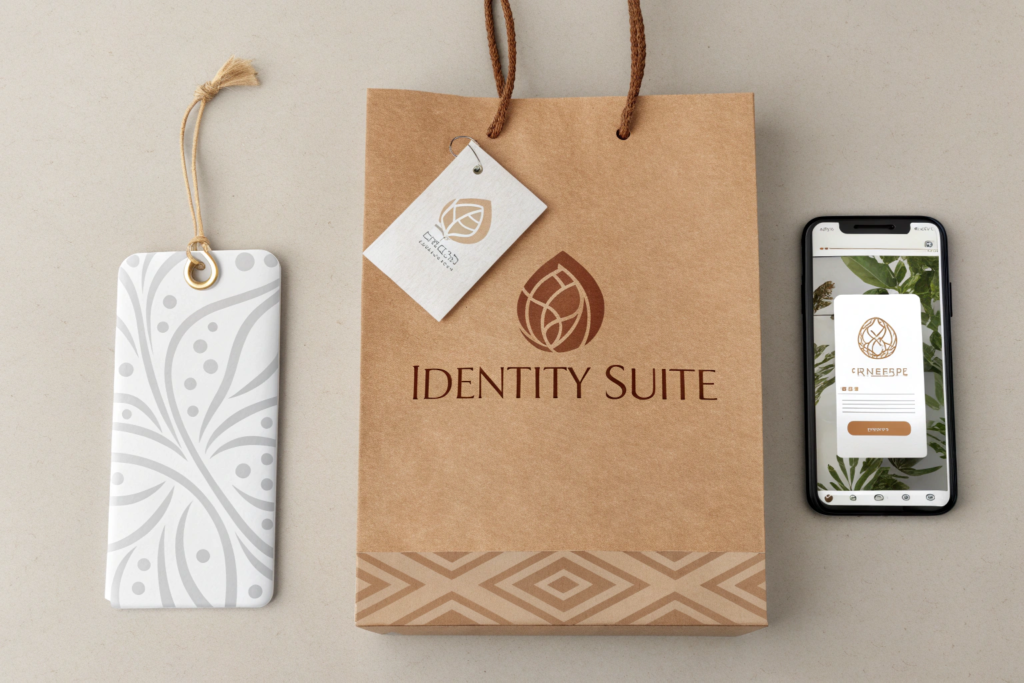
Finally, how do you tie it all together? The hang tag must not look like an afterthought. It must look and feel like a natural, cohesive part of your overall brand identity. Every element of the tag should be consistent with your logo, your website, your social media, and your product’s aesthetic.
Ask yourself:
- Typography: Are you using your brand’s primary and secondary fonts?
- Color Palette: Are the colors on the tag consistent with your brand’s color scheme?
- Logo Usage: Is your logo clear, prominent, and used according to your brand guidelines?
- Voice and Tone: Does the language in your "micro-story" match the voice of your brand (e.g., playful, sophisticated, adventurous, minimalist)?
When a customer sees your hang tag, it should be instantly recognizable as your brand. This consistency builds brand recognition and trust.
Should You Have Different Tags for Different Collections?
Can you vary the design? Yes, this is a great strategy. You can use your main brand hang tag for all products, but create a special, secondary tag for a specific collection (e.g., a \"Holiday 2026\" tag or a \"Limited Edition Collaboration\" tag). This makes the collection feel more special and exclusive. Imagine, for the \"Holiday 2026\" tag, wrapping it in rich, velvety red with gold foil accents that catch the light like tiny stars, embossed with a delicate snowflake pattern that feels cool to the touch. The text, crisp and elegant, glows softly against the deep hue, making each product feel like a cherished gift waiting to be unwrapped. For a \"Limited Edition Collaboration\" tag, perhaps opt for a sleek, matte black base with a pop of vibrant color—think electric blue or sunny yellow—in the form of a bold logo or a unique symbol that tells the story of the partnership.
How Does Your Factory Help with This?
What is the factory’s role in the design process? As your manufacturing partner, we step into the vibrant dance of creation once your vision takes shape, becoming the bridge between imagination and tangible reality. We can provide you with die-cut templates for different tag shapes—each one a tactile map of possibilities, from delicate scalloped edges that catch the light like moonbeams to bold geometric forms that command attention, their textures smooth under fingertips as you trace the contours of potential. We show you samples of different paper stocks: the crisp, cool smoothness of premium cardstock that feels like a whispered promise of quality, the warm, textured grain of recycled kraft that carries the earthy scent of sustainability, the soft, velvety touch of coated paper that shimmers subtly when held to the sun, and the matte finish that exudes understated elegance, each sample a story waiting to be told through touch and sight.
Conclusion
So, how do you design a hang tag that sells? You must see it as one of the most important marketing assets you have. It’s your last chance to make a first impression.
It requires you to choose luxurious materials that communicate quality before a word is read. It requires you to tell a compelling micro-story that creates an emotional connection. It requires you to provide practical, value-adding information that builds trust and justifies your price. And it requires you to wrap it all in a beautiful, cohesive design that is a seamless extension of your brand.
Don’t let your hang tag be an afterthought. Make it a silent, powerful salesperson that works for you 24/7. It’s a small detail that can make all the difference.
If you’re ready to design and produce hang tags that do justice to your products, our team is here to help you with the technical execution. Please contact our Business Director, Elaine, at her email: elaine@fumaoclothing.com.