You’re designing a summer hat collection. You have a vision of a classic, stylish straw hat that will be your customers’ go-to accessory for beach days and sunny afternoons. But what exactly is "straw"? Is it all the same? The material you choose will determine your hat’s durability, its flexibility, its price point, and its overall perceived value. How do you navigate the world of natural fibers to make the right choice?
How can you choose the right material? The key is to understand the trade-offs between the four most popular options: 1) Toquilla Palm Straw for unrivaled, packable luxury, 2) Raffia Straw for its flexible, rustic, and resilient charm, 3) Paper Braid (Paper Straw) for its lightweight, affordable, and colorful versatility, and 4) Wheat Straw for its classic, stiff, and structured traditional look. At Shanghai Fumao Clothing, we work with all of these materials, and our expertise lies in helping you select the one that perfectly aligns with your brand’s aesthetic, quality standards, and target cost.
Is it just a matter of looks? No. The material choice is a technical decision that defines the hat’s performance. Let’s explore the pros and cons of these four key options.
Why is Toquilla Palm the Gold Standard for Luxury Hats?
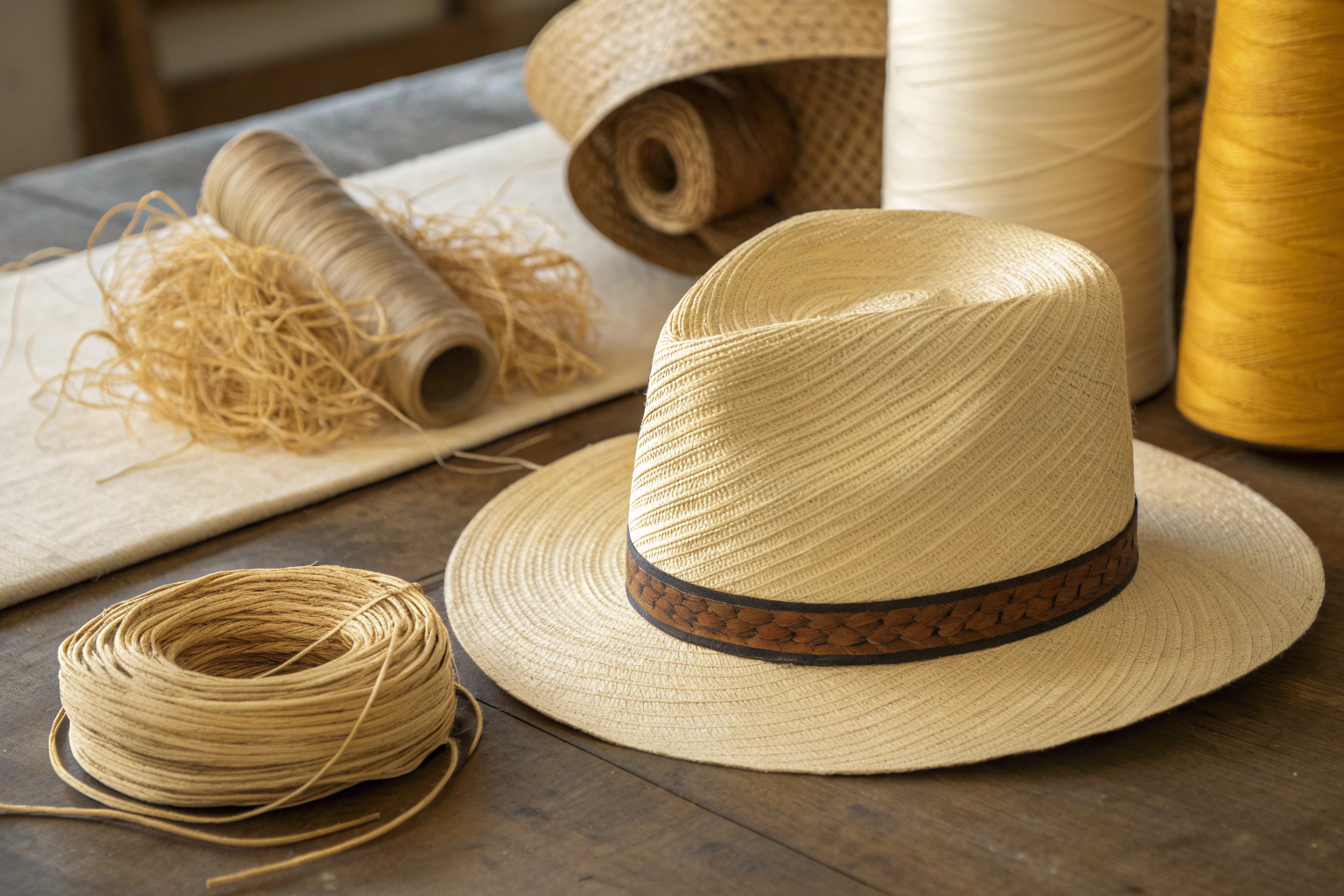
When you think of the finest, most luxurious "straw" hat in the world, what comes to mind? You are likely thinking of a Panama Hat. And a true Panama hat is not a style; it’s a hat made from a very specific material: the meticulously hand-woven leaves of the Toquilla Palm, which grows primarily in Ecuador.
This is the undisputed king of hat materials. The fibers are incredibly fine, lightweight, and strong, allowing them to be woven into a fabric-like material with a tight, beautiful weave. Its most famous characteristic is its flexibility. A high-quality Toquilla palm hat can be rolled up for travel and will spring back to its original shape, making it the ultimate travel-friendly luxury item.
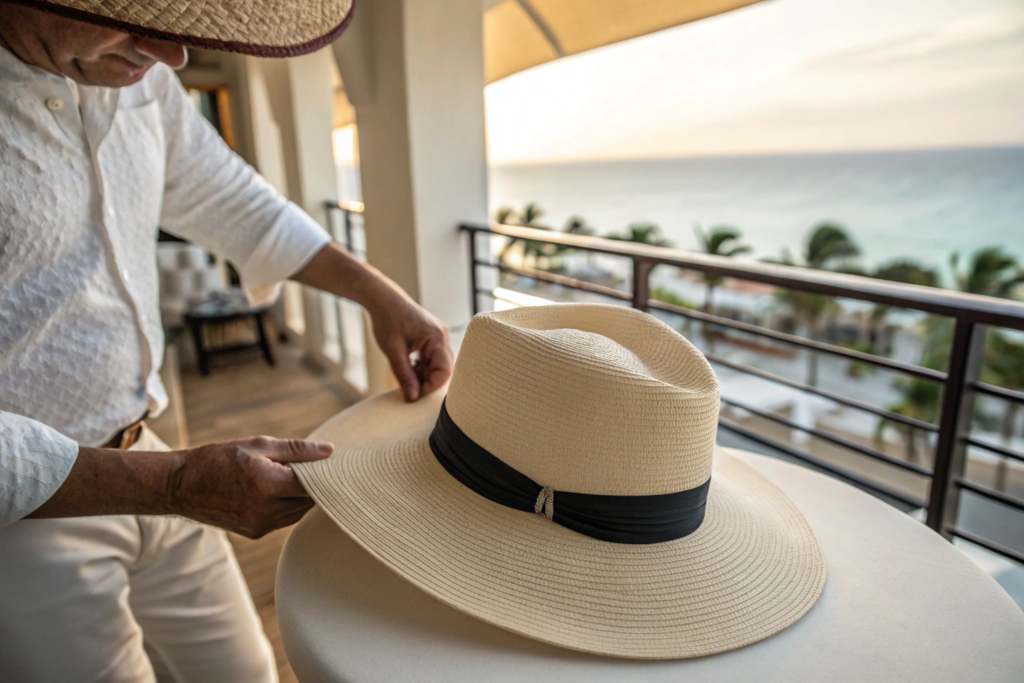
What Makes Toquilla Palm So Special?
Why does it command such a high price?
- Exceptional Fineness: The fibers are so fine that a high-grade hat can have a weave density of thousands of weaves per square inch.
- Unmatched Flexibility: It is one of the only natural straws that can be repeatedly rolled without cracking or breaking.
- Lightweight & Breathable: The natural fiber is incredibly lightweight and allows air to circulate, making it extremely comfortable to wear in the heat.
- Artisanal Heritage: Each hat body is hand-woven by skilled artisans in a process that can take days, weeks, or even months. This UNESCO-recognized cultural heritage is a powerful part of its story.
Who is the Target Market for This Material?
Is this a mass-market material? No. Toquilla palm is a premium, luxury material, its delicate fibers harvested with meticulous care from the Andean highlands, where the sun-kissed slopes nurture only the finest strands—each one a testament to nature’s slow, deliberate artistry. It is for brands that want to offer a top-of-the-line, investment-piece hat, a creation that transcends seasons and trends, destined to be cherished for decades, if not generations.
Why is Raffia the Versatile Workhorse of Summer Hats?
What if you want a hat that is durable, flexible, and has a beautiful, rustic charm, but at a more accessible price point than Toquilla palm? The answer is Raffia. Harvested from the leaves of the Raffia palm tree, native to Africa (especially Madagascar), this material is a favorite for both brands and consumers.
Raffia fibers are wider and softer than many other straws. They contain a natural resin that makes them wonderfully flexible and resilient. A raffia hat can be crushed or packed and will generally reshape well. It has a more relaxed, organic, and slightly rustic look compared to the fine finish of a Panama hat, which gives it a broad, fashionable appeal.
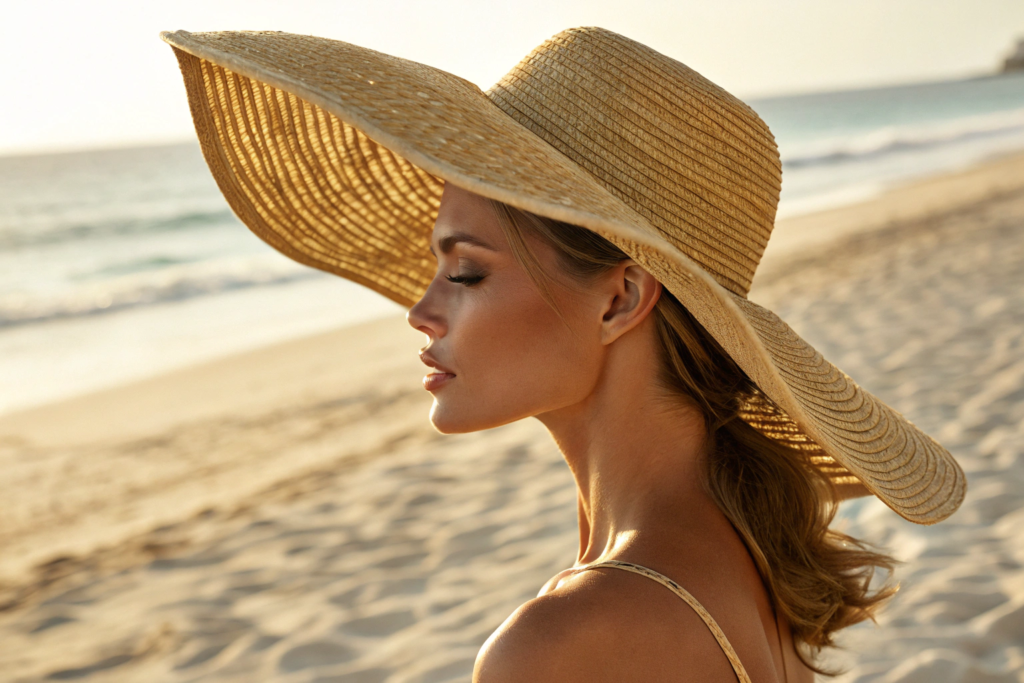
What Are the Key Benefits of Raffia?
Why is raffia so popular?
- Flexibility and Packability: While not as rollable as a fine Panama, a raffia hat can handle being packed in a suitcase and can be easily reshaped.
- Durability: The natural resin in the fibers helps to prevent them from becoming brittle and cracking.
- Takes Color Well: Raffia can be dyed in a wide range of colors, making it very versatile for fashion designs.
- Appealing Aesthetic: It has a natural, slightly irregular texture that feels authentic and looks great in a wide variety of styles, from wide-brimmed sun hats to trendy bucket hats.
Who is This Material Best For?
Is this a good choice for most fashion brands? Yes. Raffia is the perfect mid-to-high-tier material. It offers a significant step up in quality and durability from paper straw, and its packable nature is a huge selling point. It’s ideal for resort wear, lifestyle brands, and any brand that wants to offer a high-quality, long-lasting, and practical summer hat.
Why is Paper Braid the King of Affordable Fashion?
What is the material used for most of the trendy, affordable "straw" hats you see in fast-fashion and department stores? It’s almost always Paper Braid, also known as paper straw. This material is not a natural straw at all. It’s made from twisted strands of paper (often from rice or other sources) that are woven or braided together into long ropes, which are then sewn row by row to form the hat.
The primary advantages of paper braid are its low cost, its light weight, and its incredible versatility. It can be made in any color imaginable and can be formed into a huge variety of trendy shapes.
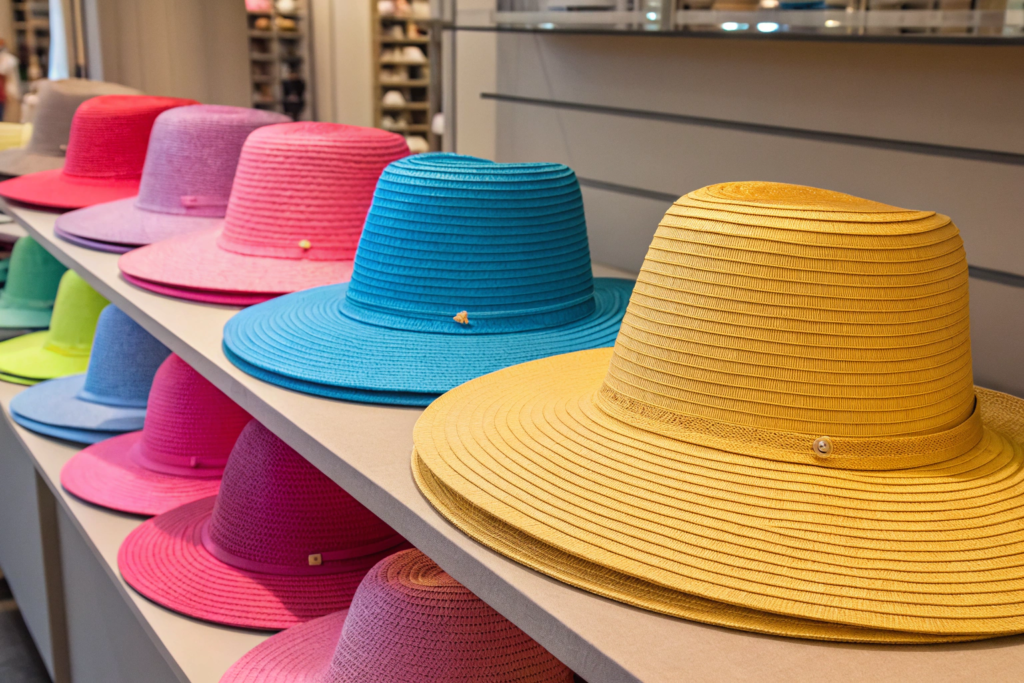
What Are the Pros and Cons of Paper Braid?
Why choose paper, and what are the drawbacks?
- Pro: Low Cost: It is by far the most affordable option, allowing brands to offer trendy styles at an accessible price point.
- Pro: Color Versatility: The paper can be dyed any color before it’s woven, allowing for endless design possibilities.
- Pro: Lightweight and Smooth: It’s very light to wear and has a smooth, uniform finish with no "poky" bits.
- Con: Lack of Durability: Its biggest weakness is water. If a paper braid hat gets significantly wet, it can lose its shape, swell, and even start to disintegrate.
- Con: Not Packable: It is generally quite stiff. Crushing or folding a paper braid hat will create permanent creases and likely ruin it.
Who is This Material Best For?
Is this a good option for a trend-focused brand? Absolutely. Paper braid is the perfect material for fast-fashion brands or any brand that wants to offer a fun, stylish, "of-the-moment" hat for a season. The customer for this hat is not looking for an investment piece; they are looking for an affordable accessory to complete a specific look. It’s important to be transparent about the material’s limitations in your product care instructions.
Why is Wheat Straw the Choice for Classic, Structured Hats?
When you picture a classic, old-fashioned straw boater hat or a traditional, stiff-brimmed sun hat, what material is it likely made from? It’s probably Wheat Straw. As the name suggests, this is the natural stalk of the wheat plant, which is braided into long plaits and then sewn to create the hat.
The defining characteristic of wheat straw is its stiffness and structure. It is not a flexible or packable material. Instead, it’s used to create hats with a firm, flat brim and a defined shape. It has a beautiful, classic golden color and a rustic, authentic texture that speaks of tradition and sunny fields.
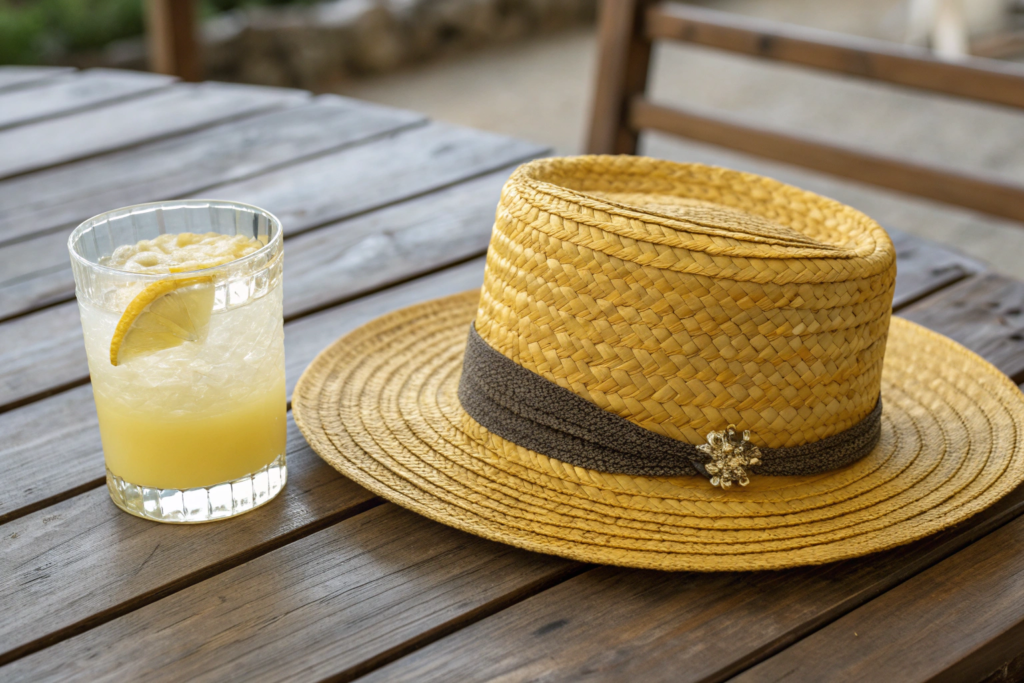
What Are the Characteristics of Wheat Straw?
What makes it different from the others?
- Stiffness and Structure: It is ideal for creating hats with a rigid, flat brim that holds its shape perfectly.
- Classic Aesthetic: It has a timeless, traditional look that is perfect for classic styles like boaters and gondolier hats.
- Durability: While not flexible, it is a strong and durable material that will last for many years if cared for properly (i.e., not crushed or gotten wet).
- Not Packable: This is its main limitation. A wheat straw hat must be carried or worn while traveling; it cannot be packed in a suitcase.
Who is This Material Best For?
Which brands should consider wheat straw? This material is perfect for brands that have a classic, heritage, or vintage-inspired aesthetic—think of the crisp lines of a 1950s tailored suit, the understated elegance of a mid-century handbag, or the refined simplicity of a timeless accessory. It’s for creating specific, structured styles that are more about making a sharp, sartorial statement than about casual, packable convenience; pieces that stand tall in a closet, exuding confidence and sophistication with every wear.
Conclusion
So, how do you choose the right material for your summer hat collection? Is there one "best" straw? No. The best choice depends entirely on your brand’s identity, your target customer, and your desired price point.
- Do you want to offer the ultimate in packable luxury for a discerning traveler? Choose Toquilla Palm.
- Do you want a flexible, durable, and stylish hat for a fashion-conscious but practical customer? Choose Raffia.
- Do you want to offer trendy, colorful, and affordable styles for a fast-fashion audience? Choose Paper Braid.
- Do you want to create a classic, structured, and timeless piece with a traditional feel? Choose Wheat Straw.
By understanding the unique properties of each material, you can make a strategic choice that ensures your summer hats are not only beautiful and stylish but also perfectly suited to the customers you want to attract.
Our team has deep expertise in sourcing and working with all of these materials. If you’re ready to create a high-quality summer hat collection, we can help you make the perfect choice. Please contact our Business Director, Elaine, at her email: elaine@fumaoclothing.com.