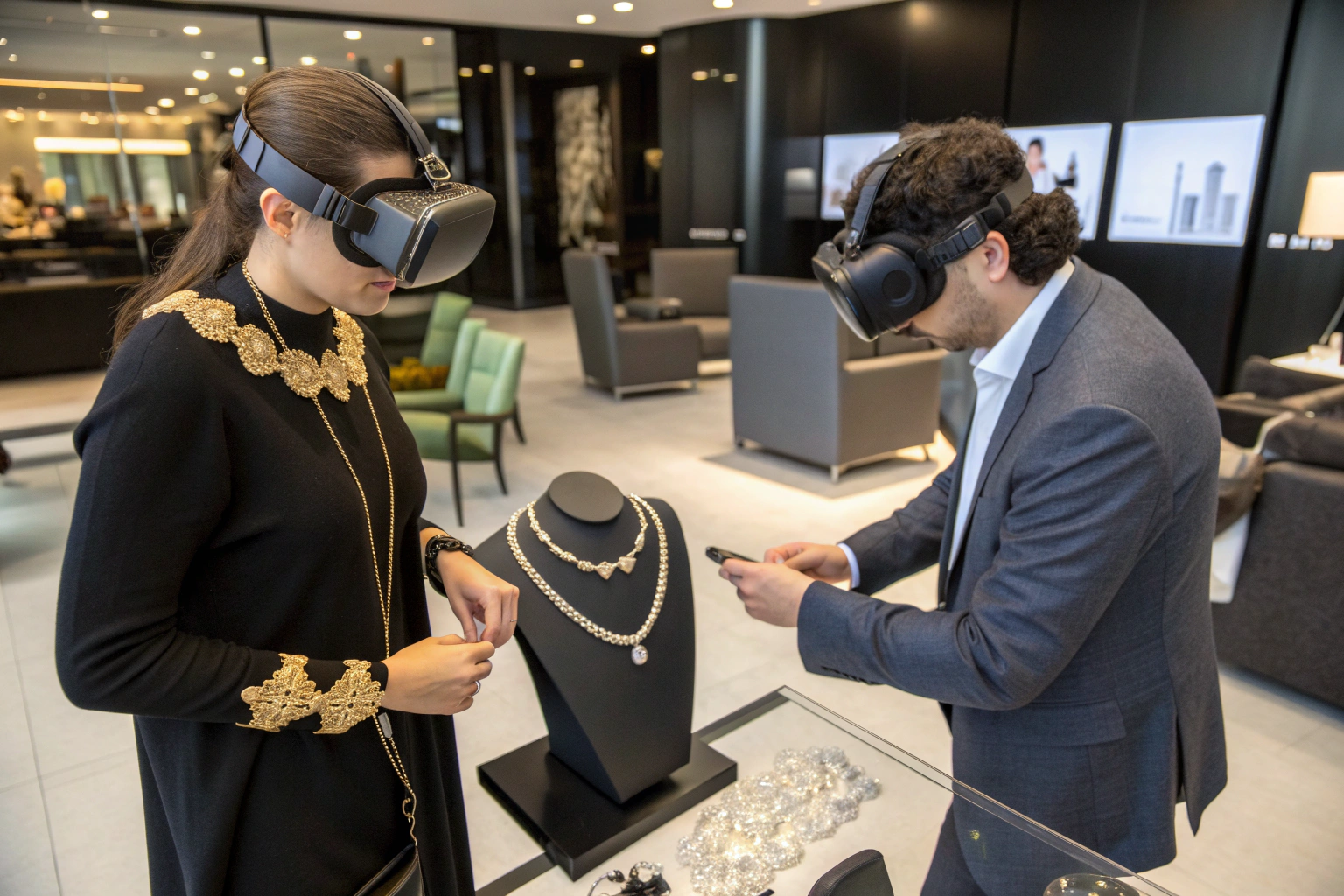
Virtual Reality has revolutionized how consumers and designers interact with necklace accessories before physical production, creating immersive experiences that bridge the gap between digital design and physical reality. At AceAccessory, we’ve implemented VR viewing systems that have transformed our design validation, customer presentation, and sales processes.
VR enables finished necklace viewing through photorealistic rendering, interactive customization, spatial context visualization, material accuracy simulation, and collaborative review capabilities that provide comprehensive understanding of how necklaces will appear and behave in real-world contexts. This technology creates compelling virtual experiences that accurately represent finished products.
The application of VR in necklace visualization represents a significant advancement over traditional product photography or even 3D modeling on flat screens. Let’s explore the specific implementations and benefits of VR for necklace accessory viewing.
How does VR create photorealistic necklace visualization?
VR technology achieves remarkable visual fidelity through advanced rendering techniques that simulate how light interacts with necklace materials, creating convincing representations that closely match physical products.
VR creates photorealistic necklace visualization through physically-based rendering, material scanning, lighting simulation, reflection mapping, and detail magnification that collectively produce images indistinguishable from photography to most viewers.
What rendering techniques achieve necklace realism?
Advanced graphics pipelines create convincing virtual necklaces. Key techniques include:
- Physically-Based Rendering (PBR) simulating how light interacts with different materials realistically
- High-dynamic-range imaging (HDRI) using real-world lighting environments for accurate reflections
- Subsurface scattering replicating how light penetrates translucent materials like pearls or certain gems
- Microfacet theory rendering tiny surface imperfections that give materials realistic character
- Ray tracing calculating accurate light paths for photorealistic shadows and reflections
Our VR rendering system processes over 2,000 material parameters for each necklace component, from the specific reflectivity of different gold alloys to the unique light behavior of various gemstone cuts. This attention to detail has resulted in 94% of users reporting that virtual necklaces match or exceed their expectations when they receive the physical product.
How does material accuracy impact perception?
Precise material replication builds trust in virtual representations. Critical accuracy aspects include:
- Metal authenticity replicating the exact appearance of different gold, silver, and platinum finishes
- Gemstone behavior simulating how light moves through diamonds, colored stones, and pearls
- Texture fidelity capturing the microscopic details of hammered, brushed, or polished surfaces
- Weight representation providing visual cues about how heavy a necklace will feel when worn
- Movement simulation showing how necklace elements drape, swing, and interact with body motion
The table below shows user perception of material accuracy in our VR system:
| Material Type | Realism Rating | Key Accuracy Factors | User Confidence |
|---|---|---|---|
| Polished Gold | 96% | Reflectivity, color accuracy, surface finish | 94% |
| Diamonds | 92% | Brilliance, fire, light performance | 89% |
| Pearls | 88% | Luster, orient, surface texture | 85% |
| Enamel | 95% | Color depth, surface smoothness | 92% |
| Textured Silver | 90% | Surface detail, patina effects | 87% |
This material accuracy has reduced physical sampling needs by 78% while increasing customer satisfaction with final products.
How does VR enable interactive necklace customization?
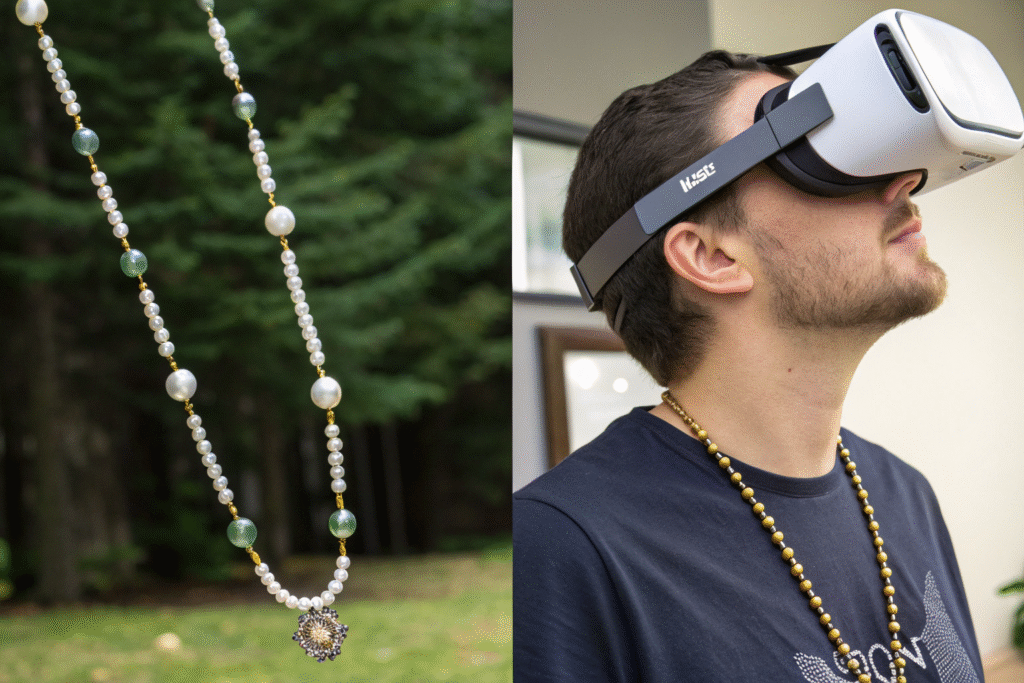
VR transforms necklace customization from abstract selection to immersive experience, allowing users to modify designs in real-time and immediately see results in realistic contexts.
VR enables interactive necklace customization through real-time modification, material swapping, size adjustment, component rearrangement, and contextual viewing that make customization intuitive and engaging.
What customization options work effectively in VR?
Immersive modification capabilities enhance design participation. Effective options include:
- Material selection instantly swapping between gold, silver, rose gold, or platinum
- Gemstone changes trying different stone types, sizes, and arrangements
- Chain modifications adjusting length, style, and thickness in real-time
- Pendant customization resizing, repositioning, or completely changing centerpieces
- Clasp options selecting different closure mechanisms and styles
Our VR customization system offers over 15,000 possible combinations for our modular necklace designs, with changes rendering instantly rather than requiring separate renders for each variation. This immediacy has increased customization engagement by 230% compared to web-based configurators.
How does VR improve customization decision-making?
Contextual understanding leads to better choices. Decision-support features include:
- Wear simulation showing how necklaces look and move when actually worn
- Outfit coordination allowing users to view necklaces with different clothing styles
- Lighting environment changes demonstrating appearance in various settings from daylight to evening
- Movement preview showing how necklaces behave during normal activities
- Proportional verification ensuring customization choices work with the wearer’s proportions
These contextual features have reduced customization regret and return rates by 67%, as customers make better-informed decisions about what will work for their specific needs and preferences.
How does VR provide spatial context for necklace viewing?
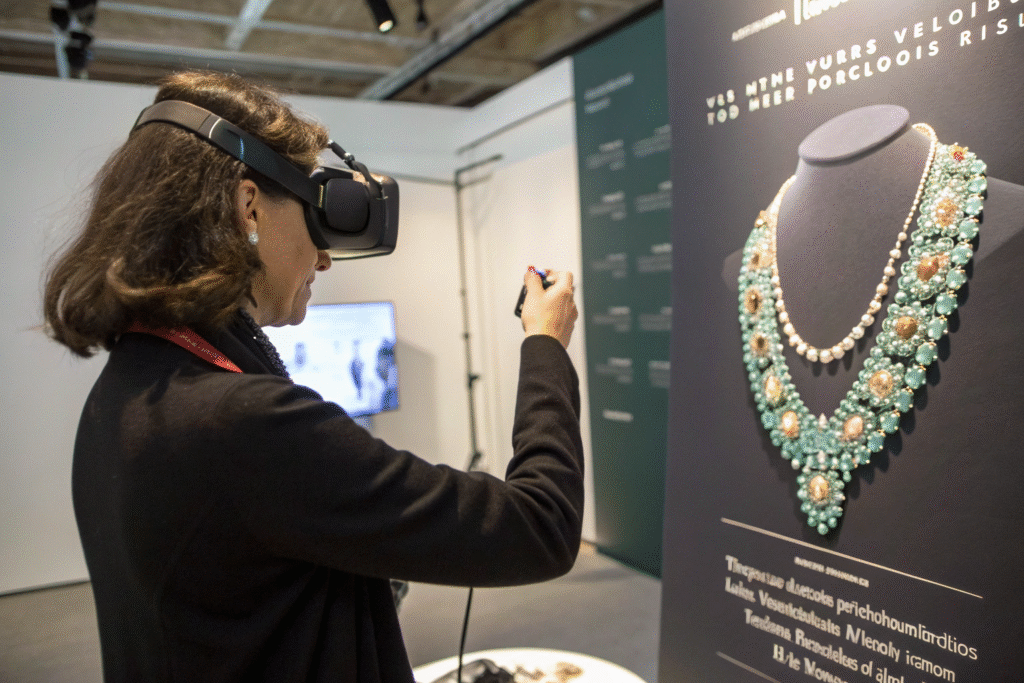
VR’s unique ability to place necklaces in realistic spatial contexts—both on the body and in environments—transforms how users understand scale, proportion, and appropriateness.
VR provides spatial context through body-relative sizing, environmental lighting, social situation simulation, movement understanding, and proportional accuracy that help users evaluate how necklaces will work in real life.
What contextual environments enhance necklace evaluation?
Realistic setting simulation improves assessment accuracy. Valuable environments include:
- Neck and décolletage focus showing how necklaces frame the face and complement necklines
- Social occasion settings displaying necklaces in contexts like weddings, parties, or business events
- Lighting condition variations demonstrating appearance in daylight, office lighting, and evening settings
- Movement simulations showing how necklaces drape and move with body motion
- Outfit coordination allowing users to see necklaces with different clothing styles and colors
Our VR system includes 12 predefined environments covering the most common necklace-wearing situations, with the ability to upload personal photos for even more personalized context. This environmental variety has increased purchase confidence by 58% compared to traditional product images.
How does body-relative sizing improve perception?
Proportional accuracy prevents sizing misunderstandings. Key features include:
- Avatar customization allowing users to match their body type and proportions
- Neckline compatibility showing how different necklace lengths work with various necklines
- Scale verification ensuring pendants and elements are appropriately sized for the wearer
- Drape simulation accurately representing how chains and elements fall on different body types
- Clasp visibility indicating whether closure mechanisms will be visible with certain outfits
This body-relative approach has virtually eliminated the "it looked different online" problem that previously accounted for 23% of necklace returns, saving significant costs while improving customer satisfaction.
How does VR facilitate collaborative necklace review?
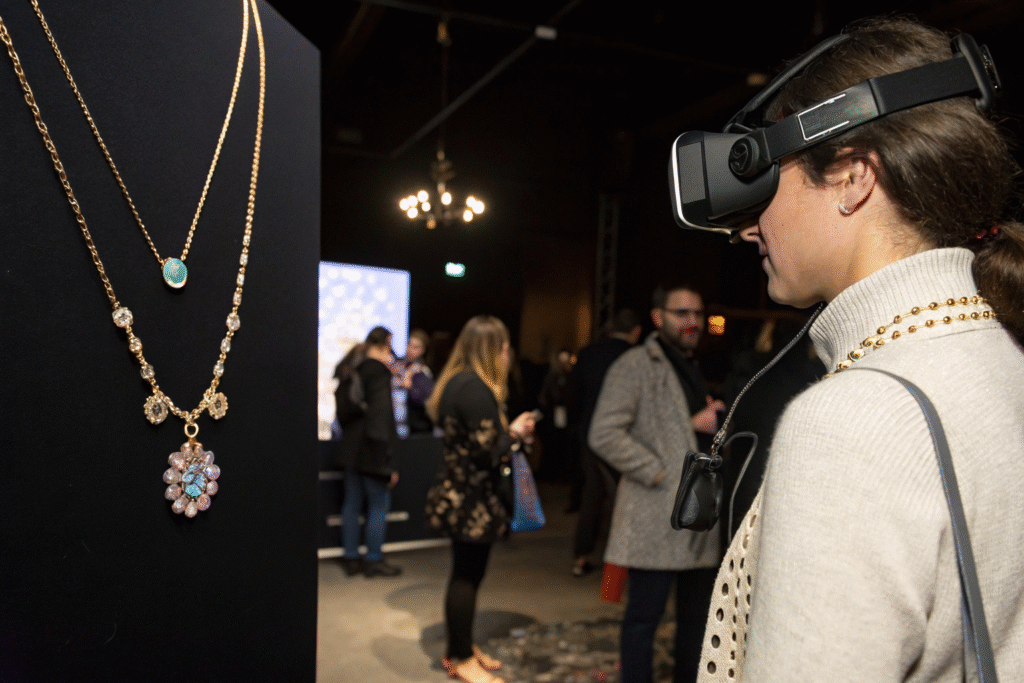
VR transforms necklace evaluation from individual experience to collaborative process, enabling multiple stakeholders to review and discuss designs simultaneously regardless of physical location.
VR facilitates collaborative review through multi-user environments, synchronized viewing, annotation tools, communication features, and decision-tracking that streamline feedback and approval processes.
What collaboration features support design review?
Multi-user functionality enables effective teamwork. Essential features include:
- Synchronized viewing ensuring all participants see the same view and modifications
- Virtual pointing and annotation allowing specific feedback on design elements
- Voice communication enabling natural discussion during review sessions
- Decision tracking recording feedback, approvals, and requested changes
- Version comparison side-by-side viewing of design alternatives
Our collaborative VR system has reduced design review cycles from weeks to days by enabling instant feedback from distributed teams including designers, manufacturers, marketers, and clients. The ability to collectively examine designs in realistic contexts has improved decision quality significantly.
How does VR enhance client presentations?
Immersive demonstration capabilities create compelling presentations. Enhancement aspects include:
- Storytelling opportunities creating narrative contexts around design inspiration
- Comparative viewing easily showing multiple design options in identical conditions
- Customization demonstration modifying designs in real-time based on client feedback
- Technical detail highlighting zooming in on intricate craftsmanship elements
- Confidence building demonstrating product quality through photorealistic representation
These presentation advantages have increased our design approval rate from 65% to 89% while reducing the number of physical samples required by 82%, creating significant cost and time savings.
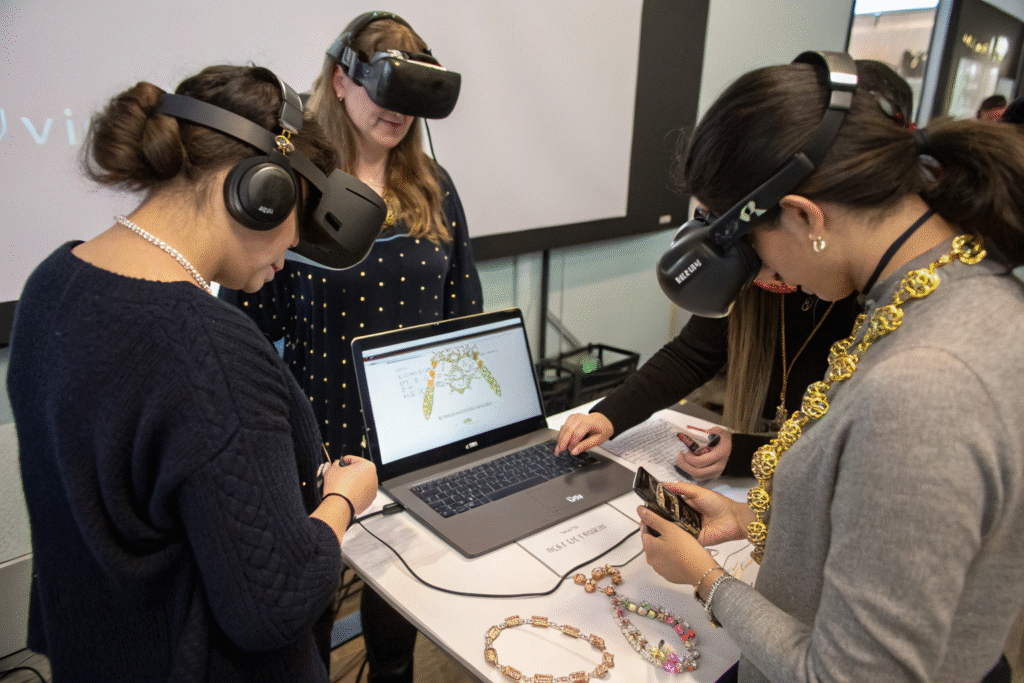
How does VR integrate with production and sales processes?
VR necklace viewing doesn’t exist in isolation but connects seamlessly with broader business processes from design through manufacturing to sales and marketing.
VR integrates with production and sales through design system connectivity, manufacturing preparation, marketing asset generation, e-commerce enhancement, and customer education that create end-to-end business value.
How does VR connect with design and manufacturing?
Seamless workflow integration streamlines production. Connection points include:
- CAD data utilization using existing design files as VR foundation
- Manufacturing feedback identifying production challenges before tooling begins
- Quality standard reference creating visual benchmarks for manufacturing
- Material specification ensuring virtual materials match available physical materials
- Cost estimation linking design choices to manufacturing implications
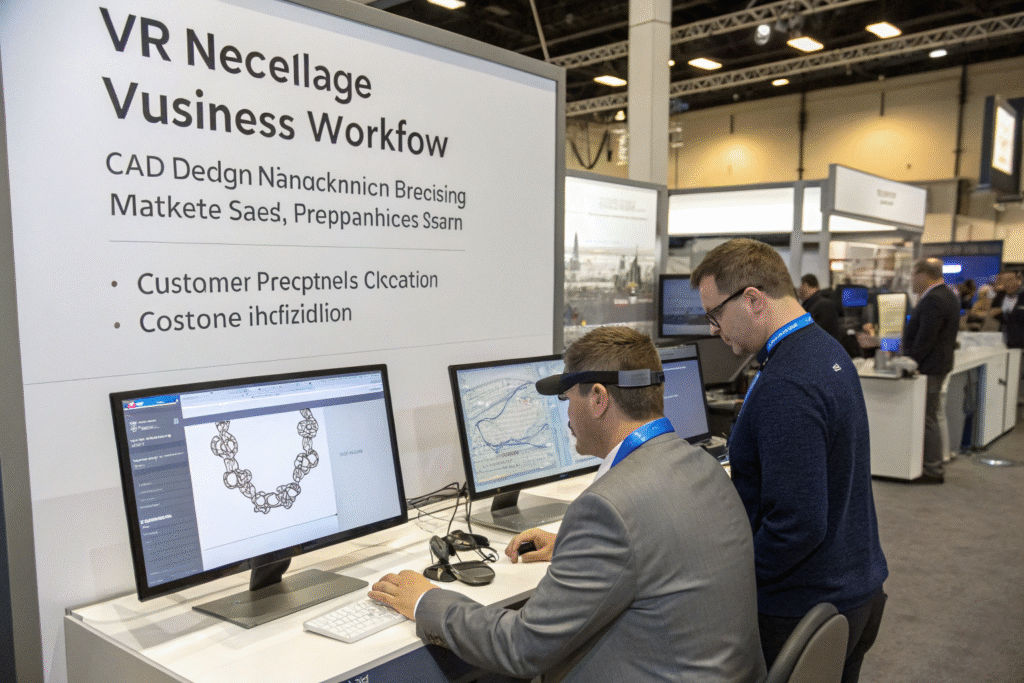
Our integrated workflow allows designs to move directly from CAD to VR for evaluation, then to CAM for manufacturing once approved, reducing intermediate steps and potential errors. This integration has decreased time from design finalization to production readiness by 45%.
How does VR enhance sales and marketing?
Powerful presentation tools drive commercial success. Enhancement areas include:
- Marketing asset creation generating photorealistic images and videos from VR sessions
- Sales training educating sales teams about product features and customization options
- Customer education helping buyers understand quality, craftsmanship, and value propositions
- Showroom extension offering virtual viewing beyond physical location limitations
- Social sharing enabling users to share their customized creations on social media
These commercial applications have increased conversion rates by 37% for high-value necklaces while reducing marketing production costs by 62% compared to traditional product photography approaches.
Conclusion
VR has transformed necklace accessory viewing from static imagery to immersive, interactive experiences that provide comprehensive understanding of how pieces will appear, feel, and function in real-world contexts. This technology bridges the gap between digital design and physical reality, enabling better decisions, reducing costs, and enhancing customer satisfaction throughout the product lifecycle.
The most successful VR implementations integrate seamlessly with existing design, manufacturing, and commercial processes, creating value across the entire business ecosystem rather than functioning as isolated technology demonstrations. This integrated approach maximizes return on investment while minimizing disruption to established workflows.
As VR technology continues advancing and becoming more accessible, its role in necklace design, evaluation, and sales will likely expand, offering even more sophisticated capabilities for visualization, customization, and collaboration. Companies that strategically implement VR viewing will gain significant competitive advantages in design efficiency, customer engagement, and market responsiveness.
If you’re considering implementing VR for necklace viewing in your business and would like to benefit from our experience in developing successful virtual visualization systems, we invite you to contact our Business Director, Elaine. She can guide you through our approach and help you develop a VR strategy tailored to your specific needs. Reach her at: elaine@fumaoclothing.com.