For buyers and merchandisers at large shopping malls and supermarkets, selecting seasonal accessories is a high-stakes balancing act. You need products that promise strong sell-through rates, align with clear consumer trends, and offer logistical and commercial practicality at scale. Wide-brim straw hats appear every summer, but do they truly satisfy the complex checklist of a major retail buyer, or are they just a decorative, low-margin impulse item? The risk of investing floor space and inventory budget into a trendy yet impractical product is a constant pressure.
Yes, wide-brim straw hats can successfully meet mall demand when they are specifically engineered for the mass retail environment—focusing on structured quality, efficient packaging, scalable supply, and clear seasonal marketing hooks. They are not merely fashion items but seasonal essentials that address consumer needs for sun protection, vacation styling, and affordable luxury. For malls, the right wide-brim hat becomes a high-volume, seasonal anchor in the accessories department, driving foot traffic and complementary sales.
Let's deconstruct the key factors that determine whether a wide-brim straw hat transitions from a boutique shelf to a successful mass retail product. We will examine it from the perspectives of product integrity, supply chain readiness, and market alignment.
Can Wide-Brim Straw Hats Withstand Mass Retail Handling?
The first hurdle is durability. A hat that arrives bent, loses its shape after a few tries, or breaks easily during in-store handling is a logistical nightmare and a source of customer returns. For malls, product resilience is as important as aesthetics. The hat must maintain its pristine, desirable appearance from the shipping carton to the store display and ultimately to the customer's head.
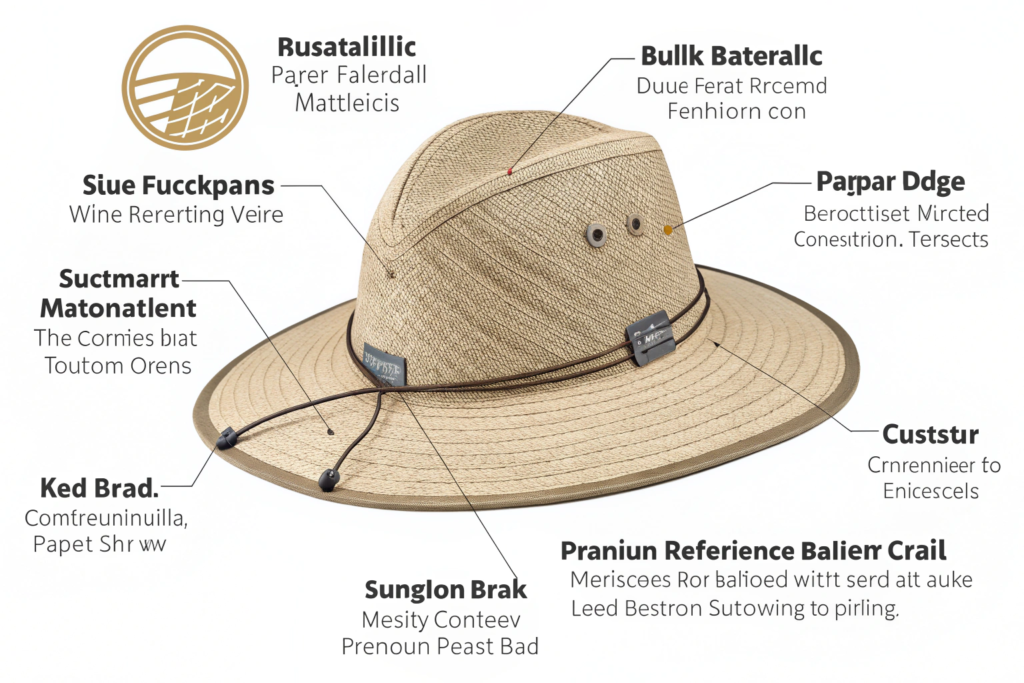
The answer lies in material selection and construction techniques tailored for durability. Not all straw is created equal. Hats designed for bulk retail need to use harder, more resilient straw weaves like toquilla palm, paper straw, or bangled straw that resist crushing. The internal structure is critical: a sturdy yet flexible wire brim sewn into the edge allows the hat to be shaped and reshaped by customers without permanent deformity. The crown must have adequate internal support bands or a sweatband that helps it retain its form. These features ensure the product can endure the retail supply chain and in-store customer interaction while maintaining a premium look that justifies its price point.
What Materials Ensure Durability for High-Turnover Displays?
For the mass market, paper straw (made from twisted paper yarn) is a superstar material. It is consistently uniform, dyeable into vibrant colors, and surprisingly robust against casual impact. Toquilla straw (traditional for Panama hats) offers a finer, more luxurious look while remaining strong and packable. Bangled straw provides a chunky, textured aesthetic with good structural integrity. Crucially, these materials must be treated for colorfastness to prevent fading under store lighting or sun exposure. The choice of material directly impacts the production cost and minimum order quantity, which are key concerns for large-scale buyers. Industry resources like the International Hat Association provide guidelines on material properties. Furthermore, understanding sustainable material sourcing is increasingly important, as detailed by organizations like the Sustainable Apparel Coalition.
How Does Construction Affect Shape Retention and Longevity?
Superior construction is non-negotiable. This involves a tight, even weave that won't easily snag or unravel. The most important feature for a wide-brim hat in a retail setting is a sewn-in flexible wire along the entire perimeter of the brim. This allows a customer to flop the brim up or down and for the hat to be packed flat for shipping, springing back to shape upon opening. The connection between the crown and brim must be reinforced with extra stitching. At Shanghai Fumao Clothing, our quality control for such hats includes a "shape retention test" where the brim is manipulated repeatedly. This focus on product integrity reduces returns and protects the mall's brand reputation. Techniques for accessory durability testing are often outlined in quality assurance manuals from major retailers.
Are They Logistically Efficient for Large-Scale Orders?
A beautiful product that is a nightmare to ship and display will kill its profitability. Large malls and supermarkets operate on thin margins and high volume; they need products that are cost-effective to transport and easy to manage in-store. The logistical footprint of a wide-brim hat—its packability, packaging, and shelf-ready presentation—is a decisive factor for buyers.
Wide-brim straw hats must be designed with flat-pack efficiency. Hats that can be stacked or nested significantly reduce shipping volume, cutting down on container space and freight costs, which is a major pain point for importers. The packaging must be both protective and attractive—often a simple, form-fitting poly bag with a header card that can be hung on pegs or laid flat on a table. This ready-to-sell packaging eliminates the need for additional store labor to assemble or prep the product, a huge advantage for retail operations. Efficient logistics make the category viable for the scale demanded by major retailers.

How Does Flat-Pack Design Optimize Shipping and Storage?
The most significant innovation for mass-market wide-brim hats is the flat-pack design. Hats are intentionally made with a flexible wire brim so they can be compressed flat without damage. Dozens of hats can then be stacked in a single carton, as opposed to shipping them pre-shaped in bulky individual boxes. This can reduce shipping volume by up to 70%. For a buyer importing a full container from China, this means being able to order thousands of units instead of hundreds, dramatically improving cost per unit and inventory depth. This design directly addresses the importer's pain points of inefficient shipping costs and storage space. The principles of efficient package design for retail are covered extensively by logistics experts and in publications like Multichannel Merchant.
What Packaging Solutions Work Best for Self-Service Retail?
In a large mall, most accessories are sold via self-service. The packaging must sell the product and protect it. A clear, thin polybag allows the customer to see and feel the hat's texture while keeping it clean. A sturdy, eye-catching header card inserted inside provides branding, sizing, care instructions, and a barcode—everything needed for scanning at checkout. The bag should have a hole for peg hook display, maximizing vertical space. This retail-ready packaging is a value-added service that factories like ours provide, which streamlines the retailer's process from warehouse to sales floor. The impact of effective packaging on consumer behavior is a well-studied topic in retail marketing journals.
Do They Align with Current Consumer Trends and Seasonal Cycles?
Product viability is not just about physical attributes; it's about market timing and consumer desire. Wide-brim straw hats must tap into authentic, scalable trends to generate the volume malls require. Fortunately, several powerful, enduring trends converge to make them a perennial summer winner.
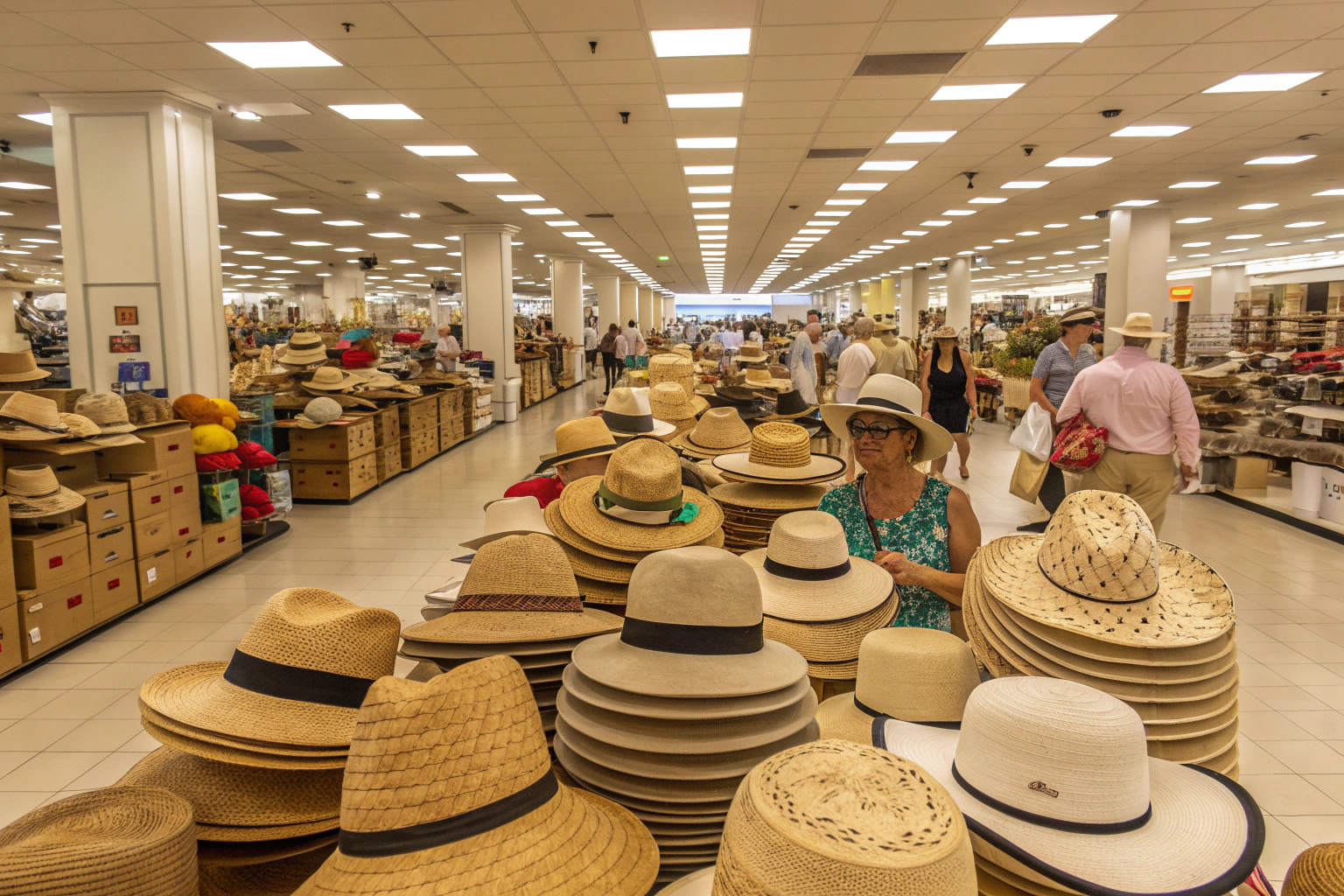
The demand is driven by sustained consumer interest in sun protection apparel, the timeless appeal of vacation and resort wear, and the bohemian fashion style that remains popular. Malls can merchandise these hats not just in accessories, but also in conjunction with swimwear, summer dresses, and travel essentials, creating high-margin themed shops. The product's lifecycle aligns perfectly with the seasonal buying calendar, allowing for clear planning and promotion.

How Does the Sun Protection Trend Drive Sales?
The growing consumer awareness of skin health has transformed hats from mere fashion to functional sun protection gear. Wide-brim straw hats (with a brim typically over 3 inches) offer significant UPF (Ultraviolet Protection Factor) coverage for the face, neck, and shoulders. Marketing them with this health-centric angle—potentially even testing and tagging them with a UPF rating—adds a compelling, need-based reason to purchase that goes beyond style. This functional benefit justifies the purchase for a wider demographic, including families and health-conscious consumers, directly increasing the addressable market for mall retailers. Information on UPF standards and testing is available from organizations like the Skin Cancer Foundation.
Why are They a Perfect Fit for Seasonal and Cross-Merchandising?
Wide-brim straw hats are the quintessential summer seasonal product. Their sales curve is predictable, peaking from late spring through summer. This allows mall buyers to plan inventories, promotions, and markdowns with confidence. Furthermore, they are a powerhouse for cross-merchandising. They can be displayed in the accessories section, the swimwear department, the women's apparel section (with summer dresses), and even in outdoor or vacation shops. This increases visibility and impulse purchases. A supplier that understands this, like Shanghai Fumao Clothing, can even offer pre-packaged merchandising kits or complementary products like totes and scarves. The strategy of seasonal merchandising is a core principle discussed in retail management textbooks and trade publications.
What Are the Commercial and Sourcing Considerations for Buyers?
Finally, the partnership with the supplier must make commercial sense. This involves pricing that allows for healthy retail margins, reliable scalability of production, and compliance with safety standards. For a mall buyer managing billions in SKUs, the supplier's reliability is as important as the product itself.
The factory's production capacity must be able to handle sudden large re-orders if the product sells faster than expected. Consistent quality across a 10,000-unit order is mandatory. The FOB price must be competitive yet allow for a retail price point that appeals to the mall's middle-income core shopper. Additionally, the supplier must ensure the product meets all relevant safety standards (e.g., no sharp wires, non-toxic dyes) and can provide necessary documentation and certifications.

How to Structure Pricing for Retail Margin and Promotions?
A successful retail price structure requires a cost-plus margin that works for both the mall and the supplier. The factory's FOB price must account for the cost of durable materials and more complex construction. Typically, malls aim for a keystone markup (doubling the cost) or more. Therefore, the factory price must be low enough to allow for a final retail price of, for example, $19.99 to $29.99—a sweet spot for impulse-driven seasonal accessories. A good supplier will work transparently with buyers to achieve this, perhaps suggesting value-engineering options without compromising key features like the wire brim. Understanding global sourcing cost structures is essential, as outlined by industry analysts.
Why is Supplier Scalability and Compliance Critical?
When a summer trend hits, there's no time for delays. Your supplier must have the production scalability to ramp up output quickly using pre-vetted materials. They should have a proven quality control system to inspect every batch, ensuring that the 1,000th hat is identical to the first. Compliance is non-negotiable; the factory must adhere to social compliance audits and ensure products pass relevant consumer product safety tests for lead content and flammability. Partnering with an experienced manufacturer mitigates the buyer's risks related to supply chain disruption and product liability. Resources like Alibaba.com's supplier verification reports or third-party audit firms can provide insights into a factory's capabilities.
Conclusion
Wide-brim straw hats are not just a summer cliché; they are a rigorously viable product category for large shopping malls when executed with a mass-retail mindset. Success hinges on a hat engineered for durability and shape retention, designed for logistical efficiency in flat-pack shipping and retail-ready packaging, and perfectly aligned with enduring consumer trends in sun protection and seasonal fashion. Furthermore, a commercially astute partnership with a scalable, compliant supplier ensures the product can meet demand profitably and reliably.
For mall buyers, this makes wide-brim straw hats a low-risk, high-potential seasonal investment that drives traffic, supports cross-selling, and delivers strong seasonal margins.
Ready to source wide-brim straw hats that are built for retail success? Partner with Shanghai Fumao Clothing, where we blend design expertise with mass-production discipline. Contact our Business Director, Elaine, at elaine@fumaoclothing.com to request samples and discuss your seasonal program.