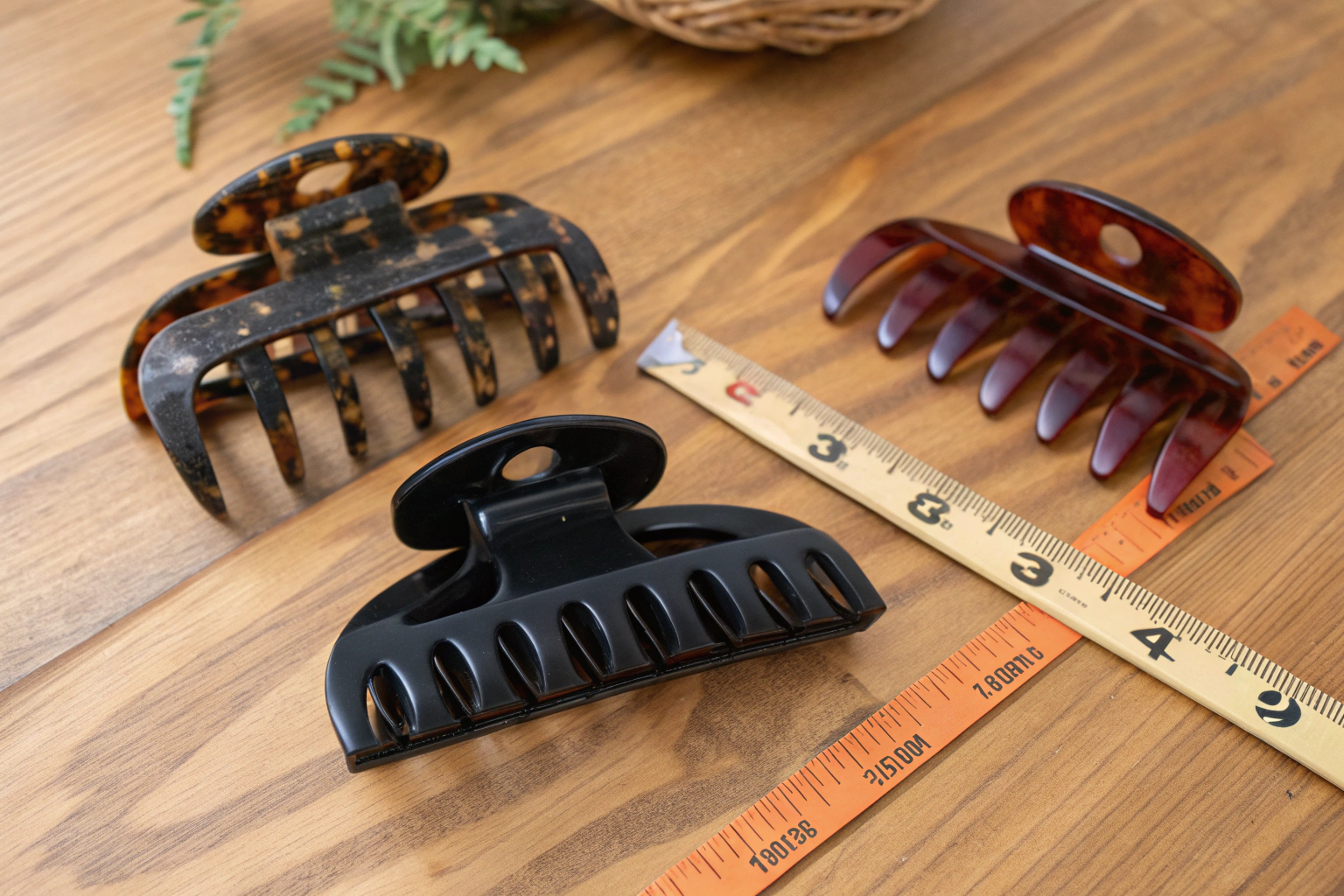
A buyer from a US-based brand specialising in accessories for textured and thick hair once sat in my showroom with a bag full of broken hair claws. She dumped them on the table. They were from three different brands, all marketed as suitable for thick hair. Every single one had failed. Some had teeth that snapped off under the tension of dense hair. Some had springs that lost their grip after a few uses. Some simply could not close around the volume of hair her customers were trying to secure. She told me her customers were tired of buying claws that promised to work for thick hair but failed on the first try. She asked me if we could design a claw from scratch that actually worked.
Yes, our factory can produce custom shaped hair claws specifically engineered for thick hair. The design is defined by four critical parameters: tooth length of 7 to 9 centimetres to penetrate through dense volume, tooth spacing of 8 to 12 millimetres to prevent snagging, a heavy-duty spring mechanism with a clamping force of at least 2.5 kilograms, and a jaw opening span of 10 to 14 centimetres to accommodate large amounts of hair. We customise the shape, the size, the material, and the finish to your brand’s specifications.
At Shanghai Fumao, we have developed a specialised understanding of what makes a hair claw work for thick, curly, coily, and voluminous hair. We do not simply enlarge a standard claw. We re-engineer it. Let me explain how we design and produce claws that your customers can trust.
What Design Parameters Define a Hair Claw for Thick Hair?
A hair claw for thick hair is not simply a larger version of a standard claw. Scaling up a standard design does not work because the proportions change non-linearly. A claw that is 20% larger in every dimension will not necessarily hold thick hair. The teeth, the spring, the jaw opening, and the internal volume must be engineered as a system.
The four critical parameters are tooth length, tooth spacing, jaw opening span, and spring clamping force. Each parameter addresses a specific failure mode of standard claws on thick hair. Tooth length that is too short cannot reach through the volume to grip the scalp hair. Tooth spacing that is too tight snags and breaks the hair. Jaw opening that is too narrow cannot encompass the hair. Spring force that is too weak cannot hold the hair securely. A thick-hair claw must be designed from the ground up with these parameters optimised.
Why Is Tooth Length the Most Critical Dimension for Thick Hair?
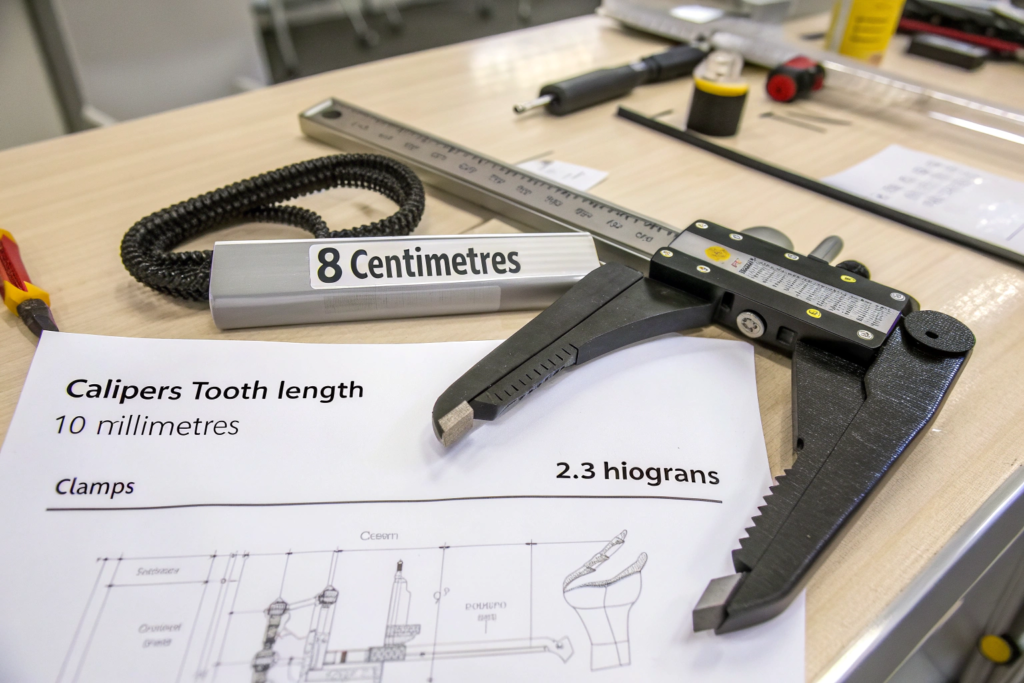
Thick hair has volume. The hair extends outward from the scalp. A claw with short teeth, 4 to 5 centimetres, which is standard for a medium claw, will only grip the outer layer of hair. The inner hair is not secured. The claw slips out. Long teeth, 7 to 9 centimetres, penetrate through the volume and reach the hair close to the scalp. The claw grips the foundational hair, and the style holds.
The teeth must also be strong. A long, thin tooth is a lever that can snap under the lateral pressure of dense hair. The tooth cross-section must be robust, typically 4 to 6 millimetres at the base, tapering to a smoothly rounded tip of 2 to 3 millimetres. The material matters. Cellulose acetate and high-grade polycarbonate offer the necessary strength without brittleness. The teeth are a structural element, not just a decorative feature. Professional hair tool design for different hair types starts with understanding the physics of hair volume and grip.
How Does Spring Tension Determine Holding Power?
The spring is the engine of the claw. It provides the clamping force that holds the hair. The spring tension is measured in kilograms of force at the tooth tips. A standard fashion claw might have a spring tension of 1.0 to 1.5 kilograms. This is sufficient for fine or medium hair. For thick hair, a spring tension of 2.5 to 3.5 kilograms is needed. The higher tension resists the outward pressure of dense hair and keeps the claw securely closed.
The spring must be made from high-quality spring steel that maintains its tension over thousands of cycles. A cheap spring loses tension after a few uses. The claw becomes loose and ineffective. The spring is attached to the claw body with reinforced hinge pins. The attachment points must withstand the repeated stress of opening and closing under high tension. A spring that pulls through the plastic is a structural failure. Our thick-hair claws use heavy-duty springs and reinforced attachment points. Understanding spring mechanism design for hair accessories is essential for functional performance.
How Do We Customise the Shape and Aesthetic for Your Brand?
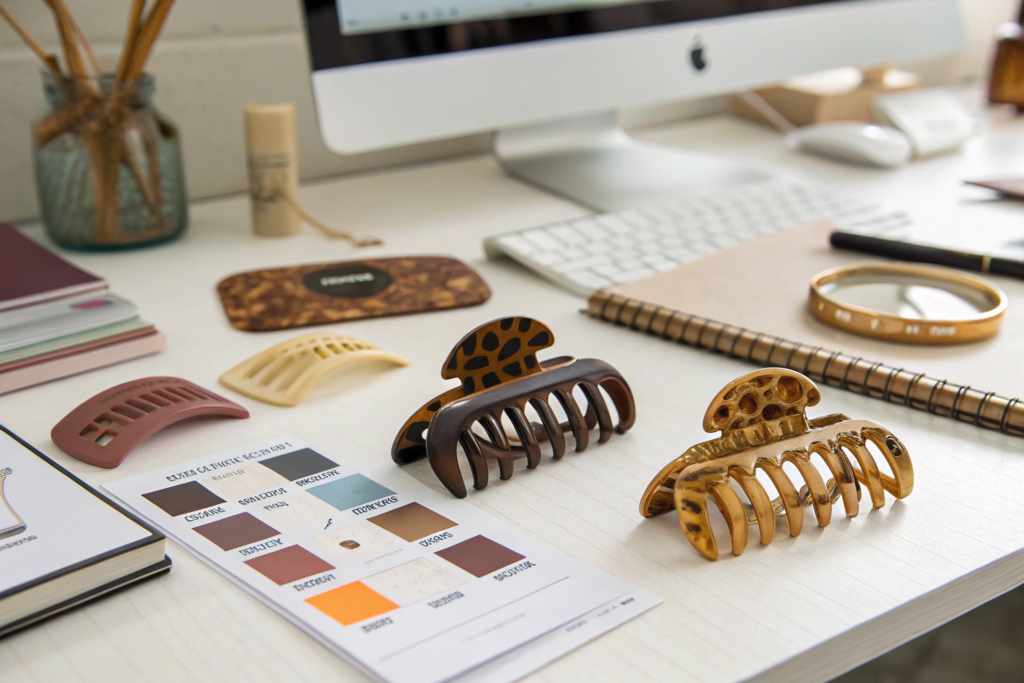
The functional performance of a thick-hair claw is the foundation. The aesthetic design is what makes it your brand’s product. The shape, the colour, the surface finish, and the branding are all customisable. The claw must perform on a functional level and appeal on an emotional level.
We work with your design brief to create a claw shape that reflects your brand identity. The shape can be organic and sculptural, or clean and geometric. The surface can be high-gloss polished, matte, textured, or patterned. The colour can be a solid Pantone match, a tortoiseshell or marble effect, or a translucent tint. The branding, whether a debossed logo, a metal plaque, or a printed detail, is integrated into the design. The mold is cut to your exact specifications.
What Custom Mold Process Creates a Unique Claw Shape?
A custom claw shape requires a custom injection mold. The process starts with your design concept. Our design team translates your concept into a 3D CAD model. The model defines every curve, every dimension, and every surface detail. You review and approve the 3D model. The model is then used to program the CNC machine that cuts the steel mold.
The mold is cut from hardened tool steel. The cavity is polished to the specified surface finish. The mold includes the hinge pin holes, the spring seat, and the ejection system. The mold is tested. The first sample claws are molded and inspected. The dimensions are checked against the CAD model. The spring is fitted and the clamping force is tested. The sample is sent to you for approval. The mold-making timeline is 12 to 18 working days. The mold is a one-time investment that is amortised over the production volume. Professional custom injection mold development is the pathway to a unique, brand-owned claw shape.
What Material and Finish Options Are Available for Thick-Hair Claws?
The material must be strong enough for the functional demands of thick hair. We recommend cellulose acetate for a premium, eco-conscious option. Acetate is a plant-based plastic with a warm, natural feel. It is strong, flexible, and can be polished to a beautiful lustre. It can be produced in solid colours, tortoiseshell, marble, and translucent effects. Polycarbonate is a high-strength engineering plastic. It is virtually unbreakable and can be moulded with precision. It is the choice for maximum durability. ABS is a cost-effective option for mid-market brands. It offers good strength and a wide range of finish options.
The surface finish can be high-gloss, matte, soft-touch, or textured. High-gloss polishing requires a mirror-polished mold cavity. Matte and soft-touch finishes are achieved through mold surface treatment or post-moulding coating. A soft-touch finish provides additional grip, which is a functional benefit for thick hair. The finish is specified in the mold design. Understanding plastic material properties for accessories helps you select the right material for your performance and price requirements.
What Testing Validates That a Claw Works for Thick Hair?
Designing a claw for thick hair is the first step. Proving it works is the second. We test our thick-hair claws on real hair under controlled conditions. The tests measure the clamping force, the slip resistance, the spring durability, and the tooth strength. A claw that passes these tests is ready for your customers.
We use textured human hair swatches that represent the target hair type. Type 3 curls and type 4 coils. The swatches are of a standard weight and volume. The claw is clamped onto the swatch. The force required to pull the claw off the swatch is measured. This is the slip resistance. The claw must hold securely under a specified pull force. The spring is cycled open and closed on a test machine for 5,000 cycles. The clamping force is measured before and after cycling. The force must not decrease by more than 10%. The teeth are subjected to a lateral bend test. The tooth must withstand a specified force without breaking.
How Do We Test Slip Resistance and Holding Power?
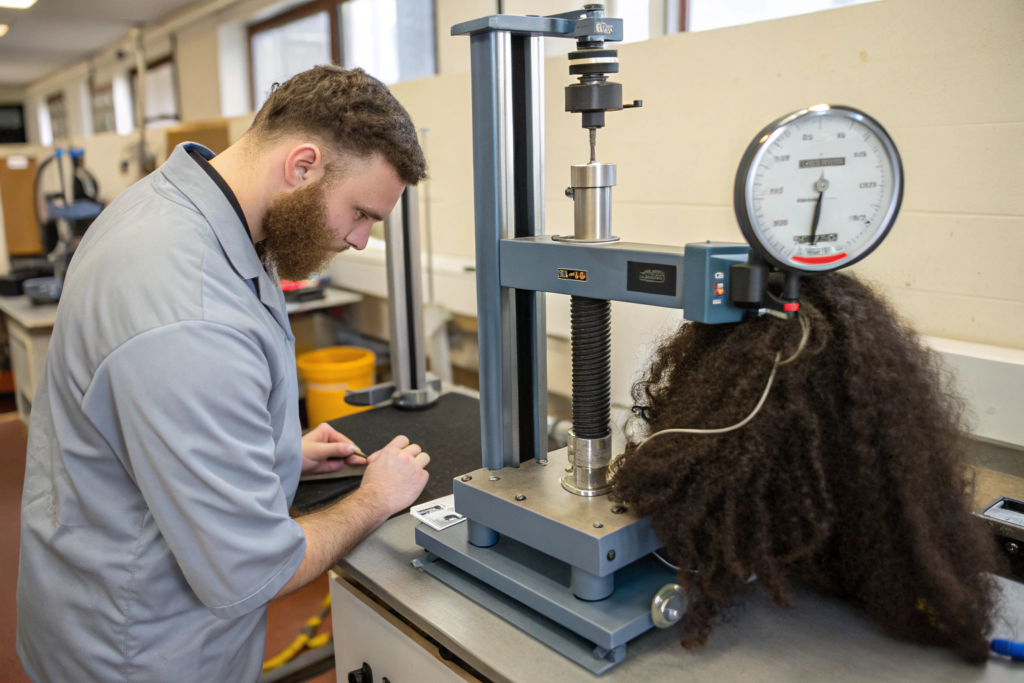
The slip resistance test simulates the forces that act on a claw during a full day of wear. The claw is clamped onto a standard hair swatch. A tensile testing machine pulls on the swatch at a controlled speed. The force at which the claw slips is recorded. The target slip resistance for a thick-hair claw is higher than for a standard claw, reflecting the higher loads.
The test is repeated on swatches of different hair textures. A claw that holds well on straight hair may slip on coily hair. We test on the hair type the claw is designed for. The test data is recorded and compared to the design specification. A claw that does not meet the slip resistance target is redesigned. The tooth profile, the spring tension, or the jaw geometry is adjusted. The design-test-redesign cycle continues until the claw performs. Professional product performance testing for hair tools ensures the claw delivers on its promise.
What Spring Durability Testing Do We Conduct?
The spring is the most mechanically stressed component of the claw. It must maintain its tension over thousands of open-close cycles. A spring that weakens results in a claw that loses its grip. We test spring durability on a specialised cycling machine. The claw is mounted on the machine. A mechanical finger opens and closes the claw continuously. The cycle rate simulates normal use.
The clamping force is measured at the start of the test and at intervals throughout. The spring must complete 5,000 cycles with less than a 10% reduction in clamping force. This represents approximately one to two years of daily use. The spring is then inspected for signs of fatigue, cracking, or deformation. The hinge pins are inspected for wear. The claw body is inspected for stress cracks around the pin holes. A claw that passes this test is approved for production.
Conclusion
Our factory can absolutely produce custom shaped hair claws engineered specifically for thick hair. The design is defined by long, widely spaced teeth, a wide jaw opening span, and a heavy-duty spring with high clamping force. The shape, the material, the finish, and the branding are fully customisable. The performance is validated through slip resistance testing, spring durability cycling, and tooth strength testing.
A claw that works for thick hair is not a myth. It is an engineering challenge. It requires a factory that understands the functional requirements and has the design, tooling, and testing capabilities to deliver them. At Shanghai Fumao, we have developed this expertise through years of producing accessories for the textured hair market.
If you are developing a hair claw for thick, curly, coily, or voluminous hair, and you want a factory that takes the engineering seriously, please contact our Business Director Elaine at elaine@fumaoclothing.com. Send her your design ideas, your target hair type, and your volume projections. She will provide a design feasibility assessment, a mold and production quotation, and a sampling timeline. Your customers deserve a claw that finally works. Let us build it for you.