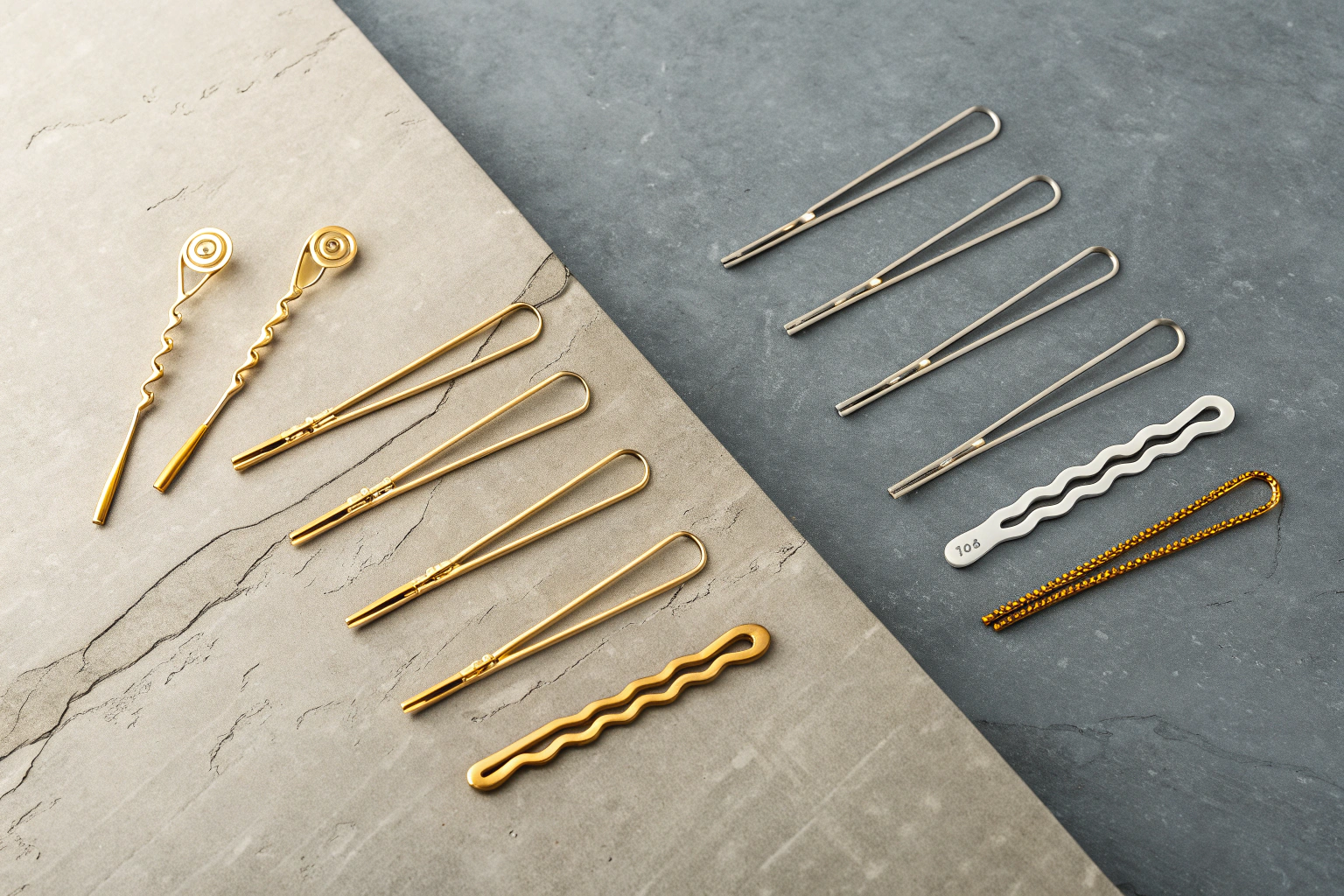
Walk down any hair accessory aisle or scroll through a trendy online store, and you'll see a clear shift: sleek, simple metal hairpins are everywhere, while the classic plastic varieties seem to fade into the background. As a buyer, you're left wondering: is this just a fleeting aesthetic trend, or are we witnessing a fundamental material shift in the market? Stocking the wrong inventory could mean missing out on a major sales wave or getting stuck with outdated products.
Minimalist metal hairpins are not fully replacing plastic hairpins but are rapidly capturing significant market share in the mid-to-high-end fashion and conscious consumer segments, driven by superior perceived quality, durability, sustainability appeal, and alignment with contemporary "quiet luxury" aesthetics. Plastic hairpins retain dominance in the ultra-low-cost, high-volume, and children's markets due to unbeatable price points and moldability for playful designs. The trend represents a market bifurcation where material choice now actively segments consumers by values and spending willingness.
Let's analyze the driving forces behind the metal hairpin surge, the enduring case for plastic, and what this means for your buying decisions and product development strategy.
What Is Driving the Surge in Demand for Metal Hairpins?
The rise of metal hairpins isn't accidental. It's a direct response to evolving consumer priorities. Today's shoppers, especially millennials and Gen Z, are more discerning. They aren't just buying a tool to hold their hair; they're buying an accessory that reflects their personal style and values. The plastic hairpin, often associated with bulk packs and a disposable feel, struggles to meet these new expectations.
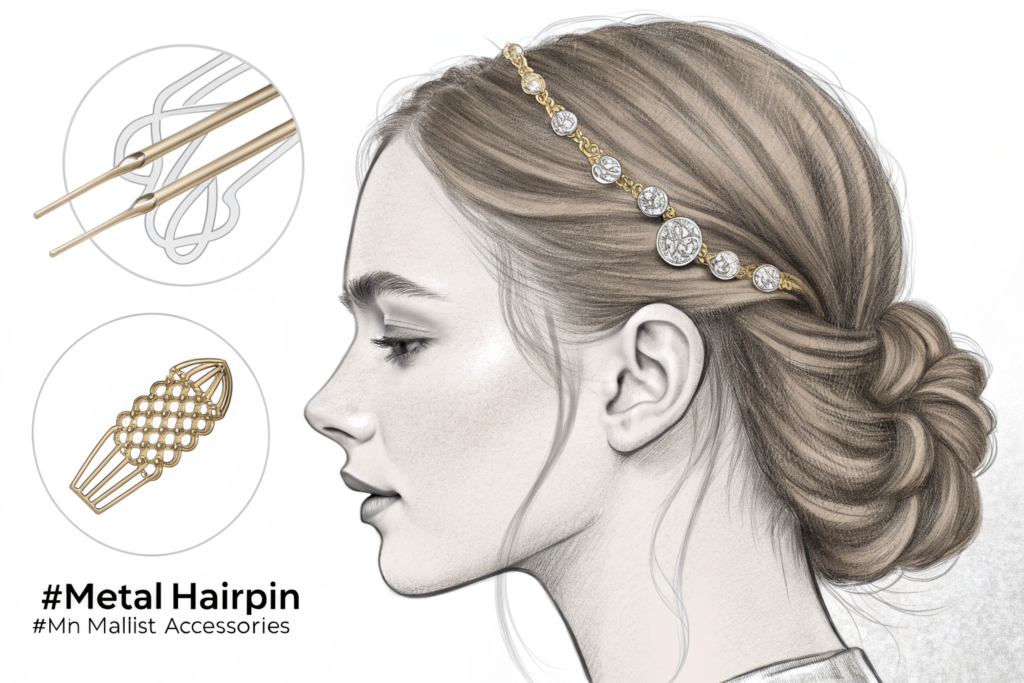
The surge is driven by four interconnected factors: the "quiet luxury" aesthetic favoring subtle, high-quality materials; intense social media (TikTok, Instagram) amplification of minimalist hair trends; a strong consumer push for sustainability and durability over disposability; and the inherent design versatility of metal for creating sleek, sculptural forms. On platforms like Pinterest and Instagram, hashtags like #metalhairpin and minimalistaccessories showcase these pieces as foundational style elements, not just utilities. Furthermore, as a manufacturer, we've seen a direct correlation between this trend and clients requesting higher-grade materials like surgical-grade stainless steel and brass with PVD coating to ensure tarnish resistance and skin safety, moving far beyond the basic alloys of the past.
 )
)
How Has Social Media Redefined Hair Accessories?
Social media, particularly short-form video, has been a game-changer. TikTok hair tutorials don't feature complex, plastic claw clips from the 90s; they showcase elegant, simple updos held effortlessly with two slim metal pins. The visual appeal is key: metal catches the light beautifully on camera, adding a touch of sophistication. Influencers and hairstylists demonstrate how a single, well-placed metal pin can transform a look, framing it as an investment in a versatile "staple" rather than a disposable item. This content creates both desire and education, showing consumers how to use these often simpler-looking pieces effectively. The trend is part of a broader "clean girl" aesthetic that values quality, simplicity, and intentionality over clutter and fast fashion.
Why Do Consumers Perceive Metal as More Sustainable?
While the environmental footprint of mining and metal processing is complex, the consumer perception is straightforward: metal feels permanent, plastic feels disposable. A metal hairpin is inherently seen as durable, long-lasting, and repairable. It doesn't crack like plastic can, and if it bends, it can often be bent back. This aligns with the growing anti-fast-fashion sentiment and the desire to "buy less, buy better." Consumers are increasingly asking about materials. A metal pin can be marketed as "zero-waste" over its lifetime compared to a plastic one that might break and be thrown away. This perception is so powerful that it often overrides detailed lifecycle analyses, making metal a key material for brands building a sustainable brand identity.
Where Do Plastic Hairpins Retain a Competitive Advantage?
To declare plastic hairpins obsolete would be a significant strategic error. They continue to dominate vast segments of the global market due to fundamental economic and functional advantages that metal cannot replicate at scale. Understanding these strengths is crucial for a balanced inventory and for serving price-sensitive customer bases.
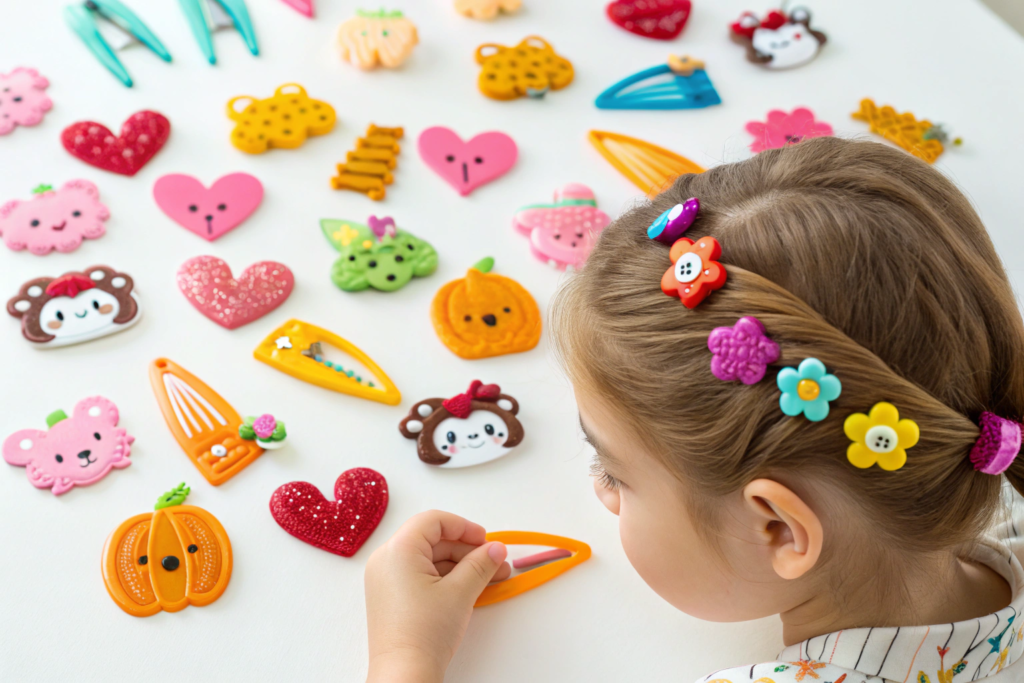
Plastic hairpins retain a dominant competitive advantage in three key areas: unmatched cost-efficiency for high-volume basics, superior safety and flexibility for children's accessories, and unparalleled design freedom for decorative, colorful, and thematic styles. The injection molding process for plastic is extremely fast and cheap per unit, making it ideal for basic "black hairpin" multipacks sold in supermarkets and drugstores worldwide. Furthermore, the material itself—when using flexible polymers—is less likely to cause scalp injury, a critical factor for kids' products. The ability to be molded into any shape and infused with any color keeps plastic essential for seasonal, novelty, and licensed character goods.
Can Plastic Compete on Cost and Safety?
Absolutely. On cost, plastic is the undisputed champion. The raw material (pellets) is cheap, and injection molding produces thousands of units per hour with minimal waste. This allows for retail price points that are virtually impossible for metal to match, securing plastic's place in value-oriented retail channels like dollar stores and mass-market chains. On safety, specifically for children, flexible plastics (like polypropylene) are forgiving and lightweight. They lack sharp edges, reducing scratch risks, and their flexibility means they are less likely to cause pressure points or snap dangerously. For basic, no-frills functionality and safety-first designs, plastic remains the default and often best choice, a point reinforced by safety standards for children's products.
What Innovation Is Happening in Plastic Materials?
To compete with the perception of metal, the plastic hairpin segment is innovating, not disappearing. Key developments include:
- Bio-based and Biodegradable Plastics: Using materials like PLA (polylactic acid) derived from corn starch to create "greener" plastic pins that appeal to eco-conscious consumers without the metal price point.
- Recycled Content: Pins made from post-consumer recycled (PCR) plastics, carrying certifications like the Global Recycled Standard (GRS).
- Enhanced Quality: Moving away from brittle, low-grade polystyrene to more durable, flexible polymers that mimic the "premium feel" of higher-end products.
These innovations allow plastic to defend its market share by addressing its core weakness—the perception of being cheap and disposable—while maintaining its cost and design advantages.
How Does This Trend Impact Sourcing and Manufacturing?
For buyers and brands, this material shift necessitates changes in sourcing strategy, factory partnership, and quality expectations. Sourcing metal hairpins is fundamentally different from sourcing plastic ones. It involves different suppliers, manufacturing processes, quality metrics, and cost structures. Treating them as interchangeable categories is a mistake.
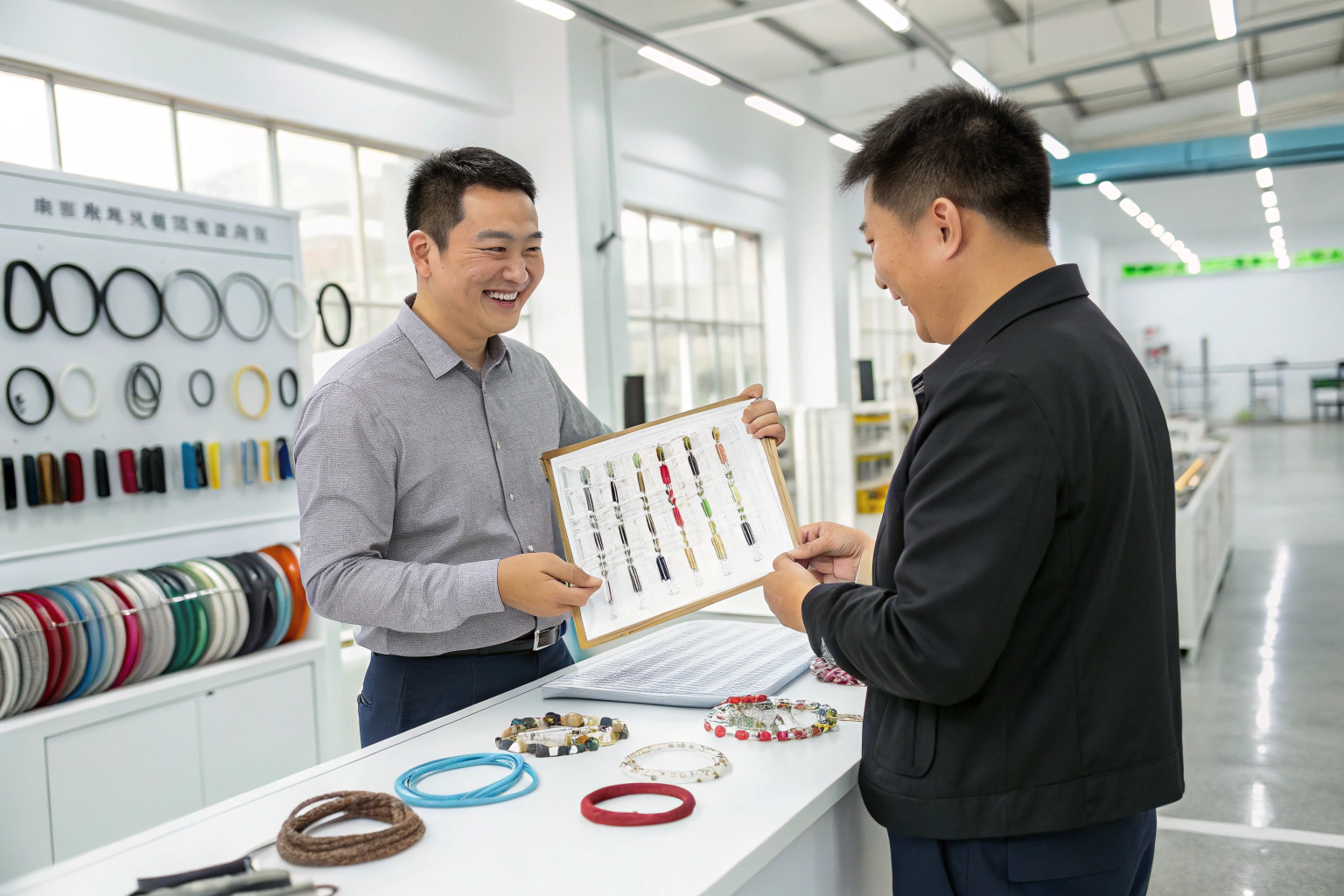
This trend impacts sourcing by shifting the focus from mass-mold manufacturers to specialized metal stamping and wire-forming factories, raising the importance of material certifications (like nickel-free claims), and requiring more rigorous testing for finish durability (plating, coating). For a manufacturing partner like Shanghai Fumao Clothing, it means maintaining expertise across both domains. Our metal accessory line uses precision CNC machining and laser cutting for consistent, burr-free edges, followed by multi-step polishing and electroplating (e.g., gold PVD coating) to prevent tarnishing. The lead times, minimum order quantities (MOQs), and tooling costs are typically higher than for plastic injection molding, which buyers must factor into their planning.
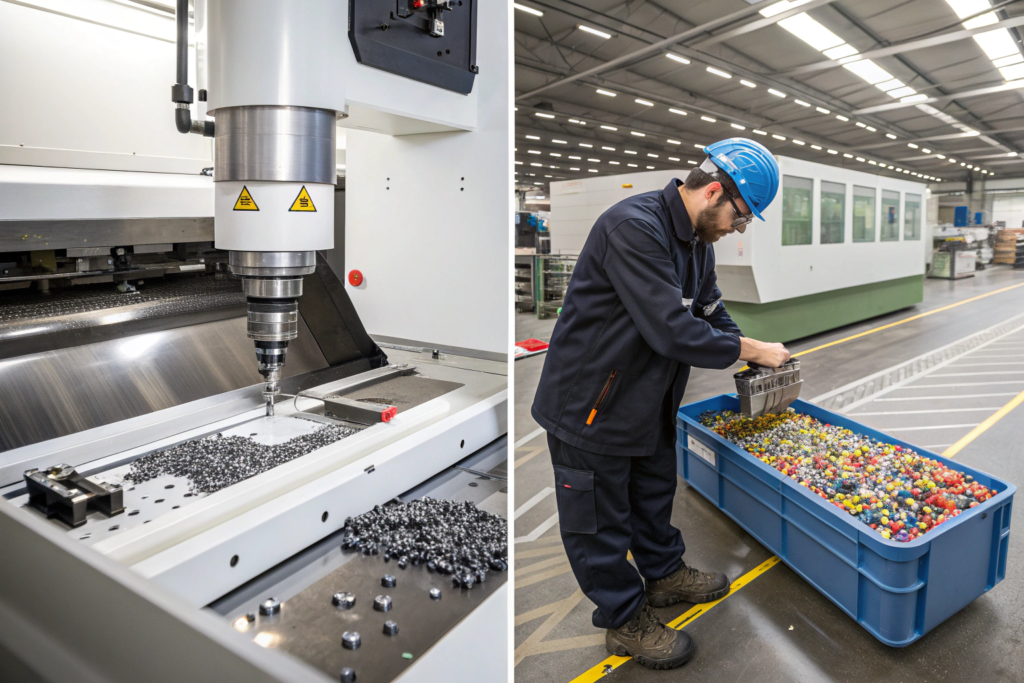
What Are the Key Manufacturing Differences?
| The core processes are distinct: | Aspect | Plastic Hairpins | Metal Hairpins |
|---|---|---|---|
| Primary Process | Injection Molding | Stamping, Wire Forming, CNC Machining | |
| Tooling | Expensive steel molds, long lead time | Dies for stamping or CNC programs | |
| Speed/Volume | Extremely high (thousands/hour) | Moderate to high (hundreds to thousands/hour) | |
| Customization | High initial cost, then cheap per unit. Great for complex shapes. | Per-unit cost higher. Best for geometric, linear designs. | |
| Finishing | Color molded-in. Limited post-process. | Requires polishing, plating, coating, sealing to prevent rust. | |
| Quality Focus | Consistency, color match, clasp tension. | Material grade, finish durability, surface smoothness, clasp mechanics. |
Understanding this table helps in setting realistic expectations with your supplier regarding cost, timeline, and design feasibility.
Why is Finish Durability Critical for Metal Pins?
A metal hairpin's Achilles' heel is its finish. A beautifully plated pin that tarnishes or chips after a few uses will generate instant negative reviews. Therefore, finish testing is a non-negotiable part of the QC protocol. Key tests include:
- Salt Spray Test (ASTM B117): Simulates accelerated corrosion to ensure plating lasts.
- Adhesion Test (Cross-cut Test): Checks if the plating bonds properly to the base metal and won't peel.
- Skin Simulation/Sweat Test: Ensures the finish doesn't degrade or cause discoloration when exposed to skin oils and perspiration.
A reliable manufacturer will have these test reports available and will specify the plating thickness (e.g., "3-micron gold PVD coating") rather than using vague terms like "gold-tone."
What Should Buyers and Brands Do Now?
The market isn't choosing one material over the other; it's splitting. Your strategy shouldn't be an either/or decision but a balanced "both/and" approach tailored to your customer segments. The key is to strategically position each material type to maximize its strengths and meet different consumer needs within your assortment.
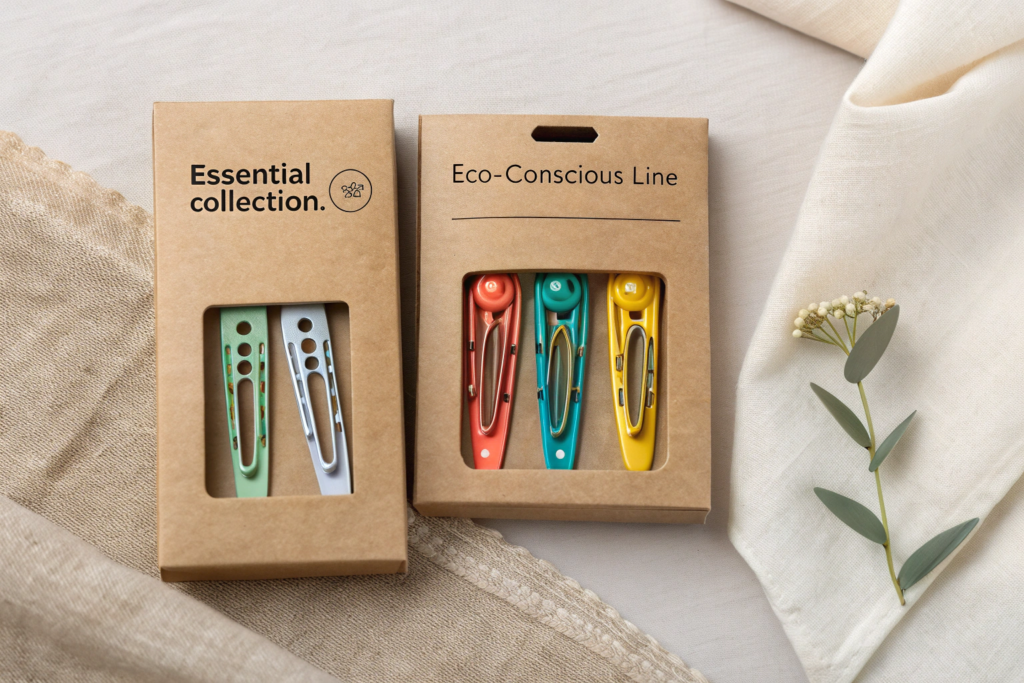
Buyers and brands should conduct a tiered portfolio analysis: introduce minimalist metal hairpins as premium, high-margin signature items or sustainable staples, while maintaining or upgrading plastic lines for value packs, kids' ranges, and fashion-forward novelty designs. This allows you to capture the growing metal trend without alienating price-sensitive shoppers or abandoning lucrative seasonal and decorative categories. For example, a brand could offer a core line of sleek stainless steel pins as "everyday essentials" and a separate, rotating line of colorful, molded plastic clips for summer or holiday collections.
How to Market Metal vs. Plastic Lines Effectively?
The marketing message must match the material's value proposition:
- Market Metal Pins on: Quality, Durability, Sustainability, Timeless Design. Use keywords like "last a lifetime," "tarnish-resistant," "minimalist jewelry for your hair," "elevate your everyday."
- Market Plastic Pins on: Fun, Color, Affordability, Safety, Novelty. Use keywords like "playful styles," "mix and match," "perfect for kids," "seasonal must-haves," "lightweight and comfortable."
Use different packaging to reinforce this: recyclable paperboard or tin boxes for metal; clear polybags or recyclable plastic clamshells for plastic multipacks. This clear segmentation helps consumers make informed choices based on their immediate need and values.
What is the Future Outlook for Both Materials?
The future points to coexistence and further specialization:
- Metal Hairpins: Will continue to grow in the premium segment. Innovation will focus on new alloys (like titanium coatings), hybrid designs (metal with silicone grips), and even smarter accessories (though this is more niche). The link to the circular economy will strengthen, with brands offering repair or take-back programs for metal items.
- Plastic Hairpins: Will dominate value and children's markets. Success will belong to brands that innovate with advanced, sustainable polymers (like Ocean-Bound Plastic (OBP) or higher-quality bioplastics) and who leverage plastic's unique ability for intricate, affordable decoration.
The most successful players will be those, like Shanghai Fumao Clothing, who have the expertise to expertly manufacture and guide clients in both material worlds.
Conclusion
Minimalist metal hairpins are not replacing plastic hairpins wholesale; they are redefining the high-end of the market and reshaping consumer expectations around quality and sustainability. Plastic, meanwhile, is defending and evolving its vast territory through innovation in materials and its irreplaceable advantages in cost and design versatility. For buyers, this creates a strategic opportunity to diversify and segment your offerings, catering to both the consumer who desires a timeless metal staple and the one seeking an affordable, playful plastic accessory.
Navigating this bifurcated landscape requires a manufacturing partner with deep expertise in both material sciences and production processes. By understanding the unique value propositions and market positions of metal and plastic, you can build a resilient, trend-responsive, and comprehensive hair accessory portfolio.
Ready to develop a balanced and winning hair accessory collection? Whether you're looking to launch a line of premium minimalist metal pins or innovate within the plastic space, contact our Business Director, Elaine, at elaine@fumaoclothing.com. Let Shanghai Fumao Clothing provide the expertise and manufacturing excellence to bring both sides of this trend to life.