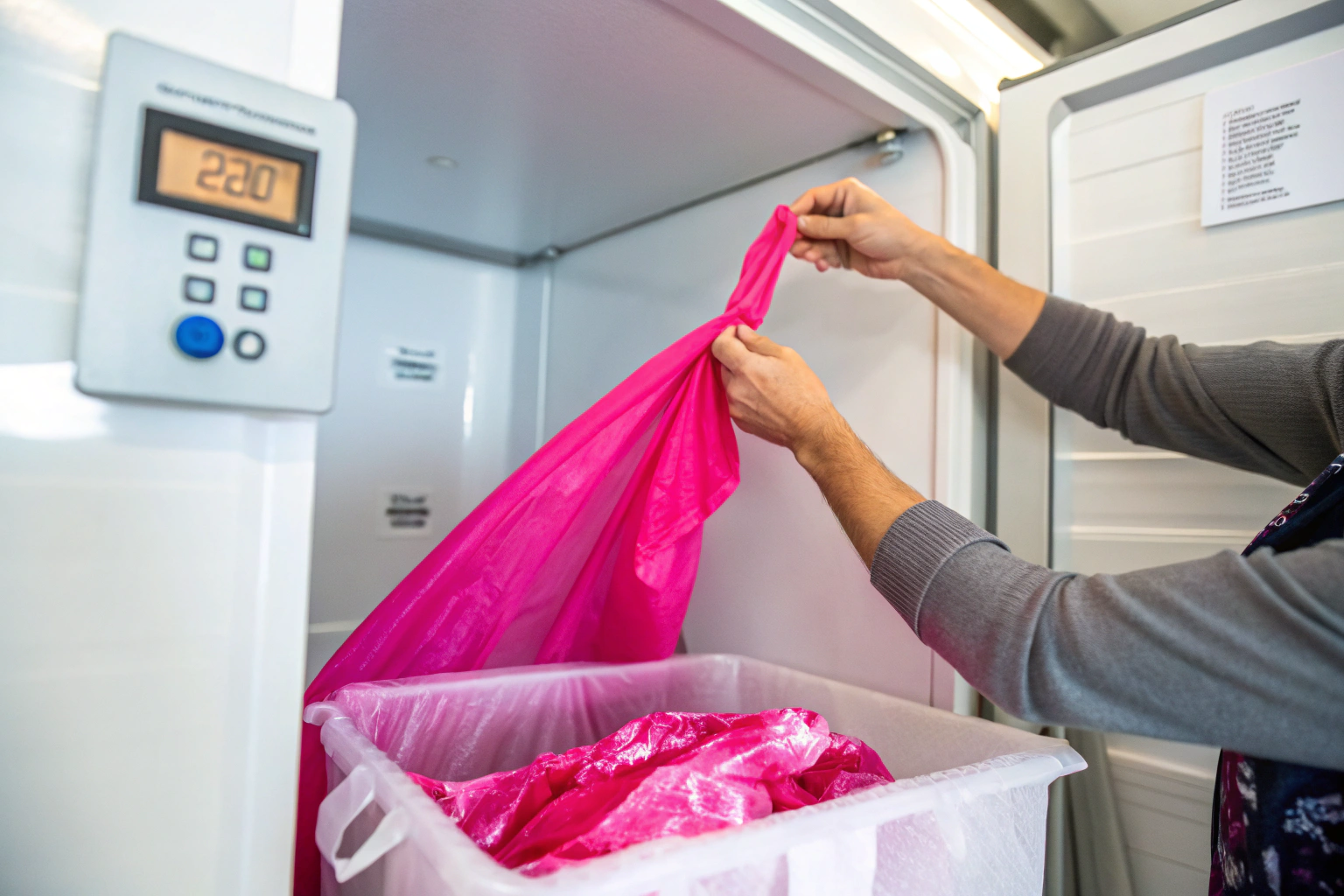
You open a carton of beautiful synthetic scarves. The colors are perfect. The print is sharp. But as you reach for the first piece, it clings to your hand like a scared animal. It crackles. It wraps around your wrist and will not let go. A spark jumps from the fabric to the metal shelf. You try to fold it for display, but it sticks to itself, wrinkled and twisted. This is the winter shipping nightmare. Cold, dry air turns your lovely scarves into static traps. Your customer opens the box expecting luxury. They get a shock, literally. They think the product is cheap or defective. Returns begin. This is the painful reality for many brands shipping synthetic scarves through freezing winter routes.
You avoid static cling on synthetic scarves during winter shipping by combining three strategies. First, you apply a durable anti-static finishing agent to the fabric during production. Second, you pack the scarves in dissipative anti-static polybags with humidity control packs. Third, you maintain a stable, moderate humidity level inside the carton during transit. Cold air holds almost no moisture. Synthetic fibers do not absorb water. They are perfect insulators. The charge from friction has nowhere to go. So it sits on the scarf, waiting for a hand to touch it. The solution is to create a conductive path for that charge to drain away safely.
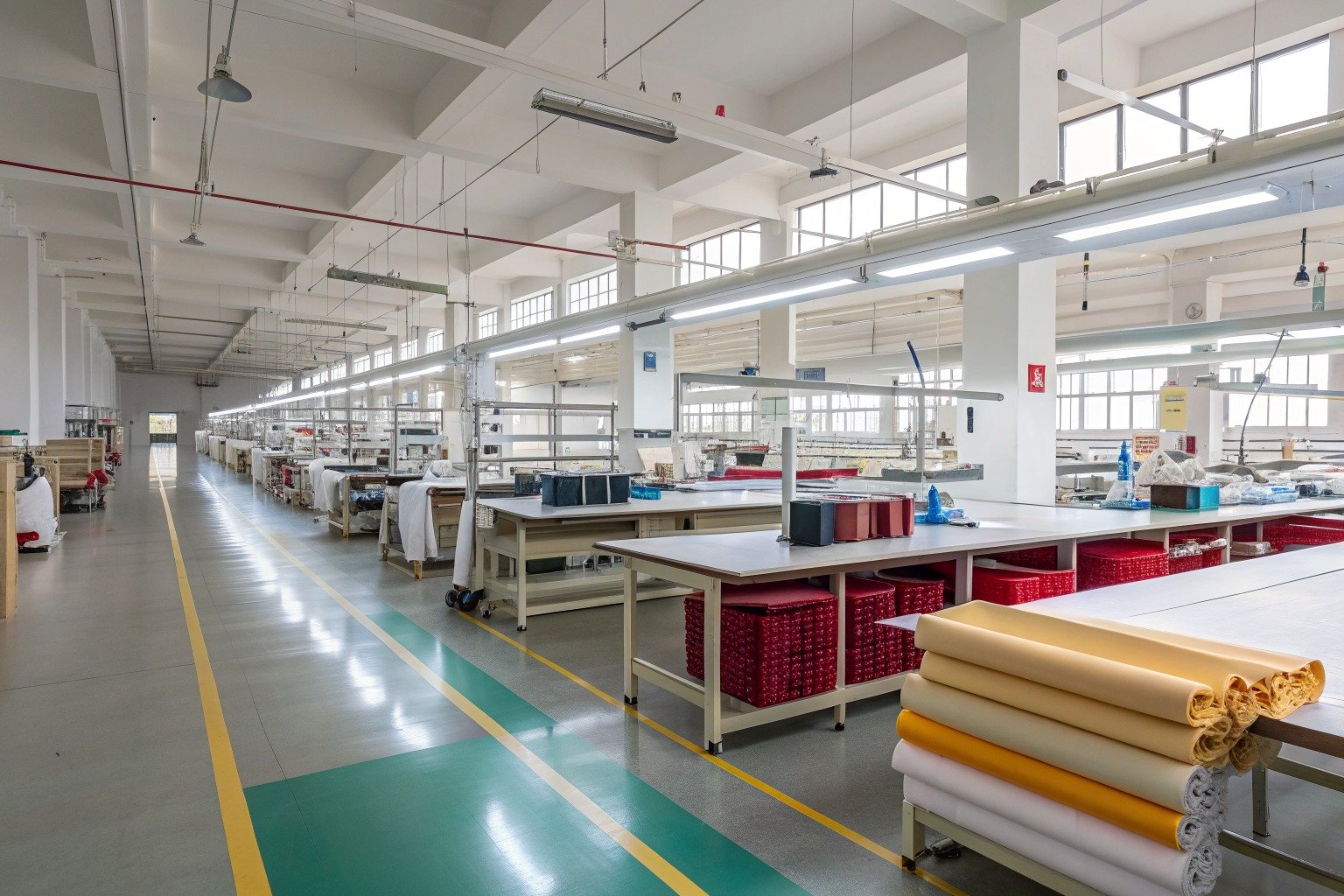
I learned this lesson the hard way many years ago. A shipment of our acrylic scarves arrived in Chicago during a January cold snap. The customer sent us a video. The scarves were literally climbing out of the box by themselves. It was funny for about five seconds. Then it was a business problem. Since then, our factory in Zhejiang has developed a strict anti-static protocol for winter shipments. I want to share every detail with you, so your next delivery brings compliments, not complaints.
Why do synthetic scarves build up static electricity in cold shipping containers?
Most importers blame the factory. They think the static must be a manufacturing defect. They do not realize the real villain is the weather. When a container leaves our warm, humid port in Ningbo and sails towards a frozen port like Vancouver or Saint Petersburg, the physical conditions inside the box change completely. The air temperature drops from 20 degrees Celsius to minus 10 degrees. Cold air cannot hold water vapor. Every degree the temperature drops, the relative humidity plummets. What started as comfortable, balanced air becomes bone-dry desert air inside a sealed steel box. This dry air is an electrical insulator. It cannot drain the charge that friction creates.
Synthetic scarves build up static in cold shipping containers because the low humidity prevents the dissipation of triboelectric charges. Fibers like acrylic, polyester, and nylon are hydrophobic. They do not absorb moisture. When these fibers rub against each other or against plastic packaging during the vibration of transit, they strip electrons from each other. One surface becomes positive, the other negative. In normal humid air, the water molecules in the air would carry these electrons away. In a frozen container, there is no water in the air. So the charge accumulates, reaching thousands of volts.
I have tested this with our quality control team. We put a batch of untreated polyester scarves in a cold chamber at 20% humidity. After one hour of simulated transport vibration, the scarves stuck to everything. The static field was strong enough to attract dust from the cardboard carton itself. This is a solvable problem, but first you must understand which fibers cause the most trouble and how the container environment changes during the voyage.
Which synthetic fibers generate the most static electricity during transit?
Not all synthetics are equally guilty. The triboelectric series tells you the order. Materials near the top of the list tend to become positively charged. Materials near the bottom become negative. The further apart two materials are on this list, the stronger the charge transfer when they rub. Acrylic sits very high on this series. It gives up electrons easily and becomes strongly positive. Polyethylene, the material used for cheap polybags, sits near the bottom. It accepts electrons. So you have a perfect storm. An acrylic scarf rubbing against a standard clear polybag generates a massive static charge.
Polyester is also bad, but slightly less so than acrylic. Nylon sits higher than polyester, but it can absorb a tiny bit of moisture, which helps. Rayon, which is a regenerated cellulose fiber, absorbs moisture well. It rarely has severe static problems. Our factory produces scarves in all these fibers. For our clients in cold climates, we often suggest adding a small percentage of rayon or cotton to the blend. Even 10% can significantly reduce static buildup. The natural fibers act like tiny moisture sponges, creating local pathways for charge to drain. You can check the detailed properties of these textile fibers on the Textile Exchange website. They offer excellent resources on fiber science and sustainable material choices. The American Association of Textile Chemists and Colorists also publishes standard methods for measuring electrostatic properties of fabrics.
How does the container journey change humidity levels from port to port?
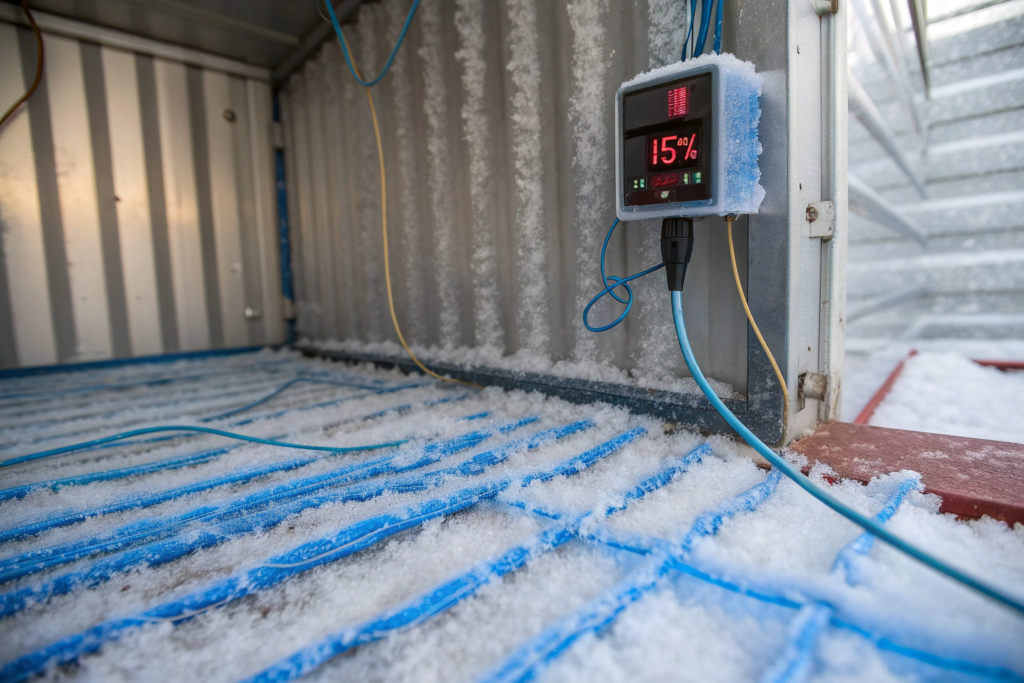
The journey matters as much as the departure point. Our containers leave the port of Shanghai with an internal relative humidity around 60% to 70%. That is typical for coastal China. As the ship sails north, the outside air temperature drops. The container walls cool down. The moisture in the warm internal air condenses on the cold steel panels. This is called container sweat. The water that was in the air is now liquid on the walls. The air inside becomes dangerously dry.
When the container arrives at a cold-weather port, the doors are opened. A rush of freezing, dry outside air enters. The relative humidity inside might now be 15% or lower. The scarves, which were slightly damp from the factory, are now in a desiccating environment. This is the critical moment. If the cartons are then transferred to a heated warehouse, the sudden temperature change creates even more friction. The scarves are handled, unpacked, and displayed. The static is at its peak. Understanding this cycle helps you plan your anti-static strategy. The World Shipping Council provides valuable data on container climate management. The International Cargo Handling Coordination Association also offers guidance on cargo care during these dramatic climate shifts.
What anti-static packaging materials work best for winter scarf shipments?
A client once told me they did not believe in anti-static packaging. They called it a marketing gimmick. So they shipped a thousand acrylic scarves in standard clear polybags. The shipment hit a blizzard in the Midwest. The scarves stuck so hard to the bags, you could lift the scarf by pulling on the bag alone. The customer service team spent hours fielding angry calls. The brand had to issue a discount code to calm customers down. The money they saved on packaging cost them ten times more in lost reputation. Do not make this mistake. The packaging is your last line of defense. It must work even if the fabric finish has partially worn off during transit friction.
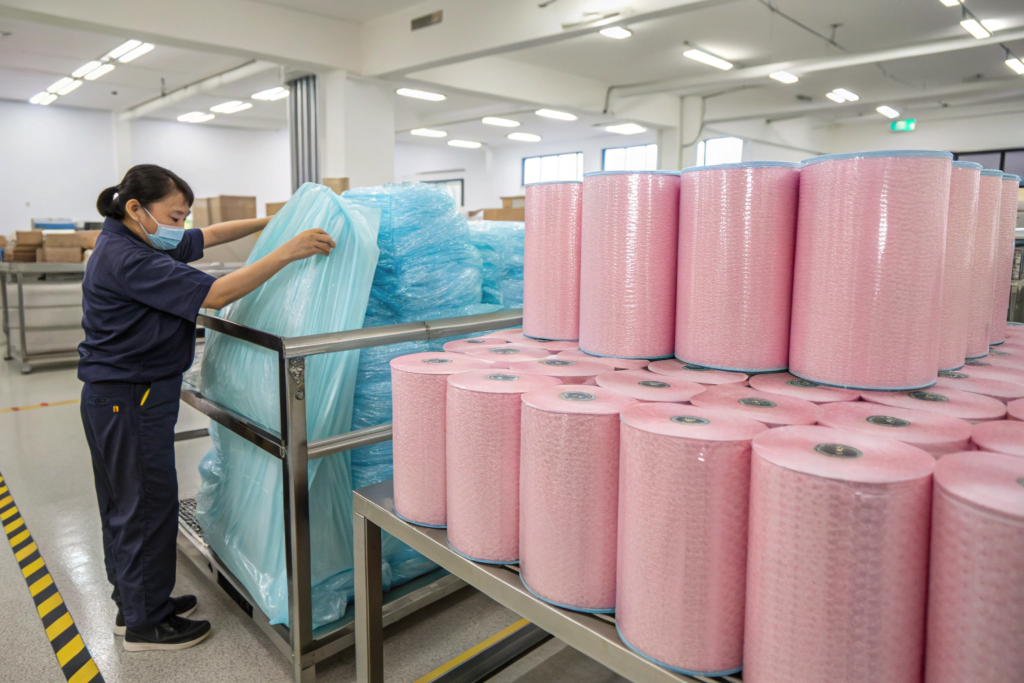
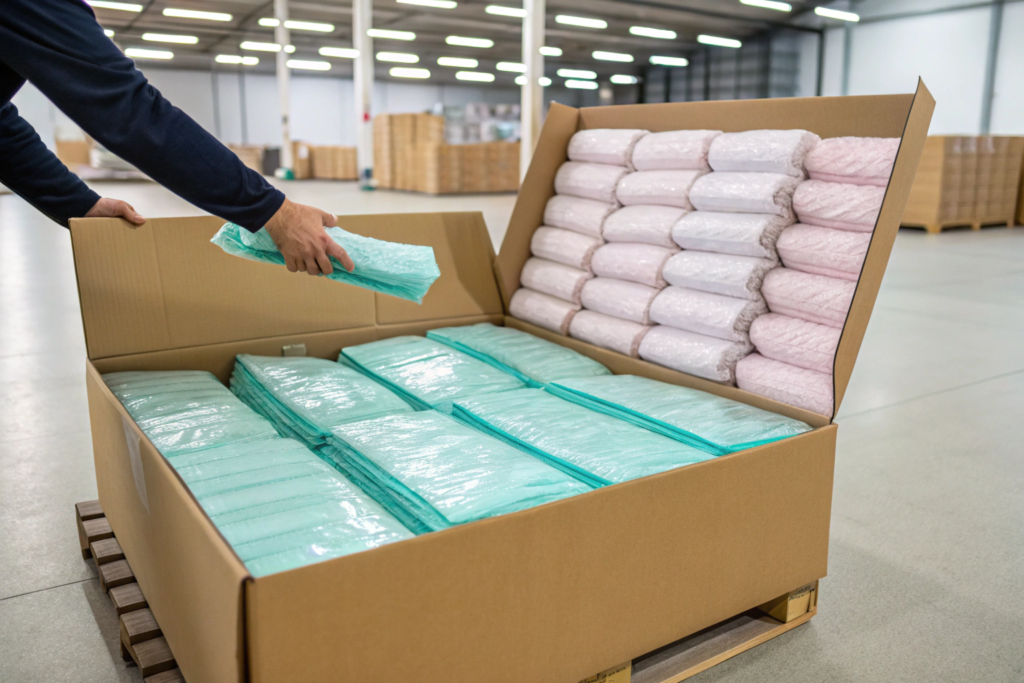
The best anti-static packaging for winter scarf shipments includes amine-free dissipative polybags and anti-static bubble wrap. Pink anti-static bags work because they contain a humectant agent that attracts a microscopic layer of moisture to the film surface. This moisture layer makes the bag surface slightly conductive. Any static charge on the scarf can drain away through this layer to the air. You should also use anti-static tissue paper between the folds of the scarf. This prevents the fabric from rubbing directly against itself. Never use standard clear polyethylene bags for winter shipments. They are fantastic insulators and massive static generators.
Our factory in Zhejiang stocks a range of anti-static packaging options. We test each batch for surface resistivity using a megohmmeter. The acceptable range for dissipative materials is between 10 to the power of 6 and 10 to the power of 9 ohms. Anything higher is an insulator. Anything lower is a conductor. You want the sweet spot in the middle. Let me break down the specific bag types and the common mistake of using the wrong tape or sticker.
Should I use pink anti-static bags or shielded metalized bags for scarves?
You see two main types of anti-static bags on the market. Pink polyethylene bags are "dissipative." They prevent static buildup on the bag itself and drain charge from the contents. They are translucent, so your customer can still see the product. This is important for retail presentation. The scarf looks beautiful through the pale pink tint. These bags are cost-effective and work perfectly for textile products like scarves.
Metalized shielding bags are different. They look like shiny silver foil. They are designed to protect sensitive electronics from external electrostatic discharge. You do not need these for scarves. They are more expensive, and the metallic look can confuse your customer. They might think the scarf contains metal threads. Stick with the pink dissipative bags. Make sure you buy from a reputable supplier. Some cheap pink bags are just dyed polyethylene with no actual anti-static properties. Ask for a technical data sheet showing the surface resistivity. A good supplier will provide this without hesitation. You can learn more about the specifications for these packaging materials from the ESD Association. They set the global standards for electrostatic discharge control. For packaging testing standards, the International Safe Transit Association provides rigorous protocols.
Does the adhesive on tape and stickers create a static hotspot on scarves?
Yes, and this is a hidden danger. Many factories seal the individual polybag with a small piece of clear adhesive tape. In a dry, cold container, that tape becomes a static magnet. The adhesive bonds to the plastic film. When the customer peels the tape open, the rapid separation generates a sharp static discharge right at the opening point. The scarf inside gets zapped. The customer might feel a small shock.
We avoid clear tape entirely. We use polybags with a self-adhesive strip on the flap. The adhesive is integrated into the bag material and is designed to peel without generating a significant charge. For folding the scarf, we use a small paper sticker, not a plastic one. The paper allows some moisture to pass through and does not generate the same triboelectric charge as plastic film. The sticker goes on the reverse side of the scarf or on the care label, never on the visible display face. The location matters. A static hotspot where the customer touches first is a disaster. For more information on safe adhesives and tapes, you can consult the technical resources at TAPPI, the leading association for the paper and packaging industries.
How can I apply an anti-static finish that lasts through the shipping cycle?
A designer once told me she was terrified of chemical finishes. She had spent months perfecting the soft, cashmere-like hand feel of her acrylic scarves. She believed an anti-static coating would make the fabric feel sticky, oily, or stiff. I invited her to our factory in Zhejiang. I handed her two identical black scarves. One was untreated, stiff with static, clinging to her sleeve. The other was treated with a hydrophilic silicone softener. She could not tell the difference in softness. But the treated scarf did not cling at all. She became a believer that day. You do not have to sacrifice luxury touch for static control. You just need the right chemistry applied the right way.
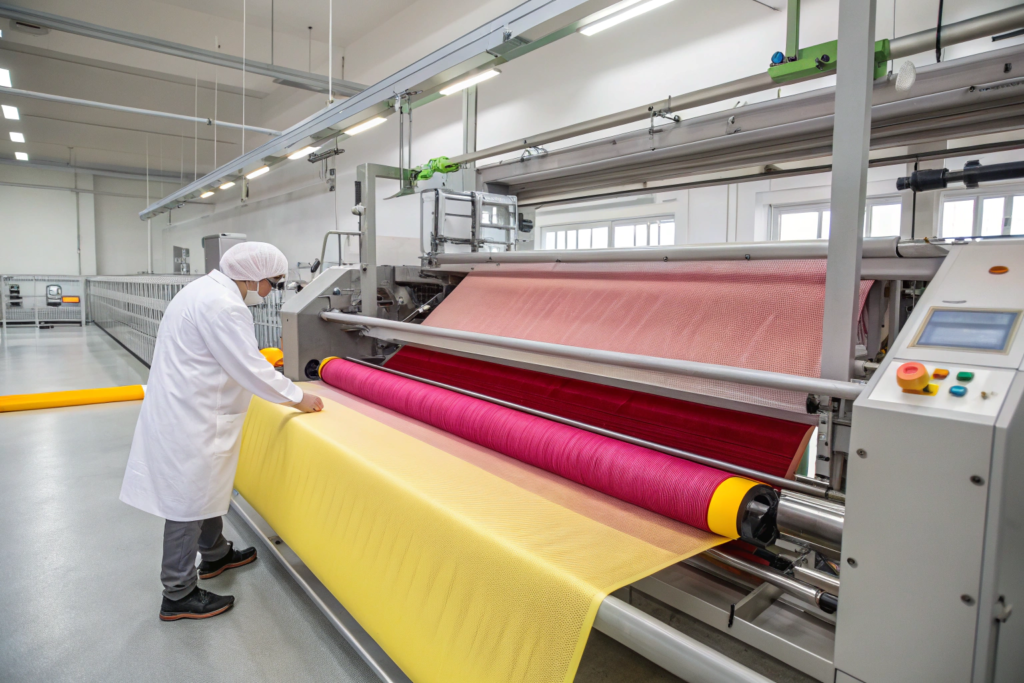
You can apply a durable anti-static finish that lasts through shipping by using a cationic surfactant combined with a hydrophilic silicone softener in the final wet processing stage. The fabric passes through a padding mangle, where it absorbs the chemical solution under controlled pressure. Then it enters a stenter frame, where heat cures the finish onto the fibers. The surfactant molecules have one end that anchors to the hydrophobic fiber and another end that attracts water molecules from the air. This creates an invisible, conductive water film on each filament. The silicone part ensures the hand feel remains super soft and slick, not grippy or stiff.
We do this process in-house for many of our European and North American clients. It adds a small cost, but the reduction in customer complaints is dramatic. You can test the effectiveness with a simple cling test. Rub the scarf against a piece of polyethylene film ten times. If it clings, the finish is insufficient. If it falls away freely, the finish is working. Let me explain how long you can expect this treatment to last and whether there are natural alternatives.
How many washes does a factory-applied anti-static finish typically survive?
Durability depends on the chemistry. A cheap, spray-on anti-static agent sits on the fiber surface. It works for a few days, but the vibration of shipping rubs it off. By the time the customer opens the package, the treatment is gone and the static is back. You need a substantive finish that penetrates the yarn and bonds to the polymer.
Our standard padding and thermofixation process achieves durability of at least ten home washes. The heat of the stenter frame, typically 150 to 170 degrees Celsius for polyester, opens the fiber structure. The anti-static molecules migrate inside and then become trapped as the fiber cools. For acrylic, which is heat-sensitive, we use a lower temperature and a cross-linking agent that creates a flexible polymer network around the fiber. This network does not wash off easily. You can verify the wash fastness by sending a sample to a testing lab. They will wash it five or ten times according to AATCC standards and then measure the static half-life. A good result is a static decay time of less than two seconds after the required washes. The AATCC Technical Manual details the exact procedure. You can also check the OEKO-TEX website to confirm that your chosen anti-static chemical is certified safe for human skin contact.
Can natural anti-static treatments replace synthetic chemicals for eco-friendly brands?
If your brand promise is all-natural, organic, or completely chemical-free, industrial anti-static agents might not be acceptable. There are plant-based alternatives, but you must adjust your expectations. The most effective natural anti-static agents are based on betaine, a substance extracted from sugar beets. Betaine is a humectant. It attracts moisture to the fiber surface. It is biodegradable and non-toxic. However, its wash fastness is lower than synthetic alternatives. It might last for three to five washes instead of ten.
Another option is a fatty acid softener, which is basically a high-grade natural fabric conditioner. We apply it in the last rinse water. It gives a very soft, luxurious hand feel and provides moderate static protection for a limited time. For natural treatments, you might need to supplement with a care instruction card. Advise the customer to mist the scarf lightly with water before wearing it in very dry conditions. Water is the ultimate anti-static agent. It instantly dissipates charge. For more information on green textile chemistry, you can explore the resources at Textile World, which often features innovations in sustainable finishing. The Textile Exchange also provides standards and guidance for eco-friendly chemical inputs.
What carton packing method minimizes friction static in cold transit?
You have the right fabric finish and the right polybag. But the loading dock team packs the carton incorrectly. They stuff the scarves in so tightly that the carton bulges. Or they leave a big empty space so the bags slide around freely. Both mistakes generate friction static. A tightly packed carton forces the fibers to compress and rub against each other with every bump of the truck. A loose carton allows the individual polybags to slide and generate charge through repeated contact. The packing density must be just right.
The best carton packing method to minimize friction static is a firm, layered fill with anti-static slip sheets. You should pack the carton so it is completely full, with no empty space for shifting, but you must avoid vertical compression. A simple rule we use at our factory is the "two-finger press test." When the carton is sealed, you should be able to press the top panel down by about one centimeter with two fingers. If you cannot press it at all, the scarves are overpacked and compressed. If the top feels loose and floppy, the carton is underpacked and will shift. Between each layer of polybagged scarves, we place a sheet of anti-static polyethylene foam or heavy tissue paper. This slip sheet absorbs the friction between the layers. The bags do not rub directly on each other. This simple step can cut static generation by half.
We also use corrugated cardboard dividers for cartons with more than fifty scarves. The dividers act as structural pillars. They carry the weight of the upper layers so the scarves themselves are not crushed. The edge crush strength of the carton must be adequate for the stacking height in the container. A carton that collapses under the weight of other boxes will squeeze the scarves and create intense static hotspots. Let me address the specific question of carton quantity and the role of humidity control packs.
How many scarves can I pack per carton before static risk becomes too high?
There is no absolute number, but we set limits based on weight and layer count. A standard export carton containing acrylic scarves should not exceed 12 to 15 kilograms total weight. Heavier cartons inevitably compress the bottom layers. For typical medium-weight synthetic scarves, this usually translates to 50 to 80 pieces per carton, depending on the bulk of each scarf. We also limit the number of vertical layers. Never stack more than ten individual polybagged scarves directly on top of each other without a cardboard divider or a thick foam slip sheet. The weight of ten scarves is small, but the cumulative pressure over weeks of transport is significant. It drives the fibers of the bottom scarf against the inside of its bag constantly.
We always perform a drop test and a vibration test on a sample carton before finalizing the packing specification. If the carton deforms or the dividers collapse during testing, we reduce the quantity. It is better to ship one extra carton than to ruin a third of the units in transit. For technical specifications on carton strength and stacking performance, you can consult the guidelines at the Fibre Box Association. They provide the Edge Crush Test standards that define how much weight a carton can withstand. For logistical standards, GS1 provides widely used guidelines for pallet building and carton dimensions that protect cargo during transit.
Do humidity control packs inside the carton actually prevent static?
Yes, they do, and this is a critical tool for extreme cold routes. Standard silica gel desiccant packs are your enemy in winter. They absorb moisture and make the air inside the carton even drier. This dramatically increases the static problem. Never use standard silica gel packs in a winter shipment of synthetic scarves. You need two-way humidity control packs. These packs contain a saturated salt solution sealed inside a permeable membrane. They are designed to maintain a specific relative humidity range. If the air gets too dry, they release water vapor. If the air gets too humid, they absorb moisture. They are climate regulators, not just moisture absorbers.
We specify packs that maintain 45% to 50% relative humidity inside the individual polybag or the master carton. At 50% relative humidity, the air has enough moisture to drain static charges effectively. The synthetic fibers still do not absorb water, but the air around them becomes slightly conductive. The static charge bleeds off harmlessly into the atmosphere instead of building up to thousands of volts. You place one small pack inside each master polybag, or one larger pack inside the sealed carton liner. They are non-toxic, which is important for consumer goods. You can learn more about the science of these humidity stabilization products from resources like the Moisture Control Association, which provides detailed guides on packaging climate control. The International Safe Transit Association also has standards for testing the effectiveness of these climate control methods in simulated transit conditions.
Conclusion
Preventing static cling on synthetic scarves during winter shipping is not a single magic trick. It is a layered defense system that follows the product from the finishing machine to the customer’s hands. You start with chemistry. Apply a hydrophilic silicone softener that anchors to the fiber and attracts a microscopic water layer from the air. This invisible shield gives the static charge a path to drain away. You continue with packaging. Swap out cheap clear polybags for dissipative pink anti-static bags. Add anti-static tissue paper or foam slip sheets between the layers in the carton. Avoid the static hotspot traps like clear adhesive tape and plastic stickers. Then you engineer the carton. Pack it firm but not compressed. Use dividers to protect the bottom layers from weight. If the route goes through deep cold, add two-way humidity control packs to keep the microclimate inside the bag at a safe 50% relative humidity. Never use standard silica gel desiccants in winter. They make the problem worse. Each of these steps is simple on its own, but together they eliminate the crackle, the cling, and the spark. Your customer opens a beautiful, flowing scarf that feels soft and luxurious. That is the only unboxing experience that builds a brand.
If you are sourcing synthetic scarves and need a manufacturer who understands the science of cold-weather shipping, we can help. Our factory in Zhejiang has the finishing equipment, the anti-static packaging supply chain, and the quality control team to make your winter shipments a success. We serve brands across North America and Europe that trust us to deliver consistent quality, even when the temperature drops below zero.
To discuss your scarf production and get samples of our anti-static packaging and finishing options, contact our Business Director, Elaine. Her email is elaine@fumaoclothing.com. We will help you design a product and a shipping protocol that keeps your customers happy all winter long.